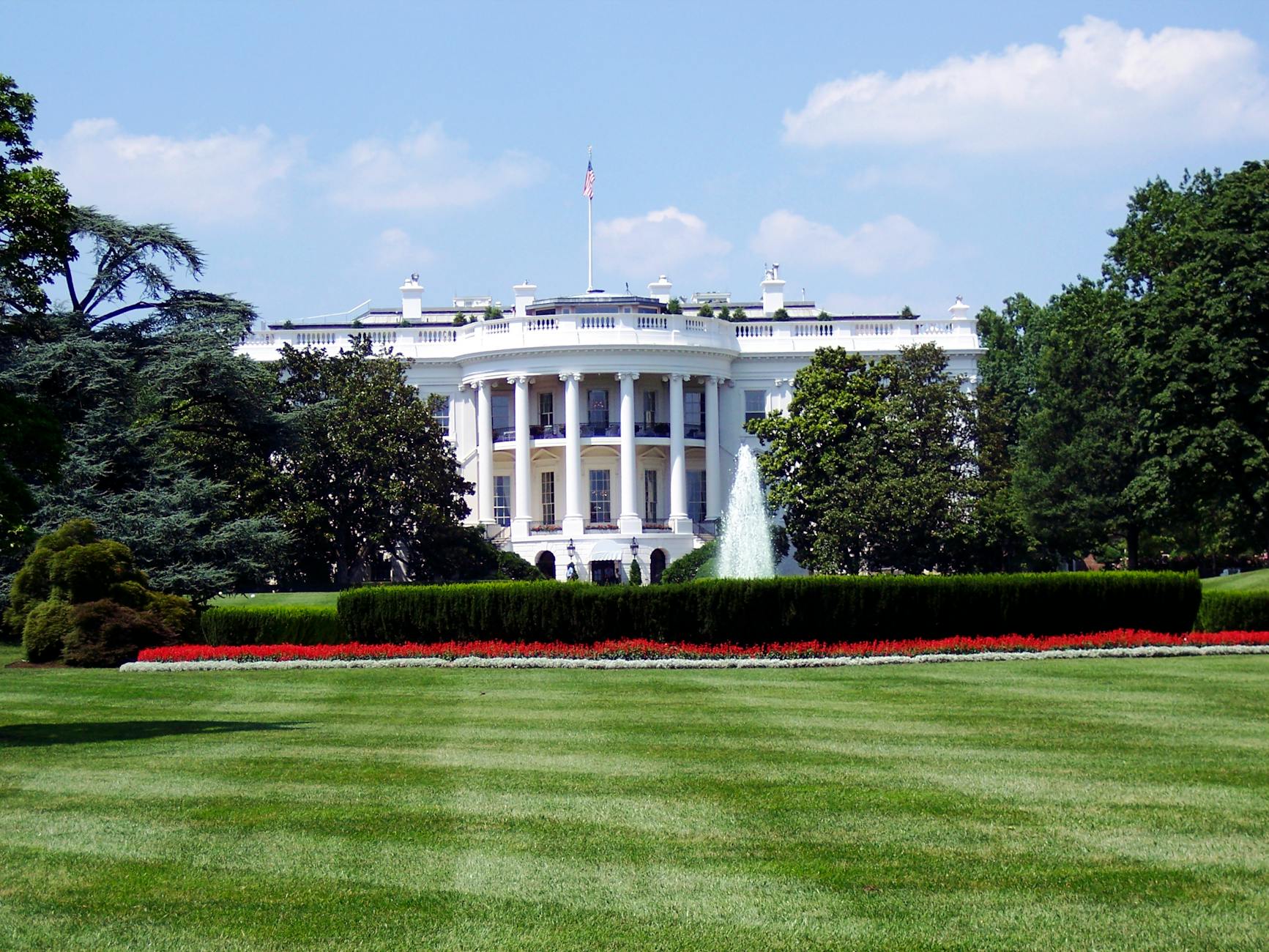
Discussing the makeshift tents for large events used by previous administrations, which the Trump administration has cited as proof a larger event space was needed, Lemon said, “The tents don’t bother me. I don’t think everything has to be a McMansion. He’s turning the white House into a McMansion.”
Applying the term McMansion is a critique. Rather than being a stately, public structure, the suggestion is that the White House is becoming too large, architecturally garish, a building to be mocked rather than admired. The new addition will detract from the coherence of the existing building. (The White House is already large with around 55,000 square feet in the central structure.)
Two related thoughts:
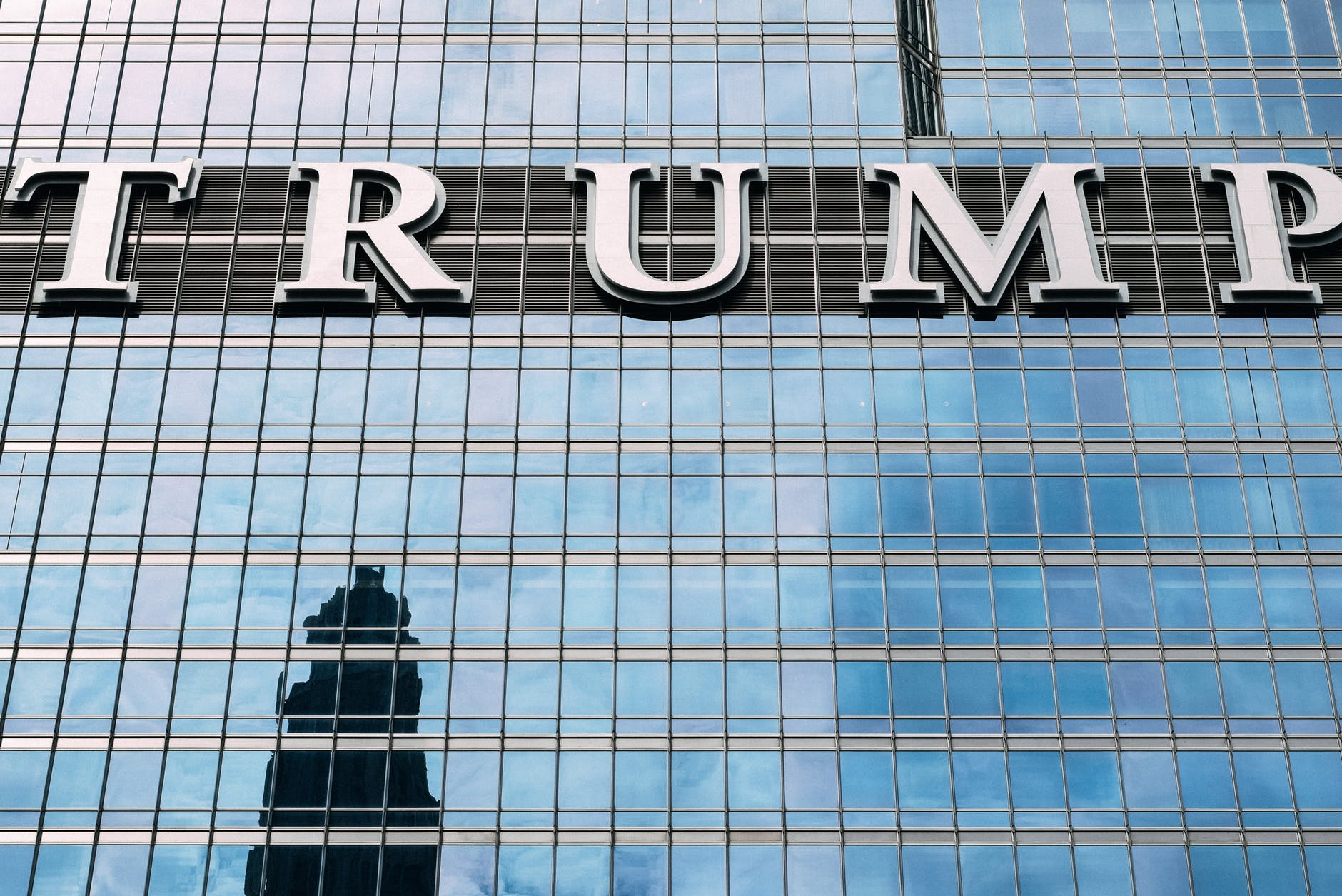
President Trump is often associated with tall buildings and a particular interior design style. Neither necessarily go with the Neoclassical design of the outside. What will the new ballroom look like outside and inside compared to the rest of the architecture?
I would imagine politicians in general would not like their homes to be called McMansions. Even if some live in large homes, to call those houses McMansions says something about their tastes. I have not seen anyone look systematically at the architecture of the homes of major politicians but considering how many might qualify as McMansions would be interesting.
Trump told mourners that one of the last things the slain conservative activist and Illinois native said to him was, “Please, sir. Save Chicago.” Trump then launched into a familiar refrain, saying, “We’re going to save Chicago from horrible crime.”
One of the Trump administration’s actions regarding Chicago includes recent ICE activity. While all the details are hard to come by, it appears however that this activity has not just affected people living in Chicago; there has been ICE activity in numerous suburbs. An ICE facility in Broadview. ICE agents approaching people in numerous suburbs, as far as 40 miles out from the city.
These actions hint at the complexity of the Chicago region and suburbs across the United States. Even as some Americans have long associated cities with racial and ethnic diversity, this diversity has increased in suburbs in recent decades. The American suburbs are full of people of different racial and ethnic groups as well as large numbers of recent immigrants to the United States.
So when Trump says Chicago has problems, does he mean just the city or is the whole region in question?Again, from the Kirk service:
Trump later took aim at Gov. JB Pritzker, declaring, “You have an incompetent governor who thinks it’s OK when 11 people get murdered over the weekend. … He says he’s got crime [under control]. No, they don’t have it under control, but we’ll have it under control very quickly.”
Both the city of Chicago and its suburbs have the same governor. Only one of the Chicago collar counties in Illinois voted for Trump in 2024: McHenry County. (There are portions of the greater Chicago area in southeastern Wisconsin and northwestern Indiana but they may not be part of the same conversation.) Are the problems some see in Chicago also ones they see present in suburbs?
When President Donald Trump declared his third presidential candidacy in 2022, he saved his most colorful language for America’s urban areas, bemoaning “the blood-soaked streets of our once-great cities” and adding that “the cities are rotting, and they are indeed cesspools of blood.”
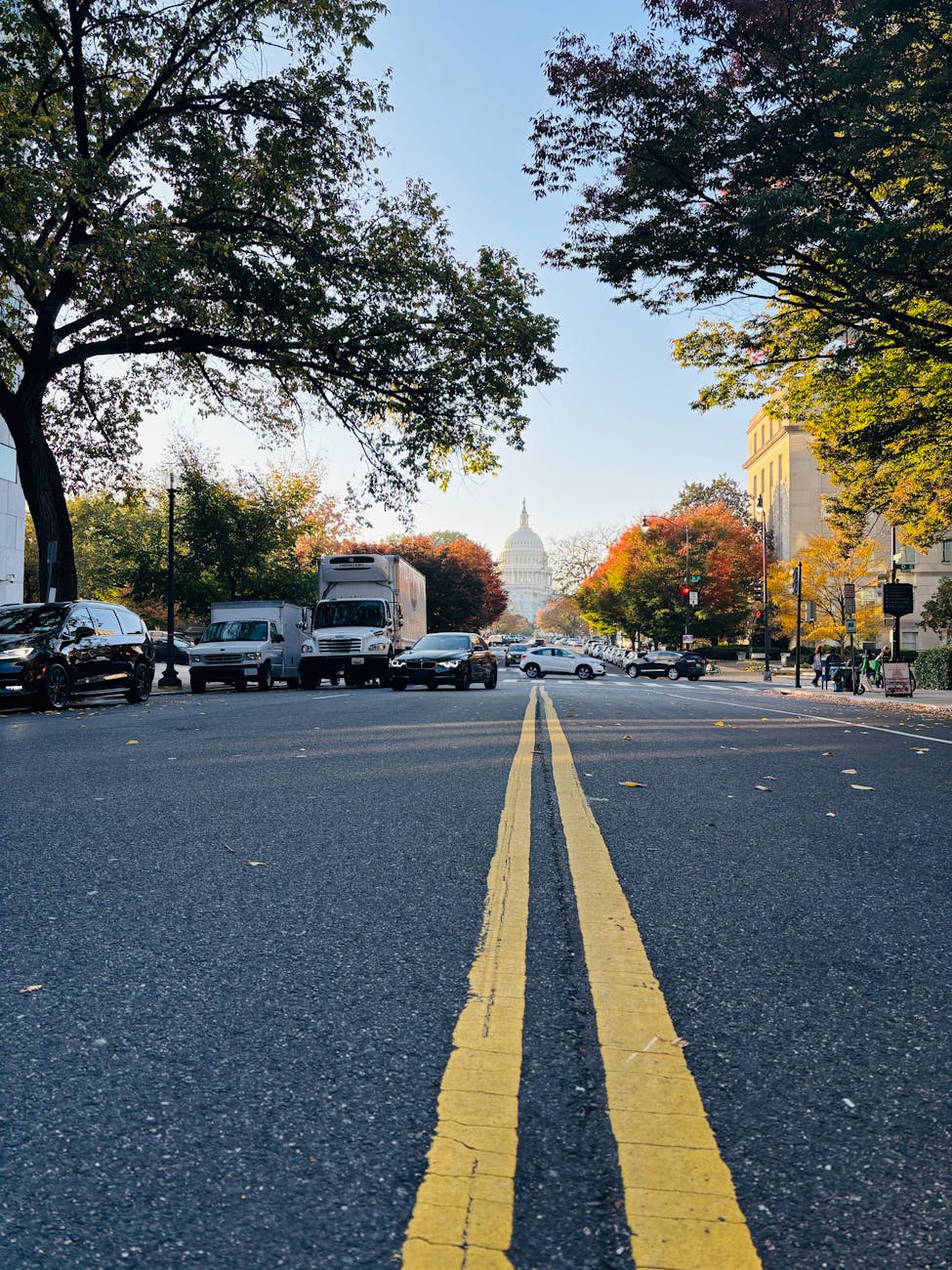
Later in his campaign, Trump called Milwaukee “horrible” and described Washington, D.C., as a “rat-infested, graffiti-infested shithole.” More recently he said, “These cities, it’s like living in hell.”
Other Republicans have seized on similar dystopian urban images. When Vice President JD Vance visited New York several years ago, he compared the city to a zombie apocalypse, posting: “I have heard it’s violent and disgusting there. But is it like Walking Dead Season 1 or Season 4?”
As Trump ramps up the military presence in Washington — and hints that he may move to take over other cities — his crackdown punctuates a frequent Republican message that American cities embody chaos, lawlessness and immorality, despite widespread recent drops in violent crime. With cities increasingly liberal and rural stretches ever more conservative, Republicans have a growing incentive to attack urban areas as the epitome of all that is wrong with America…
Trump’s rhetoric culminates a long history of American politicians casting cities as hotbeds of vice and social disorder, said Michael Kazin, a historian at Georgetown University and author of “The Populist Persuasion: An American History.” Left-wing populists have often been dismayed by the vast wealth inequality on display in cities, he said, while right-wing populists have recoiled from the elites, immigrants and minorities who live there.
This resonates with some Americans because there is a broader and longer history of criticizing cities in the United States. From the beginning, a number of Americans have idealized small town or rural living. The growth of major cities was accompanied by numerous concerns. When asked today, many Americans say they would prefer to live in small towns.
At the same time, it is hard to imagine the United States today without its big cities and the good things that came with them. A United States without New York, Los Angeles, and Chicago? Or San Francisco, New Orleans, and Cleveland?
Even if voting patterns by geography seem fairly set in American national elections, it would be interesting to hear more politicians articulate messages that cross these boundaries. Are people living in cities, suburbs, and rural more different than they are similar? Breaking through the existing patterns might just require addressing issues that Americans face or care about regardless of where they live.
In life, in order to be successful — and you people are well on the road to success — you have to find out what makes you excited, what makes you want to get up each morning and go to work? You have to find it. If you love what you do and dedicate yourself to your work, then you will gain momentum? And look, you have to. You need the word “momentum.” You will gain that momentum. And each success will create another success. The word “momentum.” I’ll tell you a story that’s very interesting for me. When I was young there was a man named William Levitt. You have some here. You have some in different states. Anybody ever hear of Levittown? (APPLAUSE) And he was a very successful man, became unbelievable — he was a home builder, became an unbelievable success, and got more and more successful. And he’d build homes, and at night he’d go to these major sites with teams of people, and he’d scour the sites for nails, and sawdust and small pieces of wood, and they cleaned the site, so when the workers came in the next morning, the sites would be spotless and clean, and he did it properly. And he did this for 20 years, and then he was offered a lot of money for his company, and he sold his company, for a tremendous amount of money, at the time especially. This is a long time ago. Sold his company for a tremendous amount of money. And he went out and bought a big yacht, and he had a very interesting life. I won’t go any more than that, because you’re Boy Scouts so I’m not going to tell you what he did. (CROWD CHANTING) Should I tell you? Should I tell you? (APPLAUSE) You’re Boy Scouts, but you know life. You know life. So look at you. Who would think this is the Boy Scouts, right? So he had a very, very interesting life, and the company that bought his company was a big conglomerate, and they didn’t know anything about building homes, and they didn’t know anything about picking up the nails and the sawdust and selling it, and the scraps of wood. This was a big conglomerate based in New York City. And after about a 10-year period, there were losing a lot with it. It didn’t mean anything to them. And they couldn’t sell it. So they called William Levitt up, and they said, would you like to buy back your company, and he said, yes, I would. He so badly wanted it. He got bored with this life of yachts, and sailing, and all of the things he did in the south of France and other places. You won’t get bored, right? You know, truthfully, you’re workers. You’ll get bored too, believe me. Of course having a few good years like that isn’t so bad. But what happened is he bought back his company, and he bought back a lot of empty land, and he worked hard at getting zoning, and he worked hard on starting to develop, and in the end he failed, and he failed badly, lost all of his money. He went personally bankrupt, and he was now much older. And I saw him at a cocktail party. And it was very sad because the hottest people in New York were at this party. It was the party of Steve Ross — Steve Ross, who was one of the great people. He came up and discovered, really founded Time Warner, and he was a great guy. He had a lot of successful people at the party. And I was doing well, so I got invited to the party. I was very young. And I go in, but I’m in the real estate business, and I see a hundred people, some of whom I recognize, and they’re big in the entertainment business. And I see sitting in the corner was a little old man who was all by himself. Nobody was talking to him. I immediately recognized that that man was the once great William Levitt, of Levittown, and I immediately went over. I wanted to talk to him more than the Hollywood, show business, communications people. So I went over and talked to him, and I said, “Mr. Levitt, I’m Donald Trump.” He said, “I know.” I said, “Mr. Levitt, how are you doing?” He goes, “Not well, not well at all.” And I knew that. But he said, “Not well at all.” And he explained what was happening and how bad it’s been and how hard it’s been. And I said, “What exactly happened? Why did this happen to you? You’re one of the greats ever in our industry. Why did this happen to you?” And he said, “Donald, I lost my momentum. I lost my momentum.” A word you never hear when you’re talking about success when some of these guys that never made 10 cents, they’re on television giving you things about how you’re going to be successful, and the only thing they ever did was a book and a tape. But I tell you — I’ll tell you, it was very sad, and I never forgot that moment. And I thought about it, and it’s exactly true. He lost his momentum, meaning he took this period of time off, long, years, and then when he got back, he didn’t have that same momentum. In life, I always tell this to people, you have to know whether or not you continue to have the momentum. And if you don’t have it, that’s OK. Because you’re going to go on, and you’re going to learn and you’re going to do things that are great. But you have to know about the word “momentum.” But the big thing, never quit, never give up; do something you love.
The moral of the story seems to be about momentum: Trump says Levitt once had it and then he didn’t. The Levittowns were built and Levitt was well known but then his later projects and efforts did not go as well.
Three things strike me about this story. First, is this what is expected of hot shot or important developers? Berenson describes how Levitt funded many of his projects. The selling of homes in the first section or subdivisions in communities then funded later houses. If sales slowed, the project lagged. If sales were brisk – and they were particularly quick in the 1950s – then the project could flow along. Donald Trump also leverages previous assets to fund projects. Perhaps this is just the game is played in real estate but it might not be the way many average Americans operate.
Second, Berenson details the yachting/wealthy life Levitt lived. Levitt at one point had the third biggest yacht in the world. He and his wife entertained at some of the hottest social spots. This brings him into contact with numerous famous people. This includes people like Donald Trump – a younger developer – and politicians – like Joe Biden. He did this all with relatively little real wealth; his money was tied up and not really growing. When the money started running out, he did not have many options.
Third, what counts as positive or negative momentum? This particular story is told in such a way that there is a clear rise and fall: Levitt made it to the top and then dropped to the bottom. Most lives or careers may not fit this simple structure. People and businesses face obstacles, make progress, take a step forward and a step back. How many people could even somewhat closely fit a story of only positive momentum or only upward progress?
Suburbanites, who make up about half of the U.S. electorate and are as racially diverse as the nation at large, are a key prize. Biden beat Trump in suburban counties by about six percentage points in the 2020 presidential election.
Before Biden dropped out, Trump was leading him 43% to 40% among suburbanites in Reuters/Ipsos polls conducted in June and July, reflecting the Democrat’s struggle to energize supporters.
Harris began closing the gap when she launched her campaign in July and led Trump 47% to 41% among suburban voters in polling across September and October. That represents a nine-point swing in the Democrat’s favor, according to the analysis of six Reuters/Ipsos polls that included responses from over 6,000 registered voters…
Winning the middle – whether nationally or in the election’s key states – won’t necessarily crown the victor. Democrat Hillary Clinton, who got nearly 3 million votes more than Trump nationwide in the 2016 election and beat him in suburban counties by about 1 percentage point, still lost the election when Trump flipped six states that had voted Democratic in 2012.
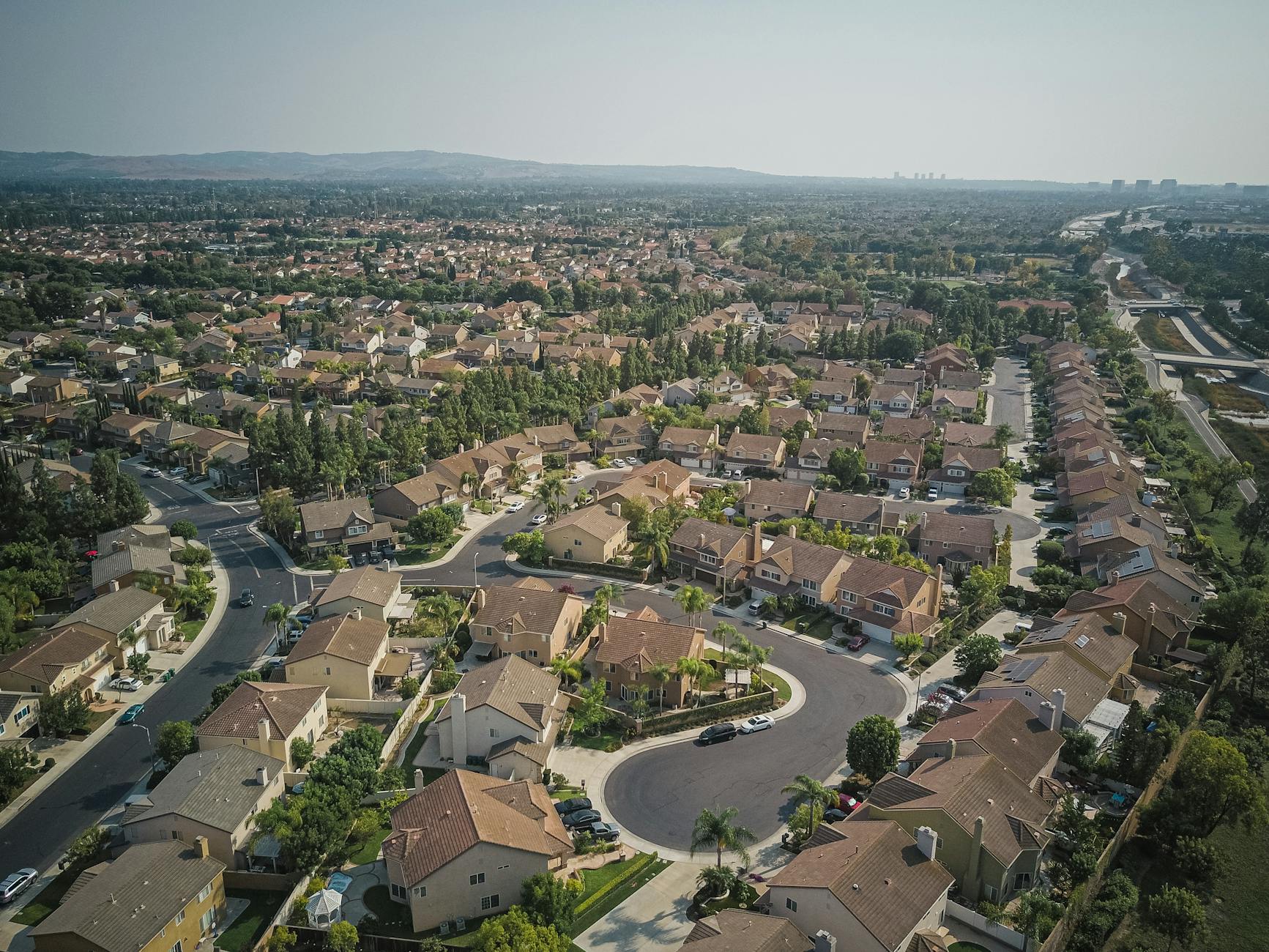
Suburban voters are a sizable block of voters as this is where a majority of Americans live. Do all suburbanites vote the same? No, suburbia is increasingly complex with people in suburbia have different experiences and backgrounds.
Related to the previous point, do suburbanites see themselves as a voting bloc? If I were to take the Chicago metropolitan area as an example, voters across the region might not see themselves as similar to others in the region’s suburbs.
Will the presidential candidates appeal more directly to suburban life in the last few months? If the economy is the biggest issue for voters (as the article suggests), is talking about the middle-class direct enough? Trump in 2020 spoke directly about suburbs; will both candidates do this in 2024?
But a POLITICO analysis shows there’s also a significant bloc of voters who did not want Trump in more exurban, red-leaning counties — the kinds of places that were skeptical of Trump in the 2016 GOP primary and, while largely voting for him in the 2016 and 2020 general elections, have remained somewhat resistant to his takeover of the Republican Party…
They’re farther away from urban areas. They’re less densely populated, and they have fewer voters with college degrees. These places — which include North Carolina’s Republican-leaning exurbs, and conservative but less Trump-inclined counties several hours north of Michigan’s major cities — still vote predominantly for Republicans, both at the presidential and local levels. In 2016, when both parties held contested primaries, the Republican voters in these counties backed candidates like Sen. Marco Rubio (R-Fla.) over Trump, and in the general election they voted for Trump at lower rates than the deep-red rural areas.
Republicans are banking on the fact that partisanship usually wins out. This is far from the first contentious primary to leave bruised egos and hurt feelings, and usually the vast majority of voters come home to their party’s presidential nominee eventually. By Election Day, voters tend to return to their partisan camps.
The middle to outer suburbs have been a primary battleground in recent election cycles. Voters in big cities and suburbs close to big cities tend to vote Democratic and voters in rural areas and exurbs tend to vote Republican.
The analysis above seems to hinge on whether exurban voters are enthusiastic for Trump or not. Perhaps the more interesting question is whether some exburban areas are becoming more suburban. As suburban populations grow and more educated and wealthier voters move in, does this shift voting away from Republicans? Particularly in the South and West, metropolitan regions continue to expand and this could change voting patterns.
Former President Donald Trump on Friday proposed building up to 10 futuristic “freedom cities” on federal land, part of a plan that the 2024 presidential contender said would “create a new American future” in a country that has “lost its boldness.”…
He said he would launch a contest to charter up to 10 “freedom cities” roughly the size of Washington, DC, on undeveloped federal land.
“We’ll actually build new cities in our country again,” Trump said in the video. “These freedom cities will reopen the frontier, reignite American imagination, and give hundreds of thousands of young people and other people, all hardworking families, a new shot at home ownership and in fact, the American dream.”
Trump’s plan, shared in advance with POLITICO, calls for holding a contest to design and create up to ten new “Freedom Cities,” built from the ground up on federal land. It proposes an investment in the development of vertical-takeoff-and-landing vehicles; the creation of “hives of industry” sparked by cutting off imports from China; and a population surge sparked by “baby bonuses” to encourage would-be-parents to get on with procreation. It is all, his team says, part of a larger nationwide beautification campaign meant to inspire forward-looking visions of America’s future.
When I saw that Trump mentioned this again, I immediately thought about free market cities that some have proposed for different parts of the world. But, that does not seem to be the goal here. Trump wants to build new cities that fit a new vision of American innovation. Freedom = innovation. One implication is that current cities are not free.
For such an idea, multiple practical obstacles exist:
Where would these be located? Which federal lands?
It is hard to build a new city. What is the timeline for this? How many resources will be involved? Will it be all private actors and developers doing the construction?
What will be the guiding mission of these cities? If the goal is innovation, what will be different about these cities compared to existing cities?
The suburbs have always been competitive political territory, but they have taken on a different significance with urban and rural voters spinning further and further away from one another. Last December, a top Democratic operative laid out for me one way of thinking about the party’s future: Had Democrats just rented the suburbs under Trump, or do they own them? The suburbs’ highly educated, middle-class, family-oriented, moderate, predominantly white, and (in terms of actual swing votes) mostly women voters may be ready to stick with the Democratic Party for the long haul. But just in case, McAuliffe and his fellow Democrats are doing their best to make sure that the former president is still a part of this year’s elections.
The battle for suburban voters continues (most recent posts on the topic here and here).
While Trump is the focus here, this seems to continue a pattern employed by both parties in recent years: tie local or state issues to who the parties think are disliked national figures. Democrats want to tie Republicans to Trump, Republicans want to tie Democrats to Nancy Pelosi. While these national figures might have some influence over more local contexts, there are also important local issues to consider.
Such a post-mortem would likely reveal that the party’s disinterest in holding onto the suburbs prevents the rise of new Pattersonian Republicans with their own identities separate from Trumpism and that this will have long-term historical consequences.
“There are dozens, if not hundreds of these local or regional-level political power brokers who shape the outcomes of how our cities and regions function in ways that just aren’t visible to most people,” says Delmont, the Dartmouth historian. “We spend so much time talking about who’s in the White House or even who’s in Congress. But it might be the L. Brooks Pattersons of the world who actually determine, like: Do we have affordable housing? Do we have segregated cities? Do we have police forces that are militarized? The people who actually operate the levers of power are probably much more positioned like a Brooks Patterson than a President Trump or President Biden.”
National politics are indeed often built on smaller units of government. While a lot of attention goes to presidential elections (and this article also focuses on Donald Trump and how this connects to local politics), there is a lot of work that happens at the Congressional, state, and other levels that undergird the larger outcomes. A candidate or political party is going to struggle without grassroots, lower-level support.
This reminds me of my blog post Thursday about addressing housing issues municipality by municipality. We often look at particular issues at a national level. How to provide affordable housing? How to explain the rise and fall of Donald Trump? There are multiple levels of analysis possible and needed. In this post and on Thursday, the reminder is that the local level matters. Does Oakland County and all the local machinations about county seats and redestricting determine who will be president or which political party will control Congress? No, but add up a lot of counties in important areas – particularly with suburban voters who can be swayed election to election – and this can start to matter.
In the 2016 election, rural and nonmetropolitan America gave Donald Trump enough of a margin to beat Hillary Clinton in seven key states. Ahead of the 2020 election, Republicans worried that Trump would lose his rural edge, in light of reduced support there in the 2018 midterm elections. But this was not the case. Instead, Trump’s loss to Joe Biden was due mostly to voters in large metropolitan suburbs, especially in important battleground states…
However, large suburban areas in 2020 registered a net Democratic advantage for the first time since Barack Obama’s victory in 2008. This is significant because more voters reside there than in the other three categories. In terms of aggregate votes in these large suburban counties, there was a shift from a 1.2 million vote advantage for Trump in 2016 to (at last count) a 613,000 vote advantage for Biden—a nearly 2 million vote flip. In addition, Biden benefitted from more modest Republican margins in small metropolitan areas. These advantages for the President-elect were even greater in key battleground states…
The three northern battleground states of Michigan, Pennsylvania, and Wisconsin—which flipped to Trump in 2016—again entered the Democratic fold in 2020. Here, even more than in the national analysis, the 2016 to 2020 suburban shifts to either greater Democratic or smaller Republican support were instrumental in Biden’s victory…
Suburban voting patterns also made a difference in the Sun Belt, especially in large southern states where suburbanization has been rampant. The focus here is on two such states: Georgia, where Biden is ahead and a recount has been announced; and Texas, which Trump won, but where urban and suburban voting patterns closed the longtime Republican-Democratic gap.
While political analysis suggests middle suburbs are battleground areas, I wonder if this signals that these suburbs are also in the middle of all sorts of other trends including demographic changes, cultural tastes, and suburban inequality. To build on earlier posts, perhaps finding middle America right now involves going to a Walmart in a middle suburb or an emergency room in a middle suburb.
Many people have discussed the electoral college in recent years. Here is a crazier proposal based on more recent trends: instead of the electoral college by states, how about an electoral college by cities, suburbs, and rural areas? With concerns on either side that cities or rural areas are controlling political outcomes, could there be some way to weight the results such that all three geographies could influence the outcome? Grouping votes by states obliterates any distinctions between places.





 Legally Sociable