The suburban contexts of James Dobson and Focus on the Family

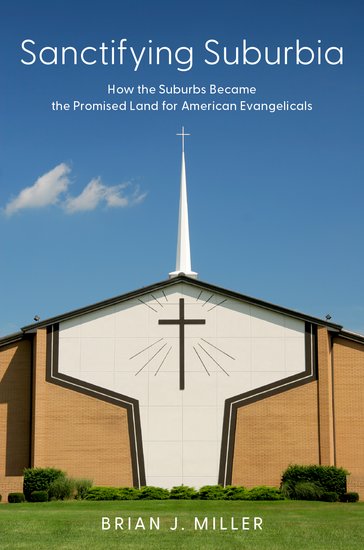
In reading multiple obituaries upon the passing of Dr. James Dobson, I was interested to read about where he lived and where his ministry operated. In my book Sanctifying Suburbia, I examine how evangelicals embraced the suburbs, and I discussed in Chapter 6 two of the evangelical centers where Dobson spent much of his adult life: the suburbs east of Los Angeles and Colorado Springs, Colorado. But his suburban experiences also predated the professional career for which he became know. Here is what the New York Times reported:

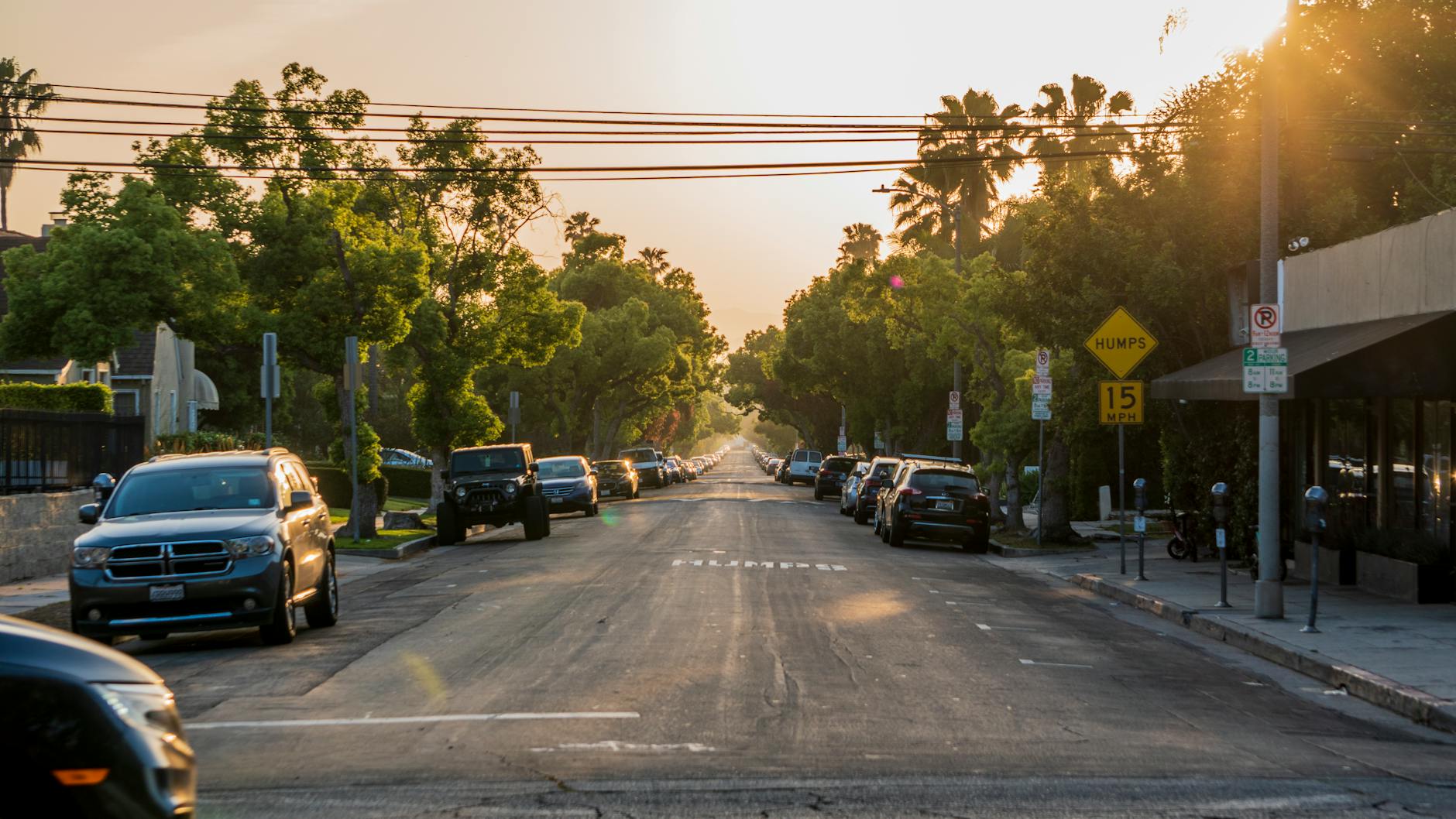
Photo by Jake Heinemann on Pexels.com

James Clayton Dobson Jr. was born in Shreveport, La., on April 21, 1936, the only child of James and Myrtle (Dillingham) Dobson.

He was the son, grandson and great-grandson of Church of the Nazarene ministers. The family avoided dancing and movies. His father, who never attended college, was a traveling evangelist, primarily in the Southwest, and young James lived mostly with his mother in Bethany, Okla., and graduated from San Benito High School, in San Benito, Texas, in 1954.

He received a bachelor’s degree in psychology in 1958 from Pasadena College (now Point Loma Nazarene University) and a master’s degree in 1962 from the University of Southern California.

In 1960, he married his college sweetheart, Shirley Deere. She survives him, as do his son; a daughter, Danae Dobson; and two grandchildren.

After four years as a teacher and counselor at high schools in Hacienda Heights and Covina, Calif., he earned a doctorate in child development in 1967 from U.S.C. He was then on the faculty of the Keck School of Medicine for 14 years and simultaneously on the staff of Children’s Hospital.

Looking more closely at these early locations shows some connections to suburbs. Shreveport is a small big city with over 76,000 residents in 1930. Bethany is a suburb west of Oklahoma City created by Nazarene founders that grew from 485 residents in 1920 to 22,694 residents in 1970. San Benito is a small community within the Browsnville-Harlingen-Raymondville combined statistical area today that is not far from the Mexico border. It had between roughly between 13,000 and 16,000 residents in the 1950s while Brownsville at that point had between 35,000 and 48,000 residents.

Dobson went to college at Pasadena College. This college started as Pacific Bible College in Los Angeles. In 1909 it moved to purchased land in Pasadena, a suburb east of Los Angeles. When Dobson was in college, the suburb was finishing a growth spurt: it had grown from 9,117 residents in 1900 to 116,407 residents in 1960. In the early 1980s, a proposed move of Pasadena College to Santa Ana, another suburb southeast of Los Angeles in Orange County, failed and the college occupied a former college campus in San Diego (and became known as Point Loma).

His first jobs involved teaching in two suburbs east of Los Angeles. Hacienda Heights is an unincorporated community that had 35,969 residents in 1970. Covina is also in the San Gabriel Valley and its population exploded in the postwar era, expanding from 3,956 residents in 1950 to 30,395 in 1970.

Without closer study, it is hard to know exactly how these suburban experiences shaped Dobson’s views and work. But going to school and starting work in a hotbed of growing evangelicalism in the post war era – suburban Los Angeles – plus his own experiences in small communities outside bigger cities echo broader evangelical patterns. Emphasizing nuclear family life and conservative political values also aligns with reasons evangelicals could embrace suburban life.

Sanctifying Suburbia reviewed in Christianity Today

My book published in early 2025, Sanctifying Suburbia: How the Suburbs Became the Promised Land for American Evangelicals, was just reviewed in Christianity Today. I found two quotes from the review helpful for summing up the argument of the book and its implications. From earlier in the review:

In light of all this, it would be surprising if suburban sensibilities have not shaped evangelical faith and practice. As Miller argues, “It is not enough for researchers and pundits to consider the theological positions and political behavior of evangelicals; accounting for their spatial context is part and parcel to understanding the whole package of white evangelicalism” (italics mine).

And from a later part of the review:

Miller’s point is that the evangelical cultural toolkit appears to have been calibrated by patterns, experiences, and commitments common to suburban life. He’s careful to avoid claiming a direct, causal relationship between suburban norms and prevailing traits among evangelicals. But he makes a compelling case for drawing arrows of motive, means, and opportunity.

It should be easy enough to accept a narrower version of Miller’s thesis that suburban evangelicalism is “formed in regular moments in daily life and in interaction with the social and physical realities of the American suburbs.” It will be harder for many to accept that American evangelicalism in general is essentially suburban in its values and sensibilities…

In the aggregate, as Miller sees it, these institutions take a fundamentally suburban vision and prescribe it as an objectively Christian vision that can guide evangelical faith and practice in any environment. This doesn’t feel like a stretch to me. My own ministry experience and professional work has primarily involved churches in rural and urban environments. Pastors in both places frequently lament that the resources they rely on are clearly tuned to social realities outside their own. It’s fair to say, at minimum, that suburban sensibilities dominate American ministry materials.

Thanks to the magazine and Brandon O’Brien for reviewing the book.

Evangelicals and suburbanites: individualistic and “populist, pragmatic, and utilitarian”

Historian Mark Noll described the cultural ethos of American evangelicals in his 1994 book The Scandal of the Evangelical Mind:

Photo by Lisa Fotios on Pexels.com

To put it most simply, the evangelical ethos is activistic, populist, pragmatic, and utilitarian. It allows little space for broader or deeper intellectual effort because it is dominated by the urgencies of the moment. (12)

Does this cultural approach to life among American evangelicals match the cultural life in American suburbs?

I make the argument in Sanctifying Suburbia that there is significant overlap in the cultural toolkits of evangelicals and American suburbs. Suburbanites might not always be activistic – or might rally to a few particular causes that threaten their way of life – but the description above generally holds. Suburbanites often want to know what works to achieve the American Dream where they can own their own home, ensure a good life for their kids, and control their surroundings. They do not need experts or intellectuals to tell them about loftier goals or long-term projects; they want a good life for themselves and their households.

One important element I would add to Noll’s description above is “individualistic.” Suburbanites and evangelicals both privilege their standing before considering the collective fate of their neighborhoods, communities, and country. They envision social change starting with the efforts of themselves and a few others around them. They spend much of their energy focused locally. They think less about larger social structures.

Evangelist Billy Graham adopted this approach when considering the world’s ills. In his messages across decades, he often started with the issues facing the world. Crime, communism, war, unrest. And the answer Graham provided to all this was not to listen to experts and scholars talk about social factors that provoke bad activity but rather to address the issue of sin in every person and for people to turn to Jesus. By transforming individual hearts, Christians could then positively influence society and address the social ills Graham started with. I discuss this in more detail in Chapter 8 of the book.

Thus, evangelicals found suburban settings to be welcoming or comfortable as their approach to the world complemented and was influenced by suburban settings.

The normal suburban buildings where the National of Association of Evangelicals operated from for decades

In Sanctifying Suburbia, I look more closely at the locations of the National Association of Evangelicals in Chapter 4. As a group that purported to represent the interests of a growing evangelical movement from the 1940s onward, where did they locate their headquarters?

For decades, their headquarters were in two adjacent suburban communities roughly 25 miles from Chicago: Wheaton and Carol Stream. These two suburbs contain a cluster of evangelical organizations (discussed further in Chapter 5 and 6 of the book). In the late 1950s and early 1960s, the NAE had multiple locations in downtown Wheaton. According to the local phone books, their location in 1957 was 108 N Main. Here is a Google Streetview image of that address from June 2019:

This is the same block that was briefly shown in a Walmart Super Bowl ad a few years ago. When I walked past the location earlier this week, the building is undergoing a massive renovation.

In the 1960s, the NAE moved a few miles north to Carol Stream. They concluded their time in the suburb in an office building within an office and light industrial area. Here is what the property looked like a few years ago (a Google Streetview image from October 2016):

The organization was there until 1999 when they had a short sojourn to suburban southern California before moving the headquarters to Washington, D.C. in 2002.

These headquarters fit in a suburban landscape, the first in a two story brick building in an older suburban downtown with the second looking like many other small office buildings dotting suburbia, with little more than a sign marking them as spaces occupied by a religious organization. And from these suburban locations, the National Association of Evangelicals supported a growing evangelical movement across the United States.

Sanctifying Suburbia is out! Explaining the forces behind the evangelical embrace of the American suburbs

If observers in the United States in the late nineteenth century had to predict the geography of American evangelicals in the year 2000, what would they have said? Would they have foreseen an evangelical presence in the biggest cities? Important evangelical congregations, organizations, and institutions resided in New York City, Philadelphia, and Chicago. From these population centers (and ones that emerged in the twentieth century like Los Angeles or Dallas), evangelicals could reach the masses. Or would they have selected small towns and more rural areas? Perhaps they would have thought of evangelicals living in particular regions, in the kinds of places that would be called “the heartland” or “flyover country” or “the Bible Belt.” These places with a slower pace of life and traditional values may have aligned with everyday evangelical life.

I argue in Sanctifying Suburbia (out in paperback today!) that by the turn of the twenty-first century American evangelicals were firmly suburban. Evangelicals did not simply follow many other Americans to the suburbs (the country was majority suburban in the 2000 Census); evangelicals actively chose to locate in the suburbs.

Why? Multiple factors led to this and different chapters in the book discuss the components that contributed to the evangelical embrace of the growing American suburbs. The story includes:

  1. Racial and ethnic change in cities and evangelicals moving to whiter suburbs.
  2. The National Association of Evangelicals operating from suburban settings for much of its existence after its founding in the 1940s
  3. Locating in some evangelical clusters – like Wheaton and Carol Stream, Illinois and Colorado Springs, Colorado – that offered particular amenities and synergy between evangelical congregations and organizations.
  4. Seeing cities as incompatible with evangelical lifestyles and goals.
  5. An individualized view of engaging with places and society while also holding up heaven as the ultimate city/place.

And this is not just a story of the twentieth century; some of the seeds were sown prior to mass suburbanization and developed over decades.

Where does this leave American evangelicals in the third decade of the twenty-first century? As a whole, they may feel most comfortable in suburban settings where day-to-day life focuses on families in single-family homes, middle-class and populist activities and values rule the day, and attracting attendees and gathering resources from growing suburban populations occupies their organizational efforts.

Sanctifying Suburbia out early in 2025

I am looking forward to the release of my book Sanctifying Suburbia: How the Suburbs Became the Promised Land for American Evangelicals on January 14, 2025. Preorder at Oxford University Press and Amazon. Throughout the early part of this year I will be publishing posts about the argument of the book and its implications, surprising things I found while researching, and ongoing possibilities for analyzing religion and the suburbs.

Here is the description of the book:

The suburbs are home to the majority of Americans, including millions of evangelical Christians and thousands of evangelical congregations and organizations. And while American evangelicals are a potent force in society and politics, their connection to and embrace of the suburbs are rarely examined. How did white evangelicals come to see the suburbs as a promised land, home to the evangelical good life and to dense concentrations and networks of evangelical residents, churches big and small, and nonprofit organizations? This book systematically assesses how evangelicals became intertwined with the suburbs and what this means for evangelical life.

Brian Miller shows how evangelical views of race and ethnicity, social class, and gender led to anti-urban sentiment, white flight, and the pursuit of racial exclusivity-all of which has led evangelicals to make the suburbs their physical and spiritual home. At the same time, clusters of evangelical organizations were planting themselves in the suburbs, drawing evangelicals out of the cities. Through sociological analysis, case studies of multiple communities with clusters of evangelical residents, and examinations of evangelical culture, Miller shows that in order to fully understand American evangelicals we must take a deeper look at how evangelicals embraced suburbs and how the suburbs shaped them.

More to come.

Evangelicals and when the “postmodern” and “urban” came to the American suburbs

A reflection on pastor and author Tim Keller’s life includes this line involving distinctions between American places:

Photo by Zekai Zhu on Pexels.com

His insights hit a nerve at a time when evangelicals were realizing that “postmodern” and “urban” challenges—religious diversity, isolation, transience—were becoming common in rural and suburban contexts as well.

In the American context, suburbs often served as a refuge from perceived problems of the city. Religious diversity in cities involved all sorts of religious traditions as people flocked to cities in the late 1800s and early 1900s. Even with the number of people in cities, Americans often celebrated an ideal of families living in suburban single-family homes rather than feeling atomized in large cities. Whereas people moved in and out of cities and urban neighborhoods, Americans often perceived suburbs as built around family and children, neighbors, and community groups.

How might we evaluate these features separating places? It is hard to discuss religious diversity without addressing race and ethnicity. As suburbs often excluded people who were not white, religious diversity was limited. Suburbs are increasingly diverse in terms of race and ethnicity and social class. Regarding isolation, plenty of narratives have been shared and told where individuals found the suburbs to be isolating. Compared to suburbs, cities offer opportunities for exploration and finding a place among other similar people. The suburbs may have celebrated certain social relationships but they were also quite transient for decades in the postwar era as people took advantage of opportunities.

If the lines between cities, suburbs, and rural areas are now more blurred, are evangelicals better equipped to address a changing world? How might they address complex suburbia?

Creation care, “practical love,” and the American suburbs

One evangelical leader is asked about caring for the environment as a Christian imperative and they connect the issue to the American suburbs:

Photo by Pixabay on Pexels.com

If you play the visionary, what must the church or mission agency do now to prepare for the coming changes? How will they take the gospel message to the world?

Much of what we will have to do is practical love, not just suburban evangelism. I don’t know how leaders of World Vision, SIL, Compassion International, or TEAM should change their strategies—but they must be talking about this. Do the analysis, and anticipate the threats.

Will “practical love” be necessary also in the suburbs?

As environmental impacts ramp up, more and more people will discover they are vulnerable. On the West Coast, the Colorado River is running dry. An entire swath of the country is or may soon be on water rationing, and I don’t know how to deal with that. We are not as protected from environmental impacts as we think we are.

Supply chain issues are affecting cellphones and new cars, but what happens when it hits the grocery stores? Trace it back, and you will discover that there were no apples, because the pollinators were absent. This brings it home, but by then, it will be too late.

I see two connections to suburbs in this discussion:

  1. There is “suburban evangelism” and this contrasts with “practical love.” To address changes in the environment, “suburban evangelism” may not be enough.
  2. The environmental issues will eventually come to the suburbs. Suburbanites might feel like they are protected by a certain level of wealth and distance from immediate dangers, but environmental change will find them.

In other words, there is a particular way of Christian faith that aligns with suburban life. Right now, that faith does not regularly intersect with climate change or environmental issues.

A much larger, and related, question: what about suburban faith does not line up with addressing climate change and other important social issues? (I have some thoughts about this: I have an analysis titled “Faith in the Suburbs: Evangelical Christian Books about Suburban Life” in this book.)

My comments on college students and social media in Wheaton alumni magazine

How does social media matter for college students? Here are some of my thoughts in a recently published piece:

Photo by fauxels on Pexels.com

It’s notable that “when we get a break in class, the first thing that almost all of the students do is pull out their phone and engage through the deice,” said Professor of Sociology Dr. Brian Miller ’04, who studies emerging adults and social media.

But these students aren’t the first Christians to embrace new media.

Miller says American evangelicals in the twentieth century were quick to take up new technology forms and adapt them to Christian uses. Miller points to the National Association of Evangelicals and its concern that evangelicals had a radio presence. As other media forms were introduced – television, Internet, and social media – Americans evangelicals have adopted and used them.

“My sense as a sociologist is that we’ve often innovated and adapted [to new technology] and hten asked questions later,” he said.

Right now, for instance, Miller said more Christians might consider asking some questions, such as, “Is what we’re doing on social media as Christians good or useful?”…

Miller is encouraged about ways Wheaton students, staff, and faculty might be able to address some of these questions related to using social media responsibly. How could we build some best practices, consider the worth of social media fasts, or figure out how to gauge social media addiction?”

Now that social media is maturing – it has been around on a mass scale for almost two decades now – I would hope we in college settings could be effective in providing information and options for students and ourselves regarding how we engage with social media. When the interaction with social media is almost always on an individual-by-individual basis, it can feel chaotic and difficult to change patterns. Why not encourage more positive community-based practices with social media?

Particularly in faith-based settings, why not more direct conversation and instruction about social media and its effects? The majorities of congregations and people of faith are engaging social media throughout their days, yet my sense is that religious institutions provide limited guidance on how much to engage, what it is useful for and what it is not so useful for, and how social media shapes our perceptions of the world and life. Sociologist Felicia Wu Song’s book Restless Devices is a good resource for this.

If Colorado wants to become home to Disney and be the anti-Florida, would all the evangelical organizations in Colorado Springs want out?

As Florida moved to revoke the local governance power granted by the state to Disney, Colorado Governor Jared Polis extended a welcome to Disney:

Photo by Erick Todd on Pexels.com

Colorado Governor Jared Polis has invited Disney to relocate to Colorado after Florida Governor Ron DeSantis’ “socialist attacks” on the company.

“Florida’s authoritarian socialist attacks on the private sector are driving businesses away,” Polis tweeted on Tuesday. “In CO, we don’t meddle in affairs of companies like @Disney or @Twitter.”

Polis then made his pitch for a new theme park in Colorado. “Hey Disney we’re ready for Mountain Disneyland,” he continued—a statement DeSantis’s office told Newsweek was “an odd invitation.”…

Polis also invited Twitter to launch headquarters in Colorado, regardless of “whoever your owners are.”

States fight over companies and jobs regularly, even as this round includes a particular culture war dynamic.

I am interested in the possible fallout for the cluster of evangelical organizations in Colorado Springs. While Colorado as a state made have made several decisions in the last decade or so toward blue status, it has longer featured two centers of power: a more progressive Denver and Boulder and a more conservative Colorado Springs. Even though the latter center has fewer residents than the cities to its north, it is home to many evangelical organizations. The profile of the city was particularly boosted by the move of Focus on the Family from the suburbs of Los Angeles to Colorado Springs in the early 1990s and the rise of local megachurch pastor Ted Haggard to president of the National Association of Evangelicals in the 2000s.

Would a continued shift left in Colorado lead evangelical organizations to want to go somewhere else? Some of the factors that made Colorado Springs attractive in the first place might still be there but the political climate and state policies less friendly. And where would they go? There might be safer clusters. For example, one study examines three other evangelical parachurch clusters in addition to Colorado Springs – Tulsa, Nashville, Washington, D.C. Would Tulsa and Nashville be safer and/or attractive choices compared to a changing Colorado?

Some city or community might also take advantage of this. Instead of waging a Twitter and media campaign impugning the choices of another state, why not quietly offer tax breaks, a promise of limited red tap and regulations, and a welcome plus reassurance that the evangelicals of Colorado Springs would be welcome in a political environment more to their liking.