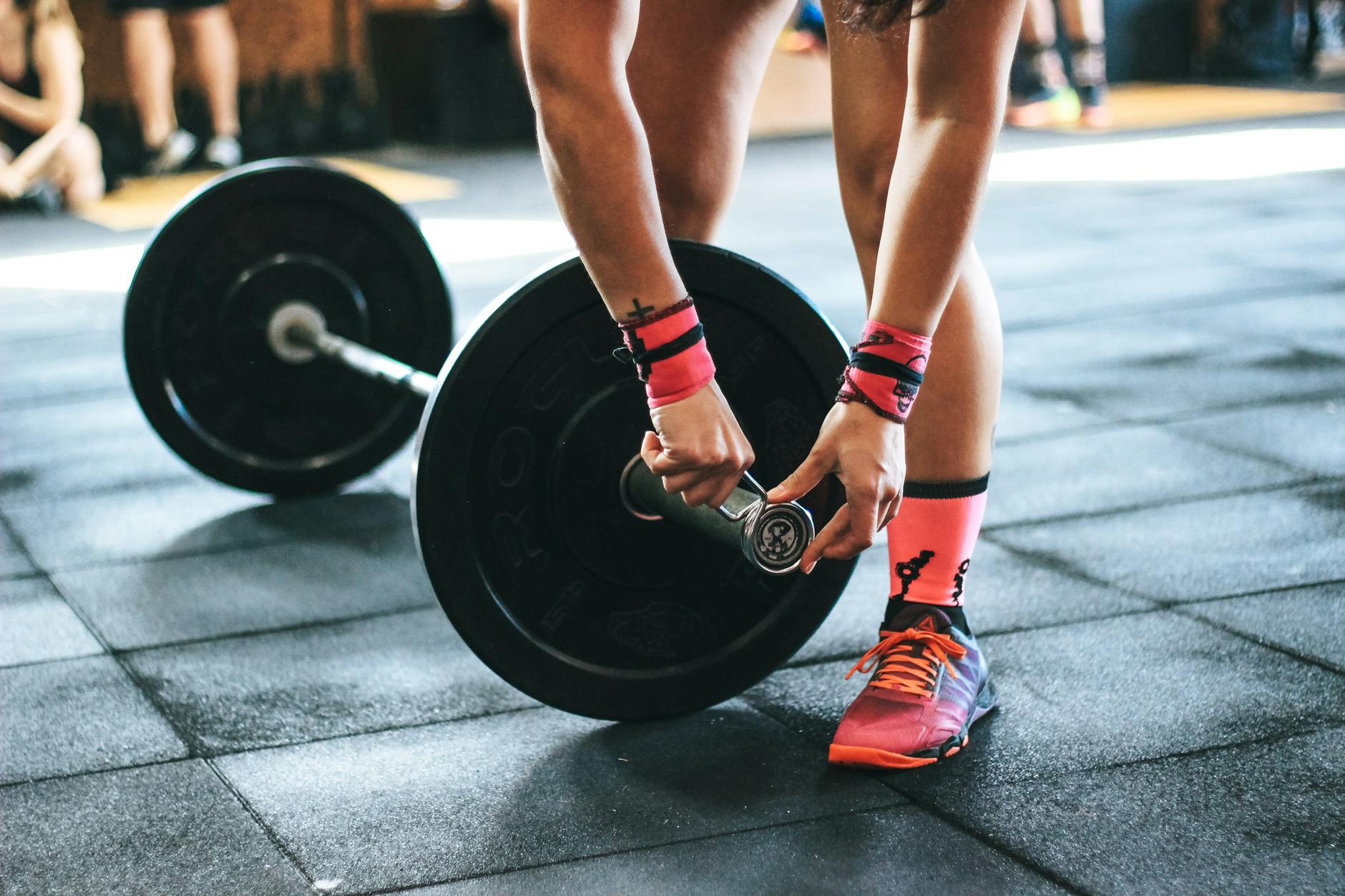
Changes in gym spaces by gender and age

If gyms are places that can be segmented by gender and age, some of the older patterns may be changing:

Photo by Victor Freitas on Pexels.com

The message from Americans is simple: Jogging on a treadmill or sweating over a stationary bike in a room full of strangers is out; moving heavy objects is in. But, in a twist, it’s not muscle-bound men who are changing America’s workouts. It’s women and older Americans who’ve made gyms prioritize strength training. “More older people, more women, more young people, even, are lifting weights than ever before,” says fitness author and influencer Casey Johnston. “When I started lifting, there was still a lot of apprehension around it in terms of ‘it’s really macho, it’s too intense for most people.’”…

The current fixation is being triggered largely by social media. If the treadmill is dying, internet influencers are the killers. Open most apps, and the message is clear. For men, bulging biceps and broad shoulders. For women, toned arms and sculpted glutes. “Swole” is the marker of peak physical health…

The increasing number of women and older people getting into weightlifting has been a striking cultural change. Wiedenbach, the New York gym owner, recalls that gyms were more gender-segregated in the early 2000s. “Back then it was very much split: There were treadmills—those were for girls—and there were weights, and those were for guys. And never the two groups would meet,” he says. In those days women made up just 10% of his clientele; now it’s closer to 40%.

Older Americans are hitting the weight room more often too. “Everybody talks about longevity now, and having strength and having muscle mass is a key indicator in longevity,” says Noam Tamir, founder and CEO of TS Fitness, which offers small workout classes in Manhattan.

This highlights broad shifts across a lot of locations. What does this mean for:

  1. The day to day experience of gym-goers. How much has this changed users’ sense of their workouts? Their interactions? Their willingness to stick with that gym or change facilities?
  2. How spaces within the gym are constructed. It is one thing to swap out one set of equipment for another; how else (if at all) have the spaces changed?
  3. Have broader conceptions of gyms and who goes there changed? It might now be a different experience (see #1) but it could take a while for the general public to catch up with this. Where might people learn about gyms?
  4. Do these changes mean more people will exercise? Are gyms now regarded as more inclusive or welcoming or are there barriers to learning about using weights?
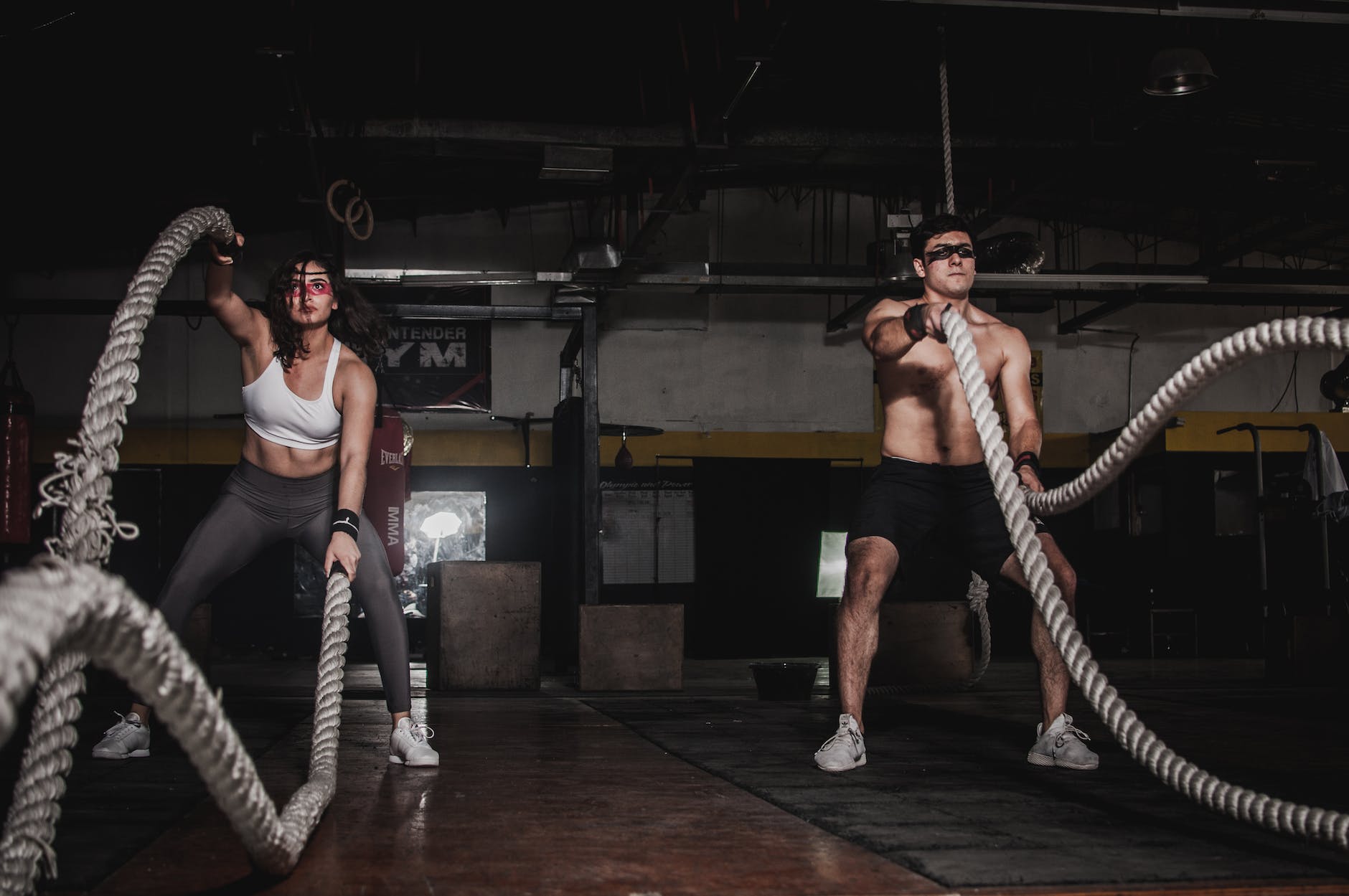

Finding religion in group athletics

As more Americans eschew religion, they can search for meaning and community elsewhere. This includes exercising and moving with others:

Photo by Leon Ardho on Pexels.com

Some readers mentioned fandom as a bonding mechanism — World Cup enthusiasts and participants in fantasy football leagues, for instance, are creating ongoing relationships. But mostly I heard from people who bonded through athletic activities. Some talked about clubs that formed organically in their neighborhoods or towns, like that Colorado hiking group. But many who answered the questionnaire I launched in April about moving away from organized religion talked about replacing their weekend worship with SoulCycle, CrossFit or Orangetheory, and finding friends and even some spiritual solace in those activities. (In case you’re wondering, I’m an Orangetheorist and a SoulCycle dropout, though I can’t say I’ve ever felt a metaphysical connection to either one.)…

Casper ter Kuile, the author of “The Power of Ritual: Turning Everyday Activities Into Soulful Practices,” studied CrossFit and SoulCycle when he was a student at Harvard Divinity School, and told me that he observed some of the “mutuality” that Johnson experienced when he talked to CrossFit devotees. CrossFitters write down their fitness goals on a whiteboard and, whether a goal is comparatively big or small, “goals are honored with the same amount of dignity and celebration.” There’s a feeling that you have the agency to meet your goals and that the community is also involved in your success. There’s also a lot of evangelizing for CrossFit that can parallel the outreach or recruitment aspect of religious worship…

SoulCycle even mimics some of the emotional beats and physical qualities of a church service. Ter Kuile and Thurston have described the “soul sanctuary,” where classes are held, and the way “Every SoulCycle ‘journey’ has a similar arc, which peaks during a hill ballad when riders turn up the resistance dial on their stationary bike and climb uphill in the dark.” The reader Susana Odriozola, 40, who lives in California and was raised Catholic, though she no longer goes to church, said that parts of the SoulCycle experience reminded her of going to Mass: They throw water out to you and you turn to your neighbors and greet them…

One part of churchgoing that’s tougher to satisfy with group fitness is the multigenerational inclusiveness of those spaces. You’re not going to bring a little kid to a CrossFit box. And though Schnurr told me that people bring their families hiking, her own experience is that some of her grandkids love it, but others, not so much. I’ve tried to drag my kids along on various hikes and climbs and, similarly, it’s not always a hit. Like me, Odriozola said she’s still trying to figure out how to give her children “spiritual strength without religion,” and that is an ongoing journey. And there are fitness spaces that are difficult to access or inaccessible for those who have mobility and health challenges.

Functional religion is an interesting topic. I have blogged about work replacing religion, politics looking like religion, and sports fandom mimicking religion.

Not mentioned here is the involvement of bodies in these activities. As sociologist Randall Collins suggests in Interaction Ritual Chains, the movement of bodies together and the emotional energy that develops is important. These physical activities help by asking people to move their bodies in sync. Religious activities do this as well; people do not gather and worship as a bunch of brains but they involve their bodies and emotions. Additionally, none of the stories in the piece above mention transcendence or interacting with forces/being beyond the people in the room.

How many of these groups/activities explicitly advertise these particular benefits? They cannot guarantee certain communal experiences but they could point to the potential for it to develop.

Walking to go somewhere or interact with people in contrast to walking suburban loops for exercise

Several months ago, I heard Andrew Peterson discuss “The Mystery of Making.” As he talked about places and suburbs, he mentioned something about walking: suburbanites walk in loops instead of having walks that go somewhere or involve interacting with people.

Photo by Daniel Reche on Pexels.com

As a suburbanite who walks both for exercise and in order to get to places, this is a thing. This could occur for multiple reasons:

  1. The design of suburbs limits walking options. Because of the emphasis on single-family homes and separating them from other uses, suburbanites may not be able to access many places as pedestrians. Can they get to schools, libraries, stores, workplaces?
  2. Perhaps suburbanites do not want to interact with many people. Suburbanites want to avoid conflict and interaction happens when people want it, not necessarily because of proximity or an orientation toward the community. Add headphones/earbuds/smartphones to this and pedestrians can be in their own waking cocoon.
  3. This sounds like a focus on walking as exercise as opposed to walking as a means to accomplish other worthwhile goals. Such a focus sounds like it would fit with American emphases on efficiency or productivity.
  4. If you really need to get somewhere, Americans often opt for a car, even when the route is walkable.

Having more walkable places would likely help here but it does not necessarily guarantee sociability or walking as transportation.

The decline in kids walking to school

Several experts talk about the issues with many fewer American kids walking to school compared to fifty years ago. The negative effects? Less exercise, less learning about active transportation, less exploration in and knowledge of their own neighborhoods.

I suspect many people will blame parents and kids for this and tell them to simply walk and stop being lazy/decadent/unnecessarily scared/etc. However, it is not as if many Americans regularly walk places outside of major cities and denser neighborhoods. Some of this may be due to comfort but other factors are involved including nicer vehicles, more fear about crime, more sprawl (particularly in the Sunbelt) which means further distances and fewer pedestrian-friendly streets, less emphasis on physical activity in daily life (which is not necessarily laziness but rather more sedentary lives overall), and a shift toward technology (starting with television) rather than active exploration. In other words, this is likely a multifacted problem that is not easily solved by simply “making” kids walk.

Calories, as a statistic, don’t mean much to consumers

A group of scientists is suggesting food packaging should replace calories with data on how much exercise is required to burn off that food:

A 500ml bottle of Coke, for example, contains 210 calories, more than a 10th of the daily recommended intake for a woman.

But US scientists think that statistic is ignored by most people and does not work as a health message.

Instead, telling them that it would take a 4.2 mile run or 42-minute walk to burn off the calories is far more effective.

The researchers, from the Johns Hopkins Bloomberg School of Public Health in Baltimore, found that teenagers given the information chose healthier drinks or smaller bottles…

They say that if a menu tells you a double cheeseburger will take a 5.6-mile hike before the calories are burned off, most people would rather choose a smaller hamburger which would require a walk of 2.6 miles…

Study leader Professor Sara Bleich said: ‘People don’t really understand what it means to say a typical soda has 250 calories.

The public vaguely knows what a calorie is – a measure of the amount of energy in food. However, the technical definition is difficult to translate into real life since a calorie is defined as “the energy needed to raise the temperature of 1 gram of water through 1 °C.” (Side note: does this mean Americans are even worse in judging calories due to not using the metric system?) This proposal does just that, translating the scientific term into one that practically makes sense to the average person. And, having such information could make comparisons easier.

I would wonder if the new exercise data would have diminishing returns over time. A new interpretation might catch people’s attention for a while. But, as time goes on, what is really the difference between that 3.6 mile burger and that 2.6 mile burger?

The workouts of the upper class aim to avoid “excessive displays of strength”

Workout goals and expectations about the ideal fit body type may just be related to social class:

Soon, however, I suffered a creeping insecurity. Looking into the eyes of a banker with soft hands, I imagined him thinking, You deluded moron, what does muscle have to do with anything?

One day, a skinny triathlete jogged past our house: visor, fancy sunglasses, GPS watch. I caught a look of yearning in my wife’s eyes. That night, we fought and she confessed: She couldn’t help it, she liked me better slender…

Sociologists, it turns out, have studied these covert athletic biases. Carl Stempel, for example, writing in the International Review for the Sociology of Sport, argues that upper middle class Americans avoid “excessive displays of strength,” viewing the bodybuilder look as vulgar overcompensation for wounded manhood. The so-called dominant classes, Stempel writes—especially those like my friends and myself, richer in fancy degrees than in actual dollars—tend to express dominance through strenuous aerobic sports that display moral character, self-control, and self-development, rather than physical dominance. By chasing pure strength, in other words, packing on all that muscle, I had violated the unspoken prejudices—and dearly held self-definitions—of my social group.

I’ve never encountered this literature. But, I wonder how this might be related to historical social patterns, particularly the shift away from and the growing bifurcation between manual labor/unskilled jobs and the growing white-collar job force who often sit in offices all day. While the wealthy classes of the past may not have had to show any physical abilities, now the expectation is fitness across a wider range of classes. With less manual labor on the job, people today have more choices about exercise ranging from whether to do it at all, how much money to spend on what can become a very expensive activity, and what kind of path to pursue from older patterns to the latest trends.

h/t Instapundit

Numbers to back claims about “SEAL-mania”?

I am often on the look-out for news stories that relate to data analysis and interpretation that I can then use in my Statistics and Social Research classes. Here is an example of the AP reporting on “SEAL-mania”:

Stumpf is one of a growing number of Americans putting themselves through grueling fitness programs modeled after Navy SEAL workouts as interest in the elite military unit has soared since one of its teams killed Osama bin Laden. Everyone these days seems to be dreaming of what it’s like to be a SEAL, know a SEAL or at least look like one.

Book publishers say they cannot order the printings of the memoirs of former SEALs fast enough, while people are dialing 1-800-Hooyah! like mad to get their hands on T-shirts emblazoned with the SEAL insignia and sayings like: “When it absolutely, positively must be destroyed overnight! Call in the US Navy SEALs.”

Awe over the covert operation is even putting the city of Fort Pierce, Fla., on the map for vacation destinations. The city’s National Navy UDT-SEAL Museum — the only museum dedicated to the secretive SEALs — has been flooded with calls from people planning to visit.

But nothing short of joining the SEALs offers a more true-to-life taste of their toughness than the workout places run by ex-Navy commandos.

There may actually be an uptick in interest in Navy SEALS (apparently Disney and others are interested) but the story gives us little actual data to support this. We are told about some books, t-shirts, calls to a museum, and an increase in interest in workouts but no hard numbers to go by. In fact, the story seems to revolve around this tentative sentence: “Everyone these days seems to be dreaming of what it’s like to be a SEAL, know a SEAL or at least look like one.” I am skeptical about claims about “everyone.” The story could at least cite Google trend data (a big spike occurs in early May when searching for “SEALs”) or Twitter trend data (another big spike). These may not be ideal data sources but at least they provide some data beyond broad claims. If a media source wants to make a causal claim (Navy SEALs participation in the Bin Laden raid has led to “SEAL-mania” among Americans), then they should provide some better evidence to back up their argument.

(Another odd thing about this story is that the rest of it is about SEALs workouts. It almost seems as if there was some copy about these workouts waiting to be attached to a larger story and this raid presented itself as an opportunity.)

The morality of going to the gym

The adult life is often made of up little tasks that must be done to live: go to work, prepare and eat meals, do laundry, and various other activities. Perhaps there is another activity that must be added to this list: getting exercise and/or going to the gym.

“There seems to be a whole substitute morality, where your obligation is to go to the gym and not ask why,” says Mark Greif, a founding editor of the literary journal n+1 and the author of a widely discussed 2004 essay, “Against Exercise.” “If you don’t, you become a sort of villain of the culture.”

The message that perspiration is a gateway to, and reflection of, higher virtues is captured in health club slogans like ones used by the Equinox chain over recent years: “Results aren’t always measured in pounds and inches.” “My body. My biography.” “It’s not fitness. It’s life.” The same idea is encoded in the language of personal improvement. A “new you” usually means a trimmer, tauter version, not someone who has learned to speak Mandarin or picked up woodworking skills.

And the pectoral is political. The current president and his predecessor have made ostentatious points of their commitments to fitness routines. Whatever the differences in their ideologies, intellects and work habits, George W. Bush and Barack Obama both let voters know that they carve out time almost daily for cardio or weights or both. And while that devotion could be seen as evidence of distraction (Bush) or vanity (Bush and Obama), each politician safely counted on a sunnier takeaway. In this country, at this time, steadiness of exercise signals sturdiness of temperament, and physical leanness connotes mental toughness…

To be unfit is to be unfit: a villain of the culture, indeed.

An interesting commentary. More broadly, these ideas seemed tied to American ideals of youth and health. We like politicians and athletes and movie stars who are physical specimens. We argue that disciplining the body is indicative of discipline in other areas of life. Being healthy is not just being an appropriate weight or eating right or limiting stress: it should include muscles and toning.

Some questions follow:

1. Do other cultures have similar ideas or are we unusual in this regard?

2. When or where did the emphasis on muscles, beyond just “being fit,” arise?

3. For the average American, how much of this judgment regarding exercise and going to the gym comes from people around them versus comparing themselves to media produced images?

4. How much have professional sports contributed to this? If you look at athletes in the 1950s and 1960s, they did not train as much. Today, being an athlete is a full-time, full-year job in order to stay in shape.

The value of stretching for athletes

Henry Abbott at Truehoop looks at some recent research regarding stretching which suggests stretching before athletic events is not that helpful.

The question arises: why then do athletes go through a stretching routine before a game? I’ll throw out a possible answer: stretching is part of a routine that is psychologically helpful in preparing for a game. Even if stretching beforehand has limited value, as long as it is not harmful, it could help athletes feel like they are doing something worthwhile. Perhaps it helps improve their mental focus. For many, I assume it is part of an established routine that they were socialized into either at a younger age or by an expert. Since they have been doing it in the past, going through the motions helps them prepare.

Where this research could be used is with younger athletes. It is hard to break people out of established patterns but teenagers and kids could chart a new path that includes little or no pregame stretching and more postgame stretching. These younger athletes could then establish new kinds of routines that will be with them throughout their athletic careers.