“Visiting…is a spiritual experience” in what used to be a church

An article about visiting Hagia Sophia in Istanbul begins this way:
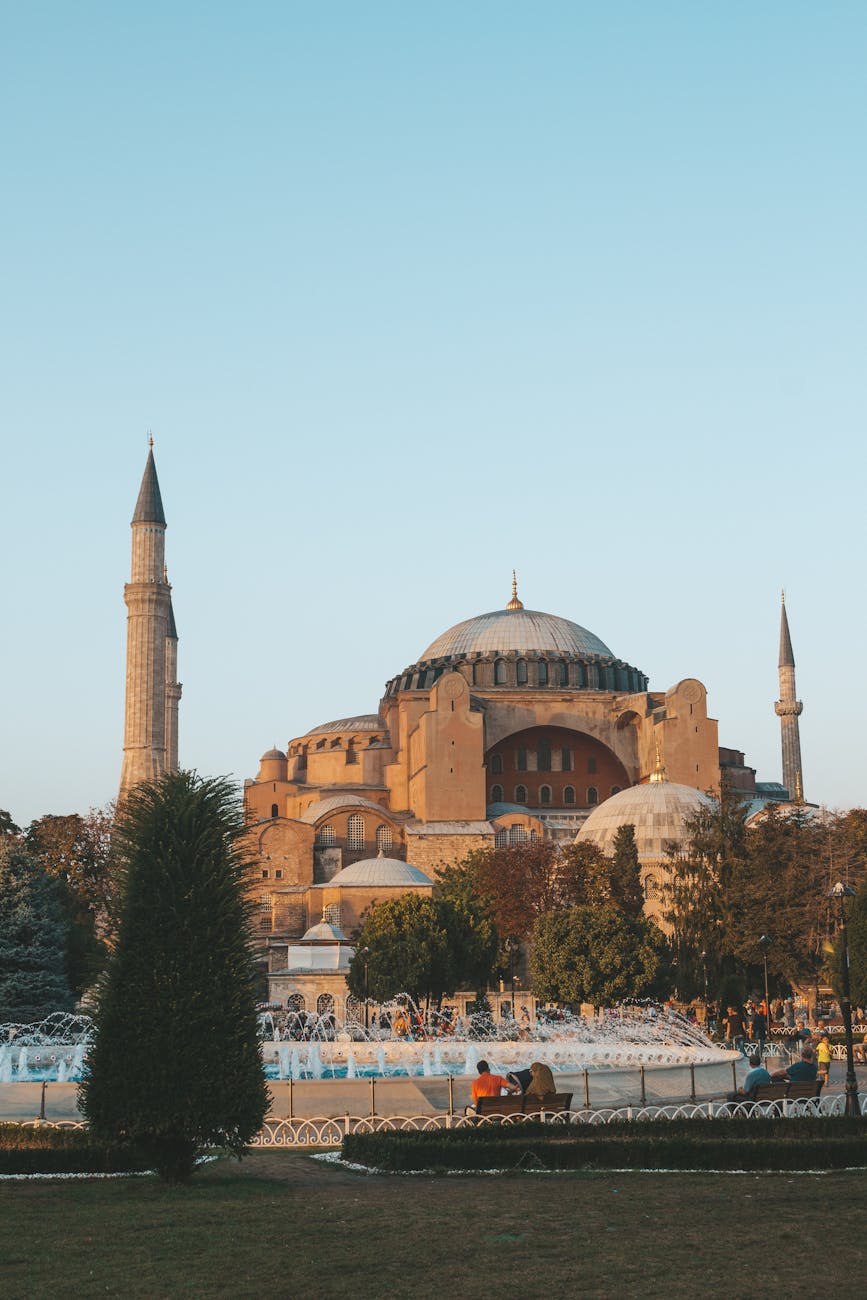
Photo by Emre Can Acer on Pexels.com

Whether you’re a believer or not, visiting Hagia Sophia is a spiritual experience. The architectural genius of this place of worship — which was built as a church in 537CE before its conversion into a mosque in 1453 — creates an illusion of vastness. It feels like the space starts to expand when you enter the building.

I bet the builders of the church intended for this to be the case: being in the religious space was to be “a spiritual experience.” I was struck by the contrast of this versus what people today might experiences in religious buildings. Not many religious buildings can come close to the scale or the history of Hagia Sophia yet how many of them regularly help produce a spiritual experience for visitors?

Many congregations have moved away from architecture and design that could prompt a spiritual experience. Perhaps they want to have a space that can serve multiple functions. Perhaps they have limited resources and so are renting a building. Perhaps they believe architecture and art distracts from the true goals of gathering together. Perhaps they utilize modern styles which not everyone interprets as spiritual.

Having co-authored a book about religious buildings, I also find the idea that one could have a variety of or no religious beliefs and still have a spiritual experience in this building interesting. Is this because it fits some template of what religious buildings could be or because of its particular architecture or its history? The building connects with human needs and aspirations? That a building could produce such emotions is worth considering further through study and experience.

Finding the American Dream through the music liked by teenagers

Where can the American Dream be found? How about at a Jonas Brother convention at a large suburban mall:

Photo by Clem Onojeghuo on Pexels.com

When JonasCon, an all-day special event celebrating the 20 years since the debut of the hit boy band the Jonas Brothers, was first announced in mid-February, anyone who still cared about the JoBros (myself included) thought it would be a disaster. After all, the announcement came less than two months before the event; information about what was actually going to happen during the convention was nowhere to be found, even mere weeks away; and it didn’t help matters that there were last-minute reports that the Jonas Brothers were struggling to find sponsors for what would likely be a “complete and chaotic mess.” Hints of an impending trainwreck angered fans; not only were they financially invested in traveling to the event, but they were also feeling protective over (and worried about) the reputation of the once-popular band of brothers, who have been left behind in an era short on boy bands and heavy on “popgirlies.”

But what actually happened on that Sunday in March, at the behemoth that is the American Dream mall in East Rutherford, New Jersey, wasn’t the reincarnation of Fyre Fest that everyone was expecting. It was something else entirely…

Being inside of the bubble of the teenage dream—while literally ensconced in the American Dream—makes you forget that the real world is still happening.

Four things seem to be converging here that add up to the American Dream:

  1. A shopping mall/attraction site that calls itself American Dream. The large thriving shopping mall is a great embodiment of the postwar suburban American Dream. (In terms of spaces, it might only trail the single-family home and yard as the epitome of the American Dream for a certain era.
  2. The teenager experience is a unique one in American society. The mix of independence and growing up and testing out adult things can come together into a heady time where experiences and patterns can prove influential for the rest of life.
  3. Music gets wrapped up in #2 as an important narrative element. Certain artists or genres can speak to teenagers in ways they might not to adults The music and the memories that go along with the music are powerful.
  4. The American Dream is not just an idea; it can be experienced. The setting here is a fan convention that brings together in a suburban setting people who enjoy particular music. They get to enjoy the music, the energy, and meeting people at one time. There are other experiences that can be the American Dream – perhaps a backyard cookout, perhaps driving fast down a road – but the fans at this event seem to get to experience something that helps them ignore what else may be happening.

The newest skyscraper attraction/commodification: climbing the outside with just a safety harness

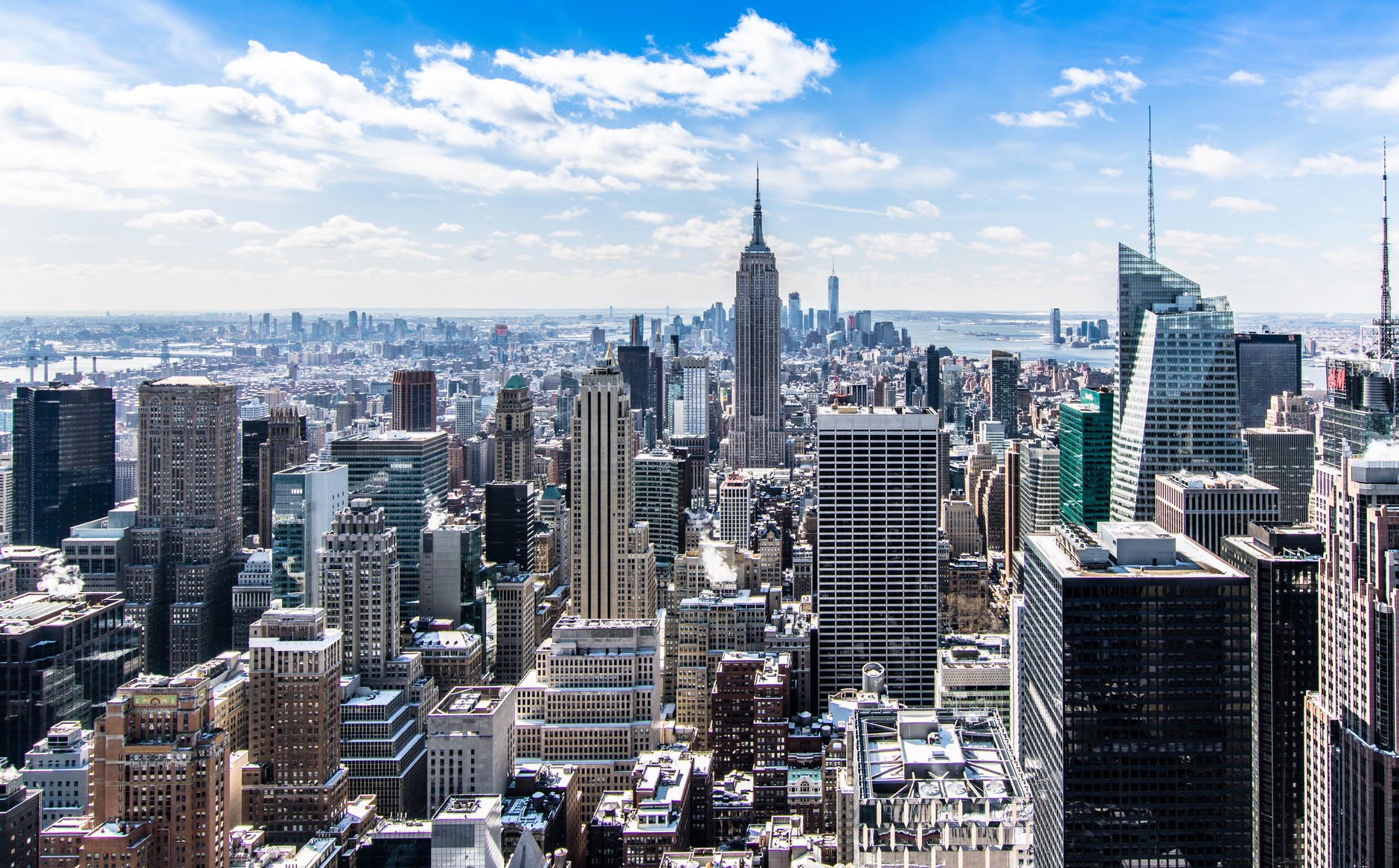
It may not quite be climbing the Burj Khalifa in Mission: Impossible but a new attraction in New York City offers the opportunity to climb at 1,300 feet up with just a safety harness:

Photo by Lukas Kloeppel on Pexels.com

This was City Climb, an attraction opening Tuesday at 30 Hudson Yards, one of the city’s tallest buildings. It gives thrill-seekers a unique perspective on New York that no observation deck could hope to match: No walls, no glass windows, no railings. Just skyline…

Climbers are equipped with specially designed safety harnesses that let them ascend an outdoor staircase, from the first lookout known as the Cliff, to the top platform called the Apex, located 1,271 feet (387 meters) above 10th Avenue.

There, they can lean out over the edge and look down at the Empire State Building. City Climb will operate rain, snow or shine, but will close if the temperature drops below 23 degrees Fahrenheit (minus 5 degrees Celsius) or if there is dangerous weather in the area…

Then, she leaned back, arms stretched out, hanging over the city as a cable tether kept her from falling to the streets below.

I find two features of this striking:

  1. The quest for humans to conquer obstacles and/or natural forces in two ways. First, the goal of building tall structures that stretch far beyond the size of people and many natural features. Second, the willingness of many to test their limits, conquer their fears, to try something new. And do it all on one of the tallest buildings in a city and country known for stretching these limits. What comes after this?
  2. The ongoing commodification of the skyscraper experience. Skyscrapers emerged because of a land for space where land was limited and expensive. With the rise of skyscrapers came sky decks and seeing from such a great height. Then came new experiences, ranging from glass floors to tilting parts to now being outside. People are used to seeing the world from the air – airplanes offer even better views – and also desire new experiences. All of this for $185 a person.

Selling mansions with a luxury experience

The arms race to sell more real estate – from live-in managers to personal notes – now includes creating luxury experiences in expensive homes for sale:

Before entering through a Casey Key mansion’s arched doors to attend a “VIP reception” to spur a sale in November, guests first had to navigate their way through a jaw-dropping array of luxury automobiles — Lamborghini, Bentley, Rolls-Royce, Porsche, Mercedes-Benz and a reproduction 1936 Auburn Boattail Speedster — parked in the 6,600-square-foot home’s motor court.

A few weeks later — and also on Casey Key — guests at a 10,000-square-foot, $15 million mansion for sale were greeted by Saks Fifth Avenue models who offered perfumes and skin care products in the oversized master bathroom.

In the Sarasota Ranch Club recently, a chef displayed his skills in the enormous kitchen of a 7,200-square-foot, $2.6 million listing…

Often, such events top $5,000 to run, or about 10 percent of a typical $50,000 marketing budget for a waterfront mansion priced at $10 million or more.

While I’m sure this creates some buzz – and it seems everyone likes buzz these days – it seems like it would help people envision how the house could be used. If a primary motivator of buying a big home is to impress people (this is what critics of McMansions argue), actually seeing the home put to that use could go a long way.

Interestingly, the article hints that this strategy works but there are no hard numbers about how effective this is. If this strategy wasn’t used as much for a while, why is it returning now? I wonder if this is particularly prone to the overall state of the economy: if things are generally going well, these sorts of events look okay but in lean times, they look garish and suggest the wealthy are rubbing it in.

Odd final thought: could someone become a real estate party crasher if they know where these events are happening? Do you have to be vetted (income, wealth, credit, etc.) to be invited to such an event?

Carefully designing museum exhibits of traumatic events

Museums help us know and interpret our past so what is the best way to design exhibits that tackle traumatic events?

Working to affect the museumgoer’s subconscious is how Layman talks about exhibition design. First, he strives to understand – reading, consulting with historians, trying to learn the material as well as the curators do in order to find what resonates, what surprises. When it comes to putting materials in galleries, yes, he wants to manipulate you, but for the purposes of telling the story.

“We do a technique called ‘swing focus’ as the visitors go through,” Layman said. “Their eye catches one thing after the next, and it works all the way through, and the story, then, it just unfolds almost intuitively. It comes off the walls, and the people get lost in this story, and it becomes a very moving experience.”

Earlier this winter, Layman was in the opening galleries at the Illinois Holocaust Museum, in Skokie, the ones that, in parallel, establish what Jewish life was like in Europe before World War II and how the Nazis rose to power in Germany.

The two hours Layman took to explain what his firm did in Skokie, a sort of ultimate guided tour, were absolutely fascinating. The museum deftly takes viewers into some of humanity’s least human moments and then escorts them back out. It works so well, in part, because every inch of the design is pored over. “We pay attention to excruciating detail on absolutely everything,” he said.

It sounds like the purpose is trying to tell an immersive narrative. This narrative is carefully crafted and meant to give the attendee a particular viewpoint on the world. Museums can reinforce existing cultural narratives, particularly in their ability to involve all the senses.

I like museums and what they can offer: original artifacts and powerful experiences. Yet, as someone who values education, museums seem like they can only go so far: they provide an introduction to most topics. If the museum is the only time a person encounters an important topics like the Holocaust, then that is not enough. I would encourage my students to find out for themselves, to find original texts and numerous interpretations to start developing what they think on their own. Museums can do some of this but there simply isn’t enough space (and this process requires a lot more text that the typical museumgoer would be willing to read) to tell the whole story.

A fascinating example of this is at The Sixth Floor Museum at Dealey Plaza in Dallas, Texas. Before going, I wondered how they would handle conspiracy theories about JFK’s assassination. But, the museum had a whole section on the various theories at the end without making a strong statement against such theories. The better parts of the museum told the story of JFK’s rise, involving artifacts, texts, and videos. The ultimate part of the journey is looking at the reconstructed spot at the sixth floor window from which Lee Harvey Oswald fired at the president. I could see that taking this all in moved numerous visitors. All together, the museum is a well-done taste of JFK’s life, legacy, and the theories surrounding his death but an individual could spend years going through all that is out there and trying to make sense of it all. The museum isn’t the final word but rather an authoritative source.


Should college be marketed as the best four years of life?

John J. Miller points out that the idea that college should be the best four years of one’s life, brought to his attention by a University of Michigan mailer, is an odd goal.

I tend to agree – and have a few thoughts about this:

1. This is a terrible setup for the rest of life. If students think that life is downhill after college (which is implied with sayings like this), then this could turn into a self-fulfilling prophecy. Perhaps it suggests that the college life (or at least its lifestyle) should be extended before one has to “get real” and pursue more adult goals. Adult life certainly is different than college life – but this idea suggests it is the peak of life and adult life, in comparison, is lacking.

2. How does this work for students who find that college is not the best four years of their life? The college experience does not appeal to everyone nor is it perfect. If you were not thrilled with everything in college, should you feel guilt? Remorse? Did you miss something? College is not just a fun time – it is a period of transition from being a teenager to being an adult and this can be a difficult process.

3. When did this shift from college being preparation to college being “an experience” happen? Which is the more important goal, particularly for a society that hopes to have productive and learned citizens? At the same time, if one is paying $20-50k a year for college, it had better be a good experience…