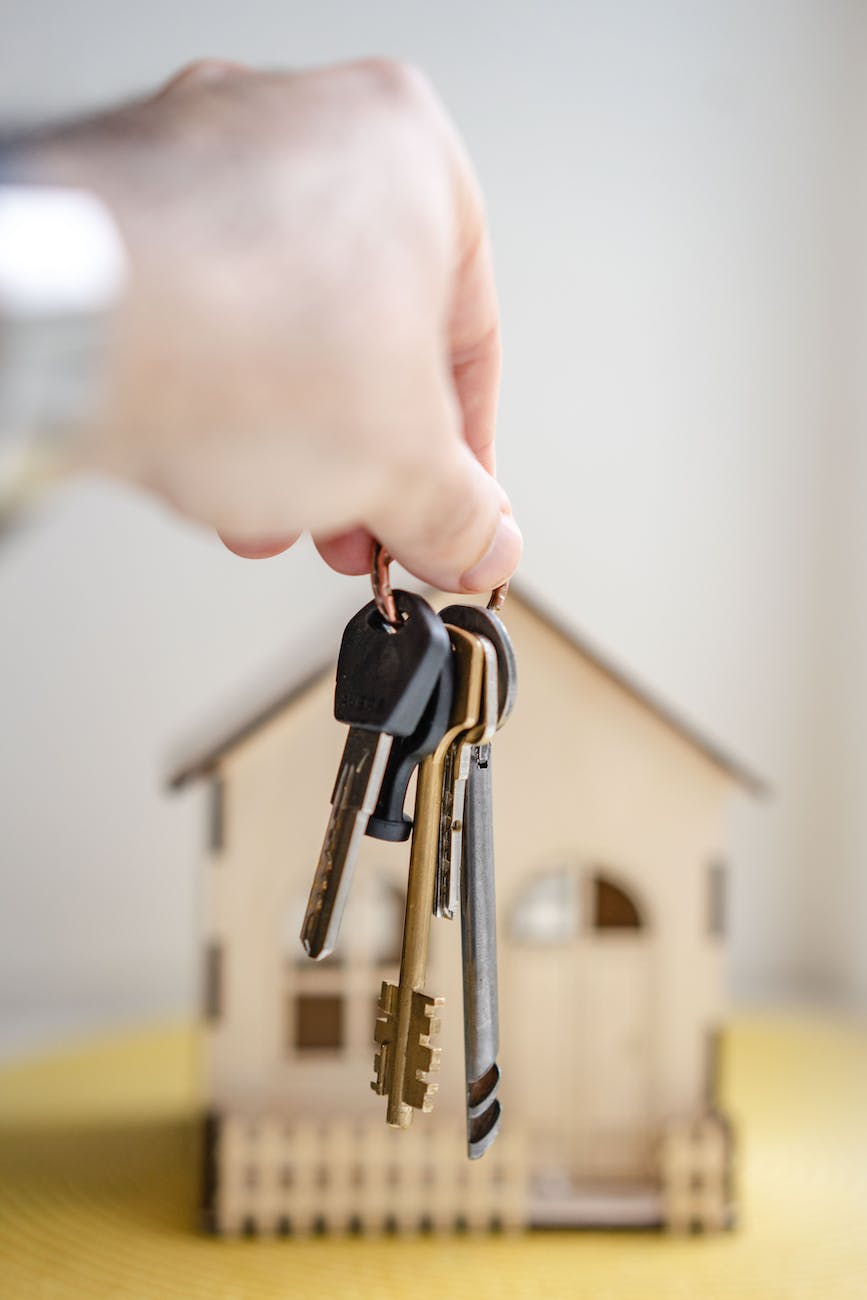
One presidential candidate: “We should be doing everything we can to make it more affordable to buy a home, not less”

With high housing prices in the United States (see concerns about rents set by algorithm, record rents in New York City, etc.), one presidential candidate has said more about how they might address the issue. From a campaign ad for Kamala Harris:

Photo by Kindel Media on Pexels.com

We should be doing everything we can to make it more affordable to buy a home, not less.

I imagine at least a few listeners would find this appealing. Paying a mortgage or rent is often the biggest expense among households. Price in many places, particularly after the last few years, leave many feeling they cannot live where they want and/or financially uncertain.

The broad appeal to homeownership is one that political leaders in the United States have made for at least a century. See earlier quotes from Herbert Hoover, George W. Bush, and Barack Obama. Given how much Americans like single-family homes, why shouldn’t every politician consider promoting this?

The details are harder to work out and put into practice. In this particular campaign ad, Harris mentions fighting banks after the foreclosure crisis, addressing the issue of corporate landlords, and constructing 3 million new housing units. I am sure there are a host of opinions about whether these are the best options or doable options or enough options.

Could housing end up being one of the major policy issues of the 2024 elections? There is still time as the campaigns look for winning messages.

The increasing percentage of income going to homeownership costs

A new report suggests a higher percentage of local income is going toward owning a house:

Photo by Karolina Kaboompics on Pexels.com

The costs of a typical home — including mortgage payments, property insurance and taxes — consumed 35.1% of the average wage in the second quarter, the highest share since 2007 and up from 32.1% a year earlier, according to a new report from Attom.

Growth in expenses, along with mortgage rates hovering around 7%, have outpaced income gains as a persistent shortage of listings pushed the median home price to a record-high $360,000, Attom said. In more than a third of US markets, ownership costs ate up 43% of average local wages, far above the 28% considered to be a guideline for affordability.

The new figures are tied to two other numbers: (1) what were homeownership costs in the past and (2) what are the guidelines for how much money should go toward housing. For the first, it would be interesting to see longer-term data; is 35.1% significantly higher than times in the past? How has this figure fluctuated during different economic and social conditions? When were the periods when average income allowed purchasing homes at lower percentages? For the second, is 28% the recommendation or is 1/3 of one’s income the recommendation or is a higher percentage okay (and particularly in certain circumstances, such as in an expensive housing market or if renting is not as viable)?

At the same time, comparing these current figures to the renting might also be helpful. Is renting cheaper and, if so, how much cheaper?

If Americans own a home, they are very likely to own a grill

Americans value homeownership. And along with having a home goes having a grill:

Photo by Lukas on Pexels.com

At least, that’s according to statistics from the Hearth, Patio & Barbecue Association that reported 80% of U.S. homeowners owned a grill or smoker in 2023 — up from 64% in 2019.

And having more time at home might go along with purchasing and using a grill. Or so it appears that way during the recent pandemic:

Most grill makers and retailers seem to agree that the pandemic pulled forward demand for grills and other long-lasting home equipment as people searched for ways to fill their days and entertain their families at home.

Is the appeal about being outdoors, cooking directly with fire, liking to eat grilled meat and other grilled items, or having this as a status symbol? A quick discussion of each of these:

  1. Homeownership often comes with a small yard or outdoor space. Grilling could provide another reason to be outside. Enjoy the outdoors while cooking rather than cooped up inside the kitchen.
  2. Cooking outside with fire has appeal for some people. It is a different experience compared to using the microwave or stove or oven where there is something in between what is cooked and the food. This is more direct. (Of course, there is both direct and indirect grilling so time with direct fire may vary.)
  3. Grilled food has a particular taste that is hard to replicate elsewhere. Yes, you can purchase an inside grill or you could add smoke flavoring or use techniques to get grill lines on food. But does it taste the same?
  4. Having a nice grill could be another part of showing the homeowner has made it. Not only do they have a nice house; they have a stainless steel eight burner grill or a Big Green Egg or a fancy pellet smoker setup. The value is in having and showing off the grill.

Costs rising for owning and maintaining a home

A new report suggests owning a home has become more expensive in recent years:

Photo by Monstera Production on Pexels.com

US homeowners are now paying an average of $18,118 a year on property taxes, homeowners’ insurance, maintenance, energy and various other expenses linked to owning a home, according to a new Bankrate study.

That’s nearly the cost to buy a used car and represents a 26% increase from four years ago when it cost $14,428 annually to own and maintain a home…

The per-month cost of owning and maintaining a home has gone from $1,202 a month in 2020 to $1,510 now, Bankrate found…

Of course, the silver lining for homeowners is the fact that home values have gone up significantly since 2020.

Those gains have padded the net worth of millions of Americans. Median inflation-adjusted net worth swelled by 37% between 2019 to 2022, according to the Federal Reserve.

These two trends above might be hard to reconcile: having a home costs more but the value of that home keeps going up. So a homeowner can feel crunched at the moment as they can anticipate a strong return on investment. Which one will they feel more – what feels like a loss in expenses or anticipated value down the road?

An American right to a good deal?

Amid inflation and high prices, the Chicago Tribune editorial board ended an editorial on prices at Starbucks this way:

Photo by Engin Akyurt on Pexels.com

It’s no sin to offer good value. Americans are practical people. We’re betting most of those who duck into a Starbucks would be pleased to see some special deals on the menu.

What American does not like a good deal? At the same time, Americans tend to say that the market sets prices. So what happens if prices seem unfair or unreasonable?

Two recent phenomena highlight this tension:

  1. Higher levels of inflation coupled with higher set prices. Is this fair? Sure, Americans keep buying during this time but they are spending more money on goods that used to be cheaper.
  2. High housing costs. Americans want to benefit as homeowners from rising property values but do not like paying high housing prices.

At what point do Americans deserve a good deal? Or when should non-market forces jump in to change conditions? This could depend on the particular context, leaders and influential actors, and what the public wants. Regarding the second example above, Americans have worked over decades to back up mortgages so that more people could pursue homeownership while not providing much public housing.

Even as Americans do not have a right to good deals, they tend to have at least some companies willing to offer goods or services at prices lower than others. This does not always occur and there are situations – such as with monopolies – where the government will step in. Without intervention, individual consumers are left trying to find a bargain or going without in a country devoted to consumerism.

Why not use President’s Day to sell homes rather than mattresses?

American presidents for at least 90 years have supported homeownership. See these thoughts from Herbert Hoover in 1931. So why not tie President’s Day in February to selling and buying homes?

February might seem a bit early to promote buying and selling homes. It is still cold in parts of the country. The school year still has months to go.

However, I have heard that the housing market tends to pick up after the Super Bowl. Warmer weather is on the way. Families might be more willing to move with less time left in the school year.

Americans like sales and shopping. Why leave President’s Day to mattresses and furniture? Why not kick off the home real estate market every year? Pepper the weekend with quotes from Presidents Obama and Bush. Find some quotes from Lincoln, Washington, and other famous presidents that seem to support the modern idea of homeownership. Match patriotism, capitalism, and holidays.

Are houses in the American Dream primarily about building wealth?

A recent article about the economic struggles of millennials describes the American Dream this way:

Photo by Oleksandr P on Pexels.com

Central to the pitch of the American Dream is a house. Homeownership, the traditional thinking goes, is the surest way to build wealth. Save up for a down payment, buy a starter home, and definitely don’t spend too long throwing money away on rent.

That dream has become more fantasy in the Covid-era economy.

The first sentence describes a longstanding sentiment: Americans want a house.

The second sentence goes a different direction. Buying a house is about making money. This might be in addition to other reasons for buying a home including: the status of owning a home; enjoying the home; maintaining and improving a piece of private property; and being a part of the community.

This short section highlights a larger shift in how Americans view homes. With the increase in housing values, more people view homes as a significant investment. They expect to make money on their homes. They plan to live in their homes for a while and experience profits when they sell. They make a home a part of their portfolio. And if different groups do not have as much access as homeownership to others, then wealth disparities exist and could grow.

Baby Boomers own a lot of large homes

A new analysis suggests older adults own a larger proportion of large homes than they did 10 years ago:

Photo by Matthias Zomer on Pexels.com

As a result, empty-nest Baby Boomers own 28% of large homes — and Milliennials with kids own just 14%, according to a Redfin analysis released Tuesday. Gen Z families own just 0.3% of homes with three bedrooms or more…

This is a change from the historical norm, according to the research. Ten years ago young families were just as likely as empty nesters to own large homes…

For those who own their home outright, the median monthly cost of owning a home, which includes insurance and property taxes, among other costs, is just $612, according to the report.

“Logically, empty nesters are the most likely group to sell big homes and downsize,” said Bokhari. “They no longer have children living at home and don’t need as much space. The problem for younger families who wish their parents’ generation would list their big homes: Boomers don’t have much motivation to sell, financially or otherwise.”…

This speaks to one of the assumptions of American housing: older adults are expected to move out of larger homes and move to smaller homes or ones that better suit their needs later in life. This frees up their homes for the next generation to move into.

Is this the way it has always worked? Might patterns change heading into the future?

Several thoughts on these trends:

  1. Americans like bigger homes. As the size of American homes has increased, might Americans want to keep these larger homes as long as possible?
  2. Houses are places to live and strategic investments. Older residents may not need all that space but wouldn’t they want to cash out as late as possible on this large asset?
  3. An emphasis on living independently and youthfully may mean that staying in a house is a sign of vitality (while moving would be a sign of weakness). Why sell if you can still live in a big house?

This could be the product of a unique confluence of factors in recent decades: a sizable birth cohort, a change in what housing is and what housing is available, and an unprecedented growth in housing values.

Create property tax exemptions for homeowners and some communities have to make up the revenue elsewhere

Homeowners generally like to pay lower property taxes. But, according to a new report looking at Cook County, reducing their own property taxes can affect the community as a whole:

Photo by Pixabay on Pexels.com

UIC professors David Merriman and Rachel Weber, experienced researchers on property taxes and government finances who led the report, said this is one of the first attempts to measure the impacts of exemptions on the county as a whole. In total, $15.8 billion worth of property value in Cook County was unavailable for governments to tax in 2021 because of those breaks, their research found.

That translates into about $1.6 billion in tax revenue, which governments simply shift onto other property owners…

To respond to tax spikes or inflation, state lawmakers have expanded breaks over the past half century. They now include eight types of homestead exemptions: homeowners, seniors, veterans, people with disabilities and those making improvements on their home. Exemptions typically cut down the taxable value of a home to provide relief.

The report noted the effects of these exemptions are not the same in every community. The tax base of the community matters:

Those unintended consequences also aren’t the case everywhere. The effects of homestead exemptions are negligible in cities and villages with a bigger industrial property base, like McCook and Bedford Park, with a concentration of more valuable properties like Winnetka or Kenilworth, or with a lower share of homeowners who qualify, like Chicago.

It sounds like this affects communities that do not have great tax bases to start with. Already behind, homeowner’s exemptions then contribute to a lack of community funds compared to other communities.

I would guess Cook County and Chicago area homeowners would point to the fact that they pay some of the highest property taxes in the nation. In a country that prizes homeownership, these exemptions help enable people to live in their homes. But, as the article notes, there are other ways to fund public goods and services. This reminds me of Prop 13 in California which since 1978 has limited property tax revenues. Without those local tax revenues, governments have sought out other means.

Americans need a lot of money to achieve the American Dream

Two estimates of how much money it takes to live out the American Dream suggest that many Americans will struggle to do so:

Photo by Nadi Lindsay on Pexels.com

The “American Dream” costs about $3.4 million to achieve over the course of a lifetime, from getting married to saving for retirement, according to a recent analysis from financial site Investopedia. 

Meanwhile, median lifetime earnings for the typical U.S. worker stand at $1.7 million, earlier research from the Georgetown University has found. 

Such figures underline the financial pressures that many families face trying to afford a middle-class life as expenses like child care, college tuition and buying a home continue to climb. The Investopedia analysis tallies the average cost of achieving other aspects traditionally associated with the American Dream, such as owning a house and raising two children to age 18. 

Another analysis, from USA Today, found that funding the American Dream costs about $130,000 a year for a family of four. Median household income stands at about $74,450, according to the Census Bureau.

One key facet of the American Dream is that it is supposed to be available to all. That never meant everyone would achieve it, particularly as Americans often emphasize individual hard work and taking advantage of opportunities. But, it should be reachable in a society where many Americans value and see themselves as middle-class.

Perhaps this is why there is a market or demand for particular experiences that provide part of the American Dream or a taste of it. One traditional marker of the American Dream in the United States is owning a home. This is displayed on TV, illustrated in toys, and promoted by presidents. If people can just own a home, they have a strong case to make for attaining the American Dream. Or, consider the freedom of driving down the road in your vehicle to wherever you want. This experience offers a taste of the larger American Dream.

If large numbers of Americans cannot obtain the American Dream now and in the coming years, this could mean the Dream becomes redefined. Maybe it will have different elements. Or, perhaps it will be more commonly viewed as attainable only by some. It could be a status symbol of the elite. Or, new policies and conditions could renew aid and efforts toward achieving the American Dream. Politicians could run on this idea while grassroots movements could promote it.