Whether Americans will be happy if/when housing values go down

If housing prices drop, will Americans be happy? The CEO of Redfin has thoughts:

Photo by RITESH SINGH on Pexels.com

I think we’re at an inflection point. So mostly people who have had to sell their home have been able to do so quite easily over the past two or three years. So even in the post-pandemic correction, it was fairly straightforward.

But now home sellers are struggling, especially people who bought a house during the pandemic. We are talking to them about lowering their price and they can’t, because they’ll be short on their mortgage. Now, we’re not going to have anything like the great financial crisis in 2008, where there was a wave of foreclosures. But for a particular population of folks who did buy during the pandemic, it has suddenly gotten very hard to sell their home and pay off their mortgage. And so right now the market is just teetering in a very unhappy equilibrium. I think that prices will come down, and I’m one of the people who views that as good news.

When bread prices come down, when gas prices come down, most Americans view that as cause for celebration. But when home prices go down, about half of us are worried about it and the other half are throwing a party. And really, for the younger generation, we need prices to come down…

So about 75 percent of American homeowners have a mortgage below 5 percent. We’re unlikely to see a rate like that anytime in the foreseeable future, and so those folks create this rate-locked inventory. Many, many people in America—more than half of all Americans—really couldn’t afford to buy their own home at current interest rates. So it’s very common for us to go to a listing consultation with someone who has had another baby or is going through a divorce, had some kind of life event where they need to move, and when they realize what they’re going to be able to afford from the sale of their home, they decide to stay put instead.

If the goal is to have a majority of Americans happy about housing prices, that might be hard at this particular moment. As described above, different actors may want higher or lower prices. Those wanting to rent or buy want lower prices. Those who are looking to sell might want higher prices. And the 0homeownership rate in the United States is a little over 65%.

But one hint above is that more people – a majority – might win if prices come down. If prices are too high and interest rates stay roughly where they are, there is little movement in the housing market. So could Americans be convinced that a drop is good? This would help more people get into the market and others to sell. (I wonder if it also might create more demand that would then raise prices again.)

Perhaps this is not the right topic in the first place. Focusing on this particular issue and moment obscures the larger issue: what is the long-term trajectory for American housing and for the ability of buyers and sellers? Do people perceive they can purchase a residence? What policies further (or hinder) a longstanding American idea that homeownership is a critical element of the American Dream?

American Dream past and future about status? Stability?

What is the American Dream actually about? An editorial in the Chicago Tribune considers how younger Americans see the American Dream:

Photo by Get Lost Mike on Pexels.com

Lower marriage rates and lower homeownership among younger adults seems to indicate the increasing elusiveness of what we have long considered the American Dream of owning your own place and building a family.

So what’s going on? Is this a generational shift in values — or the predictable result of a system that’s become too expensive and too precarious for anyone to gain a foothold?…

So is the American Dream disintegrating? Or is it changing shape?

We think the answer is a bit of both. Affordability plays no small role in explaining why fewer young people buy a home or choose to go into debt for a degree…

If Gen Z does bring marriage back into fashion, it won’t be a return to tradition so much as a reinvention of it — one that values stability, yes, but also flexibility and purpose. That’s the American Dream now.

The suggestion above is that the American Dream involved (1) homeownership and (2) having a family. Have these two things and you have made it. The contrast is provided at the end. Younger Americans perceive more instability in the economy and in relationships. The old path of securing a home and family is not as easy. They want something different: “flexibility and purpose” rather than “stability.”

How much of a change is this? The key might be getting at the motivations behind achieving these goals. What was having a home and family about? Reaching a certain middle-class status? Keeping up with the Joneses? The shift toward “flexibility and purpose” is about what exactly: self-sufficiency? Status? A better sense of self?

In other words, I wonder if this is more about changing methods to achieve the American Dream rather than a shift in goals. As noted in the editorial, many younger Americans still want to own a home. Many will pursue relationships. But the means to getting here may have changed. There is a narrative now that this former path was easy: the decades after World War Two provided easy opportunities for many Americans to buy a home and start a family. Perhaps this was a unique time in history with relative prosperity and the conclusion of a major war where the United States emerged as a winner.

Imagine several decades from now when the postwar era is one hundred years ago. Americans may still want the same things – purpose, a sense of achievement, a certain status – but what form that takes may have changed. What marks a middle-class life may look different. Feeling accomplished or stable may take a different form.

The “natural flow” of people toward renting rather than homeownership?

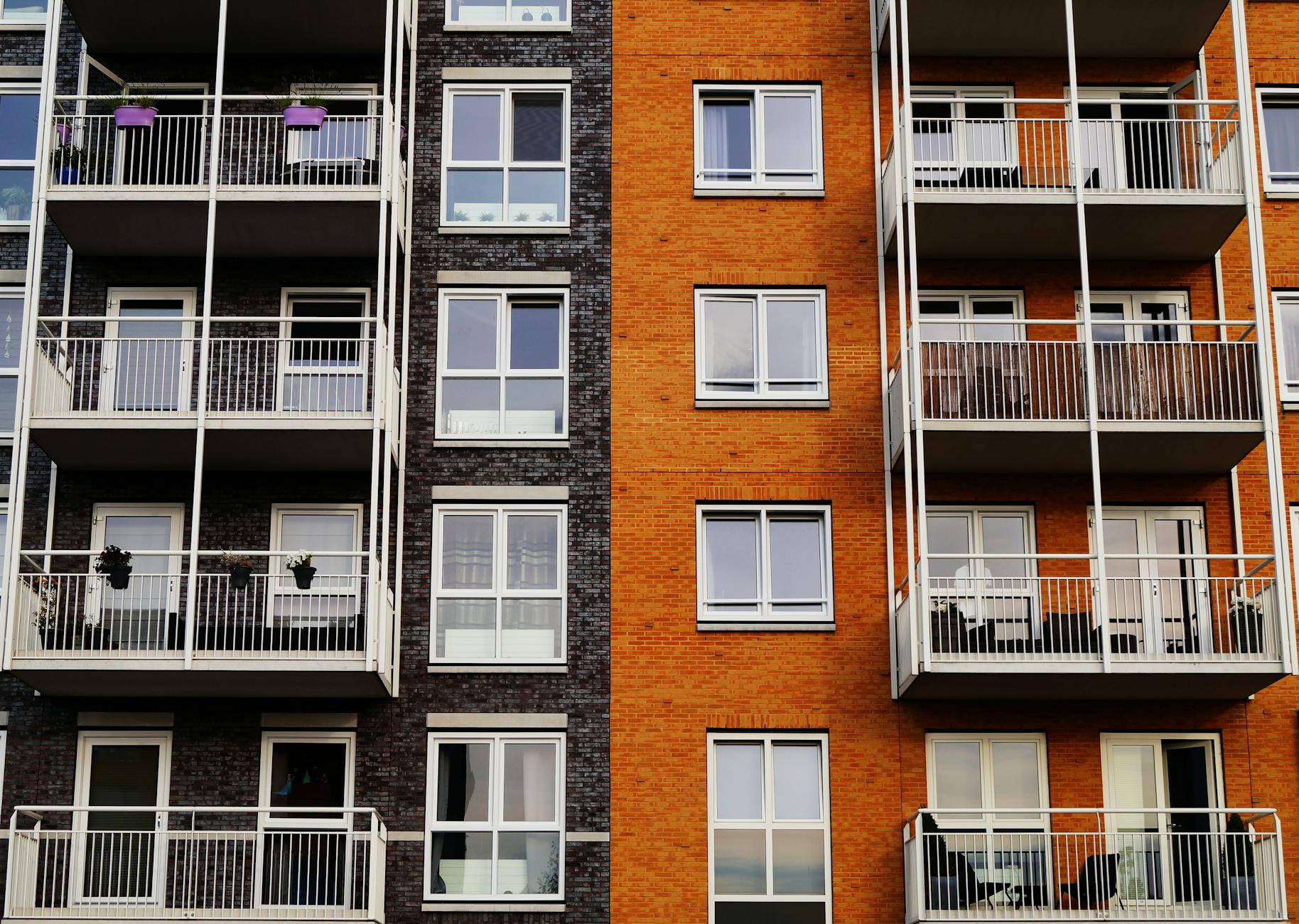
In discussing the construction of a new suburban apartment building, one person describes the demand for the apartments:

Photo by George Becker on Pexels.com

“We have seen the rent increases in the suburban market in general have been pretty strong over the last few years,” he said. “There’s a lot of people who normally would have gone out and maybe rented for a few years and then bought a home, are not doing that. They’re staying in apartments longer.

“So you have the natural flow of new people coming in and less people walking out the door for home ownership, and a lot of that is just due to the high interest rate environment and people wanting to retain the flexibility of renting right now,” Devries explained.

Is this “natural” that more people or certain people at the moment are willing to rent compared to own? These two paragraphs mention several reasons why this shift did not just happen:

  1. Increase in rents. This means at least some apartments are available to those with the resources to pay for it.
  2. Higher mortgage rates mean homeowner’s monthly payments are higher.
  3. Renting can offer flexibility in a tight housing market or when people are feeling economic uncertainty.

These are the result of social, economic, and political forces. And I wonder if all of these people who find it “natural” to rent now would prefer to own a property. If conditions were different, would they rather purchase a home, condo, or townhome? Or what if this to-be-constructed building did not contain apartments but rather contained condos?

The “natural” flow in American life for roughly the last century has been toward single-family homes and homeownership. This takes different forms – not just homes but condos and townhouses – and may not appeal or be available to everyone. But my guess is that if the three listed conditions above were more favorable toward purchasing units, that is what more people would seek and developers/builders would produce.

The Chicago bungalow as a symbol of early 20th century success

Living in a Chicago bungalow became a symbol of a successful life:

Photo by Haley Cao on Pexels.com

The humble bungalow made it possible for Chicagoans to realize the American Dream of home ownership. In the first part 20th century, between 80,000 and 100,000 bungalows were built in Cook County. The majority went up between the end of World War I and the beginning of the Great Depression, making many about 100 years old. Many were home to first-generation immigrants. They formed an arc around the city’s center known as the Bungalow Belt.

It “stretches all around the city, from South Shore to Marquette Park, out west to Austin to the Northwest Side and West Rogers Park,” Dominic Pacyga, a Columbia College urbanologist, told the Tribune in 2000…

In 1997, a Tribune declared: “Bungalows Were Better Than A Place To Live. They Told The World Who You Were” over a story that declared the humble home to be “an idea, a symbol, a trophy, a style, an approach to life.”…

Chicago’s bungalow builders left that idea behind, while appropriating the concept that the middle class deserved homes with little artistic touches, like those the wealthy took for granted: leaded window glass, red or yellow brick with checkerboard patterns, bay fronts either octagonal, squared or rounded.

Three quick thoughts:

  1. This highlights the coming and going of residential architectural styles. This design emerged in a particular era, took off, and now has been replaced by other designs that address the wants of residents and builders and that also became symbols of joining the middle class. (See the suburban ranch home or the McMansion.)
  2. How exactly does a particular home style become a status symbol? The article hints at the role of developers (selling the image that goes with this particular home), politicians (promoting the style and protecting the homes in later decades), and residents. Could we add in famous cultural works that take place in or highlight or celebrate the bungalow? The role of zoning officials and historic preservationists?
  3. How many of these homes initially were owned by white residents of Chicago and how much has this changed over time? How much did bungalows contribute to long-standing patterns of residential segregation and differences in wealth among homeowners?

How homeowners and investors see home purchases differently

What is buying a home about? It could depend who you are:

Photo by Thirdman on Pexels.com

Ordinary buyers and investors have different priorities when sizing up a house purchase. An owner-occupier will focus on whether they can afford the monthly mortgage payment, rather than obsessing over cap rates. They might be willing to overpay if the house is in a good location and is the right long-term fit for them or their family.

It can be frustrating for institutional investors when house hunters bid prices up to irrational levels in tight markets, as is happening today. But sky-high valuations have a silver lining for landlords. Oddly, family homes have turned out to be a great hedge against higher interest rates, as the lock-in effect of ultralow in-place mortgages has protected valuations. And now is a great time for landlords to prune their portfolios and sell properties at near-record prices. 

As the existing housing stock is so unaffordable, investors need to find other ways to grow their portfolios. Large players such as American Homes 4 Rent are building houses themselves, or buying newly constructed units directly from builders. This should be helpful for the undersupplied U.S. housing market.  

There is also a small pool of properties that can be picked up at prices that make sense to investors. According to real-estate investor Amherst, around $12 billion of two-to-four-bedroom homes are currently listed for sale at a 5.75% cap rate. These properties are cheaper because they need work. But it might be more lucrative to patch them up than to build new ones, given it currently costs $200 a square foot on average to build a house compared to $20 to $30 a square foot to renovate.

In the end, both sets of owners want to gain financially from their purpose. Investors want a return on their investment as do homeowners as they tend to expect the value of their property to increase in their time as owners.

But how they get to that return seems to differ. The homeowner will often live in the property in the meantime. As mentioned above, the financial return is not the only factor involved. For the big investor (the primary focus in the article as opposed to smaller investors), a property might be more of a data point among many other properties.

In both situations, it is worth asking how this emphasis on financial investment changes (1) the experiences of those living there and (2) communities. Owning a single-family home has long been part of the American Dream but the move to treating it more like a financial commodity does change matters.

Median home prices up 39% in four years

How long can median home prices rapidly increase:

Photo by David McBee on Pexels.com

The median U.S. home price is now $435,000, per NAR — up 39% since 2020 — while the average 30-year fixed mortgage rate has more than doubled to over 6% in that time

This is a quick jump in a short amount of time. Americans expect that housing values will go up over time – this is what can make it such a valuable investment – but can it keep going up this quickly?

Skepticism about this rise continuing at this rate could emphasize multiple unusual factors at play. A global pandemic. Interest rates shooting up. A quick turn toward working from home. A slow-down in housing construction, particularly for less expensive homes and starter homes. And housing prices do not always go up every year – they ten to over decades but not at every point.

On the other hand, why shouldn’t this rise continues? Where is a bunch of new housing going to come from? Will mortgage rates drop dramatically soon?

This statistic came from an article that primarily discusses how these rising prices mean many are priced out of the market. Those with resources already, particularly those with equity in a home, can better compete for the limited number of houses.

Whether values continue to increase or slow or even decline could go a long way toward affecting who can pursue the American Dream of homeownership.

One presidential candidate: “We should be doing everything we can to make it more affordable to buy a home, not less”

With high housing prices in the United States (see concerns about rents set by algorithm, record rents in New York City, etc.), one presidential candidate has said more about how they might address the issue. From a campaign ad for Kamala Harris:

Photo by Kindel Media on Pexels.com

We should be doing everything we can to make it more affordable to buy a home, not less.

I imagine at least a few listeners would find this appealing. Paying a mortgage or rent is often the biggest expense among households. Price in many places, particularly after the last few years, leave many feeling they cannot live where they want and/or financially uncertain.

The broad appeal to homeownership is one that political leaders in the United States have made for at least a century. See earlier quotes from Herbert Hoover, George W. Bush, and Barack Obama. Given how much Americans like single-family homes, why shouldn’t every politician consider promoting this?

The details are harder to work out and put into practice. In this particular campaign ad, Harris mentions fighting banks after the foreclosure crisis, addressing the issue of corporate landlords, and constructing 3 million new housing units. I am sure there are a host of opinions about whether these are the best options or doable options or enough options.

Could housing end up being one of the major policy issues of the 2024 elections? There is still time as the campaigns look for winning messages.

The increasing percentage of income going to homeownership costs

A new report suggests a higher percentage of local income is going toward owning a house:

Photo by Karolina Kaboompics on Pexels.com

The costs of a typical home — including mortgage payments, property insurance and taxes — consumed 35.1% of the average wage in the second quarter, the highest share since 2007 and up from 32.1% a year earlier, according to a new report from Attom.

Growth in expenses, along with mortgage rates hovering around 7%, have outpaced income gains as a persistent shortage of listings pushed the median home price to a record-high $360,000, Attom said. In more than a third of US markets, ownership costs ate up 43% of average local wages, far above the 28% considered to be a guideline for affordability.

The new figures are tied to two other numbers: (1) what were homeownership costs in the past and (2) what are the guidelines for how much money should go toward housing. For the first, it would be interesting to see longer-term data; is 35.1% significantly higher than times in the past? How has this figure fluctuated during different economic and social conditions? When were the periods when average income allowed purchasing homes at lower percentages? For the second, is 28% the recommendation or is 1/3 of one’s income the recommendation or is a higher percentage okay (and particularly in certain circumstances, such as in an expensive housing market or if renting is not as viable)?

At the same time, comparing these current figures to the renting might also be helpful. Is renting cheaper and, if so, how much cheaper?

If Americans own a home, they are very likely to own a grill

Americans value homeownership. And along with having a home goes having a grill:

Photo by Lukas on Pexels.com

At least, that’s according to statistics from the Hearth, Patio & Barbecue Association that reported 80% of U.S. homeowners owned a grill or smoker in 2023 — up from 64% in 2019.

And having more time at home might go along with purchasing and using a grill. Or so it appears that way during the recent pandemic:

Most grill makers and retailers seem to agree that the pandemic pulled forward demand for grills and other long-lasting home equipment as people searched for ways to fill their days and entertain their families at home.

Is the appeal about being outdoors, cooking directly with fire, liking to eat grilled meat and other grilled items, or having this as a status symbol? A quick discussion of each of these:

  1. Homeownership often comes with a small yard or outdoor space. Grilling could provide another reason to be outside. Enjoy the outdoors while cooking rather than cooped up inside the kitchen.
  2. Cooking outside with fire has appeal for some people. It is a different experience compared to using the microwave or stove or oven where there is something in between what is cooked and the food. This is more direct. (Of course, there is both direct and indirect grilling so time with direct fire may vary.)
  3. Grilled food has a particular taste that is hard to replicate elsewhere. Yes, you can purchase an inside grill or you could add smoke flavoring or use techniques to get grill lines on food. But does it taste the same?
  4. Having a nice grill could be another part of showing the homeowner has made it. Not only do they have a nice house; they have a stainless steel eight burner grill or a Big Green Egg or a fancy pellet smoker setup. The value is in having and showing off the grill.

Costs rising for owning and maintaining a home

A new report suggests owning a home has become more expensive in recent years:

Photo by Monstera Production on Pexels.com

US homeowners are now paying an average of $18,118 a year on property taxes, homeowners’ insurance, maintenance, energy and various other expenses linked to owning a home, according to a new Bankrate study.

That’s nearly the cost to buy a used car and represents a 26% increase from four years ago when it cost $14,428 annually to own and maintain a home…

The per-month cost of owning and maintaining a home has gone from $1,202 a month in 2020 to $1,510 now, Bankrate found…

Of course, the silver lining for homeowners is the fact that home values have gone up significantly since 2020.

Those gains have padded the net worth of millions of Americans. Median inflation-adjusted net worth swelled by 37% between 2019 to 2022, according to the Federal Reserve.

These two trends above might be hard to reconcile: having a home costs more but the value of that home keeps going up. So a homeowner can feel crunched at the moment as they can anticipate a strong return on investment. Which one will they feel more – what feels like a loss in expenses or anticipated value down the road?