What is suburban in the “Suburban Fury” of a woman who attempted to assassinate President Ford in 1975?

I recently watched the 2024 documentary Suburban Fury. With “suburban” in the title and promising an interesting story, I wanted to see the documentary.
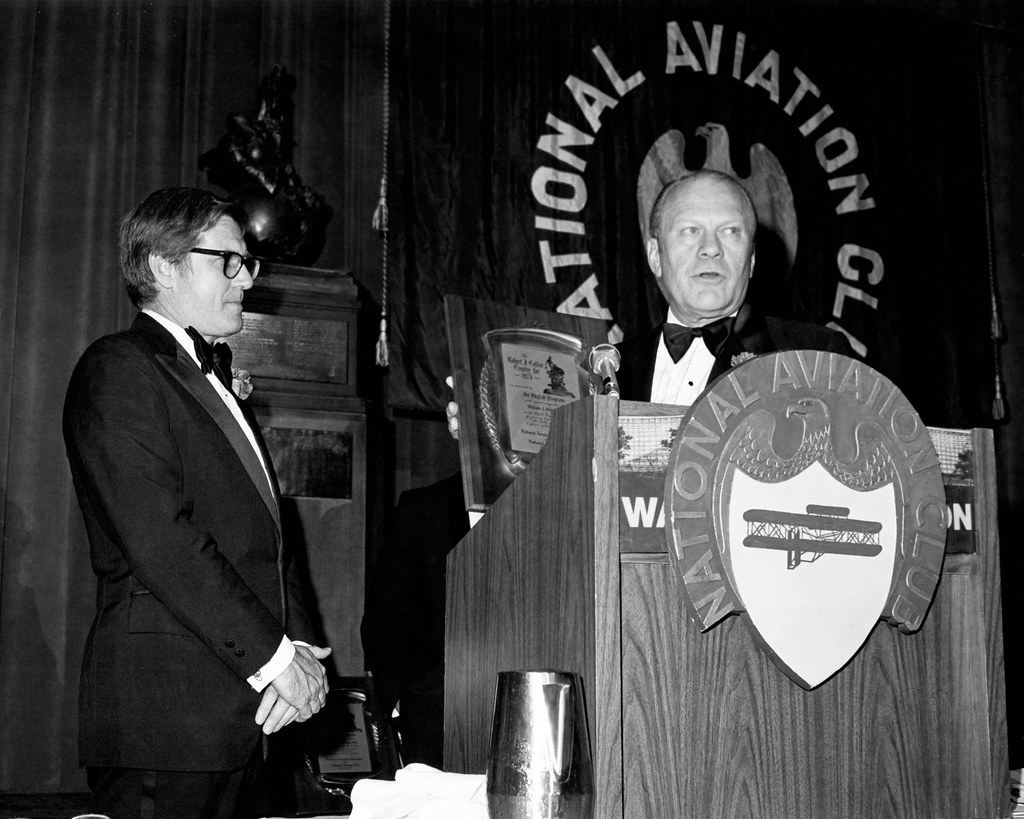
Vice President Gerald R. Ford by NASA Johnson is licensed under CC-BY-NC 2.0

Sara Jane Moore, the woman behind an assassination attempt, had a strange life. She changed names, worked for the FBI, was married multiple times, and tried to kill a president.

But I think the use of “suburban” may not mean what people expect. Moore lived in the suburbs. She had family life with children. She worked office jobs.

From what I saw in the documentary, this suburban life is not what prompted her to act. She does not explain that she was frustrated with a humdrum suburban existence.

Rather, the suburban in the title refers more to how people would not have suspected a suburban women to try to assassinate the president. As Moore recounts the steps in the day of her assassination attempt, she notes that she dressed like any suburban matron so as not to draw attention. She does not stand out in the crowd that gathers to see Ford.

There is some footage of the neighbor who sold her the gun she uses in the assassination attempt. He describes how Moore appeared to be in her right mind and he did not suspect any foul play. I have seen numerous similar news stories where neighbors can’t believe a community resident could commit such acts.

Is the “Suburban Fury” then that Americans would not expect a resident of the suburbs – places where the American Dream is to be found – to shoot a president? Moore’s story was convoluted but the suburbs are not supposed to produce violent criminals, let alone people who try to take out the leader of the free world.

Are the suburbs connected to the popularity of 1950s housewife fashion?

If the style of the 1950s is back, what does this mean about how people see the suburbs?

Photo by Wendy Wei on Pexels.com

A new generation of women is discovering the midcentury look, albeit for wildly varying reasons. Perhaps most divisively, there’s the “trad wife” movement, an online community of traditional women whose retro fashion reflects their religious, conservative and even sometimes far-right values. Then there are women who profess “vintage style, not vintage values,” combining hourglass silhouettes with a progressive worldview. And then there are those women and designers who just happen to appreciate the bygone charm of a swirly skirt…

The contemporary interpretations of 1950s fashion run the gamut from a sprinkle of yesteryear—winged eyeliner, a Grace Kelly headscarf, cat-eye sunglasses—to full-on June Cleaver dress-up. Fans of the look share makeup tutorials and life philosophies on TikTok. On

Pinterest, the somewhat disturbing tag “Stepford wife” includes images of Nicole Kidman in the spooky 2004 remake alongside black-and-white photos of women vacuuming. On Etsy, a gateway to the style, vintage hounds source period pieces, as well as replicas from purveyors like “Hearts and Found” and “Son de Flor.”

The 1950s housewife look isn’t limited to online rabbit roles and vintage shops. It’s also bleeding into high-end runway fashion. Prada has long made ladylike pieces like full skirts, capri pants and fitted sweaters cornerstones of its line, and Dior’s fall 2023 collection played up the house’s heritage of hourglass shapes.

Missing from this discussion is any explicit mention of the suburbs. The suburban lifestyle of the 1950s was a particular one. Even as it suggested middle-class success, it was not home to all nor offered equality. The country was relatively prosperous. The examples of fashion images from the era hint at the suburbs, whether it is Leave it to Beaver or I Love Lucy (two shows part of a study I published on TV shows set in the suburbs) or The Stepford Wives or Barbie (who has a dreamhouse).

Is this fashion trend connected to a feeling of nostalgia about or wrestling with the suburbs? The suburbs are not typically thought of as incubators of high fashion or culture yet, given their important part in American history and as the most common place where Americans live, there may be some connections here. I remember a political poll in 2016 getting at this longing among supports of Donald Trump. There are plenty of American narratives about a golden era of suburbia and also numerous critiques of those narratives.

The suburbs have an ongoing legacy that plays out in all sorts of contemporary issues and conversations. That it should be part of fashion should not be a surprise, even if it may not appear obvious to start.

Can a McMansion dweller have the last laugh?

A controversial TikTok video suggests a housewife could get the last laugh in her McMansion:

Photo by Karolina Grabowska on Pexels.com

Finally, Drummond, who also considers herself a content creator, took issue with women who criticize other women who marry their bosses: “Women will bully the woman who’s the secretary who married the doctor, but who has the last laugh?” she asked on camera. “Her in her McMansion with her husband and her baby.”

This last line quoted above is not what is driving the conversation about the video but it does highlight the divisive nature of McMansions. One person could live there and love the house, the space it offers, and the success it symbolizes. Another person might say they would never live in a McMansion and they are an abomination on the housing landscape.

These two opposing views come into conflict in different ways. Those opposed to McMansions are unlikely to move into a neighborhood full of them. A teardown McMansion might create conflict between a possible new McMansion owner and neighbors with other kinds of homes. Proposed McMansions can invite comments and action by people inside or outside a community. The conversation cited above is a more abstract scenario involving life in a McMansion.

Adding opinions about McMansions to another hot conversation is unlikely to lead to resolution on McMansions. However, it does provide a reminder that real people live in McMansions and many like living in McMansions or would want to live in one. This also reminds me of an earlier set of posts about gendered life in McMansions