Criticizing cities and ICE activity in complex suburbia

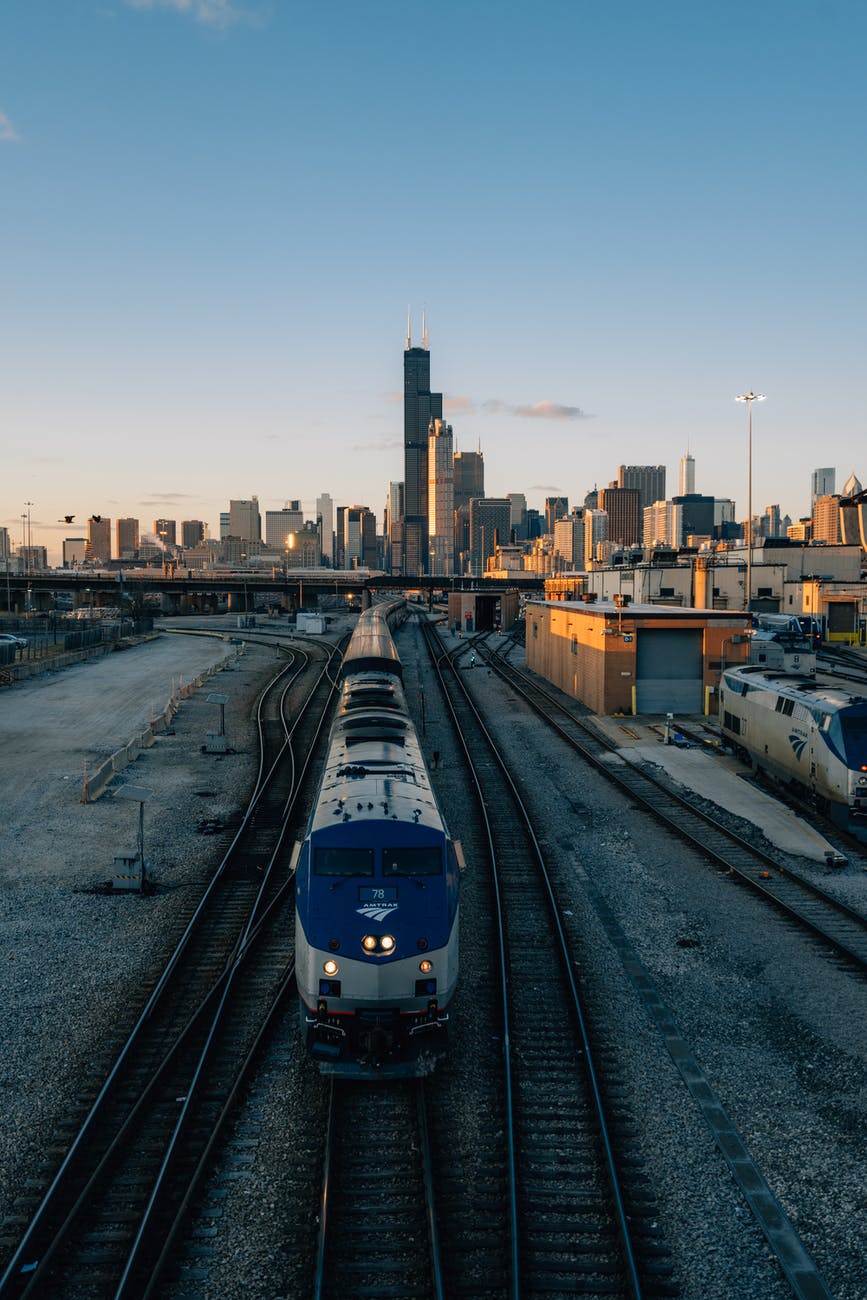
President Donald Trump often criticizes American big cities, particularly Chicago as he has mentioned the city multiple times in his first and second term. Just yesterday in the Arizona service for Charlie Kirk, Trump highlighted Chicago:

Photo by cottonbro studio on Pexels.com

Trump told mourners that one of the last things the slain conservative activist and Illinois native said to him was, “Please, sir. Save Chicago.” Trump then launched into a familiar refrain, saying, “We’re going to save Chicago from horrible crime.”

One of the Trump administration’s actions regarding Chicago includes recent ICE activity. While all the details are hard to come by, it appears however that this activity has not just affected people living in Chicago; there has been ICE activity in numerous suburbs. An ICE facility in Broadview. ICE agents approaching people in numerous suburbs, as far as 40 miles out from the city.

These actions hint at the complexity of the Chicago region and suburbs across the United States. Even as some Americans have long associated cities with racial and ethnic diversity, this diversity has increased in suburbs in recent decades. The American suburbs are full of people of different racial and ethnic groups as well as large numbers of recent immigrants to the United States.

So when Trump says Chicago has problems, does he mean just the city or is the whole region in question?Again, from the Kirk service:

Trump later took aim at Gov. JB Pritzker, declaring, “You have an incompetent governor who thinks it’s OK when 11 people get murdered over the weekend. … He says he’s got crime [under control]. No, they don’t have it under control, but we’ll have it under control very quickly.”

Both the city of Chicago and its suburbs have the same governor. Only one of the Chicago collar counties in Illinois voted for Trump in 2024: McHenry County. (There are portions of the greater Chicago area in southeastern Wisconsin and northwestern Indiana but they may not be part of the same conversation.) Are the problems some see in Chicago also ones they see present in suburbs?
US population growth driven by immigration

A new analysis suggest immigration fueled recent population growth in the United States:

Photo by Czapp u00c1rpu00e1d on Pexels.com

Immigration was the sole driver of the United States’ population growth in a single year for the first time since records began, a new study released Wednesday said…

The U.S. immigrant population grew by 1.6 million between 2022 and 2023 to 47.8 million, according to the MPI analysis, with immigrants now representing a 14.3 percent share of the overall population—the highest ever.

Three quick thoughts:

  1. Population growth is good in the United States. To have flat population growth or decline in population would be viewed with concern. This is a perception issue.
  2. The country has never experienced a decline in population between decennial censuses. It did not have growth under 7% in any decade (just over this during the 1930s and 2010s).
  3. How many systems and sectors in the country would be harmed if population growth and/or immigration slowed or stopped? What would keep going and what would not?

Two Chicago suburbs: one reinforcing its “welcoming city” status, one “reaffirmed…it is not a sanctuary city” and would work with ICE

How will different suburbs respond to the current situation in the United States regarding immigration? Two Chicago area suburbs are pursuing different approaches. Start with Skokie:

Photo by Matt Barnard on Pexels.com

Village of Skokie officials indicated at last week’s Village Board meeting that they will strengthen the village’s “Welcoming City” ordinance.

Trustee Khem Khoeun asked Mayor George Van Dusen if the village needed to update its welcoming village ordinance given recent immigration enforcement raids and the anxiety that some people in Skokie’s immigrant community are dealing with…

Van Dusen said Skokie’s existing ordinance was established during Trump’s first term in office, when the administration attempted enacting a travel ban for seven Muslim majority countries. The ban was ultimately blocked, but the effort apparently impacted Skokie residents.

Van Dusen recalled an incident in 2017 when a personal friend of his said her daughter in grade school was concerned she could be deported because she was Muslim, despite being born in the United States.

And then Orland Park:

Orland Park says its police will work with federal immigration agents on cases involving undocumented immigrants charged with or convicted of criminal offenses.

The Village Board recently adopted a resolution that also supports Senate Bill 1313 that would undo provisions of existing state law concerning law enforcement coordination with federal agencies such as Immigration and Customs Enforcement.

Trustees also reaffirmed Orland Park is not a sanctuary city, citing an ordinance approved by the board in January 2024…

The village said copies of the approved resolution would be sent to Gov. JB Pritzker and leaders in the Illinois General Assembly as well as Orland Park’s representatives in Springfield.

These suburbs could represent two opposite ends of a spectrum. They are different places with different locations in comparison to Chicago, different histories, and different residents. It is hard to know how many suburbs would have views similar to either one. There are hundreds of suburbs in the Chicago area and thousands across the United States. There will likely be a wide range of municipal reactions to immigration, including not making any resolution at all for a variety of reasons.

Will these resolutions be influential in the suburbs and in the state? Would businesses and residents make decisions to move to or stay in these suburbs when they pass these resolutions?

Another factor to consider: many immigrants to the United States move to and live in suburbs. They move to these two suburbs and suburbs like them. How much do these resolutions affect long-term patterns in the character of these suburbs?

Immigration enforcement operations taking place in cities – and suburbs

It is easy to find headlines regarding cities and U.S. Immigration and Customs Enforcement raids. But, reading a number of these stories shows these are also happening in suburbs. This one story detailing locations across the United States includes these suburbs:

Dallas, Texas, its eastern suburbs, and Lake Ray Hubbard by NASA Johnson is licensed under CC-BY-NC-ND 2.0

-Tucker, Georgia

-Irving, Arlington, and Collin County in Texas

-Federal Way, Washington

-Wilsonville, Oregon

Or see this story of operations in Chicago area suburbs.

These are suburbs of major metropolitan areas. Cities may be the target of particular political ire but there is less recognition that many people who come to the United States live in suburbs (or rural areas).

And how will suburbs respond to these federal efforts? When migrants were sent to suburbs of Chicago in 2023 from other locations in the United States, few suburban communities were interested in having them stay (see posts here, here, and here). A number of big cities have announced how they will respond but there are thousands of suburbs in the United States.

Religion in the American suburbs: a diverse religious landscape

In the postwar era, Will Herberg described American religion as primarily involving Protestants, Catholics, and Jews. The same was assumed to be true in the suburbs. With suburban populations growing, Protestants, Catholics, and Jews moved in and added to existing congregations and founded many new ones.

Photo by Zac Frith on Pexels.com

These groups also had to adjust to suburban life. Practicing faith in the suburban context looked different than in urban neighborhoods or rural areas. Critics within these traditions suggested the suburban version of their faith had serious deficiencies. Supporters of the suburban faith highlighted new possibilities and energy.

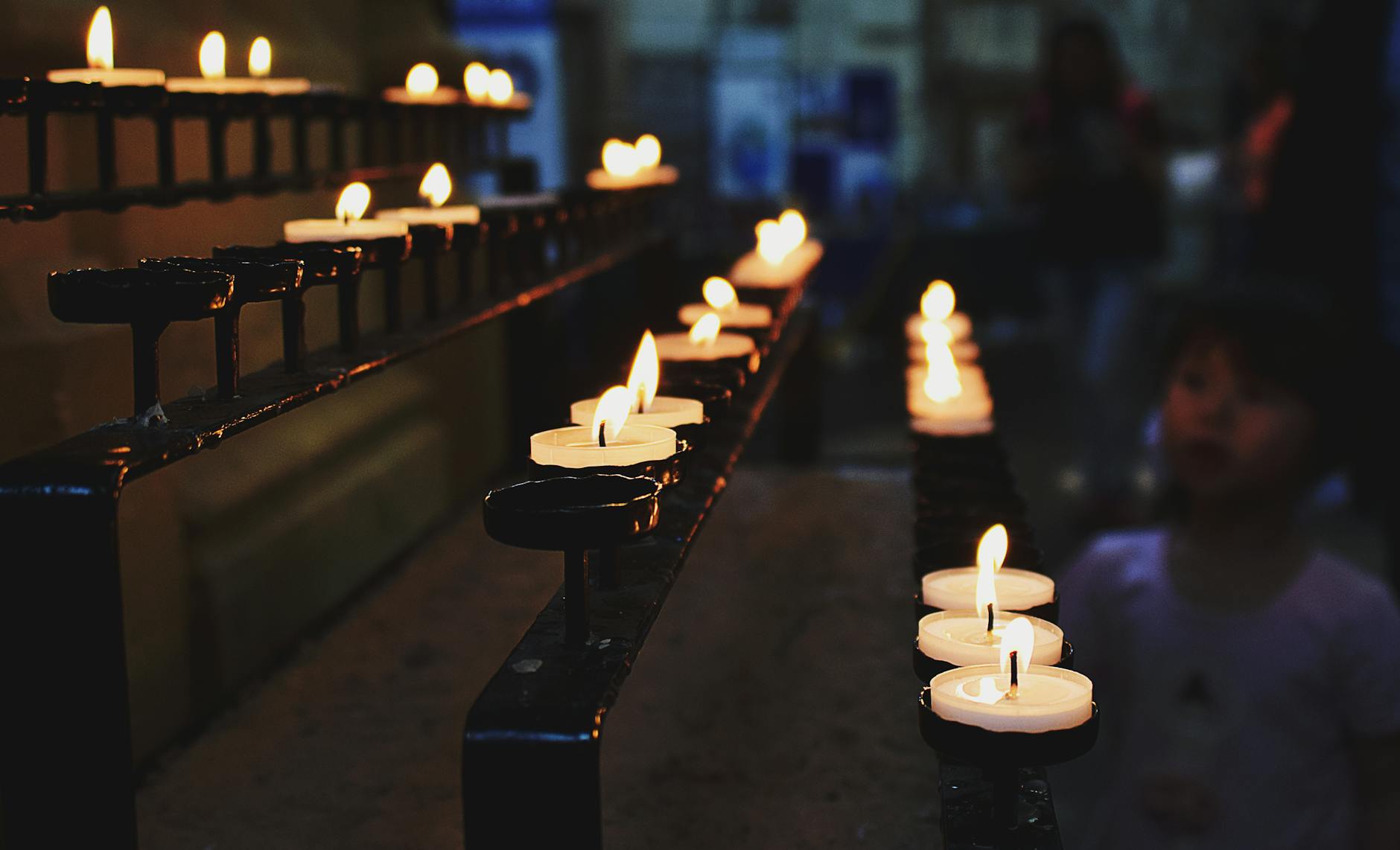
With changes to the population in the United States, including changes prompted by the Immigration and Nationality Act of 1965, the suburban religious landscape changed. Today, there are still plenty of Protestant, Catholic, and Jewish congregations in the suburbs but they are located near the congregations of Muslim, Buddhist, Hindu, Orthodox, Sikh, and other religious traditions. Increasing racial, ethnic, and class diversity in the suburbs goes alongside religious change. The complex suburbia of today includes a complex religious landscape.

Add to that the growing number of residents of the United States who do not identify with a religious tradition or faith. The suburban landscape may include religious activity throughout the week but it also is full of residents with no religious affiliation or other understandings of religion and spirituality.

This is easy to see in many suburban areas. Pick a populous county outside a major city – whether Washington, D.C. or New York City or Chicago or Los Angeles – and you can find religious and non-religious activity all over the place. The suburban landscape may be dominated by single-family homes and roads but there are plenty of congregations in a variety of traditions. It is visible when driving down major roads. You can see it in county-level counts of religious congregations.

This means any quick description of suburban religion is hard to do given the number of practices, beliefs, and belonging present in American communities. One way to see this diverse religious landscape is in the religious buildings of the suburbs – this is the subject of the next post.

Chicago area suburbs passing ordinances to not allow long-term stays by migrants

The Chicago suburb of Oak Park is devoting resources to helping migrants while other suburbs are trying to keep migrants from having long-term stays in their community:

Photo by Binyamin Mellish on Pexels.com

Unlike their counterparts in Schaumburg and Rosemont, Elk Grove Village officials aren’t yet taxing long-term hotel stays, but have crafted a local ordinance of their own to prevent migrants from coming back to town.

The new village rules bar hotel and motel owners from providing a room to anyone without certified medical documentation verifying that the individual is free of contagious diseases, such as malaria or tuberculosis, over the last 60 days. That certification can only come from a board-certified infectious disease physician, according to the ordinance. The requirement doesn’t apply to anyone who has been living in the United States for at least a year.

The ordinance also aims to prevent warehouse owners in Elk Grove Village’s sprawling industrial park, or the owners of vacant shopping centers, from turning their buildings into temporary housing. Property owners would have to get a village license and meet certain zoning and health and safety requirements, such as providing a complete bathroom including flush toilet, sink, bath or shower in each sleeping unit…

The former La Quinta Inn at 1900 Oakton St. in Elk Grove Village — since purchased and demolished by the village — was among the first suburban locations to host migrants in September 2022.

Elk Grove’s board was set to consider the new regulations Thursday, but moved up approval to a Nov. 20 special meeting once officials received a spreadsheet purporting to show suburban hotel locations being eyed to host new migrant arrivals. The list came from a restaurateur who was asked to provide meals for migrants, Johnson said.

The idea seems to be that by limiting sites where migrants can stay, a suburb can keep migrants out and/or discourage other actors from making arrangements for migrants to stay in a suburb.

It would be interesting to compare these suburban efforts to those that might be taking place in other suburbs in the Chicago region and in other metropolitan regions. Some suburbs have hotels or industrial properties while others do not. These conditions are the result of decades of planning and zoning decisions.

Furthermore, do suburban residents as a whole feel migrants should be temporarily housed in their communities and do their opinions differ from city or rural residents? One reason Americans like suburbs is the accessible local government and I would guess the ordinances in the suburbs mentioned above came, at least in part, do to input from local residents and business owners.

Americans who leave the country move all over the world

Here is some data on where Americans go when they leave the United States as well as some of the reasons they move:

Photo by Karolina Grabowska on Pexels.com

While the United States is the top destination for immigrants worldwide, hosting about three times as many immigrants as runners-up Germany and Saudi Arabia, it’s a paltry 26th in terms of sending immigrants abroad. Our analysis of U.N. data finds that just one American emigrates for every six Indians or four Mexicans.

And unlike emigrants from other countries, Americans go everywhere. We’re the most widely distributed people on the planet. No other nation has as few people concentrated in its top 10 (or top 25, or top 50) destinations, a Washington Post analysis shows.

In part, this wide distribution is probably a legacy of America’s immigrant roots. America is the top destination for migrants from about 40 countries, and many Americans remain linked to their ancestral homelands. It also reflects the wide reach of the U.S. military, as well as civilian organizations such as the Peace Corps and Christian missionaries…

Instead, Klekowski von Koppenfels’s research with Helen B. Marrow of Tufts University shows that a large majority of Americans want to move abroad to explore or have an adventure. Emigration almost always has more than one cause, they say, and some especially common ones are the desire to retire abroad, work abroad and get out of a bad situation at home. However, the desire to explore — “to lean forward to the next crazy venture beneath the skies,” as Kerouac wrote — is the American impulse that dominates.

The “nation of immigrants” is sort of a nation of emigrants? It would be interesting to compare these narratives.

Similarly, given the more limited geographic mobility within the United States in recent years plus the difficulty in collecting data on people who leave the United States, is it possible to compare trends over time on mobility within the country versus mobility abroad? Is one growing or slowing more than the other?

Populations – national or local – can grow or decline through births, deaths, and immigration

While the focus here is on the United States as a whole, this is also worth considering at the community level:

Photo by Skitterphoto on Pexels.com

A country grows or shrinks in three ways: immigration, deaths, and births. America’s declining fertility rate often gets the headline treatment. Journalists are obsessed with the question of why Americans aren’t having more babies. And because I’m a journalist, be assured that we’ll do the baby thing in a moment. But it’s the other two factors—death and immigration—that are overwhelmingly responsible for the collapse in U.S. population growth…

As recently as 2016, net immigration to the United States exceeded 1 million people. But immigration has since collapsed by about 75 percent, falling below 250,000 last year. Immigration fell by more than half in almost all of the hot spots for foreign-born migrants, including New York, Miami, Los Angeles, and San Francisco…

The implications of permanently slumped population growth are wide-ranging. Shrinking populations produce stagnant economies. Stagnant economies create wonky cultural knock-on effects, like a zero-sum mentality that ironically makes it harder to pursue pro-growth policies. (For example, people in slow-growth regions might be fearful of immigrants because they seem to represent a threat to scarce business opportunities, even though immigration represents these places’ best chance to grow their population and economy.) The sector-by-sector implications of declining population would also get very wonky very fast. Higher education is already fighting for its life in the age of remote school and rising tuition costs. Imagine what happens if, following the historically large Millennial cohort, every subsequent U.S. generation gets smaller and smaller until the end of time, slowly starving many colleges of the revenue they’ve come to expect.

Even if you’re of the dubious opinion that the U.S. would be better off with a smaller population, American demographic policy is bad for Americans who are alive right now. We are a nation where families have fewer kids than they want; where Americans die of violence, drugs, accidents, and illness at higher rates than similarly rich countries; and where geniuses who want to found new job-creating companies are forced to do so in other countries, which get all the benefits of higher productivity, higher tax revenue, and better jobs.

This matters for communities and cities in at least a few ways:

  1. The “growth is good” model in the United States assumes continued population growth. This is good for status as well as for other things (see #2).
  2. When populations are growing, the incoming revenues help pay for existing infrastructure and services as well as suggest money will be there in the future. In contrast, stagnant or declining populations can require cuts or reductions.
  3. The role of immigration cannot be understated and it affects population as well as demographics and local economics. For example, Chicago would have likely had more population loss over recent decades without immigrants coming to the city.

It will be particularly interesting to see what happens if more major population centers experience relatively little or no population growth while a few continue to grow rapidly. Does this change the balance of power and status among places?

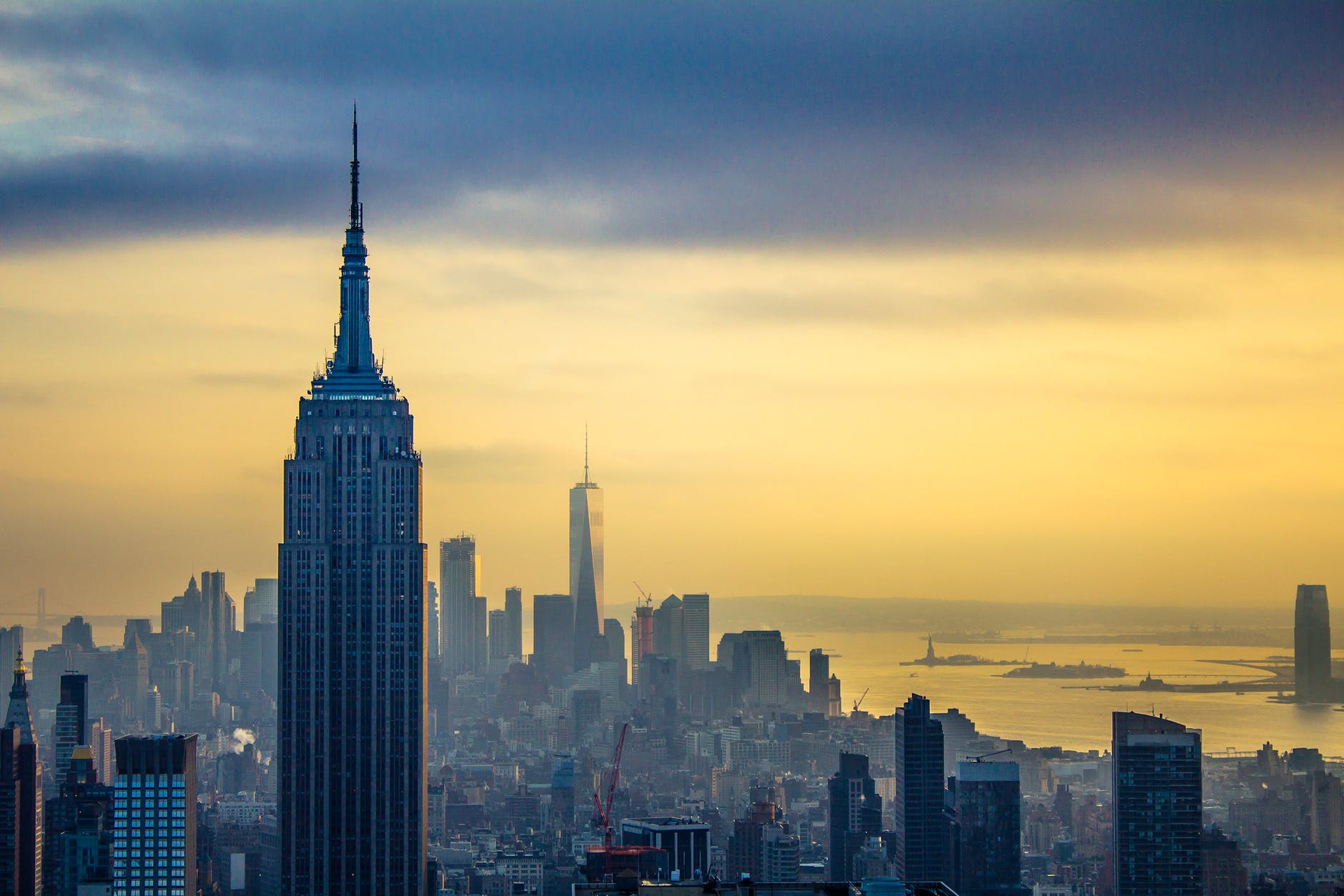
New-York or New York?

Mix arguments over immigration and hyphens and you have a historical debate over whether the name of New York City should be hyphenated:

Photo by Matias Di Meglio on Pexels.com

What Curran either didn’t know, or wanted to erase, was the fact that up until the late 1890s, cities like “New-York” and “New-Jersey” were usually hyphenated to be consistent with other phrases that had both a noun and an adjective. In 1804, when the “New-York Historical Society” was founded, therefore, hyphenation was de rigueur. The practice of hyphenating New York was adhered to in books and newspapers, and adopted by other states. Even the New York Times featured a masthead written as The NewYork Times until the late 1890s.

It was only when the pejorative phrasing of “hyphenated Americans” came into vogue in the 1890s, emboldened by Roosevelt’s anti-hyphen speech, that the pressure for the hyphen’s erasure came to pass.

Writing in 1924, several years after Roosevelt’s speech, Curran accused New York society of being overly judgmental, noting that “it is Ellis Island that catches the devil whenever a decision comes along that does not suit somebody. Of course, we are now in the midst of the open season for attacks on Ellis Island. We have usurped the place of the sea serpent and hay fever. We are ready to be roasted.” For the next twelve years he served as commissioner of immigration, Curran became more staunchly anti-immigrant, and his hatred was fueled by the anti–hyphenated Americanism espoused by people like Roosevelt and, later, Woodrow Wilson.

Curran was outraged that his beloved city would appear hyphenated, and he continually insisted that Morris call a meeting to pass a law that barred the use of a hyphen in New York. Meanwhile, curators, historians, and librarians banded together with antidiscrimination and immigrants’ rights defenders to defend a hyphenated New-York. Curran could not win this time, they insisted. The curators and librarians at the Historical Society bravely stood by the hyphen in their name, confirming that they had been founded in 1804, that the hyphen was in the original configuration of New-York, and that, no, this hyphen would not be erased. Hyphenated Americans and activists throughout New York City worried that this erasure would signal that they would not be welcome in the one city that was supposed to be a bastion of openness in America…

In the end, much to his chagrin, Curran lost this contest. No law was ever passed outlawing the hyphen, and it remains to this day, etched in stone on the building of the New-York Historical Society, a homage to the journey of the city and the hyphenated individuals who fought the good fight to keep the hyphen—and its many meanings—alive.

While it might be easy to dismiss this as a language debate from long ago, this excerpt highlights how language is not just about grammar or particular words: all of it is tied to how people see and understand the world. It sounds like the hyphen in place names followed conventions for the day of separating adjectives and nouns that went together. As hyphens later helped demarcate identity, they generated controversy.

Would New York be a different place today if it were New-York? Perhaps it might work like this. The hyphen implies a more hybrid identity than the solid “New York” together. Would this point people back to the original roots of the city, not as an American place but a British territory and before that a Dutch city? All of this could help put together contradictory ideas including American individualism and capitalism, colonialism, slavery, and pluralism. Add to that the immigrant history of New York from a variety of countries at numerous time points and perhaps the hyphenated version would help highlight the bricolage that is the city of five boroughs, numerous neighborhoods, and uncountable different experiences. “New-York” is still being shaped, “New York” already exists.

Declining Mexican immigrant population in Chicagoland

The population stagnation or loss in the Chicago region extends across groups of residents, including the Mexican immigrant population.

Photo by Luis Leon on Pexels.com

The Mexican immigrant population in the Chicago metropolitan area has decreased by 15% over the last decade, shows a new report published this week.

That’s a 104,000-person loss, roughly the equivalent of the entire population of Chicago’s Lake View neighborhood disappearing, according to a report by the Metropolitan Planning Council (MPC). The tri-state Chicago metro area includes the city, suburban Cook County and eight surrounding counties in northeast Illinois, four in northwest Indiana and one in southeast Wisconsin…

Cooper said most of the narratives about the population loss have focused on middle-class and upper-middle-class white residents leaving Illinois because of high taxes and the state’s pension woes…

The net loss of Mexican immigrants since 2010 is the continuation of a larger trend that has seen immigrant growth slow to a near halt over the past 30 years. In the ‘90s, Illinois had a net gain of 576,786 immigrants, according to the MPC report. From 2000 to 2010, the state witnessed a net gain of 230,801 immigrants. But from 2010 to 2019, the state’s immigrant population slowed to a net growth rate of just 0.4% — a net addition of only 6,622 immigrants. That trend helps explain why Illinois is near the bottom in population growth since 2010. Immigrant population growth had largely buoyed the state’s population growth in previous decades.

See this earlier post about how immigration to Chicago helped hold off population loss and this earlier post about the exit of Black residents from Chicago.

The point of this research makes sense: many locations in the United States talk about what might happen if wealthier residents leave. Would the 1% move elsewhere if taxes were raised? Will white flight continue? This emphasizes the structural conditions and decisions affecting just part of the population even as immigration has been important for many areas of the United States in recent decades. And then the next question to ask is why immigrants are not staying in this location or coming to this location in the first place; where are they going instead? Growth is good in many American communities but highlighting only certain kinds of growth provides an incomplete picture.

Another question based on these numbers: is Chicago welcoming to immigrants in 2021? Chicago has long been a traditional gateway city but it this now not the case for certain groups or immigrants overall?