“We need a White House that is not for the tech billionaires, but for forgotten Americans,” he said.
“In that spirit, we should ask Americans — in rural communities, urban centers and hollowed-out factory towns — for their ideas of what to do with the space,” Khanna said.
This is an interesting comment as it contrasts that who have a lot versus those who are forgotten. Rather than note what these forgotten Americans do or do not have, they are instead linked to geographic areas. Three in particular: rural areas, the centers of big cities, and factory towns.
The primary residential and business space left out of this list is the suburbs. These areas are often assumed to be wealthy, full of people who have made it in American life. They have at least some major control of their own destiny. They may not be tech billionaires but they are not forgotten.
There are communities in the suburbs not doing well. There are suburbs that are more rural than urban, suburbs that experience similar issues facing urban centers, and suburbs that have lost important jobs ad have limited business activity. These struggling suburbs can sometimes be near wealthy suburbs.
And it could be interesting to see how such designations line up with survey responses from Americans regarding whether they feel forgotten and where they live.
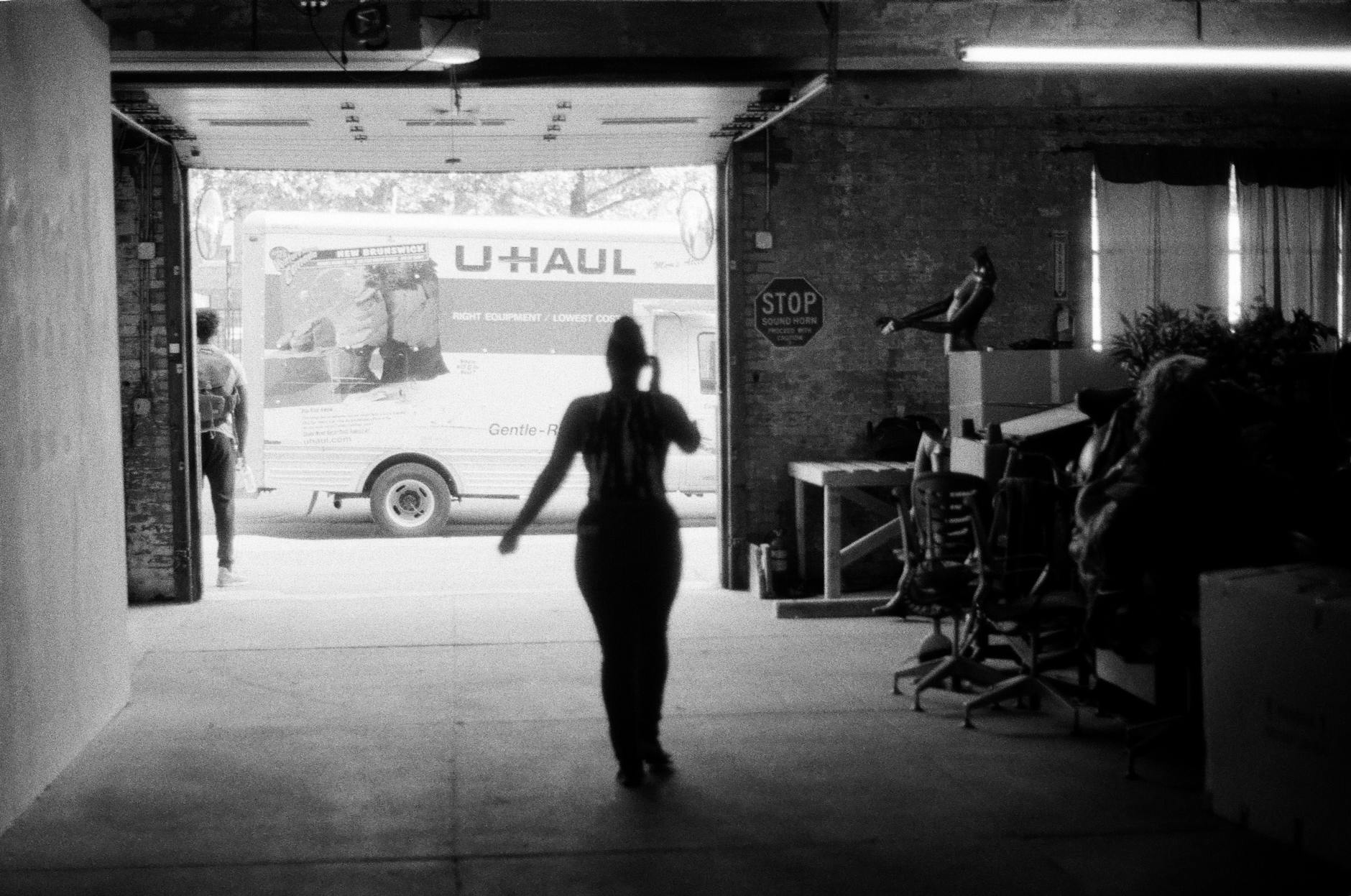
But over the past 50 years, this engine of American opportunity has stopped working. Americans have become less likely to move from one state to another, or to move within a state, or even to switch residences within a city. In the 1960s, about one out of every five Americans moved in any given year—down from one in three in the 19th century, but a frenetic rate nonetheless. In 2023, however, only one in 13 Americans moved.
The sharp decline in geographic mobility is the single most important social change of the past half century, although other shifts have attracted far more attention. In that same span, fewer Americans have started new businesses, and fewer Americans have switched jobs—from 1985 to 2014, the share of people who became entrepreneurs fell by half. More Americans are ending up worse off than their parents—in 1970, about eight out of every 10 young adults could expect to earn more than their parents; by the turn of the century, that was true of only half of young adults. Church membership is down by about a third since 1970, as is the share of Americans who socialize several times a week. Membership in any kind of group is down by half. The birth rate keeps falling. And although half of Americans used to think most people could be trusted, today only a third think the same…
As a result, many Americans are stranded in communities with flat or declining prospects, and lack the practical ability to move across the tracks, the state, or the country—to choose where they want to live. Those who do move are typically heading not to the places where opportunities are abundant, but to those where housing is cheap. Only the affluent and well educated are exempt from this situation; the freedom to choose one’s city or community has become a privilege of class.
A possible solution?
These three principles—consistency, tolerance, and abundance—can help restore American mobility. Federal guidelines can make the environment more amenable, but the solutions by and large cannot come from central planning; states and cities and towns will need to reform their rules and processes to allow the housing supply to grow where people want to build. The goal of policy makers, in any case, shouldn’t be to move Americans to any particular place, or to any particular style of living. They should instead aim to make it easier for Americans to move wherever they would like—to make it equally easy to build wherever Americans’ hopes and desires alight.
We will likely never be at a point where everyone will move to pursue certain opportunities – see an earlier post here – but this trend over time does go against earlier patterns. If more people were able to move, they might then be able to take advantage of housing or job opportunities.
One thing I have not seen in articles that highlight this: do more people want to move but can’t (which could be linked to social class)? Take some patterns from recent years. If more employers allowed work from home, would this free up people to move? If people perceive there to be more opportunities in the Sun Belt, how many move there (hence growing populations in recent decades) versus those who cannot?
Or, what if more people are used to not moving now and would stay put even if there were opportunities elsewhere? The era of mass mobility may be over and new generations are less used moving. Perhaps they want to stay closer to family or like staying rooted in one place.
Maybe the hyper mobility of Americans in the 19th and part of the 20th centuries was abnormal. Before then, opportunities were more restricted and people had stronger ties to families and communities. Why should humans move so frequently?
Looking forward, does easy access to social media and the Internet make it even easier to not move? People can access the connections and opportunities they want from wherever they are, as long as they have a fast connection.
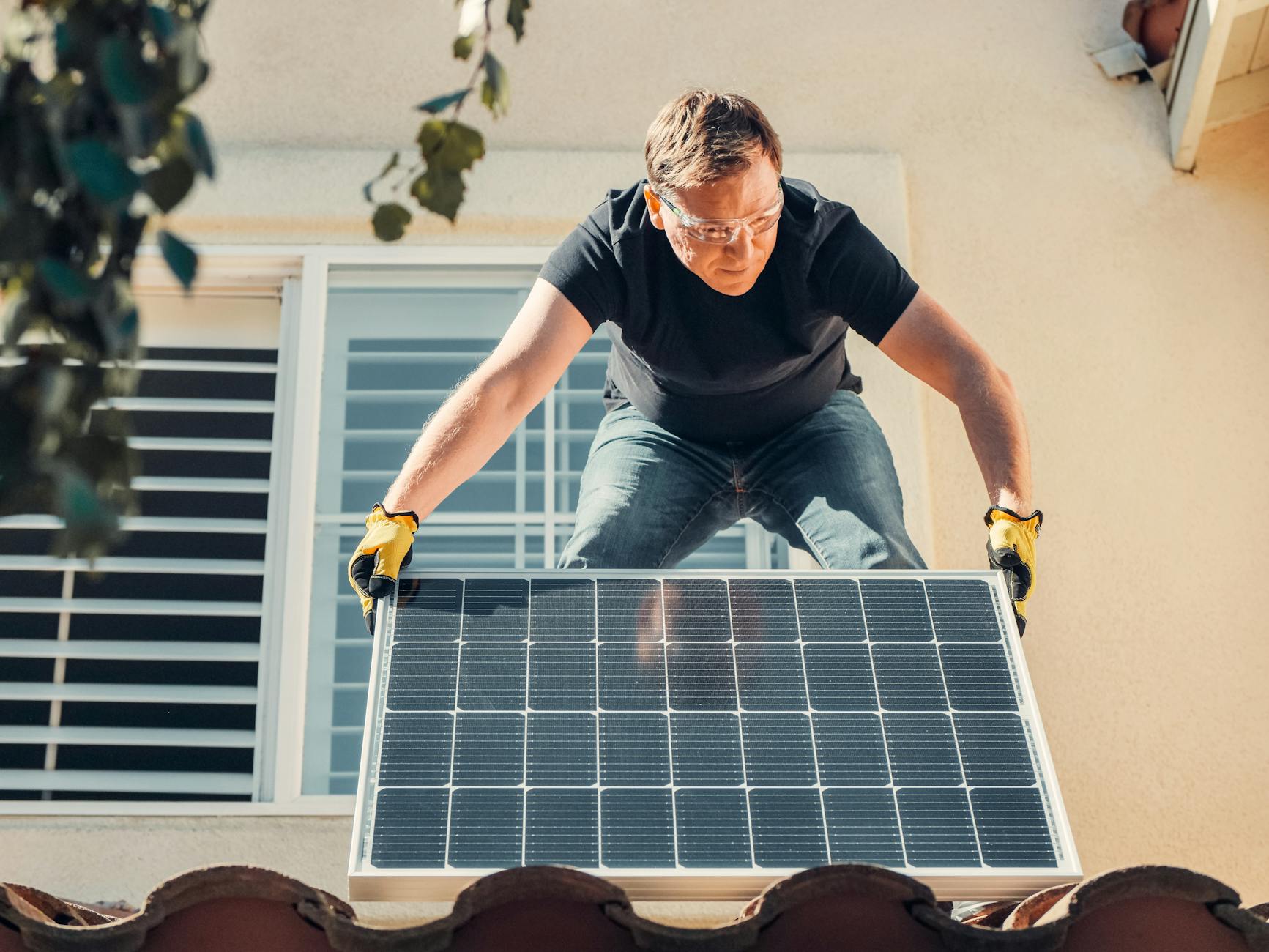
These trends, coupled with increasing grid electricity costs and decreases in both solar and battery costs, have made economic grid defection a salient issue.
But this also raises concerns about potential “utility death spirals,” where as more customers leave the grid to save money, the ones who are left face higher electricity costs, prompting even more to leave until the utility is bankrupt.
This trend raises two major concerns. First, those who can’t afford to leave the grid — often the poorest households — will end up paying the most for left-over fossil fuel electricity from the grid. Leaving the grid requires a hefty up-front cost, and not everyone can afford it.
Second, our research shows that the diesel generators used as back up for off-grid solar and battery systems will cause significant pollution — even more than the grid in some locations.
Large-scale infrastructure often serves large numbers of people. Without a large user base – whether it is a highway or an electrical grid or a sewage system – it is harder to justify its construction and maintenance. When most, if not all, the population participates, resources can be pooled and the infrastructure can serve the common good. The shift to mass society can with systems that (theoretically) served all.
If not everyone participates, things can get interesting. We see this playing out in a number of areas. What if more people start purchasing electric cars? The gas tax resources that fund roads start to shrink so there are ways to make up that revenue. What if health care is a multi-tiered system where those who good jobs and insurance can access better care? Then the public option might suffer in terms of quality and prices.
The vision above hints at a two-tiered electric system: those who have the means to produce their own electricity and those who cannot and need to keep paying for an aging system. If the trends described keep going, it could lead to interesting discussions and choices made about how to provide electricity in the United States in the 21st century.
Cash aid without conditions was considered a radical idea before the pandemic. But early results from a program in Stockton, Calif., showed promise. Then interest exploded after it became clear how much COVID stimulus checks and emergency rental payments had helped people. The U.S. Census Bureau found that an expanded child tax credit cut child poverty in half. That is, until the expansion ended and child poverty spiked.
Around the country, from big cities to rural counties, there’ve been more than 150 basic income pilots, and counting. Supporters say it works because people can spend the money on whatever they need most…
The pandemic also spurred cash aid because cities got their own pot of COVID relief money. Many are using that to fund guaranteed income pilots. Philanthropic donations are another major funding source, including from groups that have long organized direct cash payments to combat poverty in developing nations.
The pilots target low- to moderate-income people, from a few hundred to a few thousand households, and generally pay them $500 or $1,000 a month for a year or two.
Here is one way to think about such programs: the United States often focuses on helping people or social actors reach their top potential. Whether in education or in innovation, why not enable the top performers to be even better performers? But, another way to operate is to help raise the floor in areas like income so fewer people struggle. These programs seek to provide monies so that people with less income have more opportunities.
Given the outcomes of these programs plus some of the outcomes of the COVID-19 aid, my guess is that we will see more of this with hopefully positive outcomes for people and communities.
The biggest point of contention between the two camps revolves around “unreported income,” more commonly known as tax evasion. Tax returns are the best data source available for studying income distributions, but they’re incomplete—most obviously because people don’t report all of the income that they’re supposed to. This information gap requires inequality researchers to make some educated guesses about how unreported income is distributed, which is to say, about who is evading the most taxes. Piketty, Saez, and Zucman assume that it’s the people who already report a lot of income: Think of the well-paid corporate executive who also stashes millions of dollars in an offshore account. Auten and Splinter, by contrast, assume that those who evade the most taxes are people who report little or no income: Think plumbers or housekeepers who get paid in cash. They believe, in other words, that members of the 99 percent are a lot richer than they look…
To take the true measure of inequality, economists need a way to account for all the income and expenses that don’t show up on people’s tax returns. The method that Piketty, Saez, and Zucman pioneered, and that Auten and Splinter follow, was to take the gross domestic product—a measure of all of the spending in the national economy every year—and figure out who exactly is receiving how much of it. (Technically, they use something called gross national income, which is a close cousin of GDP.) The benefit of this approach is that nothing gets left out. The drawback is that, well, nothing gets left out. GDP measures the total production of an entire economy, so it includes all sorts of expenditures that don’t seem like income at all.
Much of the difference between the authors’ estimates of inequality hinges on how they treat government spending on things that benefit the public at large, such as education, infrastructure, and national defense. Because this spending is part of gross national income, it must be allocated to someone in order for the math to work out. Piketty, Saez, and Zucman take the view that this stuff really shouldn’t be considered income, so they allocate it in a way that doesn’t change the overall distribution. Auten and Splinter, however, argue that at least some of this money should count as income. Citing research indicating that education spending tends to disproportionately benefit lower- and middle-income kids, they decide to allocate the money in a way that increases the bottom 99 percent’s share of income—by a lot. Austin Clemens, a senior fellow at the Washington Center for Equitable Growth, calculates that in Auten and Splinter’s data set, a full 20 percent of income for those in the bottom half of the distribution “comes in the form of tanks, roads, and chalkboards.”…
The deeper you get into how GDP is actually calculated and allocated, the more you feel as though you’ve fallen through a wormhole into an alternate dimension. Let’s say you own a house. Government statisticians imagine that you are renting out that house to yourself, calculate how much money you would reasonably be charging, and then count that as a form of income that you are, in essence, paying yourself. This “imputed rent” accounts for about 9 percent of all GDP, or more than $2 trillion. Or suppose you have a checking account at a major bank. Statisticians will calculate the difference between what the bank pays you in interest on that account (usually close to nothing) and what you could have earned by investing that same money in safe government bonds. That difference is then considered the “full value” of the benefits you are receiving from the bank—above and beyond what it actually charges you for its services—and is therefore considered additional income for you, the depositor. All of these choices have some theoretical justification, but they have very little to do with how normal people think about their financial situation.
These are common issues working with all sorts of variables that matter in life: trying to collect good data, operationalization, missing data, judgment calls, and then difficulty in interpreting the results. In this case, it affects public perceptions of income inequality and big questions about the state of society.
Is this just an arcane academic debate? Since academics tend to want their work to matter for society and policy, this particular discussion matters a lot. Every day, economic news is reported. People have their own experiences. Humans like to compare their own experiences to those of others now and in the past. People search for certainty and patterns. The question of inequality is a recurrent one for numerous reasons and having good data and interpretations of that data matters for perceptions and actions.
The way that academics tend to deal with this is to continue to measure and interpret. Others will see this debate and find new ways to conceptualize the variable and collect data. New studies will come out. Scholars of this area will read, discuss, and write about this issue. There will be disagreement. Conditions in the world will change. And hopefully academics will get better at measuring and interpreting the concept of income.
Immediately, the rankings revealed a stark geographical pattern. The first surprise—especially for professors who have spent our careers studying urban poverty—was that the most disadvantaged places on our index were primarily rural. But they didn’t fit the stereotypical image of rural America. Though some of these were majority white, most were majority Black or Hispanic. We could see, too, that many places with large Native American populations ranked among the most disadvantaged in the nation. Considerable poverty exists in Chicago, Los Angeles, and New York. But in our apples-to-apples comparison, none of those cities ranked among even the 600 most disadvantaged places in the nation. The only cities on that list were a relatively small number of industrial municipalities such as Cleveland, Detroit, and Rochester…
The places that our index identified as the 200 most disadvantaged are concentrated in three regions—Appalachia, South Texas, and the southern Cotton Belt. (Not one county in the West, apart from those with disproportionately large Native American communities, showed up on the list.) These places share a history of intensive resource extraction and human exploitation not seen to the same degree elsewhere in the United States. In each place, this economic pattern emerged (or, in the case of the Cotton Belt, fully flourished) in the late 19th or early 20th century. In each place, one industry came to dominate the economy, a pattern that held, broadly, until the 1960s, when King Cotton, King Tobacco, King Coal, and South Texas agriculture, would bow to the twin forces of automation and global competition…
Exploring the other end of our Index of Deep Disadvantage—the places identified as those of greatest advantage—was also vital to our research. Once again, we were surprised by where the index took us. It was not Manhattan or tech-rich Seattle. Instead, the list pointed us to the upper Midwest: Minnesota, the Dakotas, Wisconsin, Nebraska, and Iowa. Overall, poverty rates in these places are very low, babies are born healthy, people live to a ripe old age, and a low-income child usually has a similar chance of making it into the middle class as any other kid.
Counties that rank among those of greatest advantage began as agricultural communities with modestly sized farms, many originally secured through the 1862 Homestead Act that made landownership widely available. Many of these places have built on this history of broad-based wealth by making significant investments in schools, which has contributed to high graduation and college enrollment rates over generations. Using the best data available, we found that they have enjoyed the lowest rates of violent crime, income inequality, and public corruption in the nation. These counties are unusually rich in social capital: Residents are connected to one another through volunteerism, membership in civic organizations, and participation in other community activities.
Who owns land? Who benefits from working it? It sounds like the Upper Midwest offered more opportunities for settlers to purchase land and develop wealth over the long run. In contrast, the three areas of disadvantage identified had more disparities in land ownership versus who worked the land. Additionally, Native Americans were removed from land that offered opportunities.
Approaches to addressing inequality and poverty in the United States can often involve homeownership but less discussed is land. A house is often tied to a particular property that has its own value. The land identified in the rankings above were particularly important for subsistence. This is not so much the case with urban and suburban land today where the proximity of the land to amenities and the size of the lot matter more than the owner’s ability to live off of it.
The rankings above also hint at the long-term consequences of land ownership. Who can access and own land now will matter for decades, possibly centuries.
As our society has become less random, it has become more unequal. Many people know that inequality has been rising steadily over time, but a less-remarked-on development is that there’s been a parallel geographic shift, with high- and low-income people moving into separate, ever more distinct communities. In 2019, the median household income in Washington, D.C., was $92,266. The corresponding figure for Mississippi was $45,792. Even locally, spatial differences are stark. New York City’s Fifteenth Congressional District, which covers the South Bronx, is the poorest in the nation, with a median income of thirty-one thousand dollars. The nation’s richest district, New York’s Twelfth, is just a mile or so to the south; it includes the Upper East Side and has a median income just shy of a hundred and twenty-five thousand dollars. Sorting occurs even in areas where people of multiple social classes overlap: people of different incomes often frequent different establishments on the same city block…
ut there’s another route to consider. What if, instead of paying taxes where we reside, and then reaping their benefits locally, we sprinkled taxation and revenues randomly—and therefore evenly—across the United States? What if, instead of paying a third of my taxes to New York City and State, I instead paid them to Pod No. 2,264—a group to which I was randomly assigned by a lottery the year I turned eighteen? What if, instead of camping out on the sidewalk the night before the school-enrollment date in hopes of getting my kids into a well-funded public school, I received a monthly check from Pod 2,264 that was meant to pay for my children’s schooling wherever I wanted to send them? In such a system, the retreat of affluent people from the places where they live doesn’t matter. In fact, it doesn’t matter where anybody lives. Nobody can escape contributing to the public sphere, no matter how far they move…
Some of us would lose in a more lottery-based society. But many of us would win. And we might end up being more compassionate toward one another; we’d be forced to acknowledge that much of our lot is the luck of the draw. We argue endlessly about the meaning of luck, even if we don’t always realize it. How much are we responsible for what happens in our lives? What’s the difference between luck and choice? How much should society try to help the unfortunate? Much psychological research shows that Americans who believe that luck plays a large role in our lives tend to be more liberal, supporting redistributive policies. Yet almost all of us seem to wish for a society in which luck plays no role, and in which everyone gets what they deserve, whether through their own actions or through mutual aid…
Despite this common goal, we tend to reach for lotteries only as a last resort, as President Nixon did when waging an unpopular war. We tell ourselves that we are successfully squeezing randomness out of life, by means of ever more refined algorithms and targeted social policies. But one lesson of our pod-based thought experiment is that we already live under the reign of lotteries—lotteries of birth, of location, of economic and social fate. We’ll never truly randomize America, but even entertaining the possibility can help us see that it can be useful to acknowledge randomness, and even to incorporate rolls of the dice into our collective life. What if, instead of trying to erase luck, we embraced it?
Since we do not control into which families, locations, and conditions we are born, there is some dimension of randomness from early ages. Some people have certain conditions, others have different conditions.
This also reminds me of the documentary Waiting for Superman. There, a lottery provides spots in a charter school for students and families who want opportunities. If I remember correctly, the message there is less about using a lottery to allocate scarce resources and more about suggesting that all children should be able to go to good schools.
How much would it take to get Americans to support such systems? Persistent in American ideology is the idea that people contribute greatly to their own outcomes. If people do not like the idea of random selections, would considering the possibilities of lotteries help people think about other ways of allocating resources or distributing opportunities?
The creation of an ad hoc affordable housing committee was announced during Tuesday’s county board meeting and comes two weeks after the county board set aside $2.5 million to start an affordable housing solutions program.
“If you work in DuPage County, you should be able to live in DuPage County,” said Deborah Conroy, county board chairwoman, after announcing the committee…
The cost of land, officials said, often hinders affordable housing developments…
From 2018 to 2022, some 862 affordable rental units were built in DuPage County, Illinois Housing Development Authority Executive Director Kristin Faust told board members Tuesday. During that same time, 996 homebuyers purchased a home with a mortgage assisted by the housing authority, Faust said.
DuPage County is a relatively wealthy county. According to the Census Bureau, the median household income is $100,292, the poverty rate is 6.9%, and the median value of owner-occupied housing is $324,900.
Additionally, the County and the municipalities within it do not have a great history of pursuing affordable housing. In the postwar era, DuPage County did not build much public housing when it had funds to do so. Municipalities largely pursued housing aimed at white, middle-class and above residents. Affordable housing has been raised as an issue in the county since at least the 1970s. Newer efforts still aim their efforts at relatively well-off residents.
By not having sufficient affordable housing in DuPage County (or in the Chicago region as a whole), the County may struggle to grow, attract workers, and continue the quality of life that residents expect.
At the core of American housing policy is a secret hiding in plain sight: Homeownership works for some because it cannot work for all. If we want to make housing affordable for everyone, then it needs to be cheap and widely available. And if we want that housing to act as a wealth-building vehicle, home values have to increase significantly over time. How do we ensure that housing is both appreciating in value for homeowners but cheap enough for all would-be homeowners to buy in? We can’t…
Fundamentally, the U.S. needs to shift away from understanding housing as an investment and toward treating it as consumption. No one expects their TV or their car to be a store of value, let alone to appreciate. Instead, Americans recognize that expensive purchases should reflect their particular desires and that the cost should be worth the use they get out of them…
I should be explicit here: Policy makers should completely abandon trying to preserve or improve property values and instead make their focus a housing market abundant with cheap and diverse housing types able to satisfy the needs of people at every income level and stage of life. As such, people would move between homes as their circumstances necessitate. Housing would stop being scarce and thus its attractiveness as an investment would diminish greatly, for both homeowners and larger entities. The government should encourage and aid low-wealth households to save through diversified index funds as it eliminates the tax benefits that pull people into homeownership regardless of the consequences…
If we are interested in helping low- and middle-income people live well, we need to fix renting. Some potential policies include increasing oversight of the rental market, providing tenants with a right to counsel in eviction court to reduce predatory filings, advancing rent-stabilization policies, public investment in rental-housing quality, and, most important, building tons of new housing so that power shifts in the rental market from landlords to tenants. Even if nothing changes and America’s love affair with homeownership continues, tens of millions of people will continue renting for the duration of their lives, and almost everyone will rent for at least part of their life. Financial security, reliable and reasonable housing payments, and freedom from exploitation should not be the domain of homeowners.
There is a lot to think about here. A few thoughts:
Is the entire goal of the American system to generate money through property and ownership? Owning land and property has been very important from the beginning not only for what land could be used for and the money that could be generated but also because of status and rights attached to owning land and homes.
Who is homeownership for? Consistently in American life, it is more available and profitable for wealthier white residents. Policies and ideals have promoted and perpetuated this.
Given #1 and #2, renting is not just a difference in how one pays for their dwelling. It is a difference in how a person is regarded and what is viewed as ideal. The current system may have vast disparities in homeownership and the wealth generated by it but renting or renters is disagreeable to a good portion of Americans.
Even if the goal remains to help adults in the United States attain homeownership, more could be done to address renting or obtaining a first property or addressing racial disparities in housing values. Ignoring renting means that it could limit people in the future from owning a home. Or, not having entry-level housing means people cannot easily move up. Or, help limit the disparities in housing values based on existing patterns. Promoting only homeownership is short-sighted.
In a watershed moment for suburban land preservation efforts, a Barrington-based conservation group announced Monday it is buying the Richard Duchossois family’s 246.5-acre Hill ‘N Dale Farm South, long considered one of the most important and desirable tracts of open space in northern Illinois.
Citizens for Conservation’s acquisition of the land near Barrington Hills will ensure it remains protected open space and provide a critical wildlife corridor with the 4,000-acre Spring Creek Forest Preserve next door…
All told, the acquisition and restoration carries an estimated $10 million price tag, according to the organization. Citizens for Conservation received nearly half that through a $4.9 million grant from the Illinois Clean Energy Community Foundation, the largest such grant awarded for a single-parcel purchase…
Although not within Barrington Hills’ corporate limits, the property is surrounded by the village. Village President Brian Cecola was enthused by Citizens for Conservation’s acquisition of the land.
“Citizens for Conservation’s dedication to land preservation aligns with our village’s objectives of preserving open spaces and maintaining our 5-acre zoning. It’s a win-win for everyone involved,” he said.
With all of the concerns about land use and environmental degradation due to suburban sprawl, isn’t preserving space for animals, plants, and nature a win?
Here is another possible way to read this: the purchase of this land continues patterns of uneven development and inequality in metropolitan regions. How this might happen:
-This green space is in a wealthier suburban setting. According to 2020 Census data, Barrington Hills has a median household income of over $157,000.
-As described above, Barrington Hills has a guideline involving 5-acre zoning. Such zoning practices mean properties are larger and both the land and housing is more expensive. This limits who can live in the community.
Hopefully, there is some consideration given to who benefits from using this green space and how all people in metropolitan regions could benefit from proximity to and access to nature and green spaces.








 Legally Sociable