Local control is essential to understanding American suburbs

The mayor of Naperville thanked the City Council for not supporting a proposal that regional transit authorities could develop land within half a mile of train stations. He explained his opposition this way (via his Scott Wehrli for Naperville Facebook page):

Photo by cottonbro studio on Pexels.com

I’m proud of our City Council for standing together in opposition of this legislation that would give transit agencies the power to control development within a half-mile of our train stations—taking that authority away from the local officials you elected.

In Naperville, development decisions should be made by our community, through our City Council, not by transit agencies in Chicago. Local control has always been the foundation of our city’s success, and we’ll continue to protect it.

This is a good example for why I included local control as one of the seven reasons that Americans love suburbs. Suburban residents and leaders want to be able to make decisions about local land and monies as they see fit. They can resent when decision-making involving their land and money takes place elsewhere, particularly if it goes against what the suburban community wants or is perceived to be a threat to an established way of life.

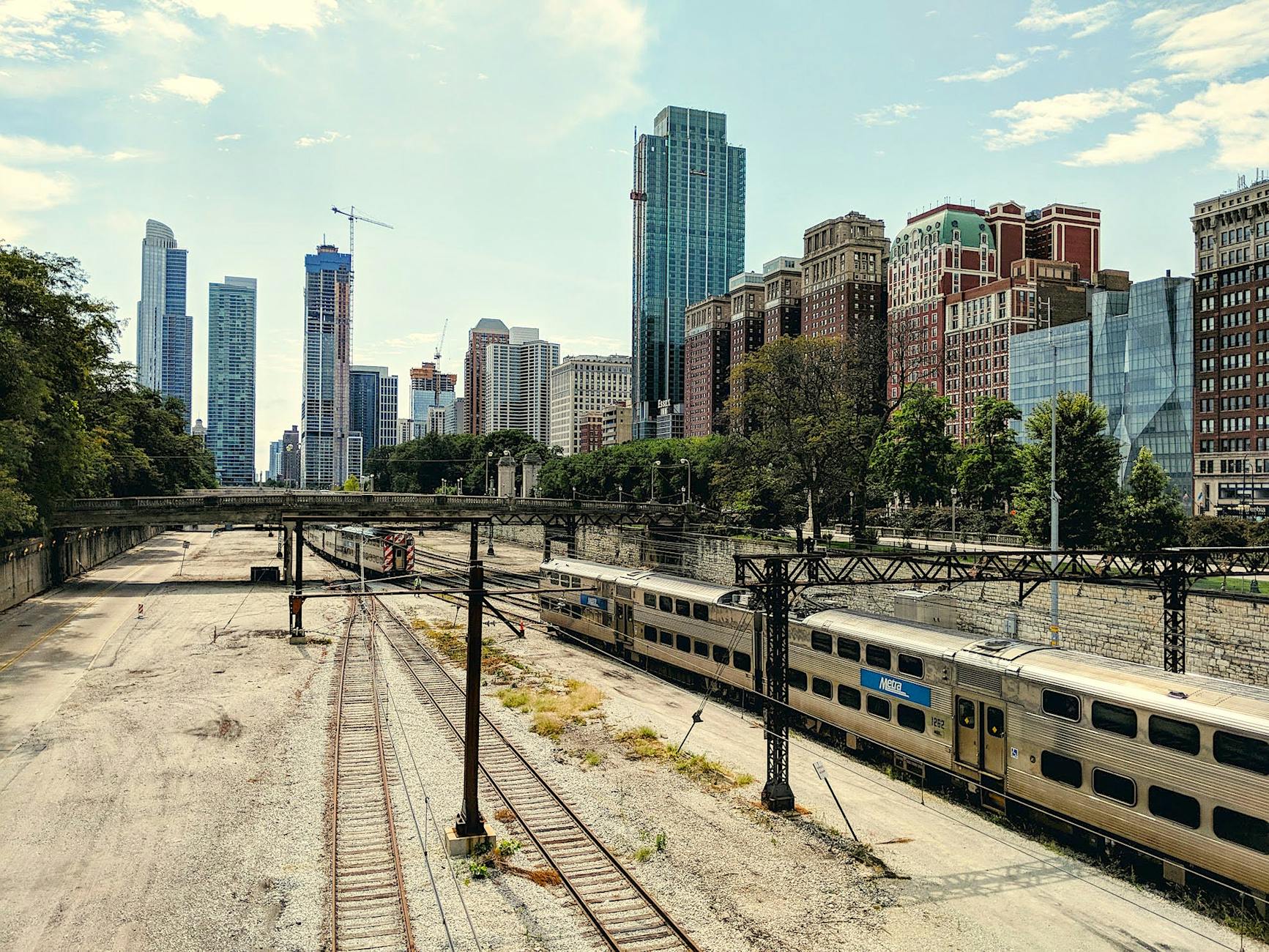
This particular case involves transportation and land development. A popular idea in numerous cities and suburbs is to construct transit-oriented development which often involves higher residential densities adjacent to mass transit stops and a reduced number of parking spaces required. A number of Chicago suburbs have pursued this in recent decades; trains going in and out of Chicago pass apartments and condos in suburban downtowns.

But the key for many of these suburbs is that they made these decisions regarding development around train stations. These conversations often included debate about the size of new buildings and the number of units involved. How tall is too tall for a suburban downtown? How many units will be erected? What is the target population for these new developments?

Leaders and residents in Naperville and suburbs across the United States might pursue denser development near mass transit but they want to make the decision and steer development in ways they feel is consistent with the existing character and footprint of their community.

(I would also argue that local control is closely linked to the other six reasons Americans love suburbs.)

If population growth in the US slows, this will make competition between cities for people even more intense

For cities and communities in the United States, growth is good. It signals progress, status, new development. To be flat in population or to lose residents hints at problems or failure.

Photo by Burak The Weekender on Pexels.com

Throughout the history of the United States, the growth rate each decade has been over 10% for every decade except for 4 (1930s, 1980s, 2000s, 2010s). The population growth came through births and immigration. This population growth means many communities could grow. Some places might lose people – such as several prominent cities in the second half of the twentieth century – but there was growth in many places.

So if population growth across the United States slows, how can many cities, suburbs, and metropolitan areas also grow? There will be fewer people to go around. This could lead to some different outcomes:

  1. There will be clearer “winners” and “losers” in population.
  2. Communities and commentators could adjust their image of how much growth is needed. They could adjust their expectations down.
  3. Americans could decouple population figures from their ideas about quality of life. Perhaps population change has little relationship with whether communities are doing well.

My guess is that #1 would lead the way as people are used to growth and the perceived benefits that go with it. #2 and #3 could happen but would take time as people adjust to different realities where growth is more limited and fewer communities can expand in population.

And if population growth is harder to attain, what might communities and governments do to try to encourage more of it? Bigger incentives? More advertising? Promoting particular amenities or quality of life concerns?

NIMBY wins by reducing the number of residential units

One observer discusses how NIMBY efforts reach their goals:

Photo by cottonbro studio on Pexels.com

Sometimes working together, sometimes working separately, NIMBYs have manipulated a web of local laws and requirements—such as exclusionary zoning, minimum lot sizes, and parking minimums—to reduce production of homes. As with any production cap, the result is higher prices for new residents and higher profits for incumbents, and a transfer of wealth and power from buyers and renters to existing owners.

The article places this in the context of antitrust efforts. Local residents and officials are able to operate a monopoly with local land and regulations, thus limiting any competition. Loosen the monopoly’s hold, others can promote and build housing, and housing prices might be more reasonable and more units are available to those who could not otherwise more there.

In the suburban context, one of the reasons Americans tend to like suburbs is because of this local control. They want to buy a home in a community, enjoy the benefits of that community, and then see their property values appreciate as they are there for a while. More housing units is perceived to do multiple things: (1) threaten the amenities of the community – through density, traffic, new residents, etc. and (2) threaten property values.

The author describes efforts in Washington state to counter local NIMBY efforts. It sounds like efforts at the state level changed what local communities could do. It remains to be seen how much local change will now occur and it is not clear how many states would be willing to go as far as Washington. How many local residents would support state-wide efforts that could overrule community interests regarding housing/

Teenagers, e-bikes and scooters, and suburban laws

Suburban teenagers and others have taken to e-bikes and electric scooters to get around communities which often require a vehicle to get from place to place. But now some suburbs have responded with new rules:

Photo by JONATHAN PAGAOA on Pexels.com

In passing the new rules, Elk Grove has joined a growing list of Chicago suburbs that have enacted tougher e-bike regulations due to growing safety concerns. Several communities — including Highland Park, Schaumburg, Glen Ellyn and Lombard — have recently imposed age limits on riders, while Burr Ridge has banned e-scooters from its streets.

Illinois law divides e-bikes into three classes based on their maximum assisted speed and whether the motor requires the rider to pedal. No one under 16 is allowed to ride a bike that can reach more than 20 mph under Illinois law.

State regulations also require riders to label their bikes with the motor wattage and classification type. Elk Grove Village officials, however, believe it’s more important for riders to follow the rules of the road, said Scott Eisenmenger, the deputy police chief…

Under the town’s rules, anyone younger than 16 can ride less powerful Class 1 and Class 2 e-bikes without motor assistance, relying on pedal power alone. Like Illinois law, Roselle ordinance prohibits anyone under 16 from riding a Class 3 bike, which reaches up to 28 mph before the motor cuts out. Additionally, no one under 18 can operate a low speed electric scooter.

Suburbs are built around cars and driving. It is part of living in a single-family home, having a suburban lifestyle, and is often necessary from getting from place to place because of the size of communities and limited additional transportation options.

Teenagers are often in a particular predicament. Herbert Gans noted this in his book The Levittowners: in new sprawling suburban communities, what could teenagers do and where could they go? With subdivisions and homes structured around private family life and cars necessary to get places, what could teenagers seeing independence do? Americans see teenagerdom as a life stage of trying out independence but without viable transportation this may be hard to do.

Enter e-bikes and electric scooters. They are now widely available. They are easy to operate. The local infrastructure is set up for cars, not pedestrians, bicyclists, or others. Vehicles are large. Safety can be an issue for anyone else trying to use a roadway.

Perhaps the bigger question is not about e-bikes and scooters; it is about possibilities for transportation options across suburbs. Teenagers may have their own interests but they are not the only ones limited in suburbia if you do not have a car.

When mass transit is or is not for suburbanites

As Illinois politicians debate what to do about multiple mass transit agencies in the Chicago region, a group of suburban mayors weighed in:

Photo by Constanze Marie on Pexels.com

The Suburban Mayors Coalition for Fair Transit criticizes new taxes proposed in a bill approved by the state Senate to avert a $771 million shortfall facing Metra, Pace and the CTA in 2026.

A $1.50 delivery fee on online orders, excluding groceries and medications, dubbed the “pizza tax” is “regressive, (and) disproportionately burdens low- to moderate-income families,” officials said.

Mayors also panned expanding a real estate transfer tax from Chicago to the suburbs, and allowing the new Northern Illinois Transit Authority to acquire or develop land near train stations for projects such as condos with retail space.

That concept would strip away power over zoning and parking from municipalities and give it to an nonelected board, they argued.

Three major issues seem to be at stake for suburban officials:

  1. Taxes and funding. Will more funds be raised from the suburbs? Will that tax money then be sent in ways that benefit suburban communities and residents?
  2. A loss of local control. More taxes affecting local residents imposed by other government bodies. Not having complete control over local land.
  3. Representation on the board that would oversee a new regional transit agency. How many suburban officials should be there? Should it be evenly balanced between suburban and Chicago interests?

All of this gets at a major reason suburbanites like the suburbs: they like local control. They generally do not like the big city dictating what will happen. They want what they think is best for their suburban community.

Perhaps this is elsewhere in the letter but it strikes me what is missing is a sense of how regional mass transit could be used by suburbanites and improve suburban life. Take the issue of suburban traffic: single communities cannot often address these issues as suburban residents commute from suburb to suburb. Could mass transit help? Or could mass transit help provide suburban residents access to more jobs and housing opportunities?

If the funding and representation issues were worked out, would a majority of suburban communities then want a regional mass transit agency? How many would be interested in more mass transit present in their communities?

For suburbanites who do not like high local taxes, which local services would they reduce or cut?

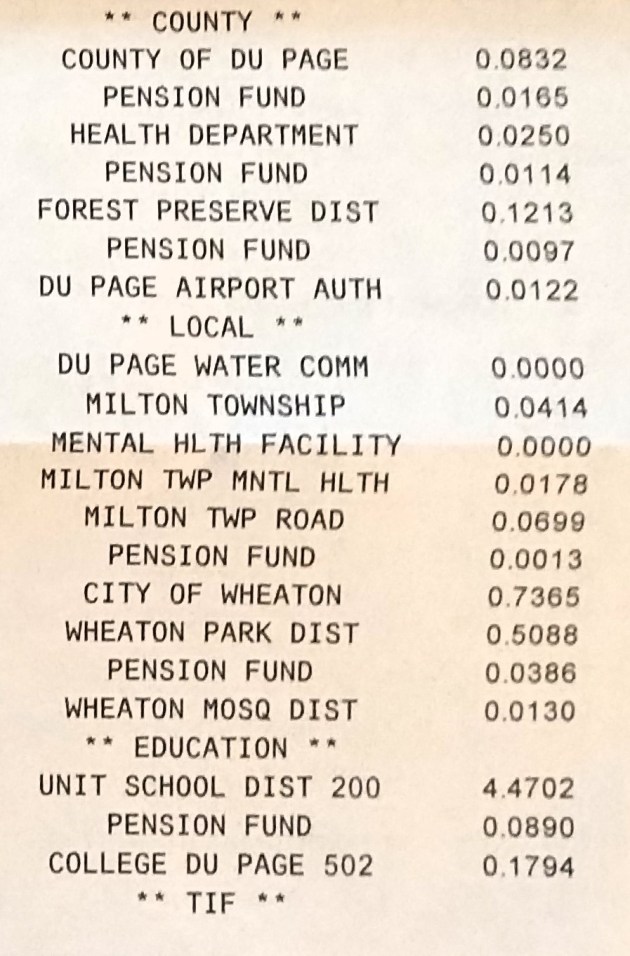
In thinking about recently receiving property tax bills in our county, I wondered what suburbanites would be willing to give up in order to lower their taxes. Here are some thoughts about each of the taxing bodies that receive monies:

-the county: how many people could name exactly what the county provides? Some roads, some medical and social services, some other things. Perhaps some people would rather pay a municipality or a state to do the same things?

-Forest Preserve: our county’s Forest Preserve is large and people tend to like green space and nature. Is it worth the cost (and the potential lost to developing more housing to address needs)?

-pension funds: I’m guessing taxpayers have little choice here.

-DuPage Airport Authority: how many average residents see the benefits of having a private airport within the county? Perhaps this helps some businesses?

-water commission: getting water is necessary.

-Milton Township with four lines: does the work the township does be carried out by the county or municipalities?

-City of Wheaton: lots of local services, including roads. What would residents want the city to do less of?

-Park District: not everyone participates and facilities and programs can be costly. But is the alternative all private options?

-mosquito district: who likes mosquitos?

-K-12 school district: the tax costs are high but what suburbanites want lower quality schools (which then they often associate with property values)? Or how many people want less money for the next generation?

-Community College district: with the costs of college these days, would people be willing to have a smaller community college or no community college option?

Consider these all together and the tax money goes towards schools, roads, public health, and more. Perhaps the argument could be made that these same services could be provided more efficiently or at better scales. This might save some money but does not necessarily address the long-term issues of rising costs and the need to update and maintain vital infrastructure. And if voters restrict one source of funding – such as limiting property taxes in California – then governments will seek revenues elsewhere.

Is it possible to consider all of these taxes at once rather than considering them one a time through referendums or each body making decisions that are best for them?

Illinois drops state’s 1% grocery tax, over 150 communities have adopted one

Local governments need revenue for local services. So when the state of Illinois dropped its 1% grocery tax, many municipalities have adopted their own 1% tax:

Photo by Pixabay on Pexels.com

Even though the measure failed in Bensenville, at least 163 communities around the state have recently enacted local grocery taxes.

Gov. JB Pritzker signed a bill last year repealing the state’s 1% grocery tax, saying it hit poorer families harder. But the bill also allowed municipalities, which depend on the revenue, to implement their own tax. Bensenville put the proposal on the ballot to get voters’ input, but local officials are not required to do so. In many municipalities, local governing bodies are casting the deciding vote…

The state suspended the grocery tax for fiscal year 2022 to help fight rising inflation, but municipal leaders say losing the stream of revenue permanently forces them to consider cutting services, raising sales or property taxes, or implementing a local grocery tax. If they approve a local grocery tax by Oct. 1, it would take effect on Jan. 1, 2026, when the state tax expires…

Illinois residents already pay the highest combined state and local taxes in the nation, at more than $13,000 annually, according to a recent report by WalletHub. Food prices rose 3% in the past year as of March, and the federal government forecasts them to rise another 3.5% this year…

“If local governments believe it is necessary to tax milk, bread, eggs, etc. to fund local services/local government, then they should be responsible and accountable for that decision to local taxpayers,” Illinois Department of Revenue spokeswoman Maura Kownacki told the Tribune. “The state should not be imposing a regressive, statewide sales tax on groceries especially during a time when inflation is hitting the pocketbooks of Illinois families.”

The cynical take would be that in a state with high taxes the Illinois governor wanted to paint the state in a good light by dropping the tax. Municipalities have limited options for filling the budget hole so they quickly move to adopt a local tax. The grocery shopper notices no change in taxes while the politicians debate who was more responsible.

I get the reaction from communities. They want a balanced budget each year and don’t want to have to cut services or acquire debt. Getting money from groceries is dependable money as people need to buy food.

At the same time, adding local taxes and fees can make residents angry. They already see the amount the federal and state governments take in each paycheck. Why do local governments charge for car registration and ask for more money for schools and keep coming up with new revenue ideas?

I wonder if this is also part of the larger issue of limited growth in Illinois. If communities were growing – adding residents, businesses, energy, status – this can cover up revenue issues. New growth leads to growing budgets with new tax money coming in. But if many communities in Illinois are growing slowly or not growing at all, this means stagnant budgets. Or worse, communities have to spend more to maintain older infrastructure that supported growth decades ago.

It may just be a grocery tax but the issues could be much larger.

Data centers as public utilities

As one company looks for approval to build a data center in an Illinois town, they made this argument:

Photo by Brett Sayles on Pexels.com

“When you use your phone to order an Uber or make a doctor’s appointment, it’s likely going through one of our data centers,” Baumann told a Minooka Village Board meeting in January.

“We consider ourselves a utility, like water or sewer or electricity. It has that kind of importance to everyday life,” he said.

But Equinix is not a regulated utility like ComEd or Peoples Gas. Equinix is a publicly traded company whose top shareholders are Wall Street titans such as BlackRock, State Street and Vanguard. 

It’s a supplier that’s kept on a tight leash by the big dogs of artificial intelligence, namely, its partners, including Microsoft and Google.

Contrasting opinions here from the corporation’s real estate director and the Chicago Tribune. On one hand, it is hard to imagine life today without the Internet, social media, and smartphones. All that data transmitted through the air requires infrastructure including cables, towers, and data centers.

On the other hand, all of this is not considered a utility in the same way by the federal and state government. Gas, electricity, and water have all sorts of regulations so that everyone can access them. They are considered essential to housing. The right to the Internet does not exist yet. And the nod above to the private market may or may make sense; other utility companies are publicly traded and seek profits.

Is this a convincing argument in the long run? Would local officials and residents be more inclined to approve a data center if they think of like a utility or more like a company?

Under 15% of local voters could decide important suburban mayoral race

The Chicago Tribune made its endorsement for mayor in Aurora, Illinois. This is not a small city or a recently-developed place; Aurora is the second largest community in Illinois with over 175,000 residents and it has nearly two centuries of history. The current mayor ran in the 2022 Republican primary for governor. Lots of people would be interested in voting, right?

Photo by Tara Winstead on Pexels.com

Or maybe not. Richard Irvin has been elected as mayor twice before, in 2017 and 2021. The first time he won with 5,838 votes out of 10,963 total votes. The second time he won with 6,697 out of 12,047 votes. The 2021 primary election had low turnout. In the 2021 mayoral election, turnout was under 13% for the Kane County portion of the city’s residents.

And this is not an isolated case; voter turnout in local elections in the Chicago region is often low.

All of this means that a relatively small portion of communities elect local officials. If turnout is under 15%, then a mayor can be elected by less than 10% of a suburb’s population. These elected officials then help make important decisions about local ordinances, land use, infrastructure, and more. They represent the community to residents and outsiders.

Does this low turnout in local elections help explain why it is difficult for mayors to make the jump to higher levels of government? They may be known in their communities – also think of Pete Buttigieg, former mayor of South Bend, Indiana – but they do not necessarily need large voting blocs to support them and help them get into office. Running for higher offices, like Congress or governor, then requires amassing many more votes.

Two Chicago suburbs: one reinforcing its “welcoming city” status, one “reaffirmed…it is not a sanctuary city” and would work with ICE

How will different suburbs respond to the current situation in the United States regarding immigration? Two Chicago area suburbs are pursuing different approaches. Start with Skokie:

Photo by Matt Barnard on Pexels.com

Village of Skokie officials indicated at last week’s Village Board meeting that they will strengthen the village’s “Welcoming City” ordinance.

Trustee Khem Khoeun asked Mayor George Van Dusen if the village needed to update its welcoming village ordinance given recent immigration enforcement raids and the anxiety that some people in Skokie’s immigrant community are dealing with…

Van Dusen said Skokie’s existing ordinance was established during Trump’s first term in office, when the administration attempted enacting a travel ban for seven Muslim majority countries. The ban was ultimately blocked, but the effort apparently impacted Skokie residents.

Van Dusen recalled an incident in 2017 when a personal friend of his said her daughter in grade school was concerned she could be deported because she was Muslim, despite being born in the United States.

And then Orland Park:

Orland Park says its police will work with federal immigration agents on cases involving undocumented immigrants charged with or convicted of criminal offenses.

The Village Board recently adopted a resolution that also supports Senate Bill 1313 that would undo provisions of existing state law concerning law enforcement coordination with federal agencies such as Immigration and Customs Enforcement.

Trustees also reaffirmed Orland Park is not a sanctuary city, citing an ordinance approved by the board in January 2024…

The village said copies of the approved resolution would be sent to Gov. JB Pritzker and leaders in the Illinois General Assembly as well as Orland Park’s representatives in Springfield.

These suburbs could represent two opposite ends of a spectrum. They are different places with different locations in comparison to Chicago, different histories, and different residents. It is hard to know how many suburbs would have views similar to either one. There are hundreds of suburbs in the Chicago area and thousands across the United States. There will likely be a wide range of municipal reactions to immigration, including not making any resolution at all for a variety of reasons.

Will these resolutions be influential in the suburbs and in the state? Would businesses and residents make decisions to move to or stay in these suburbs when they pass these resolutions?

Another factor to consider: many immigrants to the United States move to and live in suburbs. They move to these two suburbs and suburbs like them. How much do these resolutions affect long-term patterns in the character of these suburbs?