Kanye West does not like McMansions

I missed this information from two years ago; here is what Kanye West thinks about McMansions.

Photo by Thirdman on Pexels.com

The “YZY SHLRS” are not West’s first try at real estate development. Together with his wife Kim Kardashian West, the rapper transformed a McMansion in suburban Los Angeles into a cavernous, eclectic abode that has since unfolded on the covers of several esteemed magazines.

Earlier this year, Architectural Digest described the Wests’ residence as “one of the most fascinating, otherworldly, and, yes, strange pieces of domestic architecture on the planet.”

Characterized by clear, geometrical lines and white open spaces, filled with equally futuristic furniture, the home resembles a modern-day spin on a Belgian monastery, as West told AD.

The standout nature of the home, a reflection of West’s highly individualistic style, is not a surprise given the rapper’s annoyance with luxury properties that, despite their own embellishments, more often than not come off as the products of the same mold.

“The relationships that I have with architects, my understanding of sacred proportions, this new vibe, this new energy,” is what is driving West, the real estate developer. “I am tired of McMansions,” he told Charlamagne tha God. “That is wack. Everybody’s house is wack.”

His critique of McMansions and large homes is a common one: they are produced with similar features and styles. West hints that this is even the case at the level of home above McMansions where more resources does not necessarily translate into unique or quality homes. You can purchase a very expensive property and it may not be interesting or suit the particular needs of the residents.

At the same time, with his wealth and connections, West operates at a level beyond the typical McMansion owner. He has the resources to transform a large home based on a new vision. Mansion as monastery, as it were. He can pursue a particular plan and mold the home in ways that many McMansion owners cannot.

Now, if someone with fame and resources could help find a way to transform McMansions or relatively large houses (think 3,000-6,000 square feet) in the ways that West wants, this could help change the image of such homes. I imagine many McMansions owners would be interested in the idea of “sacred proportions” in their homes or differentiating their residences in significant ways from neighbors.
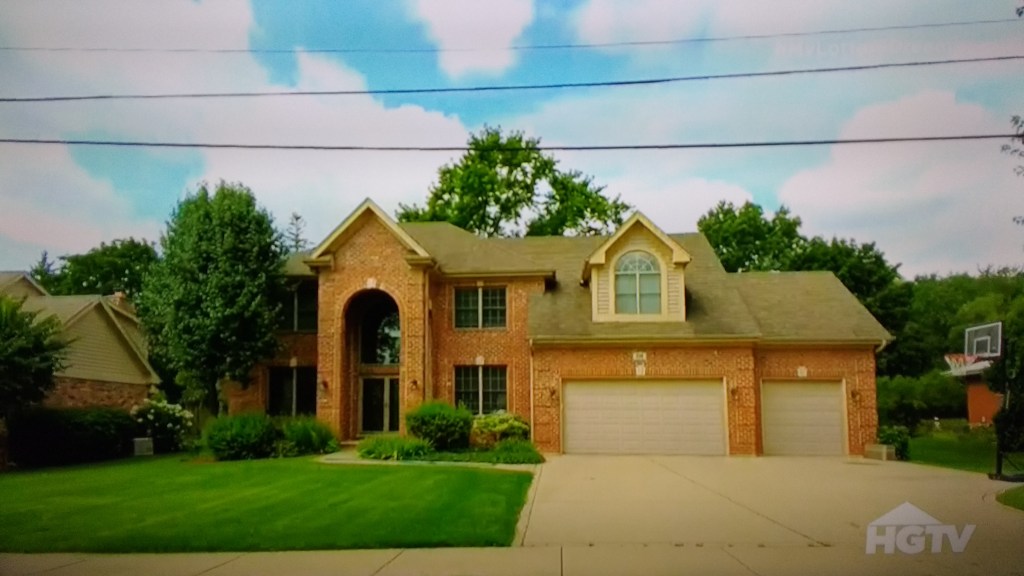
McMansions as the fad of 2001

If we had to pick a year when McMansions were the key fad, would 2001 be it?

2001: McMansions

McMansions, shorthand for the oversized homes developed en-masse in the suburbs, were seen as status symbols by some and architectural abominations by others. By 2008, the crash of the housing market left many of these multi-bedroom behemoths empty or foreclosed upon.

The list of fads has McMansions in the right era. From the article I published in 2012 on defining a McMansion, the term and kind of home arose in the early 1990s and the term was more widely known and used by the early 2000s. By my count of mentions of McMansion in the New York Times and Dallas Morning News, the use of the term roughly peaked in 2005 and 2006.

So why 2001 – a very specific year – on this list of fads by years? It could be that surrounding years had more time-limited fads listed. Right before McMansions come Furbys, Latin pop, and Heelys and right after come beyblades, flash mobs, and wristbands for a cause. McMansions had to fit somewhere in a roughly ten year stretch and perhaps 2001 had the biggest opening.

Or, McMansions represented a different era in 2001 before September 11th of that year. A growing suburbia, SUVs and big homes, entering a new millennium. Enough homeowners had money to spend on big homes with a lot of square feet and a facade to impress the neighbors. The housing bubble crash came a few years later but perhaps McMansions had already peaked years before.

Looking at the full list of fads, the McMansion is the biggest item in the list in terms of price and size. When history is written (and rewritten), it will be interesting to see where McMansions fit into the late 1990s and early 2000s narratives as well as the broader sweep of housing.

Can a McMansion dweller have the last laugh?

A controversial TikTok video suggests a housewife could get the last laugh in her McMansion:

Photo by Karolina Grabowska on Pexels.com

Finally, Drummond, who also considers herself a content creator, took issue with women who criticize other women who marry their bosses: “Women will bully the woman who’s the secretary who married the doctor, but who has the last laugh?” she asked on camera. “Her in her McMansion with her husband and her baby.”

This last line quoted above is not what is driving the conversation about the video but it does highlight the divisive nature of McMansions. One person could live there and love the house, the space it offers, and the success it symbolizes. Another person might say they would never live in a McMansion and they are an abomination on the housing landscape.

These two opposing views come into conflict in different ways. Those opposed to McMansions are unlikely to move into a neighborhood full of them. A teardown McMansion might create conflict between a possible new McMansion owner and neighbors with other kinds of homes. Proposed McMansions can invite comments and action by people inside or outside a community. The conversation cited above is a more abstract scenario involving life in a McMansion.

Adding opinions about McMansions to another hot conversation is unlikely to lead to resolution on McMansions. However, it does provide a reminder that real people live in McMansions and many like living in McMansions or would want to live in one. This also reminds me of an earlier set of posts about gendered life in McMansions

If you replace a suburban colonial with “a very modern house” rather than a McMansion, is this a win?

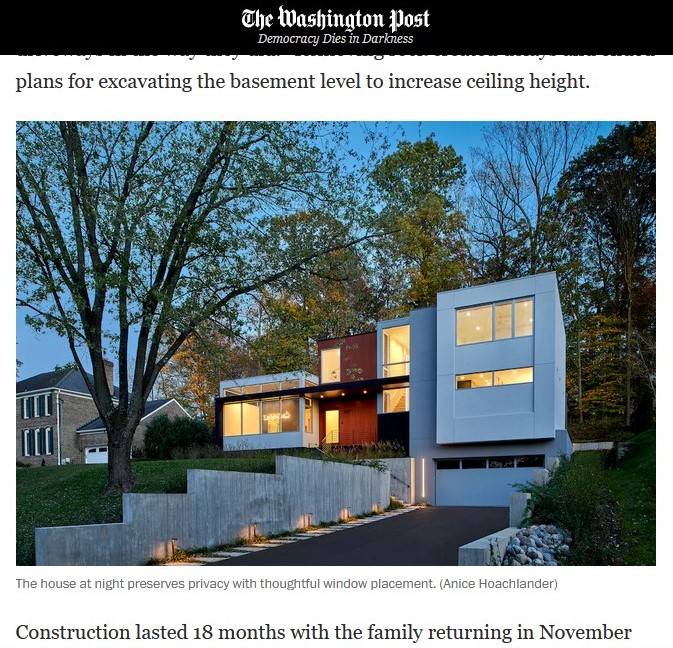
A profile a recent teardown in Bethesda, Maryland highlights that the new structure is not a McMansion:

Teardowns can often raise concerns in established neighborhoods when a McMansion suddenly arises in a collection of bungalows. The design team didn’t want that to happen. “We didn’t want it to look like a UFO just landed in their yard,” Bloomberg says. “We looked at scale, proportion and massing.”

This quote above highlights what the new home is: it is has better scale, proportion, and massing compared to McMansions which tend to get these wrong. It was designed by an architectural firm rather than builders.

The best text description of the new home is this paragraph:

“Everything feels very scaled,” Bloomberg says. “It has a warmth to it even though it’s a very modern house – there [is] lots of wood, which helps make it very warm and welcoming.”

The pictures of the interior reinforce this description: it is a more modern structure.

But, one picture early on in the article hints at a contrast between the new home and the neighbor:

The teardown does not appear to be that much different in size than the neighbor but it certainly presents a different style of home compared to the brick and shuttered Colonial. Teardown McMansions are often criticized not fitting in with the existing style of homes.

I have asked before: would Americans prefer to live next to a McMansion or a modernist home? The article says “there has been no neighborhood backlash” to this new teardown. Now, what happens if a teardown McMansion goes up next to this modern home…

Prefabricated McMansions

A debate in Rhode Island about what counts as an affordable housing unit included this suggestion about prefabricated McMansions:

Photo by Mike B on Pexels.com

But although the state’s definition of manufactured home could include a prefabricated McMansion, House spokesman Larry Berman said the bill requires units to qualify under the U.S. Department of Housing and Urban Development definition of manufactured homes, which is much narrower.

I wonder (a) how many prefabricated homes might qualify as McMansions and (b) how a prefabricated home fits with the critiques of the poor construction and/or architectural quality of McMansions.

On the first point, I imagine most prefabricated homeowners are not intending to create a McMansion. It is possible, but I do not imagine there are many prefabricated McMansions. If they do exist in sizable numbers, I would be interested to see them.

On the second issue, would a prefabricated home be a better construction choice compared to concerns some have with mass production builders? Or, could prefabricated homes successfully address the architectural issues of McMansions such as too many gables, poor proportions, and a mishmash of styles? I do not know how more expensive prefabricated homes rate in terms of quality and I suppose prefabricated homes could look like anything.

If the number of prefabricated homes in the United States increases, some might be McMansions or some might be the new McMansions in what could be a fluid term.

Separating McMansions from luxury homes

What is the difference between a McMansion and a luxury home? Here is one viewpoint:

Photo by Frans Van Heerden on Pexels.com

So, what exactly is a luxury home, Michael, you ask? Some people classify it by the style of the house, or perhaps by its finishes, or by the product brands in the home. So, how do we define a luxury home from a price standpoint? I know different brokerages and different real estate firms define luxury real estate differently. Many define a “luxury home” as a property that is priced at $1,000,000 or higher.  For the purposes of this article, we’re going to define a luxury home as a home that is listed for sale at at least three times the average sales price for that market. (There are four primary price points in most markets: starter-/entry-level, average, high-end and luxury pricing. I define high-end homes as homes that are two times the average sales price for that given area.)

Luxury is relative to that specific market. Most markets have luxury homes based on our definition; it’s all relative, however, because when people think of luxury, they often think of McMansions or estate homes, and that’s not always the case. To take action, you need to develop graphs and other visuals that can articulate the data for luxury and high-end real estate for/in your marketplace: Are you in a buyer’s market or a seller’s market? High-end and luxury homes start at what price point for your market?

I am interested in the ways the dimensions of a luxury home are different than those of McMansions. This is based on my four traits of McMansions.

  1. The absolute square feet of the home is not mentioned above. Presumably, both McMansions and luxury homes are large.
  2. The relative square footage is also not mentioned above. Perhaps luxury homes are generally larger than McMansions?
  3. The architecture and design is mentioned as luxury homes may have particular features and/or finishes. While McMansions are often criticized for mass produced features and/or poor architectural choices, luxury homes stand apart from this.
  4. The luxury home is more expensive, whether over $1,000,000 in price or some multiplier above the market or in a tier above others. McMansions are more expensive than small homes or starter homes but they are not as pricey as luxury homes. The luxury home is then a true luxury good available only to a few while McMansions are meant to appeal to a broader audience.

If the description above is correct, luxury homes are mostly different because of their price at the top end of the market. McMansions are not that; they may aspire to be luxury homes but they are for a different price point and have different features that have less to do with square feet and more to do with design elements or features.

(The next step might then be to provide advice for real estate agents and others who want to appeal to McMansion buyers and owners. How to stay away from luxury home territory and above more typical homes?)

Preserve a Brutalist courthouse in the suburbs, can McMansions be far behind?

Landmark Illinois recently released its list of the most endangered historic places and it includes several places in the suburbs of Chicago. This is the largest suburban building on the list:

This is indeed a unique structure. Suburbanites are unlikely to see many large Brutalist buildings in suburban communities as they are traditionally associated with big cities (think Boston City Hall or the FBI Building in Washington, D.C.).

I have asked before whether Americans would prefer modernist structures more broadly or McMansions. Both kinds of buildings have their detractors who critique the materials, the style, and the prevalence of such structures.

If some of the goals of preservation are to protect notable buildings and help show important architecture of the past, both such styles deserve to be recognized. Brutalism is not likely the preferred style in suburbs. McMansions are not favored by many. At the least, both kinds of buildings represent a particular era. At their best, they present a particular approach to buildings and spaces.

Even if certain kinds of structures or certain styles are not appealing to all, there is still value in preserving examples of this work. If Brutalist buildings are in, we can expect to see preserved McMansions in the future. Imagine protecting the subdivision McMansion of the North Shore or the teardown McMansion of Naperville to show how Americans thought about suburban housing at the turn of the twenty-first century.

Another reason Americans need McMansions: to fit their giant TVs!

You need a large room to fit the biggest televisions:

Photo by Max Vakhtbovych on Pexels.com

What’s the biggest TV you can buy? If we’re talking about conventional televisions, the TCL 98R754 is a staggering 98-inches wide. But if you’re willing to consider a laser or short-throw projector TV, Samsung’s The Premier is capable of showing a screen up to 130 inches. But unless you live in a cavernous McMansion with 18-foot cathedral ceilings and a sprawling layout, you won’t be able to get them to fit in your living room, let alone be able to take full advantage of their features.

How can I know if an 85-inch TV will fit in my room?

The best way to find out is to measure (in inches) from where the TV will be wall mounted or placed on a stand to where you will be sitting, and then divide that measurement by 2. If your couch is anywhere from 150 to 170 inches (12.5 to 14 feet) from the TV, an 85-inch screen will be an almost perfect fit. You can, of course, go a bit bigger (if possible) or smaller depending on what your budget is and what is available from each brand. But a screen that is too big can overwhelm your space and even cause motion sickness while one that is too small will make it feel cavernous and force everyone to crowd around in order to see.

Put together the hours of TV Americans watch each day on average plus their tastes for big houses and the cycle continues: people need a large house to fit their large TV which leads to needing a bigger TV which leads to a bigger house…

Presumably, there is some limit to how big a television can or should be. Perhaps this is about the ability to see what is happening on the entire screen. Perhaps rooms truly can only be so large. Perhaps screen technology will be replaced by an entertainment chip in glasses. Or, people might get tired of important rooms in their house being dominated by a gigantic screen.

On the other hand, perhaps this helps signal a shift away from homes leading with their garages – the so-called “snout houses” – and instead leading with a giant screen. Imagine walking in the front door and the major room is devoted to the biggest possible screen. The screen is something to show off and impress visitors with. Homes could even be designed so that the outside would make clear the giant screen and the room it sits in.

Preserve a McMansion to help combat climate change

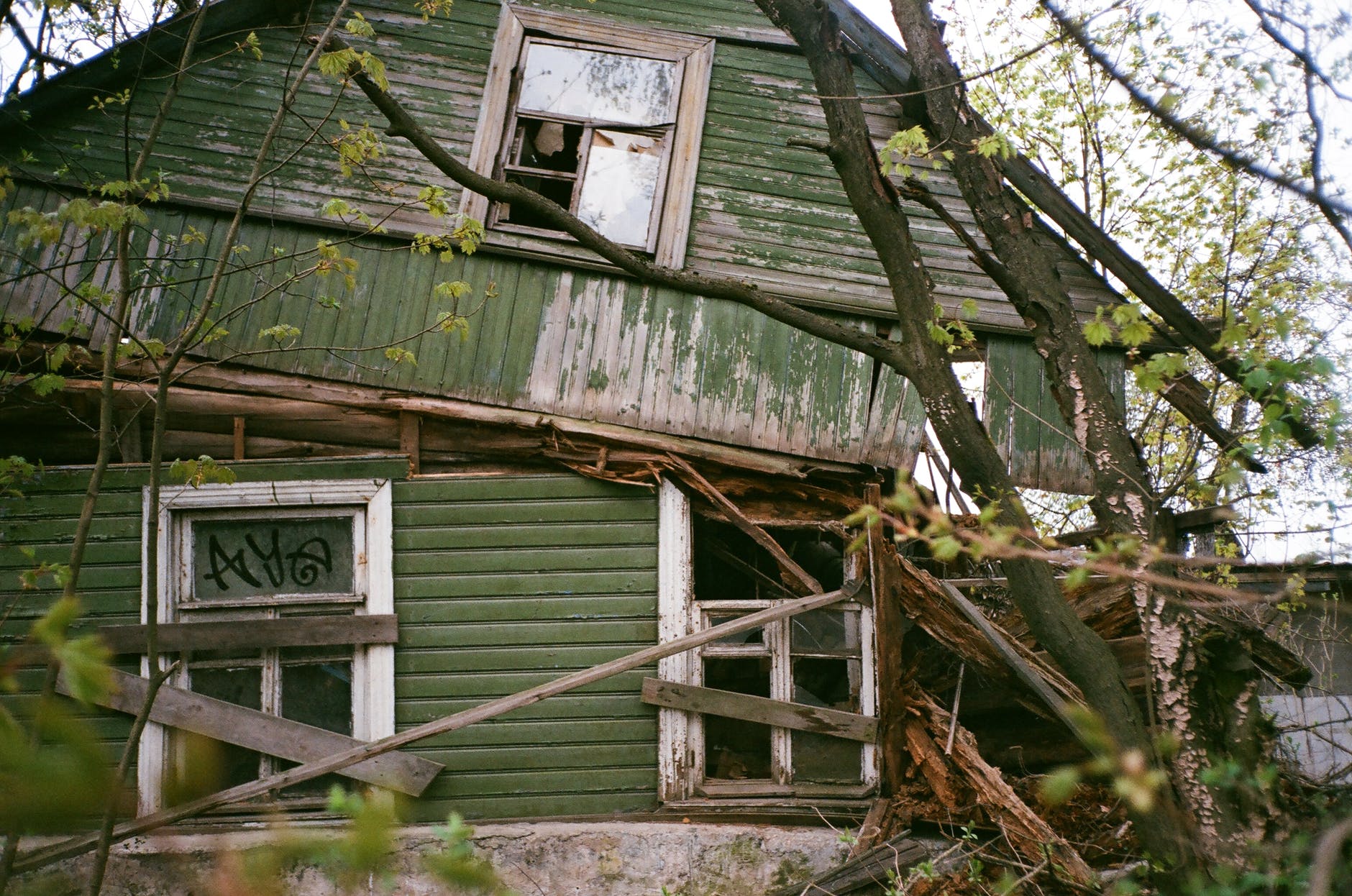
As part of an argument against demolishing buildings, McMansions should also be preserved to help address ecological challenges:

Photo by Darya Sannikova on Pexels.com

Anyone interested in mediating the worst ongoing outcomes of the present climate catastrophe must also disconnect the idea of development from our notion that it proceeds only in cycles of demolition and new construction—a pattern that prevails because it is maximally legible to our existing structures of debt, financialization, and speculation. About 80 percent or more of a typical new house’s lifetime ecological and energetic impact comes through the operations of initial material extraction, manufacturing, transportation, and construction; and then of eventual demolition, further transportation, and decay. Sustainable buildings are therefore not new buildings—however fuel-efficient their machines and materials. Sustainable buildings are buildings that have been sustained. Merely by being seventy-five years old and in working order, Geller I was radically sustainable. For that matter, any dumb 1990s McMansion down the block is almost as ecologically precious as Geller I. That McMansion’s judicious conservation, too, is part of ecological stewardship.

This kind of conservation comes not by preserving any one house exactly as it is, but by shifting from a fantasy of perpetual newness or untouchable oldness to the best practices that Gropius and Breuer cherished in old New England farmhouses: renovation, addition, retrofitting, and all manner of adaptive reuse that allows ever more lively and dignified density. The model of development becomes less one of the sudden appearance and disappearance of structures, and more one of continuous emendation and repair. Not incidentally, this affords ever more innovative ways of living intergenerationally and integratively—rather than dwelling in the built residue of past generations’ conventions about how families and communities ought to live.

Demolition and rebuilding takes a lot of resources. Additionally, rehabbing existing homes can help keep the character of a neighborhood or community consistent.

The twist above is that this might be the preferred course for McMansions. Such homes are not usually renowned for their architectural quality. Critics are not fans of the ways in which they were constructed, their drain on resources, and their ongoing presence.

I have argued before that at least a few McMansions will be preserved, at the least to mark a particular era and design. Preserving them to help combat climate change moving forward might be a unique feature of this decade.

What happens to an athlete’s McMansion when they go to a new team?

Quarterback Matt Ryan is now a member of the Indianapolis Colts after a trade from the Atlanta Falcons. What happens now to Ryan’s suburban McMansion outside Atlanta?

At the least, Ryan can enjoy lounging outside his large dwelling by a ping-pong table and think about handing it off to Jonathan Taylor?

I wonder what the market is for large houses of former athletes. I know of some high profile houses in the Chicago region where pro athletes sell their homes to other athletes who are coming to town. Some big houses, such as Michael Jordan’s mansion, languish for years.

From what I saw, Ryan’s home is not a mansion or a megamansion. Because it is more of a McMansion, it likely will find a buyer in a growing metropolitan region among those with resources to purchase such homes and who like such homes. Perhaps it might depend on how much football the house reflects; for example, see former Bears coach Matt Nagy’s house listing.

Of course, it will also be interesting to see where Ryan settles in the Indianapolis region. Will he settle in the wealthy suburban communities of Carmel or Fishers where I would guess some McMansions can be found?