Finances, ideal lifestyles, and the push and pull away from cities experienced by young adults

Looking back at residential patterns after the late 2000s economic crisis and the COVID-19 pandemic, what motivated younger adults to leave cities and move to suburban or rural communities?

Photo by Kelly on Pexels.com

Later waves that arrived just after the Great Recession, however, had a different type of migrant identity. As luxury housing continued to be built in New York City and affordable areas disappeared, some residents found the big city “inhospitable to their desired urban lifestyle and identity”: “Many of today’s newcomers to Newburgh use the term ‘priced out’…though few actually left in direct response to their rents rising or their landlord pressuring them to move out,” Ocejo writes. “But cost still played an important role in their decision to relocate…. They felt displaced from their own potential and opportunities to thrive as middle-class urbanites living a specific city lifestyle in the metropolis.”

Herein lies the tension between getting “pushed” from a city versus “pulled.” Some contemporary migrants are pushed from a particular lifestyle and pulled by a promise that it can be built elsewhere. Unlike midcentury white flight—which was highly dependent on the construction of suburban housing, racism, and statecraft—middle-class millennials (especially those facing mounting city prices and remote work) find that smaller cities and towns cater to a broader vision for life, one that provides opportunities to buy a house, build a business, or comfortably raise a family…

“When people move from one community to another…they leave behind their old job, connections, identity, and seek out new ones. They force themselves to go meet their neighbors, or to show up at a new church on Sunday, despite the awkwardness,” Appelbaum writes. What this might mean for rural or metro areas is yet to be seen. But for people moving out of large cities, it’s redefining what upward mobility might look like. Building wealth through housing may be unattainable, but it’s being replaced by a search for a new American dream: self-actualization.

What I read in this description is an intertwining of financial matters and what lifestyle people see themselves having. Costs and resources matter; housing is a sizable portion of many budgets. Housing has become more expensive in many American metropolitan areas. But cultural narratives and individual aspirations also matter; what life does someone want to live? What do they see as a good life?

On this first factor, it helps to have more financial resources. The stories told in this article seem to involve people who had enough resources that they had options of where to live. They could make a major move, perhaps by selling a residence in one place to go to another. Or they had careers and job skills that enabled them to live in multiple places.

On this second factor, Americans have developed a lot of narratives over time about desirable lives. They want a single-family home in the suburbs. They want to be individuals who pursue their own path (the self-actualization suggested above). They want to engage community life. And so on.

Perhaps then it would be helpful to think about a two-pole line that demonstrates how people make decisions about where to live and what to pursue. On one side of the line is finances and what is possible in terms of money and resources. On the other side of the line is an image of the life they want to live and what that entails on a day-to-day and long-term basis. Depending on the current situation personally and in society, they might slide a marker more toward one pole than the other.

(Does this describe how young adults make these decisions or is this limited to a certain subset with particular resources and goals?)

The pandemic gives residents to some places, the years afterward take them away

What happened to the places that gained residents during the pandemic? Some are now experiencing less growth:

Photo by Tracey Mahoney on Pexels.com

Flash forward to today, and the big “winners” of the work-from-home reshuffle — metros that drew hordes of footloose workers and disaffected coastal dwellers — have turned into losers. Fewer people are moving to so-called Zoomtowns. Home listings are piling up on the market. Prices are dropping. The anxiety has shifted from buyers trying to elbow their way in to sellers just trying to offload their properties. A new report by the real estate analytics firm Parcl Labs, shared exclusively with Business Insider, shows that home sellers in the lower half of the US, also known as the Sun Belt, are the most desperate in the country…

Housing demand surged early in the pandemic — the country’s homeowning ranks swelled by a whopping 2.2 million people between the first quarter of 2020 and the same point in 2022, an analysis by the Harvard Joint Center for Housing Studies shows. But for all the talk of upheaval, movers more or less stuck to those pre-pandemic flight patterns — just at warp speed. People kept migrating from big-city centers to the suburbs and from the North to the South. Sun Belt states, including Florida, Texas, Arizona, and North Carolina, experienced the largest population gains from domestic migration between mid-2020 and mid-2021, per a Harvard analysis of Census data. The Dallas metro, for example, gained around 63,000 people from other parts of the country that year, a huge jump from just 19,000 the year prior. Phoenix, Tampa, Austin, and Charlotte recorded similar increases. Expensive states with large urban areas, including California, New York, Illinois, and Massachusetts, saw the biggest losses…

The North-to-South movement still holds, but the North is losing fewer people, and the South isn’t gaining like it once was. The most recent numbers, for the yearlong period ending in mid-2024, show net domestic migration to the South was down almost 38% compared to the first year of the pandemic. Domestic migration to the Midwest, on the other hand, is up about 60% in that same period, though it’s still negative in absolute terms. The Northeast’s net loss was down to 192,000 in the latest tally, compared to a loss of 390,000 at the height of the pandemic. With the migration tide receding, sellers in once-hot metros are getting real. In Denver, Charlotte, Jacksonville, and a smattering of other Sun Belt markets, more than half of single-family homes for sale have seen a price cut, Parcl Labs data shows. In the Boston, Philadelphia, and Buffalo metros, the share of listings in that bucket drops to fewer than a third.

That’s just one metric. To gauge sellers’ desperation these days, Parcl Labs created what it calls the Motivated Sellers Index, which combines four factors: the number of price cuts on home listings, the time in between those cuts, the size of the price decreases, and the length of time homes are spending on the market. The higher the score, the greater the homeowners’ urgency to sell. The lower half of the US, with the exception of much of California, is awash in high scores, indicating sellers are ceding negotiating power to buyers. Same goes for much of the West. The Midwest and Northeast, on the other hand, registered some of the lowest scores in the nation: Sellers there are sitting pretty by comparison.

This is something I have wondered about a lot in recent years and even addressed, with Ben Norquist, in a chapter in my book Sanctifying Suburbia: in today’s world of smartphones, the Internet, and easy travel, why do people and organizations stay where they do when they could be located almost anywhere?

Evangelical non-profits described the benefits of being near other evangelical organizations. They thought they could find employees in certain places and could partner with other actors in the community. Some had long histories in their community while others had made a major move to help their budget.

Residents do not just go where there is cheap housing or plenty of jobs. They have ties to places and people. Moving comes with its own costs.

So some more people moved related to the pandemic following similar patterns in previous decades: away from metro areas in the Northeast and Midwest to the South and West. And that appears to be continuing, but at a slower pace and with some indicators that the rapid growth in the South and West is slowing. What does this all mean?

Perhaps the pandemic years were an aberration. Yes, people can work from home but this is not what all companies and organizations want. Bring a bunch of new people to new places and the housing prices go up and the communities change.

Does this mean all that movement would stop completely? Or that places in the Northeast and Midwest would grow? Not necessarily. Long-term patterns are hard to break.

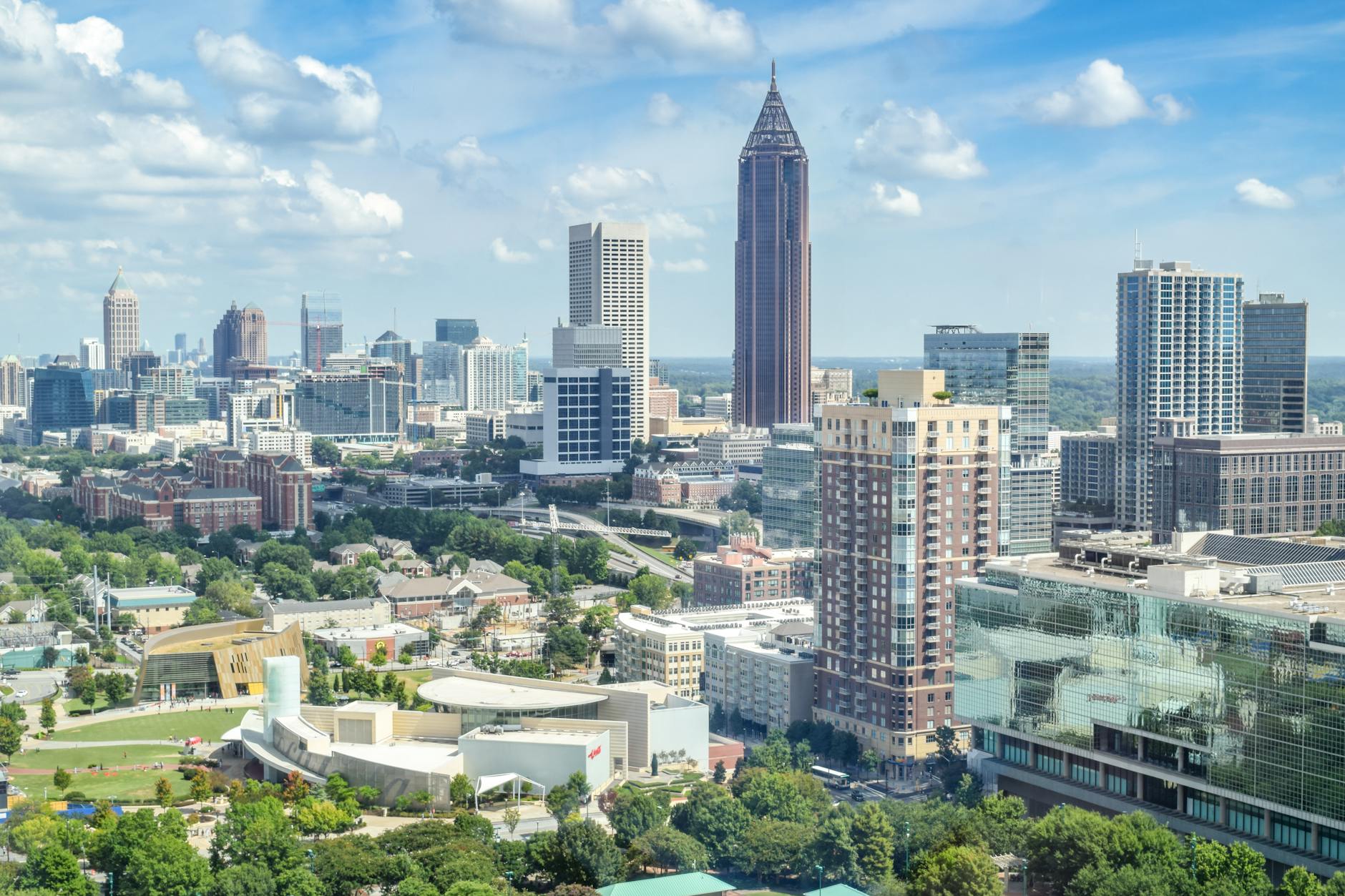
If the population growth of Atlanta has slowed, where are people going instead?

Recent data suggests that Atlanta is growing more slowly than in the past:

Photo by Nate Hovee on Pexels.com

Census data show more people from within the U.S. left metro Atlanta than moved to it during the 12 months that ended in mid-2024. It was a modest decline, about 1,330 people. But it heralds a significant moment for the longtime growth magnet: This is the first time metro Atlanta lost domestic migrants since the Census Bureau started detailing these numbers three decades ago.

If people are not moving to the Atlanta, where are they going instead? Here are some hints:

Growth in some other big Sunbelt metros has slowed, too, after pandemic-fueled population surges, including around Phoenix and Tampa, Fla., the census data show. Recent Bank of America change-of-address data also show big metros in the region losing steam…

“We just couldn’t afford to live there and have the lifestyle we wanted,” said Adelia Fish, 29 years old, who left suburban Atlanta with her husband in May for a newly built, three-bedroom home in Chattanooga, Tenn…

Whether that big-metro slowdown continues remains to be seen. But census data also indicate many smaller regions in the South—places like Huntsville, Ala., Wilmington, N.C., and Knoxville and Chattanooga in Tennessee—are picking up the slack. Their metros are all running ahead of pre-Covid trends.

The article hints at multiple reasons for this:

  1. Bigger metropolitan regions like Atlanta have advantages but they are at a point where the costs of living there are now higher – housing costs, traffic, limited housing options.
  2. Smaller metro areas can provide cheaper housing and a smaller scale.
  3. Certain jobs or careers are portable or can be done in multiple places, not just in the biggest metro areas.

What does this do to Atlanta and other places that have been used to growth for decades? It is about status – we are on the rise! – and about planning – continued demand for land and buildings leads to different options.

If these patterns continue, keep on eye on what metropolitan areas become the hot ones in the next 5-10 years. How do they respond to a new status and local changes?

Those with the right jobs and resources can move where they want in the United States

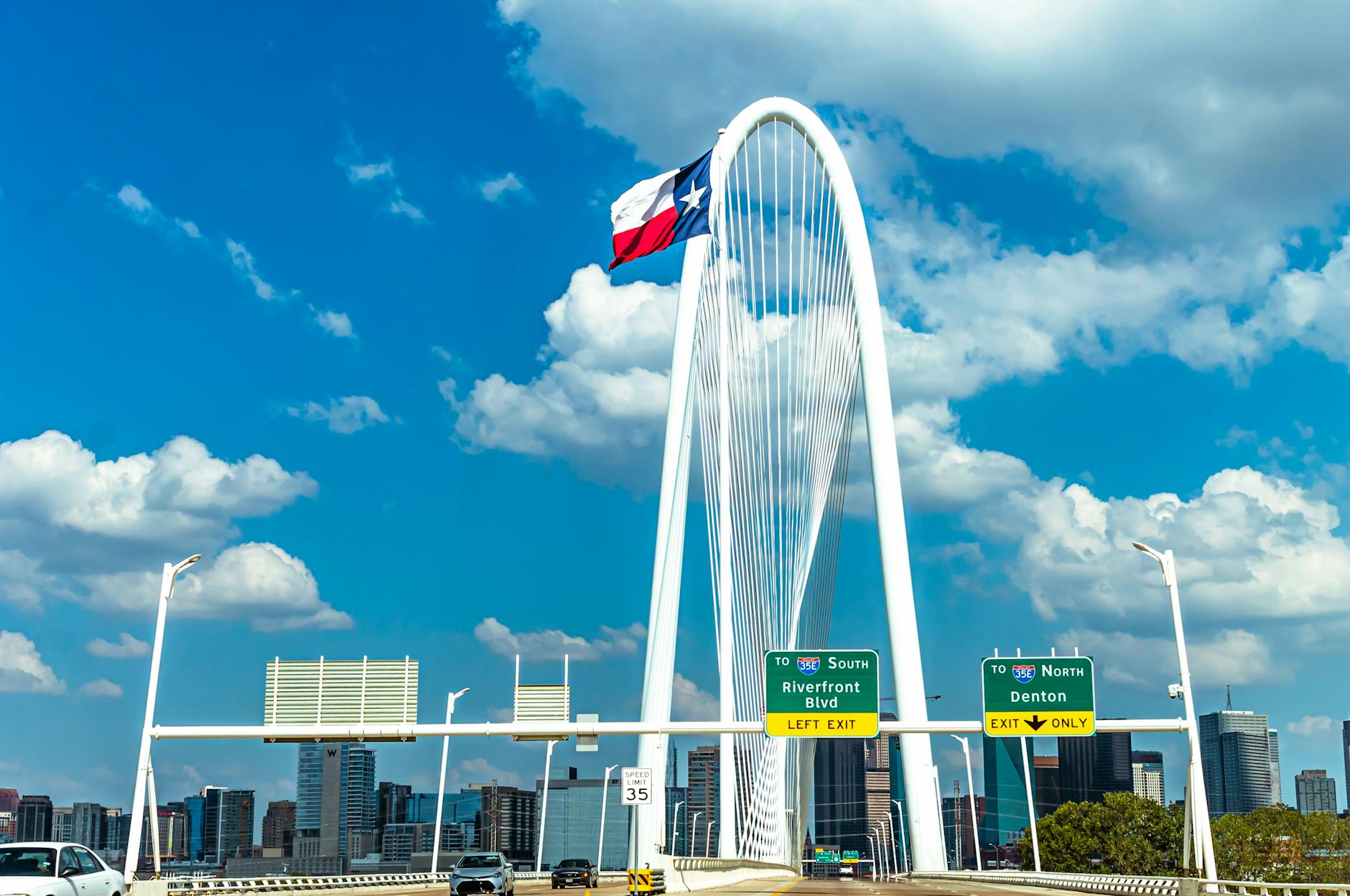
In a story about people leaving Texas (even as the state gained population last year), I was struck by the patterns in the stories of people moving out the state: they could do so. Here is what I mean:

Photo by Terrance Barksdale on Pexels.com

While people have been moving into the Lone Star state to take advantage of its relatively affordable real-estate market, political atmosphere, and work opportunities, some of those same qualities are driving others out. Over 494,000 people left Texas between 2021 and 2022 (though the state gained a net population of 174,261.) It’s a trend that could intensify as housing costs surge and the state’s political landscape becomes more polarized

For Texans, “the Midwest has emerged as popular recently because it is just by and large the most affordable region,” Hannah Jones, Realtor.com’s economic research analyst, told Business Insider in October. “We’re seeing this trend of buyers looking for affordability really explode.”…

In Austin, some tech workers who flocked to the city during the pandemic just can’t seem to get out fast enough

Jules Rogers, a reporter who relocated from Portland, Oregon, to Houston in 2018 for a position at a local newspaper, left Texas less than two years after moving to the city…

Theoretically, Americans can move wherever they like. In reality, the ability to move is constrained by a variety of factors, including financial resources and jobs.

In this story, people can move in and out of Texas relatively easily. Some came in recent years and want to move back out. Others are leaving Texas for cheaper housing elsewhere.

This may be possible for some. But, it is not easy for everyone to do this. Americans do not just move to places where housing is cheaper. People have numerous reasons for locating in certain places and not others. Those with resources and particular jobs that are in demand or available in many places have some flexibility that others may not have. White-collar workers, in particular, may be able to more easily move from big metro region to big metro region (or even out of these regions as some did during COVID-19).

This would be hard data to collect but it would be interesting to compare people moving for different reasons and how long they stay. Do retirees who move to certain places stay longer than those who move for jobs or cheaper housing?

Gen Z headed South looking for cheaper and bigger houses?

Sunbelt populations are growing. One reason is because Gen Z is moving to the South for housing:

Photo by Curtis Adams on Pexels.com

Traditionally, younger generations have flocked to cities to start their careers and enjoy the hustle and bustle of urban life. However, Gen Z is proving to be a little different, with more and more moving to the South in favor of large outdoor spaces, low cost of living and a slower pace of life…

The Southern region boasts more affordable housing and living space, which is becoming increasingly attractive to Gen Z as well as some Millennials and older adults who are fed up with cramped city life.

According to Storage Cafe, the average floor area of single-family homes sold in the South increased by 60 square feet between 2019 and 2022, meaning the average is now 2,608 square feet…

And since Gen Z is more likely to rent rather than own a home currently, it makes sense that more of the younger generation would be seeking out spaces where housing costs are cheaper.

I would be interested in seeing more numbers here. Are Gen Z movers doing so at similar rates as other Americans?

Is one of the side effects of all this movement a point where housing and opportunities in the South are no longer as attractive?

The final part of the article hints at the possible political ramifications of these moves. I would want to hear more about how younger adults might transform communities and day-to-day life in other ways. Is this a continuation of the American suburban dream with more liberal politics thrown on top?

Americans may move close to home to be near politically like-minded residents

How far are Americans willing to move to be in a political environment they are comfortable with? Fewer may move to other countries or other states compared to those who move within a county or region to find residents or communities with similar political views:

Photo by Element5 Digital on Pexels.com

“This idea of ‘red state versus blue state’ misses a great deal of heterogeneity within states, as well as clusters and spatial patterns that occur within states,” said Ryan Strickler, a political scientist at Colorado State University, Pueblo. “Instead, we’re seeing more of a micro level of political sorting.” …

[E]xperts say the more significant phenomenon is people moving within the same state where they can find others who are politically like-minded. These migrations aren’t about specific political outcomes like the Dobbs decision. Instead, they’re linked to social polarization. “There’s a lot of local reshuffling,” said Alexander Bendeck, a Ph.D. student in the Georgia Institute of Technology’s School of Interactive Computing.

In one of his current projects, Bendeck explores U.S. relocation patterns in the 2010s, using population migration data from the IRS to track the number of migrants between counties nationwide. Bendeck recognized the shift in migration from the coasts to the South or Midwest but also emphasized the effects of moving within metropolitan areas. Many natives of major Southern cities have moved out to the suburbs or to smaller cities. And the locals of those suburbs or cities move to more rural areas or even smaller cities.

But there’s a huge caveat to any migration data: It is impossible to attribute all instances of relocation, even within the same state, to politics. In fact, politics has not been a major factor why most Americans have moved in recent history, Strickler said. Instead, migration is more financially driven, whether people are seeking out a lower cost of living, better job prospects or proximity to family. 

I would be very interested in seeing more data on this micro-sorting within region. As noted in this piece, regions are often broken up this way: denser cities at the core vote more Democratic, far-flung suburbs vote more Republican, and in-between suburbs are more mixed. When people move within a region, how often do they end up in a community that aligns with their political sensibilities compared to their previous home?

One way to interpret this is that people are more tied to finances, jobs, and family within local places or geographies than to politics. Another way to put this is that Americans may express concerns about political trends, but they can often find more agreeable conditions not too far from where they currently live.

This highlights the importance of local government and politics even as there is a lot of attention paid to national politics. Even as state or national patterns may not be what individuals desire, they can rest assured that local communities or representatives share their positions. This could be related to the pattern where more Americans approve of their local Congressional representative than they approve of Congress as a whole.

Brick and mortar success in selling chickens and other farming supplies to new “ruralpolitans”

The shift of Americans from cities to suburbs and rural areas helped boost the fortunes of retailer Tractor Supply:

Photo by Brett Jordan on Pexels.com

Such gangbusters growth is unlikely to continue, with the pandemic easing. But the rush to the country that underpins it is less an anomaly than a speeding up of a long-tern trend, as more people – notably millennials yearning to become homeowners – look to adopt quasi-rural lifestyles. Being priced out of urban living is one driving factor; interest in healthier and more sustainable diets, including homegrown vegetables and home-harvested eggs, is another. Whatever is motivating them, Tractor Supply sees an opportunity in these “ruralpolitans” – and the COVID-driven shift toward remote work will help sustain their numbers.

Lawton, who became CEO in early 2020 after two years as the No. 2 at Macy’s, says millennials’ willingness to move farther from city centers is a “game changer”: “We seeing a new kind of shopper in our stores,” he tells Fortune. Now Tractor Supply is adapting to cater to both its established customer base and these younger space-seekers, following a strategic road map with the folksy title “Life Out Here.”…

The fast-growing cohort that Tractor Supply is cultivating, she says, are “beginning to learn how to garden. They have this passion for poultry.” Call them the “country suburban” customers.

The company is strategic about where it meets these customers. Its stores are almost all located in mid-size or small towns – communities that are often too small to support a Home Depot, Petco, or Walmart.

The economic impact of COVID-19 has hit some businesses very hard while others, like Tractor Supply, have found opportunities. From the sound of this article, they had locations in numerous places that received new residents during COVID-19 and had the right mix of products and service that appealed to them.

I wonder about the class dynamics of all of this. How do the new “ruralpolitans” who want to raise chickens or have a small farm and have moved from the city compare to the other shoppers at Tractor Supply or to long-term residents in the community?

Another question to ask is whether these newer residents with these interests in food and farming are in it for the long haul or not. On one hand, if remote work is more viable than ever, perhaps people will stay in smaller communities outside cities and pursue this. On the other hand, if companies ask more workers to return or if small-scale agriculture and animal husbandry is not appealing in the long run, this may be more of a flash in the pan. Industry-wide shifts in agriculture could have an impact as well.

Finally, the move to a more rural life has implications for private lives and community life. Many Americans say they like the idea of living in a small town but this is different than actually living in one. What is the tipping point where an influx of new residents changes the character of the community (or is change somewhat inevitable)? How involved will these new residents be in local organizations, religious congregations, local government, and in local social affairs?

Some evidence Americans are returning to cities in early 2021

Some Americans left cities during COVID-19. New data suggests some people are returning to those cities:

Photo by picjumbo.com on Pexels.com

Some data suggest a return is already underway. Cellphone tracking firm Unacast had earlier noted that phone users were shifting their overnight locations out of New York, but now sees them coming back.

“New York is growing again,” with the city adding a net 1,900 people in the first two months of 2021 versus a loss of 7,100 in the same two months of 2019 and the 110,000 estimated by the company to have left the city throughout 2020…

Similarly, Bank of America economists wrote last week that they “don’t see evidence of a broad urban exodus,” a conclusion that combined analysis of the company’s own card spending data as well as a survey of other reports…

“Out-migration did increase in many urban neighborhoods, but the magnitudes probably would not fit most definitions of an exodus,” he wrote. “What is certain is that hundreds of thousands of people who would have moved into an urban neighborhood in a typical year were unwilling or unable to do so in 2020.”

Stay tuned for years to come: untangling these numbers and what it means for the long-term health of cities will take time as scholars and leaders collect, analyze, and interpret patterns. Was COVID-19 a blip on the long history of American cities? Will they signal a resurgence of urban life or exacerbate the issues many face in moving to major and expensive cities?

One problem in the meantime is that there are plenty of people who want to declare an answer to these questions. For those who dislike cities, the move of residents in 2020 to suburbs and other locations is evidence of the downsides of dense cities. For those who like cities, the numbers can suggest a few people left but city life continued strong and will bounce back. And because either narrative is highly politicized and connected to numerous long-standing American issues like race (example from then President Trump in summer 2020), these are not just speculations; there are people with interests who want to settle the debate over cultural narratives before the data is in.

USPS address change data for COVID-19 sheds light on urban migration

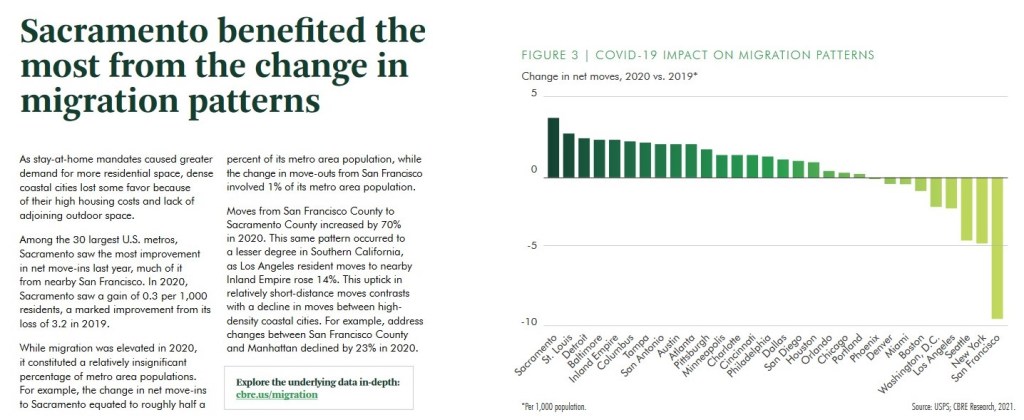
Hard data has been hard to come by regarding people leaving cities during COVID-19. Did 500,000 flee Manhattan? Did San Francisco empty out? Here is data from the CBRE report:

In this comparison of 2020 and 2019 migration data, several big cities fared the worst: San Francisco, New York, Seattle, Los Angeles, and Washington, D.C. Sacramento did well because of spillover effects from the Bay Area.

In terms of actual numbers for cities, here is a summary of the same data for New York City:

By analysing US Postal Service address changes over the last 12 months, the study reveals the greatest out-migration of people is, as expected, from Manhattan, with nine of the 10 zip codes with the largest outflows of residents in the city located in the borough…

In terms of hard numbers, the four zip codes in Manhattan from the Hudson to the East River between 42nd Street and 59th Street lost more than 12,000 residents in 2020. In 2019 that figure was less than 3,000…

The streets may have felt even emptier than the data implies, as the study only looked at permanent address changes – the total number of those who left the city for significant portions of the pandemic is likely much higher. Many more people temporarily left to stay with family or at seasonal rentals…

Talk of an exodus from New York may be a little exaggerated as 41 per cent of Manhattan residents who moved in 2020 stayed in the borough, presumably taking advantage of cheaper rents to upgrade their living space. Prior to Covid, this figure was just below 50 per cent.

The last part quoted above is important: the number of permanent address changes was smaller than it may have appeared. Plenty of people left Manhattan and other urban locations but they did not necessarily give up on their property and may return when COVID-19 fades away. Similarly, the impact on suburbs that took in new residents during COVID-19 may then also see population shifts after COVID-19 as people return to urban neighborhoods.

Planning for more Sun Belt passenger train routes

Even though the United States has struggled to build and use passenger rail between major cities, the CEO of Amtrak suggests that shift in where Americans live means there are new opportunities:

Photo by Pixabay on Pexels.com

There’s 100 million more people in the United States today than there were when Amtrak was created in 1971. And if you look about the shift of where people moved to and where they have moved from, there are 20, 25 dense corridors across our nation where Amtrak has little to no service. And that’s where people have moved to. Think about the corridors in Arizona, between Phoenix and Tucson and Flagstaff, and the route between Las Vegas and Southern California. Look at the growth that we’ve experienced in the Carolinas, for example, from Raleigh to Charlotte and Greensboro and Winston-Salem—we started the service there a couple of years ago with two trains a day, and we’re looking to grow that to six trains a day along that route.

A lot of the growth I’m talking about here would occur on corridors we already serve, but we’re only serving them once a day. Another that comes to mind is Nashville to Atlanta, with stops in Chattanooga. Try to fly that. There’s no service there. It’s a major corridor. It’s an integrated economy. I could go on and on, but I believe these areas of opportunity allow us, over the next 20-year period of time, to double our ridership.

The logic sounds similar to what has been proposed for the Midwest and other corridors in the United States: look to provide good quality passenger train service between cities where the distance means that flying is not that convenient. But, the geography in the example above has shifted from the Midwest, Northeast, or California corridors to the growing Sun Belt where there are plenty of highways but not as many other transit options.

Thinking more about these Sun Belt corridors, it seems like the Amtrak service is waiting for a critical mass of potential riders as opposed to thinking ahead of the population growth. Take the Nashville to Atlanta corridor. These areas have been growing for several decades: the city of Nashville boomed first in the 1960s and then has expanded from nearly 450,000 residents in 1970 to over 670,000 residents in 2019 while the Atlanta metropolitan region grew from just under a million residents in 1950 to over 6 million in 2019. Is it too late for Amtrak to get started with a thriving service or do they demand from potential riders to even consider boosting the amount of service? Imagine if Amtrak had planned for all of this five decades ago and connected the Sun Belt with numerous routes; how might this have affected population growth and transportation patterns? Could the United States have had a sprawling postwar era full of railroad passenger lines?