Transportation advantage: Illinois has the third most interstate miles in the country

Among states, Illinois is 25th in area and and 6th in population but has the 3rd most interstate miles. Here are the top 5 states:
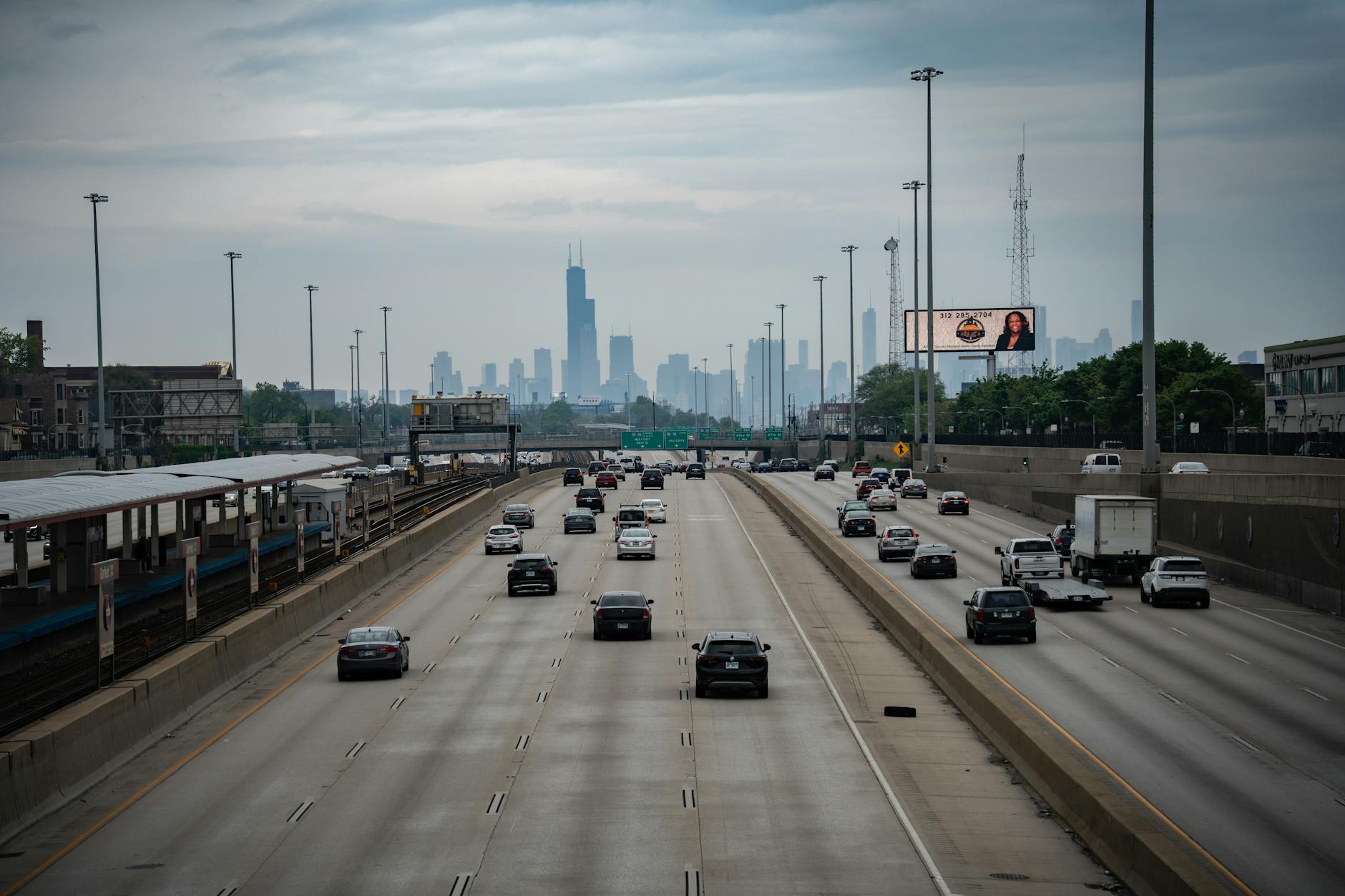
Photo by Chris Duan on Pexels.com
  • Texas – 3,233 miles
  • California – 2,456 miles
  • Illinois – 2,169 miles
  • Pennsylvania – 1,759 miles
  • Ohio – 1,572 miles

Illinois has the third-largest region in the country by population but its next largest cities are relatively small. Interstates connect all of these population centers, connect to big cities not far beyond the borders of the state (like St. Louis and Milwaukee), and link to places far away. Here is how the Illinois Department of Transportation describes the interstates:

Illinois is at the heart of the country’s interstate highway system. This vast system consists of coast-to-coast interstates I-80 and I-90, along with I-70 that extends from the east coast to Utah. These major corridors are joined by multiple north – south corridors including I-39, I-55, and I-57 and additional east – west corridors such as I-24, I-64, and I-74.

This is in part due to geographic advantages – a particular location along the Great Lakes, connections to major rivers like the Mississippi and the Ohio, and in-between other places – plus developing transportation infrastructure – highways and roads plus railroads and air options in addition to the early water transport.

Indiana may have the state motto of “The Crossroads of America” but would Illinois have a better claim to this? I am not sure it could replace the state slogan “Land of Lincoln” but it may speak more to the current state of Illinois economic and social life.

The marketing pitch in Chicago’s motto “Urbs in Horto”

Chicago’s official motto helped sell the city in the mid-1800s:

But as European descendants forcibly settled the region, and began turning land over to agriculture and then urbanization, the trees that remained were sparse holdovers from pre-settlement times. Many of the new trees they planted were non-native species for landscaping purposes, while animals distributed invasive tree species.

So the idea that Chicago was a “City in a Garden” when the motto Urbs in Horto was adopted by the city government in the 1830s is a bit of a misnomer, said Julia Bachrach, former historian for the Chicago Park District.

Bachrach said the 1830s brought a flurry of land speculation in the Chicago area, which city officials encouraged by enticing East Coast developers to buy up stretches of land. But first they had to convince developers the land was valuable.

“It was a bit of a PR move to call this marshy, windswept, ‘smelly onion’ city the ‘City in a Garden’,” Bachrach explained.

As this article goes on to describe in more detail, many of the trees, parks, and boulevards came later to Chicago. And many of the things Chicago later became known for – including “the city of broad shoulders,” skyscrapers, meatpacking, and divides – have few clear links to gardens and trees.

I recall reading Ann Durkin Keating’s Rising Up From Indian Country and being surprised by the presence of sand dunes along the shores of Lake Michigan in the early days of white settlement. As a kid reading and hearing about Chicago, the story always seemed to go the other way: filling in land along the lake with refuse from the great fire, reversing the flow of the Chicago River, and building a booming metropolis over whatever was there before. Chicago conquered nature to become what it was and then thought of parks, trees, gardens, and a lakefront. That it could feature nature in particular ways was a product of this mechanical and human progress.

Bonus facts: the motto is featured at the bottom of Chicago’s seal and is represented by one of the points of the fourth star on the Chicago flag.

Suburbs consider mottos, branding efforts

In an effort to stand out, a number of Fox Valley area suburbs are considering mottos and branding campaigns:

Oswego is looking for a motto, as well as a logo and marketing strategy, to better identify its image and solidify its place in the region.

Michele Brown, community relations manager, said Oswego wants to be a regional destination for economic development and tourism…

Carpentersville’s slogan is “Building a Better Tomorrow…Today.”

Village officials, including staff and board and commission members, are working on a rebranding campaign with the goal of changing Carpentersville’s public perception…

North Aurora last year went through a rebranding process that came up with a new logo and the motto “Crossroads on the Fox.” This came after months of debate over nine design options with dozens of variations.

Usually, these are pitched as efforts to attract businesses and residents. Think of those Bedford Park or Elk Grove Village ads that run in the Chicago area – having a catchy motto or campaign sounds better in an advertisement. Whether such campaigns work or simply help the community feel better about its efforts is another story. At the least, branding is an effort at local boosterism as businesses and residents can choose among hundreds of Chicago area communities.

But, not every suburb wants such branding:

Some towns, though, have made a conscious decision to not wear the label of a slogan or motto, like Wheaton, Naperville and Carol Stream.

Presumably, these are communities that are more comfortable with who they are and/or don’t feel like they have a negative public image.

Of course, mottos can signal things other than being open to growth like New Lenox which was selling itself in ads as “home to proud Americans.”