Growing up in the era of peak suburban shopping malls and movie theaters

Growing up in the 1990s, I and other residents of my suburb did not lack for choices when it came to shopping malls and movie theaters. While our suburb itself was not home to a theater or shopping mall, within a 10 mile drive, we could access at three shopping malls (with several more within a few more miles) and numerous smaller shopping centers and at least five first-run movie theaters and several additional second-run theaters (with more just beyond those 10 mile boundaries).
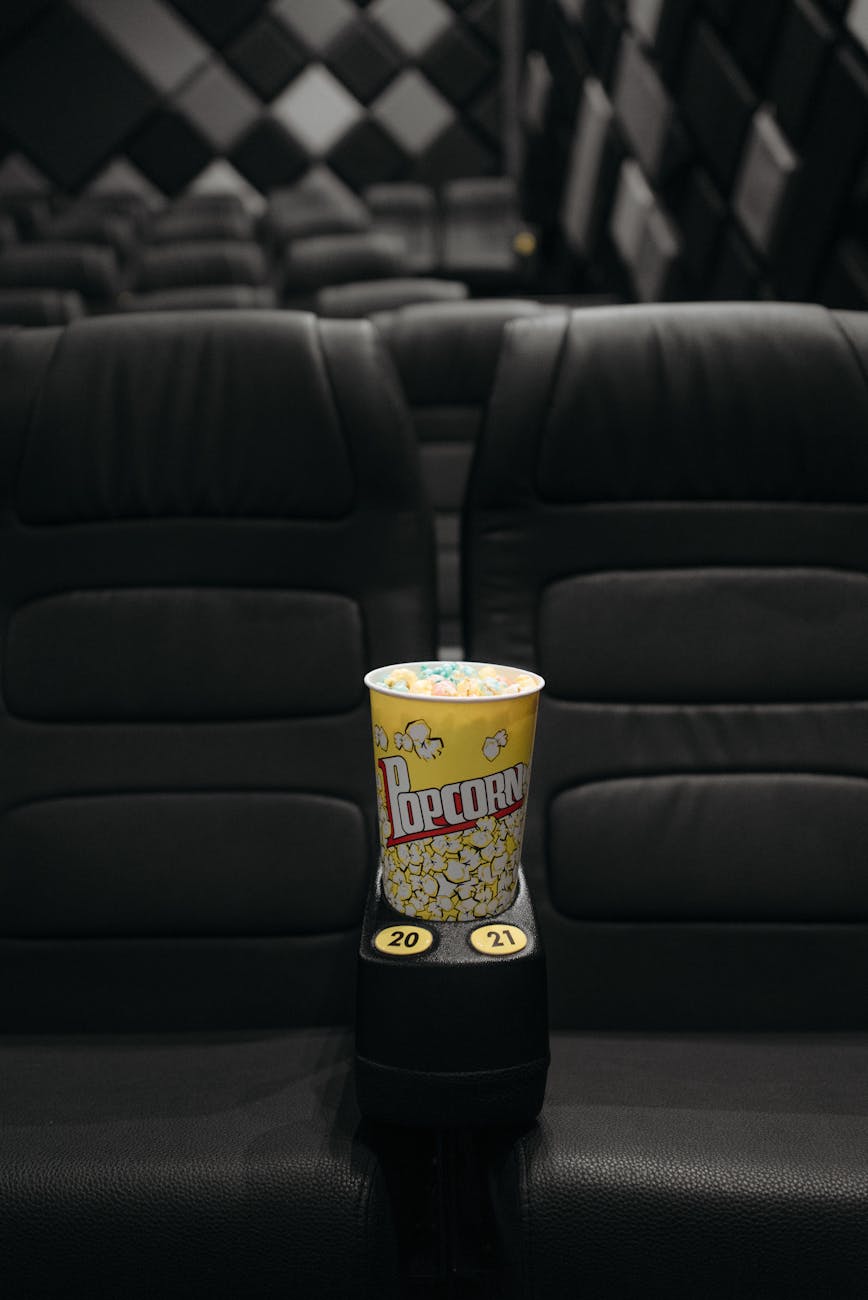
Photo by Pavel Danilyuk on Pexels.com

This provided lots of options. Did we want to see the latest blockbuster (with a good string of these in the mid to late 1990s) at a new 16 or 24 theater location? What kind of store – national chain, anchor department store, local business – did we want to visit at the mall and perhaps we could find food there?

This era is over. There are still shopping malls and movie theaters around. I do not lack for options if I were to look up theaters and malls near me. But, there are fewer within that ten mile radius: two of the three malls closed and multiple movie theaters closed or downsized from megaplex size.

And if I go to these places, the experience is different and the world has changed. Both are often less lively. People have more options, particularly at home. They can shop with their smartphones and computers and order goods and food right to their doorstep. They can skip theaters for movies, streaming them on their own screens. I am guilty of this as well; partly due to being in a different stage of life, partly because I have other options, I do not frequent malls and movie theaters.

Some shopping malls and movie theaters will hang on in the suburbs. They have been around for decades. They are part of the suburban landscape. They continue to offer unique experiences, even if people can shop and watch movies elsewhere. There just will not be as many of them in the future and people may have to drive a little further to find what used to be more plentiful.
Chicago movie theaters converted years ago into churches

After writing Building Faith: A Sociology of Religious Structures with Robert Brenneman, I am always interested to see stories of buildings converted into religious spaces or vice versa. Here is a story about movie theaters that became churches in Chicago:

Photo by Bence Szemerey on Pexels.com

But since 1969, this building has been a church, shepherded by four generations of the same family. The blue part of the façade is their improvement to the building, 56 years of stewardship that extends up to today. They’re making extensive repairs to the roof this fall with a grant from Landmarks Illinois and remodeling the interior…

At 113 years old, the building once known as the Ideal Theatre is one of the oldest purpose-built movie theaters in the city, a rare remnant from before they blossomed into the grand movie palaces we treasure now.

And as the home of New Precious Grove Missionary Baptist Church for more than half a century, it’s a long-tenured piece of a Great Migration phenomenon, where Black people coming up to Chicago from the South created church communities as anchors, either transplanted from their place of origin or planted new…

Although the building’s façade has changed much since 1912, the red brick garland remains, along with one more hint of the entertainment that went on within: Above the door, a terra cotta panel depicts a lyre, the classical musical instrument. A historical photo of the building shows there were at least two more ornamental panels, comedy and tragedy masks on the two upper corners…

The palatial Central Park is also now a church, the House of Prayer Church of God in Christ since 1971. Another movie palace, the Ambassador, later Knute Rockne, about 3.5 miles from New Precious, is also a church now and also in need of protective roof repair.

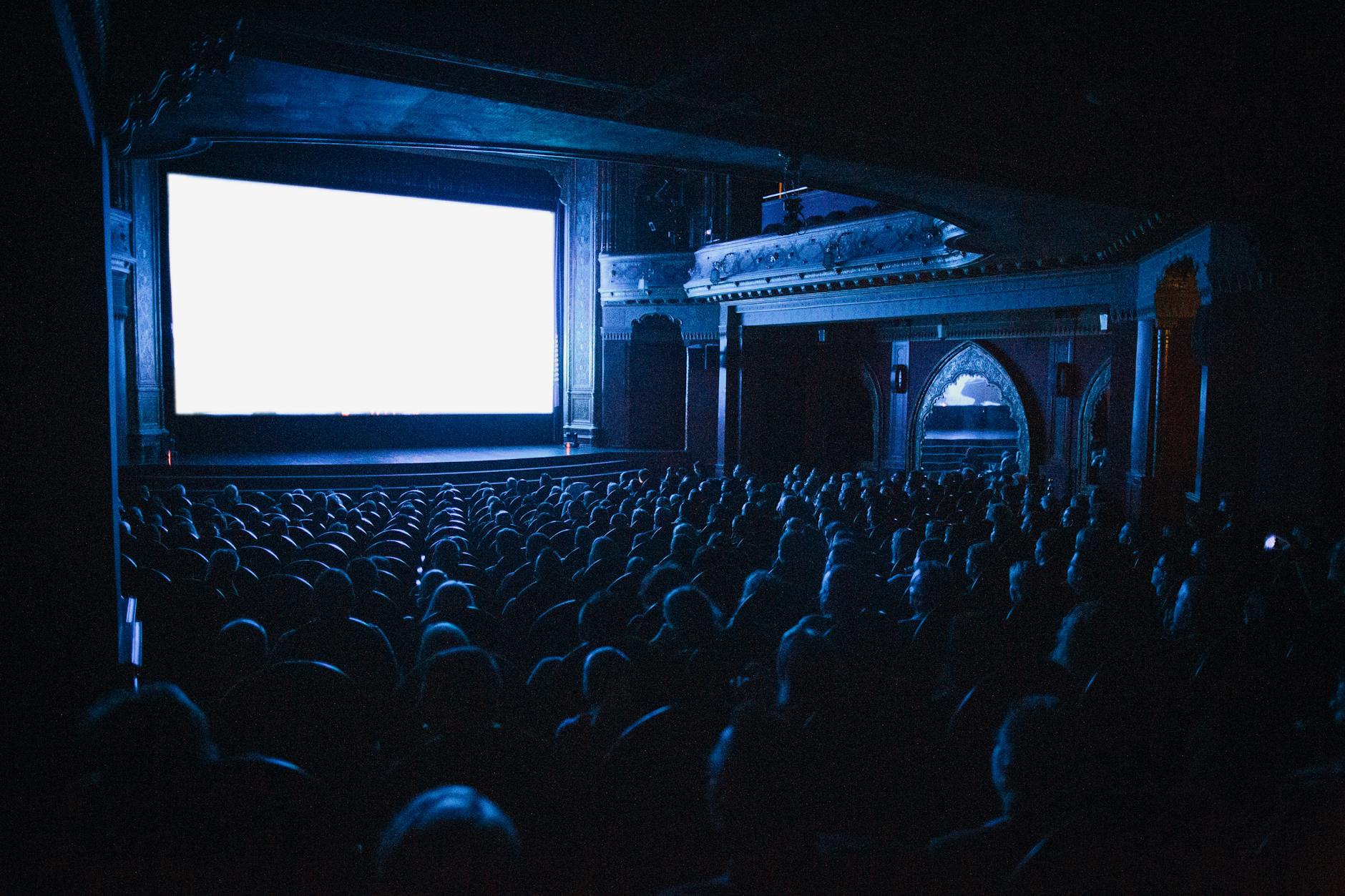
It sounds like as neighborhoods and consumption patterns changed, at least several movie theaters became available and were converted into churches. Depending on the size and condition of the theater, it may not take much work for a congregation to make it a religious space. The rough structure of a movie theater seems like it could suit religious purposes; a theater would have a lobby at the front and then people would walk into a seating area with a screen and stage at the far end.

From the pictures in the article, it might be hard now for those passing by to see the movie theater in the past of the current structure. This could be due to the changes made by congregations but it may also hint at the ways the architecture of movie theaters has changed. The boxy multiplexes of recent decades look different compared to the ways movie theaters looked more like theaters – places for live stage performances – in the past.

It would be interesting to hear more about the building energy present in these congregations today. As Brenneman and I discussed in our book, we found congregations exhibit an energy about their buildings as they budget, maintain, and plan for their physical spaces.

The past importance of movie theaters to suburban downtowns and the difficulty of reviving them today

The downtown movie theater was once an important part of suburbs but a number of these theaters have been difficult to revive in recent years:

Theater stories abound in the suburbs. The lavishly restored Paramount Theater in Aurora offers Broadway plays and big-name musical acts. The Arcada Theatre in St. Charles is another success story. Others — including the Wheaton Grand, Des Plaines Theater and Clearwater Theater in West Dundee — face uncertain futures after opening and closing multiple times in recent years…

Main Street theaters became popular in the late 1920s, when film was just emerging, Fosbrink said. Their construction boomed through the late 1930s and 1940s, particularly as suburbs took hold.

“Planning to have a theater in your town, or an opera house or something (for entertainment) was just as important as planning a city hall or fire station,” he said…

“People at this point in time are paying a lot more attention to how a theater can be a catalyst for economic development in a downtown business district,” Fosbrink said. “Theaters really can drive economic development, and we see a lot of that happening all over the country.”

Once a status symbol and source of local entertainment, these theaters are now possible ways to attract more people to a suburban downtown and hope they spend more money while they are there. Even though they aren’t really needed now (even the multiplexes have had a difficult time in recent years), they might anchor new entertainment districts where suburbanites don’t go to the city for culture but instead stay nearby.

It would be interesting to think about how many of these downtown theaters the Chicago suburbs could support. Particularly if they hope to all thrive, how much money is there to spread around?

“This [car] is bound for glory…”

Megan Garber of the Atlantic explains the car-centric origins of Robert Schuller’s Crystal Cathedral:

The efficiencies of the [Orange Drive-In Theatre where Rev. Schuller first held services in 1955 in Orange County, CA] were obvious: For cinematic purposes, the drive-in was useful only in the darkness, which meant that it could play an effortlessly dual role, theater by night and church by day. The architecture and technological system built for entertainment could be repurposed, hacked even, to deliver a religious ceremony for the golden age of the car. An early advertisement announced the new ministry’s appeal: “The Orange Church meets in the Orange Drive-In Theater where even the handicapped, hard of hearing, aged and infirm can see and hear the entire service without leaving their family car….”

The Schullers, and their contemporary entrepreneurs of religiosity, had happened into an idea that made particular cultural sense at its particular cultural moment: In the mid-1950s, Americans found themselves in the honeymoon stages of their romances with both the automobile and the television. And they found themselves seeking forms of fellowship that mirrored the community and individuality that those technologies encouraged….It was, with its peculiar yet practical combination of openness and enclosure, an improvised idea that happened to fit its time. The Schullers’ motto? “Come as you are in the family car.”

As the article goes on to note, Schuller eventually moved out of the drive-in and into his Crystal Cathedral, which has been “in the news most recently for its financial troubles — culminating in bankruptcy, a controversial shift in the the church’s leadership structure, and, finally, the sale of the Cathedral itself to a neighboring (Catholic) diocese.”  I guess things went a little off the rails at some point.

More seriously, however, I find Schuller’s integration of the automobile into Christian liturgy fascinating (and more than a little disturbing).  Megan’s article makes it clear that, by and large, Schuller’s drive-in congregants remained in their cars throughout services (“Church rubrics, the guidebooks for services, included instructions not only about when to sing, speak, and stay silent, but also for mounting the speakers onto car windows”).  It’s hard to understand how attendees could have Christian communion–in either the literal or general sense–by themselves from the walled-off comfort of their own cars.