Music in public considering that the United States once had 500,000 jukeboxes

Less than a century ago, the United States was full of jukeboxes:
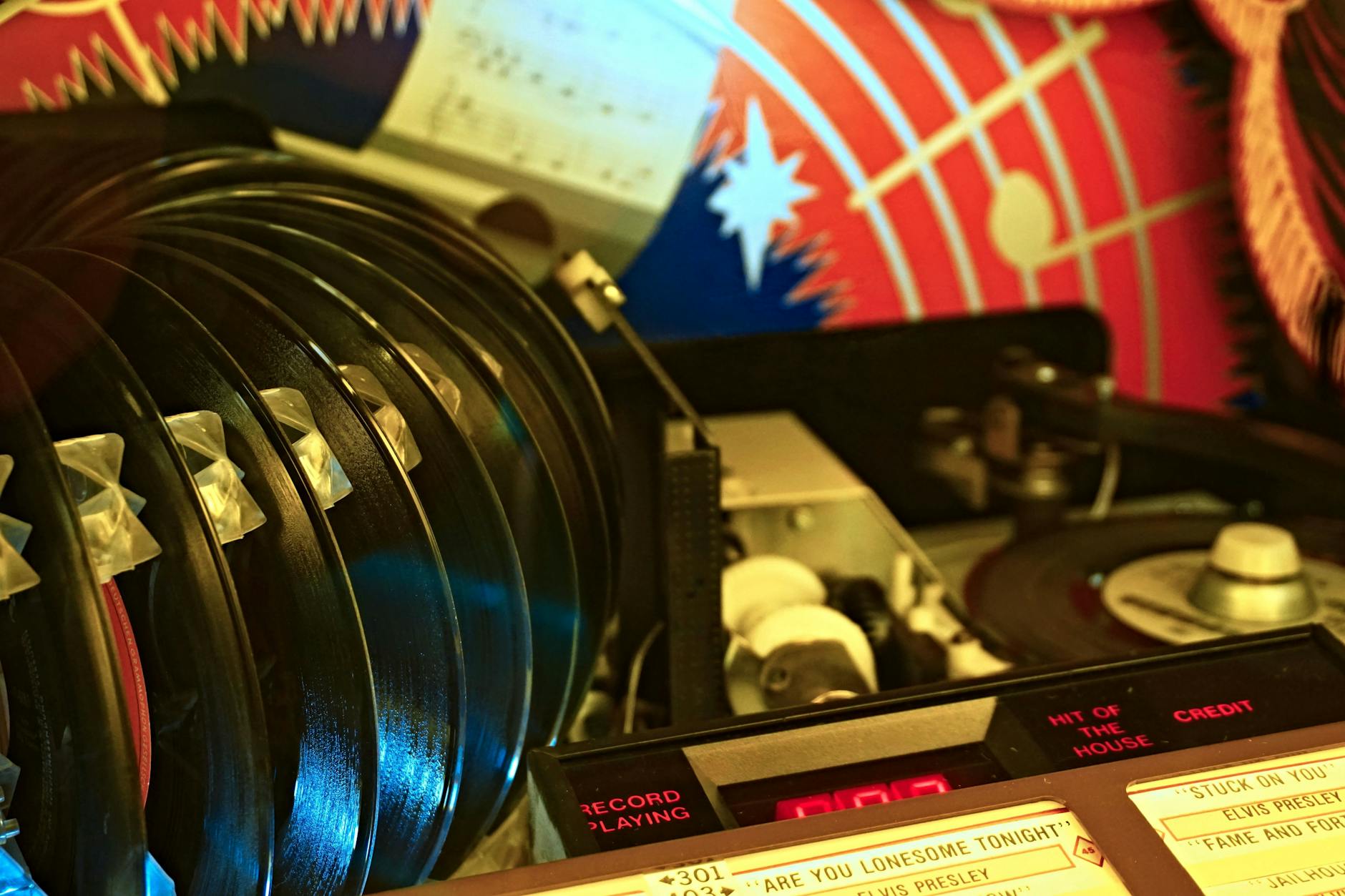
Photo by Pixabay on Pexels.com

By the early 1940s, about 500,000 jukeboxes dotted the country, sometimes inspiring too much of a ruckus: Newspapers frequently reported on bar fights over music selections and complaints about noise. Snootier critics, meanwhile, voiced more petulant grievances: “The contrivance is everywhere and is always booming its inanities,” one Los Angeles Times writer lamented in 1941.

Private spaces have multiple options for providing music. They could use a speaker system to play music (radio, recordings, etc.). They could have live music. They could go with silence. A jukebox puts the control of the music into the hands of the visitor or customer, letting them select songs.

Alternatively, consider the options visitors to spaces have in more recent decades. Each person can choose their own music without subjecting others to it. A Walkman allowed for hearing the radio or a cassette, a portable CD player for a CD. The spread of digital music – MP3 player, smartphone with built-in storage or streaming music – provided even more private options. Go with headphones or earbuds and someone could be in their own aural world even with a blaring jukebox.

Could having a common aural experience bring people together in ways that separating them into their podcast/music/Youtube streams does not? Not everyone would necessarily like what was playing on the jukebox near them but they would be exposed to the same music as everyone else. And then they could put something on the jukebox for others to hear. Of course, the limited selection of the jukebox and the processes that go into getting records into the jukeboxes might lead to a more homogeneous musical experience.
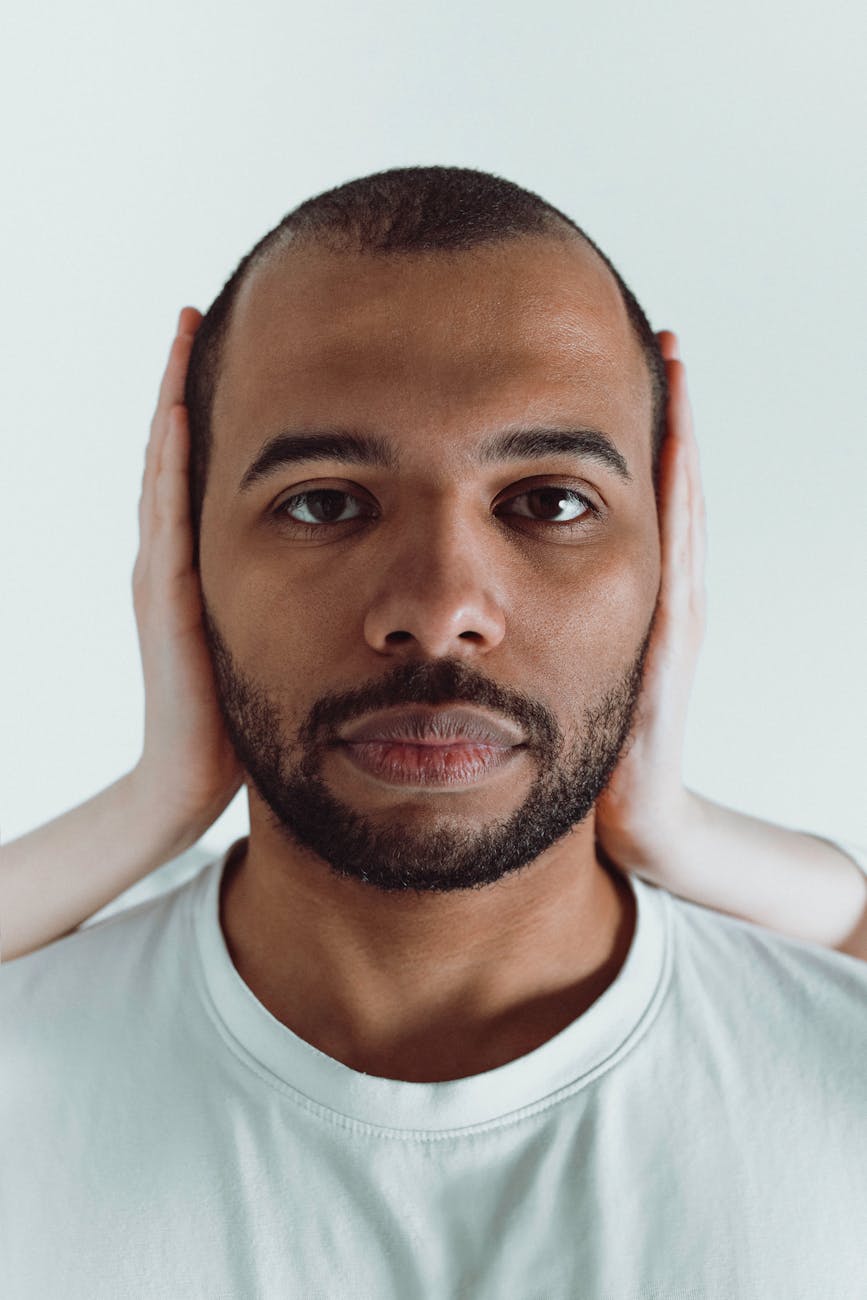
When music accompanists do not get to see what they are accompanying

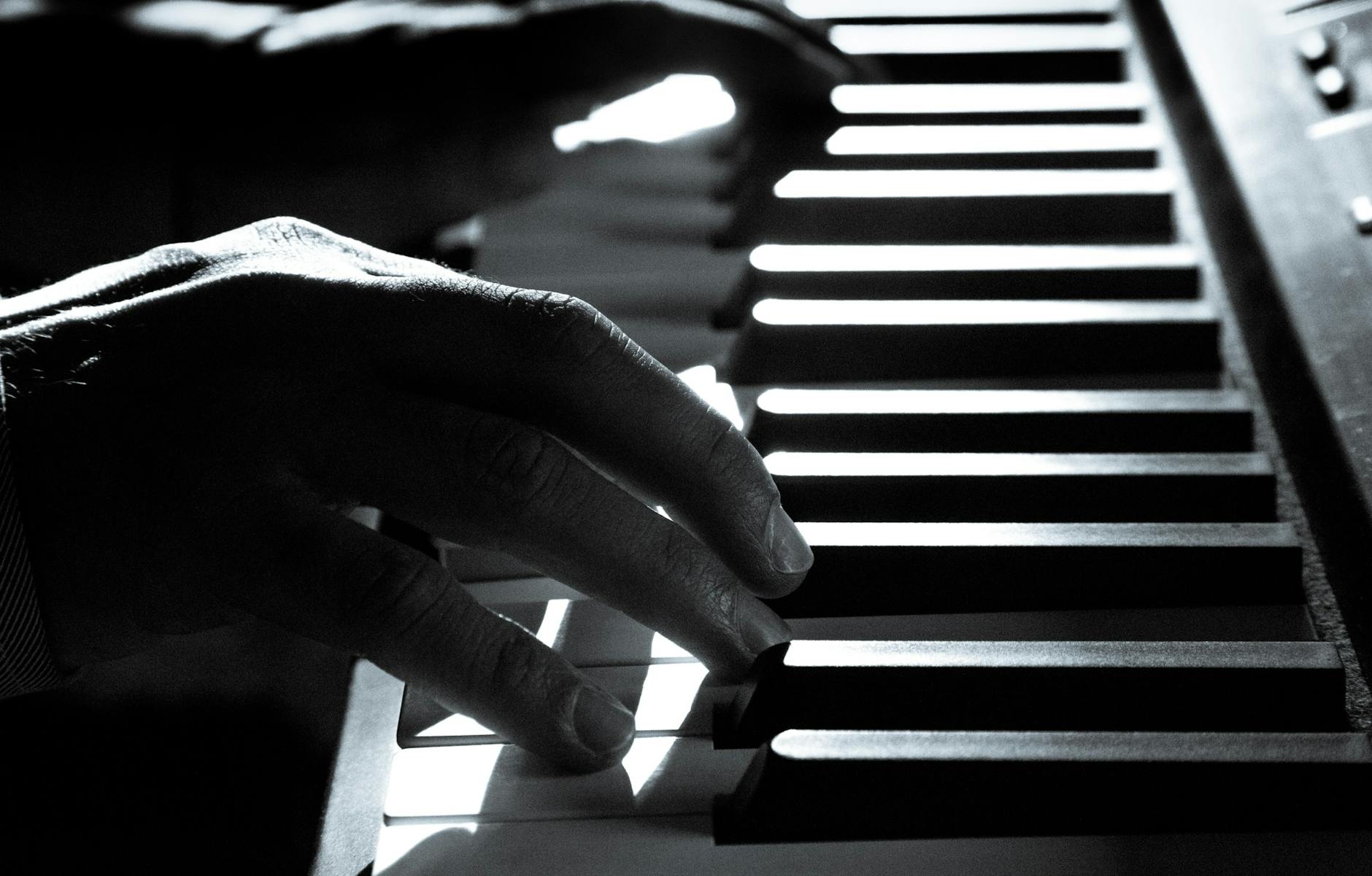
I have played piano in a number of situations – for church services, weddings, funerals, musicals, choirs, marching band shows, and instrumental soloists – where I do not get to see what the audience sees. This can happen because I am focused on my own playing and there is not much time to look. I need to make sure the music sounds good, my fingers are where they should be, and the pages are flipped when needed. But it also regularly happens because of where the piano is located; where the instrument is situated makes it difficult or impossible to see the action. Whole musicals have occurred where I can hear the lines, singing, and movement but I am facing another direction to watch the director who is facing the action on the stage.

Photo by Pixabay on Pexels.com

This is an interesting position to be in: to be part of the event or performance without seeing all of it. The audience takes it all in. For them the music and all that happens in front of them are all one thing. To the participants, they each have a role to play. The musical accompaniment is not the main focus. It “supports or complements.

This is analogous to numerous situations in life. There are times when each of us are main actors in what is going on around us. We can make choices that have immediate consequences and drive the story forward. But this does not happen all the time. Often we are playing a part in an organization or a group or a situation. Our participation matters – the situation is different depending who is or is not present, who is doing something and who is not – but does not depend on us.

In the musical situations when providing accompaniment I described above, does this mean I have missed these events? I may not have seen the bride walk in or the formation the band makes on the field or observed the way people leave a funeral service. I do not know everything that happened in the front. But I was there and playing a part that contributed to the whole.

The social process of determining the “worst” music

How do we know if music is any good or not? We look to the opinions of others. See the recent online discussion of whether the 2009 song “Home” by Edward Sharpe and the Magnetic Zeros is the worst of all time.

Photo by VAZHNIK on Pexels.com

Check out the song for yourself.

Perhaps an online crowd can convince people that this song is no good. But there are other social ways of addressing this question. For example, Wikipedia has a page titled “List of music considered the worst.” I have sampled across the albums and songs and there is a wide range of music that could be considered the “worst.” Or a group of friends could debate this among themselves as they play and remember different pieces of music.

This reminds me of a 2006 study in Science titled “Experimental Study of Inequality and Unpredictability in an Artificial Cultural Market.” Put people in listening rooms with a list of songs and their opinion of those songs partly depends on what others in the room think.

How do we know if music (or books or TV shows or art or the product of any culture industry) is any good? We decide this collectively through interactions and over time. What we consider the “worst” music could differ but we have opportunities to be shaped by the opinions of others – including large-scale actors – and to shape the opinions of people around us.

Society enables people with sports teams and music group analogies, part two

Have you been part of a sports team or in a music group? That collective had a goal, a purpose. Sports teams often want to win. Music groups have a musical work to put together. Both requiring working together, striving together to meet an objective.

Photo by cottonbro studio on Pexels.com

Of course, there are solo sports and music experiences. Numerous sports offer the opportunity to play be oneself, perhaps facing off against a single opponent or even just against some standard. Musicians can and do perform on their own. They can make music with their voice or instrument as a solo artist.

But there is something about the sports and music experiences as collectives that helps illustrate that society enables people more than it constrains them. What one person can do in either field can be very impressive but what a group can do together is amazing. And if you have been part of such an experience, it is a unique one.

Start with being on a sports team. You and your teammates are trying to play hard and win. In team sports, the outcome rarely depends on the actions of just one person; the team is working in sync to accomplish its goals. When all of the team members are contributing, the team feels great. The collective team can do what one player by themselves cannot.

Or imagine being part of a chorus or a rock band. Each person has assigned tasks. Music is often written in such a way to bring together multiple efforts for the same song. When everyone is doing their part, the resulting sound can be profound. The feeling of participating can also be notable; the work of the group can transcend the actions of the all the individuals.

This is not to discount the efforts of individuals. Solo performances require skill and can be moving. But they are different compared to groups playing and making music together. Whether working as a jazz trio or a symphony orchestra or a drumline, the group can do things that the individuals alone cannot. They can make music that is by the group.

Throughout life, we participate in groups and collectives. Society is just one massive-sized collective. We could see the larger goals of societies as analogous to the “win” a sports team seeks or the piece we are playing. We do not always succeed but what we can accomplish as a team or group or society can be empowering.

Unique noise features in populated areas

People might generally think of cities as noisy. Amid this volume level, there can be unique noise phenomena in cities and populated areas. Here are two examples, starting with temperature inversion layers:

Photo by Anthony ud83dude42 on Pexels.com

Temperature inversion layers, like the one happening the night Tamblyn heard Billy Joel from her backyard, occur when cool air gets trapped underneath a layer of warm air.

The warm air prevents the cool air from rising, along with smog and sound. The sound waves bend away from the inversion layer and back to the ground, bouncing across further distances.

This is more likely to happen during the fall season, as well as during certain times of day.

The second example involves different kinds of surfaces:

Skyscrapers lining the street can amplify city sounds, according to acoustic consultant Scott Pfeiffer.

That’s because sound waves easily reflect off rigid, hard surfaces, like glass and brick, Pfeiffer said. Sounds bounce back and forth like the two sides of the street are playing tennis.

The end result is a sound “canyon,” which often creates an echo…

Trees, grass and other plant life act as natural absorbers and deflectors of sound.

Three thoughts in response:

  1. Does public noise matter less in an era where lots of people use AirPods and other headphones? People have used headphones for decades but the noise-cancelling features of today’s devices plus their ubiquity might mean more people are in their own soundscapes.
  2. If cities are greener in the future, particularly with more plants and greenery among the buildings, does this mean they would be quieter? Having fewer motorized vehicles could also help.
  3. It is common to think of cities in terms of neighborhoods or scenes. These are often defined with physical boundaries. Do sound boundaries roughly match these boundaries or are there different sonic neighborhoods in places?

One of the joys of Easter: a full sanctuary singing

As someone who enjoys music, is a musician, and likes some large collective activities, part of the joy of Easter is having a full sanctuary with people singing.

Photo by Brett Sayles on Pexels.com

This level of congregational singing does not happen every week. Our church is full on Easter. The songs are familiar. Many people arrived early and the level of conversation beforehand was high.

Sure, this musical experience might be replicable elsewhere, such as at a club where everyone is dancing and singing along with popular songs or being in that right place with the right music that gives you goosebumps. But, this is a different experience. It is the Christian holiday on the calendar. It is an annual ritual. It is happening in a building intended to direct people’s attention toward worship. And people are singing, not just attending a loud performance.

Play Christmas music all day starting November 1 and ratings go up

The Chicago radio station WLIT starts their 24 hour a day Christmas music today because people and the ratings like it:

Photo by Dzenina Lukac on Pexels.com

WLIT-FM 93.9 will play only Christmas music round-the-clock beginning at 4 p.m. Tuesday.

It is the earliest date in the station’s 22 years of hosting the format that it is making the switch.

Why? Listeners love it…

“The reason stations switch in early November is so they can get a ratings boost for the final few weeks of the survey,” he wrote in an email.

Which comes first: the audience demand for the Christmas music or the supply of Christmas music? Would anyone play Christmas music this early if there was not such a direct payoff?

Such a question could be asked in all sorts of domains, ranging from other Christmas material – do stores put Christmas decorations and displays up right after Halloween to drive demand or is that demand already there? – to products of the culture industries. If such a question could be answered more predictably, there might be more hits – records, films, TV shows, etc. – and fewer flops.

In the meantime, Chicago radio listeners will later today have the option to hear Christmas music all the time. Even in an age of music streamable on demand plus all sorts of other music formats, at least a few will turn to WLIT because predictable Christmas music is available.

Geotagging music to specific places

How much is the experience of music connected to specific locations? One band’s efforts offer a way to link music and places:

Photo by John-Mark Smith on Pexels.com

When it came time to launch “Rand McNally,” the band decided to celebrate its long live history by launching Death Cab for Cutie Map, which directed people to go on a scavenger hunt to find the track. All they had to do was go to one of more than 800 places Death Cab has played, whether the venues were still standing or not. Once there, fans could use their phones to access a geotag that would unlock the track, making the launch a little more fun and experiential than your typical song drop…

Speaking of history, Harmer dreams of a world where this kind of geotagging is available for all of his favorite bands. “It would be cool to be able to go on Apple Maps and search for the old tour routes and histories of The Who or The Beatles,” he says. “Just from a historical perspective, I’d love to be able to see where and when they played. I learned only recently that Led Zeppelin played a concert at Green Lake Park in Seattle. There used to be this little outside amphitheater, and I’d never heard of a show being played there ever, much less a Zeppelin concert. As we start to really explore all the data that’s available to us, that kind of map would be a cool thing to have access to.”

A concert experience is a unique one. It is affected by the venue, the sound system, the audience, and the band or musical act. It is certainly different than listening to music through a radio or a phone or stereo speakers or headphones. Being in a crowd focused on live music can lead to collective effervescence.

My guess is that such geotagging will be most enjoyable for those who attended specific concerts in the past. Going back to the venue and getting a new song combines both reliving the concert experience and building on that with new music. It helps add music and sounds to our full-sensory understanding of places.

I could also imagine a future where playing a specific track could pull up a virtual reality experience of being in the crowd where the artist is performing the particular piece.

When the music swells…

I recently encountered two examples where an increase in volume of music portends something important is happening:

Photo by Pixabay on Pexels.com

-In watching The Truman Show for the umpteenth time, I noticed at one point director Cristof points to the live pianist to increase the music. The musician obliges and the melancholy music swells. (Bonus: you can see composer Phillip Glass playing piano in this scene as Truman sleeps.)

-In a chapel service, the organist played a quiet piece underneath a prayer, but as soon as the prayer ended, the volume and activity increased as the congregation moved to singing together.

This musical signaling is common in live events, religious services, television and film, and elsewhere. When the music increases in volume and/or activity, something important is happening. It is a cue to the events unfolding in front of the participant or the viewer.

Is it emotional manipulation? Can we be pushed in directions we may not even be aware of just by the musical vibrations around us? Perhaps. Yet, humans have done this for centuries and millennium as music has a long and rich history not just as an individual activity but a collective tissue and performance where tone, volume, timbre, and more contribute to life together.

Save the farm from turning into McMansions by writing a song

Tennessee’s 11th state song – “I’ll Leave My Heart in Tennessee” – was inspired by a threat of McMansions in a Nashville suburb. According to the writer of the song:

Photo by adanvdo on Pexels.com

So, I sold the farm and horses and moved into the beautiful suburb of Brentwood where I was on only an acre of land. It was great but not me, as I grew up in a rural area and loved the farm. I so missed walking the land.

In 2004, when I wrote the song, the only bucolic land in Brentwood was a 250-acre farm called Green Pastures on the corner of Franklin Road and Concord, owned by the Turner family (Dollar General/etc). They boarded horses there and a friend ended up bequeathing me a gorgeous six-year -old paint mare and said he would pay for its care if I got it ready to ride for his daughter someday. It was a beautiful compromise to living in the suburb yet having a masterpiece of a farm three miles down the road. Everyone there just loved it, and it was a close group of people who boarded there. Many said it was what kept them sane going through divorces or cancer, etc. Horses really are healing creatures…. especially when you don’t have to pay for them! It was such a gift to go out there and ride on the property or just hang out there with the horses and boarders. It was a family.

Well, at one point, developers (‘damn those developers they’re cold and heartless’) got the ear of the Turners and they were going to sell it off to put up what we called McMansions…. the LAST thing Brentwood needed. It went so far as to have a huge sign with the plans and everything. The barn family was of course heartbroken. So, I said, ‘Let’s at least try and see if we can have them save at least part of the property.’ I suggested we put a digital scrapbook together with each boarder having two pages of pictures and what the place meant to them. Underneath I put the song I’ll Leave My Heart In Tennessee. We gave it to the Turners and were told they cried when they watched it. I’m not saying my idea was the only reason they decided to stop the development, but I do think it may have been the catalyst/last straw to validate what a unique place they had.

They helped SO many people PLUS just driving by and looking at the property was uplifting to anyone with eyes! It staved off the development for over 10 years. A few years ago, they decided to stop the boarding business, but the property still remains today. I don’t know what their plans are for it. I worked with a grass roots group called Save The Brentwood Green Space for a while who put up an idea for the city of Brentwood to buy the property, but the citizens took a look at the $50 million price tag and got spooked. I would assume the price NOW would be over $100 million so they lost a deal!”

Today I learned Tennessee has 11 state songs (!!).

At the same time, this could be a story from many states and metropolitan regions: the farmland once common is quickly turning into houses. Not just any houses; big houses with dubious architectural quality (i.e. McMansions). The farm will be gone and replaced with supposedly impressive yet private homes.

How often does such a scenario lead to writing a popular song? Not often. Instead, neighbors and residents might quietly seethe. They could show up at local meetings and make their displeasure known. Some might even move away to find a different plot of land still near farms or open space.

As far as I can tell in watching performances of the song on Youtube, the song decries “progress” and sprawl but does not specifically call out McMansions…