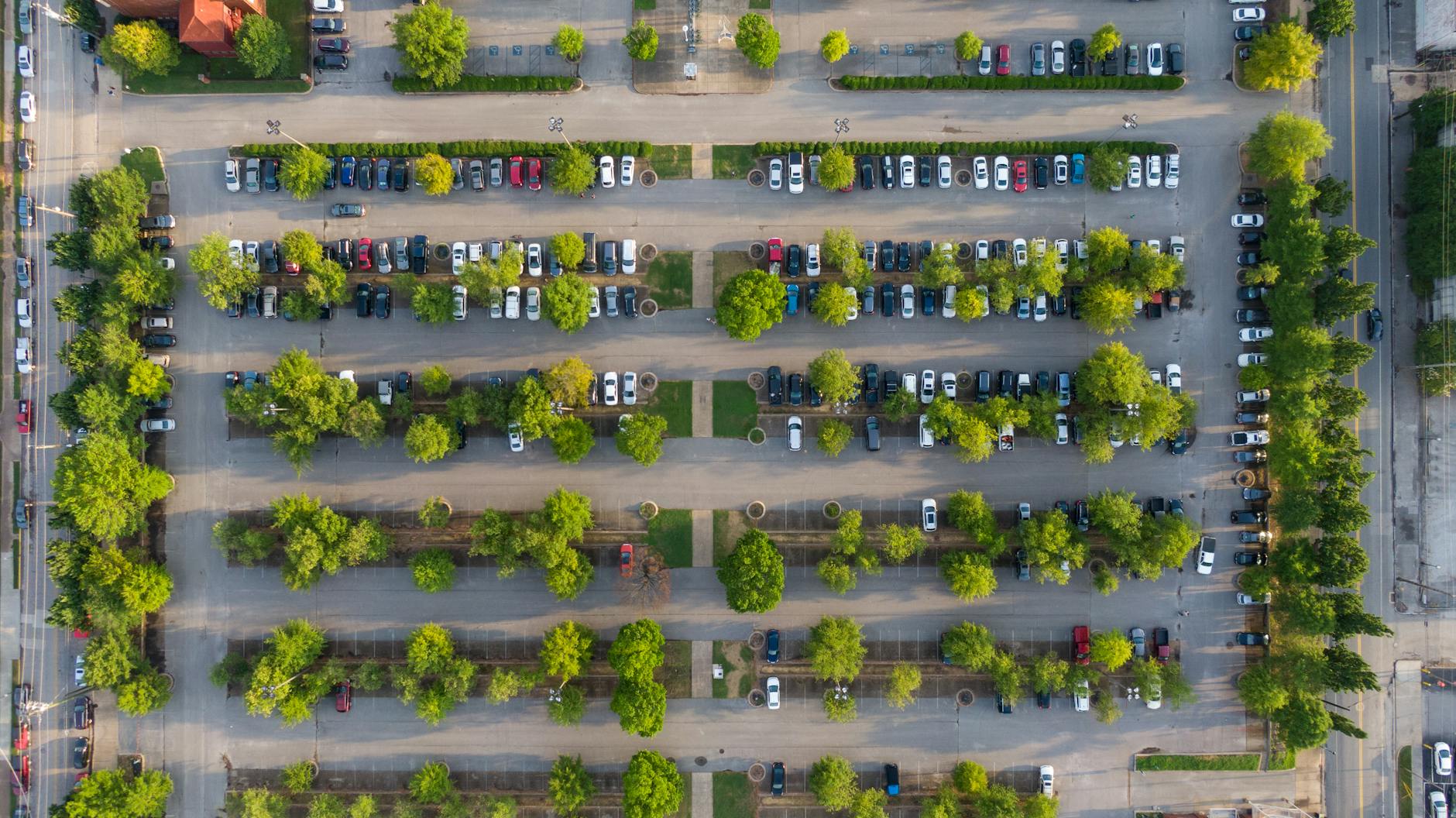
The ongoing parking issues at American colleges and universities

New policies about class scheduling at the University of Utah have touched on an important issue for many campuses: parking.

Photo by Kelly on Pexels.com

Debates about parking, of course, have long been frequent and contentious on college campuses. Clark Kerr, who led the University of California system in the 1950s and ’60s, once described colleges as “a series of individual faculty entrepreneurs held together by a common grievance over parking.”

At Utah, an online petition that has received over 7,000 signatures says that “parking congestion is undeniably a concern that needs addressing, but the solution should not compromise educational quality or student well-being.”

The university, which has 36,881 students and 18,300 full- and part-time employees on the main campus, had a combined 9,314 parking spots in 2024, according to commuter-services data. But the ratio of parking spots to parking permits sold is not one to one. Knowing that not all permit owners will park on campus at the same time, the university sells more permits than they have spots, which aggravates many students. For example, though the campus last year had 5,843 parking spots in “U” spaces that are farther from campus, it sold over 12,000 permits for those spaces, at a price of $345 for the year.

Still, the lots are never at full capacity, said Collin Simmons, executive director of auxiliary services. While spaces in the “A” lots, near the center of campus, are usually full every day, spots can be found on the outskirts of campus, or within a 10- to 15-minute walk to the campus’ center, he said. But these spots can also be scarce, especially between 10 a.m. and just before 2 p.m., when fewer than 10 percent of the U spots are available, leaving parking-permit owners to circle the lots across campus before they can find a spot.

Americans like to drive. So it should not be a surprise that they also like to drive to school campuses. This includes employees who commute to college campuses but also students who may live on or off-campus and want easier access to college buildings.

The description above from one university suggests this is a complex issue to address. I wonder if what every driver wants is this: a close parking spot to where they want to go with little to no cost to the driver. Why should I inconvenienced in reaching my on-campus work or activity?

To provide everyone a great parking spot every time comes with costs. How much does it cost to build and maintain parking lots and structures? A better parking spot for all might cost drivers more money. Would it be worth it? How much land on campus should be devoted to this purpose as opposed to other competing land uses? Colleges have numerous kinds of buildings and landscapes to build and maintain and space can be at a premium for many institutions.

Imagine a different kind of university: all the lower floors of the major buildings are large parking garages. Everyone can park underneath offices, classrooms, dining halls, recreational facilities. While this might get people a parking spot, does it then eliminate the streetscape? Many colleges and universities like to portray a bucolic image of ambling through green trees and lawns surrounded by traditional buildings that look like learning and knowledge.

Not discussed in the case above is whether the University of Utah has alternatives to driving. How many students can or do walk or bike to class? Is there viable mass transit available?
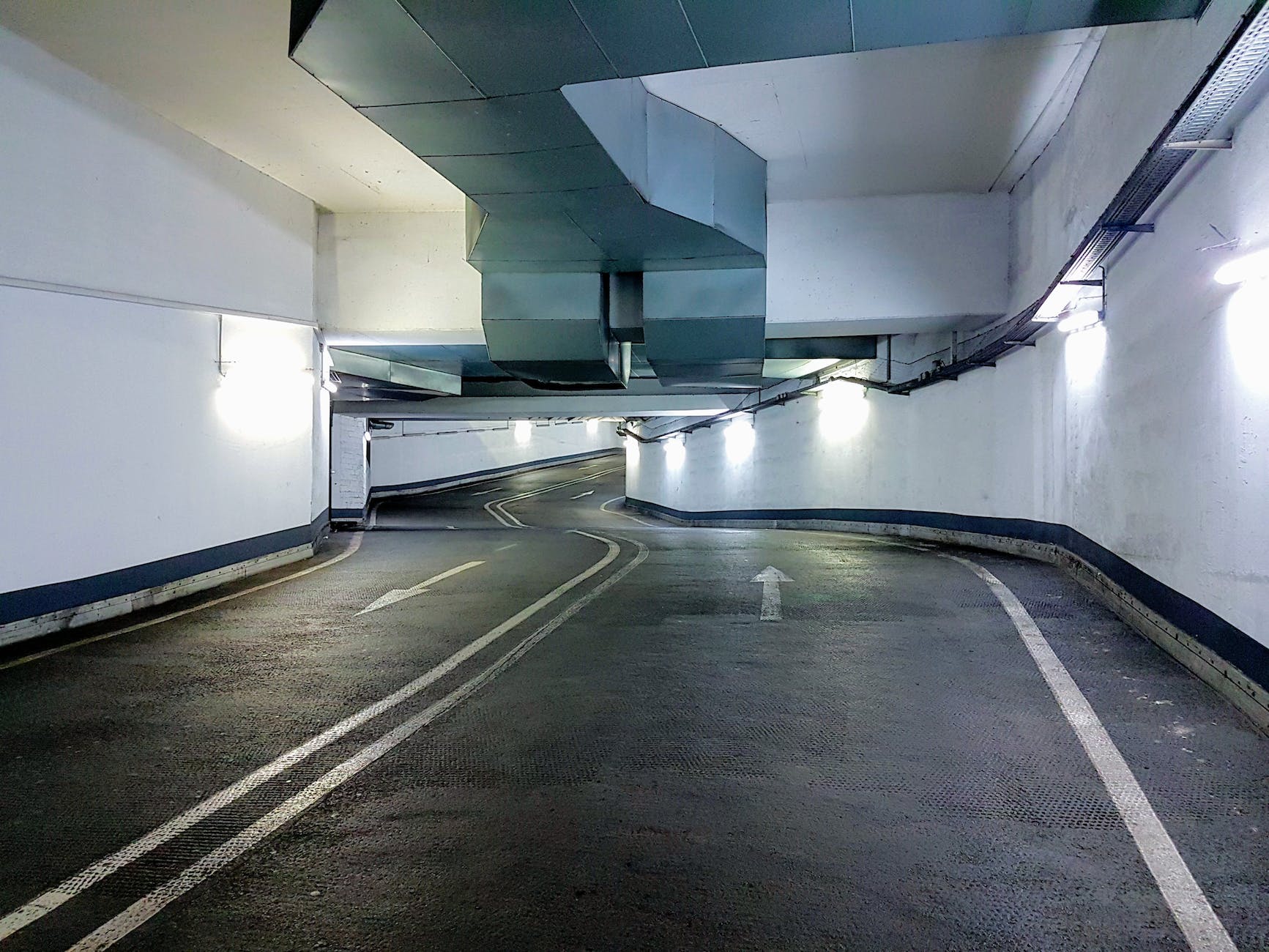
Paris discourages use of cars so underground parking garages need to change

If Paris has fewer cars on its streets, what happens to its underground parking?

Photo by Daniel Frese on Pexels.com

Today Indigo operates 2,700 garages on three continents. But it’s here in Paris, where the company now manages more than a third of publicly accessible garage parking, that Indigo is beginning to develop a new underground commercial ecosystem. There are car repair shops, car rental offices, and click-and-collect lockers from Amazon. Larger-scale ventures the company is pioneering for lower levels include storage facilities and data centers. One private, non-Indigo garage has even been turned into a farm for mushrooms and endives.

Retrofitting parking is complicated, said Arnaud Viardin, Indigo’s director of partnerships. Counterintuitively, garage floors have less load-bearing capacity than homes or offices. Garages also have very low ceilings, threaded with beams and utility conduits that can limit adaptive reuse: It’s hard to market a storage facility that’s not accessible by box truck. Energy-intensive vehicle chargers require drilling through concrete to lay new electrical cables, and just about anything you do demands a time-consuming review with the Fire Department. Rarely do these new leases pay more than a constant stream of drivers charged hourly parking rates. But they pay more than an empty parking garage.

Indigo’s underground real estate has few competitors. Hundreds of thousands of square feet are now dedicated to alternative uses across France, mostly in Paris. “Finding real estate under Place Vendôme, under Place Dauphine?” Fraisse put it to me, pointing to two of the capital’s ritziest addresses. “We’re capable of proposing square footage at prices that have nothing to do with what you’ll find aboveground. Ten, 20, 50 times cheaper.”…

For logistics clients, the value of Indigo’s space is hard to beat. MonMarché is a spinoff of a larger French grocery chain, Grand Frais, whose stores are suburban big boxes with ample parking. “We had to find another solution for the Parisian market, which is the biggest,” said Demond, slicing open the packing tape on a Styrofoam box of durian, the odoriferous East Asian fruit. “The cost of real estate is so high.”

Cities have gone underground for numerous reasons: space above ground is limited, certain land uses are less desirable, underground uses can be more efficient. Putting cars underground made a lot of sense in previous decades when there was a lot of traffic and parking aboveground takes up a lot of space.

How far can underground redevelopment of parking garages go? Would people be willing to spend long amounts of time in such spaces if they were adapted for commercial, office, or residential use?

If these underground spaces become desirable opportunities, how high might rents and resale values go?

Designing parking garages for life after cars

Parking garages can be designed in such a way so that they can be converted into other spaces if need be:

There’s a growing belief among architects and designers that all urban parking garages should be built with these “good bones,” which will allow them to be re-purposed in the future. For a variety of reasons, from higher gas prices to greater densification to better transit options, city residents will continue to drive fewer cars. As a result, we’ll eventually require fewer parking lots. The ability to adapt a structure rather than tear it down will save developers time, money, and material waste.

“As the auto culture wanes we’re going to have a lot of demolition to do, which is unfortunate,” says Tom Fisher, dean of the College of Design at the University of Minnesota. “If we’re going to build these [garages] let’s design them in a way that they can have alternative uses in the future. With just a few tweaks that’s really possible.”

Fisher says designing parking structures with an eye toward their afterlife is not only logical but rather simple. His three key elements to an adaptable garage design are flat floors, comfortable floor-to-ceiling heights, and enough loading capacity (in other words, strength) to support another structural use. Those types of changes may cost a tiny bit more up front but will provide enormous savings down the line…

New York isn’t the only place where this re-use is happening. During a recent talk, Fisher pointed out a few other examples from the Twin Cities and elsewhere around the country. In St. Paul, a developer is converting a century-old building from a garage into an apartment complex; in Miami Beach, a parking ramp is being used for retail and housing purposes.

While cars are not going away anytime soon, occasionally converting parking garages can happen. Yet, it would be interesting to see the money that converting requires versus tearing down the garage and building a new structure. I also imagine there are limits to what parking garages can be converted to.

I wonder if the fact that a building was formerly a parking garage is also part of the marketing. That might be a very different ring than saying it was a former factory or theater or church.

Parking garage proposal for Sheridan Road in Chicago sparks discussion of parking, New Urbanism, and a past golden age

A recent proposal for a new parking garage on Sheridan Road in Rogers Park has prompted further conversations about the neighborhood:

“Sheridan was a beautiful lakefront boulevard, a model of urban design that should be reclaimed, not transformed into a suburban highway,” said Susan Olin, a community activist who would be a neighbor to the 250-car garage proposed by prominent real estate developer Jennifer Pritzker.

But the local alderman, Joe Moore, not only supports the project, he also thinks its opponents have a wildly romantic vision of what Sheridan Road once was…

Moore said the Sheridan Road of yesteryear was a hodgepodge of gas stations, billboards and empty lots, in addition to stately and substantial family homes…

To some residents, that blend of a natural landscape and an urban skyline is Rogers Park’s aesthetic trump card, said John Norquist, president of the Congress for the New Urbanism.

“Against that backdrop, Pritzker’s garage would be way, way out of scale,” said Norquist, who lives nearby. “It could fit in the Loop. Maybe in Schaumburg, but not in a city neighborhood.”…

Pritzker’s designers declined the suggestion for mixed use, and the latest plan shows parking spaces from top to bottom. According to a representative, Pritzker was traveling and unavailable for an interview.

This is a great example of the conversations that erupt with urban development:

1. A set of current residents wants to preserve the neighborhood as it is and a parking garage does not fit their image of a cozy neighborhood that will meet their interests in rising property values.

2. The alderman thinks the project has merit because it will add parking but also possibly because a new development might help bring new money into the neighborhood.

3. The discussion of the parking garage leads to conversations about whether the neighborhood should harken back to a golden era or plan for the future.

4. This isn’t just about the parking garage; residents are worried any such project (or a fast food joint or a big box store) will open the floodgates to lots more new development.

5. Attempts to make the garage more palatable by including retail space on the first floor or some kind of mixed use have been rebuffed so far by the developer.

Perhaps the only question left is how this episode will conclude. Based on what is in this article and what the alderman says at the end of the article about the neighborhood support and disapproval for the garage running 50/50, I suspect the garage will happen in some form.

Designer parking garages in Miami

Parking garages tend not to have good reputations as they are often functional blocks of concrete that are measured by how many cars they can fit. But, Miami apparently has a number of “designer” garages including a proposed parking elevator for a new high-rise:

The $560 million Jetsonesque tower will rise in Sunny Isles Beach as part of a collaboration between Germany-based Porsche Design Group and a local developer, Gil Dezer. It likely will be the world’s first condominium complex with elevators that will take residents directly to their units while they are sitting in their cars…

Here is how it will work: After the resident pulls over and switches off the engine, a robotic arm that works much like an automatic plank will scoop up the car and put it into the elevator. Once at the desired floor, the same robotic arm will park the car, leaving the resident nearly in front of his front door. Voila, home!

The glass elevators will give residents and their guests unparalleled views of the city or of the ocean during their high-speed ride, expected to last 45 to 90 seconds…

The car elevators are the latest twist on Miami Beach’s burgeoning passion for designer parking garages. The highly acclaimed 1111 Lincoln Road designed by Swiss architects Herzog & de Meuron opened in 2009; also planned are garages by London architect Zaha Hadid, Mexico’s Enrique Norten and Miami’s own Arquitechonica.

Being able to live in a luxury condo that is greatly enhanced by parking right outside of your door sounds like a uniquely American prize. This is another reminder how American culture is dominated by the automobile.

At the same time, this could also be seen as an architectural or design issue: how can one successfully design parking garages so they are aesthetically pleasing? While these garages in Miami might be for more luxurious residences, there are other options. One option that seems to be growing in popularity is underground garages. While this is great in dense urban spaces where valuable land can’t be wasted on a separate parking structure, it can also be found in denser suburban developments where the goal is to allow condo or townhome owners to park directly below their units and to keep the garage out of sight. After all, large houses with prominent garages may be called “snout houses” in reference to the overarching emphasis on where the garage is going to be parked.

This reminds me of one of the parking decks in Naperville. The Van Buren structure features a stained glass window memorializing the “Cars of the Century.” Also, Wheaton has done a nice job of hiding their downtown garage behind more traditional looking structures.