The dueling TV and film production centers in the United States

Was the latest movie or television show you watched made in Hollywood or New York City?
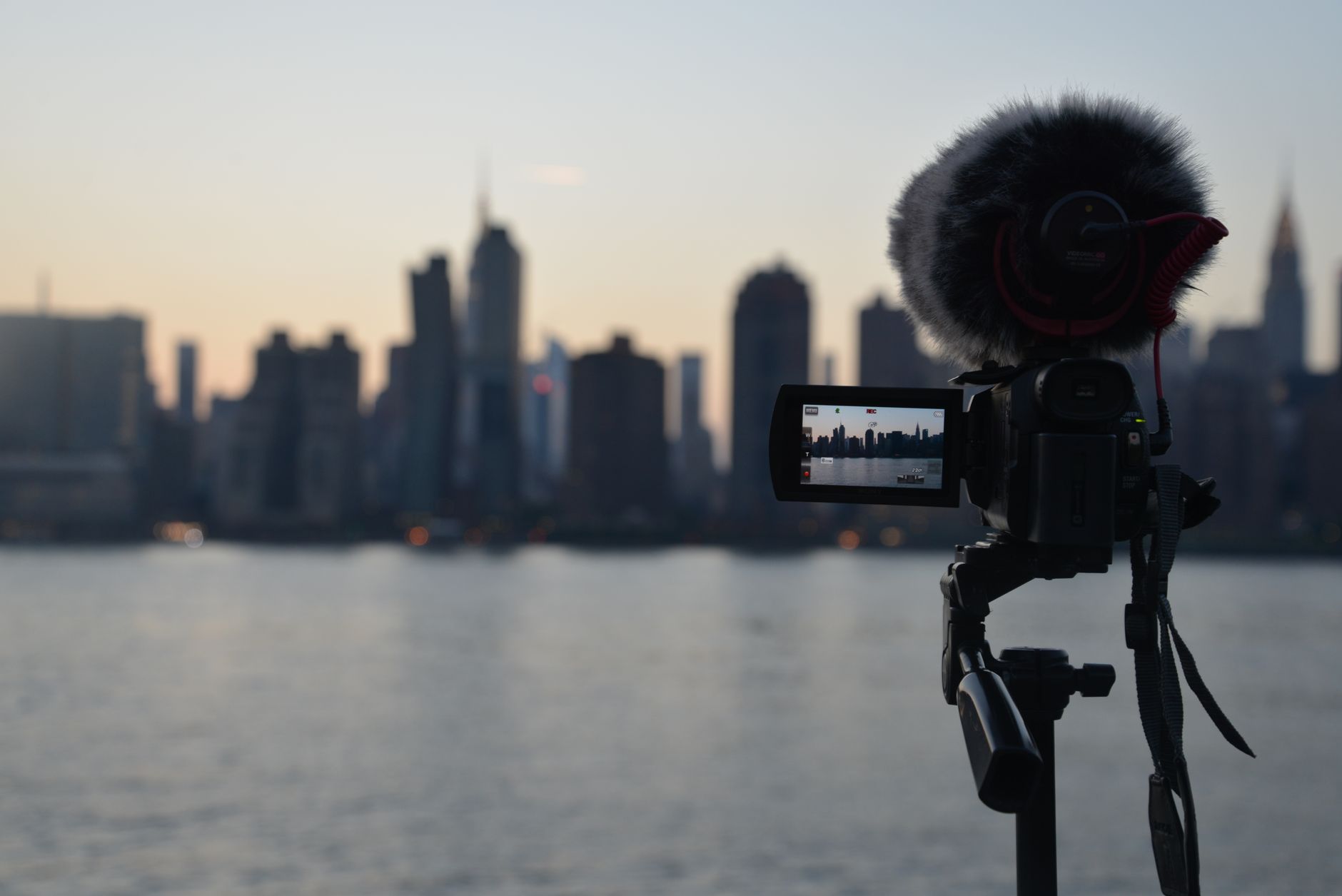
Photo by Jer Rey on Pexels.com

While California kept its crown at No. 1 with $1.76 billion in movie and TV production spend, New York is drawing major titles at a much more rapid pace, according to industry tracker ProdPro’s closely-watched quarterly snapshot released on Thursday. The state surged 87 percent in production spend in the quarter to $1.61 billion compared with California’s 17 percent uptick.

Bulked up soundstage infrastructure, a large crewmember union base, easier access to neighboring Tri-State locations are all adding up for New York. Take Universal Pictures’ Miami Vice: 85 as a case study. The Michael B. Jordan and Austin Butler neo-noir actioner has been filming in the Empire State as well as Wayne, New Jersey along with its namesake locations in Florida.

New York also has what all states covet, and what California has been losing: scripted TV shows that run for seasons and seasons, often in the same soundstages. And inventory for soundstages has grown 43 percent in the state since 2020 with a boom in purpose-built facilities, per real estate services giant CBRE, which added in a June report that the state is “better positioned for recovery than some competitor markets” after studio belt-tightening on overall content spending…

And we haven’t even talked about New Jersey yet, aka Hollywood East, which is emerging as a major player in its own right and has arguably been the biggest growth hub over the past year in production. The state bestowed Netflix, Paramount and Lionsgate as studio partners, which have conferred a series of incentives to produce titles there. And it has been reaping the benefits. Of late, Netflix’s Kevin Hart-Henry Cavill actioner Spy Duo and Adam Sandler’s Grown Ups 3 have been filming in Monmouth County, while series like Cupertino (CBS) and Dan Levy’s Big Mistakes (Netflix) shot in-state.

Both cities have been major media centers for decades. Hollywood has the reputation for being the place where TV and movie dreams are made, where a combination of stars and weather and settings and production infrastructure and booming populations leads to narratives that shape imaginations and discussions.

Some of this is easy for viewers to see on screen if you know where to look. You can examine establishing shots or common sets or certain local features that keep popping up. I saw one the other day on a commercial as I had stood on almost exactly the same spot while touring a Hollywood backlot.

Some of it is hard to know. Many scenes are set in generic places that could stand in for almost anywhere. Unless there are particular local clues (trees, architecture, etc.), a New Jersey suburb could stand in for a community in the Pacific Northwest or the South.

What might be interesting to see is how New York City could play up its TV and film production in the same way Hollywood does. What would it take for people to want to go tour New York City area backlots? Or take bus tours of where the stars live? Or have something like the Hollywood Walk of Fame? Perhaps this is not needed in New York City in the same way given the city’s different economy (finance! Wall Street! international business!) and history.

Lacking studio space with all of the TV and film production going on

With a lot of demand for new streaming content, production is moving to different places:

Photo by Ju00c9SHOOTS on Pexels.com

A show the size of The Wheel of Time has to hunt for a part of the world large enough to contain it—especially at a moment when the boom in streaming television has overwhelmed studios from Los Angeles to Atlanta to London to Prague. “We are, as a worldwide industry, quite close to capacity because of this demand for content by our friends at Amazon and all the other streamers,” David Brown, the producer of Wheel of Time, told me. Los Angeles is booked out, and too expensive, anyway. Ditto Atlanta, where Marvel Studios regularly shoots. Ditto London, a longtime production hub that is currently oversubscribed—and, once again, too expensive. So Brown thought: maybe Budapest.

Central and Eastern Europe have traditionally been accommodating places to make movies and television. The locations are suitably grand and variable and ancient; the local expertise, honed by decades of Hollywood productions coming and going, is high-level and relatively affordable. So Brown initially looked at Hungary. But, he said, “I spoke to friends in Budapest who’d worked there, and they just said, ‘You won’t get in.’ ” Then he tried Prague, and found that the waiting list for production space was just as long. So, after some consideration, Brown and his production partners decided to create their own studio from scratch. “You know, we are a big company,” Brown, who is exacting and English and who has worked on everything from The Phantom Menace to Outlander, said. “The show is hugely ambitious creatively. So how do we fill that? That’s why we’re in this building that is 350,000 square feet.”

And so Jordan Studios, where the Wheel of Time production is headquartered, ended up in a remote corner of Prague, in a giant pale-blue complex of industrial buildings that used to be the warehouse of a trucking company.

This caught my attention as I have been working in recent years on research involving the locations of television shows. When you look into television production, it takes place in a number of predictable locations. There are centers of production where all of the space, workers, and synergy is present. In the story above, these typical centers were booked and/or expensive. So, they moved to Prague and put together what they needed in a context where Hollywood production is known and possible.

At least for this particular show, the filming in and around Prague may not matter as much because it is a work of fiction. All sorts of landscapes, inside and outside buildings, could work. At the same time, for many other TV shows and films, they claim to be in a particular location. But, would someone watching know whether if it was filmed in that said location or somewhere else? Through the work of studio filming, editing, and implication, how many stories are filmed on location and how many are filmed elsewhere? The viewer may not know. The filming location might be all sorts of places.

All that to say, the geography of production can continue to change with changing conditions and new content. And would the viewer know any different?

Documenting fair use

Documentary.org has a wonderful write-up by Tamsin Rawady and Alex Buono about fair use in the documentary film setting.  As the writers/producers of Bigger Stronger Faster, a documentary about pop cultural influences driving performance-enhancing drug use, they grappled with how to tell their story legally:

The first problem we encountered is that it seemed like Fair Use was sort of an urban legend: Does it really exist? Can you really use archival clips without licensing them? And does anyone understand how this all works?

Fortunately, Rawady and Buono retained excellent legal counsel who were able to walk them through the issues and get them a highly defensible final cut, though even that wasn’t easy:

After the film has been released, expect to get calls from copyright holders upset about your use of their footage. Most copyright holders have never heard of Fair Use, and you should allow some money in your budget to have your attorney call and talk through the evidence you have. If you have been responsible in your Fair Use decisions, most complaints will only require one phone call from your attorney to make them go away. We encountered a handful of copyright holders from some very large corporations who were not pleased that their clips had been used in our film, but we were well prepared by our attorneys and had no problem avoiding any legal claims. [emphasis added]

I’m certainly happy that it worked out better for Bigger Faster Stronger than it did for Slaying the Dragon:  Reloaded.  Rawady and Buono’s story reminds us that, in law as in life, (1) an ounce of prevention is often worth a pound of cure and (2) the best (fair use) defense is a good (proactive) offense.

Further resources and reading: