The dueling TV and film production centers in the United States

Was the latest movie or television show you watched made in Hollywood or New York City?
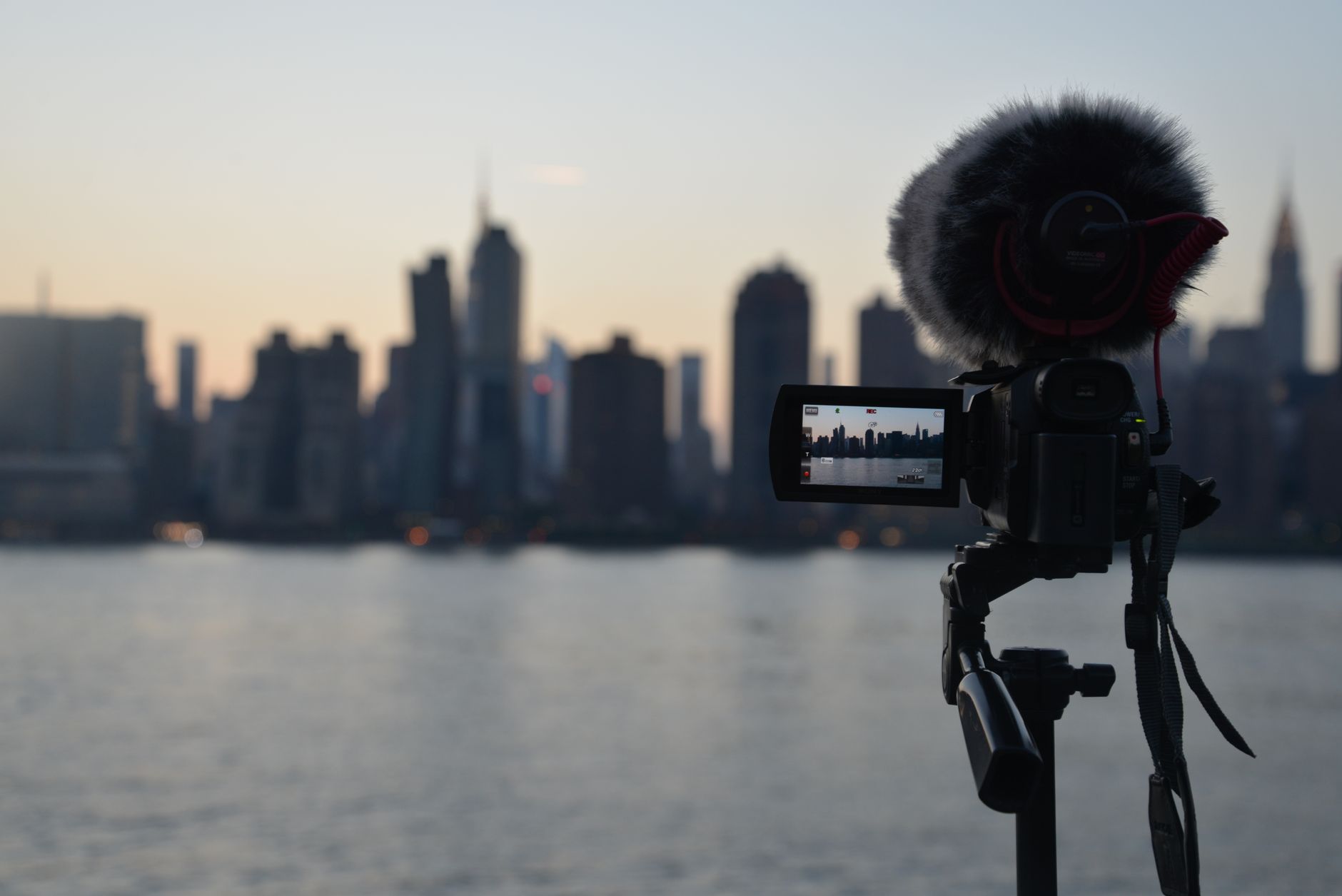
Photo by Jer Rey on Pexels.com

While California kept its crown at No. 1 with $1.76 billion in movie and TV production spend, New York is drawing major titles at a much more rapid pace, according to industry tracker ProdPro’s closely-watched quarterly snapshot released on Thursday. The state surged 87 percent in production spend in the quarter to $1.61 billion compared with California’s 17 percent uptick.

Bulked up soundstage infrastructure, a large crewmember union base, easier access to neighboring Tri-State locations are all adding up for New York. Take Universal Pictures’ Miami Vice: 85 as a case study. The Michael B. Jordan and Austin Butler neo-noir actioner has been filming in the Empire State as well as Wayne, New Jersey along with its namesake locations in Florida.

New York also has what all states covet, and what California has been losing: scripted TV shows that run for seasons and seasons, often in the same soundstages. And inventory for soundstages has grown 43 percent in the state since 2020 with a boom in purpose-built facilities, per real estate services giant CBRE, which added in a June report that the state is “better positioned for recovery than some competitor markets” after studio belt-tightening on overall content spending…

And we haven’t even talked about New Jersey yet, aka Hollywood East, which is emerging as a major player in its own right and has arguably been the biggest growth hub over the past year in production. The state bestowed Netflix, Paramount and Lionsgate as studio partners, which have conferred a series of incentives to produce titles there. And it has been reaping the benefits. Of late, Netflix’s Kevin Hart-Henry Cavill actioner Spy Duo and Adam Sandler’s Grown Ups 3 have been filming in Monmouth County, while series like Cupertino (CBS) and Dan Levy’s Big Mistakes (Netflix) shot in-state.

Both cities have been major media centers for decades. Hollywood has the reputation for being the place where TV and movie dreams are made, where a combination of stars and weather and settings and production infrastructure and booming populations leads to narratives that shape imaginations and discussions.

Some of this is easy for viewers to see on screen if you know where to look. You can examine establishing shots or common sets or certain local features that keep popping up. I saw one the other day on a commercial as I had stood on almost exactly the same spot while touring a Hollywood backlot.

Some of it is hard to know. Many scenes are set in generic places that could stand in for almost anywhere. Unless there are particular local clues (trees, architecture, etc.), a New Jersey suburb could stand in for a community in the Pacific Northwest or the South.

What might be interesting to see is how New York City could play up its TV and film production in the same way Hollywood does. What would it take for people to want to go tour New York City area backlots? Or take bus tours of where the stars live? Or have something like the Hollywood Walk of Fame? Perhaps this is not needed in New York City in the same way given the city’s different economy (finance! Wall Street! international business!) and history.
Lacking studio space with all of the TV and film production going on

With a lot of demand for new streaming content, production is moving to different places:

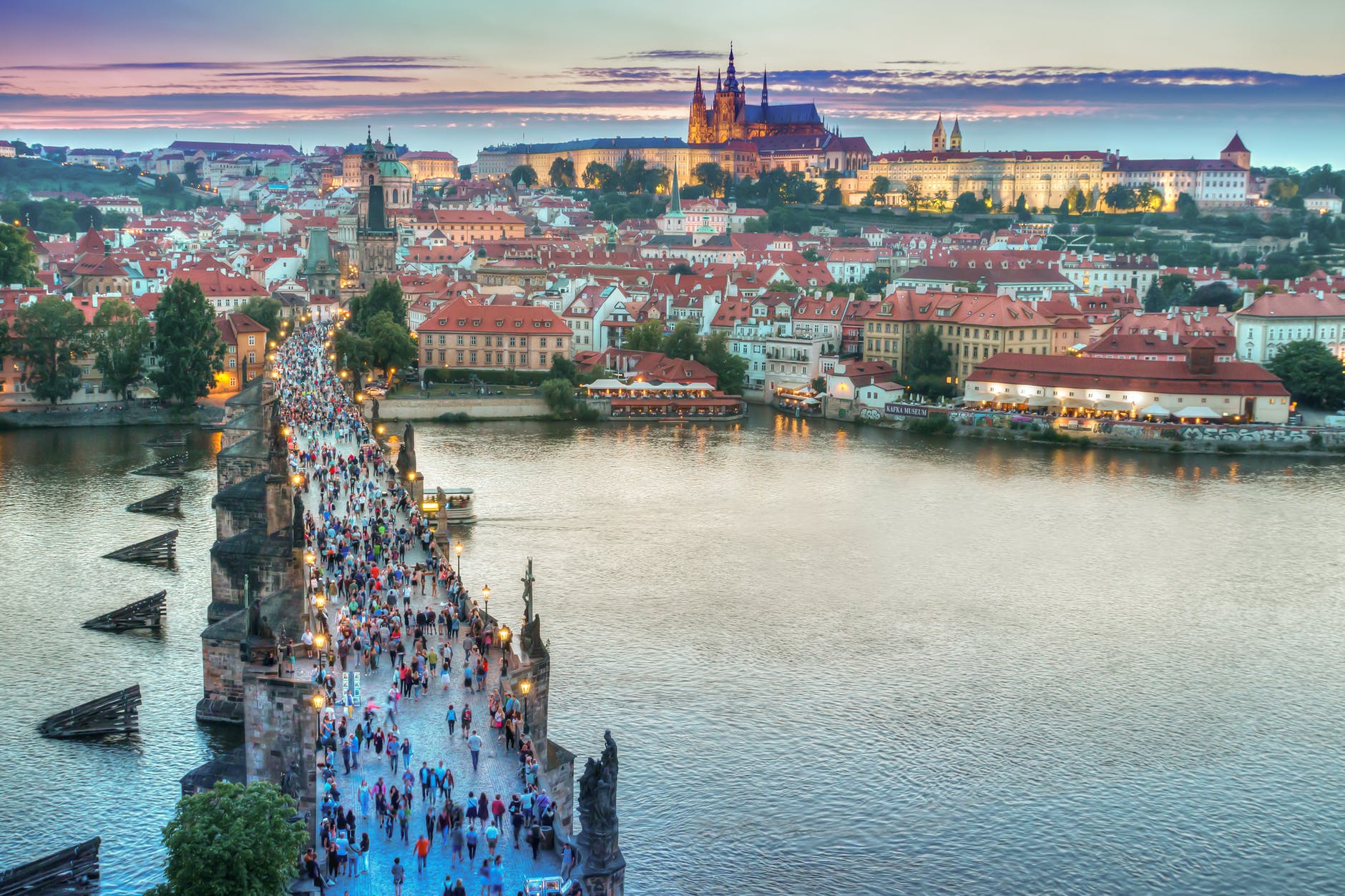
Photo by Ju00c9SHOOTS on Pexels.com

A show the size of The Wheel of Time has to hunt for a part of the world large enough to contain it—especially at a moment when the boom in streaming television has overwhelmed studios from Los Angeles to Atlanta to London to Prague. “We are, as a worldwide industry, quite close to capacity because of this demand for content by our friends at Amazon and all the other streamers,” David Brown, the producer of Wheel of Time, told me. Los Angeles is booked out, and too expensive, anyway. Ditto Atlanta, where Marvel Studios regularly shoots. Ditto London, a longtime production hub that is currently oversubscribed—and, once again, too expensive. So Brown thought: maybe Budapest.

Central and Eastern Europe have traditionally been accommodating places to make movies and television. The locations are suitably grand and variable and ancient; the local expertise, honed by decades of Hollywood productions coming and going, is high-level and relatively affordable. So Brown initially looked at Hungary. But, he said, “I spoke to friends in Budapest who’d worked there, and they just said, ‘You won’t get in.’ ” Then he tried Prague, and found that the waiting list for production space was just as long. So, after some consideration, Brown and his production partners decided to create their own studio from scratch. “You know, we are a big company,” Brown, who is exacting and English and who has worked on everything from The Phantom Menace to Outlander, said. “The show is hugely ambitious creatively. So how do we fill that? That’s why we’re in this building that is 350,000 square feet.”

And so Jordan Studios, where the Wheel of Time production is headquartered, ended up in a remote corner of Prague, in a giant pale-blue complex of industrial buildings that used to be the warehouse of a trucking company.

This caught my attention as I have been working in recent years on research involving the locations of television shows. When you look into television production, it takes place in a number of predictable locations. There are centers of production where all of the space, workers, and synergy is present. In the story above, these typical centers were booked and/or expensive. So, they moved to Prague and put together what they needed in a context where Hollywood production is known and possible.

At least for this particular show, the filming in and around Prague may not matter as much because it is a work of fiction. All sorts of landscapes, inside and outside buildings, could work. At the same time, for many other TV shows and films, they claim to be in a particular location. But, would someone watching know whether if it was filmed in that said location or somewhere else? Through the work of studio filming, editing, and implication, how many stories are filmed on location and how many are filmed elsewhere? The viewer may not know. The filming location might be all sorts of places.

All that to say, the geography of production can continue to change with changing conditions and new content. And would the viewer know any different?

Have I have seen that building before…on a studio backlot?

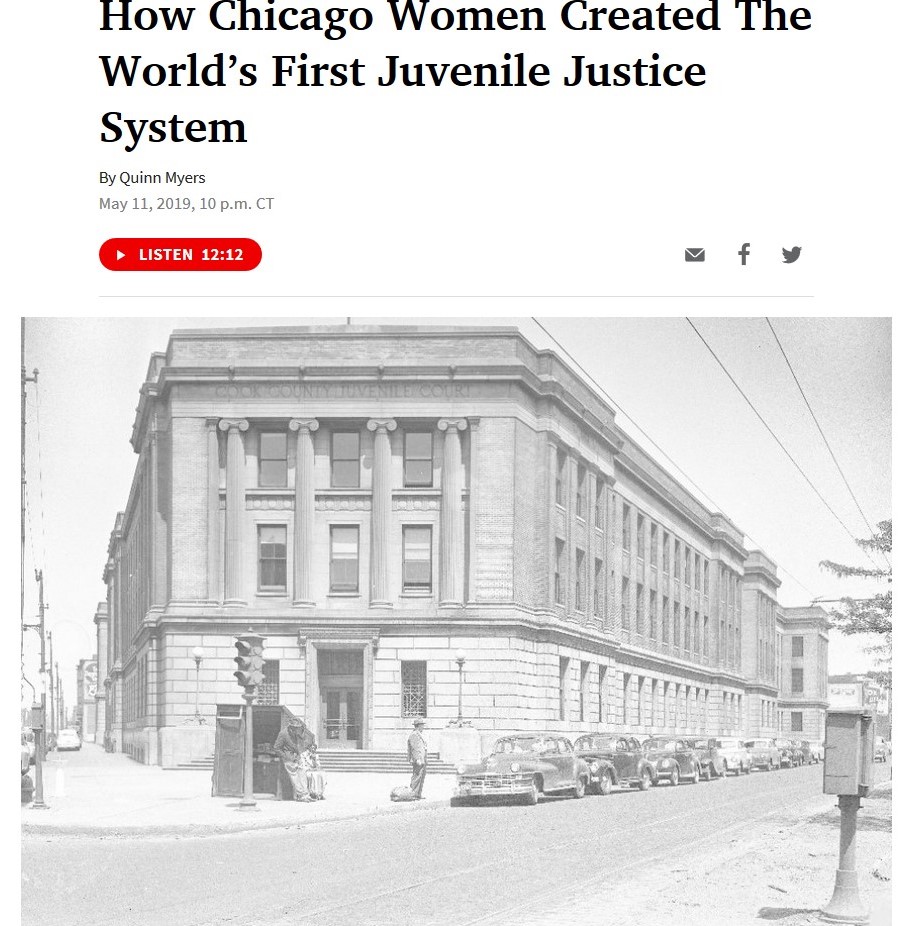
A recent WBEZ story highlighted the country’s first juvenile institution in Chicago. Here is the front of the building:

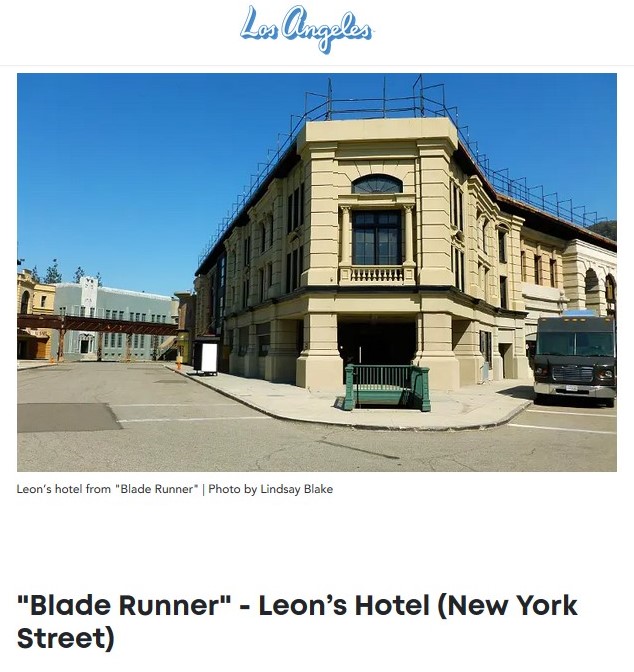
As soon as I saw this image, it reminded me of something I had seen on a tour years ago of the Warner Brothers backlot. Here is what I saw:

These buildings are not the same. But, their spirit is similar. They sit at an oddly-angled corner that gives the front entrance of the building a unique look. There are columns or pillars at the front. The buildings have a similar shape and set of materials even though they are slightly different. The backlot building has a subway entrance (from New York?) in front.

My experience with these structures hints at two larger processes at work:

  1. My memory is not quite perfect yet it is grouping similar buildings together. How many buildings in major American cities have this kind of look on this kind of corner?
  2. Linking to some of my research, how much do television and film depictions of place interact with our corporeal understandings of places? I can see a building on a screen, experience that same place or a similar place, and our brain and understandings then interact. Or, perhaps we may only know of a place through screen depictions and this backlot building in various forms stands in for all sorts of real settings.

I will keep looking for the Warner Brothers building on screen and continue to think through what it means for my understanding of Chicago, New York, and other places.

Three backlot settings I cannot forget

Vacationing in southern California a few years back, we decided to go on some tours of Hollywood studios. After doing these tours, I started looking more into the different backlots for different studios. Then it hit me: I have seen these settings at least dozens of times. In commercials, television shows, and films. Over and over again. Here are a few of these backlot settings I cannot forget:

1. Colonial Street on the Universal Studios lot. There are so many houses here that have been used. Plus it served as Wisteria Lane in Desperate Housewives. (And also an Ace Hardware advertisement.)

2. The city streets on the Warner Bros. lot, particularly the New York Street set. The street corner featuring a storefront with a subway entrance right in front that is used all the time.

3. Wall Street at the Universal Studios lot. The key is seeing the large building with columns at the end of a shot down a long street.

Once you know what these settings look like, it is easy to recognize them.

Filming the world around Hollywood and California

In working on some recent research, I ran into the classic 1927 map from Paramount Studios showing filming locations in California (reproduced in numerous works):

ParamountStudioMapCalifornia1927

Add this to the capabilities of shooting on backlots and the world may be relatively easy to access from Hollywood. There are likely other reasons the film and television industry chose to locate together in and around Hollywood but having such varied nearby locations likely helps.

One thing that is missing from this map: urban locations. This map certainly reflects an interest in more natural settings. Los Angeles in 1927 was still under development. Even later Los Angeles can be fairly distinctive – just look at all the car ads filmed in and around the city. San Francisco offers some spectacular scenery but its uniqueness means it could be hard for the location to double for other places.

New data on (a lack of) diversity in Hollywood and on TV

A new report on diversity in Hollywood and television was released yesterday:

The study, titled the Comprehensive Annenberg Report on Diversity, examined the 109 films released by major studios (including art-house divisions) in 2014 and 305 scripted, first-run TV and digital series across 31 networks and streaming services that aired from September 2014 to August 2015. More than 11,000 speaking characters were analyzed for gender, racial and ethnic representation and LGBT status. Some 10,000 directors, writers and show creators were examined, as was the gender of more than 1,500 executives.

The portrait is one of pervasive underrepresentation, no matter the media platform, from CEOs to minor characters. “Overall, the landscape of media content is still largely whitewashed,” the study concludes.

In the 414 studied films and series, only a third of speaking characters were female, and only 28.3 percent were from minority groups — about 10 percent less than the makeup of the U.S. population. Characters 40 years or older skew heavily male across film and TV: 74.3 percent male to 25.7 percent female.

Just 2 percent of speaking characters were LGBT-identified. Among the 11,306 speaking characters studied, only seven were transgendered (and four were from the same series).

These appear to be pretty consistent patterns. Given the racialized and gendered history of the United States, is it more surprising that white men still dominate in certain categories or that little has changed even with the discussions of recent decades?

One other thought: in No Logo, activist Naomi Klein recounts her own efforts to push for more diversity in advertisements. In a chapter titled “Patriarchy Gets Funky,” Klein says:

We thought we would find salvation in the reformation of MTV, CNN, and Calvin Klein. And why not? Since media seemed to be the source of so many of our problems, surely if we could only “subvert” them to better represent us, they could save us instead. With better collective mirrors, self-esteem would rise and prejudices would magically fall away, as society became suddenly inspired to live up to the beautiful and worthy reflection we had retouched in its image. (p.108-109)

And corporations bought into it:

That’s when we found out that our sworn enemies in the “mainstream” – to us a giant monolithic blob outside of our known university-affiliated enclaves – didn’t fear and loathe us but actually thought we were sort of interesting. Once we’d embarked on a search for new wells of cutting-edge imagery, our insistence on extreme sexual and racial identities made for great brand-content and niche-marketing strategies. If diversity is what we wanted, the brands seemed to be saying, then diversity was exactly what we would get. And with that, the marketers and media makers swooped down, airbrushes in hand, to touch up the colors and images in our culture. (p.111)

The real issue lay elsewhere:

But our criticism was focused on the representation of women and minorities within the structures of power, not on the economics behind those power structures…

The prospect of having to change a few pronouns and getting a handful of women and minorities on the board and on television posed no real threat to the guiding profit-making principles of Wall Street.

Maybe the issue is less one of representation on the screen and more about who controls the industry and resources.

Do conservatives only praise sociology when it fits their arguments?

Conservatives may generally dislike sociology but you can find cases where they are more than willing to accept the imprimatur of sociology if it fits their perspectives. Two recent examples:

1. Discussing a MSNBC exchange about Paul Ryan’s comments about the inner-city where one commentator suggested Ryan was echoing the arguments of Charles Murray, a Daily Caller writer defends Murray:

Murray is a prominent and widely-respected sociologist who penned the 1994 book “The Bell Curve,” which in one chapter posits certain racial differences in intelligence and suggests some of this may be due to genetics.

The book’s measured and well-researched take on a highly controversial issue failed to halt an immediate left-wing backlash. Murray was branded a racist pseudo-scientist, with the Southern Poverty Law Center filing his name under “White Nationalist” and falsely suggesting he maintains ties with neo-Nazi groups.

David Weigel, a left-leaning libertarian journalist writing for Slate, wrote that even after reams of well-received research since 1994, “[‘The Bell Curve’] wrecked Murray’s reputation with some people, and it won’t get un-wrecked.”

“But the conservatives of 2014 don’t cite Murray for his race work,” Weigel continued, noting that the fascinating work Murray presented in his later works “Losing Ground” and “Coming Apart” are much more likely to be referenced by opponents of the welfare state.

As I asked in February 2012, is Murray really a sociologist and how many sociologists would claim he is doing good sociological research?

2. Here is an interesting example from the Family Research Council of combining a temporarily favorable view of Hollywood actresses and sociology:

I know virtually nothing about contemporary stars and starlets, other than having consistently to turn away from the images of the substantially disrobed young “entertainers” displayed on the jumbotron across from my office in advertisements for their latest performances. Pornography, by any other name, ain’t art…

Now, however, Ms. Dunst is much in the news for having the audacity to say what she thinks of gender roles, to wit:

“I feel like the feminine has been a little undervalued … We all have to get our own jobs and make our own money, but staying at home, nurturing, being the mother, cooking – it’s a valuable thing my mum created. And sometimes, you need your knight in shining armour. I’m sorry. You need a man to be a man and a woman to be a woman. That’s why relationships work”.

Wow – how revolutionary! The idea that gender is not a social construct but actually has to do with biology, neurology, morphology, physiology, etc. is an affront to the received orthodoxy of the feminist left, many of whom have piled-on with a predictable combination of derision, illogic, non-sequitur reasoning, and obscenity…

So, men and women are different, and being a stay-at-home mother who cares for her children is something to be honored, not scorned: For affirming these self-evident truths, Ms. Dunst is being labeled “dumb” and ‘insufferable,” among the more printable adjectives.

Kirsten Dunst is now the good sociologist for agreeing with the organization’s perspectives on gender roles. No research required.

Conservatives aren’t alone in this behavior in cherry-picking studies and data they think supports their ideologies. Many groups are on the lookout for prominent studies and research to support their cause, sometimes leading to odd battles of “my three studies say this” and “your two studies say this.” But, given the complaints conservatives typically make about liberal ideas and research in sociology, how helpful is it to sometimes suggest conservatives should take sociology seriously?

Infographic: “Gender Inequality in [Hollywood] Film”

Check out this infographic from the New York Film Academy on gender inequality in American films. A few of the facts involved:

-“Women purchase half of the movie tickets sold in the U.S.” but “28.8% of women wore sexually revealing clothes as opposed to 7.0% of men” in the top 500 films from 2007 to 20012 and the “average ratio of male actors to females is 2.25:1” in these same films.

-The number of men and women working behind the scene in major roles of the top 250 films of 2012 is pretty unequal: women are 9% of directors, 15% of writers, 17% of executive producers, 25% of producers, 20% of editors, and 2% of cinematographers.

-“Forbes 2013 list of the top ten highest paid actresses made a collective $181 million versus $465 million made by the top ten male actors” and “In 2013 the highest paid female actor, Angelina Jolie, made $33 million, roughly the same amount as the two lowest-ranked men. Furthermore, age appears to be a dominant factor in an actress’s monetary success compared to men.”

So much for progressive Hollywood? The infographic also suggests the depth of the inequality goes beyond just star actors and actresses; it applies to numerous important roles and how characters are regularly portrayed.

Another aspect of this is to think about using infographics for social activism. In one big graphic, this group has presented a lot of data regarding gender in American films. Is it more effective to present the data in (1) a splashy way – infographics are hot these days and (2) to overwhelm people with data?

Housing facades hide subway infrastructure

Not all the necessary equipment for subways fits underground. Here are a few examples of how cities use facades to hide the subway:

On a street in Brooklyn that takes you towards the river, where the cobblestones begin paving the road, there is a townhouse that deserves a second look. Despite its impeccable brickwork, number 58 Joralemon Street is not like the other houses. Behind its blacked out windows, no one is at home; no one has been at home for more than 100 years. In fact, number 58 is not a home at all, but a secret subway exit and ventilation point disguised as a Greek Revival brownstone.

If you think about it, this could happen a lot in cities and not too many people would know. It is a clever way to not let necessary infrastructure mar what otherwise are pleasant streets.

It reminds me of seeing Hollywood sets where the exterior looks like a city or neighborhood but then you walk inside and there is nothing there. Here is an example of the interior of a city street scene on a Hollywood lot:

HollywoodFacadeInterior

This could be an interesting premise for a science fiction story: the city looks real but there is nothing behind the facades…

The houses of the James Bond actors differ from what the character Bond would own

I argued earlier this week James Bond is an international figure who doesn’t fit the sentimental idea of home. But here is a look at the homes of the actors who have played James Bond – and they seem to be more of the conventional movie star type of home. In other words, big Hollywood mansions. So it appears the actors who play Bond tend to have the kinds of homes that Bond himself would not want to be tied down to as he worked missions around the globe.