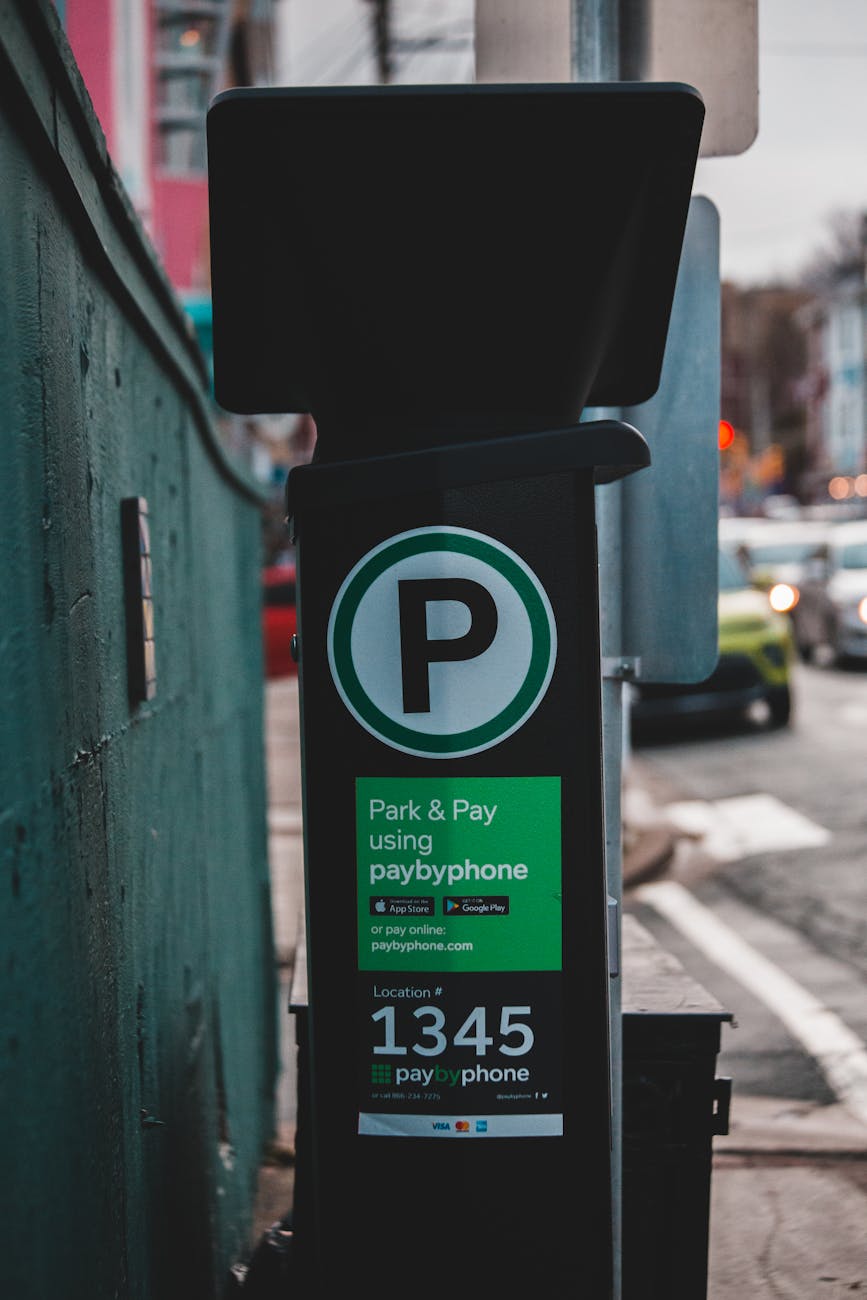
A possible investment return of over 800% on Chicago’s parking meters

One estimate of the profit to be generated through the privatization of Chicago’s parking meters suggests this was a lucrative investment:

Photo by Erik Mclean on Pexels.com

In 2008, then-Mayor Richard M. Daley, with the approval of poodles on the City Council who failed to do due diligence, agreed to sell a 75-year lease on 36,000 parking meter spots for $1.16 billion to an entity that calls itself Chicago Parking Meters LLC and is made up of various parties including Morgan Stanley-related entities and, indirectly and also among others, the sovereign wealth fund known as the Abu Dhabi Investment Authority.

Daley also agreed to a whole series of tightwad rules that handcuffed the city when it came to removing meters for, say, special events such as outdoor dining, changing the hours of paid parking, or making any other changes that might result in less revenue for Chciago Parking Meters. In each and every case, Chicago has had to lay out more cash.

Why did Daley make this colossal error? He wanted to close a budget shortfall and thought that a private company could more easily jack up rates than an elected official likely to anger voters. And he probably believed that $1.16 billion sounded like a whole lot of money.

Wrong. Former Mayor Lori Lightfoot once told this board that the decision was one of the worst public policy mistakes in the history of municipal governance and she was absolutely correct. The investors, if that’s the right term, have recouped that amount within the first 10 years of that 75-year lease. They’ve now made hundreds of million dollars in additional profit. By the end of this deal, they are likely to have raked in a total of $9 billion. 

Urban parking can be a lucrative business, whether working with parking meters or having a parking lot or garage that later becomes a huge development project. Thus, imagine the money the city could have generated by treating the parking meters differently.

This reminds me of at least two bigger picture issues. First, infrastructure and public goods require a long-term view. In the short-term, selling the revenues from these meters may have helped close a budget loophole. However, lots of things can change over 75 years. Will the city need or want parking meters at that point? How much driving will there be? Would a shorter deal leave more flexibility?

Second, Chicago has relied on some public-private partnerships for decades to help keep the city moving forward. While this deal might not appear to be a good one for the city, other projects may appear to be good. How many projects have worked out well? Does the participation of the city or the use of the city’s resources make certain things possible?

I am guessing this deal will serve as an example for years to come. Hopefully some lessons are learned that could lead to some good.

Government-developed skyscrapers, World Trade Center edition

Skyscrapers do not emerge only from private sector. The former World Trade Center in lower Manhattan is one example (with quotes below from pages 198-199 of Cities in the Sky by economist James Barr):

Photo by Thomas Svensson on Pexels.com

Despite the destruction on September 11, 2001, the legacy of the Twin Towers remains strong. it was the first time that an American government agency – or likely any government agency the world over – directly developed and managed supertall skyscrapers meant to compete with the private sector. Historically, governments built tall buildings for their own needs. City halls competed with houses of worship to be the tallest in each city. But here was a regional governmental entity producing building space to earn a profit.

More importantly, it showed, over time, that placemaking via record-breaking skyscrapers was a viable option for cities, as the Twin Towers became instant icons of the Manhattan skyline. Just as important was their economic success, which created a new model: Build a record breaker with state support. If need be, fill it up with government agencies (or state-owned businesses outside the United States), give it time for neighborhood growth to kick in, and reap the returns.

This model later spread:

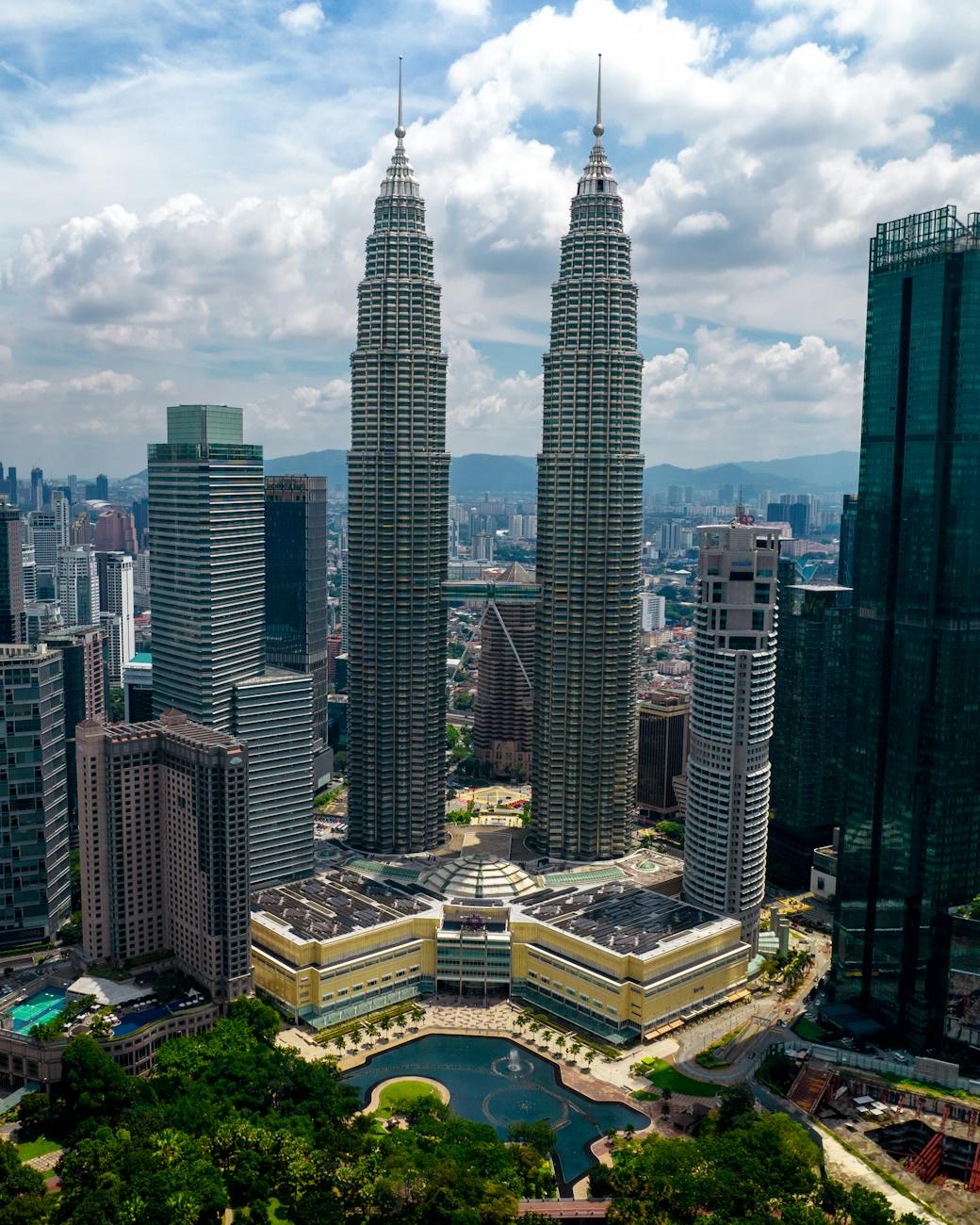
Photo by Matteo Parisi on Pexels.com

That it took till 1998 for this strategy to surface in Asia – starting with the Petronas Towers in Kuala Lumpur – was due to the time Asia needed to catch up with its economic development and infrastructure. That it wasn’t replicated in the United States after that was because by the end of the 1970s America’s era of big government-funded urban renewal projects was over, while in Asia government-funded projects were just beginning.

Might this happen again in the future in the United States? Leaders seem quite open to public-private partnerships when it is deemed necessary to boost development and growth.

State of Illinois has grant money to help develop megasites of 200+ acres, including suburban locations

A new grant from the state of Illinois makes money available to develop “megasites”:

Photo by Jahoo Clouseau on Pexels.com

Gov. J.B. Pritzker on Monday announced the creation of a $40 million grant program to help businesses find and build on large development-ready areas known as “megasites” across the state, including several in the suburbs.

Megasites are large swaths of land intended for businesses such as factories, warehouses and distribution centers. Pritzker said developing these sites will help make Illinois more competitive, especially as sectors including clean energy and manufacturing are rapidly expanding in the U.S…

Intersect Illinois, an independent economic development nonprofit working with the state on the program, lists among 151 megasites two in Hoffman Estates, one in West Chicago, four in Lake County and five in the Fox Valley. Several more are in South and Southwest suburbs, and more than two dozen are southwest of Joliet around Minooka, Channahon and Morris…

The program is open to private entities, nonprofits and local governments, and the application portal is open through April 6. Those receiving the grant must match each dollar granted by the state with other private or local funding.

This is a good example of how governments and private interests work together in the United States to develop land. The state government provides money in concert with more local funding in order to help spur development. Without the government money, the development may not happen.

This money is marked to help with large projects. Is the assumption that it is difficult to entice companies to such sites in Illinois or that local governments do not have enough resources to address needs for properties this large?

If these properties are not developed as megasites (versus being developed in parts), how much is lost?

This will be worth checking on in a decade or two to see what exactly emerges on these megasites.

A suburban hospital creating a medical and commercial district

Northwestern Medicine is developing and opening multiple properties around its hospital in the small suburb of Winfield, Illinois:

Photo by Pixabay on Pexels.com

The once-blighted corner now boasts a $38.8 million medical office building designed to anchor the redevelopment of Winfield’s Town Center…

The health system also has built a parking garage and amenities in Riverwalk Park since forming an agreement with the village to inject new life into Winfield’s small-town downtown. Northwestern has set aside commercial and restaurant space on the ground floor of both the parking deck and the medical office building…

Winfield Station, a five-story apartment complex, is almost fully leased, Sorgatz said.

The site that once housed John’s Tavern is available for development directly west of the medical office building. The restaurant owner closed the business in 2017 after deciding to retire. Northwestern purchased the property.

The hospital and the town have not always seen eye to eye.

This story highlights the potential for a hospital to drive redevelopment. The hospital has money, nearby property is available. The new projects can theoretically benefit everyone: the hospital needs space, the village has property that would benefit from new buildings, the municipality can get more tax revenues, community members could hold jobs.

Bigger question: should hospitals drive development and redevelopment? There is a lot of money in health care, they provide employment, and they are often a long-term presence. Numerous communities in the United States have long-standing facilities that drive activity and local status. How many communities, cities, suburbs, or more small towns can happily connect in public-private partnerships involving hospitals?

With opposition to Google’s Toronto smart neighborhood, larger questions about powerful corporations, tax breaks, and public-private partnerships

Plans in Toronto for Google’s major development have hit multiple stumbling blocks:

As in New York, where fierce opposition to Amazon led the online retail giant to cancel plans to build a second headquarters in Long Island City, a local movement here is growing to send Sidewalk Labs packing. Their concerns: money, privacy, and whether Toronto is handing too much power over civic life to a for-profit American tech giant.

The #BlockSidewalk campaign formed in February after the Toronto Star reported on leaked documents indicating that Sidewalk Labs was considering paying for transit and infrastructure on a larger portion of the waterfront. In return, it would seek a cut of the property taxes, development fees and the increased value of the land resulting from the development — an estimated $6 billion over 30 years…

Separately, the Canadian Civil Liberties Association is suing the city, provincial and federal governments to shut down the project over privacy concerns. Michael Bryant, the head of the group, said Trudeau had been “seduced by the honey pot of Google’s sparkling brand and promises of political and economic glory.”…

Micah Lasher, the head of policy and communications for Sidewalk Labs, said providing more details about the business model for Quayside and plans for data governance earlier would have helped allay many concerns. But he also said the business model remains uncertain.

Any major development or redevelopment project in a major city can run into issues. But, there seem to be at least three larger concerns at play here:

  1. Google and the role of tech companies. The public may be more suspicious of these corporations today compared to ten years ago when all the technology seemed rather magical. Issues of privacy and power matter more today.
  2. Tax breaks may not be the answer they once were in cities and metropolitan areas in order to attract corporations and developers. Residents and local leaders may ask why Google, a very wealthy corporation, needs any tax breaks. And, if the tax breaks are not provided, will Google take its smart city development elsewhere?
  3. This might signal larger issues with public-private partnerships. For at least a ten years or so now, these have been hailed as a way to move forward in many cities: both the local government and the developers chip in to get things done with benefits to both sides. But, do such deals turn over too much control or too many of the benefits to the private side rather than spreading the benefits to the residents and the community?

It will be interesting to see how local political and business leaders handle this: can they afford to let the project die or go elsewhere?

Perhaps the long-term answer for companies like Google is to follow the lead of Disney and Celebration, Florida and create whole communities rather than entering in messy situations in already-existing communities.

Trying to split Naperville’s downtown streetscape improvement costs

Downtowns need regular upkeep and maintenance but paying for streetscape improvements can be a tricky matter:

In an estimated $15 million project that’s expected to take six years once it begins, the city plans to upgrade sidewalks, install new benches and street furniture and enhance street corners throughout its commercial core…

City staff members are proposing the work be paid for over 15 years, with the city contributing half and downtown property owners the other half.

They say it’s a fair cost distribution because a strong downtown improves the city as a whole…

Problem is, those same downtown property owners who could be asked to foot the bill for sidewalks and benches also are still paying off the Van Buren Avenue parking garage — and will be until 2021, 20 years after it was constructed. They’re also paying for ongoing downtown maintenance and marketing through a separate special tax that’s renewed every five years.

As is suggested in the article by local leaders, perhaps this is simply the price of doing business in a popular suburban downtown: you chip in to help make the downtown better. This sort of public-private partnership can work well when there is a vibrant business scene. But, I could also imagine that these added costs make it more difficult for certain kinds of businesses to participate.

It would also be interesting to know how these streetscape improvements compare with efforts of others – whether municipalities or shopping centers – to improve their appearance and amenities. One way to view retail competition is as an arms race: who can create and foster the most vibrant scene? Who has the mix of stores, restaurants, recreational opportunities, parking, weather, and events that would lead consumers to go there rather than somewhere else? Not making such proactive improvements, even though they may be costly, could lead to falling behind.

Summarizing the sides for and against the Illiana Expressway

The Daily Herald does a nice job laying out the opposing positions regarding the Illiana Expressway. There seems to be a little bit of everything needed for a really contentious development debate:

1. Lots of money is at stake for building the highway.

2. Thousands of jobs for construction and in projected economic development. Perhaps more importantly, who gets to take credit for the jobs? Next, would these jobs take away from potential jobs elsewhere?

3. Questions about whether the highway is really needed to ease truck traffic.

4. Whether the highway will serve an area ripe for suburban development (southern Will County) or whether this is primarily about shipping freight.

5. Politicians from elsewhere in the Chicago region differ on whether the road is good for the region. Additionally, some argue the highway projects they support are more important and deserve the money.

6. Is there enough money behind this public-private partnership so that state taxpayers aren’t left on the hook?

All of this reminds me that building highways was probably a lot simpler fifty years ago. For those who want more highways today, it is too bad they didn’t have the foresight to construct them back in earlier eras of the interstate system.