Pushing back against the housing plans of the wealthy in suburban Palo Alto

One elected local government official wants to limit what wealthy residents can build in suburban Palo Alto:

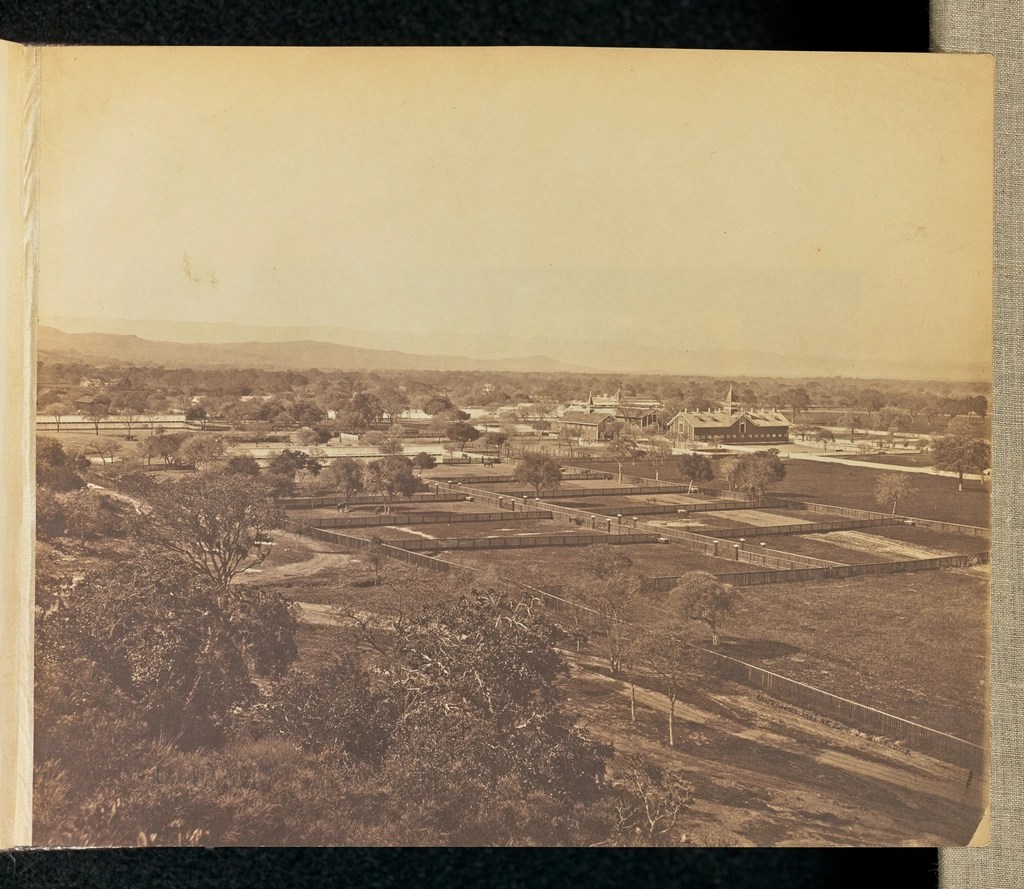
View Palo Alto, California Eadweard by thegetty is licensed under CC-CC0 1.0

The proposed legislation would apply to people who buy three or more homes within a radius of 500 feet, roughly the length of a city block. Any construction project expected to last more than 180 days would need a detailed daily schedule of construction work to prove it can be conducted without double-parking vehicles or blocking driveways or bike lanes.

After finishing one construction project, homeowners would need to wait three years to begin another unless a major emergency occurred. Homes could not be vacant for more than six months in any given year.

The proposal relies on neighbors for enforcement, leaving it up to another homeowner or tenant living within 500 feet to file a lawsuit.

The proposal would place new restrictions on private security guards across Palo Alto, not just those serving wealthy homeowners. All security vehicles would have to be marked and permitted by the city. Security guards would have to identify themselves to the public when asked. They would be prohibited from harassing or intimidating passers-by on public property…

The full Palo Alto City Council is likely to take up Mr. Stone’s proposal in January or February. Mr. Stone said he is confident that a majority of the seven-member council, which has taken a keen interest in housing affordability, would support the general framework but could send it to a committee or city staff member for refinement. It could take six months or longer to reach a final vote, he said.

Three things strike me about this proposal:

  1. It is clearly aimed at particular residents. Not just people with some wealth, who might be found across American suburban communities, but people who are truly wealthy and can afford this kind of construction and property ownership and all that goes with it.
  2. Communities often deal with these concerns at the zoning level. How big can a structure or house be? Are the guidelines in particular areas or in regards to property lines? The proposal above seems to deal with other matters that come along with regular approval of megahouses and properties.
  3. The regulations are about property but local conversations often have to do with local character and community life. Do such homes (and people) fit in the community? Who can live in a place where such properties are common? Who is Palo Alto for? Suburbs often implicitly or explicitly have these discussions while considering development.

Now that this proposal is out there, how do wealthier residents respond and what will the final local regulations be?


Considering Silicon Valley a city in order to compare it to Jerusalem and Athens

Is Silicon Valley a city? Maybe it works in order to compare it to Jerusalem and Athens:

Photo by Pixabay on Pexels.com

And this new city is growing in power. Never before have the questions of Athens and the questions of Jerusalem been mediated to us by such a great variety of things that vie for our attention and our desires. Silicon Valley, this third city, has altered the nature of the problem that Tertullian was wrestling with. The questions of what is true and what is good for the soul are now mostly subordinated to technological progress—or, at the very least, the questions of Athens and Jerusalem are now so bound up with this progress that it’s creating confusion…

If Tertullian were alive today, I believe he would ask: “What does Athens have to do with Jerusalem—and what do either have to do with Silicon Valley?” In other words, how do the domains of reason and religion relate to the domain of technological innovation and its financiers in Silicon Valley? If the Enlightenment champion Steven Pinker (a resident of Athens) walked into a bar with a Trappist monk (Jerusalem) and Elon Musk (Silicon Valley) with the goal of solving a problem, would they ever be able to arrive at a consensus?…

The extent to which people begin clustering in one of the three cities—the extent to which they isolate, fortify the walls, and close the gates—is the extent to which our culture suffers. Nobody can remain isolated in one city for long without losing perspective. Self-styled rationalists hostile to religion close themselves off from millennia of embedded wisdom (or they merely invent their own form of cult or religion, based on reason). Religion that doesn’t respect reason is dangerous because it denies a fundamental part of our humanity, and the detachment can result in extremism that, at its worst, can justify unreasonable or even violent practices in the name of God. And Silicon Valley’s excesses—like the now defunct company Theranos, the cult-building of Adam Neumann, or the technology bubble of the late ’90s—are characterized by a detachment from reason and a failure to recognize the secular forms of religiosity that led to those things happening in the first place…

The most important innovations of the coming decades will happen at the intersection of the three cities—and they will be created by the people who live there.

What makes a city? A denser population center with economic, political, and social activity.

In the discussion excerpted above, Silicon Valley sounds less like a population center and more like the locus of a particular idea or culture revolving around technology and utilitarianism. Can a sprawling area outside a major city truly be a city? Is there a geographic center to Silicon Valley? Are there public spaces used by many? Is there a unified government or social structure?

As hinted at above, for much of human history and still in some places today, cities are religious centers. This is less the case in the United States where downtowns are dominated by commerce and finance, not religious congregations and practices. But, providing religiosity or meaning at work in a deconcentrated Silicon Valley may not work out as well as hoped.

Religion, work, and Silicon Valley

A new sociology book looks at how a number of Silicon Valley leaders embraced religion as they also created a unique work culture:

Photo by Fox on Pexels.com

Author and sociologist Carolyn Chen calls this philosophy “techtopia,” where “people find their highest fulfillment in the utopian workplace.”…

Chen’s research subjects are almost all men, and most are white or Asian. Eighty percent had moved from places outside Silicon Valley, marooned there without the support structures of family, friends or community. Chen describes them as “far from home, alone, young, impressionable.” Work is their only outlet to fill in the “meaning” gap…

While Silicon Valley may be the epicenter of experimental self-improvement (just check out how many tech workers fast or microdose psychedelics to achieve greater clarity or productivity), the “work as religion” philosophy has spread across the country. According to Chen, almost every Fortune 500 company has some kind of religiosity baked into its corporate structure — from inspiring mission statements to charismatic leaders — and many companies have actively gone “spiritual” to drive up the bottom line.

For the past 40 years, the workplace has successfully unseated religious institutions as a primary meaning maker, right after family, according to a recent Pew survey. High-income employees work longer hours than ever and are less likely to consider themselves religious, writes Chen. People who don’t have any religion — “religious nones” — have tripled in the past quarter century. At the same time, corporations have changed their strategies, using new incentive structures like gain sharing and stock options to bring people into the corporate “family.”

Going back to the early days of sociology, is the Silicon Valley marriage of religion and work more like:

  1. Marx’s suggestion that religion is a tool used by the capitalists – who own the means and modes of production – to distract workers from the reality that they are being exploited.
  2. Weber’s idea that religious ideas could transform economic systems; is this less about religion being connected to work and more about religion fundamentally changing work?
  3. Durkheim’s argument that people will no longer need religion as humans embrace a brotherhood of people and progress.

There might be some merit to all of these. If humans are meaning-making creatures, they will continue to make meaning – and ultimate meaning – in the midst of their day-to-day realities. Yet, since we are right in the middle of this transformation, it is not certain that it will necessarily continue. Do American workers like the idea that work is the primary meaning-maker?

Agglomeration, working from home, and the character of places

Why do certain industries cluster together in one location? Social scientists have answers:

Photo by Chris F on Pexels.com

Economists believe agglomeration — like the clustering of tech in the Bay Area — has historically been the result of two main forces. The first is what they call “human capital spillovers” — a fancy way of saying that people get smarter and more creative when they’re around other smart and creative people. Think informal conversations, or “serendipitous interactions,” over coffee in the break room or beers at the bar. These interactions, the theory says, are crucial to generating great ideas, and they encourage the incubation and development of brainiac clusters. The other force is the power of “matching” opportunities. When lots of tech firms, workers and investors clustered in Silicon Valley, there were lots more opportunities for productive marriages between them. As a result, companies that wanted to recruit, grow or get acquired often gravitated to places like the Bay Area.

However, remote work could actually improve certain matching possibilities. Companies can hire smart people anywhere in the world when they drop the requirement that they physically be in a central office. Not only that, they can pay them less. Moreover, killing the office can significantly lower costs for companies, which no longer have to pay for expensive real estate.

So, in this theory, the future of work and the economic geography of America really hinges on whether companies can create those “human capital spillovers” through computer screens or in offices in cheaper locations.

This is a phenomenon with a pretty broad reach as cities could be viewed as clusters of firms and organizations. What has been interesting to me in this field in recent years is how places like this come to develop and what it means for the character of the place.

Take Silicon Valley as an example. This is the home of the tech industry and, as the article notes, the big firms have committed to physically being there with large headquarters (including Google, Apple, and Facebook). These headquarters and office parks are themselves interesting and often a post-World War Two phenomena as highways and suburbanization brought many companies out of downtowns to more sprawling campuses. At the same time, the impact of all of this on the communities nearby is also important. What happens when the interests of the big tech company and the community collide (see a recent example of a Facebook mixed-use proposal)? What did these communities used to be like and what are they?

This is bigger than just the idea of employees working from home. This potential shift away from clustering would affect places themselves and how they are experienced. If thousands of workers are no longer in Silicon Valley, what does this do to those communities and the communities in which more workers are now at home? Silicon Valley became something unique with this tech activity but it could be a very different kind of place in several decades if there is new activity and new residents.

The same could be said for many other communities. What is New York City if Wall Street and the finance industry clusters elsewhere or disperses across the globe? What happens to Los Angeles if Hollywood disperses? And so on. The character of places depends in part on these clusters, their size, and their history. If the agglomerations shift, so will the character of communities.

More on the wealthy leaving cities, San Francisco edition

The flight of some out of New York City amid COVID-19 has attracted attention. This may also be happening in San Francisco:

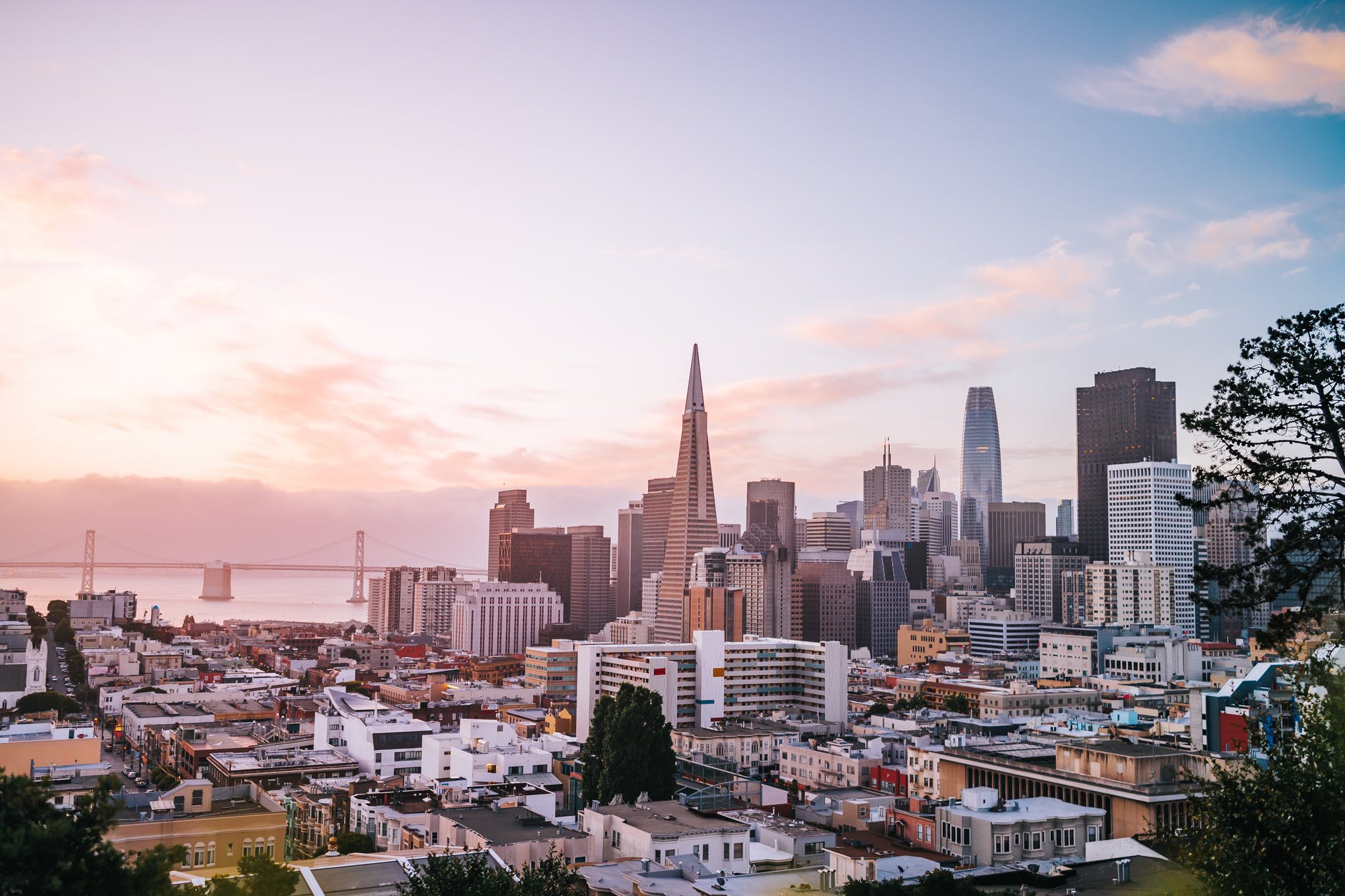
city skyline during golden hour

Photo by Kehn Hermano on Pexels.com

Amid the depths of a global pandemic and financial downturn, the demand for real estate is unexpectedly rocketing in wealthy regions outside San Francisco, reports Bloomberg. Agents say that demand is soaring in affluent areas around the Bay Area such as Napa, Marin and further afield in Carmel, as people who have the means look to get away from the city. Meanwhile, the market in San Francisco and Alameda County is still well below where it was last year.

Elsewhere, Lake Tahoe has also seen a surge in real estate interest. The prospect of living out of the city on an alpine lake while maintaining a career is appealing for a new generation of young buyers, as many tech companies have signaled that remote work may be the new norm for a long time…

Meanwhile, the rental market in San Francisco has dropped significantly, with rates for one-bedroom apartments in the city dropping by 9.2% since June 2019, and hitting a three-year low.

However, buying a new home in an isolated haven in a nearby bucolic county is not an option for lower-income San Francisco residents, and some believe the trend is only exacerbating the wealth divide.

And, as noted in the final paragraph of the story, it is hard to know whether this is a long-term trend. But, this is one of the advantage of wealth and resources: residential options during times when many others are limited in where they can live. And this is not just limited to where they can live; it includes being able to travel back and forth easily, owning or renting multiple properties at the same time, and having all the resources for working from home.

More broadly, the evidence cited above is interesting in that people moving out of the city are not said to be moving very far. They are still within a drive of San Francisco/the Bay Area/Silicon Valley. Are people in the Bay Area more willing to stay close by or do they have to due to work (a need for at least some in the tech industry to be at meetings, see people and products, etc.)? Does this differ from New York City where many of those moving ended up in the suburbs while others left the metro region all together? Staying in driving distance changes the moving experience.

I am also imagining the possibility of a more significant migration than some wealthy people heading for the suburbs or other cool metro areas. What if Facebook said they want to get out of the petri dish of Silicon Valley, be a different kind of tech company that really wants to connect people, and picks up for Omaha or St. Louis or another smaller big city in the middle of the country? Clusters of organizations have particular synergies and efficiencies but if more workers are going to be at home, is there still the same need to locate near everyone else?

Related earlier post: the evidence for this happening in Washington D.C. may not be as strong.

Claim: “The physical environment feels depressingly finished”

As Derek Thompson of The Atlantic considers innovation and Silicon Valley, he includes this paragraph regarding innovation in the physical and urban realm:

And if you look up from your smartphone, progress becomes harder to see. The physical world of the city—the glow of electric-powered lights, the rumble of automobiles, the roar of airplanes overhead and subways below—is a product of late-19th-century and early-20th-century invention. The physical environment feels depressingly finished. The bulk of innovation has been shunted into the invisible realm of bytes and code.

There are several pieces that can be pulled out of this an examined:

1. Has innovation in cities and urban areas slowed? Many of the major changes may have already happened – think the modern skyscraper, the car and all the roads to go with them – but I’m guessing there are some lesser-known changes in the last few decades that have made a major difference. (For better or worst, one would be the global shift toward and innovations in capitalism, neoliberalism, and the finance industry that has had large effects on numerous cities and neighborhoods.)

2. If “the physical environment feels depressingly finished,” does this mean a change in aesthetics or style could alter this? Science-fiction films and shows tend to depict cities as white, gleaming, and move curved than they are today. Think Her which merges city life and technological change. Or, find images of cities from researchers, activists, and architects who imagine much greener cities full of plants and life rather than hard surfaces and cars. Perhaps the problem is not innovation as it is described in this article; one issue is that the look of big cities has not changed much in the fifty years or so (even as some individual buildings or projects might stand out).

3. If the look and feel of cities has not changed as much recently, could “the invisible realm of bytes and code” bring significant changes to the physical environment in the next few decades? In contrast to #2, perhaps future innovation in spaces will be less about collective experiences and aesthetics and more about changed private experiences. Imagine Virtual Reality in cities that allows pedestrians to see or overlay different information over their immediate surroundings. Or, easier access to Big Data in urban settings that will help individuals/consumers make choices.

Would new local taxes on large tech firms really cause them to leave Silicon Valley?

Several communities in Silicon Valley are considering levying special taxes on large companies, possibly affecting some of the biggest tech companies:

Cupertino, Mountain View and East Palo Alto have begun to ponder new taxes based on employer headcounts — levies that could jolt Apple and Google — and if voters endorse the plans, a fresh wave of such measures may roll toward other corporate coffers.

Alarmed by traffic and other issues brought on by massive expansion projects, the three Silicon Valley cities are pushing forward with separate plans to impose new taxes that could be used to make transit and other improvements…

A lot of factors point to this being a prime time for efforts such as these. San Francisco ranked fifth worst for traffic congestion in the world — and third worst in the U.S. — last year, according to INRIX Global Congestion Ranking. Record housing prices in 2018 boosted the median price of a single family home in the Bay Area to a record $893,000 in April, according to a CoreLogic report.

Federal tax cuts also have improved the balance sheets on an array of U.S. companies, large and small. Silicon Valley’s largest tech companies have contributed to the gridlock on freeways and soaring housing costs as they’ve grown rapidly in recent years, with brisk hiring and expansion in unexpected areas and mega-leases that gobble up huge swaths of office space.

If this works the way that some would argue it does, then the local taxes will be viewed by the tech companies as an unnecessary burden for their operations. They should then consider moving elsewhere where they are not subject to such local taxes. Indeed, if they wanted to move sizable operations, they could probably get numerous communities to offer them tax breaks.

However, this assumes that the local taxes are the primary factor that determines where companies and organizations locate. Instead, there are a variety of factors that both support and work against staying in their current location. I assume these are important reasons for why Apple, Facebook, Google, and others are in this location: the construction and maintenance of large headquarters, proximity to other like-minded organizations, an talented employee pool nearby, and the proximity to major cities like San Jose and San Francisco. Are local tax issues more important than these other concerns? Probably not. And even if they are, it would take some time before a large organization could significantly alter their operations in response.

Living inside and outside Facebook and Google’s new developments

Online and physical realms will collide even more in new developments Facebook and Google are planning:

Willow Village will be wedged between the Menlo Park neighborhood of Belle Haven and the city of East Palo Alto, both heavily Hispanic communities that are among Silicon Valley’s poorest. Facebook is planning 1,500 apartments, and has agreed with Menlo Park to offer 225 of them at below-market rates. The most likely tenants of the full-price units are Facebook employees, who already receive a five-figure bonus if they live near the office.

The community will have eight acres of parks, plazas and bike-pedestrian paths open to the public. Facebook wants to revitalize the railway running alongside the property and will finish next year a pedestrian bridge over the expressway. The bridge will provide access to the trail that rings San Francisco Bay, a boon for birders and bikers…

Facebook is testing the proposition: Do people love tech companies so much they will live inside of them? When the project was announced last summer, critics dubbed it Facebookville or, in tribute to company co-founder Mark Zuckerberg, Zucktown

Google will build 5,000 homes on its property under an agreement brokered with Mountain View in December. Call it Alphabet City as a nod to Alphabet, Google’s corporate parent. The company said it was still figuring out its future as a landlord, and declined further comment.

Throw Apple in the mix – as this article does – and these tech companies are doing something unique in Silicon Valley: looking to develop campuses that are around-the-clock and provide housing for employees. Few companies would even think of such a plan and I could imagine many workers would have serious reservations regarding living in facilities provided by their company.

But, there is one distinguishing feature of these new developments that complicate this already-unique story: the particular geographic context in which these physical developments are located. This is an area that already has a tremendous level of inequality with limited affordable housing and some of the poorest and richest living near each other. Tech companies like these three have brought tremendous wealth and notoriety to the area and have also exacerbated issues. What responsibility do these large companies have to the local area? The article mentions Steve Jobs’ claim in front of a local government that a good company is only required to pay taxes.

I suspect physical developments from these companies would be treated differently elsewhere, particularly in places that are desperate for jobs or economic energy. The case of a Google development in Toronto will offer an interesting contrast in how local residents and officials respond. Or, we see what cities are willing to offer to Amazon for a large facility.

Additionally, the idea that corporate campuses or facilities should be open to or available to the public is an interesting one to consider. There are already numerous areas that are actually private spaces that function more like public spaces (think of shopping malls or some of the urban parks that Occupy Wall Street found out were actually private land). But, it is different to ask that an office building or housing for employees also be available to the public. I wonder if there is a company that will lead the way in this and tout the benefits of having employees and the public interact as well as share their corporate benefits with others.

Silicon Valley packing up for New York City and other locations

Google’s plans to open a big office in New York City may presage larger geographic shifts:

Google is said to be close to signing a $2.4bn deal to establish an East Coast base in New York City, the latest in a series of moves by tech firms who believe Silicon Valley‘s best days may be “over”…

If it goes ahead, Google would be among a number of tech companies that are looking to expand their New York footprint. Concerns about the soaring cost of living in San Francisco, and worried that innovation may be accelerating faster in other parts of the country, a number of firms are looking to New York and other cities…

The AP said New York had been pitching itself as an alternative to Silicon Valley for years. While tech may never rival financial services and Wall Street as the most important private-sector employer and economic driver, it has already established a legitimate footprint that goes beyond a handful of giant companies…

The news comes as a number of other tech giants are looking to find alternative locations for investment opportunities and expansion. The New York Times said Robin Li, an investor with the San Francisco venture capital firm GGV Capital, recently led a three-day bus tour through the Midwest, stopping in Youngstown and Akron in Ohio, Detroit and Flint in Michigan and South Bend in Indiana.

On one hand, it is not a surprise that New York City is alluring: it is one of – if not the most – important city in the world with its finance industry, influence, and standing as the leading America city. Many major companies throughout the world would consider a location in New York City. If any industry wants to conquer the world – and tech is on that path – New York City is a place to be.

On the other hand, New York City is a very different place compared to Silicon Valley and San Francisco. The notable laid-back vibe that helped give rise to tech start-ups over the decades does not really exist in New York City. The tech industry may be king in Silicon Valley but New York City has plenty of other options (finance, media, fashion, etc.). New York City is several times zones east, making some communication around the world more difficult (but making it easier to connect with Europe). The city and suburbs are on a different scale compared to the Bay Area.

Put this news from Google with Amazon’s search for a second headquarters and there could be a large geographic shift. While it would take some significant changes to move away from the massive Silicon Valley headquarters (including recent efforts from Apple and Facebook), the tech industry may be associated with new locations within a few decades.

A sociologist goes to the Urban History Association meetings, Part Two

I posted several observations yesterday from my time at the Urban History Association meetings. I turn today to the three most interesting ideas or debates I heard when attending sessions and panels:

  1. On a session on public housing, the discussant made this observation: with all of these negative cases of big government involvement in public housing, perhaps we need to turn away from seeing this as the solution. The main issue is this: when the federal resources are earmarked for the poor and redevelopment, it always seems to end up in the hands of the wealthy and developers rather than with those who really need the assistance. (For another example of this that involves lots of government money but not public housing, see the book Crisis Cities about New York City after 9/11 and New Orleans after Hurricane Katrina.) He suggested then and in later conversation that doesn’t mean that government should be completely removed from public housing. However, more local efforts seem to allow more opportunity for success rather than a completely top-down approach.I’ve argued before that the private market can’t do much about affordable housing in the United States, let alone public housing. At the same time, I would agree that the record of the federal government regarding public housing is mediocre at best. Are there some middle-range solutions? (I’ll also acknowledge that sometimes it does seem to take the federal government to help local governments do the right thing. For example, the Chicago Housing Authority was a mess for decades and required some oversight.)
  1. On a panel on Jane Jacobs, one of the scholars highlighted her upbringing in Scranton, Pennsylvania as being particularly formative. While Jacobs is most associated with New York City and Toronto, she was shaped by this smaller big city, the third most populous Pennsylvania city at the time and a city that attracted a variety of residents to work in the coal mining industry. This made me think of two things: (1) Why don’t more scholars pay attention to smaller big cities that may not be as important on the global stage but still contain a large number of American residents and (2) how might Jacobs and fictional resident and booster Michael Scott of The Office get along?
  1. A later panel discussed the history of Silicon Valley. In a response to a question about the representativeness of Silicon Valley for understanding other places in the United States and around the world, at least one participant suggested the ideas, social life, and spatial dimensions of Silicon Valley were likely to spread elsewhere and become normal. Another participant pushed back, suggesting that many places have no interest in becoming like Silicon Valley or don’t have the knowledge or resources to follow such a path. Such a discussion highlights how a place devoted to creating things for the masses may be in its organization and daily life be very separate from the rest of the country.

A bonus nugget from a session: when the Illinois Tollways first opened, there were not enough customers/drivers. Thus, a marketing campaign kicked off and the commercials featured Mary MacToll. Enjoy.