White House construction turning building into a McMansion?

One political commentator recently argued the changes President Trump is making to the White House are turning the home into a McMansion:

Photo by Aaron Kittredge on Pexels.com

Discussing the makeshift tents for large events used by previous administrations, which the Trump administration has cited as proof a larger event space was needed, Lemon said, “The tents don’t bother me. I don’t think everything has to be a McMansion. He’s turning the white House into a McMansion.”

Applying the term McMansion is a critique. Rather than being a stately, public structure, the suggestion is that the White House is becoming too large, architecturally garish, a building to be mocked rather than admired. The new addition will detract from the coherence of the existing building. (The White House is already large with around 55,000 square feet in the central structure.)

Two related thoughts:

  1. President Trump is often associated with tall buildings and a particular interior design style. Neither necessarily go with the Neoclassical design of the outside. What will the new ballroom look like outside and inside compared to the rest of the architecture?
  2. I would imagine politicians in general would not like their homes to be called McMansions. Even if some live in large homes, to call those houses McMansions says something about their tastes. I have not seen anyone look systematically at the architecture of the homes of major politicians but considering how many might qualify as McMansions would be interesting.

    Jobs as economic engines and prestige for big cities

    Walgreens recently announced it will move employees from Chicago’s Loop to its suburban headquarters. The Chicago Tribune discusses the consequences:

    Photo by Yuugen Rai on Pexels.com

    But let’s be honest: this news stings. The city loses many hundreds of workers who are downtown most days of the week. Grabbing lunch. Shopping. Going out after work.

    And it loses just a little bit more prestige.

    Jobs are often thought of in terms of their economic benefits. A company is hiring and paying people. Those employees then spend money in the community. Having lots of good-paying and/or stable jobs can be a sign of a strong local economy.

    But jobs are also about prestige for cities. In this case, the jobs are attached to a large company founded in the city. Having jobs of prominent companies in a community suggests the community is a desirable place to be.

    Politicians and leaders love to talk about gaining jobs. “We added this many jobs.” Or “major corporations added jobs here.” It is partly about economics but it is also about status; they can claim to be the one who brought the jobs to the community or they created the conditions that led to the jobs.

    In other words, a region may have lots of jobs but if there are constantly stories – or even just perceptions – that companies are eliminating jobs in a city, this can be a blow to the place’s prestige. To lose jobs to another community hints that the place losing the jobs is not as desirable.

    Marijuana dispensaries and the ongoing reputation of suburban communities

    Over a decade ago, numerous Chicago suburbs debated regulations regarding marijuana dispensaries. One line of argument went that such establishments diminished the reputation of communities. Here is an update for one Chicago suburb:

    Photo by Nataliya Vaitkevich on Pexels.com

    A second marijuana dispensary quietly has opened in Arlington Heights, years after controversy and debate about whether to allow the first one to do business in town.

    Longtime Mayor Tom Hayes was outright opposed to the vice, arguing it would diminish the village’s reputation as a family-oriented community.

    But supporters say times have changed, and there was the new mayor, Jim Tinaglia, holding giant scissors at a recent ribbon cutting welcoming the new business and its green — leaves and tax dollars — to town…

    But others on the elected panel soon decided revenue estimates from local taxes on pot sales — as much as $500,000 per dispensary, per year — were too good to pass up.

    This potential link between the status of the community and the presence of marijuana dispensaries sound like it could involve testable hypotheses.

    First, we would need to get at the status of a community. The suburbs overall are considered by Americans as “family-friendly” but the suggestion here is that some suburbs are more about families than others. Could Census data reveal that a suburb is “family-oriented” or would this depend on survey or interview data of local leaders and residents? Or is this more about social class – income, wealth, housing values and types, etc. – and the status that comes with it?

    Second, perhaps this is not about status but rather the need for local revenues. How do budgets look before and after considering a marijuana dispensary? Can suburbs afford to keep certain businesses out? Dispensaries may not be the only businesses suburbs do not want; this could range from tattoo shops to warehouses to other land uses considered not in character with the community.

    At least from this one story above, it sounds like a change in leadership plus a need for revenue led to different local approaches. And does this come with increased local revenues and any difference in status?

    American Dream past and future about status? Stability?

    What is the American Dream actually about? An editorial in the Chicago Tribune considers how younger Americans see the American Dream:

    Photo by Get Lost Mike on Pexels.com

    Lower marriage rates and lower homeownership among younger adults seems to indicate the increasing elusiveness of what we have long considered the American Dream of owning your own place and building a family.

    So what’s going on? Is this a generational shift in values — or the predictable result of a system that’s become too expensive and too precarious for anyone to gain a foothold?…

    So is the American Dream disintegrating? Or is it changing shape?

    We think the answer is a bit of both. Affordability plays no small role in explaining why fewer young people buy a home or choose to go into debt for a degree…

    If Gen Z does bring marriage back into fashion, it won’t be a return to tradition so much as a reinvention of it — one that values stability, yes, but also flexibility and purpose. That’s the American Dream now.

    The suggestion above is that the American Dream involved (1) homeownership and (2) having a family. Have these two things and you have made it. The contrast is provided at the end. Younger Americans perceive more instability in the economy and in relationships. The old path of securing a home and family is not as easy. They want something different: “flexibility and purpose” rather than “stability.”

    How much of a change is this? The key might be getting at the motivations behind achieving these goals. What was having a home and family about? Reaching a certain middle-class status? Keeping up with the Joneses? The shift toward “flexibility and purpose” is about what exactly: self-sufficiency? Status? A better sense of self?

    In other words, I wonder if this is more about changing methods to achieve the American Dream rather than a shift in goals. As noted in the editorial, many younger Americans still want to own a home. Many will pursue relationships. But the means to getting here may have changed. There is a narrative now that this former path was easy: the decades after World War Two provided easy opportunities for many Americans to buy a home and start a family. Perhaps this was a unique time in history with relative prosperity and the conclusion of a major war where the United States emerged as a winner.

    Imagine several decades from now when the postwar era is one hundred years ago. Americans may still want the same things – purpose, a sense of achievement, a certain status – but what form that takes may have changed. What marks a middle-class life may look different. Feeling accomplished or stable may take a different form.

    If population growth in the US slows, this will make competition between cities for people even more intense

    For cities and communities in the United States, growth is good. It signals progress, status, new development. To be flat in population or to lose residents hints at problems or failure.

    Photo by Burak The Weekender on Pexels.com

    Throughout the history of the United States, the growth rate each decade has been over 10% for every decade except for 4 (1930s, 1980s, 2000s, 2010s). The population growth came through births and immigration. This population growth means many communities could grow. Some places might lose people – such as several prominent cities in the second half of the twentieth century – but there was growth in many places.

    So if population growth across the United States slows, how can many cities, suburbs, and metropolitan areas also grow? There will be fewer people to go around. This could lead to some different outcomes:

    1. There will be clearer “winners” and “losers” in population.
    2. Communities and commentators could adjust their image of how much growth is needed. They could adjust their expectations down.
    3. Americans could decouple population figures from their ideas about quality of life. Perhaps population change has little relationship with whether communities are doing well.

    My guess is that #1 would lead the way as people are used to growth and the perceived benefits that go with it. #2 and #3 could happen but would take time as people adjust to different realities where growth is more limited and fewer communities can expand in population.

    And if population growth is harder to attain, what might communities and governments do to try to encourage more of it? Bigger incentives? More advertising? Promoting particular amenities or quality of life concerns?

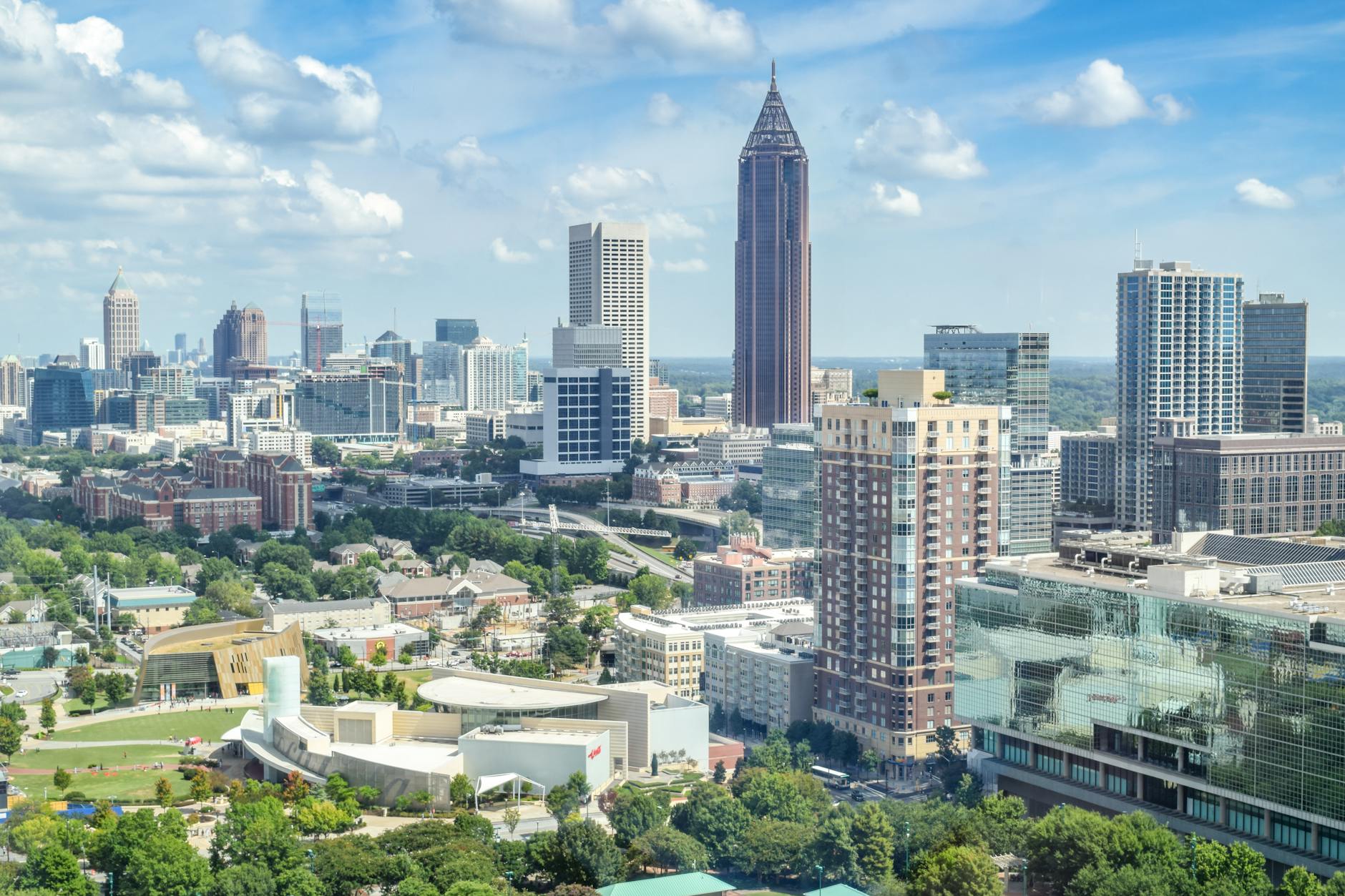
    If the population growth of Atlanta has slowed, where are people going instead?

    Recent data suggests that Atlanta is growing more slowly than in the past:

    Photo by Nate Hovee on Pexels.com

    Census data show more people from within the U.S. left metro Atlanta than moved to it during the 12 months that ended in mid-2024. It was a modest decline, about 1,330 people. But it heralds a significant moment for the longtime growth magnet: This is the first time metro Atlanta lost domestic migrants since the Census Bureau started detailing these numbers three decades ago.

    If people are not moving to the Atlanta, where are they going instead? Here are some hints:

    Growth in some other big Sunbelt metros has slowed, too, after pandemic-fueled population surges, including around Phoenix and Tampa, Fla., the census data show. Recent Bank of America change-of-address data also show big metros in the region losing steam…

    “We just couldn’t afford to live there and have the lifestyle we wanted,” said Adelia Fish, 29 years old, who left suburban Atlanta with her husband in May for a newly built, three-bedroom home in Chattanooga, Tenn…

    Whether that big-metro slowdown continues remains to be seen. But census data also indicate many smaller regions in the South—places like Huntsville, Ala., Wilmington, N.C., and Knoxville and Chattanooga in Tennessee—are picking up the slack. Their metros are all running ahead of pre-Covid trends.

    The article hints at multiple reasons for this:

    1. Bigger metropolitan regions like Atlanta have advantages but they are at a point where the costs of living there are now higher – housing costs, traffic, limited housing options.
    2. Smaller metro areas can provide cheaper housing and a smaller scale.
    3. Certain jobs or careers are portable or can be done in multiple places, not just in the biggest metro areas.

    What does this do to Atlanta and other places that have been used to growth for decades? It is about status – we are on the rise! – and about planning – continued demand for land and buildings leads to different options.

    If these patterns continue, keep on eye on what metropolitan areas become the hot ones in the next 5-10 years. How do they respond to a new status and local changes?

    Will there ever be another Naperville in the Chicago area?

    The suburb of Naperville, Illinois is marked by several characteristics: rapid growth from the 1960s onward, particularly between 1980 and 2000, and lots of land annexation; wealthier suburban residents and numerous white-collar jobs; and a lively downtown with national retailers, local stores, plenty of restaurants, and a nice Riverwalk. Will any Chicago area suburb trace a similar path in the future?

    Here is why I would guess no:

    1. Limited population growth in the Chicago suburbs. The whole region is not growing much. Population growth in the suburbs could still be uneven; some places are perceived as more desirable or are more affordable and they could grow faster will others stagnate or even shrink. But explosive population growth in the Chicago area looks like it is done.
    2. At multiple points in Naperville’s history, leaders and residents discussed possible development and regulatory options. They tended to choose growth and in particular forms. These sets of decisions helped give rise to the particular traits of Naperville today. Even if another suburb tried to pursue the same path, not all the pieces might fall together in the same way.
    3. When Naperville grew from 1960 onwards, it was closer to the edge of the metropolitan region. Land was cheap and available. The city could annex land without running into other communities. That growth has since moved out further beyond Naperville’s ring, out to places like Aurora and Plainfield and Oswego. Any future Naperville will be 10-30 miles out from Naperville.
    4. Naperville itself – and other older suburbs – will likely change in the future. If Naperville wants to continue to grow in population, it will need to grow denser and taller. Infill development on small parcels could add lots of townhouses, condos, and/or apartments. Redevelopment in desirable areas and around mass transit options could lead to taller or denser buildings. This all could happen in numerous Chicago suburbs but this will move them away from homes dominated by single-family homes and lifestyles.

    For more insight behind the argument above, see these published papers involving Naperville: “Not All Suburbs are the Same: The Role of Character in Shaping Growth and Development in Three Chicago Suburbs;” “A Small Suburb Becomes a Boomburb: Explaining Suburban Growth in Naperville, Illinois“; and “More than 300 Teardowns Later: Patterns in Architecture and Location among Teardowns in Naperville, Illinois, 2008-2017.”

    Rapid population growth in Florida and Texas now slowing?

    What happens if communities in Texas and Florida are now not growing as fast as in recent years?

    Photo by brian neeley on Pexels.com

    Fewer Americans are moving to boomtowns in Florida and Texas – once red-hot destinations that saw surging populations and soaring home prices.

    Tampa, FL, had a net inflow of just 10,000 residents last year, according to fresh data from Redfin. That is less than a third of the 35,000 in 2023…

    Meanwhile, Dallas – one of several Texas cities that boomed during the Covid-19 pandemic – saw a net inflow of around 13,000 residents in 2024, also down from 35,000 the year prior. 

    Americans had previously been drawn to Sun Belt cities due to their warm weather, low tax rates and affordable housing compared to coastal cities.

    But that appeal is fading fast. The cost of living has jumped, thanks to rising mortgage rates, skyrocketing home prices, and higher fees for insurance and HOAs – particularly after a string of natural disasters.  

    Several long-term consequences come to mind in addition to the effects on the local real estate markets:

    1. Growth is good in the United States for a place’s status. To not grow – or even to level off – is considered bad. These places will be viewed as less desirable overall if they are not rapidly growing.
    2. How does this change local planning and revenue projections? Imagine you see growth going at a particular pace for a certain time. If that growth does not occur, there could be major changes in budgets and land use. (Whether these possibilities should have been factored in is another matter; who would have factored in a global pandemic?)
    3. What other places will take over as being the fast-growing places? Will places in Arizona or Idaho (or the West more broadly) look more attractive? Or perhaps just population growth as a whole slows in ways that few American places are growing quickly?

    The new physical symbols of prestige in the modern corporate office

    With open office spaces and more people working from home, what physical signs denote someone’s higher status level at the office? Here are a few markers:

    Photo by Pixabay on Pexels.com

    Without the corner office, status is conveyed in new ways. No matter the setup, “human beings will still find a way of creating hierarchy,” Lenny Beaudoin, CBRE’s global head of workplace design, explained. Bosses might have more computer monitors, bigger desks, or even just a permanent spot rather than a rotating one, Matthew Davis, a business professor at Leeds University Business School, told me. Power also manifests intangibly—for instance, only a select few might be able to not check Slack or come and go from the office without explanation. It’s the same benefit of having a far-flung corner office, re-created digitally: You know you’re important if you can escape surveillance.

    And even if they’re not in the corner, a lot of executives do still have offices. Those have largely slimmed down, but many are connected to conference rooms or other collaborative spaces, such as broadcast rooms in finance firms, recording studios at media companies, and labs in the life sciences. Many higher-ups essentially seize these for themselves whenever they come in, Pogue, at Gensler, told me. From there, they can shape any collaboration that takes place, ensuring it plays out in their space and under their supervision. Many modern companies “have as many conference rooms as there are executives,” Sargent said, and it’s become a “dirty little secret” that conference rooms are the new corner offices.

    In other words, how space is utilized and physical possessions workers have continue to signal status. The new forms seem to cover a few areas:

    1. Who can claim space. There may be fewer and/or smaller offices but people with status can claim spaces.
    2. Who needs to be in space (working at a centralized office) or seen in space (surveilled by eyes or on devices). Does this also include who can work remotely and who can not?
    3. Who has certain devices or belongings? Higher status can translate into different and better tools for doing work or furnishing a space.

    The American office continues to change as social and economic conditions change. And is jockeying for status always going to present in some form, as one quote above suggests? It will be interesting to see how this evolves, particularly if there are ongoing efforts to address inequalities.

    Can we now regularly compare NYC, LA, Chicago, and Houston?

    Comments from the newly-elected mayor of Houston compare the four largest cities in the United States. The Chicago Tribune editorial board thinks this is a problem for Chicago.

    Photo by Nick Bee on Pexels.com

    “We’re not New York. We’re not L.A. We’re sure not Chicago. We fix our problems.”

    Quick quiz: Who recently said that? Ron DeSantis? Greg Abbott? Nikki Haley?

    The answer is John Whitmire, a Democrat who over the weekend resoundingly won election as mayor of Houston, the nation’s fourth largest city and on track to overtake Chicago as third largest if present demographic trends continue…

    Politically, Chicago comes across to much of the rest of the country as a city that’s off course, focusing not on the issues at the top of residents’ priority list (public safety, jobs, public transit, for example) but on progressive to-do lists. Not only are Johnson and his City Council allies choosing to spend their time and political capital on issues the majority of Chicagoans view as less than pressing, they’re doing a poor job even when it comes to their own priorities.

    Several factors appear to be at work. First, as noted, Houston is approaching Chicago’s population. Chicago was once the second city, then became the third city, and likely will soon be the fourth city. This means a decline a status, both internally and from the outside.

    Second, Chicago has long had a reputation as “the city that works.” It might have all sorts of problems but things got done. If the perception inside and outside is that things do not get done, then people might have concerns.

    Both of these might be existential issues for a city that is regarded as a global city and has always been behind at least one other major American city.

    Additionally, are New York and LA ready to be mentioned in the same breath as Houston?