Pushing back against the housing plans of the wealthy in suburban Palo Alto

One elected local government official wants to limit what wealthy residents can build in suburban Palo Alto:

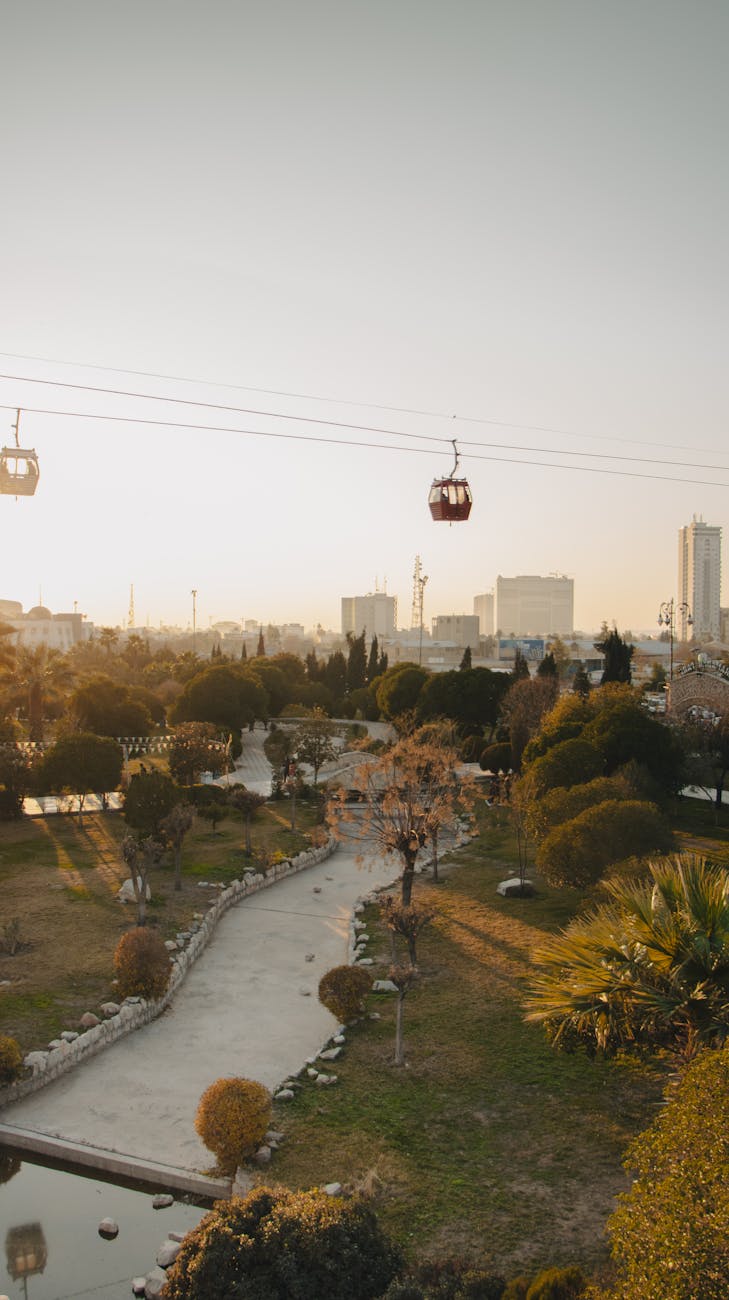
View Palo Alto, California Eadweard by thegetty is licensed under CC-CC0 1.0

The proposed legislation would apply to people who buy three or more homes within a radius of 500 feet, roughly the length of a city block. Any construction project expected to last more than 180 days would need a detailed daily schedule of construction work to prove it can be conducted without double-parking vehicles or blocking driveways or bike lanes.

After finishing one construction project, homeowners would need to wait three years to begin another unless a major emergency occurred. Homes could not be vacant for more than six months in any given year.

The proposal relies on neighbors for enforcement, leaving it up to another homeowner or tenant living within 500 feet to file a lawsuit.

The proposal would place new restrictions on private security guards across Palo Alto, not just those serving wealthy homeowners. All security vehicles would have to be marked and permitted by the city. Security guards would have to identify themselves to the public when asked. They would be prohibited from harassing or intimidating passers-by on public property…

The full Palo Alto City Council is likely to take up Mr. Stone’s proposal in January or February. Mr. Stone said he is confident that a majority of the seven-member council, which has taken a keen interest in housing affordability, would support the general framework but could send it to a committee or city staff member for refinement. It could take six months or longer to reach a final vote, he said.

Three things strike me about this proposal:

  1. It is clearly aimed at particular residents. Not just people with some wealth, who might be found across American suburban communities, but people who are truly wealthy and can afford this kind of construction and property ownership and all that goes with it.
  2. Communities often deal with these concerns at the zoning level. How big can a structure or house be? Are the guidelines in particular areas or in regards to property lines? The proposal above seems to deal with other matters that come along with regular approval of megahouses and properties.
  3. The regulations are about property but local conversations often have to do with local character and community life. Do such homes (and people) fit in the community? Who can live in a place where such properties are common? Who is Palo Alto for? Suburbs often implicitly or explicitly have these discussions while considering development.

Now that this proposal is out there, how do wealthier residents respond and what will the final local regulations be?

Letters to editor share why they like the suburbs

The Washington Post recently published several letters from people explaining why they like their suburban lives. A few excerpts:

Photo by John-Mark Smith on Pexels.com

But having lived in a suburban setting for 30-plus years, I don’t recognize any of those assumptions. My neighborhood, on the fringe of a city of 560,000, is multicultural, interconnected and solar-friendly. Everyone knows each other and finds ways to help with any need. We can walk to grocers, restaurants and other basic services. Many neighborhood groups meet regularly to play poker, discuss books or just go to lunch.

Ours is a planned community, but houses were built by different builders at different times. Thus no “little boxes made of ticky-tacky” all in a row. Just opening up areas to be developed without good planning produces the negative view of suburbs. It doesn’t have to be that way — suburban living can be as good as it gets…

Forty years later, we realize that’s not going to happen. Daily life is simply easier here. For food shopping and medical care, there are abundant choices with abundant free parking. The logistics of taking our two toddlers to preschool programs was much simpler than my struggles navigating strollers on buses or in the subway. Connections with our community have been literally lifesaving, and the scale of life is small enough that local officials are responsive. When we moved here and our garbage wasn’t collected one day, a neighbor told us to call the town’s highway department. A supervisor came by, and rang our bell to apologize. The post office took checks; the clerk remarked with a smile, “We know where you live.”…

I love the old custom architecture and charm of my city friends’ homes. But it sure is nice to be able to just go to Home Depot and buy a door or window that fits instead of needing custom everything. All that special old brick and special old stained glass comes with a hefty dose of special pain in the you-know-what.

While the writers do not exactly go through the seven reasons why Americans love suburbs, there are some patterns in this small selection of letters: the suburbs are not necessarily what outsiders might think, life in the suburbs can be pretty good, and there are certain conveniences to suburban life.

Another observation one letter writer hinted at: people are shaped by their environments. Making a major move from one place to another can require a lot of work and change. People have some flexibility and they can also get very used to where they are. With millions of Americans having grown up in the suburbs and millions living there now, the suburbs are known, if not preferred by some.

This also reminds me of an ongoing question I have about places: how exactly do people learn about their own community and communities that are not their own? People have only so much time and ability to see or hear about other places. How does a suburbanite find out what it is like living in a big city or a rural area and all the different possibilities in either of those? There are common narratives and assumptions made about all of these places they might be hard to dispel without direct experiences in other settings.

What it took for a successful suburban musician to push against their suburb’s push to go to college

A look back at the life of musician Justin Baren, member of The Redwalls, highlights how they forged a path to music success from their suburban upbringing:

Along with his older brother, Logan, Baren was an obsessive fan of the British Invasion sound of the 1960s, which he channeled into the band the brothers formed while students at Deerfield High School. Jordan Kozer, the band’s first drummer, recounted how the brothers studied Beatles albums like holy scripture; Justin would record rehearsals and require the others to spend hours listening to their mistakes to get their parts right the next time.

“He didn’t know anything else. He didn’t try anything else. Deerfield was pushing people to go to college. He and Logan didn’t care anything at all about that. They were laser focused on making this happen. There was no backup plan,” Kozer said.

The perseverance worked. On the same day of their high school graduation, the band was in Los Angeles signing a contract with Capitol Records, the U.S. label of the Beatles. Two years later, the Redwalls opened shows for Oasis in U.K. soccer stadiums…

“From a very early age, we knew the kids in high school weren’t going to be our scene,” Justin told this writer in 2005. “We wanted to get into the real music scene and not be limited by what other kids were saying or doing. We wanted to be Downtown where it was happening.”…

Despite their age, their hard work, sophisticated musical sensibilities, confidence and charisma impressed the network of music professionals in the city. The Redwalls, which included guitarist Andrew Langer, solicited the help of Mitch Marlow, then the talent buyer for a music club in Evanston, by blindly handing him a cassette tape of their music. “What nerve, they put Beatles outtakes on a cassette and are saying it’s their band,” Marlow first thought, until realizing days later the recordings were contemporary…

Marlow ended up managing the group. He booked headlining shows for them at Double Door, the Hideout and Metro. He recorded them, encouraged them to keep writing original songs and introduced them to Bob Andrews, co-founder of Champaign indie label Undertow Music, a collaboration that resulted in “Universal Blues,” the band’s 2003 debut. They were high school seniors.

To become a professional in many fields requires focus and practice. To do this by the end of high school is impressive.

It is interesting to hear that Baren and the band did this while pushing against what was expected of them in their suburban high school. Deerfield High School is a highly rated institution and like many such schools encourages students to go to college. What would parents say to students in similar schools who say they want to pursue music rather than going to college? How many high school musicians are able to secure a record deal and open for a major rock group? Is this a good life path?

And then the path toward music success moved away from their suburban community to Chicago. They played in music venues utilized by numerous music groups, small and big. They got into the music networks of promoters and venues and labels that are based in big cities.

Was there anything in their music or performances that would belie their suburban roots? Maybe not. But the story of suburban high school to major record label is rare even as there must be plenty of suburbanites among successful music artists in the United States.

Musician raised in the suburbs “grateful for the thousands of hours of sitting in my room playing guitar”

How might being raised in a quiet suburban community affect a musician’s career?

Photo by billy Lopez on Pexels.com

You grew up in Wheaton. What was that like?

Quiet. It’s a nice suburb, I enjoyed it. I was homeschooled, so I had a very different experience than probably a lot of people did. My mom kept our world very big — we traveled a lot. Wheaton is where I fell in love with music. I’m grateful for the thousands of hours of sitting in my room playing guitar.

Practice is required to become skilled at many tasks. Having the time, space, and skills to practice well is helpful.

Suburban bedrooms are a private space in the American suburban home. It is a place to get away from the world. One can be alone with their thoughts. In the case of practicing music, playing guitar in a bedroom isolates the activity and noise from the rest of the house. The practicing goes unobserved.

Add to this that suburbs are sometimes portrayed as being creative wastelands. Suburbs are said to be conformist, conservative, cookie-cutter. Many narratives suggest there is a suburban facade of success and attainment – happy families, polite interactions – but just below the surface are problems and divisions.

Can suburban bedrooms produce artistic talent and creativity? The majority of Americans live in the suburbs and multiple generations have grown up in the suburbs. Presumably at least a few artists, novelists, filmmakers, playwrights, and musicians have honed their craft in the suburbs, and perhaps even in their bedrooms.

Growing up in the era of peak suburban shopping malls and movie theaters

Growing up in the 1990s, I and other residents of my suburb did not lack for choices when it came to shopping malls and movie theaters. While our suburb itself was not home to a theater or shopping mall, within a 10 mile drive, we could access at three shopping malls (with several more within a few more miles) and numerous smaller shopping centers and at least five first-run movie theaters and several additional second-run theaters (with more just beyond those 10 mile boundaries).

Photo by Pavel Danilyuk on Pexels.com

This provided lots of options. Did we want to see the latest blockbuster (with a good string of these in the mid to late 1990s) at a new 16 or 24 theater location? What kind of store – national chain, anchor department store, local business – did we want to visit at the mall and perhaps we could find food there?

This era is over. There are still shopping malls and movie theaters around. I do not lack for options if I were to look up theaters and malls near me. But, there are fewer within that ten mile radius: two of the three malls closed and multiple movie theaters closed or downsized from megaplex size.

And if I go to these places, the experience is different and the world has changed. Both are often less lively. People have more options, particularly at home. They can shop with their smartphones and computers and order goods and food right to their doorstep. They can skip theaters for movies, streaming them on their own screens. I am guilty of this as well; partly due to being in a different stage of life, partly because I have other options, I do not frequent malls and movie theaters.

Some shopping malls and movie theaters will hang on in the suburbs. They have been around for decades. They are part of the suburban landscape. They continue to offer unique experiences, even if people can shop and watch movies elsewhere. There just will not be as many of them in the future and people may have to drive a little further to find what used to be more plentiful.

Where “forgotten Americans” might live

In a discussion of what to do with the new ballroom under construction at the White House, one politician said the new part of the White House should represent “forgotten Americans”:

Photo by Eugenio Felix on Pexels.com

“We need a White House that is not for the tech billionaires, but for forgotten Americans,” he said.

“In that spirit, we should ask Americans — in rural communities, urban centers and hollowed-out factory towns — for their ideas of what to do with the space,” Khanna said.

This is an interesting comment as it contrasts that who have a lot versus those who are forgotten. Rather than note what these forgotten Americans do or do not have, they are instead linked to geographic areas. Three in particular: rural areas, the centers of big cities, and factory towns.

The primary residential and business space left out of this list is the suburbs. These areas are often assumed to be wealthy, full of people who have made it in American life. They have at least some major control of their own destiny. They may not be tech billionaires but they are not forgotten.

There are communities in the suburbs not doing well. There are suburbs that are more rural than urban, suburbs that experience similar issues facing urban centers, and suburbs that have lost important jobs ad have limited business activity. These struggling suburbs can sometimes be near wealthy suburbs.

And it could be interesting to see how such designations line up with survey responses from Americans regarding whether they feel forgotten and where they live.

Chicago, a city of (many suburban) neighborhoods

Chicago grew in a way that many American cities have grown: they annexed land and communities just outside their borders. Famously, New York City annexed Brooklyn in 1898 when the separate community across the East River was one of the most populous communities in the United States. But Chicago also had its share of large annexations that helped it add neighborhoods and expand to the borders it has today. The Encyclopedia of Chicago summarizes this process:

The Encyclopedia of Chicago (The University of Chicago Press, 2004), 22

For Chicago, the period of extensive annexations extended from 1851 to 1920. The largest annexation occurred in 1889, when four of five incorporated townships surrounding Chicago (as well as a part of the fifth) were annexed to the city. Most annexations to Chicago during these years came because Chicago offered superior services, from better water connections in the nineteenth century to better high schools in the early twentieth. Later, prior incorporations and suburban resistance to the power and urban complexity of Chicago halted the process.

Chicago is often known now as a city of neighborhoods and starting with efforts by University of Chicago sociologists in the 1920s to define Chicago neighborhoods, it has 77 community areas. But many of these areas were once suburban. Historian Elaine Lewinnek in The Working Man’s Reward discusses what happened in Lake Township, bordered by Pershing, State, 87th, and Cicero, as it developed as an industrial suburb with working-class residents. It was added to the city in 1889, an important year for the city’s boundaries as several other large suburban areas were incorporated into the city including Hyde Park just east of Lake Township and Jefferson Township and Lake View Township on the north side of the Loop.

As these suburban areas became part of the city, they received city services and became part of the larger city’s fabric. They added residents and structures. But they also have hints of suburban life. Row upon row of single-family homes. Strip malls and big box stores. Residents might drive more.

Such neighborhoods can be found in many American cities. Big cities are not just the dense downtowns with skyscrapers, major corporate offices, and certain cultural institutions. They include numerous residential, commercial, and industrial neighborhoods on their edges where the borders of municipal boundaries can blur.

Compelling evidence that wealthy New Yorkers are headed to the suburbs after election of a new mayor?

One article claims there is more evidence wealthy residents of New York City will move to the suburbs with the election of Zohran Mamdani:

Photo by Alena Darmel on Pexels.com

That urgency is showing up in the data. Pending home sales in Westchester are up roughly 15% from a year ago, while average showing activity has climbed more than 25% since midsummer, according to Compass agents Zach and Heather Harrison. “Concerns about higher taxes, safety, and a desire for more space are driving people to act quickly,” said Zach Harrison. “We’re seeing bidding wars well into the multimillion-dollar range.”

The rush has been so widespread that local agents have coined a term for it—the “Mamdani effect.” High-net-worth buyers from Manhattan and Brooklyn are placing offers sight unseen, often hundreds of thousands of dollars above asking, in a bid to outpace rivals. “It feels like the pandemic all over again, but with more urgency,” Heather Harrison said.

That sense of déjà vu is supported by market metrics. Nationwide, inventory has been growing for nearly two years, yet supply in affluent New York suburbs remains scarce. Realtor.com’s October Housing Report shows a 15.3% annual rise in active listings nationally, but that growth is tapering, with homes spending an average of 63 days on the market—five more than a year ago. In contrast, suburban markets ringing New York City are accelerating, defying the national slowdown…

Luxury enclaves like Greenwich, Conn., are seeing similar dynamics. Mark Pruner of Compass said inventory there is down more than 80% from 2019, leaving just 2.7 months of supply overall. “Contracts have surged in the past five weeks,” Pruner said, noting several listings that sold within days, including a $2.4 million home that fetched $2.96 million. “This is the strongest top-end market we’ve seen in years.”

I still have multiple questions, even with more evidence in this story than a previous one I wrote about:

  1. Would this come with a corresponding number of sales in New York City or will the new suburban purchases become the primary residence and the city properties can remain as investments?
  2. Who exactly are these people engaging in this real estate activity? Is it the over 100 billionaires who live in New York City? Is it the upper middle class? Are they people in particular industries or households or kids?
  3. What alternative factors could explain this increase in suburban real estate activity? The recent rise in the stock market?
  4. While there are consequences of people moving out of cities to the suburbs, the suggestion in the article is that they are staying in the region. How important is this in the long run – suburban residents still connected to city organizations and activity – compared to residents leaving the region all together?
  5. With political sorting and polarization in recent decades, there are regularly suggestions that people will make significant moves to be in places that are more amendable to their own political views. Is this particular example simply something we should now expect if cities or regions change politically?

Several ways AI could transform suburban life

How might AI transform suburban life? A few thoughts that came to mind:

Photo by Tara Winstead on Pexels.com
  1. If AI disrupts works and jobs in significant ways, this will affect suburbs. Many jobs are in the suburbs and people in the suburbs need certain jobs and income to be homeowners and residents. For example, if AI eliminates a lot of white collar office jobs, this will hit residents and communities who depend on corporate offices. Or if work from home becomes more prevalent, this changes people’s mobility and interactions with people and places around them.
  2. Can AI take over driving or render a lot of driving unnecessary? Driverless vehicles have been in the works for a while now but if AI helps accelerate these innovations, it could change a fundamental aspect of suburban life. People could get more time back. Perhaps communities do not need to be designed around cars.
  3. Is there any chance that AI makes suburban community life better – more interaction, deeper relationships – or would it contribute to individualism and atomization? Say AI takes over certain work duties; does this give people more time to socialize? Or do suburbanites rely even more on AI to handle their interactions with others – why wave to that neighbor you don’t really talk to when AI can generate a text to send to them?
  4. Would widely-adopted AI make suburban houses bigger, smaller, or just different? Perhaps it changes the layout. Would suburbanites want less space if AI can do more for them?
  5. This might be the biggest question of all: does widespread AI help suburbs grow or shrink in population?

I do not know the outcomes of these questions. I do know that the ideology and patterns of suburban living in the United States are well-established and establishing other patterns would require substantial forces.

The prevalence of industry in 19th century American suburbs

In recently reading The Working Man’s Reward: Chicago’s Early Suburbs and the Roots of American Sprawl, I noted this in a chapter on the Town of Lake which was annexed into Chicago in 1889:

Photo by Jon on Pexels.com

The U.S. census reported that the number of suburban jobs rose after 1850 and accelerated after 1880, so that, in the second half of the nineteenth century, suburban employment constituted one-third of all manufacturing employment in America. Ignoring those jobs beyond the central business district means ignoning blue-collar workers and ignoring one of the leading forces for suburbanization in America. (75)

A large part of the American Dream of suburbia involves single-family homes. But the story of suburbia also includes industry and jobs. In this book, historian Elaine Lewinnek highlights the move of industry to suburban areas outside of what was then the Chicago city limits and how working people followed those jobs. They often ended up in small, single-family homes close to new factories and meatpacking facilities.

Why did industry move to the suburbs? Land was cheaper. They could build large facilities. The downsides of industry – noise, smells, pollution – affected fewer people and the land uses faced fewer regulations in suburban areas.

The one statistic that jumped out at me in the paragraph above was that “one-third of all manufacturing employment” was in the suburbs. Some of those suburban areas became part of the city, as they did in Chicago. But industrial suburbs continued, such as in places like Gary, Indiana, as did suburban employment. When the most common commuting trip in the United States today is suburb to suburb, this is part of that legacy of suburban industry and work.

Some suburbs are indeed bedroom communities with limited or no commercial and industrial land uses but the suburbs as a whole have lots of business activity.