Education the biggest recipient of local property and IL state taxes

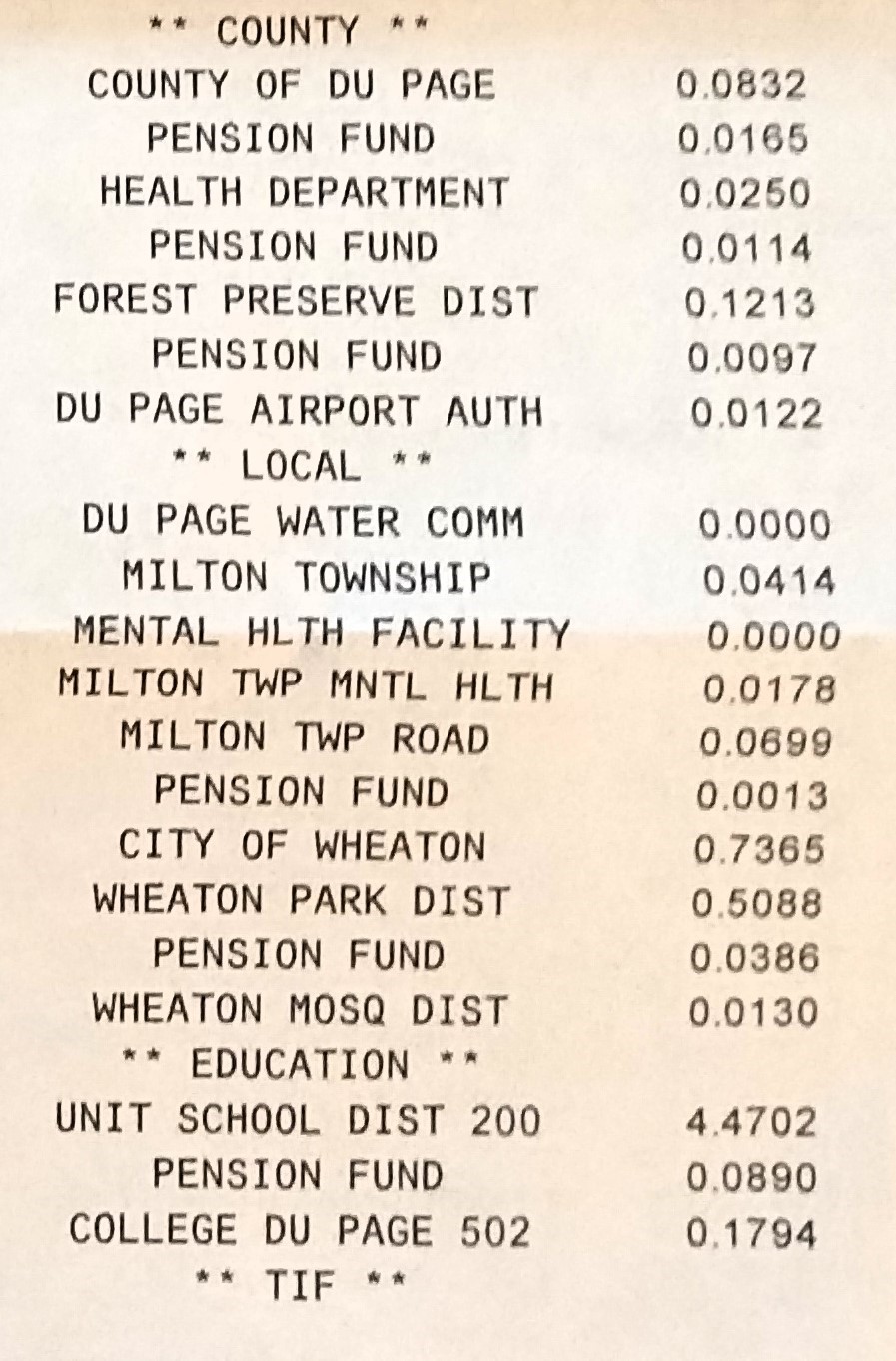
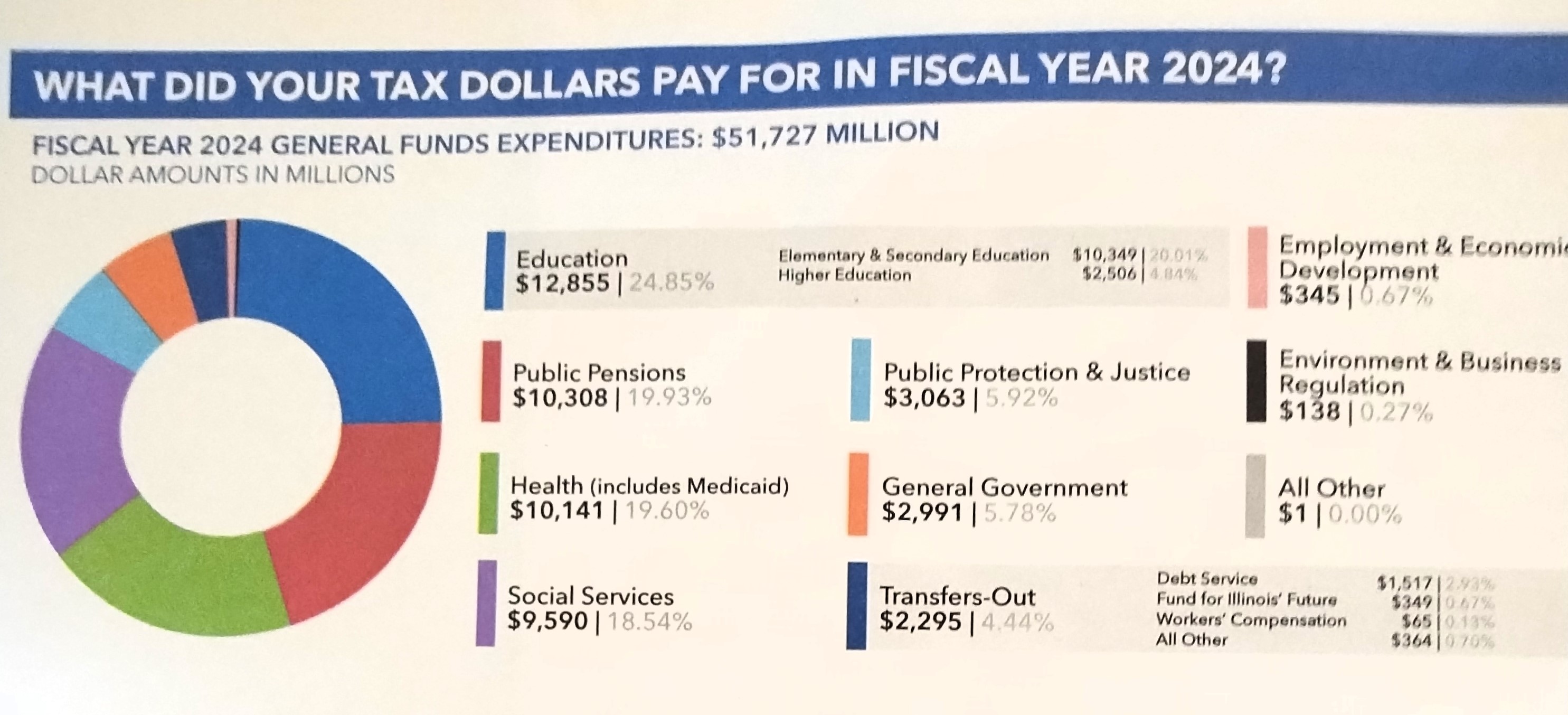
I recently received the breakdowns of where tax dollars for the State of Illinois and DuPage County went in 2024:

In both cases, education leads the way. For state expenditures, education accounts for 24.8% of spending. At the local level, education accounts for 69.4% of the total rate.

The large portions going to education are supported by multiple interests of residents:

  1. Education is often pitched as for children, the next generation, and the future. If we do not spend on education today, how will the children succeed and/or do better than the previous generation?
  2. The quality of local schools is often tied to housing prices and the status of communities. To not spend locally on schools might provide short-term savings but reduce the desirability of properties and communities in the long-term.
  3. The bulk of education costs is in salaries for teachers and staff. Without quality educators, how can schools be successful?

Some might complain about the tax burden – and Illinois does have high property taxes – but it is hard to argue against spending on education. It could be more effective to reign in spending by targeting other areas where there is duplication of local services (such as townships).

Abolish townships or worry about turning them blue (or keeping them red)?

Illinois has many taxing bodies and government units. Illinois moved to stop creating new government bodies and DuPage County resolved several years ago to work to reduce the number of government bodies. Townships are a common target; they exist above municipal governments and below counties so are they necessary?

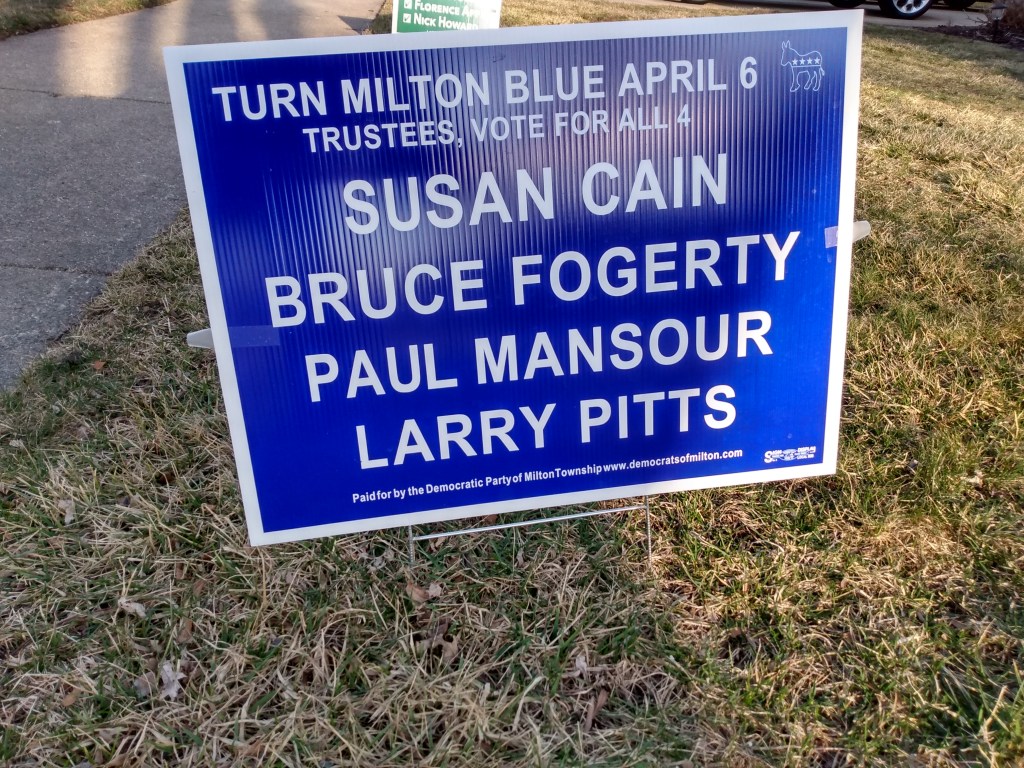
I thought of this recently with the lead-up to the upcoming local elections. On one side, I have seen signs urging voters to “Turn Milton Blue.”

This might be a strategy to boost local turnout and connect to broader political patterns. But, I do not know what these candidates want to do at the township level. What significant changes are needed?

On the other hand, I have seen campaign material for Republican candidates for Milton Township. This material listed all the things that the township does, presumably because of the Republicans there. For a party that at least talks sometimes about limited government, should they argue townships are unnecessary rather than fighting for political seats?

More broadly, how much do these township races benefit the people and communities of Illinois? In a time of budget deficits before COVID-19 plus further issues because of COVID-19, is it more important that one party or another holds the majority of seats in townships?

Township argument: don’t disband us because we only take a little of your money

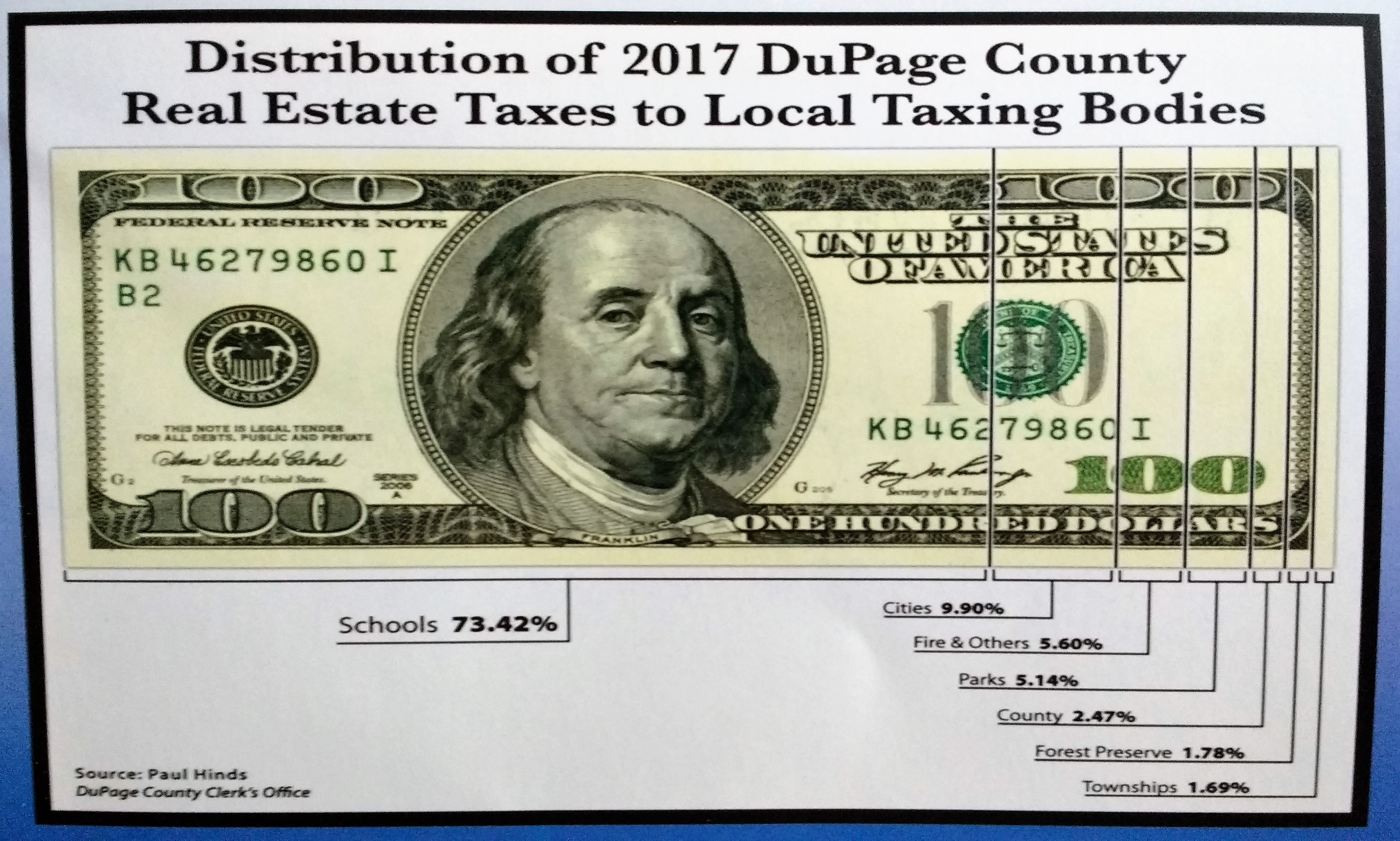
Continuing with local governments making interesting appeals to suburbanites, I received a newsletter from our township earlier this week. Illinois and DuPage County have had discussions about limiting taxing bodies and dissolving townships because of the state’s large number of taxing bodies. In response, the township put this graphic on the first page of the newsletter:

TownshipGraphic

While other parts of the newsletter described what the township does and how residents benefit, this graphic makes one argument: the township does not really ask for much so leave us alone.

In relative terms, this is a good argument: townships ask for the least amount of money. Even the Forest Preserve, a rather large one, asks for more money. On the other hand, given property values in the township, even 1.69% can add up to some decent money over the years. Plus, how does the money for townships compare to what residents get from the other taxing bodies?

On the whole, the quick appeal to property taxes hints at how suburbanites think: they do not want to pay more in taxes and want to be able to see how the money is being spent. I’m guessing relatively few DuPage County residents could detail what the townships do (compared to other taxing bodies) or connect the township activities to their property values.

Ongoing Illinois debates about abolishing townships

Illinois is known as the state with the most taxing bodies and one way to reduce that figure would be to eliminate townships:

It’s prompted dueling Republican proposals for new state laws, one to make it easier to get rid of townships, the other to require a study to show financial savings before any township unit could be dissolved.

Illinois has 1,428 townships, helping to account for more units of government than any other state. It’s a layer of bureaucracy formed primarily to serve rural communities, but most states do without them…

“The real issue, and the reason property taxes are so high in Illinois, is because we have 7,000 units of government,” said state Rep. David McSweeney, a Barrington Hills Republican who’s sponsoring the bill to make it easier to mount township abolition campaigns in McHenry County. “The only way we’re going to reduce property taxes is to consolidate local governments. Townships are just a start.”…

Townships have three basic functions: maintaining roads that aren’t handled by other units of government, assessing property for real estate taxes, and helping the poor through food banks and emergency aid. Townships also often provide transportation for people with disabilities, as well as programs for senior citizens and youths….

Advocates of townships argue that they provide the most local, responsive service for the lowest price. In addition, several studies have found that expected expense reductions from government consolidation never materialized. A Rutgers University study concluded that “cost savings are not assured,” and that “most consolidations fail.”

Americans tend to prefer lower levels of government that they feel is more responsive to their daily needs. Taking the duties that townships do and pushing them up to a larger and more abstract county or state government can feel like ceding control to officials who do not know local conditions.

The article also makes it sound as if the research findings do not support claims that fewer bodies of local government would lead to cost savings. If that is not guaranteed, could a successful effort to abolish townships provide hope to some that government can be rolled back or reduced to some degree?

All said, efforts in Illinois in recent years to eliminate or consolidate units of government has been slow. The state legislature banned the formation of new government bodies and DuPage County slowly is reducing the number.