Housing market slows, first-time buyers hit hard, higher priced homes not down as much

Headline: “June home sales drop to the slowest pace in 14 years as short supply chokes the market.” But, not everyone in the housing market is having the same experience:

Photo by RDNE Stock project on Pexels.com

First-time buyers are struggling the most. Their share of June sales fell to 26%, down from 30% in June 2022. That is the lowest share since the Realtors began tracking this metric.

The higher end of the market, however, appears to be recovering. While sales were down across all price points, they were down least at the higher end. That was not the case last year, when higher-priced home sales were dropping off sharply.

The bifurcated housing market continues. At the cheaper end, the bar for entering keeps rising. With prices up, mortgage rates up, and supply down, it is harder to purchase a first home. At the more expensive end, those with means continue to be able to buy and sell.

This is not new. The starter home is hard to find in the 2020s for multiple reasons. If people cannot buy a home early on, this limits opportunities down the road. If you are already in a more expensive home, you have more options.

Whether the differences between these two ends of the housing market is addressed in ways that help long-term remains to be seen.

Consequences of the mansion tax in Los Angeles

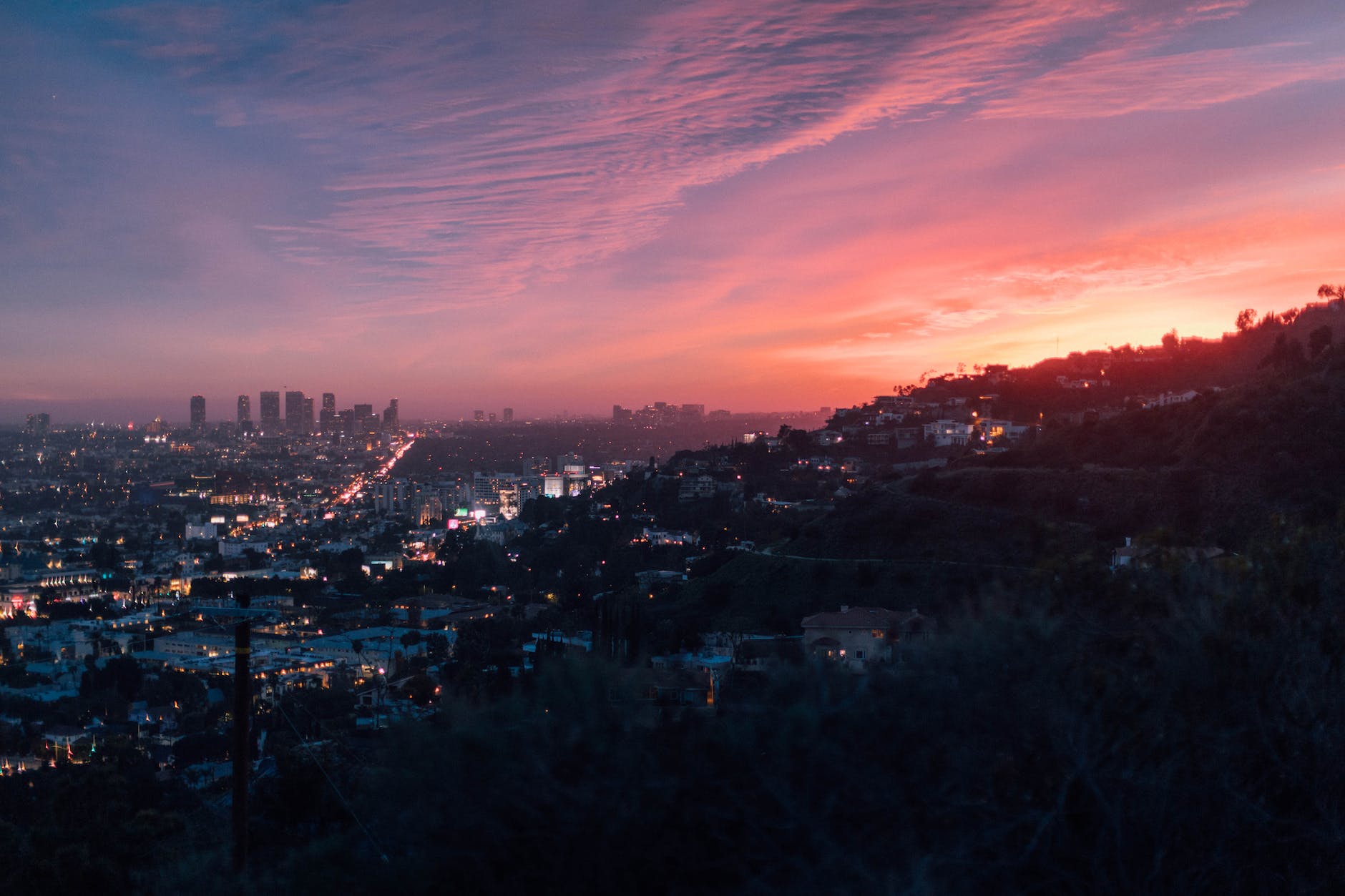
Los Angeles has a new mansion tax since April 1 and here are some of the consequences:

Photo by Roberto Nickson on Pexels.com

Measure ULA adds a transfer tax of 4 percent for sales above $5 million and 5.5 percent for deals above $10 million; real estate transactions in the city below those levels pay the already-established transfer tax rate of .56 percent.

“The flurry of activity that happened up until April 1 was pretty phenomenal,” says real estate attorney Loretta Thompson, a partner at Withers Worldwide. “And then, of course, after that, people started pulling their listings. There’s been a quantifiable pause in anything that’s over $5 million. It chilled the market immediately, which was what everyone expected it would do.”…

There are some winners. Independent Los Angeles County cities like Beverly Hills and Malibu have become more desirable since the measure does not apply to them. It is also shifting the balance of power in luxury real estate, long a seller’s market. “Buyers are being picky right now,” says Nourmand, adding that some people are willing to wait in hopes that sellers bring down prices on mansions: “They feel they have the upper hand in the high-end market. They don’t feel like they have to rush — they think time is on their side.” James Corden, for instance, listed a Brentwood house in January for $22 million, then dropped it to $18 million before selling it in July for $17.1 million. According to Dirt.com, Corden’s sale is subject to nearly $1 million in taxes under the ULA Measure.

However, many hope the tax will be revamped or rescinded. With two lawsuits already challenging the measure, the City of Los Angeles finance director has been instructed to hold any monies received, rather than use them as planned to create affordable housing options in the city.

Will any of these consequences affect legal rulings? Whether this is allowable is a different kind of question compared to how it is working out in practice.

Will the new revenue effectively address affordable housing? At the moment, the revenue is tied up. But, put together taxes from several of these sales and some new housing units could emerge.

It will be interesting to see where the turning point in the market is. Wealthier homeowners will still want to buy and sell property. There will likely still be demand from those outside the region who want to move into these homes.

The McMansion riches of ’80s TV versus the massive dwellings of today’s Succession

TV depictions of what constitutes a house for the wealthy can change over time:

Photo by Pixabay on Pexels.com

And if the “Succession” audience is smaller, the money is, pointedly, bigger. Rewatched in 2023, the idea of luxury in “Dallas” looks quaint, almost dowdy. The aesthetic is Texan country club; the Ewing homestead, the size of a decent suburban McMansion, is a toolshed next to the Manhattan aeries, Hamptons manors and Italian villas that the Roys flitter among.

Some of this is a matter of modern premium-cable budgets vs. the grind of old-school network-TV production, of course. But it also reflects the changed, distorting nature of modern riches. In 1980, American wealth inequality was still near its postwar lows. Since then, the wealth of the top .01 percent has grown at a rate roughly five times as much as that of the population overall. Today, the very rich are very, very, very richer.

The holdings of Waystar Royco — Hollywood studios, cruise lines, newspapers, amusement parks, a king-making right-wing news channel — make Ewing Oil look like a franchise gas station. We know only vaguely how Logan Roy built his empire, but it was enabled partly by the media-consolidation and antitrust deregulation, beginning in the “Dallas”/Reagan era, that allowed his real-life analogues like Rupert Murdoch to make their own piles.

American homes do broadcast messages about a resident’s status and wealth. McMansions are supposed to signal that the owner can afford a big home in a particular style (even if the imitation of traditional styles are odd).

On the other hand, mansions are even bigger, more extravagant, and can be of better build quality. Having multiple such dwellings extends far beyond the McMansion owner in the suburbs.

Another question: do the super wealthy make use of all that square footage and the features or are these part of a real estate investment? The McMansion owner is also hoping to get a return on their investment but the amount of money involved with extra-large properties is at another level.

Courtesy of Architectural Digest, see more about some of Succession’s dwellings here.

Secretariat as the sports figure with the most streets named after them

A few years ago, ESPN looked at how many American roads are named after athletes. Secretariat led the field:

Photo by Mu00eddia on Pexels.com

But perhaps nothing drives home the impact of Secretariat’s life more than looking at a map. Like, any map. We know because we’ve looked at them. All of them. In an effort to identify roads in the U.S. named for athletes, ESPN cross-referenced 2010 Census data with Google Maps. We were stunned to uncover 263 roads named after the horse — far more than for any other athlete, human or otherwise. “I’m not that surprised,” says Kate Chenery Tweedy, whose mother, Penny, raised and owned Secretariat. “Secretariat came along at a time of great crisis in this country — Watergate, the Vietnam War, Nixon’s impeachment. And unlike any other athlete ever has, he restored our sense that there is beauty and good in the world.”…

Born in Virginia. Won Triple Crown races in Kentucky, Maryland and New York. So it makes perfect sense that the states with the most Secretariat streets are … Florida and Texas?…

Road experts say there is little rhyme or reason to the way our streets get their names. It’s mostly just real estate developers who submit names to their town, there’s usually a relatively easy approval process, and voilà. Case in point: Somebody in Butte, Alaska, sure likes horse racing. You can take Sea Biscuit Lane to E. Man o’ War Drive, then hang a right onto E. Secretariat Drive — the most northerly road named for Secretariat. And if you wanted to ride Secretariat the 3,920 miles back to his burial site? At the record 37.8 mph he ran the Belmont in, he’d have gotten you there in a little over four days.

As someone who studies suburbs, here is my own theory for this naming pattern. Developers often want names for nicer subdivisions connected to tradition, certain lifestyles, and success. Why not reference both horse racing and one of the most successful horses ever? Horse racing requires money to participate and the audience for horse racing might fit particular demographics. Additionally, horse racing hints at nature. Secretariat is a well-known athlete. Such names will help establish their subdivision as an exciting place for people with means.

My own community has at least a few street names that connect to horse racing. This is not just a connection to racing in the abstract; our suburb has links to horse racing near these sites with a racetrack that was in existence in the early 1900s and another farm with wealthy owners who bred and raced horses in the second half of the twentieth century.

By linking single-family homes to horses and one of the most famous American athletes, how can a developer go wrong?

Encourage more and more building in cities – and get more and more luxury apartments

Efforts to encourage more housing in big American cities can often lead to more units for the wealthy:

Photo by Kozymeii Kong on Pexels.com

Academics, developers and people in their 20s and 30s—particularly those most active on social media—have reached an unusual level of consensus. Their solution, supported by a wealth of scholarly research, is simple and elegant: Loosen regulations, such as zoning, and build more homes of any kind—cheap, modest and palatial…

Inconveniently for the Yimbys, Austin, like other cities, is still way more expensive than it was years ago, even though it’s built so many apartments. As a result, a small group of academics is starting to question the free-market path. These critics note that the market leads developers to build luxury housing on scarce and sought-after property to maximize the return on their investment. “Yimbys say, ‘We have to let the market build,’ ” says Benjamin Teresa, an urban planning scholar at Virginia Commonwealth University. “But what kind of housing are you building, and for whom?”…

But the very popularity of these places with the affluent drives up housing costs, making it harder for companies to find workers and pushing firms to relocate elsewhere. The Austin metro area, one of the fastest-growing in the US, with a population exceeding 2 million, has benefited from corporations fleeing the high cost of housing elsewhere, particularly on the east and west coasts of the US. Home of the University of Texas’ flagship campus, it’s lured Elon Musk’s Tesla, along with Oracle, from Silicon Valley. JPMorgan Chase and Charles Schwab are expanding there, too...

Frustration over rising rents has led cities to consider government interventions that were once deemed discredited. Boston, Orlando and Kingston, New York, have taken fresh looks at rent control, which had been blamed for distorting the market and raising the cost of other apartments.

If a builder or developer gets the green light to build housing, why would they choose to build cheaper units if they can build more expensive units and make more money?

As the article notes, perhaps this requires cities to see housing as not just a market good or something subject to market fluctuations. If housing is just another commodity that requires a big return on investment, why not go big in asking for expensive rates? Rent control or publicly subsidized housing may require more intervention, but they could also be necessary to provide any housing within the reach of residents with fewer resources.

Which cities are able to successfully buck these trends will be interesting to see. If policies become more explicit about affordable housing units, will developers push back publicly? Will an important city then see a downturn in building and investment?

Turning even a trailer park into a home for the wealthy

In Malibu, California, one trailer park on the coast has homes that sell for millions:

St. Brides Wentlooge: Lighthouse Park mobile homes by Chris Downer is licensed under CC-BY-SA 2.0

Enter Paradise Cove Mobile Home Park, widely considered the most expensive trailer park in America. Home to 256 trailers and manufactured homes, it dates to the 1950s, when the then-owners allowed commercial fishermen to park campers there. Starting in the early 2000s, big names such as Stevie Nicks, Minnie Driver and Matthew McConaughey began buying up trailers, slowly turning the park into some of the hottest real estate in California

The draw is clear. The cove, as it is known by locals, sits on a bluff with panoramic views over the Pacific Ocean, with direct access to a secluded cove that is popular with local surfers. These are the same views that billionaires pay hundreds of millions to secure. Nearby, Edward H. Hamm Jr., a movie producer and heir to the Hamm’s Beer fortune, paid $91 million for a mansion; media mogul Byron Allen paid $100 million; venture capitalist Marc Andreessen and his wife, Laura Arrillaga-Andreessen, paid $177 million. Barbra Streisand’s enormous estate is perched on the edge of the same stretch of bluff as the park.

Today, the cove is a patchwork. Decades-old trailers that resemble banged-up tin cans that have been sitting in the California sun for close to half a century are snuggled up next to mobile homes that completely defy the traditional concept of a trailer. These multimillion-dollar beauties sport spacious gazebos and chic, designer finishes. There are exteriors designed by prominent architectural firms such as Marmol Radziner, known for revamping some of the most architecturally important homes in Los Angeles. Some of the wealthiest buyers have brought on high-end interior designers or used the design services of trendy, celebrity favorites such as One Kings Lane. The trailers are owned by celebs and other wealth-havers who use the cove as a beach-front refuge from their inland mansions. 

These buyers are driving prices in Paradise Cove way up, bolstered by low inventory and pandemic-induced demand for homes by the ocean, local agents said. Roughly 30 trailers have sold in the past three years for sums as high as around $5 million, according to listings website Zillow, though that figure doesn’t include a number that sold off market, real-estate agents said. In March, a three-bedroom mobile home came on the market for $5.85 million; if it sold for close to that amount, it would likely set a record for the cove, agents said. Agents point to the $5.3 million sale in 2016 of a mobile home owned by Ms. Nicks as the likely current record holder, but others noted that they had heard of off-market deals at up to $7 million.

The pictures of the location and the homes are stunning. This is no ordinary trailer park.

Such communities generally do not have a positive reputation in the United States. They offer cheaper housing, residents do not own the land under their homes, and wealthier residents generally do not want to live near them. This is why I titled one published paper “‘Would Prefer a Trailer Park to a Large [Religious] Structure'”: Suburban Responses to Proposals for Religious Buildings” because of the shocking claim from one suburban resident that they would rather live next to a trailer park in their wealthy suburb than near a proposed mosque.

I can only imagine some of the interactions between neighbors or within the community as homes go for multiple millions.

From subprime mortgage issues to superprime mortgage issues

The most recent financial uncertainty includes mortgages in a superprime era:

Photo by Expect Best on Pexels.com

This is quite the turnaround. After 2008, banking the rich was often touted as a far better model. Even the biggest banks began aiming more of their consumer lending and wealth management at relatively better-off customers, and they scaled back on serving subprime customers. Wealthy customers seldom default, they bring lots of cash and commercial banking business and pay big fees for investments and advice, the thinking went.

But when interest rates shot up last year, it exposed weaknesses in the strategy. It isn’t that the rich are defaulting on loans in droves. But the most flush depositors with excess cash last year started taking their cash and seeking out higher yields in online banks, money funds or Treasurys. On top of that, startups and other private businesses started burning more cash, leading to deposit outflows…

A major way that the better-off do borrow from banks is to buy homes, and often in the form of what are known as jumbo mortgages. Jumbos are for loan amounts over $726,200 in most places, and over $1,089,300 in high-cost cities such as New York or San Francisco. Jumbo mortgages bring wealthy customers with lots of cash. They also are typically more difficult to sell to the market, in part because they aren’t guaranteed by government-sponsored enterprises such as Fannie Mae or Freddie Mac. So banks often sit on them. But the value of these mortgages, many of which are fixed at low rates for the foreseeable future, have dropped as interest rates have risen.

To be sure, not all banks that focus on wealthier individual clients are under intense pressure. Shares of Morgan Stanley and Goldman Sachs, are down less than half as much this month as the nearly 30% decline for the KBW Nasdaq Bank index. But those banks are more diversified and focus more on the steadier, fee-generating parts of the wealth business, such as stock trading and asset management, than on mortgages or deposits.

I interpret this to mean that there is less money – or lower rates of return – to be made on big mortgages. Wealthy people will want to buy real estate, particularly because it is often assumed that the value of real estate will be good long-term, but the money does not generate the amount of money banks want.

If mortgages are too “boring” or do not generate enough money, could we be headed to an era where banks do not want to do mortgages? Money for mortgages could come from elsewhere.

Are there wealthy American residents in favor of denser housing near their home?

If basketball stars and billionaires are opposed to denser housing near them in Atherton, California, where are there wealthy residents of the United States willing to have denser housing near them?

Photo by jd garrett on Pexels.com

Atherton is a small suburb – under 7,000 residents – with a median household income of over $250,000. In question is a California effort to increase affordable housing.

Are there any or many communities in the United States where the wealthy do not pursue NIMBY policies?

Could it be different in places where wealthier residents can escape by living high up in the air? I am thinking of residences like the pencil skyscrapers just south of Central Park or the new condos south of downtown LA.

Or, could it be different in places that are more rural? According to Wikipedia, Atherton “has very restrictive zoning, only permitting one single-family home per acre and no sidewalks. This policy that prohibits homes from being on less than an acre.” But, imagine a place with even bigger lots and more room. Would denser housing in part of the community be perceived as less problematic by neighbors?

I am open to hearing about wealthy communities where affordable housing is desired and pursued.

American political leaders tend to be homeowners

A recent study looked at how many political leaders in the United States are homeowners or renters:

Photo by August de Richelieu on Pexels.com

The researchers identified 10,800 representatives across city halls, state houses, and federal offices in 2019 and cross-referenced their home addresses with tax records. They found that about 93% of US senators, congressional representatives, federal judges, city council members, state senators, state representatives and governors definitely or likely owned a home.

In another sample of 1,800 city-level officeholders, the discrepancy between voters and their electeds was stark: For the 190 municipalities researchers examined, citywide homeownership rates were around 50%, while 83% of mayors owned their residences…

Despite these high-profile exceptions — both young people of color, like Azeem — researchers found that in city after city, the broader homeownership trend held, even in costly cities like Miami and Boston, where renters dominate. “There aren’t really any cities where large numbers of renters have been elected to local, state or federal office,” Einstein said.

The paper describes two “bottlenecks” that could prevent renter representation: Either fewer renters run, or fewer voters are willing to elect them. By analyzing the housing status of city council candidates in California between 2017 and 2018, they found that the former is more likely…

Elected officials are even more out of step with their communities when it comes to where and how they live. Researchers found that the homes occupied by local, state and federal officials were worth an average of 50% more than their zip code’s median value. The higher the level of public office, the greater the ratio. Nearly 80% of officeholders who owned their houses lived in single-family homes, while only 67% of houses across the country are considered single family.

Who will represent the renters in a country that loudly proclaims its preference for homeownership?

If you have a list of steps one needs to take to be a successful politician, add this one to early in the list: own a residence.

How exactly does wealth play into this? Does wealth lead to both homeownership and the possibility of running for office?

A possible follow-up study: do political candidates run markedly different campaigns given their homeownership status or do they generally play to the ideals of homeownership?

Filming a wealthy home exterior, McMansion interior

A film production designer describes the problem of finding a home for filming:

Photo by Mark McCammon on Pexels.com

We were looking for the Voze mansion and having trouble finding an exterior and interior to match, as most wealthy estate-type people heavily renovate their interiors and look more McMansion inside. The exterior was a house in Pasadena.

I think this is saying that they had a problem finding a home fit for wealthy characters because the homes with the gravitas-invoking exterior did not necessarily have the same kind of interior. Having lots of money can be associated with a particular aesthetic. Describing a portion of the home as having a McMansion look is not usually a good thing. It is a negative term. I imagine a McMansion interior could involve the latest trends, having large spaces, and going for shock and awe rather than refined details.

Through the magic of filming and editing, a different exterior and interior can be put together without too much evidence otherwise. Of course, it is also fun to watch for situations where they do not exactly match.