I have tried numerous weather apps and websites over the years searching for an interface that provides all the information I want in a helpful format.
Many platforms seem to want to emphasize the current temperature and conditions and make it harder to see other details. And they want you to view ads.
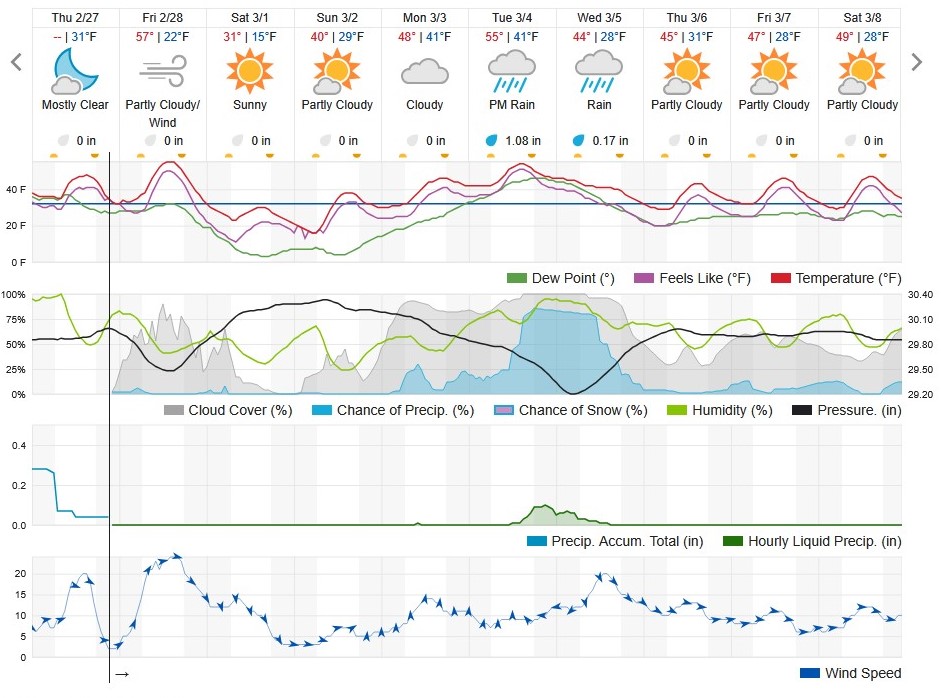
I eventually found Weather Underground’s ten day forecast. It works best on a bigger screen through their website. Here is what it looked like last night:
This does tell me current conditions – I can see them on the left. And there is a temperature high/low and a graphic at the top. But it also does several other things:
-provides info on upcoming days
-graph lines for temperature, wind chill, dew point, cloud cover, precipitation and wind
-the user can move along those graph lines to see the exact prediction conditions at that time so it can operate like an hourly forecast
Perhaps this is too much information for many. But I don’t need to scroll down and down or click to another screen. I can have a current condition graphic and can see current conditions plus can see trends for the future. This is the weather site I am sticking with (though would be open to trying other options).
But a more significant influence on the rising storm damage trend has little to do with the weather: Growth and development patterns mean there are many more homes and businesses in the way of tornadoes, hail and damaging winds than there were decades ago…
The trend is a product of growing populations in regions where severe storm impacts are also increasing, said Adam Smith, a NOAA economist and scientist who tracks the events.
Researchers call it the expanding bull’s eye effect — a larger target for storms and tornadoes makes it easier for them to inflict damage.
For example, in outlying parts of a city like Wichita, a tornado that might have affected 20 homes several decades ago could now damage 2,000 homes in the same footprint, said Walker Ashley, an atmospheric scientist at Northern Illinois University.
Given the propensity toward sprawl in the United States, would any developer or local leader or potential suburban resident say no to more sprawl to avoid storm damage?
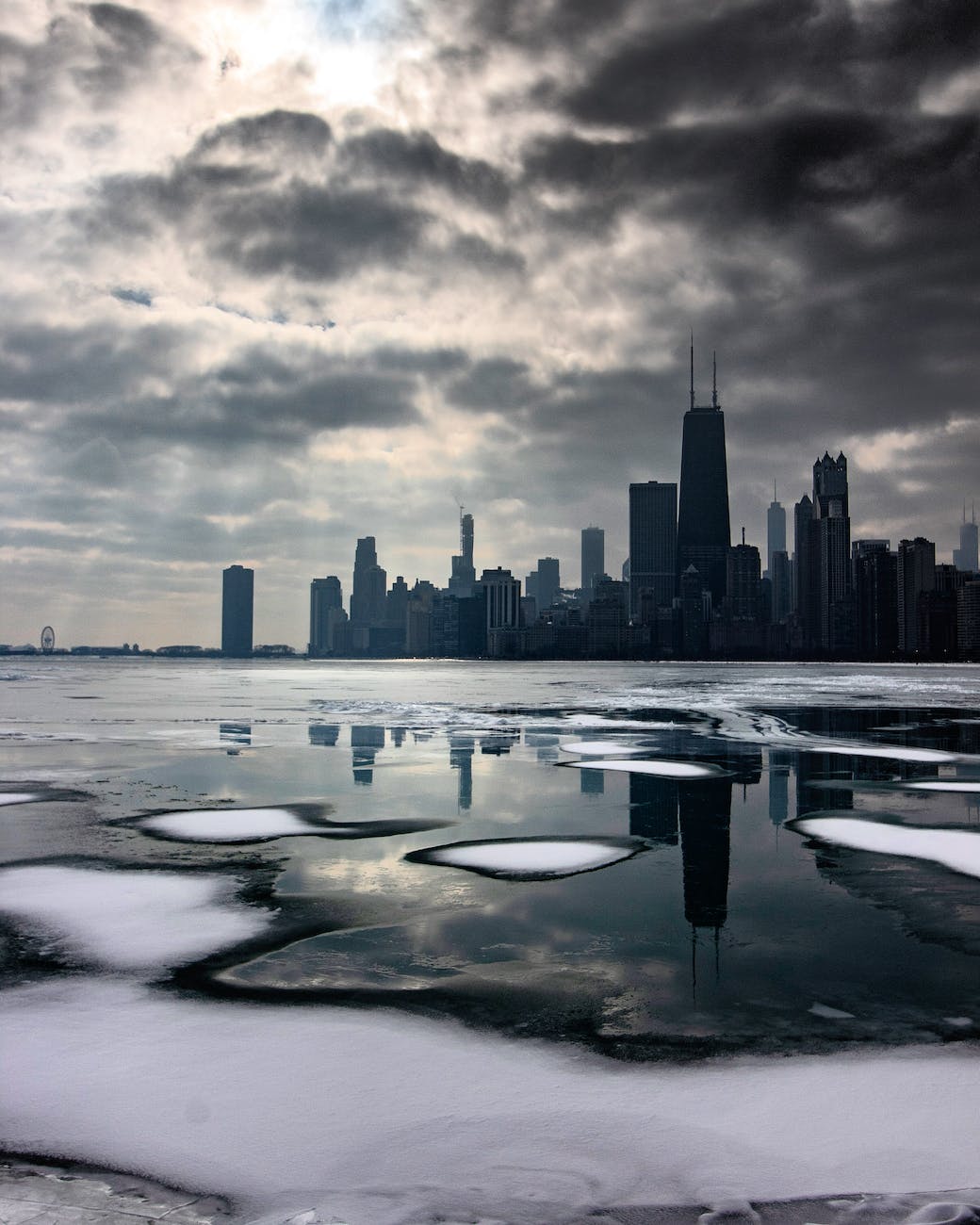
Imagine the best weather for infrastructure. It is probably not the four seasons of weather in the Chicago region:
From the State Climatologist Office in Illinois:
Chicago lies midway between the Continental Divide and the Atlantic Ocean, and is 900 miles north of the Gulf of Mexico. Chicago’s climate is typically continental with cold winters, warm summers, and frequent short fluctuations in temperature, humidity, cloudiness, and wind direction. Many consider the more moderate temperatures of spring and fall to be the most pleasant. Lake Michigan provides a moderating influence on temperature while boosting the amount of snowfall received in the city.
Such fluctuations in the Chicago region lead to potholes, closures of airports and roads plus delays, flooding, and pressure on systems at both the hot and cold ends of the temperature spectrum. Coming out of a major snow storm and heading into several days of subzero temperatures, some of everyday activity is disrupted but mostly life goes on. Humans have developed systems and practices that make it possible to live in many different conditions.
What might be ideal? How about a place with more consistent temperatures, few storms, and no flooding? I am sure there are locations in the United States that meet this more than others. Everywhere else, people and systems adapt.
Modern infrastructure that makes everyday life possible is remarkable enough in addition to adaptability to different climates and making repairs when local conditions make it difficult.
It starts with “where we are on the globe,” North Carolina state climatologist Kathie Dello said. “It’s truly a little bit … unlucky.”
China may have more people, and a large land area like the United States, but “they don’t have the same kind of clash of air masses as much as you do in the U.S. that is producing a lot of the severe weather,” said Susan Cutter, director of the Hazards Vulnerability and Resilience Institute at the University of South Carolina…
With colder air up in the Arctic and warmer air in the tropics, the area between them — the mid-latitudes, where the United States is — gets the most interesting weather because of how the air acts in clashing temperatures, and that north-south temperature gradient drives the jet stream, said Northern Illinois meteorology professor Walker Ashley.
Then add mountain ranges that go north-south, jutting into the winds flowing from west to east, and underneath it all the toasty Gulf of Mexico.
The geography of the Untied States is often described as an advantage. Lots of land. Many natural resources. A range of temperatures and climates. Across the oceans from major global conflicts.
In this case, the unique geography leads to issues. The expanse and variation in land puts air masses in conflict.
As the article suggests, have American communities adapted to this? If bad weather and disasters are somewhat predictable, do we have structures and planning that mitigates some of this impact? Just as one example, suburban sprawl with its balloon-frame houses and reliance on driving could be prone to particular ill effects.
Phil’s track record is not perfect. “On average, Phil has gotten it right 40% of the time over the past 10 years,” according to the National Centers for Environmental Information, a division of the National Oceanic and Atmospheric Administration, which manages “one of the largest archives of atmospheric, coastal, geophysical, and oceanic research in the world.”
The three-month temperature outlook for February through April 2023 calls for above normal temperatures across the eastern and southern US and below normal temperatures for the northwestern US, according to the Climate Prediction Center…
Despite his mixed record when it comes to actually forecasting the weather, there’s no doubt Phil’s fans still hold him in high regard.
After all, his full title is Punxsutawney Phil, Seer of Seers, Sage of Sages, Prognosticator of Prognosticators, and Weather Prophet Extraordinary.
In other words, Phil is worse than a coin flip in predicting the coming weather. This is not good; any expert would hopefully be better than that.
However, there is some evidence that many expert predictions about the future are not great. How well can people predict the future performance of the stock market or natural disasters or geopolitical change? Not so well. And it is not just that it is difficult to predict the future; we think we can predict the future so it can be even more damaging when projections are wrong.
I suspect very few people care if Punxsutawney Phil is right or wrong. They like the tradition, the ritual, a festive gathering in the middle of winter. Still, Phil offers a window into our own abilities and confidence about knowing the future…and it is a cloudy window at best.
In the field of its highest development, in the United States, the pursuit of wealth, stripped of its religious and ethical meaning, tends to become associated with purely mundane passions, which often actually give it the character of sport.
According to Weber, by the early 1900s the practice of capitalism in the United States was taking on “the character of sport.”
Weather betting emerged and gained popularity during the pandemic.
“When the pandemic hit and sports shut down in March, most people will remember the NCAA tournament was canceled and within a day virtually everything shut down. There was nothing to bet on. The sports world naturally shut down and sports books were looking for something to attract customers. One of the popular things that emerged was betting on Russian table tennis and another was betting on the weather,” says Holden…
“There will be a proposition like, ‘Will there be rain on this day?’ and then individuals can select yes or no. Much like in over under betting for sports, the bookmaker sets a line where the total points can either go over or under and the better selects which will occur.”
Betting laws are strict in the U.S. and at the moment, weather betting is not regulated. However, it is allowed in places like Canada where sportsbooks are taking bets on the weather.
Some might say that betting on the weather is just another opportunity for gamblers to try to make money and for those in the gambling industry to make money. Following the quote from Weber above, perhaps it is just another outworking of capitalism in the United States. Why not make it like a sport? Why not try to generate money off the weather?
Let’s say winters in the future in the Chicago region turn out to be not as cold, do not involve as much snow, and/or include more warm days. In just the last month, we have experienced wind chills of roughly -30 degrees below zero and 50 degree days. The Chicago region has had moments of winter but not a full month of winter. Would Chicago residents like a long-term shift away from winter?
On one hand, many Chicago area residents complain about the winter. They make clear their opinions about the cold, snow, potholes, salt, longer traffic times, winter gear, heating bills, and more. At least a few vacation in warmer climates during the winter and some move to warmer climates.
On the other hand, it is hard to imagine the Chicagoland experience as it is known now without winter. What about the social capital created by griping together? The possibility of a white Christmas? The pride about shoveling and still doing life when talking to people in parts of the country where a light amount of snow shuts everything down? Invigorating winter outdoor activities? Supposed “Bears weather”? Jokes about the two seasons of winter and construction? And so on.
Perhaps new weather patterns would lead to a reconfigured understanding of what winter is. People can adapt to change over time. They can find different ways to bond and different experiences or group identities that bring them together. The long-told tales of the Blizzard of 1967 or Snowmageddon 2011 will fade further into the archives. Chicago could still have a winter that is different than the South or West even if it s different than what it is in the past.
“Not one police (officer) came in the 16 hours we were stuck,” she said. “No one came. It was just shocking. Being in the most advanced country in the world, no one knew how to even clear one lane for all of us to get out of that mess?”
I have seen some version of this quote in numerous contexts in recent months. It could reference:
-health care
-US military and political involvement in Afghanistan
-infrastructure issues
-conducting elections
-responding to natural disasters
-passing basic legislation
The expectation is that the United States is highly advanced or the most advanced country in the world. The country boasts a history of innovation and pragmatism, a powerful military, and an influential set of ideals. If all of this is true, why then can the United States not address such basic issues (in the eyes of the questioner)?
Implicit in this question is whether the United States exists amid a massive contradiction. For all of those markers of success, perhaps the country is not as advanced as its people think. Perhaps there are difficult issues to solve, complex concerns that we do not know how to or do not have the will to address.
Take the above example of unexpected bad weather. Large highway backups during snowstorms are not unknown in the United States. They occur even in areas more accustomed to cold and snow. Sure, local responses can differ. But, these systems are complex with natural forces, hundreds of autonomous drivers, governments and private actors responding, and the relatively long distances Americans are used to traveling on a daily basis.
All of the issues mentioned above as something an advanced country should be able to address are not simple. The expectation that a country should always easily get it right might be unrealistic. Even so, if a large number of people think the issue should be easily solvable, this quickly becomes a problem when it is not.
New York had its first climate-related wake-up call nine years ago, when Hurricane Sandy brought a storm surge that flooded low-lying areas and, yes, subway stations. Since then, the city has spent almost $20 million on climate-proofing the city, according to the Mayor’s Office of Resiliency. But some of that funding went to solving a different problem than the one presented by Ida: water coming from the rivers. This week, all the wet stuff fell from the sky, threatening even areas above sea level…
Now, after years of updates, 60 percent of New York City has a combined sewer system, which uses a single pipe to carry both wastewater and stormwater to treatment plants. During heavy rainstorms, the system can get quickly overwhelmed. The detritus of city living—trash, plants, general gunk—clogs drains, further gumming up the works. “So if you get a really big kahuna like this, I don’t think it really has a shot at draining that out fast enough to avoid flooding,” says Farnham.
The city has worked to separate those combined sewer systems and to clear clogged drains, especially when storms threaten. It has raised and in some cases eliminated subway grates, which were built to allow fresh air to flow down to dank underground spaces but which now look like holes to let more water in. In some places, the MTA constructed flood-proof doors, which can close when the water gets too close.
More generally, cities like New York can create more green infrastructure to help with their water problems—basically, less pavement and more dirt. You might, for instance, create roadside green spaces where water can percolate before moving into stormwater drains, removing trash and pollution in the process. Los Angeles has been doing this to catch rainwater. “This is a long-term thing,” says Horodniceanu. Retrofitting cities to deal with what’s coming, and what’s already come, will take gobs of one of the scarcest resources of all: much more funding.
As cities expand and change, fixing the infrastructure already there to incorporate new technologies and grow the capacity is a difficult task. How disruptive will the efforts be? How much will it cost? It could be much easier in the long run to anticipate these issues way ahead of time and proactively make changes rather than only act after a major issue is exposed.
Water is particularly destructive as much of modern life depends on the fact that water will be excluded from the system. Residences, businesses, mass transit, electronics must be dry to function well. If there is an overwhelming storm or a breach of the water defenses, water can quickly wreak havoc both in the short-term and long-term. Cities require a lot of things to go right to properly go about their business but water can quickly disrupt this operation.
The recent events in New York City and New Orleans also remind me of the planning that can go into highways and parking lots: they can be constructed with peak use in mind. The parking lot needs to be large enough to handle the biggest crowds, hence the shopping mall parking lots that can handle Thanksgiving weekend shopping but are not fully used throughout the rest of the year. Or, the highway that needs more and more lanes to handle rush hour traffic while there are many hours when that capacity is not needed. Sewers need to handle really big storms or events. But, in each case, can the largest need be forecast correctly? Adding lanes to roads can increase the traffic. Right-sizing parking lots can be tricky. And planning for the rare storm is hard, particularly if conditions are changing. Similarly, people will not be happy in these cases if there is not enough capacity and there will be calls to fix the problem afterward.
By a wide margin, three skyscrapers in the East stood out for repeated lightning strikes between the years 2015 and 2020. At 1,776 feet tall, the tallest building in the U.S., One World Trade Center in New York City, was struck 189 times between 2015 and 2020, but it wasn’t the most frequently hit building in the nation…
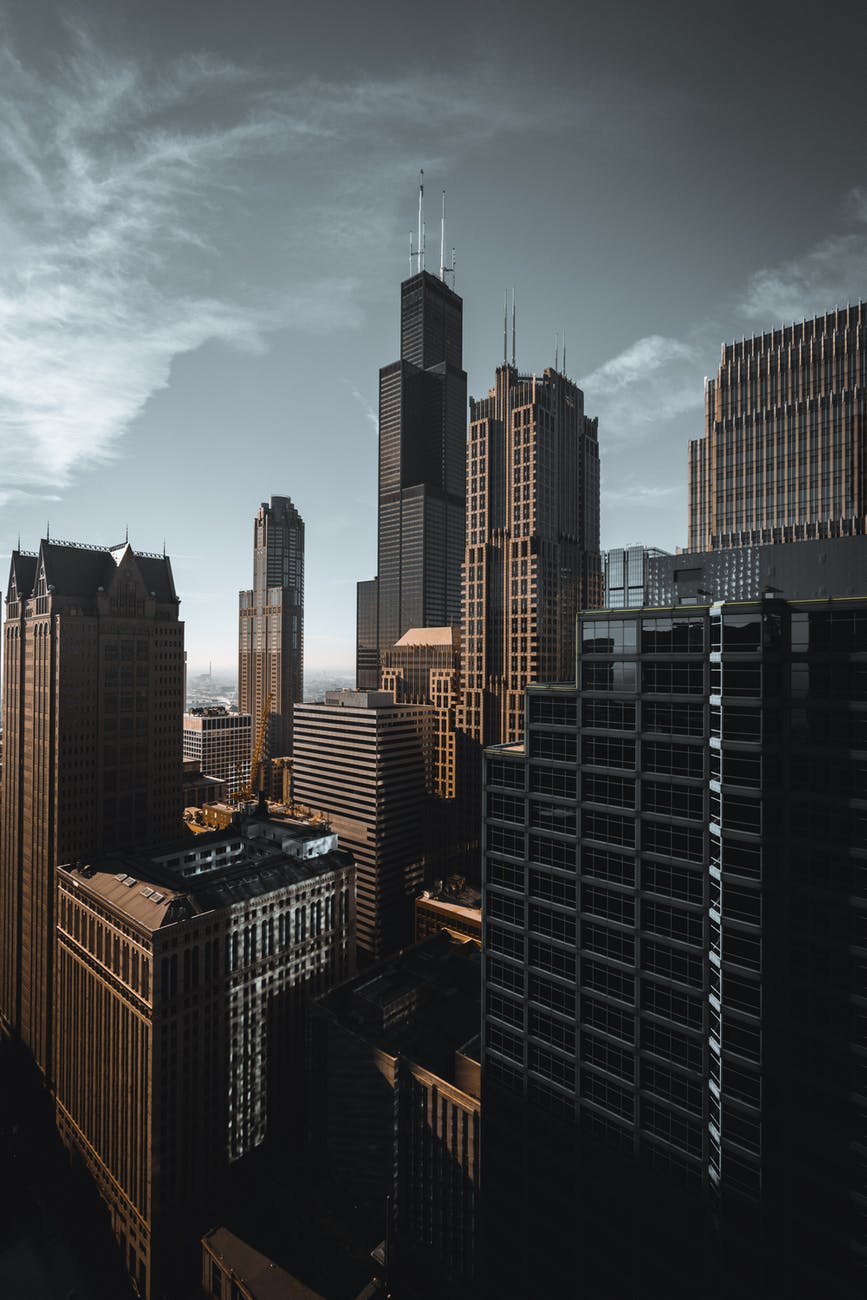
Yet the Big Apple isn’t the U.S. city with the most frequently struck building. That distinction goes to the Willis Tower in Chicago, which ranks third in the U.S. for height, towering at 1,451 feet above the Windy City. That skyscraper was hit with 250 lightning strikes between 2015 and 2020, making it Thor’s favorite target, so to speak.
Why Willis and not World Trade? Lightning strikes vary based on building height, material, and suppression systems. Chris Vagasky, a meteorologist for Vaisala, told AccuWeather that location may be to blame as well.
“Chicago gets more lightning in an average year than New York City,” Vagasky said. “So when you stick a tall building in a place with a higher lightning density, it’s more likely to be struck than a tall building in a place with a lower lightning density. Willis Tower is only slightly shorter than One World Trade, by about 35 feet.”
This is a timely write-up given the number of storms the Chicago area has experienced in the last week or so. With summer heat and humidity in a humid continental climate, big dark clouds and rain have swept over the Chicago region.
The pictures that capture lightning striking the Willis Tower highlight the height of the building above the rest of the (impressive) Chicago skyline. Additionally, they also show the resilience of the structures – explained elsewhere in the article as large Faraday cages – in the midst of a natural phenomena that can be quite destructive.





 Legally Sociable