In August Wilson’s 1979 play Jitney, one of the Pittsburgh characters is working to buy a suburban home for his young family. In the opening scene of Act 2, Youngblood describes where the home is:
I asked Peaches if she would go with me to look at houses, cause I wanted to surprise you. I wanted o pull a truck up to the house and say, “Come on, baby, we moving.” And drive on out to Penn HIlls and pull that truck up in front of one of them houses and say, “This is yours. This is your house baby.”
And a little later in the same conversation:
Wait till you see it. It’s real nice. It’s all on one floor . . . it’s got a basement . . . like a little den. we can put the TV down there. I told myself Rena’s gonna like this. Wait till she see I bought her a house.
In this conversation, the home in Penn Hills is part of achieving the American Dream: a pleasant place where a family can settle in and children can achieve.
Later in the same scene, the older character Becker hears of the potential move and approves of the community:
Good! They got some nice houses out there. That’s a smart move, Youngblood. I’m glad to see you do it. Ain’t nothing like like owning some property.
The vision of a suburban property contrasts sharply with the fate of the jitney station as the city will soon board up the property with some vague notion of redeveloping the land in the future.
But there are also hints that Penn Hills might not be a paradise. In the final scene (Act Two Scene 4), another character comments on Penn Hills:
They ain’t as nice as the houses in Monroeville. Most people don’t even buy houses in Penn Hills no more. They go out to Monroeville.
Reading this reminded me of Benjamin Herold’s book Disillusionedthat includes Penn Hills as part of the argument of how the American Dream of suburban living did not extend beyond white families. Penn Hills grew quickly after World War Two, increasing from over 15,000 residents in 1940 to over 62,000 in 1970. But since then white families left (as development extended to Monroeville and other places), the population declined, and Black families who moved to the community found a suburb struggling to maintain its tax base and fund local infrastructure.
Penn Hills may have looked in the early 1970s to hold out hope regarding a successful suburban life but Herold suggests it cannot now promise the suburban American Dream. By the late 1970s, it was changing. The struggles of and in Pittsburgh neighborhoods that Wilson describes extended out to Penn Hills. What was a place of hope turned out to be different than depicted.
Between 1925 and 1990, the rate of suburbanization differed by Protestant denomination. Some denominations were already more likely to be in the suburbs (their suburban presence predated mass suburbanization), some moved to the suburbs in increasing numbers, and some hardly moved at all. The general pattern among these groups was an increasing percentage of their churches in suburban locations, a process that was underway by the 1930s and 1940s and continued after World War II…
In this study, churches were influenced by settlement patterns in the Chicago region and the presence of numerous churches already existing in suburban communities. In addition, the racial and ethnic identity of some denominations helped dictate their choices for new suburban locations.
This article built on important work by multiple scholars about white flight in the Chicago area. Mark Mulder in Shades of White Flightlooked at how The Christian Reformed Church and The Reformed Church in America churches, both Dutch Reformed denominations, moved to the suburbs. Irving Cutler in The Jews of Chicago examined how Jews moved to suburban communities. Eileen McMahon in What Parish Are You From?analyzed how one Catholic parish responded to changing neighborhood populations, including moving to the suburbs.
As the story is told of American suburbanization, particularly after World War Two, the story should include the role religious institutions and adherents played in supporting white flight. I say more about the ways this played out with evangelicals in Sanctifying Suburbia.
Pope Leo XIV grew up in Dolton, Illinois, a suburb just south of the city of Chicago. Is this a story not just of the first American pope but a pope who grew up in the changing American suburbs? Over the years, what happened in his suburban community that had its first white settlers in the 1830s? First from the Encyclopedia of Chicago:
The mixture of railroads and the Little Calumet River proved to be a good site for industry. Dolton grew as a center for truck farming and manufacturing. It has produced bakery equipment, brass castings, shipping containers, cement, furniture, agricultural equipment, steel tanks, and chemicals. This diverse activity attracted an ethnically varied workforce. In the 1960s the Calumet Expressway (now the Bishop Ford Freeway) improved automobile and truck access to Chicago by two interchanges serving Dolton. In recent years large numbers of African Americans have moved to Dolton. The 2000 census reported a population of 25,614 with 14 percent white, 82 percent black, and 3 percent Hispanic.
According to a table on this page, Dolton was 99.9% white in 1960, 58.1% white in 1990, and 14.3% white in 2000. According to the Census Bureau, Dolton is now 4.9% white.
This is the story of how one small town became trapped in a downward spiral that poverty experts say follows a well-worn pattern of deindustrialization that leads to a disenfranchised economic class. Communities of color inherit a legacy of decline and then lack the resources, both financial and political, needed to turn things around.
The focus is Dolton, but it just as easily could be Riverdale, Harvey, Dixmoor, Posen, Calumet City or other nearby suburbs that once were powered by steel and other industry but over time slowly coalesced into a broad swath of economic distress. In other parts of Illinois, such as North Chicago to the north or Maywood to the west, the details change but the problems are often much the same.
It was no one single thing, but a cascade of events that changed the fortunes of Dolton and its neighbors. The decline of manufacturing led to a loss of job and pay opportunities, which in turn fed a wave of white flight as longtime residents left and were replaced by African-American city dwellers lured by better, yet not too expensive, housing.
But luring new investment to now majority black communities proved a challenge and housing values began to fall, taking down with them the tax revenues needed to keep up public services. Next came widespread foreclosures and an invasion of real estate scavengers who bought houses on the cheap, transforming a community of homeowners with a deep financial stake in their town into one of renters with looser bonds.
All the while, the political fabric vital to turning things around continued to fray. Government stumbled amid patronage and gridlock, rendering even more challenging the task of drawing needed new investment.
His parents had been living in a 1,200-square-foot brick house on East 141st Place in Dolton. They bought it new in 1949, paying a $42 monthly mortgage.
His father Louis Prevost was superintendent of the south suburban schools in District 169. News clippings from 1945 show he served as a Navy lieutenant in the Mediterranean in WWII. He had graduated from the old Central Y.M.C.A. College in 1943 while living in Hyde Park.
The new pope’s mother, Mildred Martinez Prevost, studied library science at DePaul University. Her death notice, in 1990, said she and her husband started the St. Mary’s library in the basement of the old school building and mentions jobs she had in the libraries at Holy Name Cathedral, Von Steuben High School on the North Side and at Mendel from 1969 to 1975.
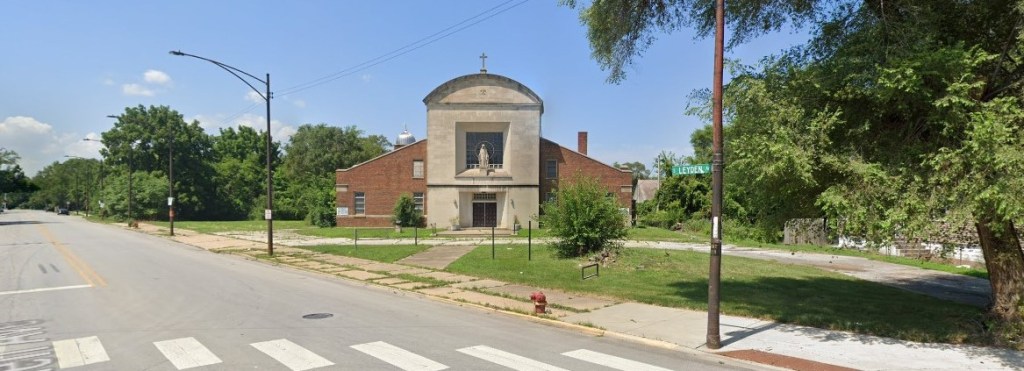
The Prevosts attended a Catholic parish – St. Mary of the Assumption – just inside the southern borders of Chicago and next to the suburbs of Dolton and Riverdale. Here is what the property looked like as of July 2024:
Like St. Mary’s, other Catholic institutions that helped shape the future cardinal are long gone, closed over the past several decades as the Catholic population around where he grew up and elsewhere plummeted. Among those bygone institutions:
• Mendel College Prep High School, where Prevost and his mother worked.
• St. Augustine Seminary High School in Michigan.
• Tolentine College in Olympia Fields, the suburb where he briefly lived.
• Mount Carmel Elementary School in Chicago Heights, where his father was principal.
Several of these communities mentioned – Olympia Fields, Chicago Heights – experienced racial change similar to that of Dolton.
If white Catholic residents indeed left Dolton and other communities on the South Side of Chicago and its southern suburbs and American suburbia became more complex, where did they move to? How did this shape the ministry of Pope Leo XIV?
Researchers interviewed by The Times said rising costs, rampant crime and changing racial demographics have made it harder to sustain worship spaces in large cities…
As more urban neighborhoods become secularized, demographers say religious families increasingly prefer to settle in suburban enclaves up to 20 miles outside of city centers…
“Over the last 10 years, the 100 fastest-growing churches in America are primarily in the growing inner and outer ring suburbs of major cities,” said Ryan Burge, an Eastern Illinois University political scientist and religious demographer. “They’re almost always non-denominational Christian churches near cities like Charlotte, Charleston and Atlanta. They are the fastest because that’s where people are moving.”…
In New Orleans and several Midwest and Northeast cities, gentrification has pushed more Black Christians into the suburbs than other groups…
Rather than start in the city and expand to the suburbs, most new churches now move in the opposite direction. For example, Elevation Church in Matthews, North Carolina, started 12 miles southeast of downtown Charlotte. It later planted a satellite church in the city center.
On the other hand, these could include new and different patterns:
-Which churches are closing and which religious groups are moving to the suburbs. If it was largely white congregations in the postwar era, it now includes more groups.
-The number of congregations closing. Are there now more closing than decades before?
-The relative power and influence of suburban megachurches compared to the past. If congregational influence decades ago tended to reside in older, urban congregations, this may have shifted today.
-Are cities more secular than they were in the past? Significant percentages of urban residents are religious and cities contain numerous religious congregations and organizations. Or, has the perception of cities and religion changed?
I suspect there is more to say on the connection between religion and suburbs.
By the 1990s, the mob was operating out of detached villas with swimming pools in upstate New Jersey, but if you want to learn precisely why the adult Tony Soprano lives in a gilded McMansion rather than a clapboard house with a stoop in Newark like his mother’s, The Many Saints Of Newark has the answer.
As Harold’s fortunes rise, black families move onto the same streets as Italians, causing much angst to the latter, including Tony’s parents, Johnny Boy and Livia Soprano. It makes Tony’s racism that much more obvious when, 30 years later, his daughter, Meadow, brings home her mixed-race college boyfriend. “I think there was talk, back in the day, about ‘Were black people getting short shrift on The Sopranos?’” says Odom Jr. “Was our story being told? I think David had a desire this time to look at an arc that really didn’t get explored the first time, at how the two communities intertwined and where they butted up against each other.”
At the same time, this narrative could say more about a general move to the suburbs and less about the specific move to the suburban McMansion at the heart of the show. Tony Soprano presumably used his wealth to purchase a big home in a quiet subdivision to hide his work and give his family an opportunity at a more normal suburban life. But, did he go straight from Newark to the suburban McMansion? Did his journey include a more modest suburban starter home or a suburban apartment (as it did for other characters on The Sopranos)? Did a young adult Tony Soprano make his moves from a suburban split-level or anonymous apartment off a major suburban road?
The housing path of Tony Soprano is not an inconsequential part of the story that is being developed here; it highlights his family history, his success, and his goals in life. If I see The Many Saints of Newark, I will be keeping an eye on the residences depicted within the film.
U.S. Census Bureau data indicate that Brooklyn Center is the most rapidly segregating community in Minnesota. In 1990, the city was 90 percent white; its poverty rate was low, at 5 percent. Three decades later, the city is 38 percent white and its poverty rate has tripled, to 15 percent. It is now the poorest major suburb in the Twin Cities region, and it has a higher percentage of residents of color than any other major municipality in the area. Ferguson underwent nearly identical changes in the years before a police officer shot Michael Brown to death in 2014; the city transitioned from 85 percent white in 1980 to 29 percent white in 2010. Over the same period, its poverty rate almost quadrupled…
Suburbs usually remain vibrant and thriving as they become more racially integrated. But eventually a tipping point is reached, and the corrosive effects of racial isolation and segregation begin to be felt. When this happens, middle-class residents—mostly white, but not entirely—begin to leave in large numbers. Since 2000, Brooklyn Center has lost 42 percent of its white population; Ferguson has lost 49 percent. Economic opportunity has vanished too. Adjusted for inflation, the median income in Brooklyn Center has fallen by about $9,000 since 2000, and the city has lost a sixth of its middle- and upper-income residents. In Ferguson, median incomes have dropped by nearly $15,000 during the same period…
The suburbs that these dynamics leave behind replicate many of the same conditions that existed in segregated center-city neighborhoods in the 20th century. As in those enclaves, certain aspects of the relationship between residents and the powerful institutions with which they interact—police, elected officials, school systems, landlords, employers—appear colonial in nature. At the time of Brown’s killing, Ferguson’s mayor and almost all of its city council were white. Many police forces in resegregated suburbs are staffed with a large number of nonresidents, who also may be disproportionately white. Even private economic arrangements in segregated places can be extractive in nature. Before the 2008 financial crisis, Brooklyn Center was the largest suburban hub of subprime lending in the Twin Cities area. Tragically, the residents of resegregated suburbs face the same obstacles that many had attempted to escape by leaving major cities: struggling schools, unemployment, poverty, and police violence…
The Fergusonization of suburbs is a nationwide problem, uniting many far-flung communities whose residents and leaders may not even realize they have anything in common. Census data show that in 2010, more than 20 percent of the suburban population in major American metros lived in a predominantly nonwhite suburb reminiscent of Brooklyn Center or Ferguson, and that share has grown every year since. Because the forces causing resegregation are larger than any one municipality, individual suburbs are unable to solve this problem by acting alone. But solutions do exist.
Scholars have continued to debate the extent to which white flight remains racially motivated or, in contrast, the result of socioeconomic concerns that proxy locations of minority residence. Using 1990–2010 census data, this study contributes to this debate by re-examining white flight in a sample of both poor and middle-class suburban neighborhoods. Findings fail to provide evidence in support of the racial proxy hypothesis. To the contrary, for neighborhoods with a larger non-white presence, white flight is instead more likely in middle-class as opposed to poorer neighborhoods. These results not only confirm the continued salience of race for white flight, but also suggest that racial white flight may be motivated to an even greater extent in middle-class, suburban neighborhoods. Theoretically, these findings point to the decoupling of economic and racial residential integration, as white flight may persist for groups even despite higher levels of socioeconomic attainment.
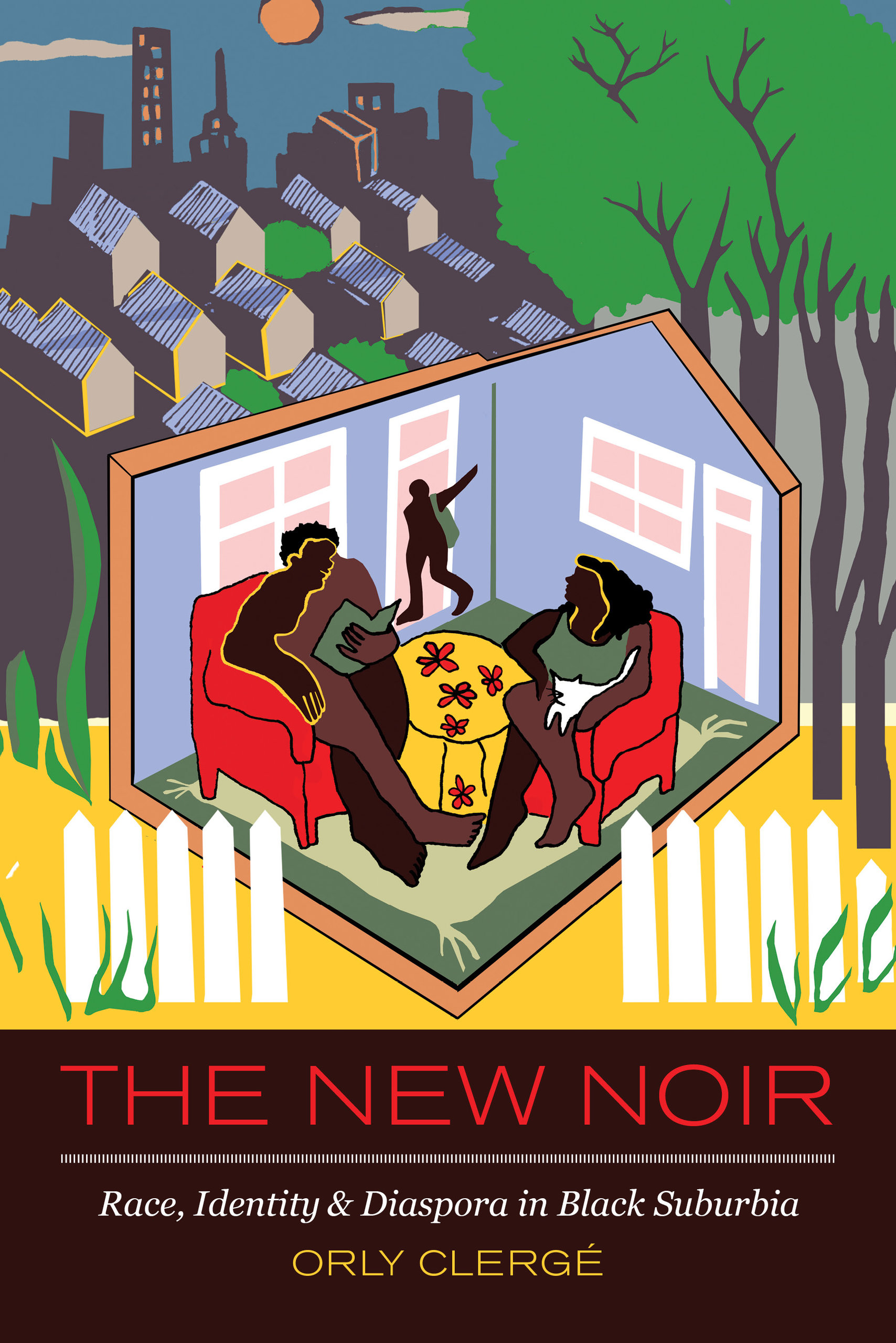
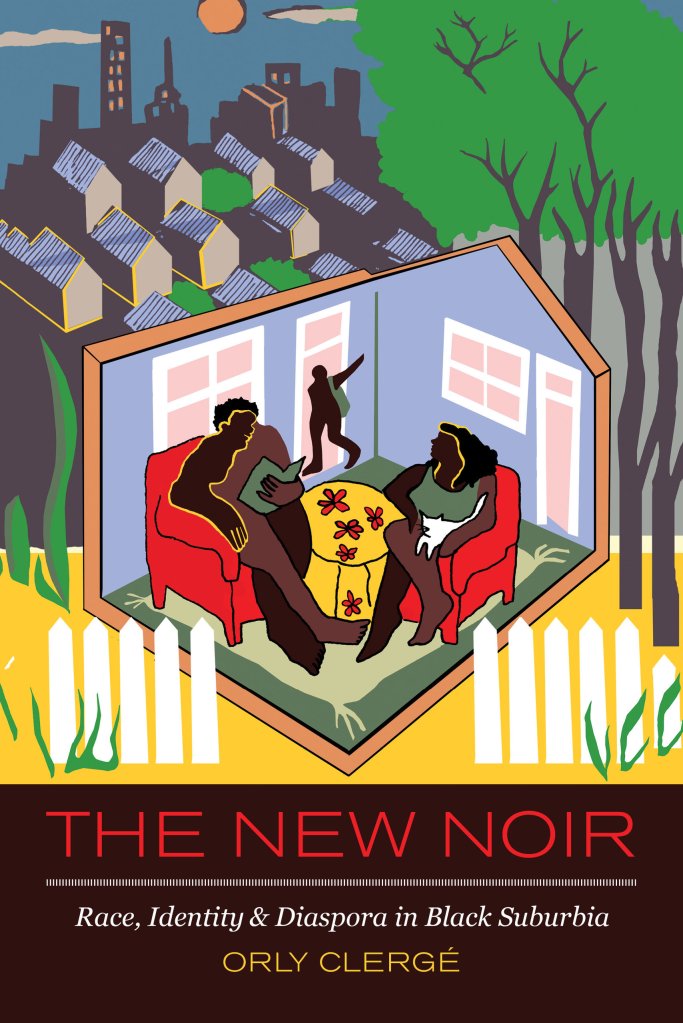
Sociologist Orly Clergé’s 2019 book The New Noir: Race, Identity & Diaspora in Black Suburbiaincludes the history of Blacks moving to New York and its suburbs. In her study, Clergé talks to both Black residents and white residents of suburban communities. Here is how Clergé responds to the claim by some white residents that their families left neighborhoods spontaneously as Black residents moved in:
Although White flight is discussed as a spontaneous response to Black in-migration, White fight and flight were well thought-out, collective, strategic, and immoral acts against Black people condoned by the state. (101)
White flight is the American phenomena where white residents left urban neighborhoods for the suburbs when Blacks and other racial or ethnic minorities moved in. This is most common in the decades after World War Two when government policy and community changes combined to lead to often rapid turnover in cities. In some Chicago neighborhoods, the population moved from +90% white to a significant Black majority in just a decade or two.
What the quote above highlights is just how prepared white residents were regarding potential changes in their neighborhood. Over the course of at least a few decades, whites deployed a range of techniques that culminated in white flight: restrictive deeds and covenants, blockbusting, redlining, and threats and violence. As each of these techniques was rendered illegal or went against public opinion, white residents moved onto the next option. And white flight was eventually the choice as white residents left en masse. It did not just happen; it was part of well-established patterns of exclusion that would then continue in suburban communities.
This reminds me of the first and only homeowners association meeting we attended when we moved back to Illinois. The board and attendees discussed efforts to combat some vandalism of association property, mainly some signs at the playground in the middle of our neighborhood as well as on a bridge over a creek. One attendee stood up and told this story (and I’m doing my best to paraphrase: “Any time my family and I move somewhere, we stay until there is crime. And then we move further away from the city until there is no crime and try again. If the vandalism issue is not dealt with, there will soon be babies shot in the street.” The suburb we lived in is rather small and sleepy but I would not be surprised if many people share a similar mindset (given what I see on social media about reactions to local crime).
Those with resources will likely always try to find ways to create protected suburban communities. Depending on what regulations could come down regarding affordable housing, some will try to find loopholes and some might just defy the regulations and fight in court. (Another option: some might move to upscale urban neighborhoods.)
An easy answer might be to embrace telecommuting and working from home and move to more rural locations. Yet, this negates some of the advantages suburbs offer including access to amenities of the city (including cultural institutions, major airports and transportation options) and job centers in the suburbs and cities. How many people truly want small town life (rural, tight local networks, few local options for shopping, dining, entertainment) versus wanting a suburb that straddles urban options and lower density?
What does this do to our understanding of white flight and related phenomena? As it stands, historians, sociologists, and others largely talk about white flight as a process that occurred after World War II as whites left urban neighborhoods for suburbs and black residents moved in. If the suburbs are more open to all (and they already are much more diverse compared to the postwar era), will white flight come to include whites moving from suburbs to more protected suburbs and/or more rural areas?
That said, while in the aggregate, suburbs are more diverse, the distribution of nonwhites isn’t random. Metropolitan America is not a place of free housing choice. It’s still very much shaped by deep patterns of racial inequality and a maldistribution of resources. A lot of the nonwhite newcomers to suburbia live in what I call “secondhand suburbs” — places that have become increasingly unfashionable for whites, often older suburbs closer to central cities, with declining business districts and decaying housing stock.
And just as the distribution of minority groups across suburbia is not random, the distribution of whites across suburbia has really significant political implications. We’re seeing a suburban political divide quite different from the one that played out after World War II, when well-to-do, middle-class and even some working-class whites living in suburbia found common ground by looking through their rearview mirrors with horror at the cities they were fleeing. By the early 2000s, you have growing divisions among white suburbanites. The whitest suburban places are often at the suburban-exurban fringes — places where middle-class whites who are attempting to flee the growing racial diversity of cities and nearby suburbs are moving. By contrast, many of the older suburbs, particularly those with late 19th-, early 20th-century charming housing and excellent schools, have been attracting well-to-do and highly educated whites…
But suburbs didn’t freeze in time circa 1950 or 1960; they continued to evolve and transform. And those transformations were largely overlooked by political commentators, journalists, social scientists, novelists and pop culture. You saw, for example, beginning in the 1960s and expanding in the ’70s and ’80s, the emergence of clusters of multifamily housing — apartments, townhouses and condominiums — in suburban places. And as the housing market opened, a lot of new immigrants chose suburban places as points of settlement because suburbs offered access to jobs. In the post-WWII period up to the present day, most American job growth has been in suburban places — office parks, industrial parks, shopping malls, stores, restaurants, the construction industry, all sorts of service jobs. And those changes are crucial to understanding the remapping of metropolitan America. They capture a more complex reality than the post-WWII image of the suburbs….
One of the consequences of that are the fierce battles over even modest or token efforts to bring diversity to predominantly white suburban school districts, and really significant opposition to the construction of multifamily housing. And it’s not even couched in the rhetoric of class. It’s not, “I don’t want multifamily housing in my neighborhood because I don’t want lower-class people living here.” Instead, it’s, “This is going to change the character of the neighborhood,” or “It’s going to jeopardize my property values,” or “It’s going to bring congestion.”
This reminds me that the image of 1950s suburbia is so pervasive as part of the American Dream and yet it has only some connections to current realities. Why does this image live on? It was incredibly powerful (postwar success, baby boomers, tremendous growth and sprawl), repeated and critiqued endlessly (numerous cultural products on both sides for decades), and some would like to continue or recreate what happened then. History rarely works this way; even if it were possible to recreate similar conditions, people are now different and society has changed.
There is a lot more here for academics and others to explore about desirable and undesirable suburbs. Now that suburbs are more diverse in race, ethnicity, and class, the sorting within suburbs is a powerful force. Do wealthier people primarily select places through personal networks? How do residents of a metropolitan region come to know about and regard other communities (and how do communities try to “subtly” signal what they are)?
Accompanying the announcement, the team released a map showing where, precisely, Braves Country was—and, notably, where it wasn’t. That view of the greater Atlanta area was speckled with red dots, each one indicating the home of a 2012 ticket buyer, including season-ticket holders. Only a smattering of red appeared to the east, west and south of Turner Field, while thousands of dots congealed into a ribbon above downtown that expanded into a wide swath in the half-dozen suburban and exurban counties to the north. The new stadium would be closer to the middle of that mass, which happened to embody an older, whiter and more conservative population than the city proper. Those northern suburbs were fast diversifying, yet many in Atlanta—particularly in its black population—felt slighted by the decision, their perspectives colored by decades of racial and political tension between city and sprawl.
Five months later MLS commissioner Don Garber, Falcons owner Arthur Blank and then-mayor Kasim Reed proclaimed in their own press conference that downtown Atlanta would be home to MLS’s 22nd franchise, and the new club, Atlanta United, would take the pitch in 2017, the same year the Braves headed to Cobb. The soccer team would play in the same new $1.6 billion stadium the Falcons would soon call home, but United would be no afterthought. The facility would be designed to accommodate the beautiful game from the start. Pushing back against skepticism and pointing to an influx of young professionals near Atlanta’s urban core, Blank assured MLS’s leaders he could fill the massive venue, even in a market known for lukewarm enthusiasm toward pro sports. Reed boasted that his city’s foreign-born (and, seemingly implied, soccer-loving) population was growing at the second-fastest rate in the U.S. Garber himself insisted these factors combined to make downtown an ideal MLS incubator. The city “embodies what we call a ‘new America,'” he said, “an America that’s blossoming with ethnic diversity.”
Fast-forward five years, and Atlanta United’s ticket-sales map, while not a direct inverse, is considerably more centralized than Braves Country (or even, says United president Darren Eales, a depiction of the Falcons’ fan base). United, meanwhile, aided no doubt by winning the 2018 MLS Cup, has led MLS in attendance in each of its three seasons, averaging 53,003 fans in ’19, among the highest in the world. This echoes the success the Braves found when they chased their audience to the north, the farthest any MLB team had ventured from its city center in 50 years. The Braves’ average home attendance, aided too by on-field success, reached 32,779 fans this season, up 31% from their last year at Turner Field…
Kruse, the Princeton history professor, is blunt in his assessment of such feelings. “These ideas about downtown being a dangerous place are really about the people downtown,” he says. For years he thought that “suburbanites want nothing to do with the city except to see the Braves.” But today? “That last connection has been severed. I see this movement of the stadium as the culmination of white flight.”
Trying to connect with particular fan bases or contributing to decades-long processes of residential segregation and white flight? How about both?
Three additional thoughts:
More could be made here of the public money the Braves received from Cobb County. Plus, they could develop land around the new stadium, now a common tactic to generate more revenue beyond fan attendance. Yes, fan attendance is important but the long-term money may be in investing money in land surrounded by whiter and wealthier residents. Stadium development then just continues the process of limited capital investment in neighborhoods that could really use it and concentrates it in places where wealth is already present.
Baseball is widely regarded as having an older and whiter fan base. Soccer is said to have a more diverse and younger fan base. In addition to the demographics of the Atlanta area, the sports themselves try to appeal to different audiences (even as they might work to reach out to different groups).
It will be interesting to see how many sports teams in the next few decades move to more niche locations while still claiming to be from the big city. Civic identity is often tied to sports teams as most metro areas can only support one team from the major American sports. Can big city politicians still lose when the team from the area decides to move to a suburb (see a recent example in the Las Vegas area) but takes that revenue out of the big city? Can a team that locates in one particular area of the metropolitan region still easily represent the entire region?





 Legally Sociable