The Irving City Council will vote Thursday on millions of dollars in economic incentives to support the huge campus that’s expected to house 4,000 workers…
The agreement with Irving calls for Wells Fargo to “occupy at least 800,000 square feet of office space in the newly constructed buildings by December 2026. The proposed new office development would serve as a regional hub for Wells Fargo.”…
Irving proposes in its economic incentive agreement to give Wells Fargo up to $19 million in tax increment finance district funds to build a 4,000-space parking garage and “to reclaim a portion of the lake between the two adjacent parcels on the south side of Promenade Parkway.”
A separate economic incentive of up to $12 million would support construction of the Wells Fargo offices.
The project will increase the city’s tax “property value by a minimum of $200,000,000,” according to the City Council filings.
I can imagine the argument from Irving and similar communities about why the tax breaks are worth it:
Such a move helps entice national and international brands to your community.
Such a move brings jobs to the community.
The tax breaks will be outweighed by the tax and physical improvements to the property in question.
All of this helps boost the status of the suburb and the economic prospects in the community.
On the other hand, tax breaks have downsides:
Lots of communities offer tax breaks. The company may be less interested in this specific community and more interested in how much money they can get from a community.
Less money will come into the community than if no tax breaks were offered.
At some point, the tax breaks run out and then what happens to the company and the newly developed property?
As the title of this post asks, how much development in suburban areas like Irving involves tax breaks? Would Wells Fargo locate in Irving or in the region without tax breaks?
While this fits one narrative of Chicago, the region, and Illinois losing residents and companies to places with growing populations and more conservative business climates, this is not the only move Caterpillar has made in recent years. The company started in 1910 in Peoria and stayed there for a long time before relocating to Deerfield in 2017. Here is how the Chicago Tribune described that move:
Caterpillar will take over the former headquarters of premium spirits maker Beam Suntory, which announced plans last year to move its 450 employees and global headquarters to Chicago’s Merchandise Mart, joining corporations including McDonald’s, Motorola Solutions, Kraft Heinz, Wilson Sporting Goods and Conagra Brands that have recently moved or made plans to relocate downtown. Beam Suntory’s move will be completed by the end of June.”
“Following a thorough site selection process, we chose this location because it is approximately a 20-minute drive to O’Hare airport and convenient to the city of Chicago via commuter train, achieving our goal to be more accessible to our global customers, dealers and employees,” Caterpillar CEO Jim Umpleby said in a news release Wednesday. “This site gives our employees many options to live in either an urban or suburban environment. We know we have to compete for the best talent to grow our company, and this location will appeal to our diverse, global team, today and in the future.”…
In 2011, Caterpillar’s then-CEO Doug Oberhelman talked of moving jobs out of Illinois because of the state’s tax and spending policies. But in 2015, the company said it would stay in Peoria and build a new corporate headquarters, reassuring employees worried about a move. That changed again in January, when the company said it was abandoning plans for the new downstate headquarters.
So is this a story about Chicagoland and Illinois losing important companies or a broader example of companies responding to global markets and leaving behind long roots? Caterpillar is a company started and based in a smaller Rust Belt city for decades and now will move to two of the biggest metropolitan areas in less than a decade. How long will it be in Irving, Texas before again seeking greener pastures and business advantages?
The price of a foot of water pipe in Tucson, Arizona: up 19%. The cost of a ton of asphalt in a small Massachusetts town: up 37%. The estimate to build a new airport terminal in Des Moines, Iowa: 69% higher, with a several year delay.
Inflation is taking a toll on infrastructure projects across the U.S., driving up costs so much that state and local officials are postponing projects, scaling back others and reprioritizing their needs.
The price hikes already are diminishing the value of a $1 trillion infrastructure plan President Joe Biden signed into law just seven months ago. That law had included, among other things, a roughly 25% increase in regular highway program funding for states.
“Those dollars are essentially evaporating,” said Jim Tymon, executive director of the American Association of State Highway and Transportation Officials. “The cost of those projects is going up by 20%, by 30%, and just wiping out that increase from the federal government that they were so excited about earlier in the year.”
Because a number of these projects have to get done, it sounds like the primary effect of inflation is to delay projects. This has a cascading effect on getting better infrastructure in place, jobs, construction and its consequences, and more.
Naperville continues to reign as the top suburb in retail sales for the fifth year in a row, a recent report shows.
The city in 2021 recorded sales of $4.3 billion, $540 million more than No. 2 Schaumburg, according to the annual report from Chicago real estate and retail consultants Melaniphy & Associates…
For Naperville, 2021 restaurant and bar sales climbed to a record $443 million, up 34% from 2020′s pandemic plummet to $330 million after hitting $431 million in 2019…
By far the largest contributor to retail sales in Naperville is under the automobile dealership and gasoline category.
In 2021, Naperville figures rose by 33% over the previous year to $1.7 billion, which was the highest percentage increase throughout the Chicago metropolitan area, according to the report.
Some of the lead for Naperville could be tied to their large population and land area. Many suburban communities are not this big. For example, Schaumburg has roughly a little more than half the population of Naperville and about half of the land area.
But, I am more interested in the absolute figures. One suburb had over $4 billion in sales. This is a lot of money in one community. And hundreds of millions were spent in numerous categories, including restaurants, groceries, cars, and lumber, hardware, and building supplies.
In short, Naperville is not just a bedroom suburb with a high quality of life: it is full of retail activity even as it contains thousands of homes and dozens of subdivisions.
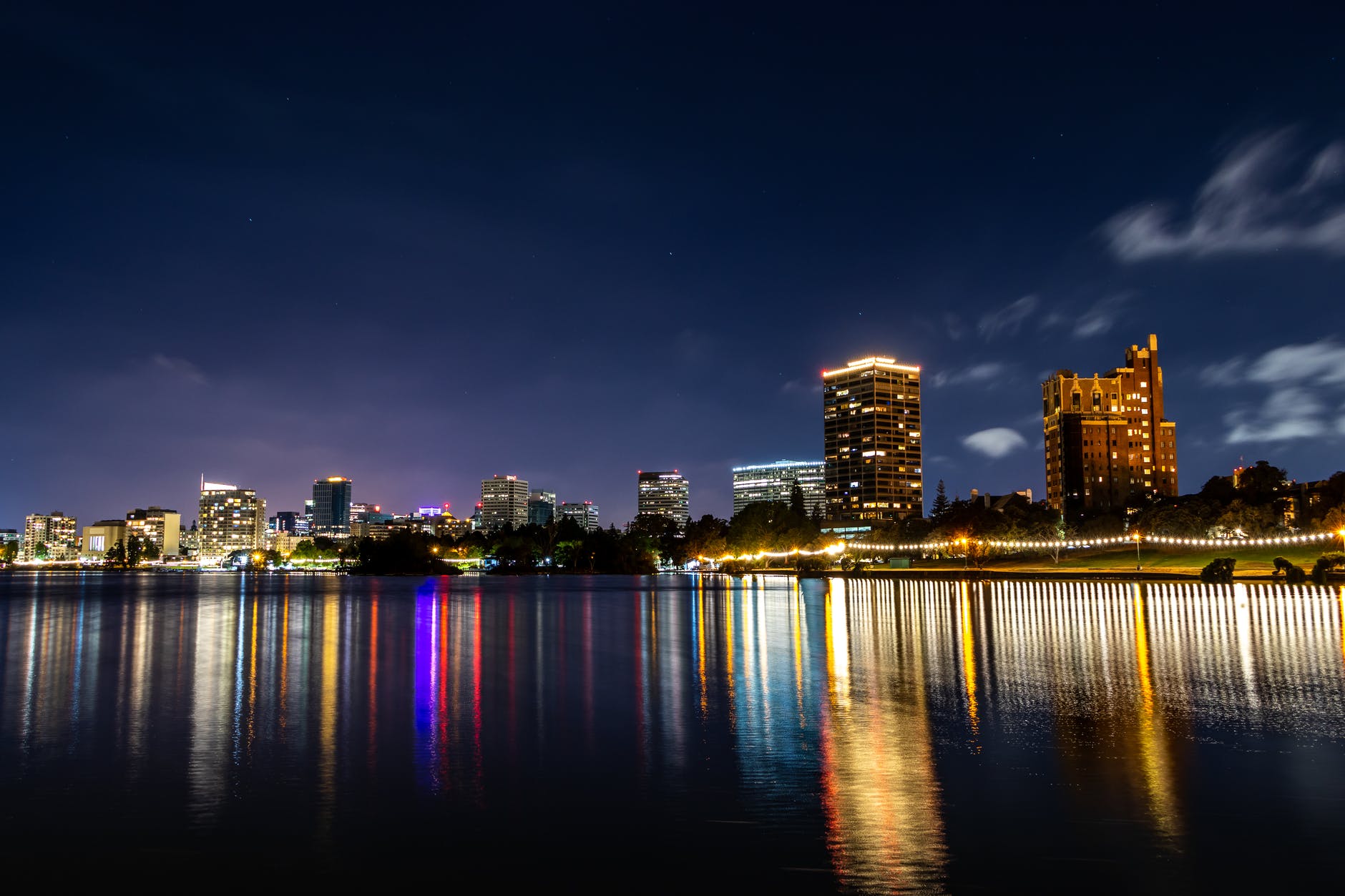
By 2020, the A’s were the only team left. But they made it clear they were prepared to leave, too. Last May, majority owner John Fisher and team president Dave Kaval—resident cartoon villains of what remains of the Oakland sports scene—began threatening to follow in the Raiders’ footsteps and relocate Oakland’s last pro team to Las Vegas … unless the Oakland City Council voted to help them build a $12 billion stadium “district”—replete with condos, hotels, and apartment buildings—on a wedge of waterfront property operated by the Port of Oakland just west of Jack London Square. If approved, the project would constitute one of the largest and most transformative development deals in California state history. It would likewise require hundreds of millions of dollars in public funding to complete. Fisher, who is heir to the Gap Inc. fortune and has a net worth north of $2 billion, has committed to privately finance the construction of the stadium itself, but the project isn’t viable without a suite of infrastructure improvements to the surrounding area. These improvements are what the A’s asked the city to find ways to pay for.
It was a familiar ploy. As journalists Neil deMause and Joanna Cagan write in Field of Schemes: How the Great Stadium Swindle Turns Public Money Into Private Profit, since roughly 1984, when the Colts left Baltimore for Indianapolis, team owners across the country have worked systematically to “supplement profits by extorting money from their hometowns,” usually “under threat of moving.” Starting around last summer, Fisher and Kaval began to expand upon their means of municipal extortion. In the run-up to a series of contentious City Council meetings, Kaval took to posting videos of himself on Twitter jubilantly attending Las Vegas Knights games, as if to spur the city into supporting his proposal out of jealous insecurity. Fisher, meanwhile, enlisted MLB commissioner Rob Manfred to act as muscle. “Thinking about this as a bluff is a mistake,” Manfred told the BWAA in July 2021. “This is the decision point for Oakland as to whether they want Major League Baseball going forward.”
Oakland has been struggling to make that decision ever since. Some, like Marcus Thompson, an East Oakland native, 2021 California Sportswriter of the Year, and author of Golden: The Miraculous Rise of Steph Curry,resent Fisher and Kaval’s tactics, and say that Oakland’s political leaders “should not be caving to an owner” worth over $2 billion who has “shown zero desire to be a meaningful member of our community unless it is profitable.” Certain Oakland political leaders, such as Councilmember Carroll Fife, who represents the district in West Oakland where the A’s stadium would be built, agree. “There are so many dire issues in Oakland right now,” Fife told me in February—citing, among other things, Oakland’s crises of gentrification, affordability, and homelessness, which the United Nations has singled out as “cruel.” Fife said she doesn’t believe “a sports team is going to address” any of them. “We should use public resources toward addressing residents’ immediate needs.”
Others believe the economic benefits of a new stadium are worth pursuing in and of themselves. “Building the new A’s ballpark would be a blessing,” Mitchell Schwarzer, historian, professor, and author of Hella Town: Oakland’s History of Development and Disruption, told me in an email. It would “bring crowds to adjacent Jack London Square,” and fill “its vacant spaces with places to eat, drink and shop.” Oakland’s mayor, Libby Schaaf, agrees, calling the A’s stadium project “a world-class waterfront ballpark district” with the potential to “benefit Bay Area residents for generations to come.”
No major city or leader wants to lose a major sports team. And the Oakland case is unique with multiple teams leaving in recent years.
However, the price that is often paid to keep a team is not worth it. The costs are too big, taxpayers lose other opportunities, the money would be spent elsewhere in the city if not at sporting events, and the owners are the ones who truly win with the increasing value of their team.
The Oakland case is also different because of the way the Athletics are run. The team has a Billy Beane approach that suggests an excellent team can be created with a limited payroll and an ability to exploit market inefficiencies. The A’s have done this a few times in the last two decades…and then they sell off all of their good players and start again. They just did this going into the 2022 season and have a minimal payroll of just under $50 million, second-lowest in baseball and roughly one-fifth of the biggest spenders in the sport. In addition to the economic case for taxpayers, is this a team worth supporting?
“Probably the strongest work ethic of laborers is the folks in the Midwest,” the Houston-based founder of SparrowHawk Real Estate Strategists said, definitely not rhyming. “They’re just, I don’t know what they put in the water there, but they’re hard workers. And so you’ve got a good labor force.”…
Illinois Manufacturing Association president and CEO Mark Denzler recalls a businesswoman who recently moved her small manufacturing operations of about 50-70 workers to Mississippi with the goal of saving on costs. She regrets the decision, he said…
“When I’m around the warehouse workers in the Midwest — Chicago and all these other Midwestern cities — they’re different than the folks in the southeast and the folks in the West Coast. They just have a different work ethic,” he said…
“It would be really hard. I’d be suspicious of anybody who said they can do it,” Bruno said. “But there is this strong experience with work in the Midwest that it’s part of your development. It’s connected to your health and well-being.”
Contrary to the final paragraph above, I bet this could be measured. But, what would it show? And how would workers in Boston or New York City or Atlanta or San Francisco respond to the argument that Chicago workers have a stronger work ethic? Or, within the Midwest and Rust Belt, how about workers in Milwaukee, Cleveland, or Pittsburgh?
This is part of a bigger narrative about Chicago. it is part of its character. Even as it is a global city with an important finance sector and many professional and white-collar workers, it imagines itself as a blue-collar city relying on manufacturing. The loss of manufacturing jobs in the last sixty years hit Chicago hard, as it did many cities, yet the narrative continues.
I would be interested in a more recent study that looks at how residents of the Chicago area think about the purported work ethic. Does the narrative hold across locations, groups, and occupations? Does the idea of “the city that works” extend throughout the region and different kinds of workers?
The Reedy Creek Development Act can be traced back to 1967.
It was a pivotal negotiating factor in convincing Disney to locate his company in Florida and allows the company to do just about whatever it wants on its land.
“The ability, the power to build a nuclear power plant, an airport manufacturer, distill and distribute alcoholic beverages and lots of other things,” said Dr. Richard Foglesong, author of “Married to the Mouse” in an interview with WFTV in 2021.
Many would love to have this kind of freedom to do what they want with a large property. In contrast to what was possible through this act, many property owners would have to apply to local governments for uses of the property beyond what is allowed through the local zoning.
If leaders in Florida follow through with revoking this act and Disney wants to go elsewhere, does this shape up to be a second Amazon HQ #2 situation? Or, does Disney have a lot fewer possible locations to go to given its need for a lot of land and good weather?
We recently tried HelloFresh when just needing to pay shipping for three meals. The food tasted good and the prep time was at or close to their projections. The experience also caused me to think about social class, food, and who exactly HelloFresh is aiming for as their customers. A few thoughts:
The food is delivered fresh and it is in exactly the correct proportions for the recipes. Yet, it requires prep time. This appeals to people who like the idea of fresh food and the work that puts the food together. What is really cut out is the planning for meals and shopping for food.
Because of just needing to pay shipping on an introductory deal, we paid something like $5+ for each 4 person meal. That is a good price. Looking at their longer subscriptions or packages, the food turned to be more like $8-10 per portion. This is closer to the price of fast casual restaurants. This money toward fresh ingredients and still needing to put the meal together would add up.
If we paid a little bit more than normal Hello Fresh rates, we could have full meals delivered from restaurants. The prep time would disappear. I would be out more money.
All of this requires a decent amount of money to start with. That money purchases ingredients, recipes, and time not having to plan or shop. But, if I paid a little more I could have full meals with no prep.
So how does HelloFresh connect to social class? I suspect they are aiming for middle to upper-middle class families that want to provide a more traditional meal time – healthier food! real labor! – at a certain price point. Given the aggressiveness of advertising, I would guess HelloFresh thinks it has a big enough market to really make some money. This is about market segmentation but also about particular food practices tied to social class in the United States.
These ghost storefronts—often called “dark stores”—are warehouses in all but name, yet they look markedly different from the gargantuan spaces where older online grocery companies like FreshDirect store their goods. Traditional warehouses are zoned to regions outside of commercial districts, meaning they will be set apart from areas with lots of walking traffic. Dark stores are located in retail storefronts on main streets, near the heart of busy neighborhoods, but they serve only ecommerce customers. And they’ve gone from a niche phenomenon discussed largely in retail industry circles to a feature of major American cities.
The rise of dark stores directly parallels the acceleration of ecommerce as a whole, especially in the grocery industry. Online sales represented 13 percent of all grocery spending in 2021, a new high, and dark stores are designed to make the delivery process smoother…
Dark stores—sprouting up in former butcher shops, convenience stores, gyms, and mattress retailers—are taking up spaces once designed to be open to the public. That shift from far-flung warehouses to accessible retail storefronts has city planners on edge. Because dark stores sit at the confusing intersection of being technically occupied, but functionally empty, they risk entrenching the worst impacts that vacant real estate can have on a community.
The fear is that dark stores, like vacant storefronts, could puncture a hole in the social landscape of a neighborhood. Vacant storefronts are bad for cities. When there are a lot of them in a tight vicinity, they mean that fewer people will walk down the street, and fewer connections between neighbors will happen. “Having people out on the street increases public safety, because more people see things that are happening,” said Noel Hidalgo, executive director of BetaNYC. “That level of social engagement makes cities safer and makes places safer.” Accordingly, neighborhoods with high numbers of vacant storefronts see increased crime rates, fire risks, and rodent activity.
I wonder how municipalities will respond to this because of the revenues such dark stores might generate. It is one thing if other retailers or businesses want to use these spaces. But, if dark stores are occupying commercial space and generating money through paying property taxes and sales taxes plus adding jobs, will they be as concerned about the social fabric? It can be difficult to fill vacant commercial properties, particularly spaces like grocery stores.
So out of the concerns expressed above, I could imagine cities limiting the number or density of dark stores within different kinds of zoning. Or, what if there was a whole block of dark stores and then none for a decent distance from there? If e-commerce is here to stay and needs to be close to those who order, perhaps warehouse districts need to be spread throughout communities at regular intervals or near transportation hubs.
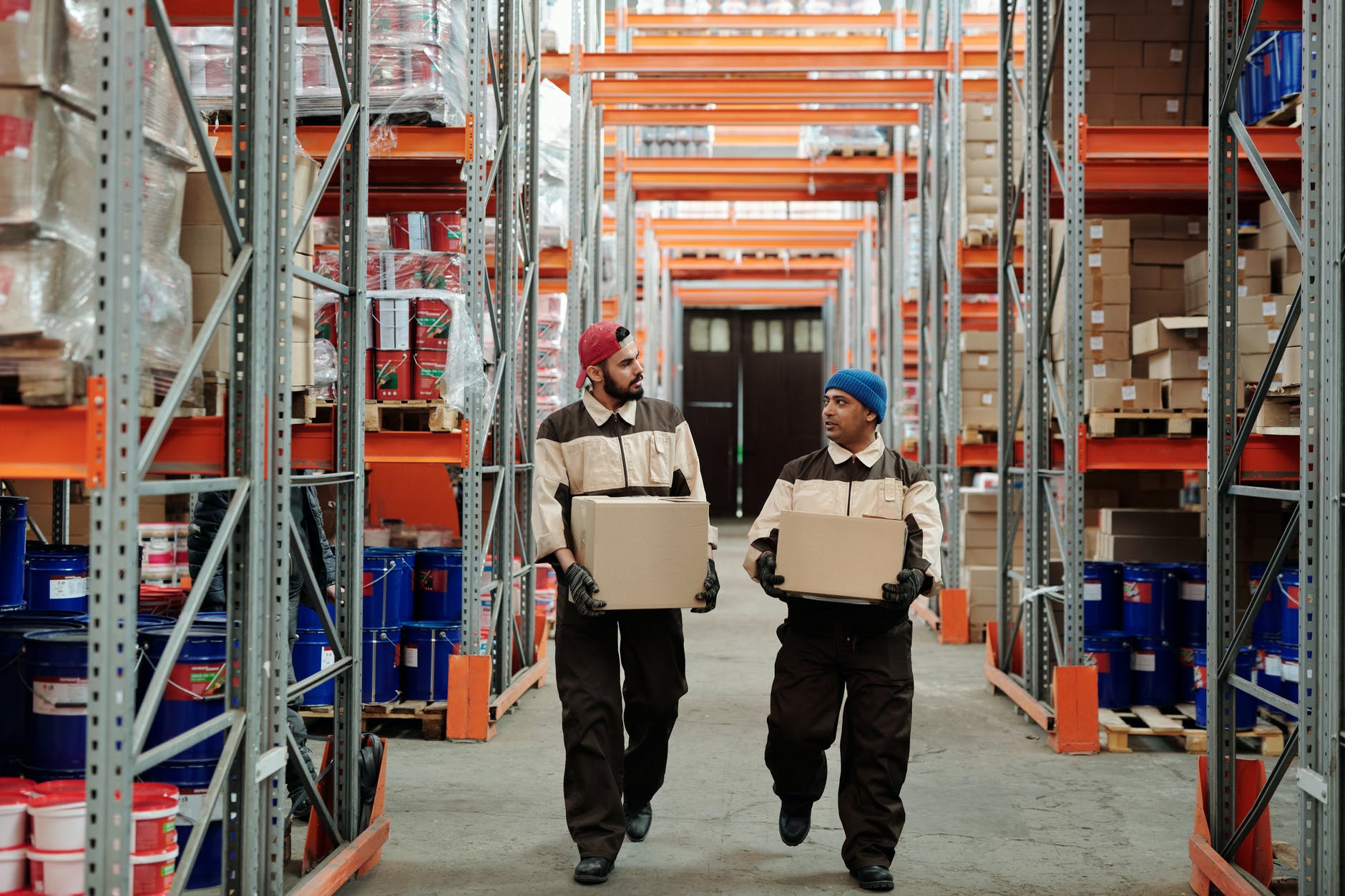
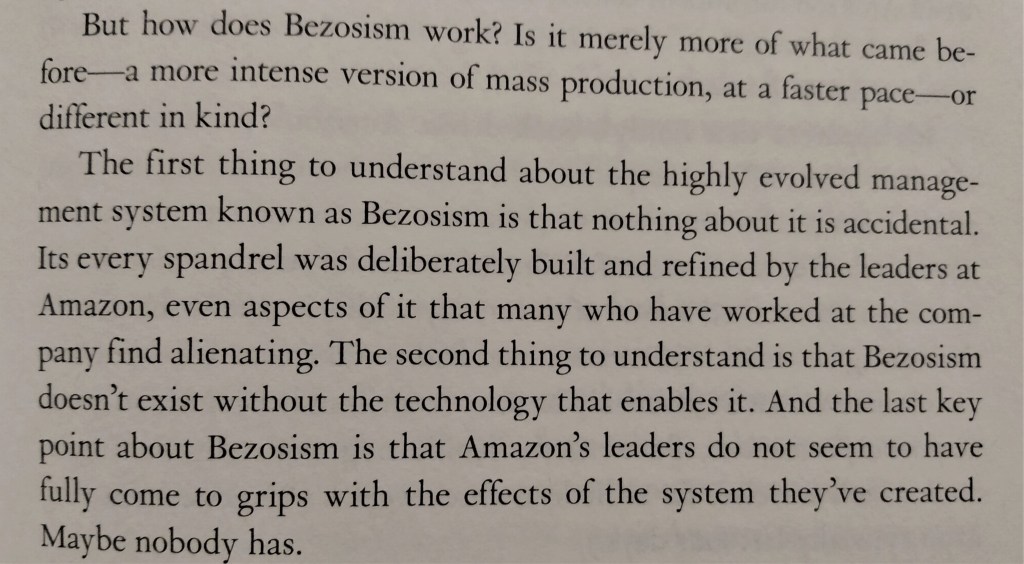
Much of the rest of the book after this point considers the costs of this new system for workers. Even as technology enables new options – robots working in warehouses and distribution centers – humans still play a critical role but they work in difficult circumstances.
How far can Bezosism go? Amazon facilities and similar operations from other companies are one important sphere to consider. But, what about other areas? As automation increases and demands for productivity and profit increase, where does this leave workers in all sorts of industries?








 Legally Sociable