The Home Alone house as one of the most newsworthy houses in America?

I saw the news: the Home Alone house has been sold.

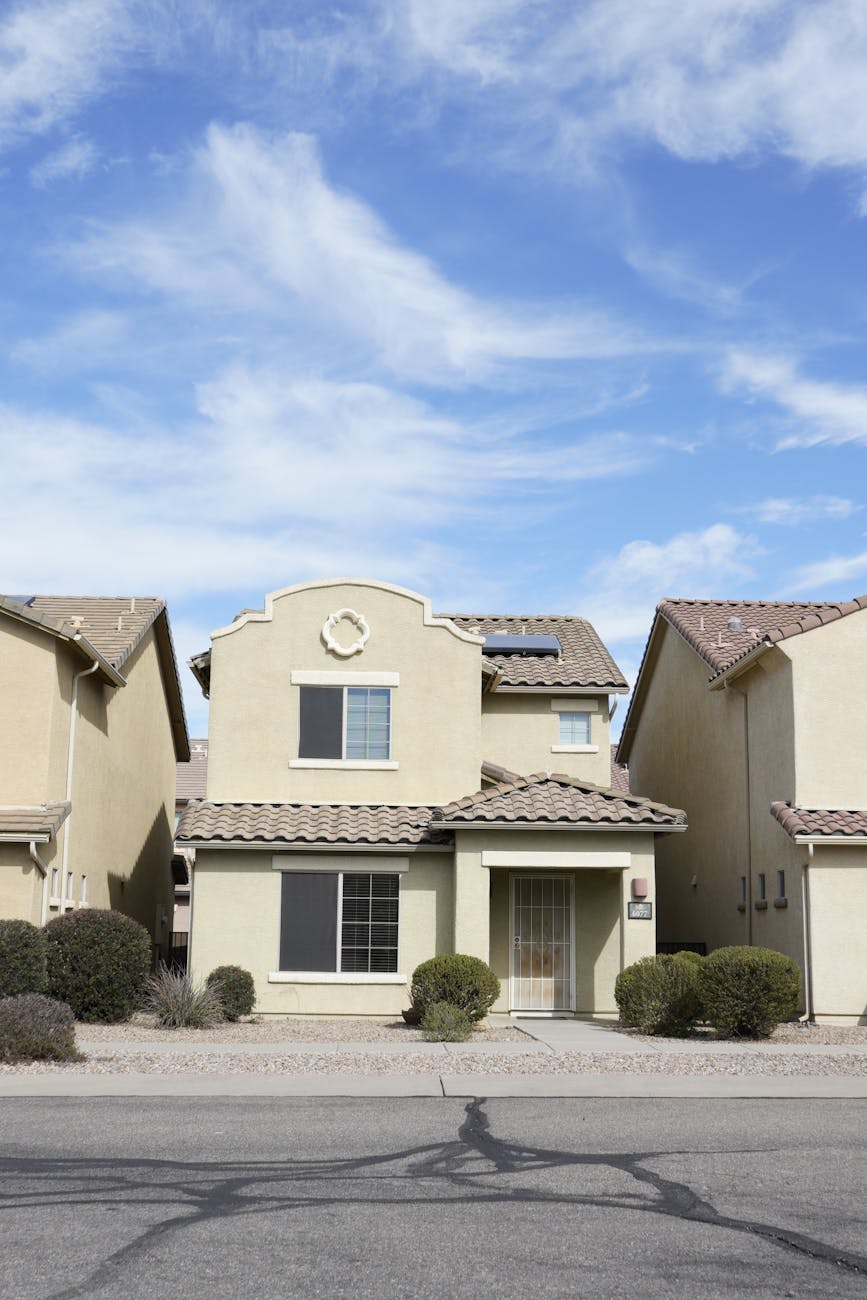
Photo by Alena Darmel on Pexels.com

The red brick Georgian Revival mansion in Winnetka made famous by the 1990 film “Home Alone” garnered much attention when it was listed on May 24 for $5.25 million — more than three times what it had sold for in 2012 to its current owners — and in a testament both to the condition of the home and the popularity of Winnetka, the mansion found a buyer just one week later.

How many houses generate this much interest when they are on the market or even when they are not? The same story above noted the number of visitors to the fictional home of the McCallisters:

A 1992 Chicago Tribune headline for a story about the home being placed on a local house walk called the mansion “a “home that’s never left alone.” Then-owner Cynthia Abendshien told the Tribune even back then that “there are a lot of people, especially children, that will knock on the door and ask to see the house.”

It’s not much different today, although the mansion now is set behind a wrought iron fence and gate. On a nice day, a visitor showing up to gawk at the mansion soon will discover that there’s company — other visitors there for the same purpose.

There are historic mansions that get a lot of visitors. Think Hearst Castle, Biltmore. Lots of communities have preserved older homes or historic preservation districts. Homes designed by well-known architects, like Frank Lloyd Wright, draw the attention of visitors.

But homes made famous by a movie? Particularly a movie aimed at kids? That when it goes on sale prompts articles by the New York Times, Architectural Digest, and the Today Show? It may be an particular confluence of when the movie was made, the way news outlets today report similar stories, and the interest people have in famous or celebrity houses. I am sure the home will be back in the news at some point, though the movie is now over 30 years old and real estate markets change.

Rolling ball machine sculptures: art and fun

I like the work of artist George Rhoads. He made “rolling ball machine sculptures” that can be found in some children’s museums and other public spaces. More about Rhoads in the image below is from the Rockford Discovery Center Museum:

What do they have? Balls moving along interesting paths, noise, color, and lots of action.

See a 1993 creation in action or this one at the Franklin Institute in Philadelphia.

Americans will watch TV where they could learn something – if it is competitive

Could the Spelling Bee bring Americans together? One commentator makes the case:

Photo by Nataliya Vaitkevich on Pexels.com

The Spelling Bee is the rare event that would get people to tune in due to word of mouth. It would become the rare communal event in 2024.

You have to watch it live.

Thursday night, the Spelling Bee went to a lightning-round tiebreaker and 12-year-old seventh grader, Bruhat Soma, came out on top.

Sounds awesome. It would’ve been fun to watch it with everyone else.

That is a tall order for the fragmented world – entertainment-wise, politically, socially, economically – of 2024.

Jeopardy! is another show that comes to mind as contestants show off their knowledge and win money. It has a good audience and show happenings can generate strong online/social media debate.

But how many shows involving learning or knowledge would Americans watch if there was not competition? Can learning itself make for compelling television?

Zillow Gone Wild is popular but how can one make money from it?

Social media users like to see unusual residences on the account Zillow Gone Wild:

Photo by cottonbro studio on Pexels.com

Since he started the account in December 2020, it has exploded into a social media phenomenon, amassing more than 4 million followers across the major social media platforms and spinning off an HGTV show that debuts next month with Mezrahi as executive producer. Throughout it all, Mezrahi’s recipe has remained mostly unchanged: Find the zaniest homes on the market – castle-themed mansions with full drawbridges, for example – then blast them out to the internet with a bit of pithy commentary, and watch the clicks, likes and shares pile up. The simplicity of the premise is part of the brilliance; it’s the result of the decade-plus that Mezrahi spent charting the internet’s fascinations as social media director for BuzzFeed.

Does all this interest in houses translate into money?

None of this, however, was enough to save Mezrahi at BuzzFeed. The now-struggling company laid him off last spring. He had survived previous cuts, “but eventually you don’t last, especially as a strategist kind of person,” Mezrahi says. Already, he’d been mulling the prospect of leaving the full-time gig to focus entirely on his personal projects. BuzzFeed simply made the choice for him…

Still, there is one thing that Mezrahi shares in common with the rest of them: He’s trying to figure out how to make more money off the internet. Aside from the HGTV executive producer credit, most of Zillow Gone Wild’s revenue comes from ads. He did one for “The Bachelor,” posting what looked like a typical listing but for the show’s famed house. PopTarts and Royal Caribbean have also paid him to promote fake listings for a house made of PopTarts, and for the new Icon of the Seas cruise ship.

But the account still brings in “very little” money, he says. He imagines a future where his newsletter has a paid classified section or where he dedicates more time to growing a YouTube audience because that platform can be the most lucrative.

Americans like houses. It helped give rise to suburbia and an decades-long emphasis on homeownership. That they are now popular on social media should not be a surprise.

It will be interesting to see how this goes in the next few years. How big can the social media audience get for this account? Would users be willing to pay for such content or special content? How much content could there be? Will a TV show lead to more opportunities or spin-offs or streaming shows? Can Zillow Gone Wild be its own brand soon with different content and products?

Setting The Matrix in Chicago – sort of

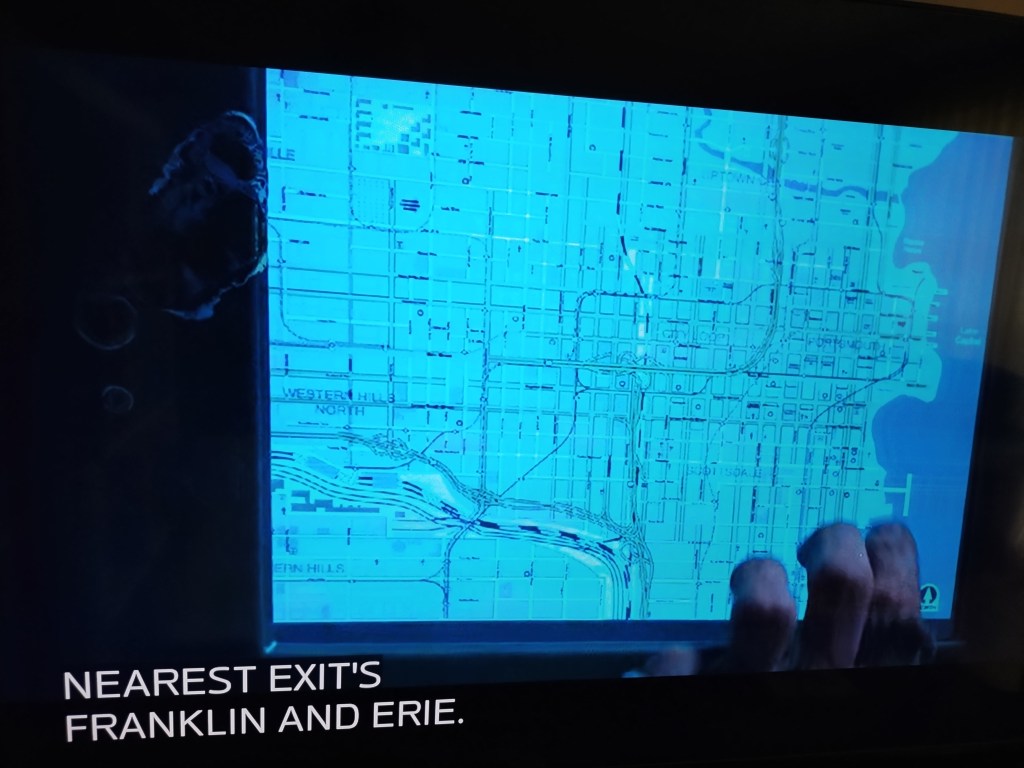
While recently rewatching The Matrix, I noticed multiple references to Chicago streets. And then there is a map in the second half of the film:

Looking closely, this is not exactly Chicago. But, the waterfront kind of looks like Chicago, there is a neighborhood on the map marked “City Loop,” the city has a river, and things do appear to converge in the district next to the waterfront.

Why the resemblance? One source suggests this is deliberate in the depiction of Mega City:

Early drafts of the screenplay identified the city as Chicago, and most of the street and landmark names referenced in the films are from Chicago,[4] such as Wabash and Lake, Franklin and Erie, State Street, Balbo Drive, Cumberland Ave, the Adams Street Bridge and the Loop Train.[5] Some street names, such as Paterson Pass and Wu Ping Ave., are derived from names of production staff.

In a brief screenshot of the first movie, wherein Tank zooms in a map on the screen to give Cypher directions to the telephone, the map of the city shows a coastline similar to that of Chicago’s Lake Michigan Coastline.

The creators have connections to Chicago:

Sure, most of the trilogy’s urban scenes were shot in Sydney, and close watchers of the first movie can spot several Sydney landmark buildings. But creators Larry and Andy Wachowski were raised in Chicago and drop at least five references in the first script…

The Wachowskis attended Whitney Young High School and spent two years in small liberal arts colleges before they each dropped out and started a construction business. Then the quirky film resume began to take shape.

This is not unusual in today’s filming of movies and shows: creators are from certain places, scenes may be shot in a variety of places, and the name of the place in the film or show may or may not align with the places that are depicted on screen. In The Matrix, a combination of modern cities produce a soulless but recognizable setting.

Depicting Chicago’s public housing residents on a 1970s sitcom

Set in Chicago’s Cabrini-Green public housing project, the TV show Good Times first aired fifty years ago:

Photo by Huu1ef3nh u0110u1ea1t on Pexels.com

This year marks the 50th anniversary of the groundbreaking Good Times sitcom on CBS, which ran until 1979. Mike Evans, who played Lionel Jeffferson in The Jeffersons, and Chicago native Eric Monte created the television show, which the legendary Norman Lear developed.

The opening credits showed an aerial view of the red towers with Chicago’s skyline in the background as its iconic gospel-tinged theme song played. Good Times was an honest depiction of a loving Black family trapped in poverty. The show never shied away from racism — whether taking on crooked Chicago politicians, critiquing the lack of jobs in African American communities or being unapologetic about racial pride. And the youngest son, endearingly dubbed the “militant midget,” aspired to be on the U.S. Supreme Court.

White American sitcoms often depicted a sanitized version of real life, a la Father Knows Best, The Donna Reed Show and The Adventures of Ozzie and Harriet. By contrast, Good Times did not…

While the show has been lauded, it also has taken in criticism over the way the family was depicted in a never-ending cycle of keeping their heads above water. Walker’s character, J.J., became the breakout character, but some saw his portrayal as playing to a negative stereotype with his signature “dynomite” line. Amos has said he was fired from the show because he spoke out against some of the stereotypical elements of the show.

Public housing is not generally popular in the United States. More popular is the ideal of owning a single-family home in the suburbs. TV networks and producers have put together an endless stream of shows depicting families living in suburban homes; fewer shows portray life in public housing. To depict people living in public housing on a show that was popular is a feat in itself.

Today, a low percentage of people in the United States live in public housing. According to the U.S Department of Housing and Urban Development, there are roughly 970,000 public housing households. What would a Good Times type show in 2024 look like in terms of depicting their experiences? In a more fractured media landscape, could such a show find a decent-sized audience?

Learning about American housing through The Sims

Playing The Sims may just offer a few lessons about housing in the United States:

Photo by Monstera Production on Pexels.com

The Sims felt like a trial run for adulthood, exploring how you’d make use of your future autonomy. Much of this validated the importance of personal space: how to lay out a room, how to choose a sofa that balanced aesthetics and comfort, how to make a house a home…

The official trailer for The Sims 4: For Rent emphasizes the potential of “multiunit life,” promising “ample opportunity … [for] eavesdropping, snooping, or even breaking and entering”—a description that instantly evoked memories of my worst roommates…

Inevitably, a lot has changed. The peaceful suburb I remembered from childhood has been replaced by elaborate “worlds” that I can (effortfully, via a loading screen) switch between to grow my property portfolios. The Sims 4 is more immersive and finely drawn, visually, than the original was, but it’s also more involved: It took me a whole afternoon to create my first Sim and set her up in her “hovel.”…

But soon my frustration (as Edith) with Jazz’s requests started to outweigh my commitment to being the Only Good Landlord. Every notification from the rental instantly provoked my impatience. Not the damn tenant again! The slow, clunky transition within the game between Edith’s home and the rental only added to my frustration and my creeping sense of Jazz as a burden. Why did this guy need so much of Edith’s energy?

With For Rent, The Sims has perhaps moved too far toward reflecting brutal reality, forcing players to choose between being on one side or the other of an often fractious and all-too-familiar power imbalance. As a child, I was drawn to The Sims as a role-play for adulthood, a world of expansive promise and possibility; playing For Rent, I was reminded, depressingly, of how the game is rigged.

The Sims is a game, a product intended to provide enjoyment for players. Can one gamify the rental experience in the United States?

More broadly, The Sims puts a home – owned or rented – at the center of the experience. The United States has a long history of celebrating the single-family home. Renting may be common in some places but it can also be treated with suspicion in other places. Players of the game can make their own choices but they are limited by what is possible in the game as well as what is possible in our society.

Anyone able to offer an analysis of housing, landlords, and properties in general across the Will Wright creations? Simcity offered a particular take as did SimTower – has this changed noticeably over the years? Are there any video games that do a different or better job of portraying property and renting?

Tax breaks and Chicago suburban locations standing in for other locations in films and TV shows

The state of Illinois offers tax breaks for filming in the state. This means the Chicago suburbs can stand in for numerous other locations:

Photo by Stephan Mu00fcller on Pexels.com

The state’s film production tax credit allows qualified productions to receive a 30% transferable tax break on most production costs and certain salaries. Producers can also receive 15% more for hiring workers living in “economically disadvantaged areas.” In return, these productions generate jobs and draw business from outside the region.

According to a new report commissioned by Dudley’s group, the state’s film incentive is the biggest box office draw for Hollywood. A survey of producers included in the report indicates more than 90% of the productions shot in Illinois would not have occurred without the incentive…

Producers of the television series “Fargo” used Elgin and other suburban locales as a stand-in for Kansas City a few years ago. Acclaimed director David Fincher turned downtown St. Charles into upstate New York for his recent Netflix film, “The Killer.” And parts of Warrenville and Lockport are used as substitutes for Manhattan, Kansas, in the HBO series “Somebody, Somewhere.”…

This commonly happens in movies and television shows: a filming location stands in for another place. This could include filming on a backlot or in another city or community.

Yet, it still is a strange experience to see a location you recognize on-screen that is supposed to be somewhere else. Imagine you live in a suburb listed above. These communities have their own history roughly 30-40 miles outside of Chicago. They exist alongside dozens of other suburbs. But, you could be watching what is supposed to be Kansas City and you recognize this suburb. Or, Manhattan, Kansas is on-screen and it happens to look like Lockport. Do these geographic switches make the on-screen presentation less real? How many people notice the disconnects?

The article also emphasizes the role of finances: tax breaks help drive where filming takes place. I assume there are also efforts to try to make sure the stand-in location looks similar to what is supposed to be depicted. Do certain suburbs make good stand-ins for all suburbs or are particular metropolitan regions good to offering the variety of locations studios might want?

Leave It to Beaver’s downtown and Skokie, Illinois

Television shows may use a variety of settings to film scenes. Given my research on suburbs depicted on television, this example struck me as it combines a famous suburban show and a Chicago suburb:

A variety of websites back up this claim (IMDB, blog). The first home in the show, what I describe as having “two stories, a one-car garage, three bedrooms, and at least two bathrooms (Bennett 1996),” was on a Universal Studios backlot. The show is often held up as an exemplar of suburban-set TV shows in the postwar era yet I noted that it “ran six seasons but never cracked the top 30” most popular TV shows.

As a fictitious show set in an unnamed community, it is interesting to consider why Skokie might have been chosen. Was there existing footage that could be used? Did someone connected to the show or studio have a personal connection to Skokie? Did Skokie represent the experiences of American suburbs at this time? Would someone watching the show then or now see this scene and connect to particular places?

Here is a similar view from Google Street View in August 2019:

The sort of construction on the right – what looks like mixed-use four-story buildings – is common in suburban downtowns where they hope that increased numbers of downtown residents will patronize local businesses and restaurants in addition to those who want to visit such locations. These streetscapes have often replaced one- to two-story structures such as those in the top image.

When I enter an American hotel room, I think I am supposed to watch TV

Hotel rooms in the United States can look different across brands and locations. However, one feature I have noticed through recent years is consistent: there is a large television mounted in a prominent location in the room.

Photo by Pixabay on Pexels.com

The primary purpose of a hotel room is sleep. It is a place to stay when away from home. It is a bedroom. The bed or beds are usually the biggest pieces of furniture of the room and take up the most square footage.

Yet, it is hard to miss how big the TV often is in hotel rooms. There is a lot of entertainment available through this TV. When I was a kid, I remember lots of hotels advertising that they had cable or particular cable channels or particular premium movie channels. This is not the case now and you can often log into your own streaming accounts through these TVs.

The design of hotel rooms suggest Americans want to continue to do what they do plenty of at home: watch TV. Perhaps this reflects what Americans have done for decades: watch hours of TV a day. Even with ubiquitous smartphones, tablets, and laptops, Americans keep watching TV whether home or away.

(Other ways to get at this topic: what percent of Americans have a television in their bedroom and how many TVs, particularly big ones, are in Airbnbs.)