Writing the best suburban stories and acknowledging real suburban life

What makes for a good suburban story? A review of one suburban memoir makes an argument of what needs to be present:

Photo by Kindel Media on Pexels.com

The best suburban stories, on the page or on-screen, are deceptively complex, affixing irony or self-knowledge to what may initially appear to be mere scathing social criticism. Take Revolutionary Road, the searing 1961 Richard Yates novel adapted to the big screen by Sam Mendes in 2008. This is the tragedy of Frank and April Wheeler (played in the film by Leonardo DiCaprio and Kate Winslet), average New Yorkers in the ’50s who move to a tree-lined Connecticut suburb to start a family and watch their dreams die. Frank commutes to the city for a sales job he loathes. April whiles away her days with the kids, forgoing whatever ambitions she might otherwise have had.

Here’s the catch: As April and Frank plan a move to Paris—where Frank will do an unspecified creative something—then retreat back into a domestic existence both tortured and predictable, it becomes clear that they would live quotidian lives no matter where they laid their heads. Paris. Connecticut. New York. The suburbs just happen to be the perfect venue for their smallness, the place where their silent scream can disappear between the hedges. In this sense, Yates’s suburban critique carries a strong whiff of irony. After all, it’s hard to blame the perfect lawns and fake smiles when you carry your misery the way a turtle carries its shell.

The only truly honest person in these suburbs is John, the adult son of the community’s busybody real estate agent. John is a mathematician who has undergone extensive shock treatment for his mental illness, a spirit stifled by his family’s shame and hyperconformity. (Michael Shannon plays him in the film and walks away with the whole thing.) John might actually be happier in Waldie’s Lakewood, where strange behavior, including obsessive hoarding, arguably becomes part of the town’s beautiful fabric, the answer to any easy assumptions of conformity…

The naked reality Waldie depicts subverts any impulse to indulge dystopian visions or Twilight Zone–like allegories. (The suburbs, incidentally, provided a feast for The Twilight Zone. Take 1960’s “The Monsters Are Due on Maple Street,” in which a bland collection of suburban neighbors, walled off from the rest of the world, become a self-immolating mob when they suspect an alien invasion.) Waldie doesn’t need such devices to conjure his uncanny suburbia. He accentuates minute details of housing and neighborhood construction—drywall, crape myrtle, layers of stucco—with philosophical musings and remembrances that sometimes cross over into the macabre. “In the suburbs,” he writes, “a manageable life depends on a compact among neighbors. The unspoken agreement is an honest hypocrisy.”

Is the suggestion here that the problems people face in the suburbs are the same sorts of problems they would face in other settings? Or that people in the suburbs are idiosyncratic just as they are elsewhere?

I wonder if the difference is that the American Dream placed a large burden on suburbs: life had to be good, not just normal. The sparkle of the new home and suburban lifestyle were not just to be settled into and lived in; it had to be the apex of American, and perhaps global, life.

On the whole, the standard of living in American suburbs is pretty high compared to historic and global settings. But, could any place easily be the promised land? It is probably not a coincidence that this book is titled Holy Land.

Cannot unsee the studio backlot, snowy Christmas commercial edition

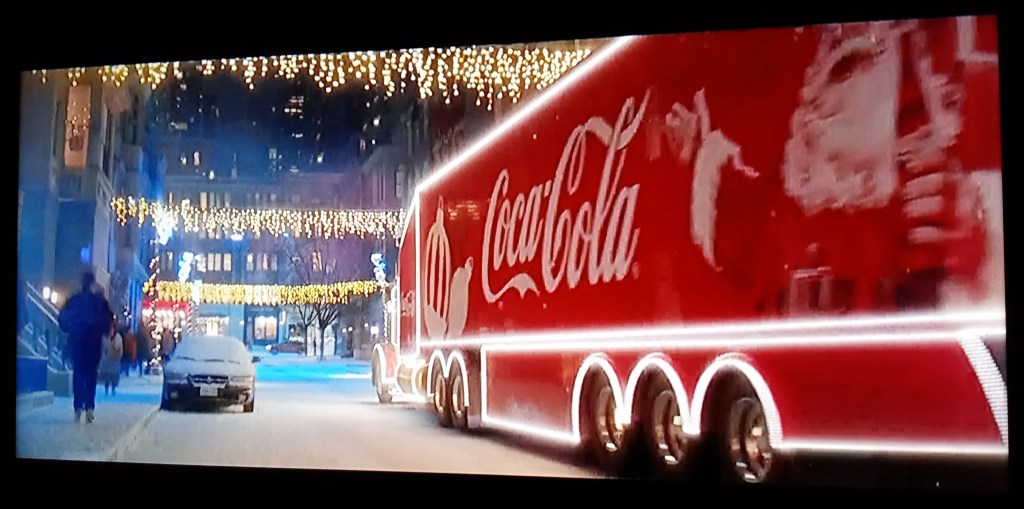
After touring several Hollywood backlots years ago, I see them pop up in many places. Here is a Coca-Cola television advertisement with a closing scene from a southern California backlot:

I am pretty sure that this scene was filmed here.

On one hand, it is exciting to be watching a film, TV show, or commercial and recognize a place. It pops out at you out of the other anonymous scenery. On the other hand, this is not a real place. It is a backlot where all sorts of “places” can be made. With some work and added elements, these backlots can look like a lot of different places.

As I have found in studying suburbs on TV shows, places are presented on screens in particular ways. It is hard to communicate the feel and experience of a place on a two-dimensional screen when the emphasis is often on a few characters. Backlots can be changed up but if you know what you are looking for, you can spot them in all sorts of displays. Or, films, shows, and commercials tend to be shot in some places and not others. With these patterns, we do not necessarily see real places or the range of places within the United States.

The wealth needed for the “Home Alone” house and life

Not everyone can live the Home Alone life:

Photo by cottonbro studio on Pexels.com

Aside from the quirkiness of this 90s film staple, another aspect of the movie that continues to captivate audiences is the question: just how rich were the McCallisters? The New York Times set out to find out by speaking with economists and professionals at the Federal Reserve. It turns out, according to the report, they were indeed rich — to the tune of being in the top 1%.

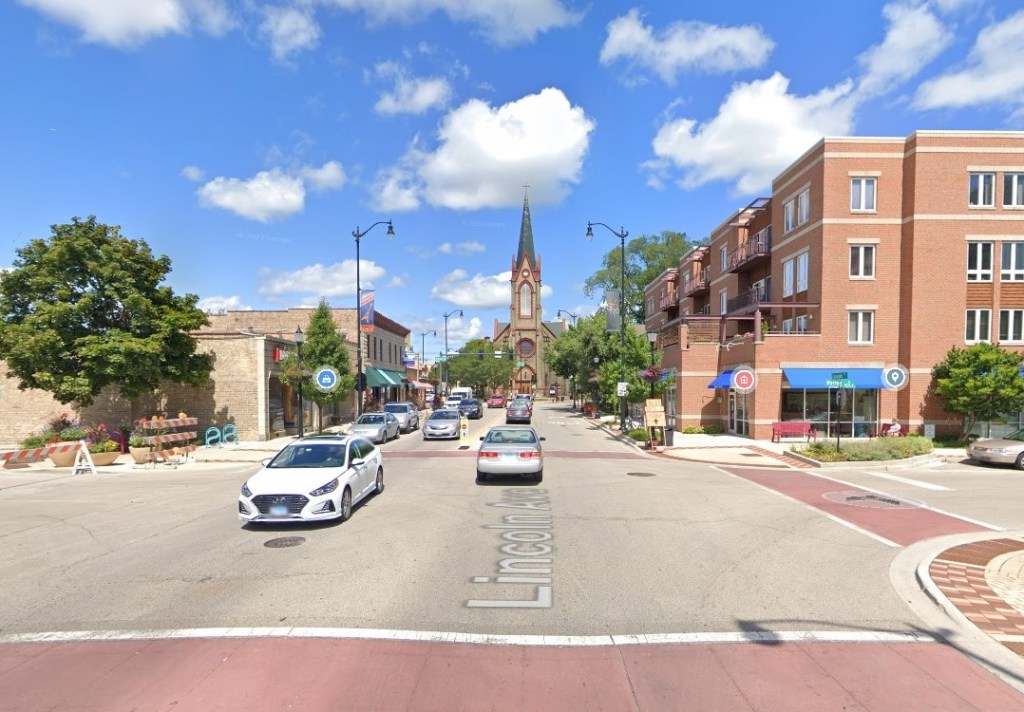
The article goes on to say that the McCallisters’ stunning home is proof of just how much money they have. The real house used for its exterior shots in the film is actually located on Lincoln Avenue in Winnetka, a Chicago suburb that happens to be one of the most expensive neighborhoods in the United States, the NY Times reports, citing Realtor.com.

At the time that the film came out in 1990, this massive Georgian-Colonial style home was affordable to only the 1%. It turns out, 32 years later, the house is still only within reach of the 1%, according to economists at the Federal Reserve Bank of Chicago, the NY Times reports. Three economists poured over data, including household incomes of the area for 1990 and 2022, the property value, mortgage rates at the time, taxes and insurance to come to this conclusion…

“In the middle of 2022, a similar house would cost about $2.4 million, based on the Zillow estimate for the ‘Home Alone’ house. A home of that value would be affordable to a household with an income of $730,000, which would be in the top 1 percent of Chicago-area households,” the economists said.

The house is key. It is large, expensive, and in a wealthy suburban neighborhood. It is not a McMansion; it is a mansion.

Can you have madcap Christmas capers that end well without a large expensive house? I would guess that an analysis of houses depicted in Christmas movies would show they tend to be larger than normal – this is common in movies and television.

Imagine Home Alone in a 1,000 square foot 1950s ranch home or a 1 bedroom apartment. Would it be better? Significantly different?

Barbie could only live in the Los Angeles region

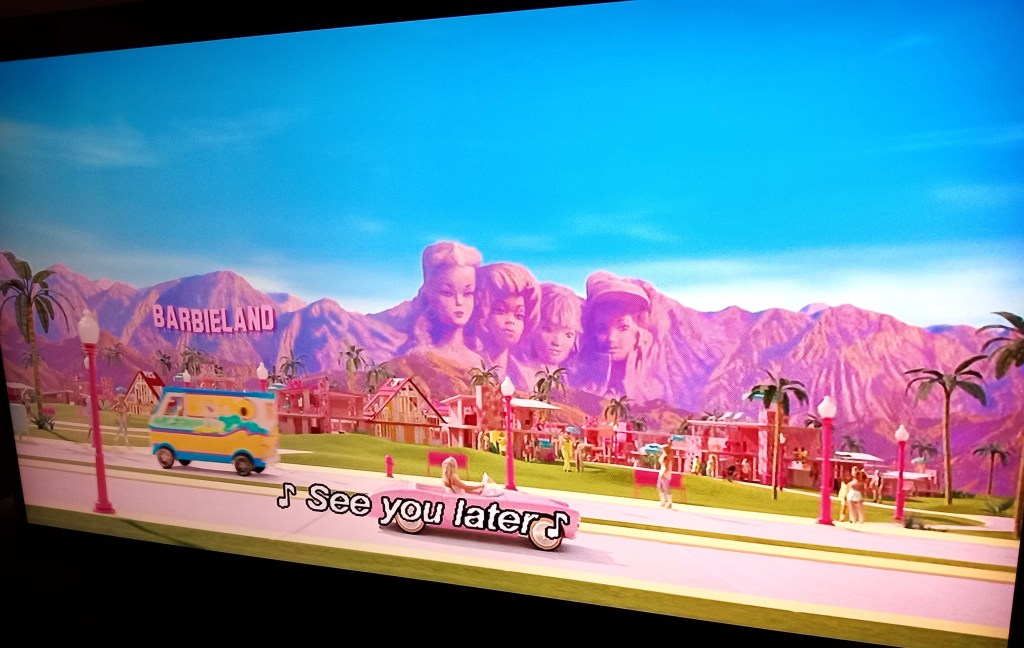
Barbie is one of the most famous toys and she resides near Los Angeles. Could she live anywhere else? I pondered this when seeing Barbie:

This scene, along with others in the movie, firmly place Barbie in and around Los Angeles. There are palm trees. Beach scenes along the ocean and boardwalk. The mountains looming in the background. A replacement for the “Hollywood” sign. Her dreamhouse is in Malibu.

Could Barbie live in other locations? How about Manhattan Barbie? Atlanta Barbie? Omaha Barbie? These are harder to imagine. Barbie has a lifestyle tied to a postwar vision of the American Dream exemplified by life in Los Angeles. She was not alone; TV shows endlessly showed life in southern California, Disneyland first opened there, and sprawling suburbia became a model.

A new city and/or region could become the marker of a new era and new toys. Perhaps Houston? A different city that will grow rapidly and look different or exhibit different patterns of life and development?

Did certain sitcoms change American society – and how would we know?

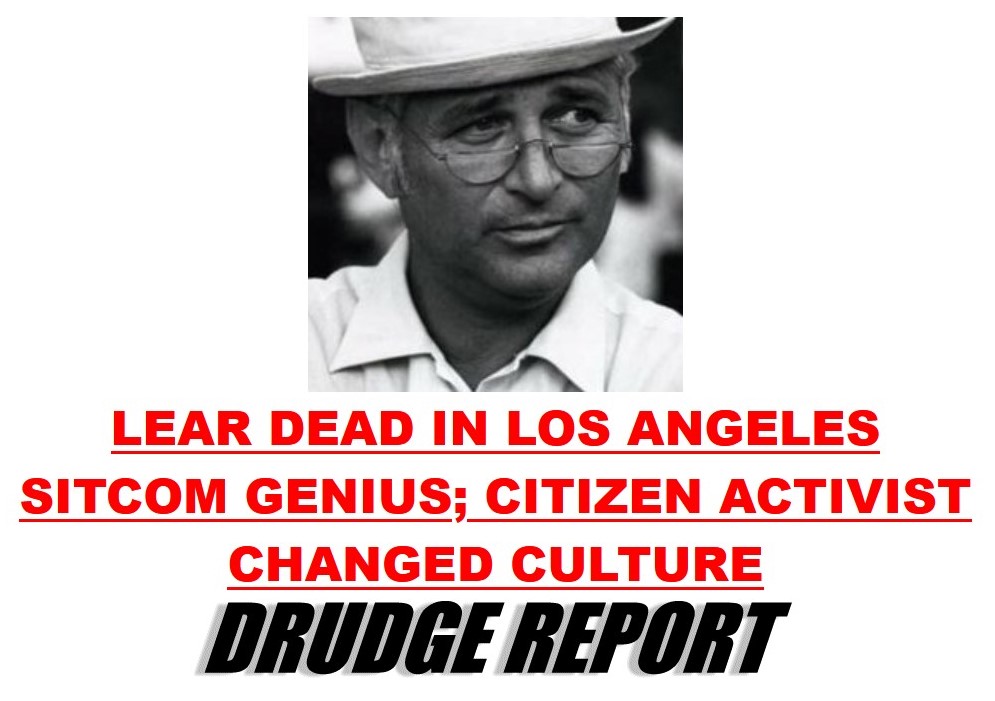
Did Norman Lear change American culture through the television shows he created? Here is one headline hinting at this:

From the linked article, here are some of the ways Lear was influential:

Lear had already established himself as a top comedy writer and captured a 1968 Oscar nomination for his screenplay for “Divorce American Style” when he concocted the idea for a new sitcom, based on a popular British show, about a conservative, outspokenly bigoted working-class man and his fractious Queens family. “All in the Family” became an immediate hit, seemingly with viewers of all political persuasions.

Lear’s shows were the first to address the serious political, cultural and social flashpoints of the day – racism, abortion, homosexuality, the Vietnam war — by working pointed new wrinkles into the standard domestic comedy formula. No subject was taboo: Two 1977 episodes of “All in the Family” revolved around the attempted rape of lead character Archie Bunker’s wife Edith.

Their fresh outrageousness turned them into huge ratings successes: For a time, “Family” and “Sanford,” based around a Los Angeles Black family, ranked No. 1 and No. 2 in the country. “All in the Family” itself accounted for no less than six spin-offs. “Family” was also honored with four Emmys in 1971-73 and a 1977 Peabody Award for Lear, “for giving us comedy with a social conscience.” (He received a second Peabody in 2016 for his career achievements.)

Some of Lear’s other creations played with TV conventions. “One Day at a Time” (1975-84) featured a single mother of two young girls as its protagonist, a new concept for a sitcom. Similarly, “Diff’rent Strokes” (1978-86) followed the growing pains of two Black kids adopted by a wealthy white businessman.

Other series developed by Lear were meta before the term ever existed. “Mary Hartman, Mary Hartman” (1976-77) spoofed the contorted drama of daytime soaps; while the show couldn’t land a network slot, it became a beloved off-the-wall entry in syndication. “Hartman” had its own oddball spinoff, “Fernwood 2 Night,” a parody talk show set in a small Ohio town; the show was later retooled as “America 2-Night,” with its setting relocated to Los Angeles…

One of Hollywood’s most outspoken liberals and progressive philanthropists, Lear founded the advocacy group People for the American Way in 1981 to counteract the activities of the conservative Moral Majority.

The emphasis here is on both television and politics. Lear created different kinds of shows that proved popular as they promoted particular ideas. He also was politically active for progressive causes.

How might we know that these TV shows created cultural change? Just a few ways this could be established:

-How influential were these shows to later shows and cultural products? How did television shows look before and after Lear’s work?

-Ratings: how many people watched?

-Critical acclaim: what did critics think? What did his peers within the industry think? How do these shows stand up over time?

But, the question I might want to ask is whether we know how the people who watched these shows – millions of Americans – were or were not changed by these minutes and hours spent in front of the television. Americans take in a lot of television and media over their lifetime. This certainly has an influence in the aggregate. Do we have data and/or evidence that can link these shows to changed attitudes and actions? My sense is that is easier to see broad changes over time but harder to show more directly that specific media products led to particular outcomes at the individual (and sometimes also at the social) level.

These are research methodology questions that could involve lots of cultural products. The headline above might be supportable but it could require putting together multiple pieces of evidence and not having all the data we could have.

Do Christmas movies avoid McMansions?

What kinds of homes are featured in Christmas movies? One article suggests McMansions are rarely featured:

Photo by Kristina Paukshtite on Pexels.com

Have you noticed that holiday movies are already streaming? And have you noticed the homes? They’re built for families who enjoy being together.

Rarely opulent “McMansions,” the homes featured in holiday family movies run the gamut from the family cabin in the woods to a stately family home that has been passed down through the generations.

The suggestion here is that the features of McMansions are not well-suited for these films. Here are some traits that might not work. Lots of square footage means family members are not around each other regularly. Unusual architectural features or interior designs do not look like traditional homes. A giant house on a small lot or looming over other homes does not appear friendly.

In contrast, a “good” home for a Christmas movie will be cozy, traditional in architecture and design, and present a particular appearance from the outside. The home might be tied to particular styles from the Victorian era through the mid-twentieth century when many Christian traditions and themes emerged in the Anglo-American sphere.

Given the way McMansions are treated in artistic endeavors, perhaps a McMansions could serve as the setting for a dystopian or black comedy Christmas film.

Who sings of suburbs? Taylor Swift in “Suburban Legends”

On her latest release, 1989 (Taylor’s Release), Taylor Swift has a new song involving suburban life:

Here are the lyrics from the second time through the chorus:

I didn’t come here to make friends
We were born to be suburban legends
When you hold me, it holds me together
And you kiss me in a way that’s gonna screw me up forever
I know that you still remember
We were born to be national treasures
When you told me we’d get back together
And you kissed me in a way that’s gonna screw me up forever

The song describes an ill-fated suburban romance. The main character imagines walking into a high school reunion and surprising former classmates with the person they are with.

What exactly makes the song suburban? This is less clear. A powerful romance that ends in heartbreak and wistfulness could take place in a number of American settings, including suburbs. Is this connected to suburban youth? It is about suburbanites looking back on a more exciting time of life? Does a flashy young romance in a suburb make them suburban legends?

Given that more than 50% of Americans live in suburbs, perhaps there are many people who could identify with these sentiments and certainly plenty of suburbanites who like Taylor Swift.

(See an earlier post about music and suburbs.)

The Simpsons encounter a teardown McMansion

The Simpsons have new neighbors in Season 35 episode 3, “McMansion and Wife.” They get to know each other and enjoy spending time together. But, then the neighbors go from a modest home to a teardown McMansion:

As the new home is under construction, it is called a “reno” and then a “do-over.” Then it turns into a giant home. By my count, the teardown is 3-4 stories, is much bigger in terms of square feet and height as it towers over the Simpsons’ home, and has a mishmash of architectural features. The Simpsons live in a modest suburban home by today’s standards.

This story of a teardown McMansion within an established neighborhood is a common story across the United States. The new home can be considered disruptive by some neighbors even as others might defend the ability of property owners to do what they wish with their home and land and benefit from those changes.

One possible twist this episode briefly explores is the relationship between neighbors in these positions. Can they be friends? Can someone moving into a neighborhood build relationships and soften the blow of tearing down a house and constructing something much bigger on the same spot? Or, do teardowns usually lead to conflict between neighbors?

Finding horror spots in the Chicago suburbs

Some suburbanites in the Chicago region believe there are unexplainable and spooky things happening:

Photo by Daisy Anderson on Pexels.com

Spirits are high in Naperville from apparitions including deceased janitor “Yellow Boots” who supposedly lives in North Central College’s Pfeiffer Hall and lovers Charles Hillegas and Jessie Robateene who are said to roam the historic area…

A heartbroken Hillegas horrified the town by digging up Robateene’s grave at Naperville Cemetery in hopes of reviving her with a potion. Franz said he learned about the romance from the deceased couple themselves. With help from a specialized recorder, “they were very talkative and told us the whole story,” he said…

Shoe Factory Road

The scenic route in Hoffman Estates once housed the historical Charles Lindbergh Schoolhouse, purported to be haunted although that could be pegged to teenagers who rendezvoused there. Also adding to the road’s mystique is an unsolved triple murder at a farmhouse where Earl Teets, his wife Elizabeth, and their son Gary were found shot to death in 1979…

Both the Woodstock Opera House and the Genesee Theatre in Waukegan are known for supposed paranormal drama. In Woodstock, it’s “Elvira,” a performer who leapt from the opera’s tower when she didn’t get a part and now is said to sit in the audience. Meanwhile, the Genesee celebrates its spookiness, which includes disembodied barking, with an annual “Ghost Wauk.”

Just like horror films set in the suburbs, these stories go against the grain of what suburbia often appears to be: a place where families and households achieve success. If there are ghosts and memories of crime, the idyll of happy suburban single-family home life is broken.

Could such stories help suburbanites recognize the good things in their communities? Supernatural happenings could be destabilizing but they may also serve residents in that they could be reminded that these things typically do not happen.

How might an enterprising suburb or organization capitalize on these supernatural sightings throughout the entire year? October is an obvious time to link these together. However, is there enough interest in the Chicago area to pursue this all year round?

Finally, I wonder how the number of stories told in the Chicago suburbs compares to other suburban areas in the United States. Are there certain metropolitan regions that have more supernatural happenings?

So long to the long tail of movies

Netflix, once the purveyor of many movie options, now has a much more restricted catalog:

Photo by Anastasia Shuraeva on Pexels.com

In the early years of the new millennium, internet theorists and tech startups were fixated on the long tail, the idea, popularized by a 2004 Wired article and subsequent book, that on-demand manufacturing and digital distribution would disrupt the winner-take-all logic of monopoly capitalism and allow businesses to profit by making a nigh-infinite variety of products available to any audience, no matter how small. You could sell one book to a million people, but you could also sell them a million different books, especially once you were freed from the storage constraints of a brick-and-mortar store. The problem is that this theory, that “the future of business is selling less of more,” turned out to be, at least in some cases, almost exactly wrong. Faced with the internet’s overwhelming range of choices, people retreat to the familiar, or flock to the latest TikTok trend. In a 2018 study, researchers found that increasing the number of available movies by a mere 1,000 titles decreased the market share occupied by the bottom 1 percent of DVDs—the ones the long-tail effect should benefit most—by more than 20 percent. Faced with even more options, people just gave up entirely. “When instead of 20,000 DVDs you can choose from 50,000 or 100,000 or 1 million,” the study’s co-author, Wharton professor Serguei Netessine, explained, “what happens is demand for all movies goes down.”…

Netflix won’t say how many movies are on the service at any given time, but estimates put it at fewer than 4,000, less than a hundredth of the vast universe it once provided. Where Netflix’s disc-by-mail service promised you could watch anything you wanted, its streaming incarnation merely promises that you’ll always be able to watch something. In the DVD era, Netflix’s queue would not only show you what was available but what wasn’t—if a disc ended up lost or damaged, the title would be grayed out and it would sink to the bottom of the page. But if a title on your list leaves the site, as dozens do every month, it just disappears: off of Netflix, out of mind. I rarely look at my list at all these days, but when I do, I’m vaguely annoyed that it’s full of things I’ve already watched, as if one time through Army of the Dead wasn’t enough. It’s no longer an agenda, something to be meticulously arranged and checked off one item at a time. (The cinephiles have Letterboxd for that now.) It’s just a pile of stuff.

When Hollywood’s legacy conglomerates launched their own streaming services in 2020, they followed Netflix’s initial model: one low price for a mountain of content. For less than $10 a month, you could access every movie Disney ever made, plus all the Marvels and NatGeo specials you could stuff your eyeballs with. Twice that, and HBO Max would serve up a vast trove of Hollywood history, from Batman to Casablanca, not to mention Game of Thrones and Friends. But they followed Netflix’s arc at an accelerated clip. Two and a half years after HBO Max launched, it started pulling down titles by the fistful, and six months later, Disney+ and Hulu followed suit. “This whole idea of warehousing content on Max, on a streaming platform, in retrospect is incomprehensible,” the CFO of HBO’s parent company, Warner Bros. Discovery, recently told investors. “A small percentage of titles really drives the vast majority of viewership and engagement.” Any title outside that small percentage is at risk of being removed, and while a movie or a TV show that went off the air might once have still been available on disc at your local video store, now, not even the people who create the content own their own copies.

The unchecked sluice of streaming can make it seem like you’ll never run out of things to watch, but that doesn’t mean you can watch anything you want to. When the director William Friedkin died last month, many people were unpleasantly surprised to find his cult favorite To Live and Die in L.A. unavailable to stream at any price, even as a digital rental or purchase. The movie is available on Blu-ray, but while Netflix once had a copy in its library of discs, they didn’t in August. (My local library, at least, does.) In the streaming era, we’ve come to accept such artistic lacunae as a way of life, and if To Live and Die in L.A. isn’t available, you can still watch The Exorcist and The French Connection—not to mention Sorcerer and Cruising and Killer Joe. How much William Friedkin does one person need, anyway?

This sounds like the ongoing issue facing the culture industries: how do they know what will be a hit and which products generate the most interest and money? In the world of movies, TV shows, books, music, and similar media, it is hard to know what viewers, readers, and consumers might find worth their time. Thus, these industries produce hundreds and thousands of options each year. A small group will generate a lot of money and help make the rest of the production possible.

Netflix offered a different possibility: the ability to profit from the edges of the catalog. By being the place where movie viewers could find particular options, they could offer a unique product. Other Internet-based companies, such as Amazon, could offer similar opportunities.

But it sounds like Netflix does not think it profits enough from the long tail. The goal is to make a smaller catalog available and focus on finding the big hits. If this is the plan moving forward, the culture industries continue on a long term path: try to crack the code on what becomes a hit and funnel resources to similar products.