The endless search for water in the (fictionalized) origin story of Los Angeles

The movie Chinatown highlights the ways acquiring water helped Los Angeles grow and hints at what may need to happen for the city and region to keep growing:

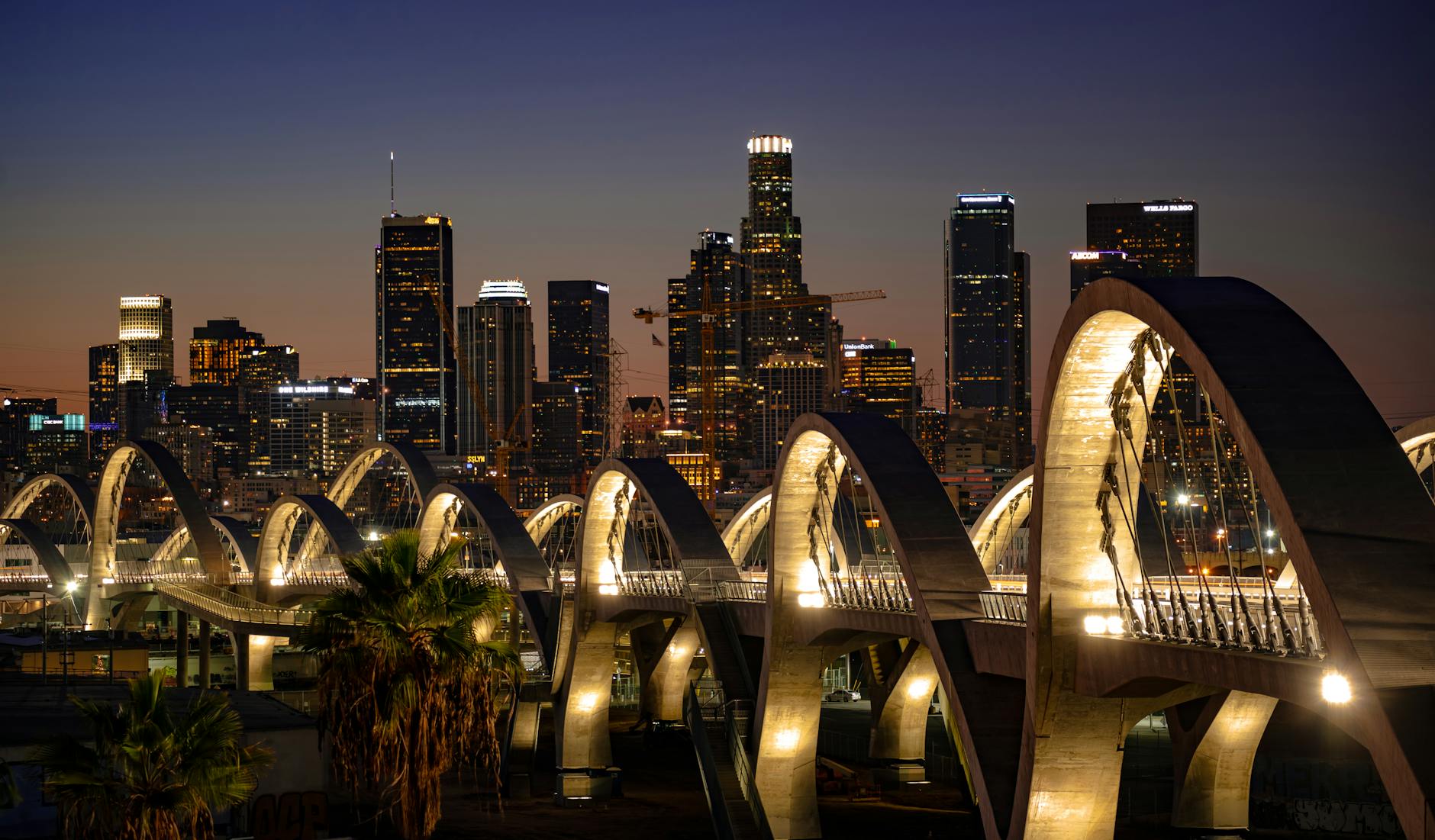
Photo by Soly Moses on Pexels.com

If Chinatown’s ending forces the audience to sit in a feeling of hopelessness, it should also disturb anyone invested in Los Angeles’s future. The history of water in 20th-century California was defined by mammoth feats of engineering and an enduring belief that someone like Mulholland would eventually come along and enable the impossible. Each new dam or aqueduct only guaranteed the arrival of the next one—the population growth allowed by Mulholland’s aqueduct, for example, later resulted in L.A. tapping other water sources, such as the Colorado River. California has had a few good years of rain recently, but the long-term sustainability of the state’s water supply depends on collective conservation efforts: drastically reducing the amount of water used by Big Agriculture, moderating suburban tasks such as watering lawns, regulating the state’s groundwater.

“There is no more water to capture with big projects. There just isn’t. The future is really about much smarter water management,” Stephanie Pincetl, a UCLA professor who specializes in urban policy and the environment, told me. Conservation measures, she argues, are the way forward even if politicians wish they could stump for some grand technological innovation the way their 20th-century predecessors did: “The approach to the 21st century has to be a lot more subtle, a lot more place-based, and a lot more guided by the realization that water is a scarce resource, and so we need to treat it like a scarce resource.”

Finding water in Los Angeles, the Southwest, the West, and the United States more broadly may become more paramount in the coming decades. Which cities and regions would do well in competing for water? Would a lack of water in some places lead to growing populations in places with plenty of water?

While we are at it, why not tell more exciting stories in these categories:

  1. Origin stories of modern places. Take any of the big cities in the United States and put its origin story in a movie or a miniseries. How about the rise of Phoenix?
  2. It would be interesting to popularize more stories about water and other necessary resources in daily life. How about a thrilling tale about concrete? It is hard to imagine modern life without out. Or air conditioning. Can’t have a lot of the global development of the last century without it. Or salt. Where do we get all this salt in our daily lives from?

If Chinatown can entertain and inform about place, why not engage in more storytelling that explains where places have come from and where they might be going?

Three thoughts on pop/rock music about the suburbs

I enjoyed thinking this week about pop and rock music about the suburbs. As I considered the music of Malvina Reynolds, the Beatles, Ben Folds, Arcade Fire, and Olivia Rodrigo, several thoughts come to mind:

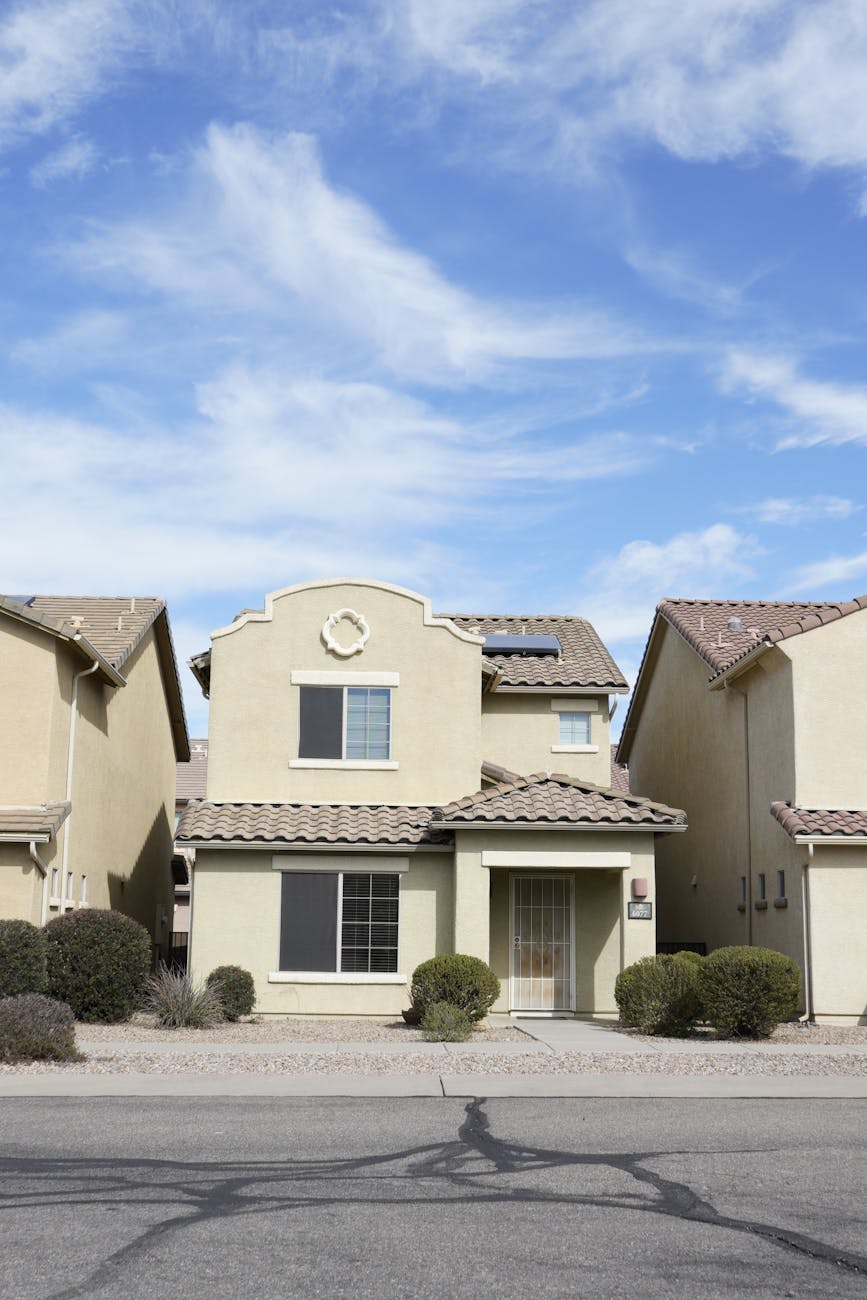
Photo by Edward Eyer on Pexels.com
  1. These genres do not often write directly about the suburbs. They may tell stories about people and situations based in suburbia but the role of suburban places is minimized. Many popular songs do not say anything about where they take place geographically.
  2. Finding songs that portray suburbia in a positive light is difficult. Surely they exist. Perhaps they do not become as well-known? Perhaps music artists tend to associate suburbia with negative traits? Perhaps other genres do this differently?
  3. At the same time, there is plenty about suburban life that could make for compelling music. Millions of Americans, including many musicians, have experience this life. The songs profiled this week included looks at houses, daily routines, remembering childhood, listening to music, driving, and relationships. For all the reasons Americans love suburbs, why not tackle those themes? (I realize it might be hard to write about suburban local government but I am guessing it could be – and probably already has – been done.)

I will keep listening for music that references and is about specific places. This includes the suburbs but also cities and rural areas as place could be a fascinating topic for a new single or album or bonus track.

Ben Folds and “Rockin’ the Suburbs”

In 2001, Ben Folds released an album and song with the same name critiquing suburban life. From the chorus of “Rockin’ the Suburbs“:

Photo by Njukeng George Njukeng on Pexels.com

I’m rockin’ the suburbs
Just like Michael Jackson did
I’m rockin’ the suburbs
Except that he was talented

The song pokes fun at “being male, middle-class, and white” as the protagonist angrily goes through life. Folds highlights one group of suburbanites – what would he do with the increasingly complex suburbia?

Folds suggested the song was done in the style of two groups popular at the time:

The song parodies Korn and Rage Against the Machine. Folds stated of the song “I am taking the piss out of the whole scene, especially the followers.”[1]

This reminds me of a sidewalk square nearby in suburbia that immortalizes “Korn.” Both groups provided music and lyrics that could be used to express discontent about a suburban America.

Arcade Fire and recalling growing up in the suburbs

In 2010, Arcade Fire released the single “The Suburbs” which shared the same name as their third album. This song references growing up in the suburbs – here is what is in verse two:

Photo by KoolShooters on Pexels.com

The kids want to be so hard
But in my dreams, we’re still screaming
And running through the yard
And all of the walls that they built in the seventies finally fall
And all of the houses they built in the seventies finally fall
Meant nothing at all
Meant nothing at all, it meant nothing

By the early 2000s, millions of Americans had grown up in suburbs. What was that childhood like? How could it be put into music?

Whether related to their artistry or their view of the suburbs decades later, The Suburbs may be the most decorated music album about suburbia:

The album debuted at No. 1 on the Irish Albums Chart, the UK Albums Chart, the US Billboard 200 chart,[4] and the Canadian Albums Chart.[5] It won Album of the Year at the 2011 Grammy Awards, Best International Album at the 2011 BRIT Awards, Album of the Year at the 2011 Juno Awards, and the 2011 Polaris Music Prize for best Canadian album. Two weeks after winning Grammy’s Album of the Year, the album jumped from No. 52 to No. 12 on the Billboard 200, the album’s highest ranking since August 2010.[6]

One interesting note: the group is Canadian but The Suburbs is based on growing up outside of Houston. How does this mixing of experiences change their interpretation of suburbia?

Folk music about the “little boxes” of suburbia

The folk song “Little Boxes” written by Malvina Reynolds in 1962 and popularized by a Pete Seeger recording released in 1963 captured some of the concerns about growing suburbs in the United States. The first verse speaks to the song’s message:

Photo by Andy Vuknic on Pexels.com

Little boxes on the hillside
Little boxes made of ticky tacky
Little boxes on the hillside
Little boxes all the same

The rest of the song then describes the people who live in these homes and the ways they follow the same paths.

This song borrows the imagery of new suburban construction – a lot of similar looking homes (“little boxes”) emerging out of open spaces outside cities – to argue the communities and people within are falling into patterns of conformity. This was a common argument in the 1950s and 1960s: suburbanites thought they were achieving the American Dream but they were really getting a dull and common life. Instead of becoming individuals or households that had made it, they were sold a bill of goods.

Even as Seeger’s song became a hit (reaching #70 on the charts), many Americans did not appear to be swayed by this song. They continued to move to the suburbs in large numbers for subsequent decades. Perhaps they might even admit there is conformity in the suburbs in the houses and social life – and they might be okay with that.

The Home Alone house as one of the most newsworthy houses in America?

I saw the news: the Home Alone house has been sold.

Photo by Alena Darmel on Pexels.com

The red brick Georgian Revival mansion in Winnetka made famous by the 1990 film “Home Alone” garnered much attention when it was listed on May 24 for $5.25 million — more than three times what it had sold for in 2012 to its current owners — and in a testament both to the condition of the home and the popularity of Winnetka, the mansion found a buyer just one week later.

How many houses generate this much interest when they are on the market or even when they are not? The same story above noted the number of visitors to the fictional home of the McCallisters:

A 1992 Chicago Tribune headline for a story about the home being placed on a local house walk called the mansion “a “home that’s never left alone.” Then-owner Cynthia Abendshien told the Tribune even back then that “there are a lot of people, especially children, that will knock on the door and ask to see the house.”

It’s not much different today, although the mansion now is set behind a wrought iron fence and gate. On a nice day, a visitor showing up to gawk at the mansion soon will discover that there’s company — other visitors there for the same purpose.

There are historic mansions that get a lot of visitors. Think Hearst Castle, Biltmore. Lots of communities have preserved older homes or historic preservation districts. Homes designed by well-known architects, like Frank Lloyd Wright, draw the attention of visitors.

But homes made famous by a movie? Particularly a movie aimed at kids? That when it goes on sale prompts articles by the New York Times, Architectural Digest, and the Today Show? It may be an particular confluence of when the movie was made, the way news outlets today report similar stories, and the interest people have in famous or celebrity houses. I am sure the home will be back in the news at some point, though the movie is now over 30 years old and real estate markets change.

Rolling ball machine sculptures: art and fun

I like the work of artist George Rhoads. He made “rolling ball machine sculptures” that can be found in some children’s museums and other public spaces. More about Rhoads in the image below is from the Rockford Discovery Center Museum:

What do they have? Balls moving along interesting paths, noise, color, and lots of action.

See a 1993 creation in action or this one at the Franklin Institute in Philadelphia.

Americans will watch TV where they could learn something – if it is competitive

Could the Spelling Bee bring Americans together? One commentator makes the case:

Photo by Nataliya Vaitkevich on Pexels.com

The Spelling Bee is the rare event that would get people to tune in due to word of mouth. It would become the rare communal event in 2024.

You have to watch it live.

Thursday night, the Spelling Bee went to a lightning-round tiebreaker and 12-year-old seventh grader, Bruhat Soma, came out on top.

Sounds awesome. It would’ve been fun to watch it with everyone else.

That is a tall order for the fragmented world – entertainment-wise, politically, socially, economically – of 2024.

Jeopardy! is another show that comes to mind as contestants show off their knowledge and win money. It has a good audience and show happenings can generate strong online/social media debate.

But how many shows involving learning or knowledge would Americans watch if there was not competition? Can learning itself make for compelling television?

Zillow Gone Wild is popular but how can one make money from it?

Social media users like to see unusual residences on the account Zillow Gone Wild:

Photo by cottonbro studio on Pexels.com

Since he started the account in December 2020, it has exploded into a social media phenomenon, amassing more than 4 million followers across the major social media platforms and spinning off an HGTV show that debuts next month with Mezrahi as executive producer. Throughout it all, Mezrahi’s recipe has remained mostly unchanged: Find the zaniest homes on the market – castle-themed mansions with full drawbridges, for example – then blast them out to the internet with a bit of pithy commentary, and watch the clicks, likes and shares pile up. The simplicity of the premise is part of the brilliance; it’s the result of the decade-plus that Mezrahi spent charting the internet’s fascinations as social media director for BuzzFeed.

Does all this interest in houses translate into money?

None of this, however, was enough to save Mezrahi at BuzzFeed. The now-struggling company laid him off last spring. He had survived previous cuts, “but eventually you don’t last, especially as a strategist kind of person,” Mezrahi says. Already, he’d been mulling the prospect of leaving the full-time gig to focus entirely on his personal projects. BuzzFeed simply made the choice for him…

Still, there is one thing that Mezrahi shares in common with the rest of them: He’s trying to figure out how to make more money off the internet. Aside from the HGTV executive producer credit, most of Zillow Gone Wild’s revenue comes from ads. He did one for “The Bachelor,” posting what looked like a typical listing but for the show’s famed house. PopTarts and Royal Caribbean have also paid him to promote fake listings for a house made of PopTarts, and for the new Icon of the Seas cruise ship.

But the account still brings in “very little” money, he says. He imagines a future where his newsletter has a paid classified section or where he dedicates more time to growing a YouTube audience because that platform can be the most lucrative.

Americans like houses. It helped give rise to suburbia and an decades-long emphasis on homeownership. That they are now popular on social media should not be a surprise.

It will be interesting to see how this goes in the next few years. How big can the social media audience get for this account? Would users be willing to pay for such content or special content? How much content could there be? Will a TV show lead to more opportunities or spin-offs or streaming shows? Can Zillow Gone Wild be its own brand soon with different content and products?

Setting The Matrix in Chicago – sort of

While recently rewatching The Matrix, I noticed multiple references to Chicago streets. And then there is a map in the second half of the film:

Looking closely, this is not exactly Chicago. But, the waterfront kind of looks like Chicago, there is a neighborhood on the map marked “City Loop,” the city has a river, and things do appear to converge in the district next to the waterfront.

Why the resemblance? One source suggests this is deliberate in the depiction of Mega City:

Early drafts of the screenplay identified the city as Chicago, and most of the street and landmark names referenced in the films are from Chicago,[4] such as Wabash and Lake, Franklin and Erie, State Street, Balbo Drive, Cumberland Ave, the Adams Street Bridge and the Loop Train.[5] Some street names, such as Paterson Pass and Wu Ping Ave., are derived from names of production staff.

In a brief screenshot of the first movie, wherein Tank zooms in a map on the screen to give Cypher directions to the telephone, the map of the city shows a coastline similar to that of Chicago’s Lake Michigan Coastline.

The creators have connections to Chicago:

Sure, most of the trilogy’s urban scenes were shot in Sydney, and close watchers of the first movie can spot several Sydney landmark buildings. But creators Larry and Andy Wachowski were raised in Chicago and drop at least five references in the first script…

The Wachowskis attended Whitney Young High School and spent two years in small liberal arts colleges before they each dropped out and started a construction business. Then the quirky film resume began to take shape.

This is not unusual in today’s filming of movies and shows: creators are from certain places, scenes may be shot in a variety of places, and the name of the place in the film or show may or may not align with the places that are depicted on screen. In The Matrix, a combination of modern cities produce a soulless but recognizable setting.