Can one property help highlight the changes in Naperville, Illinois in the last century? I ran into this news item first published May 30, 1946 in The Naperville Sun:
The Moser Fuel and Supply company has just completed the first new house to be built in Naperville since the outbreak of the war in 1941. This “No. 1” house, as it is referred to by Moser employees, is at 417 S. Sleight St., and is a little dream in brick veneer with chocolate-color mortar. Ten other Moser houses are going up around No. 1, eight of which are in the 400 block of south Sleight Street and two on South Wright Street.
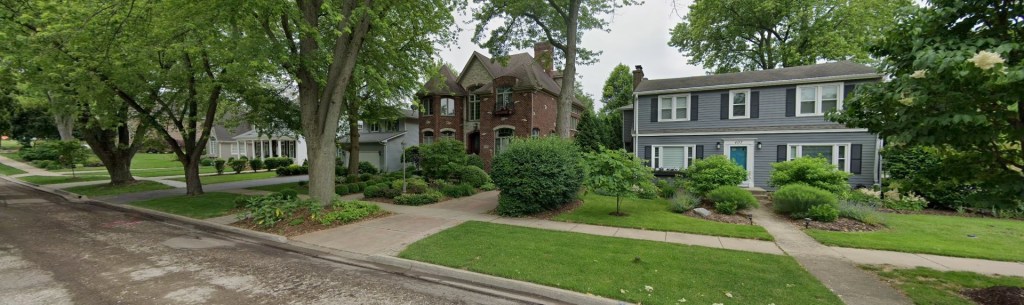
According to multiple real estate websites, the current house on the property was constructed in 2004 and is worth over $1 million. Here is a June 2019 Google Street View image of the block, including the newer home on the property:
Several patterns worth noting:
-Naperville was a different place after World War Two: much smaller in population, lots of farms and agriculture around.
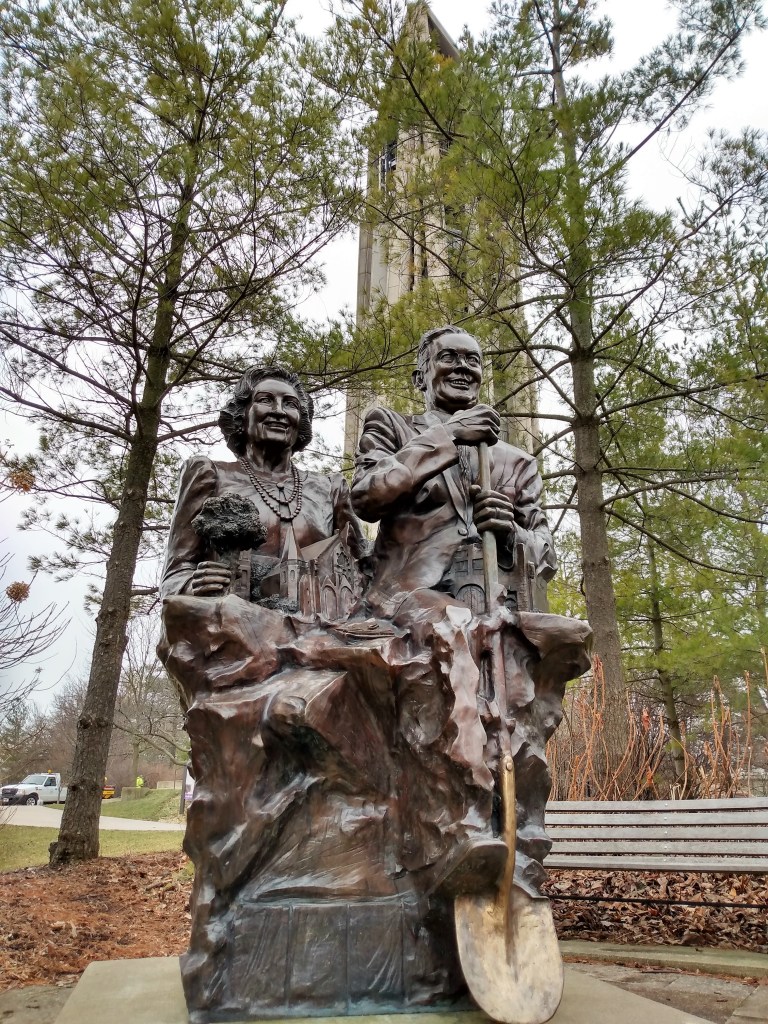
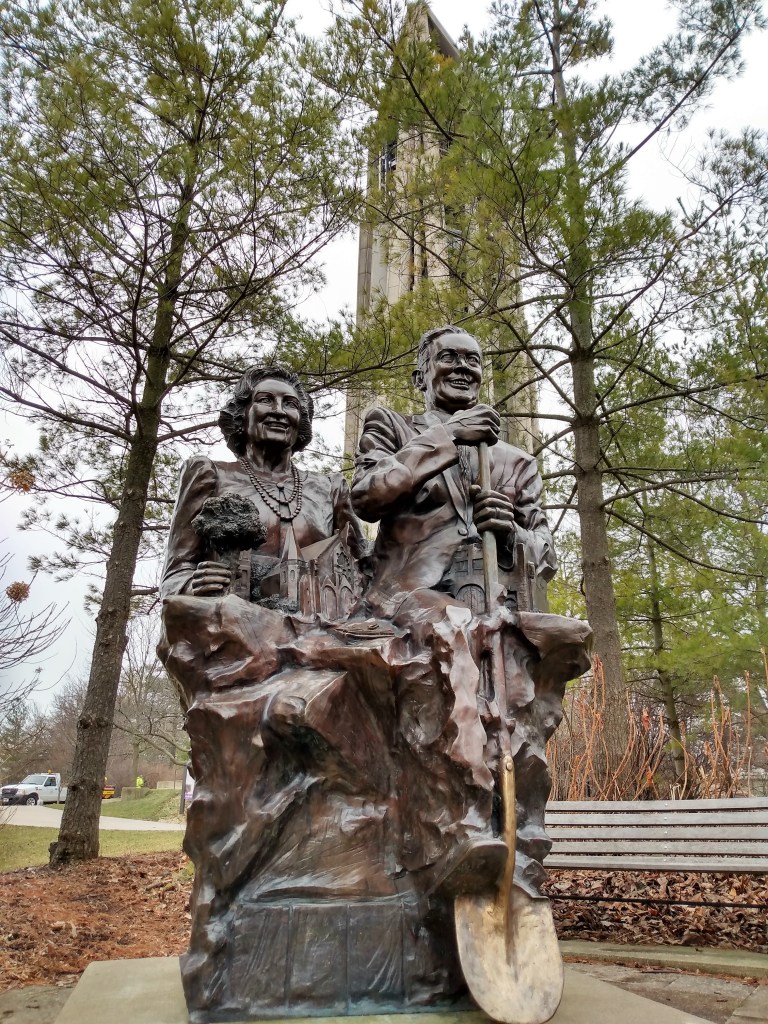
-Harold Moser and his firm ended up building thousands of units in Naperville. Moser Highlands, one of his first subdivisions, is just south of this location. He and his wife are honored in a statue along the Naperville Riverwalk:
-There are lots of teardown homes in Naperville, particularly near the downtown. As Naperville expanded in population and its status grew, some of the older suburban homes built decades earlier gave way to larger structures. I studied patterns in some of these new homes in a 2021 article.
Constructed in 2000 at the northwest corner of Naperville and Warrenville roads, the five-story glass and steel complex at one time was touted as a technological hub with the potential to sustain thousands of jobs.
But with the recent arrival of cranes, excavators and other heavy equipment, a new era is beginning for the 41-acre site that’s part of the city’s Interstate 88 corridor.
Oak Brook-based Franklin Partners — which in April finalized the purchase of 1960 Lucent Lane for $4.75 million — in June received a demolition permit from the city to raze the 500,000-square-foot building and the three-story parking garages on either side…
Discouraged by city officials to develop warehouses on the property, Franklin Partners replied by saying it would seek a technology-based alternative.
The arrival of a high-status tech company on this suburban plot helped give rise to more white-collar employers in Naperville plus numerous subdivisions.
It is too simple to say that the fate of this land could do much to affect Naperville’s future trajectory. At the same time, it is a large parcel of land that once helped affect Naperville’s future. It sounds like the city clearly does not want the property to become warehouses, but what could arise here that contributes to a vibrant future?
Dallas-Fort Worth is one of the country’s fastest growing metropolitan areas…
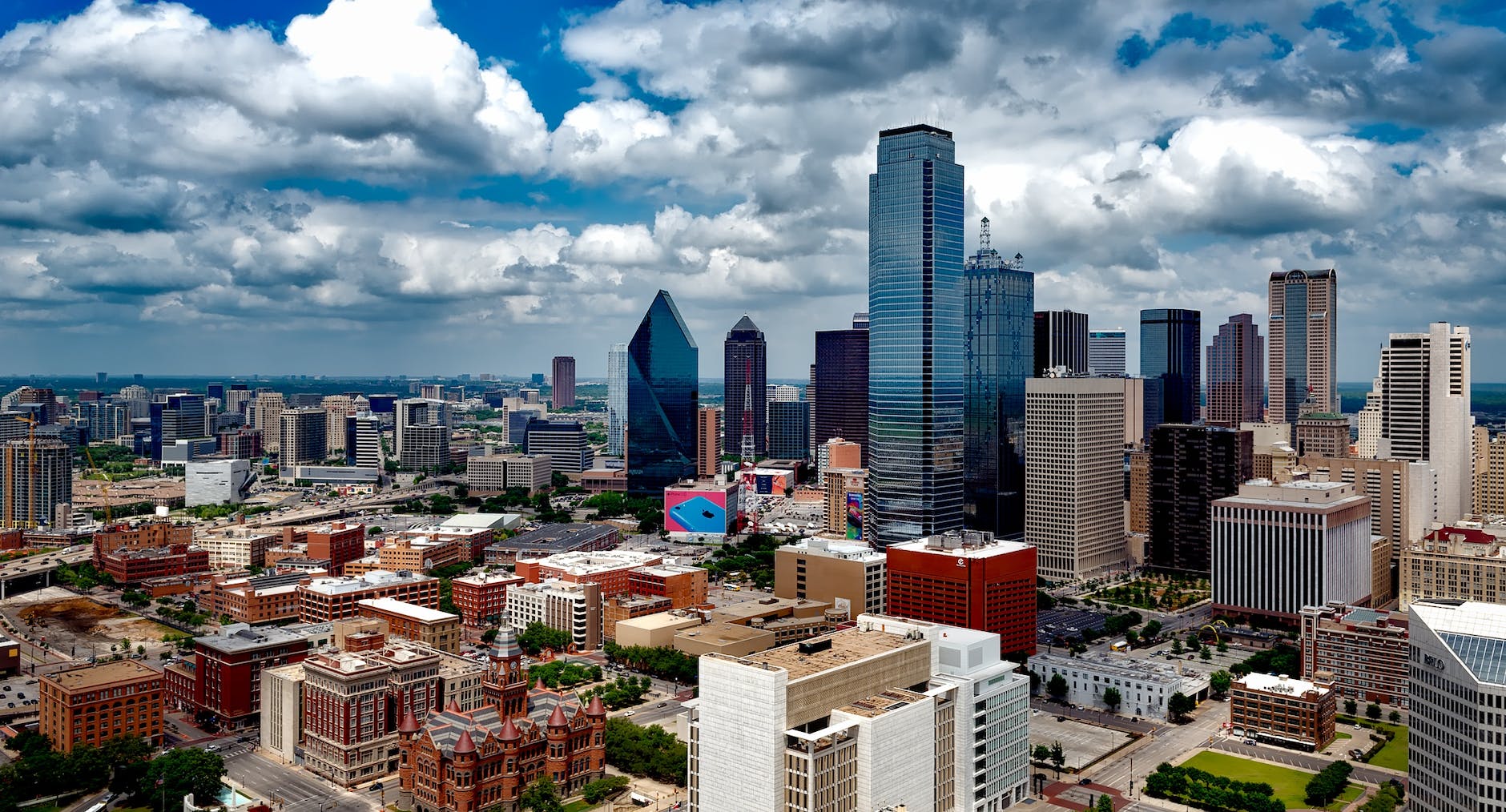
Business expansion and relocations are fueling the Dallas region’s growth, putting it on track to overtake the Chicago area and become the third-most-populous metro within the decade…
Dallas-Fort Worth is on track to be the only U.S. metropolitan area to house two cities with populations over 1 million in the next five years, as people and companies seek profit, opportunity and room to grow.
Cities and metropolitan areas rise and fall in population over time. Chicago was once smaller than St. Louis than shot past it with the latter losing a lot of population in the 1900s. Where will the new boom cities be?
Naperville is the third largest city in the Chicago region and in Illinois. It is wealthy and has a thriving downtown. Is it also a tourist destination?
Naperville, a charming western suburb of Chicago, Illinois, offers many activities catering to locals and visitors alike. Illinois is a well-known destination for tourists, but this area of the state has more to offer than meets the eye…
While in the Chicago area, Naperville is a must-see tourist destination. From beaches to museums to parks, and tasty pizza, Naperville, Illinois, can’t be beaten.
The ten recommended things to do are: Naper Settlement, the DuPage Children’s Museum, Morton Arboretum, the Millennium Carillon, iFly indoor skydiving, McDowell Grove Forest Preserve, BrightSide Theatre, Centennial Beach, Hollywood Palms Cinema, and RiddleBox Escape Room.
Several quick thoughts in response to this list:
-Nine of the ten are in Naperville while Morton Arboretum is outside city limits in Lisle.
-I am surprised the Riverwalk is not a must-see on its own. It is not along the biggest river but it is a popular spot with food, music, civic buildings, and people-watching all available.
-Of the ten things to do, some are more unique to the community than others. For example, escape rooms can be unique but they are available in lots of places. It is harder to find the particulars at Naper Settlement or a carillon tower or a large public pool near downtown made out of a quarry.
-How many people each year visit Naperville to see the suburb?
-More broadly, how many suburbs in the United States are tourist destinations?
Thanks to a recent local news segment that asked people in Naperville about Chicago politics, the two communities are being compared. Why?
Let’s be real, though: The mayor was also taking a dig at Naperville. It’s become a Chicago tradition. Whenever a Chicagoan complains about the proverbial suburbanite who claims to be from Chicago, it’s always someone “from Naperville.”…
I really wasn’t finding anything in Naperville that I couldn’t get in Chicago. That explains why I only visited every 10 years. I could live a complete life without ever going to Naperville, especially since it’s such a long haul on the train. But I’m sure that’s also true of Lemont or Schaumburg or Libertyville. Of all suburbs, why do Chicagoans single out Naperville for scorn? At the Naper Settlement, I met a woman who offered an answer. Jeanne Schultz Angel grew up in Naperville, went to Waubonsie Valley High School, then moved to Norwood Park, from which she commutes back to her hometown to work as associate vice president of the history museum. That evening, she was helping set up for a Weezer tribute concert.
“Speaking both languages, I think there’s this perception and then there’s the reality,” Angel said. “People in Chicago might think they know the brand, which is idyllic suburban. We always make the top lists of where to live. Chicagoans tend to get beaten up about living in Chicago. There’s a lot of learning curve that can increase understanding. People who think Naperville is this very idyllic, very American place, it does surprise. We have a Patel Brothers. Naperville has a constant transient population, but I think a lot of people who grew up in Naperville had their careers here and bought homes here. I love the city. I love Naperville, too. It’s a different kind of life.”
Chicagoans need to respect Naperville’s differences and stop cracking jokes at its expense. Stop thinking about Naperville altogether. It’s so far away. Why let it bother you? I just spent a day in Naperville and I probably won’t think about it for another decade, when I find a reason to visit again.
On one hand, these explanations make some sense. Naperville is a successful suburb. It is the second largest suburb – after Aurora – in a sprawling region of over six million suburbanites. Chicago is a big city whose big city problems can often be in the news or political conversations. Residents of the two communities might have different ideas about the kinds of lives they want to live. Thus, the two places serve as shorthand for a long-standing American competition between cities and places outside of them.
On the other hand, there are plenty of stories and reports that take a similar tack to this piece. The journalist or researcher from the city comes out to the suburbs to examine the life they find unusual. What do those suburbanites actually do day-to-day? How do they survive in such a place devoid of culture and sophistication?
The two municipalities might do better to cooperate more as leaders within a metropolitan region that could better coordinate its efforts to help all in the region thrive.
I recently heard a radio advertisement for the suburb of Schaumburg, Illinois. The pitch included this fact: the suburb has a daytime population of 150,000 people.
A suburb that almost doubles in population during the day is not the typical image of suburbs in the United States. Yet, it is one part of the increasingly complex suburbia where some communities are the stereotypical bedroom suburbs and others are office and retail centers.
Why advertise the number of people in Schaumburg during the day even if they are not there overnight? The daily population presents a business opportunity. What might all those workers, shoppers, and visitors be interested in? Perhaps they need food or a particular good or certain services. In a region with over nine million residents, being able to reach 150,000 each day could be attractive.
(On the other hand, do residents of Schaumburg want more businesses or office space? The suburb is not a small one in terms of population. Is the brand residents want to promote? See previous posts on advertisements for Schaumburg here and here.)
If you’re not doing anything Thursday evening, swing by the park for a bit of Shakespeare, a signature cocktail and an interesting bite or two from a selection of food trucks. What park? Why, Cantigny Park, in DuPage County, of course. Where else would anyone go for a hip summer evening out in the Chicago area?
Long overshadowed by Cook County when it comes to cool stuff to see and do, DuPage County is starting to change its image as a boring suburban haven for people intimidated by life in the big city.
The editorial also notes the “good government” and diversity of the county:
The occasional scandal aside, we think of DuPage as being a haven for good government compared with the rest of the state, owing in no small part to the 12-year tenure of Dan Cronin as chair of the DuPage County Board. Cronin, a native of Elmhurst, set a singular example for reducing the size and cost of county government and we were sorry to see him step down.
Democrats have turned the tables in this longtime GOP bastion, holding a majority on the board for the first time in decades. In November, voters elected the county’s first woman as board chair to replace Cronin. After her election, longtime Illinois state Rep. Deb Conroy noted that her predecessors on the board had been white men. “And today that is not the face of DuPage County,” she said. “DuPage County today is richly diverse.”
As chair, Conroy should aim to extend Cronin’s proud legacy of efficient government, while ensuring this important part of the state is inclusive and equitable.
The contrast in this editorial is the city of Chicago and Cook County. The city is supposed to be the place of cool scenes, art exhibits, and exciting entertainment options. These are now available in the suburbs?!
I would put this recognition as part of a longer process of suburban development. At this point, DuPage County has had over seven decades of suburban postwar growth. It is a wealthy suburban county with plenty of jobs and economic opportunities. Before the postwar era, the county had roughly one hundred years of history involving the arrival of white settlers and the removal of Native residents, the coming of the railroad that connected the county to Chicago and other parts of the Midwest, the founding of small towns throughout the county, and the start of suburbanization on the eastern edges of the county.
This means the county has had plenty of time to mature and develop. Suburban greenfield growth is pretty much done and the population has grown less than 2% each decade since 2000. More communities have focused on infill development, redevelopment, and enhancing their downtowns (or trying to create community nodes if they did not have a downtown). There are plenty of institutional and community resources to draw on and wealthier residents to spend money. The demographics and social priorities of county have changed.
Additionally, people can live, work, go to school, find interesting restaurants and shopping spots, and more all within the suburbs. Chicago does offer unique opportunities and places but many suburbanites spend a majority of their time closer to home.
Is DuPage County cool? Or, are the suburbs more complex than an image of quiet and staid communities that provide bedrooms for urban jobs and exciting city opportunities?
(One note: the coolness the Editorial Board cites does not likely extend to all suburbs. The piece notes particular communities and opportunities. How many entertainment centers can the suburbs have? Suburbia is full of uneven development and inequalities.)
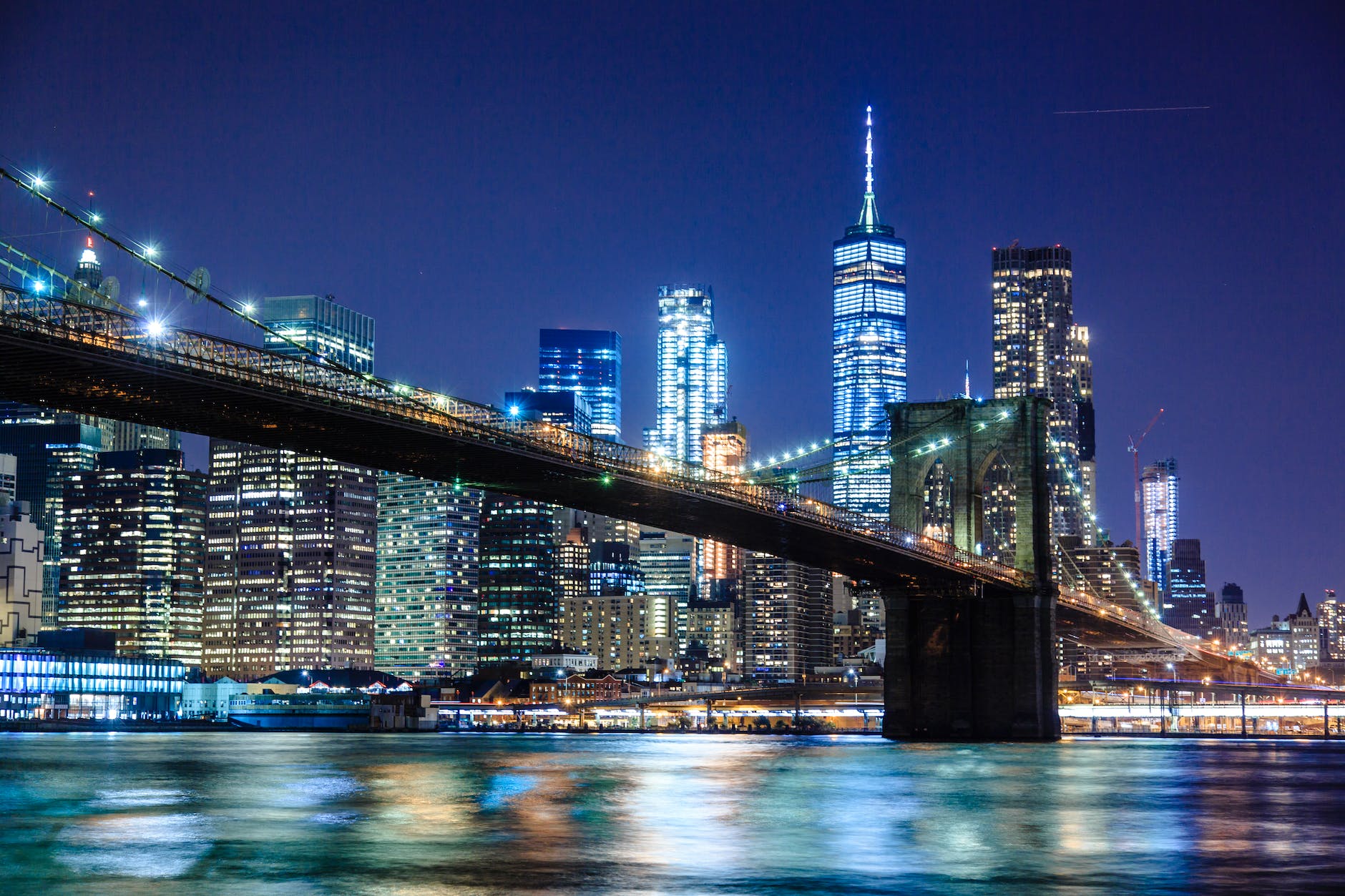
New geological research warns that the weight of New York City’s skyscrapers is actually causing the Big Apple — whose more than 1 million buildings weigh nearly 1.7 trillion pounds — to sink lower into its surrounding bodies of water.
Given the innovations that helped give rise to all of these buildings, can we expect innovative solutions to the consequences of all that weight? One approach would be to create barriers between the surrounding waters and the habitable areas. However, that does not fully address the weight and the ground under the buildings. Are there ways to prop up large structures?
For almost three hours, crews from Fernandez Tree Service hacked away at one of Chicago’s oldest trees, a centuries-old, sprawling bur oak that had reached the end of its life span. The nearly 70-foot giant was here long before the zoo was built in 1868, when the area was just a lakeshore covered with tall grass, and possibly even predating the incorporation of the city of Chicago.
Director of horticulture at Lincoln Park Zoo Katrina Quint said the tree is 250 to 300 years old. The caramel cross-sections of the trunk have diameters of 60 inches…
Scott said that in northeastern Illinois, about 1 million acres of land used to be oak forests. There are only 17% of those oak ecosystems left, and 70% are in private ownership, meaning that they’re not in protected status, she said…
Morton Arboretum’s Robert Fahey wrote about this native species loss in the 2015 Oak Ecosystems Recovery Plan, led by the Chicago Wilderness and the Oak Ecosystems Recovery Working Group. Fahey overlaid 1830s public land survey data with 1939 aerial photography and 2010 analysis to see where oak ecosystems used to exist and where they exist now.
The Chicago area now has many trees, but losing one of its oldest trees both harms the ecosystem and severs a connection to the past. Trees are an important part of the landscape and can outlive development and people.
One thing that cities and suburbs tend to do is level the landscape, plop buildings, roads, and more on the ground, and place all sorts of infrastructure underground. It is hard to imagine that prior to the Chicago region, there existed sand dunes, waterways that operated differently (the Chicago River, in particular), groves of trees, swamps, and prairie spaces. The growth of Chicago was bad news for these natural settings as the city consumed land and resources, produced much pollution, and recreated “nature” along the lakefront and in parks.
I hope more people can see what areas looked like before mass development in the United States. This can help prompt thinking and action about what we might do with land beyond building houses and providing pathways for vehicles.
Q: What will be your legacy as mayor of Naperville?
A: It has to be the financial impact on the city. Eight years seems like a long time, but it’s not when you’re trying to turn a ship like that. To turn over the city with tons of cash, not to mention federal money we didn’t touch, they’re going to be able to do a lot. And that’s my gift, to make sure the city was on the right trajectory. We’re the envy of what most cities want to be.
One of the jobs of a mayor is to champion their community. They are often the chief booster. In many American communities, professional staff – a city manager and others – address day-to-day concerns while mayors work with a council and act as cheerleader. The outgoing mayor earlier in the interview described the suburb’s success in planning, development, and revenues. Yet, always highlighting the best of the community is key and Naperville has a precedent: former mayor George Pradel did this for decades. I assume mayors will say their community is great.
Yet, it can be interesting when mayors make statements that involve other communities, implied or otherwise. It is one thing to say your community is great; it is another to say that it compares well to other communities. Some communities can be leaders or models for others. In the United States, this might involve growth or a high quality of life or economic opportunities or tackling particular issues.
Do most cities want to be Naperville or like Naperville? This might be hard to answer, particularly if leaders elsewhere will tend to focus on the good things in their own communities.








 Legally Sociable