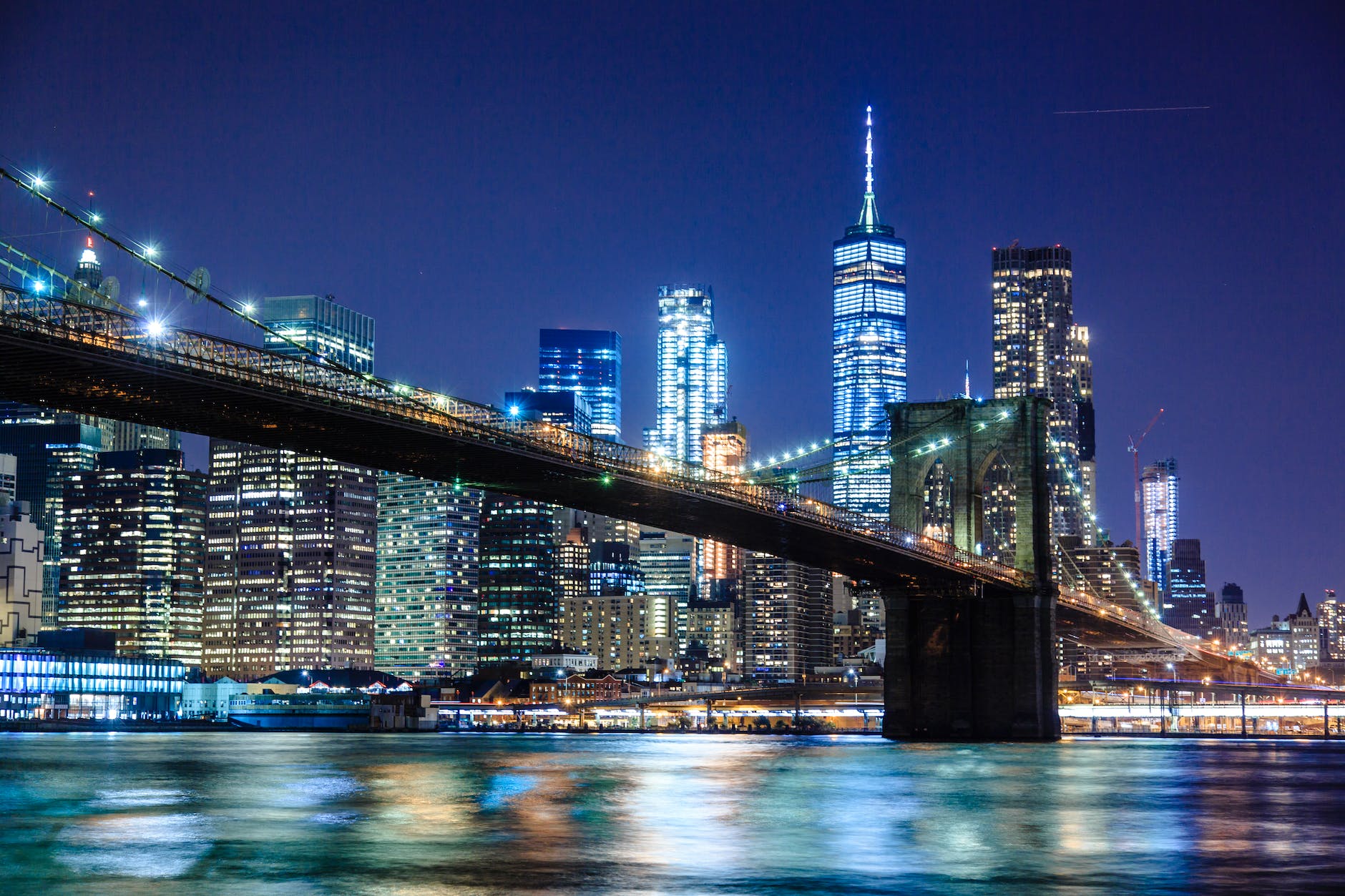
New geological research warns that the weight of New York City’s skyscrapers is actually causing the Big Apple — whose more than 1 million buildings weigh nearly 1.7 trillion pounds — to sink lower into its surrounding bodies of water.
Given the innovations that helped give rise to all of these buildings, can we expect innovative solutions to the consequences of all that weight? One approach would be to create barriers between the surrounding waters and the habitable areas. However, that does not fully address the weight and the ground under the buildings. Are there ways to prop up large structures?
For almost three hours, crews from Fernandez Tree Service hacked away at one of Chicago’s oldest trees, a centuries-old, sprawling bur oak that had reached the end of its life span. The nearly 70-foot giant was here long before the zoo was built in 1868, when the area was just a lakeshore covered with tall grass, and possibly even predating the incorporation of the city of Chicago.
Director of horticulture at Lincoln Park Zoo Katrina Quint said the tree is 250 to 300 years old. The caramel cross-sections of the trunk have diameters of 60 inches…
Scott said that in northeastern Illinois, about 1 million acres of land used to be oak forests. There are only 17% of those oak ecosystems left, and 70% are in private ownership, meaning that they’re not in protected status, she said…
Morton Arboretum’s Robert Fahey wrote about this native species loss in the 2015 Oak Ecosystems Recovery Plan, led by the Chicago Wilderness and the Oak Ecosystems Recovery Working Group. Fahey overlaid 1830s public land survey data with 1939 aerial photography and 2010 analysis to see where oak ecosystems used to exist and where they exist now.
The Chicago area now has many trees, but losing one of its oldest trees both harms the ecosystem and severs a connection to the past. Trees are an important part of the landscape and can outlive development and people.
One thing that cities and suburbs tend to do is level the landscape, plop buildings, roads, and more on the ground, and place all sorts of infrastructure underground. It is hard to imagine that prior to the Chicago region, there existed sand dunes, waterways that operated differently (the Chicago River, in particular), groves of trees, swamps, and prairie spaces. The growth of Chicago was bad news for these natural settings as the city consumed land and resources, produced much pollution, and recreated “nature” along the lakefront and in parks.
I hope more people can see what areas looked like before mass development in the United States. This can help prompt thinking and action about what we might do with land beyond building houses and providing pathways for vehicles.
Q: What will be your legacy as mayor of Naperville?
A: It has to be the financial impact on the city. Eight years seems like a long time, but it’s not when you’re trying to turn a ship like that. To turn over the city with tons of cash, not to mention federal money we didn’t touch, they’re going to be able to do a lot. And that’s my gift, to make sure the city was on the right trajectory. We’re the envy of what most cities want to be.
One of the jobs of a mayor is to champion their community. They are often the chief booster. In many American communities, professional staff – a city manager and others – address day-to-day concerns while mayors work with a council and act as cheerleader. The outgoing mayor earlier in the interview described the suburb’s success in planning, development, and revenues. Yet, always highlighting the best of the community is key and Naperville has a precedent: former mayor George Pradel did this for decades. I assume mayors will say their community is great.
Yet, it can be interesting when mayors make statements that involve other communities, implied or otherwise. It is one thing to say your community is great; it is another to say that it compares well to other communities. Some communities can be leaders or models for others. In the United States, this might involve growth or a high quality of life or economic opportunities or tackling particular issues.
Do most cities want to be Naperville or like Naperville? This might be hard to answer, particularly if leaders elsewhere will tend to focus on the good things in their own communities.
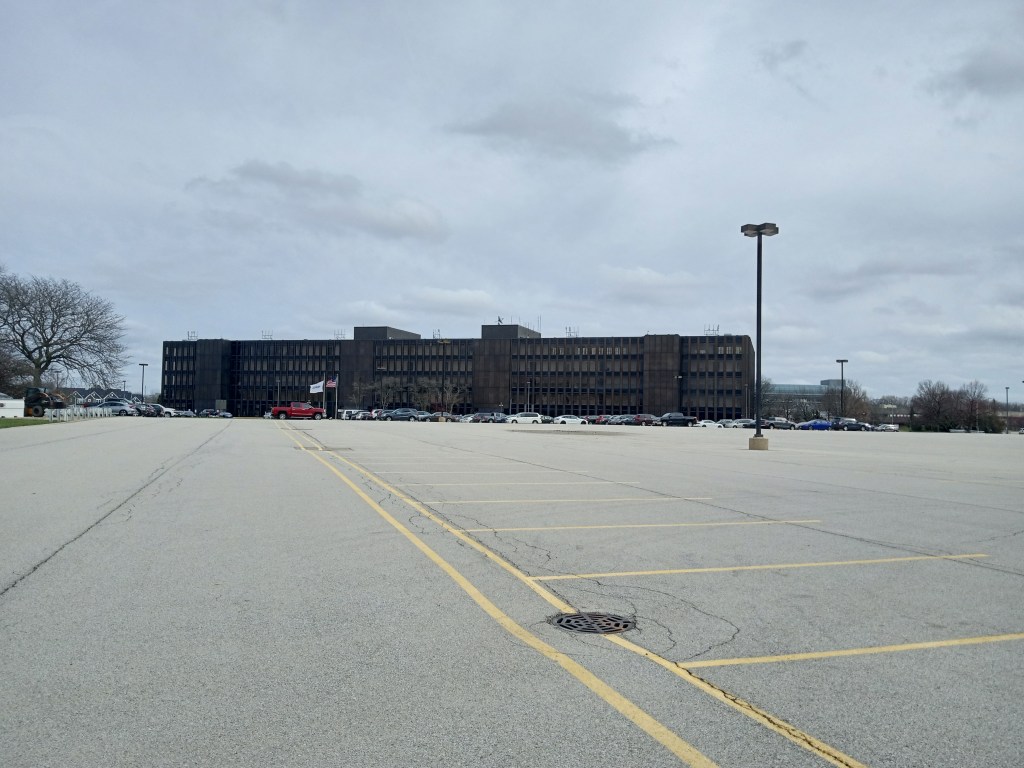
The 175-acre property near the intersection of Naperville and Warrenville Roads has the address of 1960-2000 Lucent Lane.
Nineteen-sixty Lucent Lane includes a vacant five-story 613,620-square-foot steel and glass office building, two three-story parking decks and surface parking lots. Nokia has consolidated its offices into the five-story 1-million-square-foot steel and glass building at 2000 Lucent Lane. The company occupies about 33% of the building, according to city documents.
What will become of this full property in the next few decades? Could it become a “metroburb” like another Bell Labs facility in a northwest Chicago suburb? The same property that helped lead Naperville to white-collar jobs and office buildings could become part of numerous transformations of suburban office parks into new uses.
All parking spaces in Naperville commuter rail lots will transition to daily fees in the coming months.
The Naperville City Council Tuesday voted to eliminate the parking permit system at the Route 59 and Naperville/Fourth Avenue Metra rail stations and require commuters to pay only for the days they park…
Even before the COVID-19 pandemic changed the frequency people commute to Chicago, city staff was working to address the problem of spaces not be used in permit lots.
Effective immediately, no new permits will be issued for any Naperville commuter parking lots.
In the coming months, staff will modify the municipal code for council consideration with a goal implementing the daily pay-by-plate fee model in July…
When demand does return, the city can look into implementing more technology, such as parking guidance and reservations systems, Louden said.
This is a big change in a community where finding parking at the train station was difficult for years. Suburbanites are often used to plentiful and cheap parking so both a waiting period for a permit and a shift to a first-come-first-served model can irk different people.
It would be interesting to hear more about how changing work patterns – more work from home, perhaps more suburb to suburb commuting over time compared to trips into Chicago – affect suburban life. Are we in for a significant reckoning with commuter rail and mass transit when fewer people use it regularly for work? How about big parking lots: do they survive? Or, do suburban schedules change when fewer people work 9-5 shifts?
Prairie Food will focus on local, organic and sustainably produced food. The co-op has cultivated relationships with Walnut Acres Family Farm in Wilmette, Rustic Road Farm in Elburn, Jake’s Country Meats in southwest Michigan and “quite a few dairy farms,” Kathy Nash said…
Co-op organizers say the model — local control, local ownership — has become especially relevant after the pandemic brought on food supply issues…
Food co-ops clearly define what “local” means. The Food Shed’s goal is to source 25% of all of the store products within a 100-mile radius. The McHenry County co-op purchased land on Route 14 and Lakeshore Drive to build from the ground up. The shopping space will cover around 7,000 square feet…
The Food Shed started from a desire to connect with local farmers and “tap into the local economy,” Jensen said. The co-op was officially incorporated in 2014.
If the comparison is between a 3,000 mile salad where the ingredients come from a long ways away or having food from within 100 miles or a few hours drive, then the co-op is definitely pursuing local food.
At the same time, the desire to buy local food is made more difficult in suburban settings where development has gobbled up land for decades. Looking back at some research notes I had, I found these facts about local farms:
-The amount of land in DuPage County devoted to farming dwindled toward the end of the twentieth century – down to 11% of the county’s land in 1987 and 95 farms in 1992 – according to the Chicago Tribune.
-Also in the Chicago Tribune, the last dairy farm in DuPage County closed in 1993 with the land sold to a developer. At one point, the county was known as “the milk shed for Chicago.”
-The last beef cows in Naperville left in 2005 with the sale of a farm to developers (also according to the Chicago Tribune).
So even as some suburbanites want local food, the developments and communities in which they live are at least partly responsible for pushing food production further away?
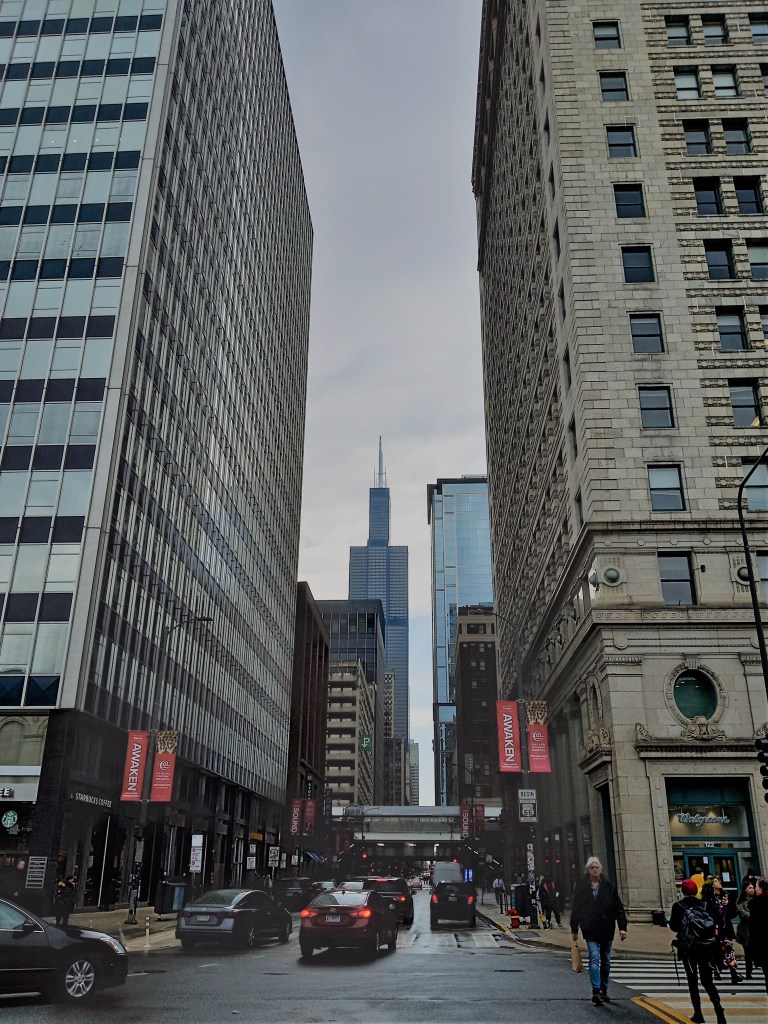
The number of residents in the Loop — as the city’s central business district is known — grew by almost 9% since 2020, according to estimates from the Chicago Loop Alliance…
Population in the Loop, an area bounded by the Chicago River on the north and west sides, stands at 46,000, with the number of residents expected to grow another 17% by 2028, the group estimates. About 95% of residential properties are occupied, up from the pandemic low of 87%, and a rate that exceeds 2019 levels…
Most of the Loop’s population is 25 to 34 years old, with more than 80% living alone or with one person. Almost half don’t own a car and the majority cite the ability to walk to places, the central location and proximity to work as top reasons for living downtown…
The future of the Loop will also be more residential. Another 5,000 housing units are expected to be added by 2028, bringing the district’s total population to 54,000, according to the report. The estimates assume the global economy avoids a major recession, that the cost of building doesn’t become prohibitive and that city incentives to convert commercial blocks into homes move forward. Crime, rising property taxes and developments elsewhere are also threats to the forecast.
Regardless of the larger context of what has happened in the Loop in the last few years, I am guessing this data point will be used to support development and civic plans.
The NOPD posted the commercial—”Everywhere Else Is Cleveland”—to its social media accounts at 9 a.m. Wednesday…
“Everywhere Else Is Cleveland”—which features women, people of color and members of the local LGBTQ community—was commissioned by the foundation as part of a broader recruitment push to help fortify the city’s shrinking police force. To broaden their applicant pool, the department recently relaxed restrictions around past marijuana use, credit scores and physical appearance—including tattoos, facial hair and nail polish.
The commercial’s title is a play on the famous Tennessee Williams quote: “America has only three cities: New York, San Francisco, and New Orleans. Everywhere else is Cleveland.”
This quote referenced above hints at a larger issue for those who study American cities. When is it helpful to lump cities together as similar enough or helpful to put them in different categories because they have unique traits? All big cities share some common characteristics but they are also different in certain ways. Is size, the time of settlement or rapid population growth, density, political system, cultural opportunities, or something else the factor we should use to analyze cities?
The quote above suggests there are four categories of cities: three that stand on their own then a much larger category represented by Cleveland. Cleveland is the stand-in here for all nondescript cities compared to three American cities that have unique personalities and settings. The ad suggests New Orleans is a very different kind of place.
Is this objectively true? As far as I know, there is no New Orleans School of urban thought, but this does not mean there should not be. Urban sociologists and theorists tend to squabble more about the biggest cities and whether New York, Chicago, or Los Angeles are the best models for understanding urban processes.
Scholars who study ethnoburbs note the importance of Monterey Park, California. Here is one reason why:
Monterey Park, about seven miles east of downtown Los Angeles, has a population of about 60,000 people, about 65 percent of whom are Asian American and 27 percent are Hispanic or Latino, according to government data. In the 1990s, it claimed to have become the first city in the continental United States to have a majority of residents with Asian ancestry.
At the swearing-in this month for her third term as the District of Columbia’s mayor, Muriel Bowser delivered a surprising inaugural-address ultimatum of sorts to the federal government: Get your employees back to in-person work — or else vacate your lifeless downtown office buildings so we can fill the city with people again…
There are days when downtowns in other American towns can almost look like they did before 2020. In the 9-to-5 core of Washington, though, there’s no mistaking the 2023 reality with the pre-Covid world. Streets are noticeably emptier and businesses scarcer. Crime has ticked up. The city’s remarkable quarter-century run of population growth and economic dynamism and robust tax revenues seems in danger…
According to census data, Washington has the highest work-from-home rate in the country. Week-to-week numbers from the security firm Kastle Systems back this up: The company, whose key fobs are used in office buildings around the country (including the one that houses POLITICO), compiles real-time occupancy data based on card swipes in its 10 largest markets. D.C. is perennially dead last…
To people who depend on commuters’ lunch-hour spending or transit fees, the change is less welcome. According to John Falcicchio, the city’s economic-development boss and Bowser’s chief of staff, the federal government’s 200,000 D.C. jobs represent roughly a quarter of the total employment base; the government also occupies a third of Washington office space — not just the cabinet departments whose ornate headquarters dot Federal Triangle, but plenty of the faceless privately held buildings in the canyons around Farragut Square, too.
On one hand, Washington D.C. is in a unique situation. One employer, the federal government, is responsible for a sizable portion of the local workforce.
On the other hand, this is an issue facing many downtowns. Can asking companies to have workers return or applying threats be successful? Or, is it better to try to offer amenities and encouragements so workers want to return? As a third option, is it time to transition from the decades-long emphasis on commercial downtown space to residences and other uses?
This could be an inflection point for a number of downtowns or it could end up being a version of the same old approach. However, it would not surprise me if the conversation between local politicians and business leaders heats up around this issue.