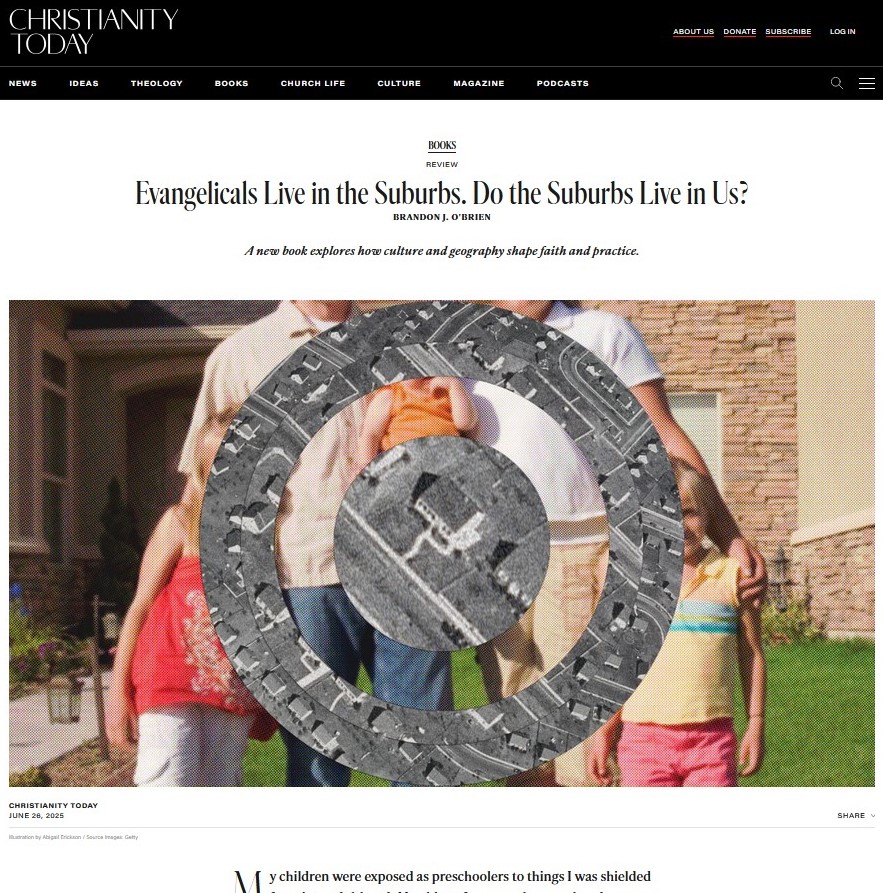
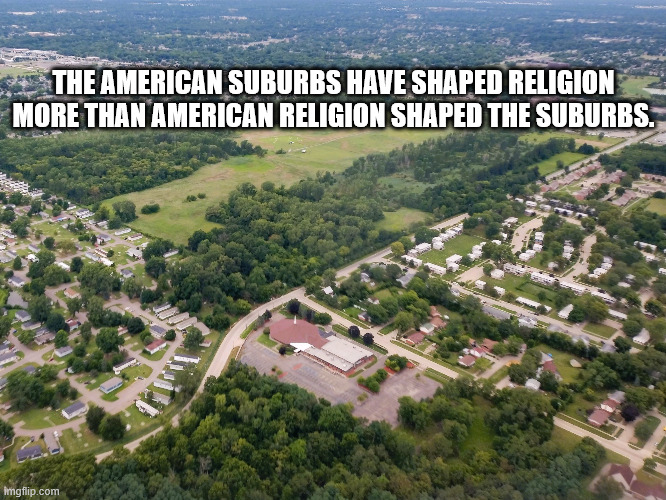
In light of all this, it would be surprising if suburban sensibilities have not shaped evangelical faith and practice. As Miller argues, “It is not enough for researchers and pundits to consider the theological positions and political behavior of evangelicals; accounting for their spatial context is part and parcel to understanding the whole package of white evangelicalism” (italics mine).
And from a later part of the review:
Miller’s point is that the evangelical cultural toolkit appears to have been calibrated by patterns, experiences, and commitments common to suburban life. He’s careful to avoid claiming a direct, causal relationship between suburban norms and prevailing traits among evangelicals. But he makes a compelling case for drawing arrows of motive, means, and opportunity.
It should be easy enough to accept a narrower version of Miller’s thesis that suburban evangelicalism is “formed in regular moments in daily life and in interaction with the social and physical realities of the American suburbs.” It will be harder for many to accept that American evangelicalism in general is essentially suburban in its values and sensibilities…
In the aggregate, as Miller sees it, these institutions take a fundamentally suburban vision and prescribe it as an objectively Christian vision that can guide evangelical faith and practice in any environment. This doesn’t feel like a stretch to me. My own ministry experience and professional work has primarily involved churches in rural and urban environments. Pastors in both places frequently lament that the resources they rely on are clearly tuned to social realities outside their own. It’s fair to say, at minimum, that suburban sensibilities dominate American ministry materials.
Thanks to the magazine and Brandon O’Brien for reviewing the book.
Homer Glen-based home rehabber Pawel Radzik paid $66,000 last year for the modest, three-bedroom ranch-style brick house on 141st Place, and he gave it a major overhaul, saying last week that “80% of it is new — new flooring, new cabinets, new plumbing, new electrical, new kitchen.” He then listed the home in January for $219,000 before cutting his asking price to $205,000 later that month and then to $199,900 in February…
Upon the naming of the pontiff, Radzik immediately pulled the house from the market and told Elite Street at the time that he was looking into “what is the best option for me,” regarding the home, given its newly discovered provenance and heightened prominence.
Now, Radzik and his listing agent, Steve Budzik of iCandyRealty, have teamed up with auction house Paramount, with a June 18 auction date. The house has a reserve price of $250,000, meaning that Radzik has the right to reject any offers below that amount…
What a new owner would do with the home is unclear — perhaps turning it into a shrine to the new pope, or alternately restoring it to how it might have looked when the pontiff was a boy. No one disputes that the house has no real equal, as Prevost is the first American ever to become pope, and the 141st Place house is the only home Prevost ever lived in while growing up.
Three things strike me from this news:
The house looks like a typical postwar suburban house in the Chicago area: modest in size by today’s standards and was in need of overhauling. And the community it is in has changed.
This house is famous because of someone who once lived there. What happens to such suburban houses? There must be many such houses in the American suburbs – even though no other ones can claim to be the home to such a religious leader – given the number of Americans who have lived in suburbs over the decades.
The increase in value is striking. Even before the announcement about the Pope, the home went from a purchase price of $66,000 last year to a sales price around $200,000 this year to a set minimum of $250,000 later this year. That a significant appreciation in housing value. Does this end up as a successful house flipping project?
I will be curious to see what the home sells for as it combines an aging yet rehabbed and more valuable home in the suburbs connected to a famous religious leader.
Between 1925 and 1990, the rate of suburbanization differed by Protestant denomination. Some denominations were already more likely to be in the suburbs (their suburban presence predated mass suburbanization), some moved to the suburbs in increasing numbers, and some hardly moved at all. The general pattern among these groups was an increasing percentage of their churches in suburban locations, a process that was underway by the 1930s and 1940s and continued after World War II…
In this study, churches were influenced by settlement patterns in the Chicago region and the presence of numerous churches already existing in suburban communities. In addition, the racial and ethnic identity of some denominations helped dictate their choices for new suburban locations.
This article built on important work by multiple scholars about white flight in the Chicago area. Mark Mulder in Shades of White Flightlooked at how The Christian Reformed Church and The Reformed Church in America churches, both Dutch Reformed denominations, moved to the suburbs. Irving Cutler in The Jews of Chicago examined how Jews moved to suburban communities. Eileen McMahon in What Parish Are You From?analyzed how one Catholic parish responded to changing neighborhood populations, including moving to the suburbs.
As the story is told of American suburbanization, particularly after World War Two, the story should include the role religious institutions and adherents played in supporting white flight. I say more about the ways this played out with evangelicals in Sanctifying Suburbia.
Pope Leo XIV grew up in Dolton, Illinois, a suburb just south of the city of Chicago. Is this a story not just of the first American pope but a pope who grew up in the changing American suburbs? Over the years, what happened in his suburban community that had its first white settlers in the 1830s? First from the Encyclopedia of Chicago:
The mixture of railroads and the Little Calumet River proved to be a good site for industry. Dolton grew as a center for truck farming and manufacturing. It has produced bakery equipment, brass castings, shipping containers, cement, furniture, agricultural equipment, steel tanks, and chemicals. This diverse activity attracted an ethnically varied workforce. In the 1960s the Calumet Expressway (now the Bishop Ford Freeway) improved automobile and truck access to Chicago by two interchanges serving Dolton. In recent years large numbers of African Americans have moved to Dolton. The 2000 census reported a population of 25,614 with 14 percent white, 82 percent black, and 3 percent Hispanic.
According to a table on this page, Dolton was 99.9% white in 1960, 58.1% white in 1990, and 14.3% white in 2000. According to the Census Bureau, Dolton is now 4.9% white.
This is the story of how one small town became trapped in a downward spiral that poverty experts say follows a well-worn pattern of deindustrialization that leads to a disenfranchised economic class. Communities of color inherit a legacy of decline and then lack the resources, both financial and political, needed to turn things around.
The focus is Dolton, but it just as easily could be Riverdale, Harvey, Dixmoor, Posen, Calumet City or other nearby suburbs that once were powered by steel and other industry but over time slowly coalesced into a broad swath of economic distress. In other parts of Illinois, such as North Chicago to the north or Maywood to the west, the details change but the problems are often much the same.
It was no one single thing, but a cascade of events that changed the fortunes of Dolton and its neighbors. The decline of manufacturing led to a loss of job and pay opportunities, which in turn fed a wave of white flight as longtime residents left and were replaced by African-American city dwellers lured by better, yet not too expensive, housing.
But luring new investment to now majority black communities proved a challenge and housing values began to fall, taking down with them the tax revenues needed to keep up public services. Next came widespread foreclosures and an invasion of real estate scavengers who bought houses on the cheap, transforming a community of homeowners with a deep financial stake in their town into one of renters with looser bonds.
All the while, the political fabric vital to turning things around continued to fray. Government stumbled amid patronage and gridlock, rendering even more challenging the task of drawing needed new investment.
His parents had been living in a 1,200-square-foot brick house on East 141st Place in Dolton. They bought it new in 1949, paying a $42 monthly mortgage.
His father Louis Prevost was superintendent of the south suburban schools in District 169. News clippings from 1945 show he served as a Navy lieutenant in the Mediterranean in WWII. He had graduated from the old Central Y.M.C.A. College in 1943 while living in Hyde Park.
The new pope’s mother, Mildred Martinez Prevost, studied library science at DePaul University. Her death notice, in 1990, said she and her husband started the St. Mary’s library in the basement of the old school building and mentions jobs she had in the libraries at Holy Name Cathedral, Von Steuben High School on the North Side and at Mendel from 1969 to 1975.
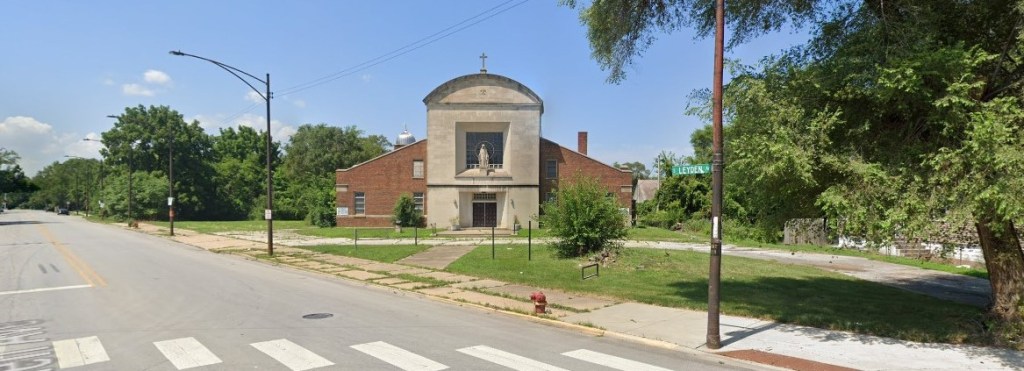
The Prevosts attended a Catholic parish – St. Mary of the Assumption – just inside the southern borders of Chicago and next to the suburbs of Dolton and Riverdale. Here is what the property looked like as of July 2024:
Like St. Mary’s, other Catholic institutions that helped shape the future cardinal are long gone, closed over the past several decades as the Catholic population around where he grew up and elsewhere plummeted. Among those bygone institutions:
• Mendel College Prep High School, where Prevost and his mother worked.
• St. Augustine Seminary High School in Michigan.
• Tolentine College in Olympia Fields, the suburb where he briefly lived.
• Mount Carmel Elementary School in Chicago Heights, where his father was principal.
Several of these communities mentioned – Olympia Fields, Chicago Heights – experienced racial change similar to that of Dolton.
If white Catholic residents indeed left Dolton and other communities on the South Side of Chicago and its southern suburbs and American suburbia became more complex, where did they move to? How did this shape the ministry of Pope Leo XIV?
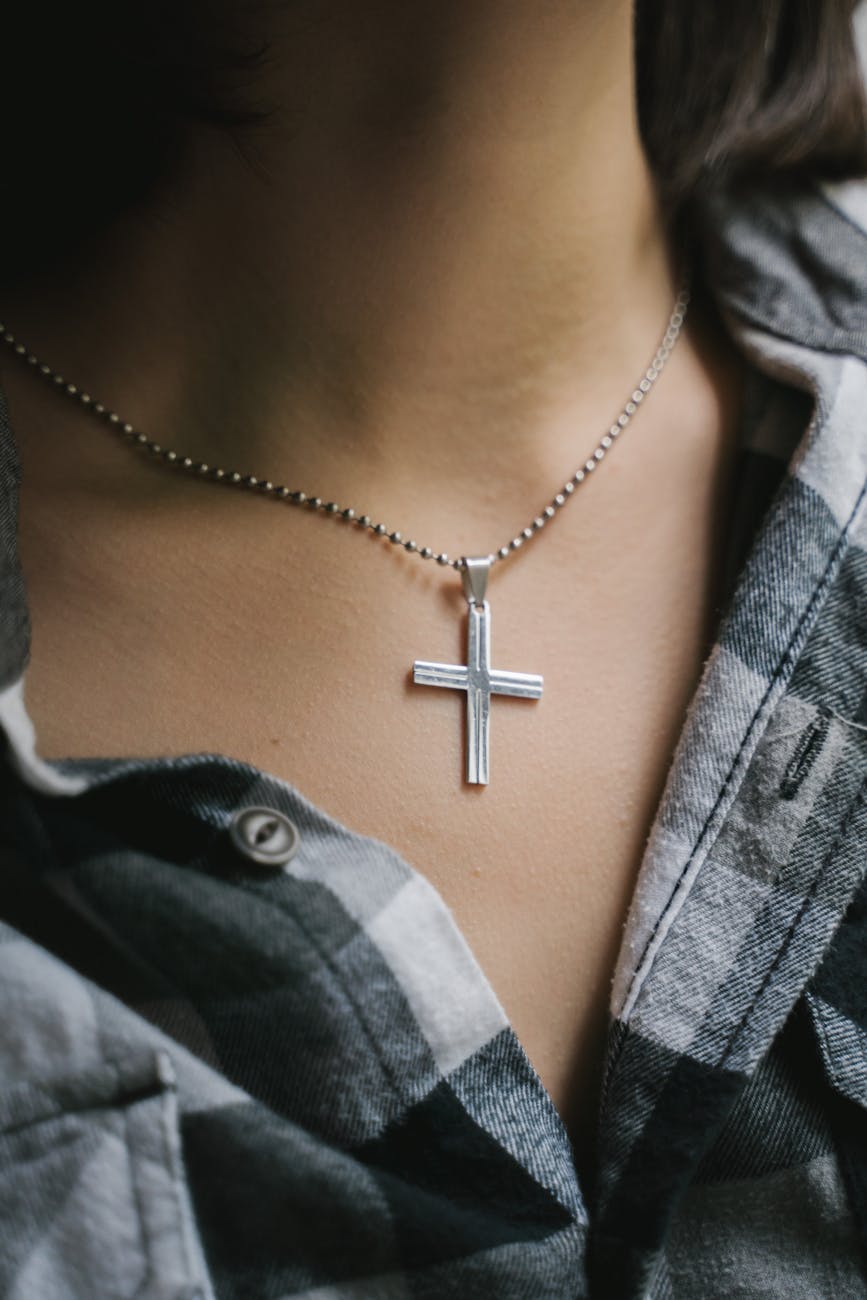
As a millenniums-old symbol of Christian faith, the cross would seem somewhat immune to trendiness. But cross necklaces and pendants have been in vogue before and may be again as some feel more comfortable embracing their faith and seek community with others.
On red carpets, on social media, at protests by high-ranking Democrats and in the White House, necklaces with cross pendants are appearing with renewed prevalence. Chappell Roan wore an oversize one to the MTV Video Music Awards in September, and one dangled from Sabrina Carpenter’s neck in the music video for her single “Please Please Please.” The trendy online store Ssense sells them in nearly 50 variations, and mainstream jewelers like Kendra Scott and Zales carry numerous designs.
Lately, the cross necklaces flash across cable news screens several times a week, suspended between the collarbones of Karoline Leavitt, the White House press secretary, and Attorney General Pam Bondi…
Over centuries, the cross evolved as a signpost of the moral compass one shares with fellow Christians and a kind of talisman with deeply personal significance. “They have an official meaning but people bring their own meaning, which is where symbols really get their power,” said Mr. Covolo, 58, who in 2020 published a book about the link between Christianity and fashion.
The article suggests two primary reasons for more worn crosses: (1) strengthening/expressing one’s own faith and (2) identifying with religious communities. This speaks to two important elements of religious faith: knowing and living out one’s one faith and participating in community with others.
At the same time, this seems like it is part of the larger pattern of individualizing or privatizing faith in the United States. The individual makes choices regarding their faith and practice. They choose to display it or not. They pick a level of involvement that works for them and their stage in life. A necklace or pendant can be added and taken off. (This might be contrasted to religious tattoos, for example, that are more permanent.)
This all makes sense in a religious marketplace where the consumer is the key actor. Crosses on church buildings or online profiles could function in similar ways: religious communities have to brand themselves as a cross is a known marker of the Christian brand.
Would cross necklaces and pendants be something different in societies with other settings?
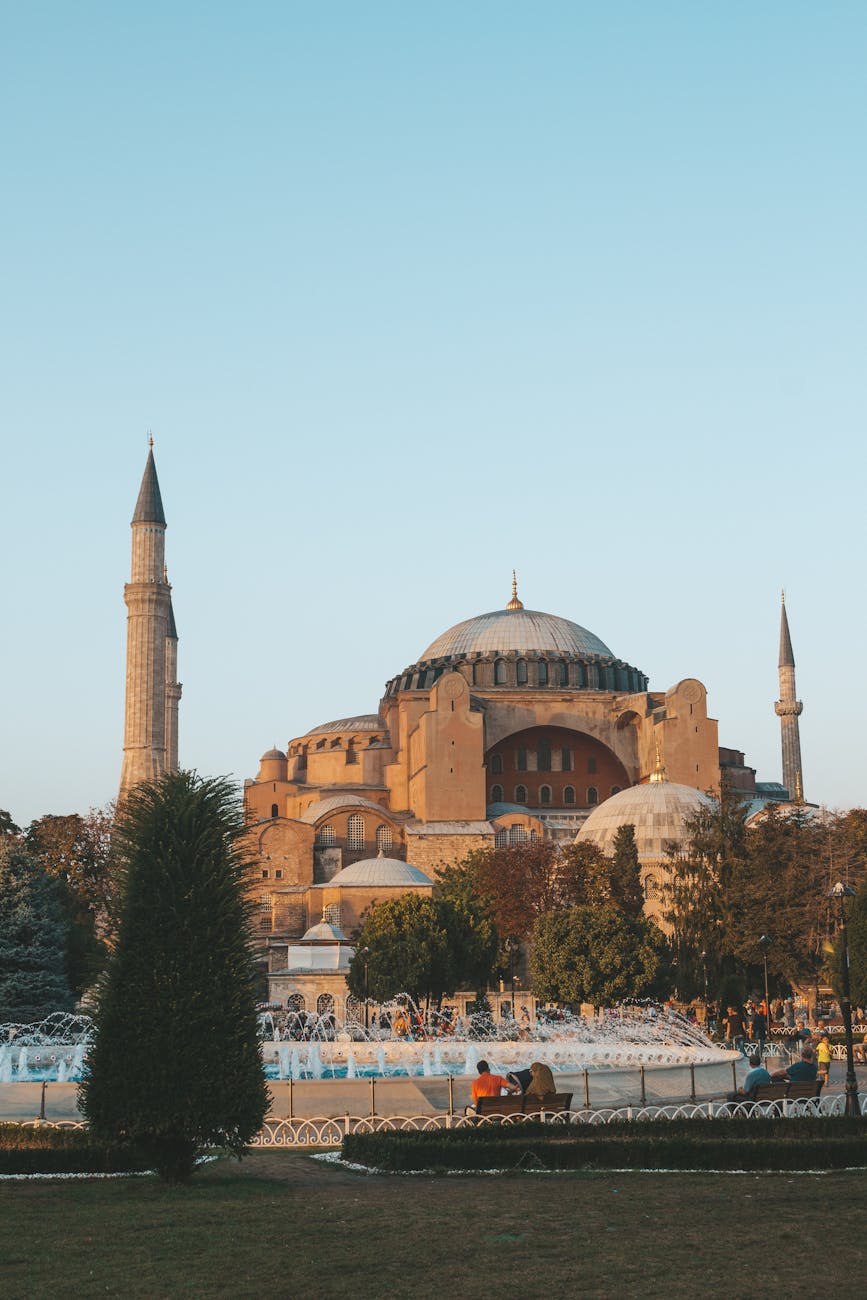
Whether you’re a believer or not, visiting Hagia Sophia is a spiritual experience. The architectural genius of this place of worship — which was built as a church in 537CE before its conversion into a mosque in 1453 — creates an illusion of vastness. It feels like the space starts to expand when you enter the building.
I bet the builders of the church intended for this to be the case: being in the religious space was to be “a spiritual experience.” I was struck by the contrast of this versus what people today might experiences in religious buildings. Not many religious buildings can come close to the scale or the history of Hagia Sophia yet how many of them regularly help produce a spiritual experience for visitors?
Many congregations have moved away from architecture and design that could prompt a spiritual experience. Perhaps they want to have a space that can serve multiple functions. Perhaps they have limited resources and so are renting a building. Perhaps they believe architecture and art distracts from the true goals of gathering together. Perhaps they utilize modern styles which not everyone interprets as spiritual.
Having co-authored a book about religious buildings, I also find the idea that one could have a variety of or no religious beliefs and still have a spiritual experience in this building interesting. Is this because it fits some template of what religious buildings could be or because of its particular architecture or its history? The building connects with human needs and aspirations? That a building could produce such emotions is worth considering further through study and experience.
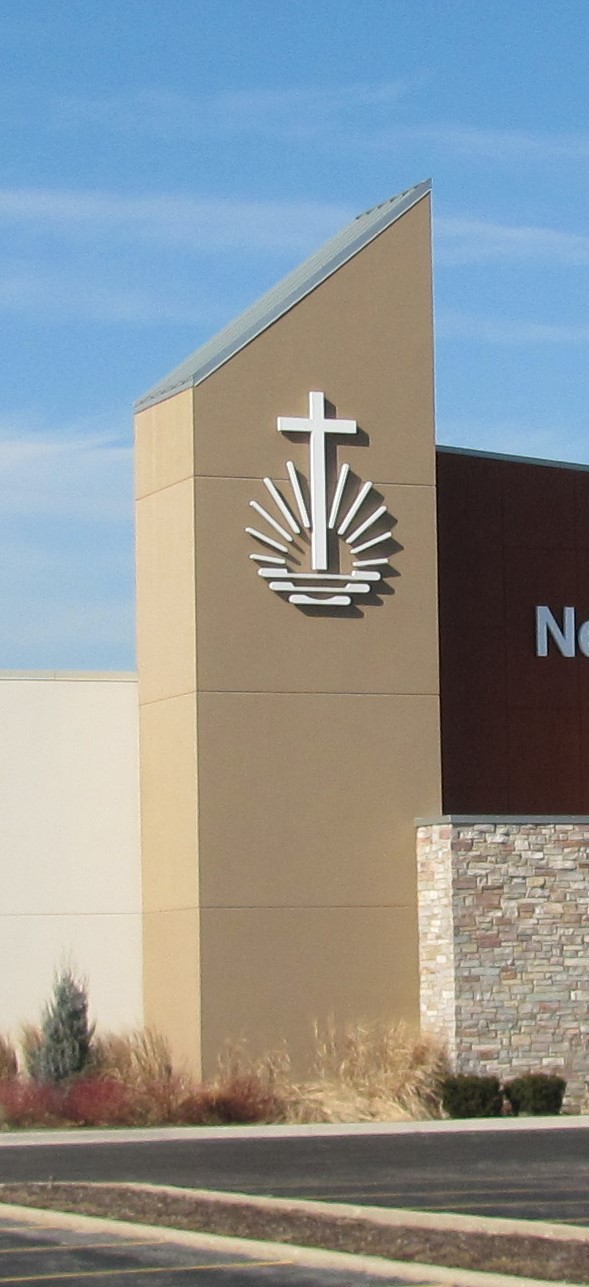
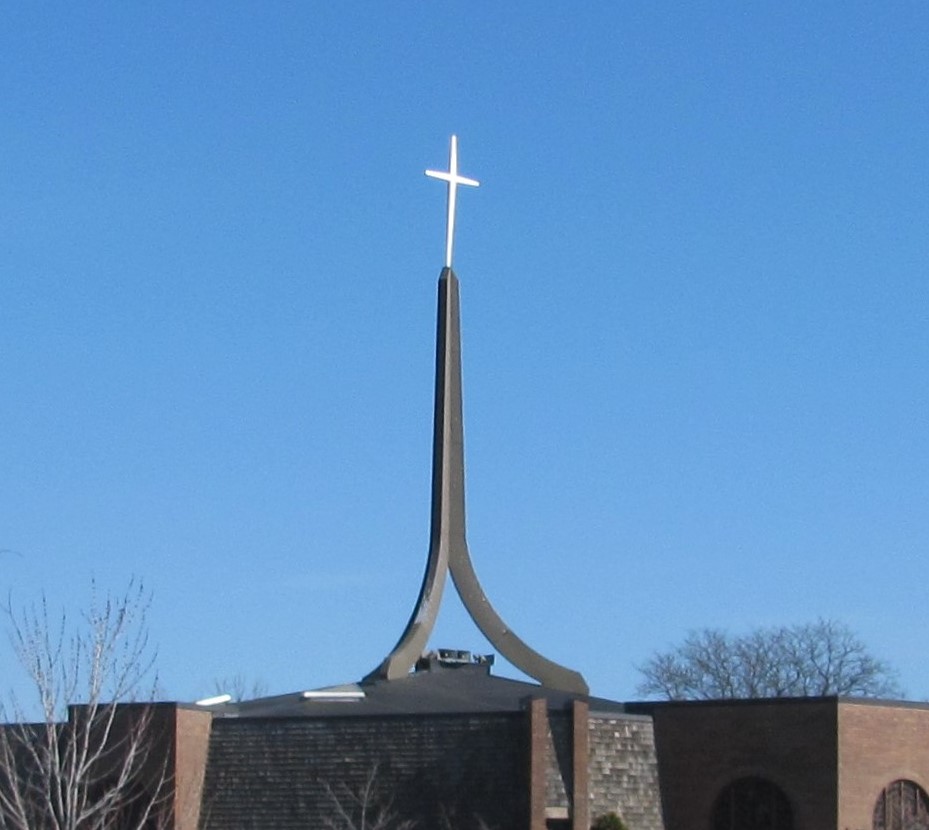
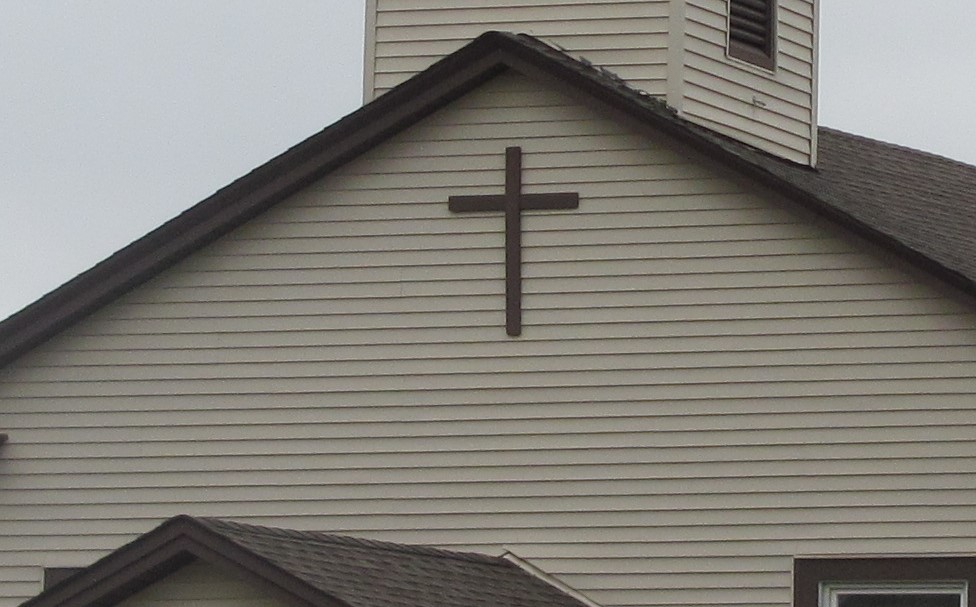
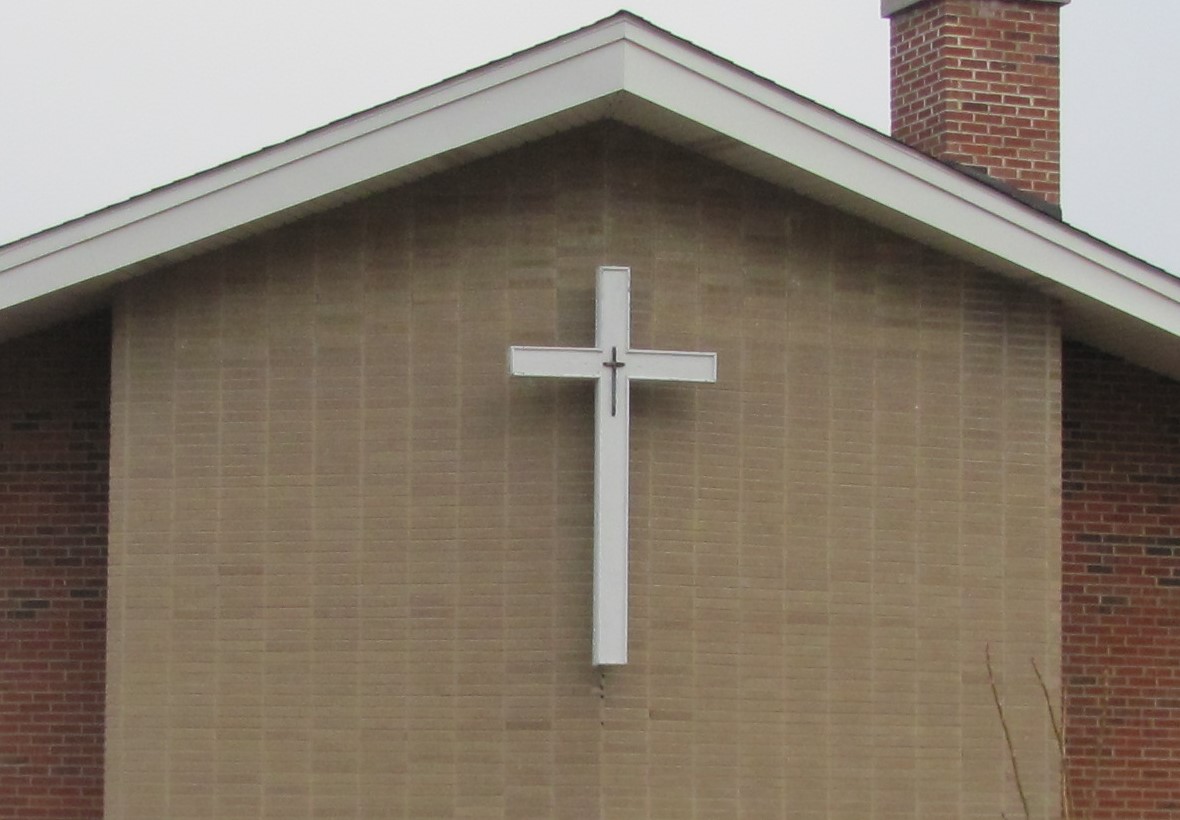
Working on some recent research involving religious buildings and also celebrating Easter yesterday, I was reminded of how many Christian churches feature crosses. Here are several local examples of church exteriors:
Not all churches have crosses on the outside. Some congregations want to avoid looking like a church and this could include eschewing traditional features like crosses or steeples. But many do feature crosses on the sides of buildings, on roofs, and on signs.
Similarly, if one were to walk into Christian churches, crosses are often present. They may be behind an altar or hanging on a side wall or incorporated in art or a bulletin.
And in looking for religious congregations online, I found many also feature crosses in the images they use. For example, in Facebook profile pictures and cover images, many Christian congregations feature a cross somewhere. In searching for congregations, a cross is a very common image one will find on social media and websites.
For these congregations that feature crosses, they likely see it as part of their theological foundations and part of their message of who they are. Christians are people of the cross and they share that image with the world. Whether one finds a congregation in a storefront, a school, an older religious building, or an online space, they are likely to find a cross somewhere and often prominently displayed.
I have been studying and writing about religion in the American suburbs for about ten years now. After recently publishing a book on evangelicals embracing suburbia – Sanctifying Suburbia– and more recently also looking at a variety of religious traditions over time in the Chicago suburbs, I had this thought:
This is a broad statement. But if I were to put the two social forces side by side – suburbanization in the United States and religion (and all that entails) in the United States – I would come down on suburbs affecting religion more than the opposite. Here is a couple of ways to think about:
As religious groups have moved to the suburbs, whether Catholic, Protestant, Muslim, Jewish, or others, they often have to adapt to suburban settings.
How much do religious congregations, organizations, and adherents in suburbia shape community life or social life at the structural level (beyond individuals, small groups, some social networks, more micro level)? Another way to put it: if these religious groups were not present, how different would suburban life be?
I am going to keep thinking about this claim and may write more about it. Even as religion has served to provide meaning and structure for many humans and societies across time and space, suburbia is a powerful place and ideology.
Newly built or remodeled churches typically have a space with a sink and a coffee pot, Slagill said. Possibly a microwave. But no expanse of countertop suitable for chopping carrots, potatoes, and onions to go into a big pot of soup. No oversized refrigerators for Jell-O salads. No industrial ovens large enough to cook three or four casseroles at once. Churches these days don’t have a lot of cupboards with drawers labeled “forks and knives,” “spoons,” and “serving utensils.”…
A recent exhibit of religious architecture in the 21st century curated by architect Amanda Iglesias included more than 40 churches from around the world. Only five had dedicated spaces for gathering around food.
“Culture has changed,” said Katie Eberth, an architect with Aspen Group, a leading firm in the field of church design. “It’s not part of the culture now, the church culture, where you have 20 women who come together and make a meal. Today we order Panera or Jimmy John’s.”…
Hospitality comes up a lot, according to Eberth. But when people talk about what that should look like in the physical construction of a building, they don’t talk about fellowship halls with long folding tables where everyone can sit together. They talk about a café serving coffee and pastries in the foyer…
The age of church kitchens didn’t really get going until rapid urbanization started in the 1880s.
“The city offered saloons, amusement parks, and pool halls, places designed to attract and corrupt young minds with fun,” historian Daniel Sack writes in Whitebread Protestants. “Churches were just one competitor in the free market of entertainment. . . . The church had to use every tool at hand, including food.”
Three thoughts in response:
It sounds like food and drink will continue to be a staple of church interaction, just not food prepared in a church kitchen. Food continues to help facilitate conversation and interaction.
Comparing the physical spaces of a fellowship hall versus a cafe is interesting. The first is likely a large space that can be used in many different ways. Are the cafes cozier and more fixedly set up for socializing? In other words, is it just the food that is different or is there a different ambience in a foyer or cafe compared to a large room?
I would guess this references one of the traits of McMansions: their size. A super-sized house is analogous to the level of pride humans can construct. Their pride puffs them up in their own eyes. They impress themselves, just as a McMansion through its size and dubious architecture, tries to do in impressing neighbors and people passing by.
But the idea of the poem then is that the McMansion of hubris is demolished by the ash-delivered reminder that “Remember that you are dust, and to dust you shall return.” Large amounts of pride and large McMansions too will be brought low. McMansions might live on longer than many humans but they too will not last forever.