Sanctifying Suburbia out early in 2025

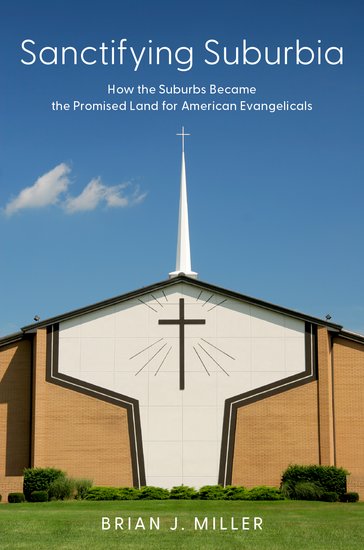
I am looking forward to the release of my book Sanctifying Suburbia: How the Suburbs Became the Promised Land for American Evangelicals on January 14, 2025. Preorder at Oxford University Press and Amazon. Throughout the early part of this year I will be publishing posts about the argument of the book and its implications, surprising things I found while researching, and ongoing possibilities for analyzing religion and the suburbs.

Here is the description of the book:

The suburbs are home to the majority of Americans, including millions of evangelical Christians and thousands of evangelical congregations and organizations. And while American evangelicals are a potent force in society and politics, their connection to and embrace of the suburbs are rarely examined. How did white evangelicals come to see the suburbs as a promised land, home to the evangelical good life and to dense concentrations and networks of evangelical residents, churches big and small, and nonprofit organizations? This book systematically assesses how evangelicals became intertwined with the suburbs and what this means for evangelical life.

Brian Miller shows how evangelical views of race and ethnicity, social class, and gender led to anti-urban sentiment, white flight, and the pursuit of racial exclusivity-all of which has led evangelicals to make the suburbs their physical and spiritual home. At the same time, clusters of evangelical organizations were planting themselves in the suburbs, drawing evangelicals out of the cities. Through sociological analysis, case studies of multiple communities with clusters of evangelical residents, and examinations of evangelical culture, Miller shows that in order to fully understand American evangelicals we must take a deeper look at how evangelicals embraced suburbs and how the suburbs shaped them.

More to come.

Papal visits and large crowds

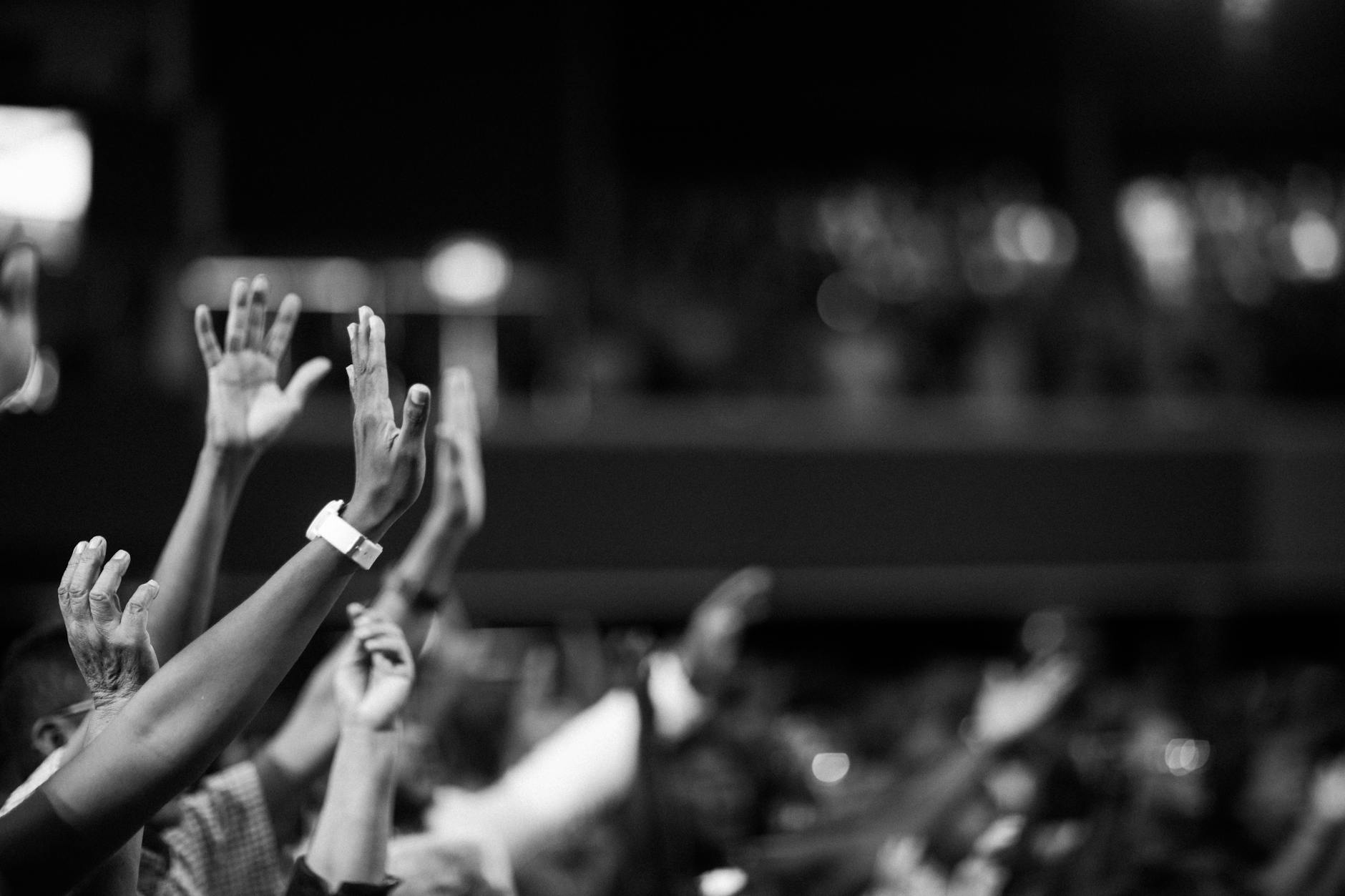
Pope Francis visited East Timor earlier this week and many people came out to see him:

Photo by brokenadmiral_ on Pexels.com

opes are popular. So much so that nearly half the population of East Timor gathered Tuesday in a seaside park for Pope Francis’ final Mass in the small Southeast Asian country whose people are deeply Catholic…

East Timor, also known as Timor-Leste, has been overwhelmingly Catholic ever since Portuguese explorers first arrived in the early 1500s and some 97% of the population today is Catholic. They turned out in droves to welcome the first pope to visit them since their independence in 2002, on the same field where St. John Paul II prayed in 1989 during the nation’s fight to separate from Indonesia.

Here is how this crowd compares to other crowds for papal visits:

Other papal Masses have drawn millions of people in more populous countries, such as the Philippines, Brazil and Poland. But the estimated crowd of 600,000 people in East Timor was believed to represent the biggest turnout for a papal event ever in terms of the proportion of the population…

While the East Timor gathering stands out, experts caution against relying on crowd counts that cannot be independently verified. The Vatican communicates crowd estimates that come from local organizers — who have an interest in overestimating the popularity of the head of the Roman Catholic Church.

Crowd counting can be a tricky process. Does it get more difficult if it is a religious crowd as opposed to another kind of crowd?

More broadly, is the experience of a religious large crowd different? It is a unique experience to be crowds of hundreds of thousands of people or more. It does not happen often. The crowd can have a collective experience that is hard for individuals to have on their own. Such a crowd can help produce change or sentiment.

New mosque on 248th Avenue in Naperville almost complete after a long process

There is an update on a case of zoning conflict in Naperville regarding a proposed mosque (see a 2019 journal article here and two blog posts here and here):

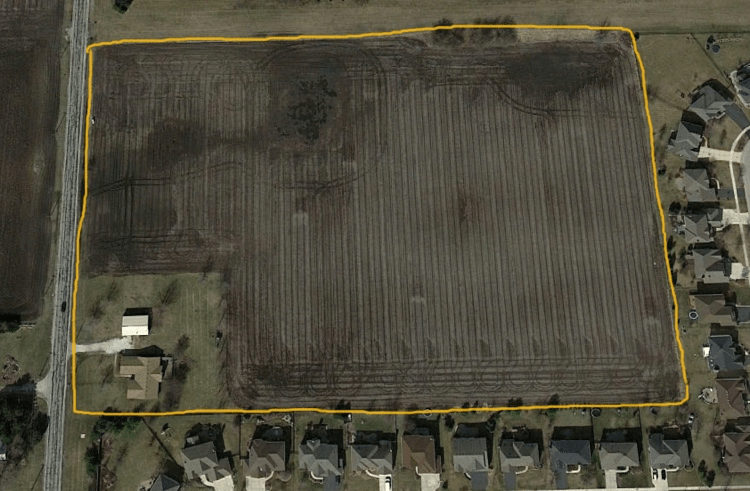
An aerial view of the property circa 2011 when originally purchased by the Islamic Center of Naperville.

Nearly two years after breaking ground, the first phase of the Islamic Center of Naperville’s mosque complex on 248th Avenue is nearly complete.

Phase one work — the construction of a 28,400-square-foot mosque — is set to finish in October, according to Islamic Center President Anees Rahman. As of mid-August, Rahman estimated the mosque was about 90% to 95% complete…

It took 15 meetings held over nine months for the proposed complex to receive a positive recommendation in October 2021 from the city’s Planning and Zoning Commission. The Naperville City Council unanimously OK’d the venture a month later — with a slate of restrictions.

Those included conditions aimed at addressing traffic, parking, fire safety and noise concerns raised by neighboring residents. As part of the approved plans, ICN agreed it would not proceed past phase two — a 41,749-square-foot school — until improvements to 248th Avenue are complete…

With traffic projections estimating the road will average 18,000 vehicles daily by 2050, the city is planning to widen 248th Avenue to five lanes between 95th and 103rd streets and to add storm sewers, curbs, gutters, street lighting, sidewalks and noise walls.

This sounds like a good outcome for the group and its members as the building will open soon. This provides space for worship and fellowship.

At the same time, this was a long process with a lot of public involvement. The property was originally owned by a church who did not build a church building on it. When it was sold to the Islamic Center of Naperville and they put forward plans, neighbors and others responded.

Given what I found in two studies (see more about the second one involving the New York City area) regarding local zoning conflict and religious buildings, proposals from Muslim groups receive more scrutiny. This particular building is almost complete but what are the consequences of longer processes and more questions compared to what others face?

Mapping religious diversity and what it shows for the Chicago region

Analyzing data from the 2020 U.S. Religion Census shows interesting patterns in religious diversity in the United States and the Chicago region. First, a map of religious diversity across all groups:

There is a good amount of diversity across counties with this measure. The Chicago area is in the middle, leaning toward less diversity by this measure.

Second, putting together all of the Christian traditions under one umbrella leads to a different map of diversity:

The Chicago region is now more diverse with the metropolitan counties generally on the side of more diversity.

Third, a map of different religious traditions:

This helps show the ways the Chicago region is diverse with a number of religious traditions present. Find county by county findings here.

The article has a summary of the larger patterns across the United States:

But if we regard Christianity as a single monolith — lumping all the Catholics, Presbyterians, Methodists, Lutherans and whatnot in one big sacramental wine jug — we find that the most religiously diverse places in America are generally the big cities. The urban Northeast leads the pack.

That’s because if America has a Quran Belt, a Torah Belt or a Bhagavad Gita belt, greater New York City forms its buckle. Almost half of America’s Jews, by synagogue adherence, live in either New York or New Jersey — which also happen to be the second and third most Islamic states, after Illinois. And they’re in the top three for Hindu Americans (along with Delaware). The Buddhists stick to the West Coast (and D.C.).

In other words, religious diversity varies quite a bit by county in the United States with metropolitan regions tending to be more diverse. The Chicago region is in the middle and has a large presence of Catholics.

Christian faith and the banality of suburbia

Theologian William Cavanaugh considers his childhood and what drew him to faith:

Photo by Huu1ef3nh u0110u1ea1t on Pexels.com

While his parents grew up in a “thick” immigrant culture surrounded by other Catholic families, practices and symbols, Cavanaugh feels that his own upbringing in an assimilating American Church revealed a “thinned” bond. One might hear his future mentor Stanley Hauerwas’ judgment in this appraisal: The Church went out to convert America, but America converted the Church. Devotional objects adorned the Cavanaughs’ suburban Chicago home (until, as teens, William and his sister secretly discarded many of them), but his family’s “practice of the faith was primarily going to church on Sunday.”

Still, he felt Catholicism held out the hope of something “less banal than suburban life filled with Wonder Bread and Gilligan’s Island.” It captured his interest, he says, “precisely for the way in which it was indigestible to mainstream American culture. So, it became my little way of being outside of the mainstream.”

Cavanaugh is not alone in these sentiments. For example, Catholic priest and sociologist Andrew Greeley wondered about the compatibility of Catholic faith and suburban life in his 1959 book The Church and the Suburbs. Protestants of different traditions have echoed similar themes; is it possible to live the American suburban good life and have a vibrant faith?

The particular examples Cavanaugh cites are interesting. “Wonder Bread” began in the 1920s and became a symbol of a booming consumerist economy. Gilligan’s Island was a comedy that ran three seasons on television, another key part of an emerging suburban society. Food and entertainment are pretty central to life today. Did religion in suburbia become another consumable? Cavanaugh suggests Catholicism was “indigestible” for this way of life even as millions found ways to pursue religious beliefs, belonging, and behaviors in the American suburbs.

Wrestling with the legacy of the cross at the De Soto National Memorial

I recently visited the De Soto National Memorial near Bradenton, Florida. The entrance to the site describes the beginning of the landing of De Soto’s group:

A short trail that winds in a loop from the entrance back to the parking lot provides more details of the encounters. This includes some reflection on the role of the cross:

A complicated legacy that visitors are left to consider.

Religion in the American suburbs: data sources and recommended readings

To explore religion and the American suburbs further, I briefly discuss available data sources and recommended readings. These are not meant to be exhaustive but rather to be starting points. There is much to consider and the particular variations of suburban faith in specific settings means there is much to discover.

Photo by Emily on Pexels.com

First, two sources of data I have found valuable. The 2020 U.S. Religion Census sought religious congregations by county throughout the United States. Available at theARDA.com, anyone can look up congregations in a county. So, if you know a suburban county (and these are critical to defining metropolitan areas), you can get a sense of the number of religious congregations and adherents across places.

The second source is more local. Within a neighborhood or community, a resident should be able to research local congregations and religious activity. Such work could include: visiting local religious congregations; talking to members of religious communities, clergy, and community members about religious activity; seeking out records of congregations at a local historical or genealogical society; examining old printed Yellow Pages and searching social media and websites for congregations; and reading local histories. Doing one of these or some of these can reveal a lot about religious groups.

In terms of existing research, here are twelve books that I have found very valuable and have cited multiple times in work I have done. These works highlight different religious traditions and suburban settings:

Cavillo, Jonathan. 2020. The Saints of Santa Ana: Faith and Ethnicity in a Mexican Majority City. New York: Oxford University Press.

Diamond, Etan. 2000. And I Will Dwell in Their Midst: Orthodox Jews in Suburbia. Chapel Hill: University of North Carolina Press.

Diamond, Etan. 2003. Souls of the City: Religion and the Search for Community in Postwar America. Bloomington: Indiana University Press.

Dochuk, Darren. 2011. From Bible Belt to Sunbelt: Plain-folk Religion, Grassroots Politics, and the Rise of Evangelical Conservatism. New York: W. W. Norton.

Eiesland, Nancy L. 2000. A Particular Place: Urban Restructuring and Religious Ecology in a Southern Exurb. New Brunswick: Rutgers University Press.

Howe, Justine. 2018. Suburban Islam. New York: Oxford University Press.

Hudnut-Beumler, James David. 1994. Looking for God in the Suburbs: The Religion of the American Dream in its Critics, 1945-1965. New Brunswick, NJ: Rutgers University Press.

McGirr, Lisa. 2001. Suburban Warriors: The Origins of the New American Right. Princeton, NJ: Princeton University Press.

Mulder, Mark T. 2015. Shades of White Flight: Evangelical Congregations and Urban Departure. New Brunswick, NJ: Rutgers University Press.

Mulder, Mark T. and Gerardo Martí. 2020. The Glass Church: Robert H. Schuller, the Crystal Cathedral, and the Strain of Megachurch Ministry. New Brunswick, NJ: Rutgers University Press.

Numrich, Paul D. and Elfriede Wedam. 2015. Religion and Community in the New Urban America. New York: Oxford University Press.

Wilford, Justin G. 2012. Sacred Subdivisions: The Postsuburban Transformation of American  Evangelicalism. New York: New York University Press.

My own published work explores some of these areas – find these works listed here. I look forward to more reading and research in this area and continuing to learn from the work of others.

Religion in the American suburbs: religious practices interacting with a suburban lifestyle

What does religious practice, activity, and belonging look like in the American suburbs? Is it different than religiosity in other settings, particularly urban and rural settings? This can be hard to parse out. Because more Americans live in suburbs than other settings and because of the pervasive features of American religion, it can be difficult to know how different religious faith in the suburbs is from religious activity in the United States as a whole. But, here are three consistent ideas from scholars and pundits regarding what marks suburban religiosity.

Photo by Tima Miroshnichenko on Pexels.com

First, suburban religiosity is an individualized faith occasionally set within larger religious communities and traditions. If “Sheilaism” from Habits of the Heart was true generally of American religion in the 1980s, it could easily be placed in suburbia. Suburban residents, often with some means, make decisions for themselves about what to believe and practice. They have numerous options to explore, ranging from highly individualistic practices unique only to them to being part of large religious organizations with broad reach and influence. This individualistic approach has consequences; religious faith may be centered in nuclear families or religious small groups or disconnected from larger neighborhood or regional concerns.

Second, megachurches are often in suburbs. They are not exclusive to suburbs. But, the megachurch that we think of now begins to emerge in the postwar, suburban-dominated decades. These congregations are often in easy to access locations (near major roadways), offer high energy experiences, and draw people from near and far. The majority of American religious congregations are smaller with a median congregation under 100 people but suburban megachurches, think of a Willow Creek or Saddleback, have exerted outsized influence.

Third, religious congregations and practice have adapted to suburban lifestyles and patterns. This was a concern of critics in the postwar era: how could relatively wealthy suburbanites in comfortable settings practice their faith? Could religious faith challenge their lifestyles? It may be the concern of new residents in the suburbs today who wonder how their faith mixes with American life in the suburbs. Even with the amount of religious activity in the suburbs, can traditional religious practices, beliefs, and belonging in different traditions survive an encounter with American suburbs and their particular emphases? Given the amount of religious activity in suburbs, the answer appears to be yes – religion has survived – but it is probably not the same after interacting with suburbia.

How do we know these features of religiosity in the suburbs? The final post will look at sources for exploring this subject.

Religion in the American suburbs: numerous religious buildings and buildings used by religious groups

Imagine a stereotypical suburban downtown in the United States. It has two story brick buildings with storefronts on the first floor. There are some offices and places to eat. A few people walk around while cars drive past parked vehicles. There may be train tracks and a station marking the ability to commute to the big city. Not far from such a streetscape are often church buildings of various denominations and traditions.

Photo by Jatuphon Buraphon on Pexels.com

Not all suburbs have downtowns. Many of the postwar suburbs are agglomerations of subdivisions, commercial areas, and industrial parks. But, religious buildings are there too. Go to a major intersection involving a highway; is there a megachurch nearby? Are there congregations meeting in former big box stores and in strip malls? There may not be an obvious walkable center to these suburbs but there are still plenty of congregations.

Religious buildings dot the suburban landscape. They may not be the most desirable land use with congregations not paying property taxes for their property and the opportunity costs of how valuable land might instead by used. Neighbors and local leaders may object to constructing a new religious building or a religious group altering an existing building. However, numerous residents attend these congregations. A number of these congregations and buildings are fixtures and centers in their communities. These congregations host services and can provide services to and space for the community.

These buildings range in size and architecture. Some of this depends on religious traditions. Some traditions have a particular approach to a building. Other traditions have more flexibility. People of faith in the suburbs may meet in a traditional-looking church – even as a member of a faith that is not Christian – or in a school, a movie theater, a mall, an office building, or a home. These approaches might be guided by financial resources or by concerns that certain styles may inhibit people from joining their community.

Thus, the American suburbs can include large Hindu temples, mosques and Islamic community centers, megachurches, and traditional religious buildings large and small. They can meet in old and new structures. They can move between locations as their congregations grows or shrinks, acquires resources or has difficulty finding resources.