Teardown a home for a new parsonage that may not be a McMansion

What happens when the needs of a church for a larger parsonage converge with the interests present in a district of older single-family homes where teardown McMansions occur? Here is a case from the Buckhead neighborhood of Atlanta:
Photo by JESHOOTS.com on Pexels.com

Peachtree Road United Methodist Church aims to demolish a historic Buckhead Forest house for a new parsonage, stirring preservationist concerns.

The 81-year-old house at 3210 West Shadowlawn Ave. is listed as contributing to the Alberta Drive-Mathieson Drive-West Shadowlawn Avenue Historic District, which was added to the National Register of Historic Places in 2015. But that does not prevent demolition and the property has no City historic protections. The church claims the house is “uninhabitable” and can’t meet its mother organization’s requirements for large parsonages…

The historic district application was filed with the National Park Service in 2014 by the Georgia Historic Preservation Division. The filing says the neighborhoods are historically significant as part of a building boom that followed a 1907 trolley line extension on Peachtree, and for its wealth of intact architecture dating from the 1910s through the 1960s. West Shadowlawn, the filing says, was named for a subdivision called Shadow Lawn, which started construction in 1922. The filing includes a photo of the house at 3210. The main church property is not included in the historic district.

Rev. Bill Britt, the church’s senior minister, told the DRC that the plan is to build a parsonage as a home for a member of its clergy who currently rents elsewhere in the city. The existing one-story house would be replaced with a larger, two-story version…

Project architect Brandon Ingram noted that many houses on the street date to the period of the 1920s through 1940s. He said the church wanted the new parsonage to be be “respectful” of that aesthetic and look “a little bit more vintage” rather than “some giant Buckhead McMansion.”

This sounds like a typical teardown situation: there is an older property in a desirable single-family home neighborhood that needs some work. It does not have modern features or the size of new homes today. A property owner wants to tear it down and build a new home. Some in the community want to preserve the old home and worry that a new home changes the local character. Some in the community want property owners to have the right to do what they want with their property and be able to reap the benefits of what might come along.

Does it change the situation if it is a local church that wants to pursue the teardown? The church will likely profit from a teardown – increased property value, a newer home – but it is also a community or non-profit actor and not just a private owner. The church has been around a long time and the parsonage may not change hands for a long time. The intended use is for church staff.

Is a church that is a long-term member of the community less likely to construct a McMansion and instead lean more toward the existing architecture of the neighborhood? Trying to picture a McMansion nearby a historic looking church building – see image below – does not work as well as imagining a McMansion near a newer megachurch in the sprawling suburbs.
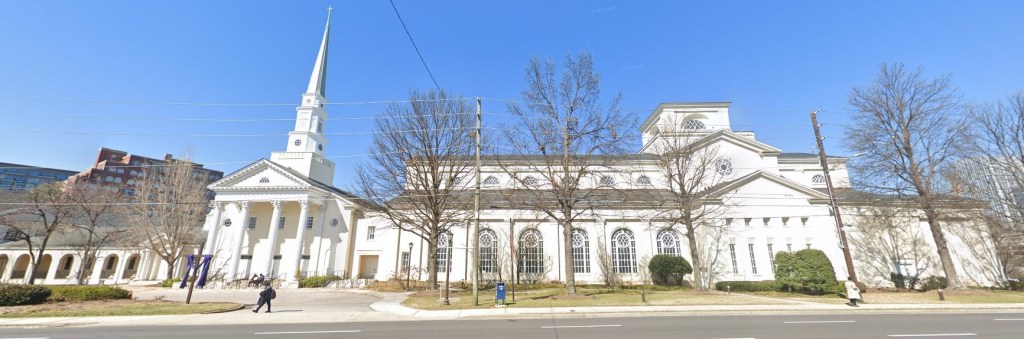
Google Street View of Peachtree Road United Methodist Church

If religious congregations are in the business of building McMansions, there may be an interesting story to tell.

From one sacred domain to another? Religious buildings as spaces for the arts

When studying the conflict that could arise when religious groups proposed zoning changes, I encountered a number of creative efforts by religious congregations to generate income with their building. Here is another use: creating spaces for the arts.

Photo by cottonbro on Pexels.com

“The problem is that, particularly in New York, congregations are housed in large, historic properties, with large amounts of deferred maintenance,” nonprofit leader Kate Toth told Religion News Service. “At the same time, membership in most religious communities is declining. Those are two difficult trends to square.”

But Toth has a solution to offer. Enter Venuely, a space sharing website launched this month. The interfaith platform borrows from other space sharing models like Airbnb to match houses of faith in New York Citythat have surplus space to short-term renters in search of a deal. It’s also founded by two nonprofit organizations (Bricks and Mortals and Partners for Sacred Places) that aim to develop capacity for faith communities, not line their pockets…

“We’re turning (the space) into an outreach mission for theater community, and because we’re nonprofit we can offer the space at a very good price,” said Hutt. “Churches have a lot of unused capacity. It makes a lot of sense for that space to be available for other organizations, especially when you have a mission match like we do with the theater community.”…

Looking ahead, St. Luke’s plans to use Venuely to rent its stained-glass adorned sanctuary as well as a multipurpose room to members of the arts community. For Strasser, opening the space up for nonprofit arts groups is an extension of what the church does on Sundays.

Many religious buildings are constructed with the idea that their spaces are sacred or can become sacred or are imbued with the sacred. They are physical buildings constructed by people yet when people of faith come together and experience fellowship and worship, the building is something different. My colleague and I wrote a book about this.

What then happens when the building is used for a different purpose? The religious congregation itself may do this; not all of their activity may be sacred in the same way or draw on sacred themes. There may be more profane activities in the buildings as well such as cleaning or people engaging in more mundane activities inside.

For some religious traditions and congregations, the arts is a relatively close domain to religious sacred space. Through music, art, theater, and other forms, the arts can invite creators and audiences to consider big questions and reflect on life. This all can be enhanced by a physical space that works with the creation. (Other religious traditions might be less open to this. Evangelicals, for one, are not known as a group that encourages the arts and may not want to share spaces.)

It will be interesting to see how Venuely does and how congregations, creators, and audiences respond to the possible venues.

A Brooklyn church pursuing a Jane Jacobs-inspired development

A plan is underway for a New York City church to work with a developer to construct a sizable development:

Photo by Pixabay on Pexels.com

A. R. Bernard, pastor of the largest evangelical church in New York City, has been working on a plan for more than 10 years. Now the proposal to build a $1.2 billion urban village and revitalize the struggling neighborhood around his church is progressing through the city’s approval process and closer to reality. The Christian Cultural Center (CCC) hopes developers could break ground in Brooklyn next year…

On 10.5 acres of church land, the proposed village would include thousands of units of affordable housing, a trade school, a supermarket, a performing arts center, 24/7 childcare for night-shift workers, senior living facilities, and other amenities designed to revitalize the East New York neighborhood…

“I’m a big Jane Jacobs fan, when it comes to understanding the urban landscape. And community means amenities are within a 1,000-foot walking distance,” Bernard said, referring to the urban planner who is famous for saving lower Manhattan from a highway and for her ideas on smaller-scale urban development focused on street life. “She was a genius. Absolute genius.” He sees this plan as a counter to the influence of the infamous urban planner and Jacobs nemesis Robert Moses, who had a history of dividing communities economically, including in this part of Brooklyn…

The church hopes this village can be a model for other cities and it could be scaled up or down, Bernard thinks. But he added that a church must be large enough, like CCC, to pull such a plan off.

As my research on religious congregations and zoning issues in the New York City region found, it is not necessarily easy for congregations to make significant changes to property. Lots of actors can express concerns.

But, some congregations have the resources and community presence to pursue projects like this and it might be difficult for others to propose and pull off the same plan. Affordable housing is needed all over and it sounds like the other parts of the project would also provide helpful facilities and services.

It would also be interesting to see how the congregation might serve as a physical and social anchor of a sizable new development as it matures.

My comments on college students and social media in Wheaton alumni magazine

How does social media matter for college students? Here are some of my thoughts in a recently published piece:

Photo by fauxels on Pexels.com

It’s notable that “when we get a break in class, the first thing that almost all of the students do is pull out their phone and engage through the deice,” said Professor of Sociology Dr. Brian Miller ’04, who studies emerging adults and social media.

But these students aren’t the first Christians to embrace new media.

Miller says American evangelicals in the twentieth century were quick to take up new technology forms and adapt them to Christian uses. Miller points to the National Association of Evangelicals and its concern that evangelicals had a radio presence. As other media forms were introduced – television, Internet, and social media – Americans evangelicals have adopted and used them.

“My sense as a sociologist is that we’ve often innovated and adapted [to new technology] and hten asked questions later,” he said.

Right now, for instance, Miller said more Christians might consider asking some questions, such as, “Is what we’re doing on social media as Christians good or useful?”…

Miller is encouraged about ways Wheaton students, staff, and faculty might be able to address some of these questions related to using social media responsibly. How could we build some best practices, consider the worth of social media fasts, or figure out how to gauge social media addiction?”

Now that social media is maturing – it has been around on a mass scale for almost two decades now – I would hope we in college settings could be effective in providing information and options for students and ourselves regarding how we engage with social media. When the interaction with social media is almost always on an individual-by-individual basis, it can feel chaotic and difficult to change patterns. Why not encourage more positive community-based practices with social media?

Particularly in faith-based settings, why not more direct conversation and instruction about social media and its effects? The majorities of congregations and people of faith are engaging social media throughout their days, yet my sense is that religious institutions provide limited guidance on how much to engage, what it is useful for and what it is not so useful for, and how social media shapes our perceptions of the world and life. Sociologist Felicia Wu Song’s book Restless Devices is a good resource for this.

Housing for the unhoused with church-provided tiny houses

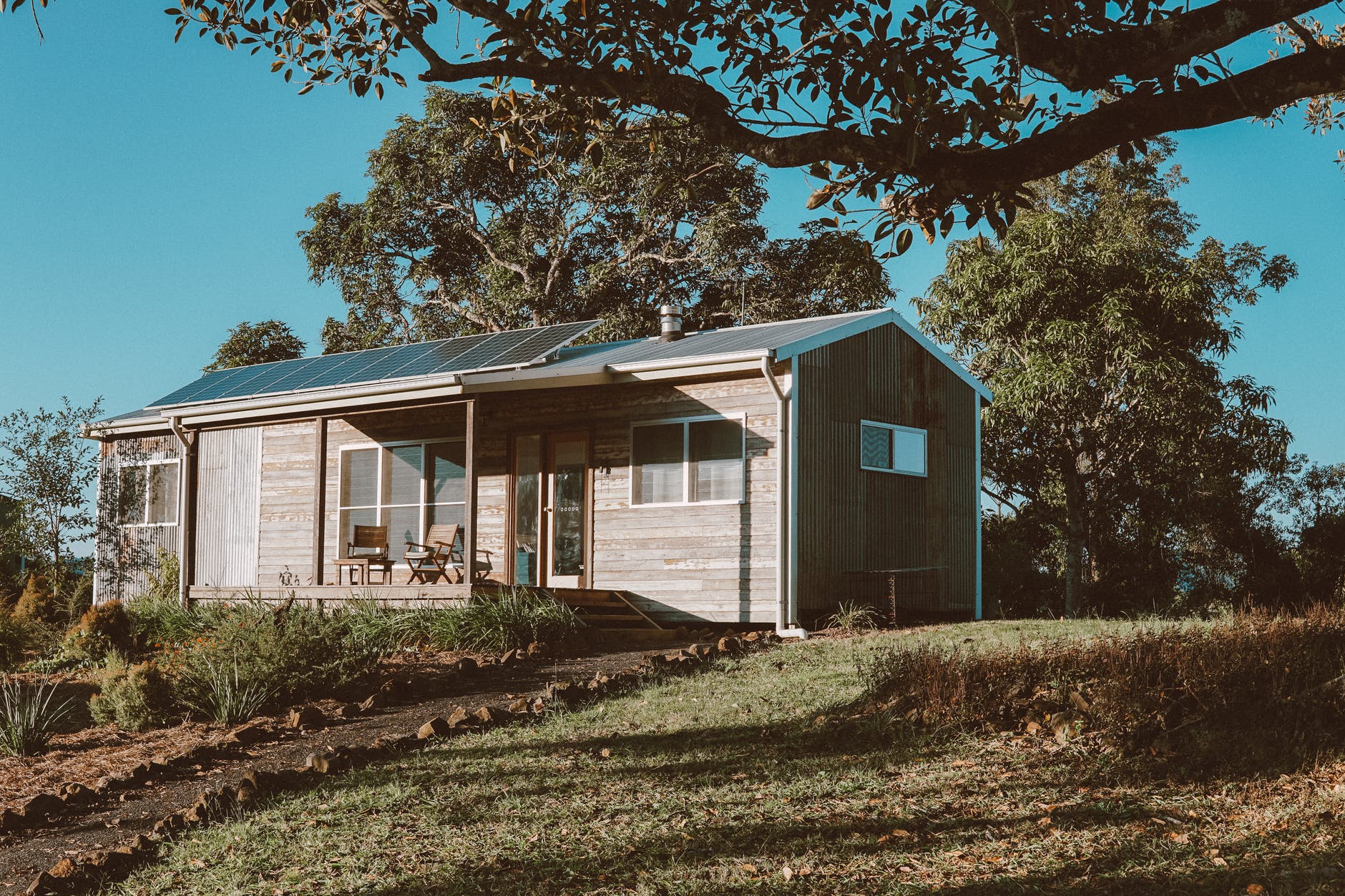
The idea of tiny homes to address homelessness has been around for a little while and some churches are making it a reality:

Photo by Elle Hughes on Pexels.com

On vacant plots near their parking lots and steepled sanctuaries, congregations are building everything from fixed and fully contained micro homes to petite, moveable cabins, and several other styles of small-footprint dwellings in between.

Church leaders are not just trying to be more neighborly. The drive to provide shelter is rooted in their beliefs — they must care for the vulnerable, especially those without homes…

Some churches’ projects are already up and running, while others are still working toward move-in day, like the Church of the Nazarene congregation in St. Paul, Minnesota, which is assembling a tiny house community for chronically homeless people with local nonprofit Settled…

Houses of worship not only have land to spare, Medcalf said, but are positioned to “provide community in a way that really is humanizing and is a part of anybody’s basic healing and recovery.”

I like this idea for the reasons cited above: congregations have a mission to serve, have land, and are often established and respected organizations in communities.

As noted elsewhere in the article, churches might not feel equipped to tackle all of the issues involved with housing – so they can work with organizations in this sector – and neighbors can register complaints – as they often do about any new housing in an area.

Thinking more broadly, given all of the housing needs in the United States, does this hint at a growing willingness of religious congregations to consider addressing this issue?

If Colorado wants to become home to Disney and be the anti-Florida, would all the evangelical organizations in Colorado Springs want out?

As Florida moved to revoke the local governance power granted by the state to Disney, Colorado Governor Jared Polis extended a welcome to Disney:

Photo by Erick Todd on Pexels.com

Colorado Governor Jared Polis has invited Disney to relocate to Colorado after Florida Governor Ron DeSantis’ “socialist attacks” on the company.

“Florida’s authoritarian socialist attacks on the private sector are driving businesses away,” Polis tweeted on Tuesday. “In CO, we don’t meddle in affairs of companies like @Disney or @Twitter.”

Polis then made his pitch for a new theme park in Colorado. “Hey Disney we’re ready for Mountain Disneyland,” he continued—a statement DeSantis’s office told Newsweek was “an odd invitation.”…

Polis also invited Twitter to launch headquarters in Colorado, regardless of “whoever your owners are.”

States fight over companies and jobs regularly, even as this round includes a particular culture war dynamic.

I am interested in the possible fallout for the cluster of evangelical organizations in Colorado Springs. While Colorado as a state made have made several decisions in the last decade or so toward blue status, it has longer featured two centers of power: a more progressive Denver and Boulder and a more conservative Colorado Springs. Even though the latter center has fewer residents than the cities to its north, it is home to many evangelical organizations. The profile of the city was particularly boosted by the move of Focus on the Family from the suburbs of Los Angeles to Colorado Springs in the early 1990s and the rise of local megachurch pastor Ted Haggard to president of the National Association of Evangelicals in the 2000s.

Would a continued shift left in Colorado lead evangelical organizations to want to go somewhere else? Some of the factors that made Colorado Springs attractive in the first place might still be there but the political climate and state policies less friendly. And where would they go? There might be safer clusters. For example, one study examines three other evangelical parachurch clusters in addition to Colorado Springs – Tulsa, Nashville, Washington, D.C. Would Tulsa and Nashville be safer and/or attractive choices compared to a changing Colorado?

Some city or community might also take advantage of this. Instead of waging a Twitter and media campaign impugning the choices of another state, why not quietly offer tax breaks, a promise of limited red tap and regulations, and a welcome plus reassurance that the evangelicals of Colorado Springs would be welcome in a political environment more to their liking.

The fate of church buildings when thousands of churches cease operating

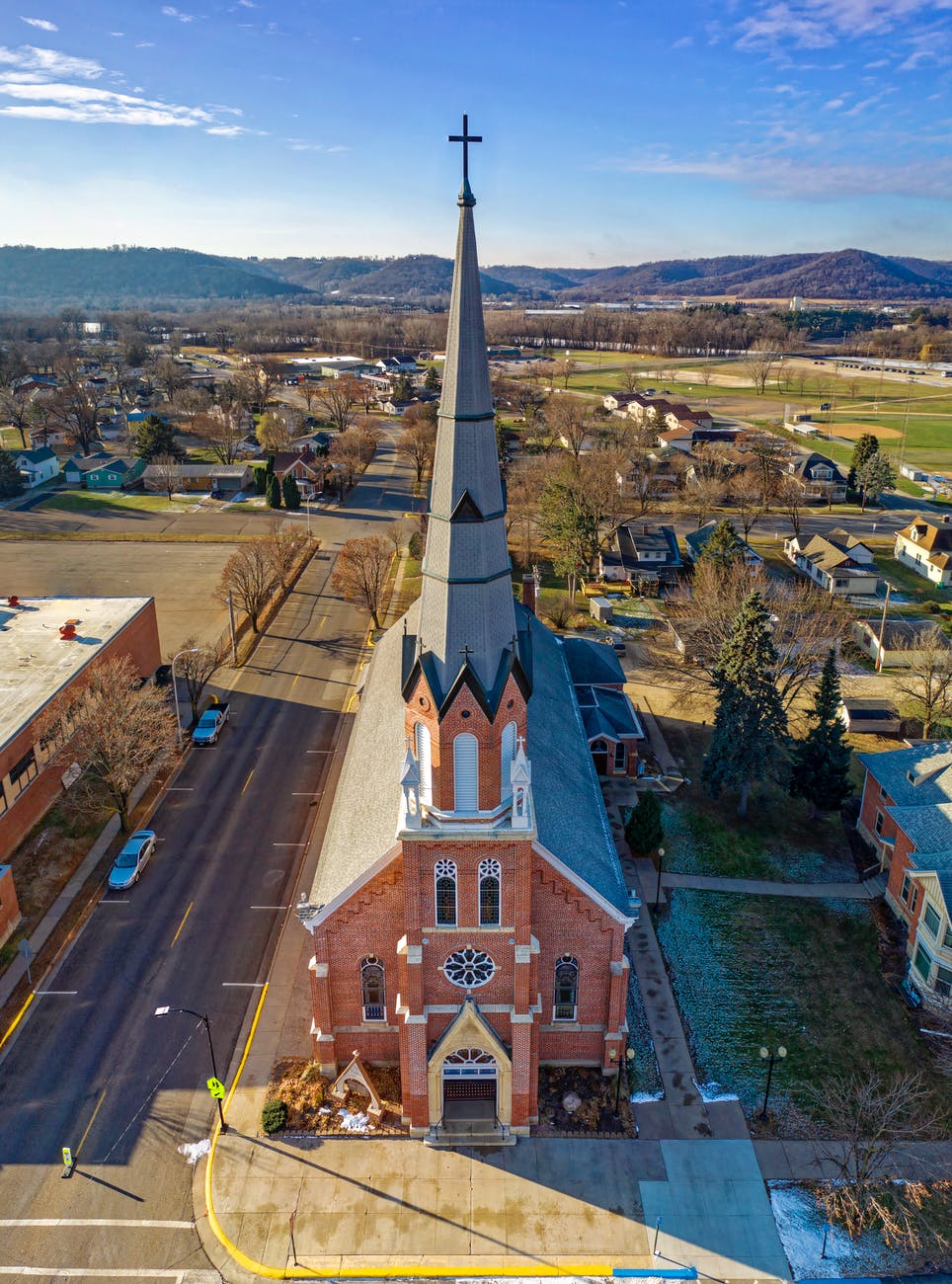
A new book addresses the fate of church buildings when congregations end:

Photo by Pixabay on Pexels.com

Dominic Dutra, author of “Closing Costs,” a new book about how church property can be repurposed, says there are thousands of churches around the country that have closed or will likely close in the years to come. And too often, he said, leaders of those churches put off any discussion about what to do with their building until it’s too late.

“I’ve had situations where buildings are empty and they have no plan at all,” he said.

A 2021 study from Lifeway Research, based on data from three-dozen denominations, found that 4,500 churches closed in 2019, while only 3,000 were started. The 2021 Faith Communities Today study found that the median worship attendance for churches in the U.S. dropped from 137 people to 65 people over the past two decades.

Dutra argues that billions of dollars in church property could be put to work for ministry ­— if church leaders become proactive about the future. He has worked with a number of religious groups to do just that.

The numbers cited above are interesting: prior to COVID-19, more churches closed than opened. Additionally, the data from the survey is consistent with the National Congregations Study run over the last two decades regarding the median size of churches.

This is one area that my co-author Robert Brenneman and I did not address as much as we could have in our 2020 book Building Faith: A Sociology of Religious Structures. One of the later chapters looks at the fate of church buildings in the Chicago area. We found big differences across four denominations and a number of church buildings put to other uses. Church building are used in a variety of ways, including used by new congregations, converted into housing or commercial space, razed, and preserved.

Based on the description of the book in the article above, my guess is the recommendation is that church buildings no longer housing congregations can be put to other faith uses. There is certainly opportunity, ranging from serving new congregations to housing non-profits or parachurch organizations to being home to community centers.

Avoid “near churches” in a real estate listing

Among other phrases to avoid in writing real estate listings, one expert suggests avoiding this:

Photo by Tom Fisk on Pexels.com

Near churches

You may be amazed that this still happens, but here and there I see this pop up in property descriptions. Perhaps worse is when a specific church is mentioned as a local landmark since it suggests not only that the prospective buyer should be church-going, but that they should be from a specific denomination.

In general, much of the advice in this piece asks sellers to broaden their categories about who might purchase the home. Why mention “near churches” if there are plenty of potential buyers who are of a different faith or of no faith? With “religious nones” as the fastest growing religious tradition, to paraphrase Michael Jordan, “non-religious people buy houses too.”

At the same time, there may be unique locations where “near churches” or “near houses of worship” might make more sense. Perhaps it is a neighborhood or community known for religious activity. Perhaps there really is an important site that people might want to live near. (One less positive possibility: could such a phrase signal the amount of traffic and activity around churches? Since real estate listings do not often dwell on negative features of the property, this may be unrealistic.)

I also suspect the “near churches” information is found much more frequently in some places than other. How about the Bible Belt or Midwest much more so than the Seattle area or the Northeast?

Measuring religious affiliation at the county level and the variation within counties

I was looking at the methodology for the “Where Should You Live?” interactive feature in the New York Times from November 2021 and noticed this section on religion and place:

Photo by Ricardo Esquivel on Pexels.com

Why isn’t there a checkbox for ____?

There are many metrics that we wanted to include but for which we couldn’t find data.

Religion was at the top of that list. The Public Religion Research Institute sent us breakdowns of religious affiliation by county. But some counties contain dozens of places. Cook County, for instance, includes Chicago and is home to a large number of Black Protestants. The county also includes Chicago’s northern suburbs, where very few Black people live. Assigning the same statistics to every place within Cook County would have been misleading.

(We did use county- or metropolitan-level statistics for a handful of metrics — but only when we thought values were unlikely to vary significantly within those areas.)

This explanation makes some sense given the data available. Counties can have significant variation within them, particularly when they are large counties and/or have a lot of different municipalities. The example of Cook County illustrates the possible variation within one county: not only does the county contain Chicago, there are scores of other suburbs with a variety of histories and demographics.

On the other hand, it is a shame to not be able to include any measure of religion. People do not necessarily gather with similar religious adherents in their own community. People regularly travel for religious worship and community. There are Black Protestant congregations in Cook County outside of Chicago even as they may not be evenly distributed across the county. Because this religion data is at the county level, perhaps it could be weighted less in the selection of places to live and still included as a potential factor.

This also speaks to a need for more systematic data on religious affiliation on a smaller scale than counties. This requires a tremendous amount of work and data but it would be a useful research tool.

Will there be more empty church buildings in the near future due to COVID-19?

COVID-19 has lowered church attendance and impacted giving. Does this mean there will be more empty church buildings in the next few years? A few hints:

Photo by Nikko Tan on Pexels.com

Biltmore is just one of an untold number of congregations across the country that have struggled to stay afloat financially and minister to their flocks during the pandemic, though others have managed to weather the storm, often with help from the federal government’s Paycheck Protection Program, or PPP, and sustained levels of member donations.

The coronavirus hit at a time when already fewer Americans were going to worship services — with at least half of the nearly 15,300 congregations surveyed in a 2020 report by Faith Communities Today reporting weekly attendance of 65 or less — and exacerbated the problems at smaller churches where increasingly lean budgets often hindered them from things like hiring full-time clergy…

After congregants voted last May to put the church property, a two-building campus perched on a verdant knoll just off Interstate 40, on the market, church leaders are still figuring out what comes next, including where the congregation will call home. But they hope to use some of the proceeds from the property sale to support marginalized communities and causes like affordable housing…

When services went virtual, savings on utilities and other costs helped keep the budget balanced. PPP loans of some $290,000 were also key to maintaining employees on the payroll and offsetting lost revenue from renting out space and other services.

COVID-19 has been disruptive for many faith communities. The article notes the fallout in multiple areas and I will add how this might affect buildings.

  1. Disrupted giving. Congregations have to decide what is essential. This might differ across congregations as they consider staffing, programs, and buildings. A congregation with an older but important structure may respond differently than a newer congregation with less attachment to a property.
  2. Decreased attendance. The building has likely experienced less use during COVID-19. Is the same building needed in the future? Is it maintainable given fewer attendees or with modifications that make streaming services and activities possible?
  3. Congregations that were already struggling may have been pushed to the brink. Whereas they may have been able to hold on to a building longer or developed a solution without COVID-19, the pandemic gave a shove to property and building concerns.

Combine these factors with the regular flow of older church buildings and congregations fading away and we may just see more church buildings available for reuse or redevelopment.

See this earlier set of posts (on reusing religious buildings, building maintenance, using space differently, and different building energy) addressing possibilities for religious buildings post-COVID-19.