Seven suburbs added over 40,000 residents between 2013 and 2023

American suburbs are used to growth; as a whole, they have been growing for decades. But some suburbs grow much more quickly than others. A recent analysis suggests these seven suburbs added more than 40,000 residents in just ten years: Meridian, Idaho, Horizon West, Florida, Buckeye, Arizona, Santa Clarita, California, McKinney, Texas, Frisco, Texas, and Enterprise, Nevada.

Photo by Erik Mclean on Pexels.com

All of these locations are in the South or the West. All of them are sizable communities; the smallest has over 60,000 residents and several are over 200,000 residents.

Imagine how this much growth in a short period of time could change a community. More development and land in the community. Increased levels of local services, everything from school to libraries to firefighters to road maintenance. More traffic and activity. A different sense of who the community is.

At some point, the rapid growth of these ten years slows or stops. There is less land for development. There is limited appetite for building up or at higher densities. Growth moves to other nearby communities or other metropolitan areas.

It may take years for these suburbs to settle into being a place (1) that once had such fast growth and (2) that lives with the consequences of their now larger size.

The reasons Americans give for fighting against data centers in their communities

As the number of data centers in the United States is growing, some residents are fighting back:

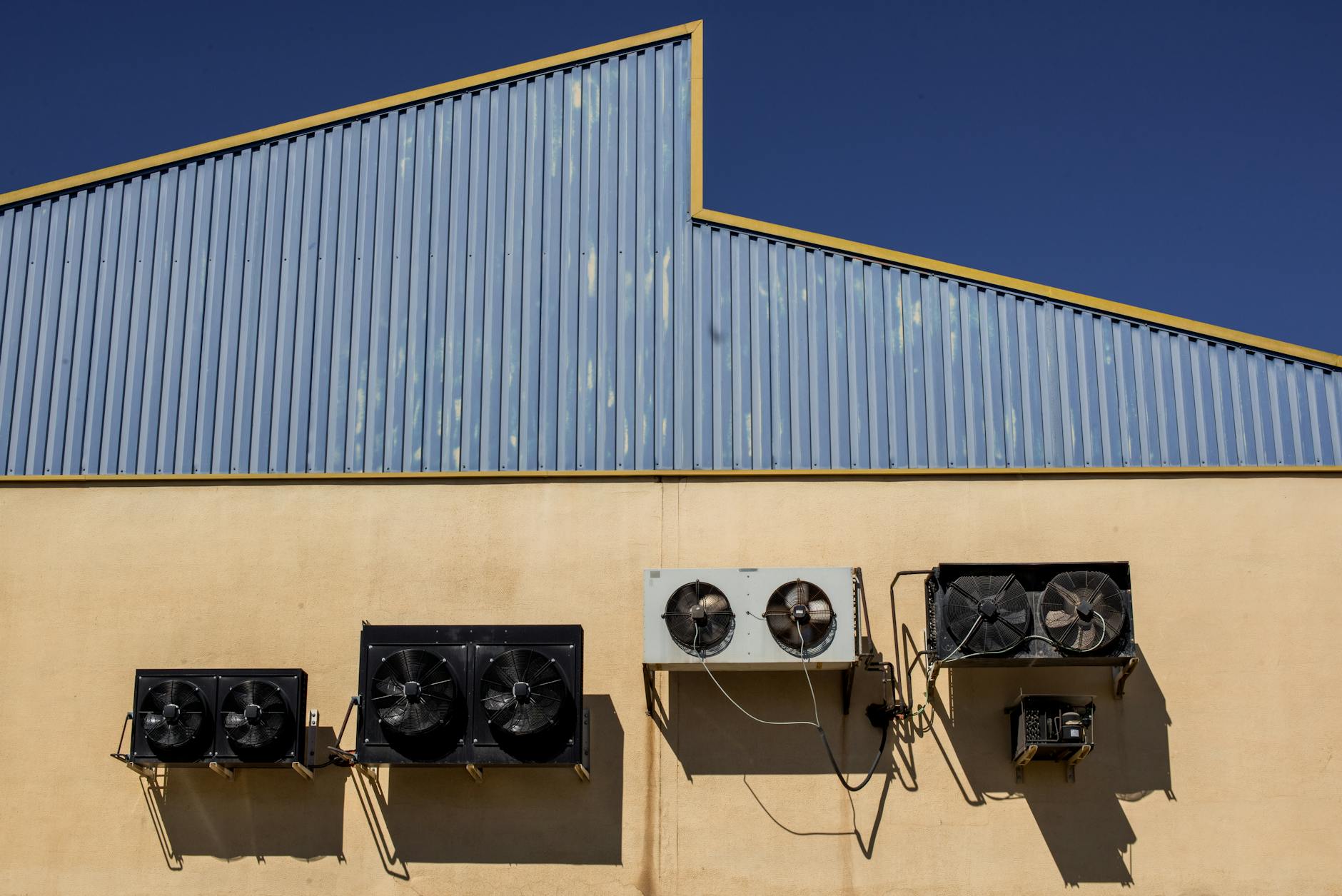
Photo by Brett Sayles on Pexels.com

Meanwhile, grassroots resistance to unchecked growth is on the rise. In Memphis, locals are trying to shut down an xAI facility powered by turbines they say are polluting the air in a historically black community that already suffers high rates of respiratory illness. A couple in Georgia told reporters their water taps went dry after Meta broke ground on a $750 million development in Newton County. In suburban northern Virginia, where the massive warehouses have become a fixture of everyday life, citizens complain that the developments are encroaching on neighbourhoods and homes at an alarming rate. In Prince William County, locals have even coalesced to try to change local ordinances and put an end to the incessant low-grade roar produced by data centre cooling systems.

In Alabama, residents in McCalla and in the City of Bessemer are united against Project Marvel. “We might be fighting an uphill battle,” David says, “but we’re going to fight it to the very end.” Locals have spent months pouring over academic reports and technical documents, trying to understand how data centres have been received in other communities and what risks might attend the development. They’ve also built a substantial coalition of allies in opposition to the project location, if not to the project itself, including Jefferson County Commission President Jimmie Stephens, State Representative Leigh Hulsey, and a wide range of environmental and other public advocacy organisations.

Generally, American communities think growth is good but they do reserve the right to try to have growth on their terms.

Reading this article and seeing online conversation opposed to data centers near me, I wonder which if these factors is more influential in the concerns people have:

  1. The environmental costs of data centers including high water and electricity usage plus possible pollution and noise.
  2. The sense that a community could find or approve better uses for the land rather than for a data center. How many jobs will actually be generated? Will the community actually see some benefits?
  3. A sense that tech and/or certain companies are dangerous or they could corrupt communities.
  4. Resistance to a potential change in local character that having a data center might represent.

Some of these are common responses in American communities to proposals for land use and others are more specific to data centers.

According to this article, there are already over 5,000 data centers in the United States. How many communities will say no to data centers and which ones will say yes?

Horror films, the suburbs, and “the seedy underbelly of American promise”

Want to show that Americans may not be able to access the American Dream? Why not make a horror film set in the suburbs?

Photo by Alex Fu on Pexels.com

Weapons is not a very scary horror film. It is, however, a fascinating movie about the suburbs and the way the architecture of family life supports silence and complicity. Horror movies often use the suburbs to interrogate the seedy underbelly of American promise. Whether exploring fear, ennui, racial tensions, or Satanic Panic, suburban horror films are about control—who has power and who desperately wants it.

Since the rise of postwar suburban sprawl, numerous cultural works have explored the facade of successful suburban life. What is hiding behind the green lawns?

Horror films do this in particular ways, following conventions in their field. One question we could ask is whether this particular film gets at this seedy underbelly in unique ways. Does it put together existing ideas in new ways? Does it break new ground in exploring the suburbs? Does it offer new commentary on suburban life here in 2025?

Another question we could ask: how many Americans are familiar with these horror film depictions of suburbs? If you have seen one or two such films, do you have a general sense of their suburban commentary?

Marijuana dispensaries and the ongoing reputation of suburban communities

Over a decade ago, numerous Chicago suburbs debated regulations regarding marijuana dispensaries. One line of argument went that such establishments diminished the reputation of communities. Here is an update for one Chicago suburb:

Photo by Nataliya Vaitkevich on Pexels.com

A second marijuana dispensary quietly has opened in Arlington Heights, years after controversy and debate about whether to allow the first one to do business in town.

Longtime Mayor Tom Hayes was outright opposed to the vice, arguing it would diminish the village’s reputation as a family-oriented community.

But supporters say times have changed, and there was the new mayor, Jim Tinaglia, holding giant scissors at a recent ribbon cutting welcoming the new business and its green — leaves and tax dollars — to town…

But others on the elected panel soon decided revenue estimates from local taxes on pot sales — as much as $500,000 per dispensary, per year — were too good to pass up.

This potential link between the status of the community and the presence of marijuana dispensaries sound like it could involve testable hypotheses.

First, we would need to get at the status of a community. The suburbs overall are considered by Americans as “family-friendly” but the suggestion here is that some suburbs are more about families than others. Could Census data reveal that a suburb is “family-oriented” or would this depend on survey or interview data of local leaders and residents? Or is this more about social class – income, wealth, housing values and types, etc. – and the status that comes with it?

Second, perhaps this is not about status but rather the need for local revenues. How do budgets look before and after considering a marijuana dispensary? Can suburbs afford to keep certain businesses out? Dispensaries may not be the only businesses suburbs do not want; this could range from tattoo shops to warehouses to other land uses considered not in character with the community.

At least from this one story above, it sounds like a change in leadership plus a need for revenue led to different local approaches. And does this come with increased local revenues and any difference in status?

The social process of determining the “worst” music

How do we know if music is any good or not? We look to the opinions of others. See the recent online discussion of whether the 2009 song “Home” by Edward Sharpe and the Magnetic Zeros is the worst of all time.

Photo by VAZHNIK on Pexels.com

Check out the song for yourself.

Perhaps an online crowd can convince people that this song is no good. But there are other social ways of addressing this question. For example, Wikipedia has a page titled “List of music considered the worst.” I have sampled across the albums and songs and there is a wide range of music that could be considered the “worst.” Or a group of friends could debate this among themselves as they play and remember different pieces of music.

This reminds me of a 2006 study in Science titled “Experimental Study of Inequality and Unpredictability in an Artificial Cultural Market.” Put people in listening rooms with a list of songs and their opinion of those songs partly depends on what others in the room think.

How do we know if music (or books or TV shows or art or the product of any culture industry) is any good? We decide this collectively through interactions and over time. What we consider the “worst” music could differ but we have opportunities to be shaped by the opinions of others – including large-scale actors – and to shape the opinions of people around us.

Whether Americans will be happy if/when housing values go down

If housing prices drop, will Americans be happy? The CEO of Redfin has thoughts:

Photo by RITESH SINGH on Pexels.com

I think we’re at an inflection point. So mostly people who have had to sell their home have been able to do so quite easily over the past two or three years. So even in the post-pandemic correction, it was fairly straightforward.

But now home sellers are struggling, especially people who bought a house during the pandemic. We are talking to them about lowering their price and they can’t, because they’ll be short on their mortgage. Now, we’re not going to have anything like the great financial crisis in 2008, where there was a wave of foreclosures. But for a particular population of folks who did buy during the pandemic, it has suddenly gotten very hard to sell their home and pay off their mortgage. And so right now the market is just teetering in a very unhappy equilibrium. I think that prices will come down, and I’m one of the people who views that as good news.

When bread prices come down, when gas prices come down, most Americans view that as cause for celebration. But when home prices go down, about half of us are worried about it and the other half are throwing a party. And really, for the younger generation, we need prices to come down…

So about 75 percent of American homeowners have a mortgage below 5 percent. We’re unlikely to see a rate like that anytime in the foreseeable future, and so those folks create this rate-locked inventory. Many, many people in America—more than half of all Americans—really couldn’t afford to buy their own home at current interest rates. So it’s very common for us to go to a listing consultation with someone who has had another baby or is going through a divorce, had some kind of life event where they need to move, and when they realize what they’re going to be able to afford from the sale of their home, they decide to stay put instead.

If the goal is to have a majority of Americans happy about housing prices, that might be hard at this particular moment. As described above, different actors may want higher or lower prices. Those wanting to rent or buy want lower prices. Those who are looking to sell might want higher prices. And the 0homeownership rate in the United States is a little over 65%.

But one hint above is that more people – a majority – might win if prices come down. If prices are too high and interest rates stay roughly where they are, there is little movement in the housing market. So could Americans be convinced that a drop is good? This would help more people get into the market and others to sell. (I wonder if it also might create more demand that would then raise prices again.)

Perhaps this is not the right topic in the first place. Focusing on this particular issue and moment obscures the larger issue: what is the long-term trajectory for American housing and for the ability of buyers and sellers? Do people perceive they can purchase a residence? What policies further (or hinder) a longstanding American idea that homeownership is a critical element of the American Dream?

Trying to change the name of a canal to match its future uses

The Chicago Sanitary and Ship Canal has existed for over 100 years. Some now want to change the name as it refers to the past, not the future of the canal:

Photo by Tom Fisk on Pexels.com

People who live and work near the canal want to see more uses of it, said Margaret Frisbie, executive director for Friends of the Chicago River. A new name, she said, could reflect the canal’s importance beyond shipping and sanitary needs…

The canal, a 28-mile stretch from Chicago’s Lower West Side to just north of Joliet where it joins the Des Plaines River, has a rich history. At the time it opened in 1900 to provide the only way for ships to navigate between the Great Lakes Waterway and the Mississippi River, it was regarded as a win for public health and sanitation and earned the applause of civil engineers…

The coalition has released a survey where people can pitch ideas for names and voice their opinions on how the canal should be cared for and used. The public will later be able to vote on favorite names, Frisbie said, before the group submits a name-change application to the U.S. Board on Geographic Names. The goal is to submit the application by the end of the year, she said…

“Modernizing the canal’s name will better reflect its role as an economic driver for the region and its potential for recreational development,” a spokesperson for Foster said in a statement.

Is it too direct to call it the “Economic Driver Canal? The “Economic and Recreational Canal”? The “Canal of Success”?

This is a branding issue. The groups behind this suggest the name is not helpful for people today who do not think much about sanitation or may not know much about shipping. A new name could revitalize interest. Perhaps it leads to increased funding, more tax revenues, a new age for the canal.

Yet it is hard to imagine a new name that might capture these new ideas. I would not be surprised if the canal adopts a name related to a historical figure or group that might connect to some of that forward-looking energy.

Once again, my pathway was blocked by a flock of turkeys

On a recent trip to a nearby state, I was driving on a country two lane road near dusk. The road had some small hills and I was going about 55 mph. In the distance I could see something in the roadway. It looked short. It did not cast much of a shadow. What was it? I slowed down as I neared and then I recognized the unmistakable shape: turkeys!

Photo by Mark John Hilario on Pexels.com

This is not my first encounter with turkeys while moving a wheeled vehicle. The first time occurred years ago while bicycling through a local forest preserve in the late afternoon.

The turkeys acted similarly in both situations: they stood there, not making much noise, blocking the way forward. On this road, I honked several times as I neared a stop. The turkeys finally looked up and then scampered off the asphalt and into the tall grass next to the road.

I do not know how much experience wild turkeys have with cars. They did not seem particularly interested in the presence of a vehicle. They were doing their thing and I until I was very near and made some noise, they did not look like they wanted to move.

I am now curious when I will again encounter turkeys in my way. I do not have many vehicle options left; I rarely, if ever, use a scooter or skateboard. I do not skate. Where will I next nearly run into a flock of turkeys?

American Dream past and future about status? Stability?

What is the American Dream actually about? An editorial in the Chicago Tribune considers how younger Americans see the American Dream:

Photo by Get Lost Mike on Pexels.com

Lower marriage rates and lower homeownership among younger adults seems to indicate the increasing elusiveness of what we have long considered the American Dream of owning your own place and building a family.

So what’s going on? Is this a generational shift in values — or the predictable result of a system that’s become too expensive and too precarious for anyone to gain a foothold?…

So is the American Dream disintegrating? Or is it changing shape?

We think the answer is a bit of both. Affordability plays no small role in explaining why fewer young people buy a home or choose to go into debt for a degree…

If Gen Z does bring marriage back into fashion, it won’t be a return to tradition so much as a reinvention of it — one that values stability, yes, but also flexibility and purpose. That’s the American Dream now.

The suggestion above is that the American Dream involved (1) homeownership and (2) having a family. Have these two things and you have made it. The contrast is provided at the end. Younger Americans perceive more instability in the economy and in relationships. The old path of securing a home and family is not as easy. They want something different: “flexibility and purpose” rather than “stability.”

How much of a change is this? The key might be getting at the motivations behind achieving these goals. What was having a home and family about? Reaching a certain middle-class status? Keeping up with the Joneses? The shift toward “flexibility and purpose” is about what exactly: self-sufficiency? Status? A better sense of self?

In other words, I wonder if this is more about changing methods to achieve the American Dream rather than a shift in goals. As noted in the editorial, many younger Americans still want to own a home. Many will pursue relationships. But the means to getting here may have changed. There is a narrative now that this former path was easy: the decades after World War Two provided easy opportunities for many Americans to buy a home and start a family. Perhaps this was a unique time in history with relative prosperity and the conclusion of a major war where the United States emerged as a winner.

Imagine several decades from now when the postwar era is one hundred years ago. Americans may still want the same things – purpose, a sense of achievement, a certain status – but what form that takes may have changed. What marks a middle-class life may look different. Feeling accomplished or stable may take a different form.

Why the CTA could not easily remove “ghost buses”

The Chicago Transit Authority hopes it has eliminated most “ghost buses” and “ghost trains” in apps that rely on its data. Why did it take a while to get to this point?

Photo by NHP&Co on Pexels.com

The updated tracker system is an additional step in CTA’s effort to eliminate “ghost buses.” The phenomenon was widespread shortly after the COVID-19 pandemic, when the CTA suffered a shortage of operators and was running fewer buses and trains than were scheduled.

At the time, the CTA explained that ghost buses were rampant because CTA had no technical way to remove the scheduled buses that were never expected to run due to short staffing. Those unstaffed buses could only be removed twice a year, when the CTA was allowed by its union contracts to updates its bus timetables.

Now, the CTA says it has mostly resolved the staffing issue, and therefore fixed a lot of the scheduled but canceled buses that show up on online bus trackers. The agency has more bus operators than it did before the pandemic, and the CTA has nearly as many train operators as before, according to the agency’s public data dashboard.

In June, the CTA ran 98.8% of its scheduled buses and 88% of scheduled trains, according to agency’s dashboard…

The CTA says its next step in further eliminating ghost buses is to update its systems to reflect bus detours and reroutes with transit apps.

I would have guessed that the CTA would have tracked trains and buses with GPS trackers. The internal data and apps would then reflect where vehicles were at that current moment. This is what apps like Uber or Lyft offer; you can see vehicles moving around in real time.

It sounds like this system worked with scheduled trips and then could not adjust if the bus or train was not there. Is there not the ability to see CTA routes in real time? Or do they not want to share that data?

It would be interesting to hear more about how this system developed. Decades ago, how did the CTA keep track of all of their routes? Was there some massive command room where a team of people updated maps and then helped make decisions about changes?