The grass cannot be much greener if the grass is already green, American society edition

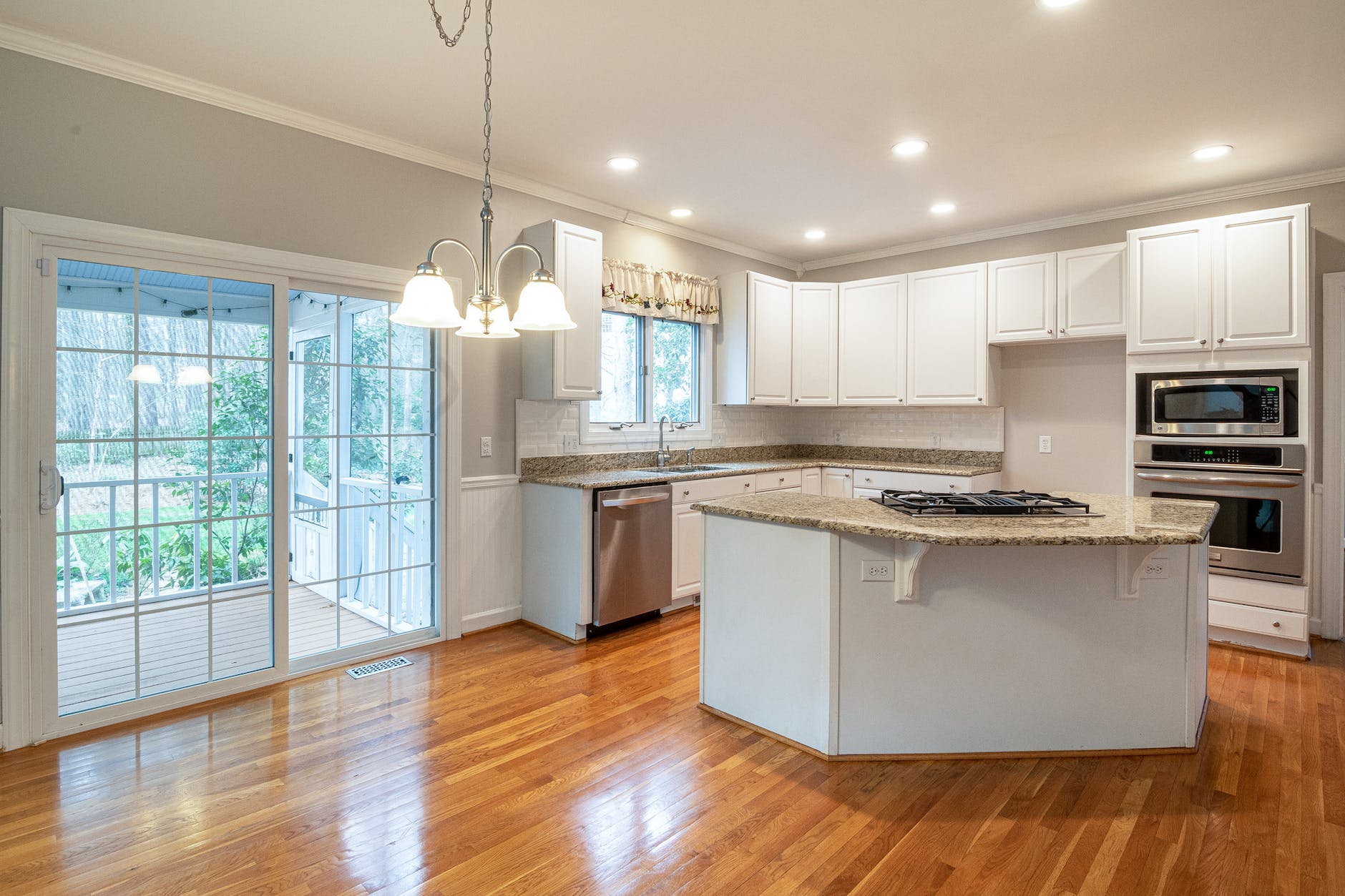
If the lives of some people in the United States are already pretty good, it is hard to improve on that:

Photo by Karol D on Pexels.com

Low interest rates, high salaries and membership discounts scored before and during the pandemic often can’t be matched today, binding people in golden handcuffs. Many feel comfortable, but stuck…

In matters big and small, people feel they cannot improve on their current situations. They’re mentally or emotionally ready for a change but can’t bring themselves to walk away.

This is how it can affect housing:

Their findings suggest that people with 3% mortgages today could be about 30% to 40% less likely to move than they otherwise would be, says Lu Liu, an author of the paper and a finance professor at Penn’s Wharton School. 

When homeowners don’t move, that limits the number of houses that are bought and sold. And Liu found that those who locked in low mortgage rates are less likely to move in response to wage growth in nearby areas, potentially making the labor market less dynamic. 

This all seems related to a basic assumption in the American Dream: life will continue to get better and better. The next generation will have it better than the current one or previous ones. Progress will continue to improve lives and outcomes.

But, what if this does not happen? Does improvement always occur over time?

The American Dream does not allow much space for stagnation or decline. There can be blips, temporary setbacks like a Great Depression or a housing crisis in the late 2000s. Otherwise, housing values should keep going up. The stock market should keep going up. Job opportunities should continue to be there. Standards of living should improve as should technology.

Whether the American Dream has peaked or whether room for improvement is limited because so much improved over the last century or so is interesting to consider. To some degree, we may not know for sure until we can look back and see the broad patterns. But, there are likely plenty of people willing to dig into the data and/or make these arguments.

Gen Z headed South looking for cheaper and bigger houses?

Sunbelt populations are growing. One reason is because Gen Z is moving to the South for housing:

Photo by Curtis Adams on Pexels.com

Traditionally, younger generations have flocked to cities to start their careers and enjoy the hustle and bustle of urban life. However, Gen Z is proving to be a little different, with more and more moving to the South in favor of large outdoor spaces, low cost of living and a slower pace of life…

The Southern region boasts more affordable housing and living space, which is becoming increasingly attractive to Gen Z as well as some Millennials and older adults who are fed up with cramped city life.

According to Storage Cafe, the average floor area of single-family homes sold in the South increased by 60 square feet between 2019 and 2022, meaning the average is now 2,608 square feet…

And since Gen Z is more likely to rent rather than own a home currently, it makes sense that more of the younger generation would be seeking out spaces where housing costs are cheaper.

I would be interested in seeing more numbers here. Are Gen Z movers doing so at similar rates as other Americans?

Is one of the side effects of all this movement a point where housing and opportunities in the South are no longer as attractive?

The final part of the article hints at the possible political ramifications of these moves. I would want to hear more about how younger adults might transform communities and day-to-day life in other ways. Is this a continuation of the American suburban dream with more liberal politics thrown on top?

The possibility that downsizing housing may now cost more

Moving to smaller housing units may not be cheaper at this point in time:

Photo by Lewis Burrows on Pexels.com

The average 30-year fixed-rate mortgage has soared to 7.49 percent, according to latest data from lender Freddie Mac, while many homeowners are locked into much cheaper 2 or 3 percent deals on their current homes. 

Meanwhile the number of smaller houses for sale has diminished in recent years, according to listing website Realtor.com – pushing up the price of the limited inventory on the market.

The number of properties for sale that measure 750 to 1,750 square feet – the size range people who are downsizing tend to purchase – has dropped by more than 50 percent since 2016, according to Realtor.com…

Hannah Jones, Senior Economic Research Analyst at Realtor.com, said: ‘Home prices for smaller homes fell 0.4 percent year-over-year in September, but remained more than 50 percent higher than pre-pandemic.

On one hand, this is about a particular moment where demand is high for small houses, few are available, and selling and buying means acquiring a higher interest rate.

But, there are also larger forces at work contributing to this moment. The United States has the largest houses in the world. This contributes to the lack of smaller homes for sale; fewer small units have been constructed in recent decades. There are also a lot of older Americans who have larger homes and may not want to keep them as they age. Are there enough units to accommodate their changing housing needs and/or enough buyers who want the homes they previously owned?

In many ways, the housing stock in the United States does not change quickly. Builders, developers, municipalities, buyers, and others interested actors need time to assess conditions and change course. Coordinated planning across different interested actors could help as housing conditions and needs change in the coming years.

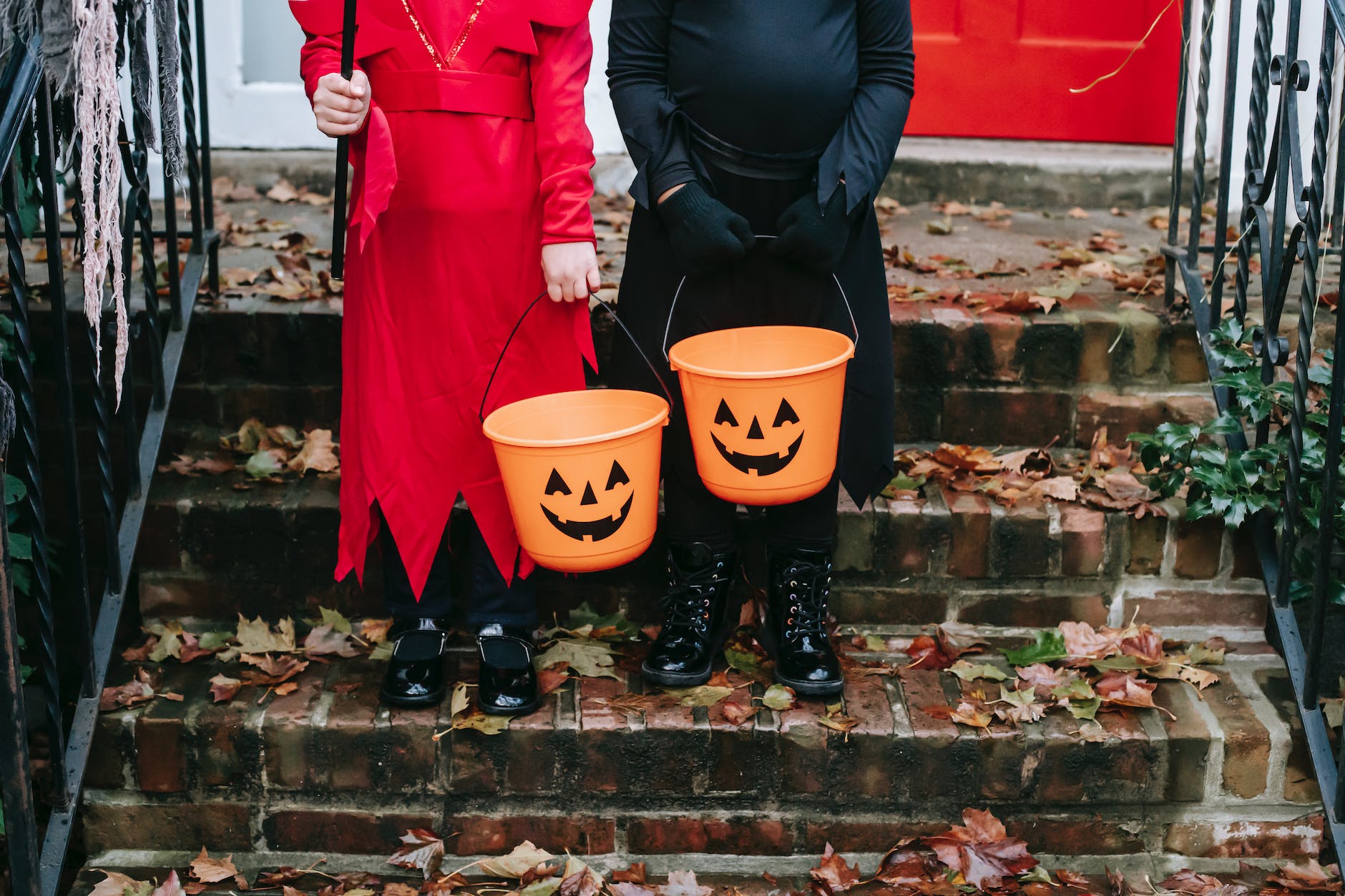
Naperville now top trick-or-treating community in the United States

Naperville has accumulated a number of high rankings over the years and now it can claim to be the best place to trick-or-treat in 2023:

Photo by Charles Parker on Pexels.com

For innocuous thrills and chills, the city is No. 1, according to a recently released study ranking the top safest U.S. cities to go trick-or-treating. The list, compiled by product research company Chamber of Commerce, considers factors like crime, pedestrian deaths and law enforcement presence to determine where a worry-free Halloween is most likely to happen.

Naperville came in first out of more than 300 places evaluated across the country. That’s a step up from even last year, when the city ranked No. 4 on the same tally heading into Halloween 2022…

For Naperville, the company found the city “retains the charm and security of a tight-knit community” with few registered sex offenders, an “excellent record of property crime” and relatively few violent crimes reported across the whole city over the past year.

No word on the quality of candy available among the city’s households and businesses? There has to be some way to get at the experiences of people trick or treating in the community.

This adds to earlier rankings that had Naperville as a best place to live, a good place for families, and high level of wealth within the region.

NJ suburb home to the second largest Hindu temple in the world

Here is a sign of increasing diversity in the increasingly complex American suburbs: the world’s second largest Hindu temple just opened in suburban New Jersey:

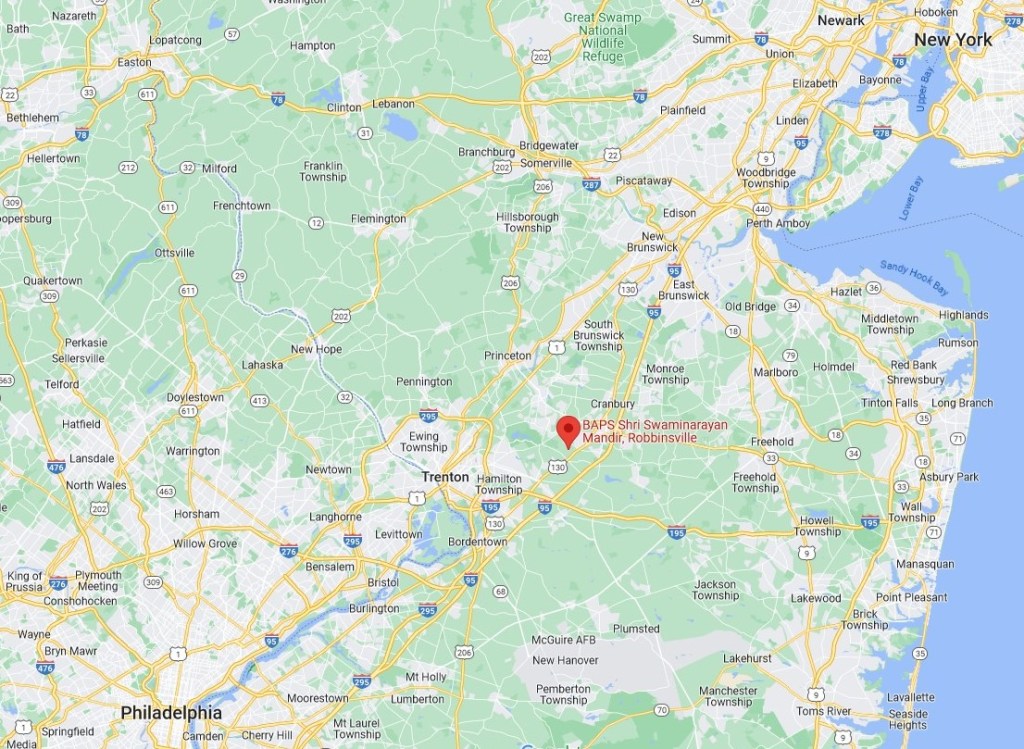
The official inauguration for BAPS Akshardham, the massive 87,975 square-foot, 191-feet tall temple in Robbinsville, New Jersey, is scheduled for Sunday…

Spanning 185 acres, the grand temple is dedicated to Bhagwan Swaminarayan, a revered Hindu spiritual leader from the 19th century. 

The temple is made of stoned of Marble, granite, and limestones – sourced from various places in Europe and shipped to India, where artisans carved intricately.  

Stone pieces were then shipped to the U.S. and assembled by volunteers from all over the world under guidance of artisans from India…

The New York tri-state area is known for its large Hindu American population and community of Hindu devotees.

According to Wikipedia, this suburban location is part of the New York City region but it also right next to the Philadelphia region:

Robbinsville Township is a township in Mercer County, in the U.S. state of New Jersey. Located at the cross-roads between the Delaware Valley region to the southwest and the Raritan Valley region to the northeast, the township is considered part of the New York Metropolitan area as defined by the United States Census Bureau,[21] but directly borders the Philadelphia metropolitan area and is part of the Federal Communications Commission‘s Philadelphia Designated Market Area.[22]

Recent research helps explain the increasing amount of religious diversity within metropolitan regions. For example, Religion & Community in the New Urban America details this in the Chicago region and I detail patterns in debates about zoning and land throughout the New York region and involving multiple religious traditions.

Yet, I suspect such a building would surprise many who do not think of suburbs in the United States this way. With new populations in the suburbs and new religious groups, many suburban communities have changed in recent decades. Suburbs do not only consist of white bedroom communities; suburbs are more racially, ethnically, and religiously diverse.

Trying to maintain hope in the pep band with a HS football team that wins 4 games over 4 years

I recently saw the football team at the high school I attended has a chance to make the playoffs for the first time in over two decades. This brought back memories…of lots of football losses.

Photo by cottonbro studio on Pexels.com

Even though I like football, I would not have been at any of these games unless I had to be. And I saw many of the games in the 4-32 record over four seasons because I was in the pep band. Usually playing alto saxophone (and one season on the sidelines playing keyboards), I was at every home game and a few of the away games. I remember some of the halftime scores where the other team had thirty points or more, we had none, and we had a halftime show to do.

What happens to the pep band amid these results? We did not pay much attention to the football action. We played our parts loudly. The crowds at football games – and those who might hear us – were limited. We did our thing and did not think much about football.

Since I also had some pep band experience in college, I can compare and safely say that it was more enjoyable to play upbeat music when your team could regularly win. Someone has to lose the game and those teams have bands, cheerleaders, and fans as well. Trying to enjoy the music and band experience is harder when it occurs during loss after loss.

Put this together with my Cubs and Bears fandom and I am used to lost games and seasons. I wish teams who tend not to have success over time do at least occasionally have times of winning. Even just a year or a few games of success can help sustain enthusiasm and hope.

The United States has somewhere between 700 million and 2 billion parking spots. Is that enough? (/s)

One expert recently put some numbers to the amount of parking in the United States:

Photo by Pok Rie on Pexels.com

According to Donald Shoup, an urban planner and parking research pioneer at the University of California, Los Angeles, the government doesn’t track the number of parking spaces. But speaking with WSJ, he estimates that on the low end, the U.S. has at least 700 million parking spaces, and on the high end, the estimate is more like 2 billion. That works out to somewhere between 2.5 and 7.0 parking spaces per registered vehicle in America.

As this article goes on to note, some believe that is way too many parking spots. (Hence, the /s tag on the post title.) All of that parking takes up a lot of space, continues to further the commitment in communities to driving, and has negative environmental consequences.

At the same time, I could imagine many drivers in the United States like having all of this available parking and might even want more spots. In a car-dependent society, people need a place to park. People expect to be able to find parking quickly and close to their destination. If parking is limited and/or costly, drivers will express frustrations. Some might note that even if they wanted to use other forms of transportation (and avoid parking issues), these are not always available or convenient.

Commitments to reduce the number of parking spots in the United States long-term probably requires a lot of small changes to different parts of planning and communities. Just as a quick example, increased mass transit use and service would help reduce the number of drivers and reduce the need for parking spots. But, that chain does not happen quickly and there are multiple levers to move. I wonder if one of the important moves would be for some key communities to change their parking guidelines, find that it works or is successful (and also enables other good opportunities for land use), and this becomes a model for others to follow.

Addiction treatment center sign goes up but lawsuit with suburb continues

The saga of Haymarket Center attempting to open an addiction treatment facility in the suburbs of DuPage County continues:

Photo by EKATERINA BOLOVTSOVA on Pexels.com

Although the lawsuit remains unresolved, Haymarket has installed a new sign with its logo of a deep-rooted tree in the center of the east side of the building, facing I-290. Haymarket, one of the largest addiction treatment providers in the region, owns the property…

After two years and more than 35 public hearings, Itasca trustees in November 2021 unanimously voted against the project. The subsequent lawsuit alleged officials violated the Fair Housing Act and other laws prohibiting discrimination against people with disabilities, including patients in treatment for substance use and mental health disorders.

Village officials, however, are adamant that Itasca, a town of less than 10,000, lacks the infrastructure to support a treatment center that would serve more than 4,700 patients a year…

The lawsuit argues that Itasca violated the Americans with Disabilities Act and other anti-discrimination laws when it required that Haymarket submit a zoning application as a planned development rather than as a health care facility. As a result, Haymarket was held to a “higher and more onerous standard than would have been required had it been allowed to apply for a special use as a health care facility.”

This is a case I have followed as I think about undesirable land uses within suburban areas. (See earlier posts here, here, and here on this particular case and a recent post on undesirable land uses in suburbs.) I would guess many suburbanites would see such treatment centers are needed within a reasonable drive of themselves – from the article: “Last year, 150 people died from overdoses in DuPage, compared to 137 in 2021” – but few want it in their community.

As the lawsuit unfolds, is the suburb losing out by having an empty building? Suburbs also do not like vacant structures.

And if Haymarket loses, where do they go next to try to open a facility? Do they try a new strategy to sweeten the pot for a community?

America’s religious nones: “They. Really. Don’t. Like. Organized. Religion.”

New data on the growing number of “religious nones” in the United States, those who do not identify with any religion , shows they do not like organized religion:

Photo by Francesco Ungaro on Pexels.com

While the nones’ diversity splinters them into myriad subgroups, most of them have this in common:

They. Really. Don’t. Like. Organized. Religion.

Nor its leaders. Nor its politics and social stances. That’s according to a large majority of nones in the AP-NORC survey.

From a related article with some numbers on this:

Among the nones who say they are also not personally religious, 68% cited their dislike of organized religion as a very or extremely important reason. For 63%, a top reason is their dislike of the stances religious faiths take on social and political issues, while 54% say the same about reports of abuse or misconduct by religious leaders. Forty-six percent cite disbelieving in God as a top reason. That was true of 81% of atheists, but just 40% of agnostics and 32% of nothings in particular.

The last paragraph suggests there are multiple influential reasons the nones cite, with a dislike for organized religion leading the way.

It is interesting to see this alongside recent figures showing declines in trust in all sorts of institutions in American life.

This also makes me think about how religious or spiritual ideas can begin or start and then there are processes that transform them into institutionalized religion. Beyond just leaving religion and spirituality solely up to individuals, how do different religious groups push against institutionalization and rationalization?

Presenting at the Conference on Illinois History and crossing disciplinary boundaries in research

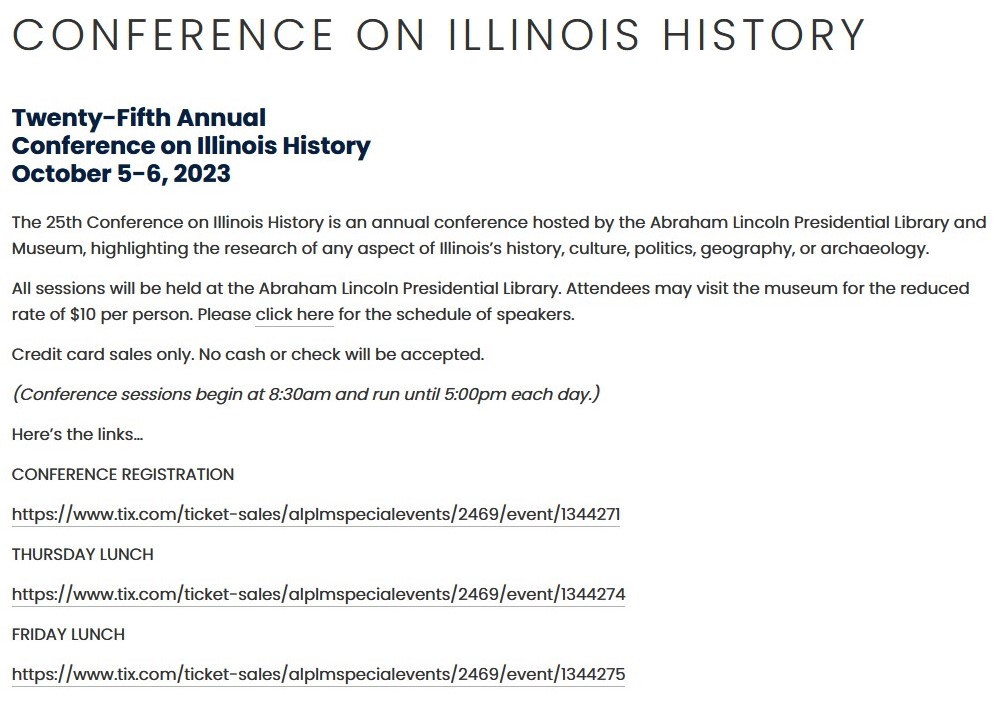
Later this morning, I will present at the Conference on Illinois History. The title of my talk is “Racial Exclusion, Public Housing, and Affordable Housing: The Cases of Chicago and Naperville” and I present in a session with my collaborator Caroline Kisiel of DePaul University.

This talk builds on previous research I did involving Cabrini-Green in Chicago and in my dissertation on the development and trajectories of three Chicago suburbs. The work is sociological but also historical. The larger scope of research involved weeks in archives looking at primary and secondary sources, reading through newspaper accounts, reading academic histories, and conducting interviews with leaders. I published portions of this work in several outlets, including the Journal of Urban History (Cabrini-Green, the surprising growth of Naperville) and Urban Affairs Review (key character moments in suburban development). Additionally, I have published work in what might be considered media studies. For example, looking at the McMansion on The Sopranos (Journal of Popular Film and Television). Or, examining the architecture and design of teardowns (Journal of Urban Design).

I have done this all with professional training in sociology. Some sociologists do more historical-comparative work and I did have some training in this during my sociology Ph.D. program. I would consider all of this work to be sociological in nature, even if conventions regarding writing, evidence, and making strong arguments differs across academic fields. I have learned much by engaging with work in other fields and it has pushed me to develop my own thinking and writing.

I am grateful for conferences, colleagues, and journals that have been gracious with a sociologist stepping into these fields.