Who benefits from preserving open space in the suburbs?

I was reading through some newspaper articles from the 1990s about development in my suburban county. In an article on a $75 million bond proposal for county voters to preserve 2,300 acres of open space (which voters did approve), here is one explanation why county voters should increase their property taxes for this purpose:

Photo by David Boozer on Pexels.com

Bond issue proponents have stressed that preserving open land will help everyone by making DuPage County an even more desirable place to live. Saving open space will improve wildlife habitats, help control flooding, improve stream water quality, avoid added congestion and protect property values, Oldfield said. (Lynn Van Matre, “DuPage voters to decide on open space,” Chicago Tribune, November 2, 1997)

The reasons listed for voting in favor of spending this money appear to split into two areas: (1) environmental concerns (wildlife, flooding, water) and (2) a particular quality of life marked by property values and limited traffic.

But, I wonder if the first category is a subset of the second set of concerns. Suburbanites in Chicagoland care about property values and have concerns about drug treatment centers, waste transfer facilities, religious buildings, apartments, and anything else they think threatens their financial investment.

Do suburban residents care more about environmental concerns or about what development might go into these open spaces? From the perspective of some (and this was also expressed in the article above), such land could be used for affordable housing or for community amenities. To keep it as open space means it could not be other uses that people could benefit from.

If preserving property values is the top concern regarding land development, this is the sort of decision that might be made. Such a decision does not come cheaply; local property owners pay more but they do so in order to hopefully boost their investment even more.

(See earlier posts involving questions about who benefits from open space in New Jersey and the motives behind acquisitions by forest preserves.)

Equating the population of a good sized American small town and the world’s new largest cruise ship

Americans like small towns. What if a small town was always on the water? The world’s new biggest cruise ship will carry a sizable number of people:

Photo by Shawnna Donop on Pexels.com

Royal Caribbean’s luxurious new vessel Icon of the Seas is nearing completion in the Turku shipyard on Finland’s southwestern coast, its maiden voyage scheduled for January 2024…

Resembling a village more than a ship, the mammoth vessel boasts colourful waterparks, more than 20 decks and can carry nearly 10,000 people…

Papathanassis noted that “there are obvious economic benefits” to mega-sized ships, reducing the cost of individual passengers.

With its seven pools, a park, waterslides, shopping promenades, ice skating rink and “more venues than any other ship”, larger vessels like the Icon of the Seas also offer more options for spending money on board.

Here is a breakdown of who will on the ship/floating village:

Royal Caribbean International’s Icon of the Seas is a mammoth 365 meters long (nearly 1,200 feet) and will weigh a projected 250,800 tonnes. For comparison, that’s like trying to keep two CN Towers afloat.

When it sets sail on Caribbean waters in January 2024, it will comfortably hold some 5,610 passengers and 2,350 crew.

Imagine a large American small town or a small suburb floating on the ocean around the world. What might take up several square miles on the American landscape can be packaged on one boat. The density is a lot higher and it has a lot of recreational amenities in a small space. Besides space, what else is missing?

I am reminded of the ideas of floating communities outside of international waters and/or apocalyptic scenarios where humans do not have access to land. Could a ship this sized be turned into a permanent settlement and how would this alter what is on board?

Dallas-Fort Worth metro area predicted to pass Chicago area in population in roughly a decade

Which American metropolitan areas are poised for large population gains in the coming years? One prediction says Dallas-Fort Worth will soon be the third largest metro area:

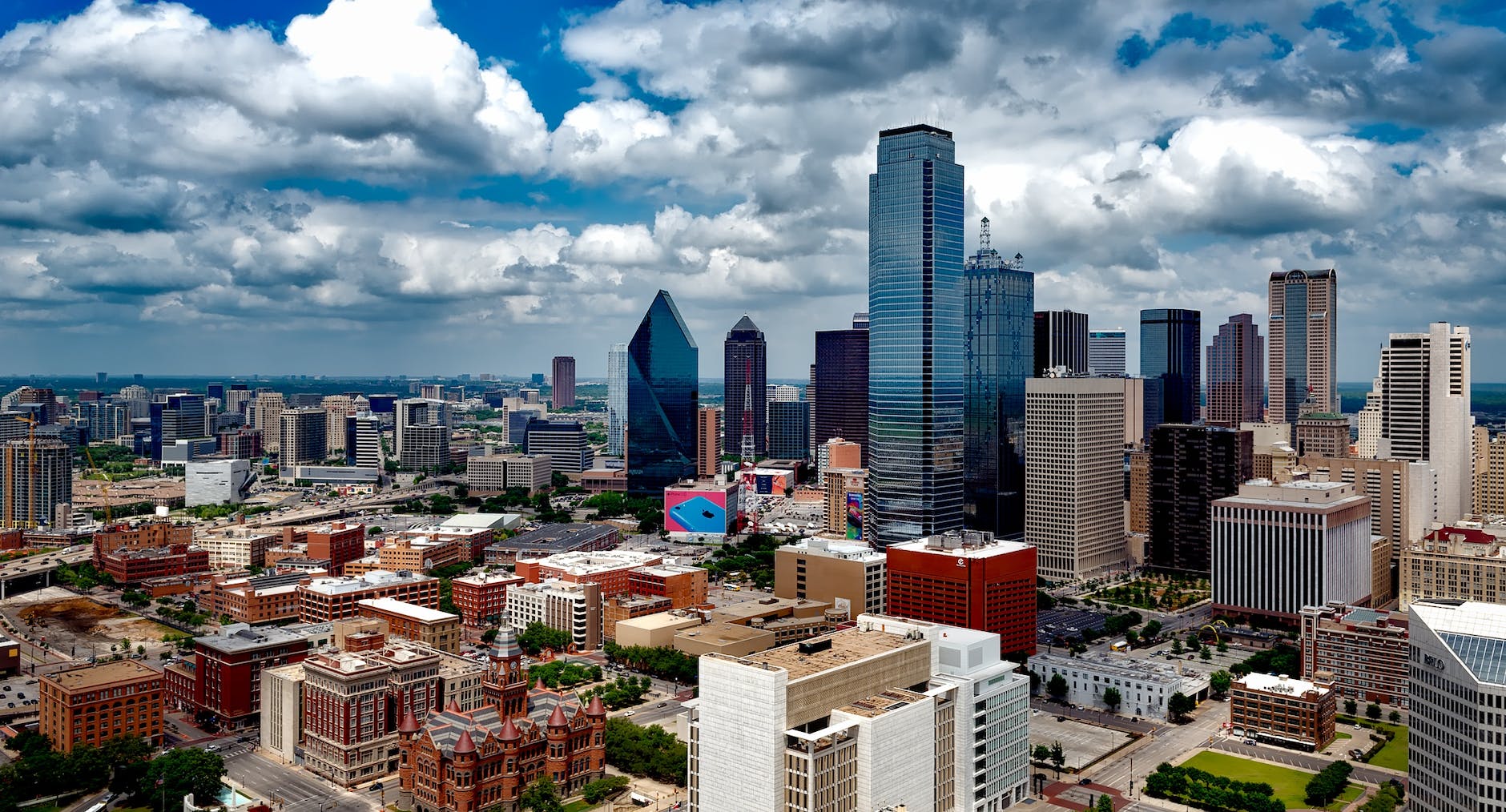
Photo by Pixabay on Pexels.com

Dallas-Fort Worth is one of the country’s fastest growing metropolitan areas…

Business expansion and relocations are fueling the Dallas region’s growth, putting it on track to overtake the Chicago area and become the third-most-populous metro within the decade…

Dallas-Fort Worth is on track to be the only U.S. metropolitan area to house two cities with populations over 1 million in the next five years, as people and companies seek profit, opportunity and room to grow.

The population shift to the Sunbelt continues.

As for Chicago, it was passed by Toronto in population, Houston might pass it soon, and Dallas-Fort Worth pass the metropolitan area population. How far will the city and metropolitan area be down lists in a few decades?

Cities and metropolitan areas rise and fall in population over time. Chicago was once smaller than St. Louis than shot past it with the latter losing a lot of population in the 1900s. Where will the new boom cities be?

Chicago suburbs lobbying at the federal level – and it might pay off?

Multiple Chicago suburbs employ lobbyists in Washington and those lobbyists may pay for themselves:

Photo by Tima Miroshnichenko on Pexels.com

Crashes at one of the state’s most dangerous rail crossings, in Elmwood Park, have killed seven people and injured at least 27 over the last few decades. Village officials want to build an underpass to make the intersection safer, but the village can’t do it alone — the $121 million price tag is more than four times the western suburb’s annual budget, according to Village Manager Paul Volpe…

Elmwood Park has paid $230,000 since 2020 to the transportation lobbying firm Tai Ginsberg and Associates, according to federal lobbying records. So far, the village has received $3 million in federal funds, Volpe said…

Illinois cities, towns, villages and counties besides Chicago spent about $838,000 on federal lobbyists in 2020, $1 million in 2021 and $1.4 million in 2022, lobbying disclosure records kept by the U.S. Senate and analyzed by the Chicago Tribune/Pioneer Press show. This year, they have spent a total of $720,000 so far, per lobbying disclosures. The grand total is slightly inexact because lobbyists are not required to report receipts under $5,000.

One town that’s turned its attention to opportunities in Washington is north suburban Niles, where the village board recently renewed a $60,000 contract with lobbying firm Smith, Dawson and Andrews…

So far, Alpogianis said the village is more than satisfied with that change. He pointed to a recent $200,000 federal grant for the Niles Teen Center the village secured with the help of U.S. Sen. Dick Durbin’s office.

Suburbanites tend to like local government because they believe it is easier to convey their interests and they can see and experience local decisions. So getting more federal money that can be directly used to improve a local quality of life is a win, right?

I could imagine two primary objections:

  1. Do lobbyists always pay for themselves? The story cited highlights several examples of successes. Does this work for every suburb?
  2. Is federal money the money suburbs want? Local government beholden to federal dollars? Some might object, others may not care where helpful money comes from.

It would be interesting to hear from the lobbyist side about firms or individuals that do well for suburbs. What is their success rate?

The role of land in new rankings of the most disadvantaged and advantaged places in the United States

A new analysis ranks the most disadvantaged and advantaged places and one common factor is land and property ownership:

Photo by Kelly on Pexels.com

Immediately, the rankings revealed a stark geographical pattern. The first surprise—especially for professors who have spent our careers studying urban poverty—was that the most disadvantaged places on our index were primarily rural. But they didn’t fit the stereotypical image of rural America. Though some of these were majority white, most were majority Black or Hispanic. We could see, too, that many places with large Native American populations ranked among the most disadvantaged in the nation. Considerable poverty exists in Chicago, Los Angeles, and New York. But in our apples-to-apples comparison, none of those cities ranked among even the 600 most disadvantaged places in the nation. The only cities on that list were a relatively small number of industrial municipalities such as Cleveland, Detroit, and Rochester…

The places that our index identified as the 200 most disadvantaged are concentrated in three regions—Appalachia, South Texas, and the southern Cotton Belt. (Not one county in the West, apart from those with disproportionately large Native American communities, showed up on the list.) These places share a history of intensive resource extraction and human exploitation not seen to the same degree elsewhere in the United States. In each place, this economic pattern emerged (or, in the case of the Cotton Belt, fully flourished) in the late 19th or early 20th century. In each place, one industry came to dominate the economy, a pattern that held, broadly, until the 1960s, when King Cotton, King Tobacco, King Coal, and South Texas agriculture, would bow to the twin forces of automation and global competition…

Exploring the other end of our Index of Deep Disadvantage—the places identified as those of greatest advantage—was also vital to our research. Once again, we were surprised by where the index took us. It was not Manhattan or tech-rich Seattle. Instead, the list pointed us to the upper Midwest: Minnesota, the Dakotas, Wisconsin, Nebraska, and Iowa. Overall, poverty rates in these places are very low, babies are born healthy, people live to a ripe old age, and a low-income child usually has a similar chance of making it into the middle class as any other kid.

Counties that rank among those of greatest advantage began as agricultural communities with modestly sized farms, many originally secured through the 1862 Homestead Act that made landownership widely available. Many of these places have built on this history of broad-based wealth by making significant investments in schools, which has contributed to high graduation and college enrollment rates over generations. Using the best data available, we found that they have enjoyed the lowest rates of violent crime, income inequality, and public corruption in the nation. These counties are unusually rich in social capital: Residents are connected to one another through volunteerism, membership in civic organizations, and participation in other community activities.

Who owns land? Who benefits from working it? It sounds like the Upper Midwest offered more opportunities for settlers to purchase land and develop wealth over the long run. In contrast, the three areas of disadvantage identified had more disparities in land ownership versus who worked the land. Additionally, Native Americans were removed from land that offered opportunities.

Approaches to addressing inequality and poverty in the United States can often involve homeownership but less discussed is land. A house is often tied to a particular property that has its own value. The land identified in the rankings above were particularly important for subsistence. This is not so much the case with urban and suburban land today where the proximity of the land to amenities and the size of the lot matter more than the owner’s ability to live off of it.

The rankings above also hint at the long-term consequences of land ownership. Who can access and own land now will matter for decades, possibly centuries.

“While in the Chicago area, Naperville is a must-see tourist destination”

Naperville is the third largest city in the Chicago region and in Illinois. It is wealthy and has a thriving downtown. Is it also a tourist destination?

Photo by Tim Gouw on Pexels.com

Naperville, a charming western suburb of Chicago, Illinois, offers many activities catering to locals and visitors alike. Illinois is a well-known destination for tourists, but this area of the state has more to offer than meets the eye…

While in the Chicago area, Naperville is a must-see tourist destination. From beaches to museums to parks, and tasty pizza, Naperville, Illinois, can’t be beaten.

The ten recommended things to do are: Naper Settlement, the DuPage Children’s Museum, Morton Arboretum, the Millennium Carillon, iFly indoor skydiving, McDowell Grove Forest Preserve, BrightSide Theatre, Centennial Beach, Hollywood Palms Cinema, and RiddleBox Escape Room.

Several quick thoughts in response to this list:

-Nine of the ten are in Naperville while Morton Arboretum is outside city limits in Lisle.

-I am surprised the Riverwalk is not a must-see on its own. It is not along the biggest river but it is a popular spot with food, music, civic buildings, and people-watching all available.

-Of the ten things to do, some are more unique to the community than others. For example, escape rooms can be unique but they are available in lots of places. It is harder to find the particulars at Naper Settlement or a carillon tower or a large public pool near downtown made out of a quarry.

-How many people each year visit Naperville to see the suburb?

-More broadly, how many suburbs in the United States are tourist destinations?

Why people move to Phoenix (and similar locations)

The Sun Belt has boomed in population and some cannot seem to figure out why. A historian explores the appeal of Phoenix:

Photo by Yigithan Bal on Pexels.com

“Why would anyone live in Phoenix?” You might ask that question to the many hundreds of thousands of new residents who have made the Arizona metropolis America’s fastest-growing city. Last year, Maricopa County, where Phoenix sits, gained more residents than any other county in the United States—just as it did in 2021, 2019, 2018, and 2017.

At its core, the question makes a mystery of something that isn’t a mystery at all. For many people, living in Phoenix makes perfect sense. Pleasant temperatures most of the year, relatively inexpensive housing, and a steady increase in economic opportunities have drawn people for 80 years, turning the city from a small desert outpost of 65,000 into a sprawling metro area of more than 5 million. Along the way, a series of innovations has made the heat seem like a temporary inconvenience rather than an existential threat for many residents. Perhaps not even a heat wave like this one will change anything…

Outside the summer months, the quality of life in Phoenix is really quite high—a fact that city boosters have promoted stretching back to before World War II. They traded the desiccated “Salt River Valley” for the welcoming “Valley of the Sun.” Efforts to downplay the dangers of Phoenix’s climate go back even further. In 1895, when Phoenix was home to a few thousand people, a local newspaper reported that it had been proved “by figures and facts” that the heat is “all a joke,” because the “sensible temperature” that people experienced was far less severe than what the thermometers recorded. “But it’s a dry heat” has a long history, one in which generations of prospective newcomers have been taught to perceive Phoenix’s climate as more beneficial than oppressive.

Most people surely move to Phoenix not because of the weather, but because of the housing. The Valley of the Sun’s ongoing commitment to new housing development continues to keep housing prices well below those of neighboring California, drawing many emigrants priced out of the Golden State. Subdivisions have popped up in irrigated farm fields seemingly overnight. In 1955, as the home builder John F. Long was constructing Maryvale, then on Phoenix’s western edge, he quickly turned a cantaloupe farm into seven model homes. Five years later, more than 22,000 people lived in the neighborhood; now more than 200,000 do. Even today, the speed of construction can create confusion, as residents puzzle over the location of Heartland Ranch or Copper Falls or other new subdivisions that include most of the 250,000 homes built since 2010…

“Why would anyone live in Phoenix?” serves as nothing more than a defensive mechanism. It makes peculiar the choices that huge numbers of Americans have made, often under economic duress—choices to move to the warm climates of the Sun Belt, to move where housing is affordable, to ignore where energy comes from and the inequalities it creates, and, above all, to downplay the threats of climate change. In that way, Phoenix isn’t the exception. It’s the norm.

Another way to put this: Phoenix and similar places embody the suburban boom in the United States. They offer cheap homes away from more established settlements in the United States. Sure, it involves a lot of driving, hot weather, and uses many resources but it appears to offer a pathway to comfort and convenience.

At some point, such growth may not be possible. For example, water supplies might not hold up. Or, Americans might decide a car-dependent life is no longer as desirable.

Another big factor that might slow growth is rising housing prices. If cheaper housing is indeed driving many people to Phoenix, more expensive housing might send people elsewhere. Phoenix is not the cheapest market people could go to. Right now it is popular and growing but this does not necessarily have to last.

Participatory budgeting in the US started in Chicago

Participatory budgeting involves community members in discussions of and decisions about local monies. While this is not a widespread process, it started in this country in Chicago:

Photo by Pixabay on Pexels.com

Participatory budgeting, in which members of the public get a direct vote in how tax dollars are spent, has been around in Chicago for more than a decade, and made its U.S. debut here in the North Side’s 49th ward in 2009, led by then-Ald. Joe Moore.

The concept was born in Porto Alegre, Brazil in 1989 and is now used in cities across the world. In Chicago, residents vote on how to spend the majority of the $1.5 million in “menu money” City Council members are allotted for infrastructure projects each year — in the handful of wards that choose to use it. It’s also utilized in a handful of Chicago Public Schools as a form of civic education.

But despite its special ties to the city, participatory budgeting, or PB, has failed to launch on the scale advocates envision, lagging other U.S. cities such as New York and Boston that have implemented different versions of citywide programs. Now, proponents of participatory budgeting see an opportunity with Chicago’s newly elected mayor, who has vowed collaboration with residents, and whose transition report calls for Chicago to be “real pioneer” in participatory democracy.

Many local issues involve money. Where is it coming from? Where is it being spent? Who is benefiting and who is not? One local expert describes the benefits of participatory budgeting:

“That’s what our research shows is that over and over again, people who participate talk about how they learn more about what their needs are in their community, that they meet more neighbors, they feel more positively about their aldermen, they learn more about how government works, they’re more comfortable contacting government agencies and officials,” said Crum, whose group also helps alderpersons facilitate ward-level participatory budgeting processes each year.

Would doing more participatory budgeting help restore public faith in government? If a good number of residents feel that elected people or appointed officials are not using money in ways that are good for the community, it can be easy to criticize the whole system. At the least, participating in budget conversations can help reveal all of the possible priorities and how decisions might be made.

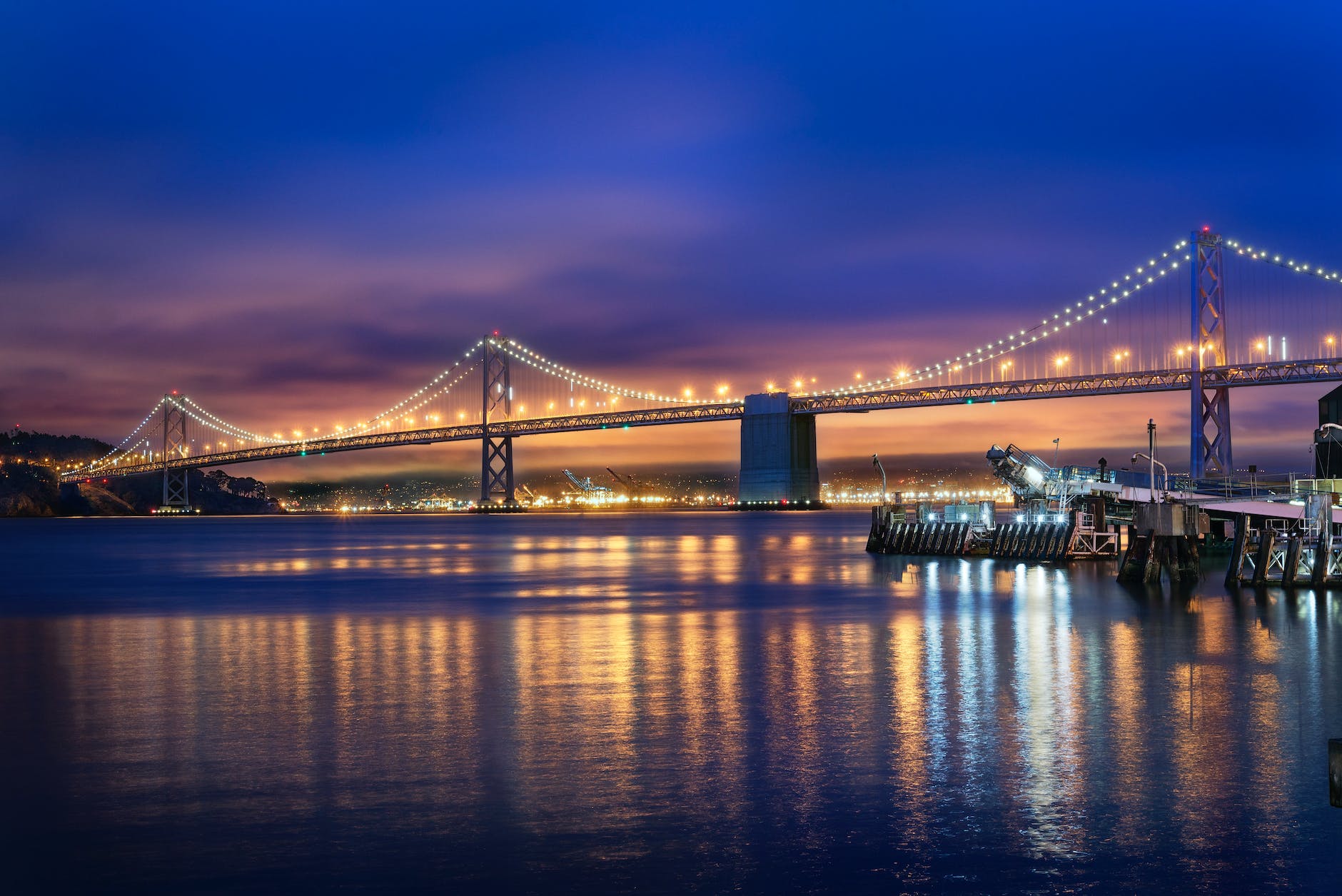
An expanding Bay Area megaregion moving toward Sacramento…

How big could a Bay Area megaregion get?

Photo by David Henry on Pexels.com

The Bay Area exodus may be mostly a myth, but the trend of people moving inland, leaving coastal metros in search of more space at better prices, is growing. There are more people moving to Sacramento from the Bay Area than anywhere else in the country, according to Redfin data. People moving from the Bay Area to Sacramento isn’t a new phenomenon, but COVID-19 sped up a process that experts say was inevitable, and it could have long-lasting effects on the state…

They’re far from the only ones who have made the move, and all the new transplants are having a significant impact on Sacramento’s population, which grew 26% between 2000 and 2019, according to census data. The Bay Area’s grew just 14.6% during the same period. A recent study conducted through a collaboration between the University of Southern California, Occidental College, and UC Davis suggests increased migration could even be creating a “megaregion,” breaking down barriers that traditionally separated the coastal cities of the Bay Area from the inland region around Sacramento.

The “megaregion” and the resulting demographic shifts will have an outsized impact on traffic and infrastructure, creating new needs for California’s future. While the study showed there was a small dip in the proportion of people commuting to the Bay Area from Sacramento County, the percentage of people “supercommuting” — defined as a commute of more than 50 miles — had grown from 17% in 2008 to 20% in 2018. That percentage grew in every Central Valley county studied and is likely to continue as high-wage earners with jobs centered in the coastal metros seek larger homes inland…

The issues are not limited to Sacramento and the surrounding suburbs, according to Rodnyansky, and his research suggests the megaregion could stretch all the way to Fresno. Past Sacramento, people are also spreading out to surrounding El Dorado and Amador counties, where they will likely face challenges they’re not prepared for, like managing their land for increasing wildfire risk.

Three thoughts come to mind:

  1. Is there anyone these days seriously opposed to megaregions? I could see some concerns rising about distinct identities of particular cities and communities or addressing increasingly complex problems in a growing region. Yet, having a larger region means a larger economy, a bigger population, and an increased status.
  2. It would be interesting to hear more about communities in between these areas. What is it like to live between Oakland and Sacramento that might feel a pull one direction or another?
  3. Now is the time to be planning ahead to the issues an expanding region brings. Can the infrastructure handle this? How should disputes between communities and major actors be resolved? Are there new population and business nodes that will develop? (Is there a point where development should not continue? This is not the kind of question that tends to be asked in the United States when growth is good.)

Finding religion in group athletics

As more Americans eschew religion, they can search for meaning and community elsewhere. This includes exercising and moving with others:

Photo by Leon Ardho on Pexels.com

Some readers mentioned fandom as a bonding mechanism — World Cup enthusiasts and participants in fantasy football leagues, for instance, are creating ongoing relationships. But mostly I heard from people who bonded through athletic activities. Some talked about clubs that formed organically in their neighborhoods or towns, like that Colorado hiking group. But many who answered the questionnaire I launched in April about moving away from organized religion talked about replacing their weekend worship with SoulCycle, CrossFit or Orangetheory, and finding friends and even some spiritual solace in those activities. (In case you’re wondering, I’m an Orangetheorist and a SoulCycle dropout, though I can’t say I’ve ever felt a metaphysical connection to either one.)…

Casper ter Kuile, the author of “The Power of Ritual: Turning Everyday Activities Into Soulful Practices,” studied CrossFit and SoulCycle when he was a student at Harvard Divinity School, and told me that he observed some of the “mutuality” that Johnson experienced when he talked to CrossFit devotees. CrossFitters write down their fitness goals on a whiteboard and, whether a goal is comparatively big or small, “goals are honored with the same amount of dignity and celebration.” There’s a feeling that you have the agency to meet your goals and that the community is also involved in your success. There’s also a lot of evangelizing for CrossFit that can parallel the outreach or recruitment aspect of religious worship…

SoulCycle even mimics some of the emotional beats and physical qualities of a church service. Ter Kuile and Thurston have described the “soul sanctuary,” where classes are held, and the way “Every SoulCycle ‘journey’ has a similar arc, which peaks during a hill ballad when riders turn up the resistance dial on their stationary bike and climb uphill in the dark.” The reader Susana Odriozola, 40, who lives in California and was raised Catholic, though she no longer goes to church, said that parts of the SoulCycle experience reminded her of going to Mass: They throw water out to you and you turn to your neighbors and greet them…

One part of churchgoing that’s tougher to satisfy with group fitness is the multigenerational inclusiveness of those spaces. You’re not going to bring a little kid to a CrossFit box. And though Schnurr told me that people bring their families hiking, her own experience is that some of her grandkids love it, but others, not so much. I’ve tried to drag my kids along on various hikes and climbs and, similarly, it’s not always a hit. Like me, Odriozola said she’s still trying to figure out how to give her children “spiritual strength without religion,” and that is an ongoing journey. And there are fitness spaces that are difficult to access or inaccessible for those who have mobility and health challenges.

Functional religion is an interesting topic. I have blogged about work replacing religion, politics looking like religion, and sports fandom mimicking religion.

Not mentioned here is the involvement of bodies in these activities. As sociologist Randall Collins suggests in Interaction Ritual Chains, the movement of bodies together and the emotional energy that develops is important. These physical activities help by asking people to move their bodies in sync. Religious activities do this as well; people do not gather and worship as a bunch of brains but they involve their bodies and emotions. Additionally, none of the stories in the piece above mention transcendence or interacting with forces/being beyond the people in the room.

How many of these groups/activities explicitly advertise these particular benefits? They cannot guarantee certain communal experiences but they could point to the potential for it to develop.