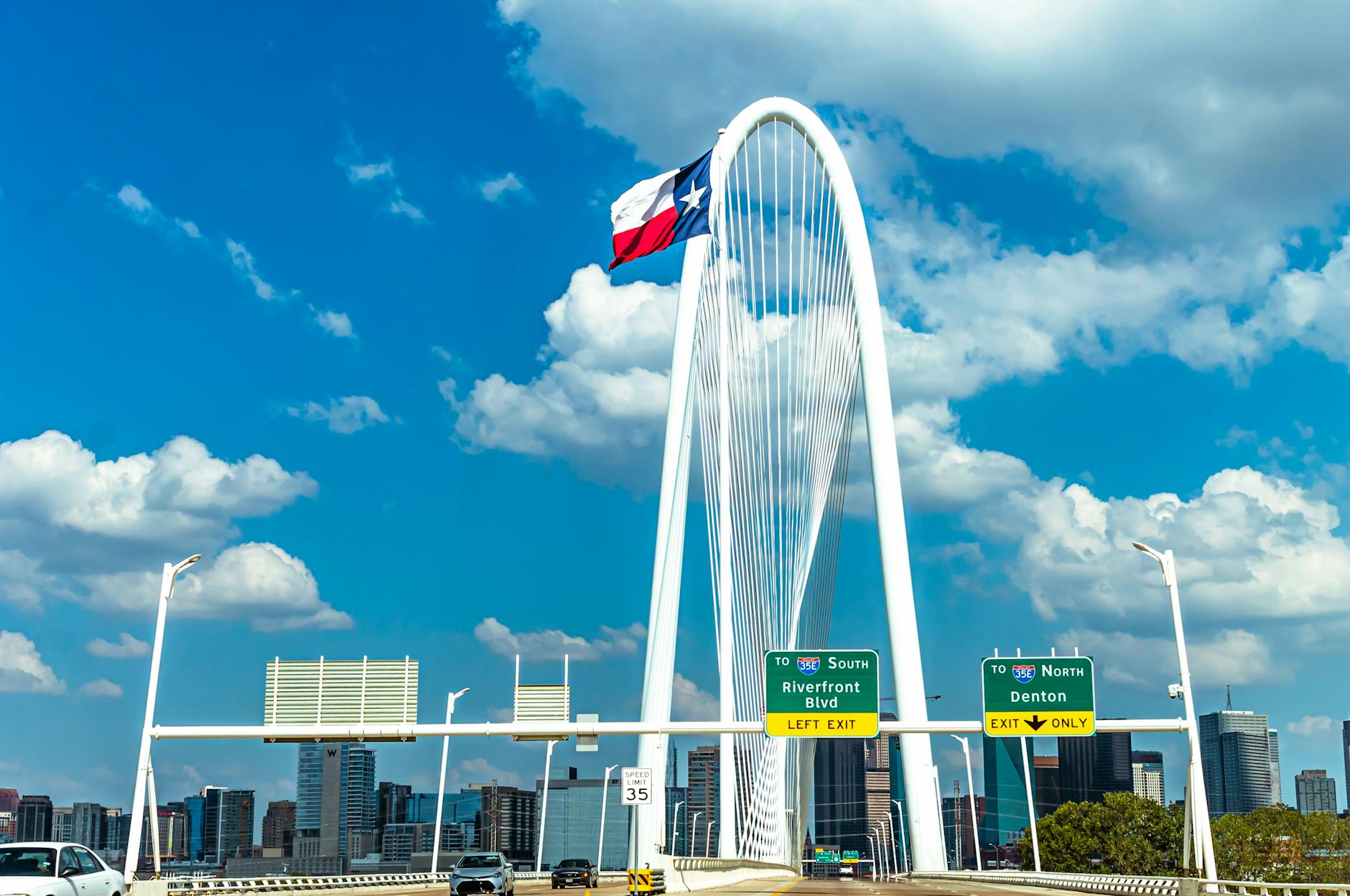
Could more unusual speed limits help improve safety on the roads? Here is one speed limit I saw recently along a road coming out of a shopping plaza:
Most speed limits are in increments of 5. I assume this is, in part, due to standardization of roadways throughout the United States. But, why not throw in some more unusual numbers to catch the attention of drivers? Would I be able to stick to the occasional 13 or 31 or 67 more easily than the standard 15, 30, or 65? If every speed limit was a number off of the 5/10s pattern, they might make the problem worse. The key could be to have some numbers off from typical numbers.
The switch to more digital speedometers in cars could help with this. A good number of speedometers are also in increments of 5 and 10 so matching 13 mph could be hard. If more drivers have digital displays where a 5/10 increment does not exist, then escaping the rigidity of 5/10s could be easier.
What if each of the thousands of American suburban communities had a maximum population? I had the idea after rereading David Macaulay’s City:
What could the benefits be for American suburbs? As described here, the problems that come with more residents than resources would not occur. Suburbs could be a similar size. Each suburb could have facilities for residents to access and infrastructure they need.
I am under no illusions that most Americans would want a population cap for suburbs or any other community. And simply capping the population does not address all the issues communities and their residents face. But, it is interesting to consider what good might come from planning ahead for meeting needs in communities with a maximum population.
There’s a specific damp and melancholy ancient smell that comes out in Boston after sunset, when the weather is cool and windless. Convection skims it off the ecologically disrupted water of the Mystic and the Charles and the lakes. The shuttered mills and mothballed plants in Waltham leak it. It’s the breath from the mouths of old tunnels, the spirit rising from piles of soot-dulled glass and the ballast of old railbeds, from all the silent places where cast iron has been rusting, concrete turning friable and rotten like inorganic Roquefort, petroleum distillates seeping back into the earth. In a city where there is no land that has not been changed, this is the smell that has come to be primordial, the smell of the nature that has taken nature’s place. Flowers still bloom, mown grass and falling leaves and fresh snow still alter the air periodically. But their smells are superimposed; sentimental; younger than those patiently outlasting emanations from the undersides of bridges and the rubble of a thousand embankments, the creosoted piers in oil-slocked waterways, the sheets of Globe and Herald wrapped around furry rocks in drainage creeks, and the inside of every blackened metal box still extant on deserted right-of-way, purpose and tokens of ownership effaced by weather, keyhole plugged by corrosion: the smell of infrastructure.
It was out in force when Louis and Renée came up Dartmouth Street from the Green Line stop at Copley Square.
I feel I may have experienced a similar smell before in the city in similar conditions: in the big city in the evening with a bit of dampness. The smell from the roads, buildings, mass transit, and built environment is a particular one. Would I chalk it up to infrastructure? Does this require relatively few people around so that the smell of infrastructure is accentuated?
But, this might not be the exact smell of Boston. All cities have some unique features and histories that contribute to a specific milieu, including the smell. Trying to describe that in words is a difficult task and not one that I would want to take on.
A recent excursion to an adventure farm included looking at a small house meant for children’s play:
I realize this might not work for taller people but shorter spaces could work when trying to maximize space. Why do ceilings have to be 8 foot tall (or even taller for a good number of places)?
The primary place I have seen shorter ceilings in houses involves two situations:
Tiny houses that try to incorporate a loft or second floor so they have a lower ceiling for part of their unit.
Older basements.
Shorter buildings could be enhanced with vaulted ceilings or skylights or do not necessarily have to come with smaller furniture as depicted above. Could shrinking the whole scale of a home, including the height, help free up space or enhance the coziness of a space?
(I enjoyed thinking about this for the few minutes I spent in this building. It was a similar experience to exploring the tiny apartments featured at Ikea.)
Oak Brook is a diverse community, welcoming to everyone except criminals. We’re open for business!
A little bit more on each of the three pieces of diversity, welcomes, and business activity.
Regarding diversity, the U.S. Census Bureau QuickFacts say the community of just over 8,000 residents is 61.8% white, 30.3% Asian, 4.5% Hispanic or Latino, and 0.6% Black or African American. The median household income is $146,409, the median housing value of owner-occupied units is over $801,000, and the poverty rate is 4.9%.
Many suburbs say they are welcoming and few, if any, would say they welcome criminals.
The community has plenty of business activity as it is home to Oakbrook Center and numerous offices along I-88.
Is this formula – diversity + welcoming + business – the secret to suburban community success? Or, is this a viewpoint from suburbs with certain features and character?
But even these studies failed to confirm that three of the five activities the researchers analyzed reliably made people happy. Studies attempting to establish that spending time in nature, meditating and exercising had either weak or inconclusive results.
“The evidence just melts away when you actually look at it closely,” Dunn said.
There was better evidence for the two other tasks. The team found “reasonably solid evidence” that expressing gratitude made people happy, and “solid evidence” that talking to strangers improves mood.
How might researchers improve their studies and confidence in the results?
The new findings reflect a reform movement under way in psychology and other scientific disciplines with scientists setting higher standards for study design to ensure the validity of the results.
To that end, scientists are including more subjects in their studies because small sample sizes can miss a signal or indicate a trend where there isn’t one. They are openly sharing data so others can check or replicate their analyses. And they are committing to their hypotheses before running a study in a practice known as “pre-registering.”
These seem like helpful steps for quantitative research. Four solutions are suggested above (one is more implicit):
Analyzing dozens of previous studies. When researchers study similar questions, are their findings consistent? Do they use similar methods? Is there consensus across a field or across disciplines? This summary work is useful.
Avoid small samples. This helps reduce the risk of a chance finding among a smaller group of participants.
Share data so that others can look at procedures and results.
Test certain hypotheses set at the beginning rather than fitting hypotheses to statistically significant findings.
One thing I have not seen in discussions of these approaches intended to create better science: how much better will results be after following these steps? How much can a field improve with better confidence in the results? 5-10% 25% More?
First-time buyers are struggling the most. Their share of June sales fell to 26%, down from 30% in June 2022. That is the lowest share since the Realtors began tracking this metric.
The higher end of the market, however, appears to be recovering. While sales were down across all price points, they were down least at the higher end. That was not the case last year, when higher-priced home sales were dropping off sharply.
The bifurcated housing market continues. At the cheaper end, the bar for entering keeps rising. With prices up, mortgage rates up, and supply down, it is harder to purchase a first home. At the more expensive end, those with means continue to be able to buy and sell.
Panama City Beach, Florida is a resort town full of lots of fun and scenic views. In a very confusing naming twist, there’s also Panama City, Florida which is just right down the road from the resort town. Unfortunately, people don’t think it’s nearly as beautiful or fun as PCB.
The main complaint of residents, who are in agreement that Panama City isn’t the prettiest place to live, is all of the McMansions that seem to pop up all over the place. They’ve hit a critical mass of boring, tasteless homes and now it’s starting to drag the city down!
A resort town where the McMansions are the aesthetic problem in the community? This is a community with big hotels, a Ripley’s Believe It or Not, a waterpark, and many of the typical establishments found along roads in the United States.
I wonder if the issue with McMansions is more about (1) changes to existing neighborhoods and/or (2) the McMansions are more visible to residents while the resort areas appeal more to tourists.
Thinking more broadly, in a beach town, how easy is it to fight against McMansions? Being on the water leads to higher real estate prices and more demand.
From the beginning, much of Barbie’s existence — her unrealistic physical proportions, the lack of racially diverse dolls, the toy’s reinforcing of gender roles — has been debated in jest and in seriousness. But her home, which has not been as publicly parsed or praised like the doll, has been a mirror for the various social, political and economic changes the rest of the country was experiencing. It has followed housing patterns and trends, from chic, compact urban living to suburban sprawl to pure excess. At times, it has been out of step, ignoring the country’s ills (Barbie’s never been broke; she has never lost her house to foreclosure)…
Financial institutions frequently turned down mortgage applications for women without male co-signers when Mattel debuted the Dreamhouse in 1962, three years after Barbie shook up the toy world, arriving in a one-piece bathing suit and kitten heels…
Society has held up “this promise of homeownership as part and parcel of the American dream,” for centuries, said Ms. Castro. More than 60 years of Barbie’s Dreamhouses have further instilled that in us from a young age.
To own a home at all, especially one with a three-story slide, can feel unattainable for most. From July 2021 to June 2022, home buyers were richer, whiter and older than they had been in decades. The share that were first-time homeowners was the lowest its been since at least 1981. And, the median home price exceeded $400,000 for the first time.
It’s called a Dreamhouse for a reason. We can all dream, can’t we?
Is the Barbie Dreamhouse simply a plot to teach children that they should aspire for a large home with all the latest furnishings and in a bright style?
Thanks to a recent local news segment that asked people in Naperville about Chicago politics, the two communities are being compared. Why?
Let’s be real, though: The mayor was also taking a dig at Naperville. It’s become a Chicago tradition. Whenever a Chicagoan complains about the proverbial suburbanite who claims to be from Chicago, it’s always someone “from Naperville.”…
I really wasn’t finding anything in Naperville that I couldn’t get in Chicago. That explains why I only visited every 10 years. I could live a complete life without ever going to Naperville, especially since it’s such a long haul on the train. But I’m sure that’s also true of Lemont or Schaumburg or Libertyville. Of all suburbs, why do Chicagoans single out Naperville for scorn? At the Naper Settlement, I met a woman who offered an answer. Jeanne Schultz Angel grew up in Naperville, went to Waubonsie Valley High School, then moved to Norwood Park, from which she commutes back to her hometown to work as associate vice president of the history museum. That evening, she was helping set up for a Weezer tribute concert.
“Speaking both languages, I think there’s this perception and then there’s the reality,” Angel said. “People in Chicago might think they know the brand, which is idyllic suburban. We always make the top lists of where to live. Chicagoans tend to get beaten up about living in Chicago. There’s a lot of learning curve that can increase understanding. People who think Naperville is this very idyllic, very American place, it does surprise. We have a Patel Brothers. Naperville has a constant transient population, but I think a lot of people who grew up in Naperville had their careers here and bought homes here. I love the city. I love Naperville, too. It’s a different kind of life.”
Chicagoans need to respect Naperville’s differences and stop cracking jokes at its expense. Stop thinking about Naperville altogether. It’s so far away. Why let it bother you? I just spent a day in Naperville and I probably won’t think about it for another decade, when I find a reason to visit again.
On one hand, these explanations make some sense. Naperville is a successful suburb. It is the second largest suburb – after Aurora – in a sprawling region of over six million suburbanites. Chicago is a big city whose big city problems can often be in the news or political conversations. Residents of the two communities might have different ideas about the kinds of lives they want to live. Thus, the two places serve as shorthand for a long-standing American competition between cities and places outside of them.
On the other hand, there are plenty of stories and reports that take a similar tack to this piece. The journalist or researcher from the city comes out to the suburbs to examine the life they find unusual. What do those suburbanites actually do day-to-day? How do they survive in such a place devoid of culture and sophistication?
The two municipalities might do better to cooperate more as leaders within a metropolitan region that could better coordinate its efforts to help all in the region thrive.