Nearly every high school nickname in Illinois, and across the country, is a product of a local history. Your nickname, blandly innocuous or a 300-year-old derogatory insult toward indigenous people, is not special. More than 30 schools in Illinois currently claim Native American-related nicknames. There are also 36 schools that are Eagles, 29 that are Bulldogs and 29 that are Tigers…
Heritage and lore are often behind nicknames: Outside Champaign, the Bunnies of Fisher Jr./Sr. High School took their name from a century-old tradition, when players carried rabbit-feet. The DeKalb Barbs nod to DeKalb as the origin of barbed wire. In Brighton, Southwestern High School — honoring the area’s Native background without making a whole group of people a caricature — are Piasa Birds, a reference to the mythical creatures found painted into cliffs on the nearby Mississippi River.
Some of the best Illinois nicknames play off a town’s industry: The Rochelle Hubs honor Rochelle’s history as a travel junction, where rail lines and several interstates converge. The Cornjerkers of Hoopeston — home of the National Sweetcorn Festival — is another example of a team turning an insult (here, against corn farmers) into a point of pride. There’s a similarly defiant streak about Farmington Farmers and Coal City Coalers.
Discussions of changing the mascot often invoke this history:
“My first death threat I ever got as a legislator was after I filed that first mascot bill,” West said. “You hear, ‘If I see you crossing the street, I promise to forget how to use my brakes.’ My goodness — over a mascot! You are coming for their traditions, they say. Tradition is always the main argument. Finances too — how much it will cost to get new uniforms and so on. But the energy, and anger, in these conversations is about history.”
Local history is important to many communities. But there are also plenty of moments in history where communities make decisions to go different directions. As they consider external pressures and internal pressures, communities come together and discuss how they would like to respond. My research considered decisions about development but this could also apply to mascots. Have the times changed? How do newer residents in a community feel? What is the broader purpose of schools? The discussion may be about the name of the high school names bu tit likely invokes broader questions about how communities think about themselves and the world around them.
Of the examples of high school mascots provided in the article, the names highlighting a local industry are intriguing. What might this look like in the twenty-first century? The Office Parks? The Hospitalists? The Data Centers or Warehousers? The Drivers? New traditions could begin with names fitting more recent work and industry patterns.
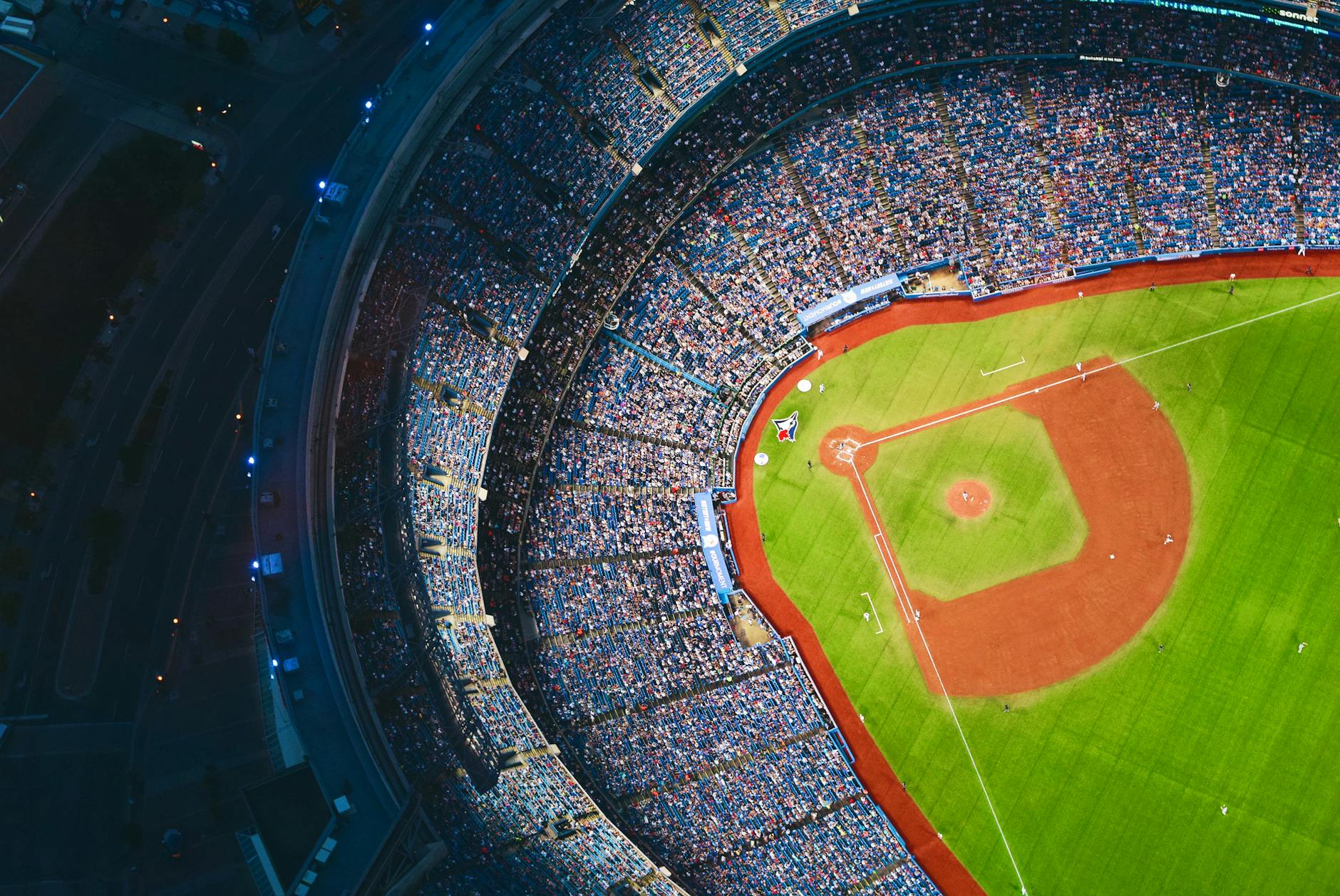
Of the top 10 teams in playoff position, seven teams come from the top seven North American markets by population figures, according to the Census Bureau and Canada population sources. They are, 1) the New York Yankees and New York Mets, 2) Los Angeles Dodgers, 3) Chicago Cubs, 5) Houston Astros, 6) Toronto Blue Jays and 7) Philadelphia Phillies.
The three other teams in the top 10? Detroit, Tampa, and Milwaukee. According to one source, they rank as the #17, #24, and #outside of the top 50 most populous metropolitan regions.
A few other thoughts about this list:
Mexico City is the largest North American market. Of course, MLB only has teams in the US and Canada (one team).
Missing teams from the other largest markets: Dallas-Fort Worth, Atlanta, Washington, D.C., Miami.
Metropolitan population may not compare exactly with market size. This listing of MLB market sizes has a slightly different order.
All seven teams in the big markets play in stadiums in their city (not in the suburbs).
The argument in baseball tends to go that the teams in the largest markets have the most money to spend. This could be connected to local media deals (the LA Dodgers with the biggest) or perhaps owners from certain places having funds or lots of fans attending games in certain places.
But having money does not necessarily guarantee being in a bigger market or winning a World Series. One analysis:
Since 1995, 48% of the champions and 38% of the contestants in the World Series have had top 5 payrolls. 93% of the champions and 83% of the contestants have been in the top half of payroll. Only two low-payroll teams have won it all — the 2002 Anaheim Angels and the 2003 Florida Marlins. It has been two decades since that has happened.
The list of losing World Series teams in the bottom half of payroll for the season includes the 2007 Rockies, 2008 and 2020 Rays, 2010 Rangers, 2014 Royals, 2015 Mets, 2016 Indians, and 2023 Diamondbacks.
Lately, though, there’s a rash of billionaires breaking ground on new golf clubs for reasons that seem to defy economic logic and environmental sanity. It seems they are so rich that they are willing to spend whatever it takes to build their dream playgrounds, and it’s less important, in many cases, whether the new enterprise makes money or not.
“Many are ‘financed’ by wealthy people who want to do something great, and know how to work the system to get tax breaks etc. from localities eager to have a great project providing jobs and tourism [dollars] in their backyard,” Tom Doak, the great golf-course architect, wrote on Golf Club Atlas, a popular blog, last year…
Last year, more than 25 new golf courses were opened around the country, the most in the past decade. Many of these were add-ons to existing resorts or in remote private locations, such as Mauk. Land and building costs have become too pricey to justify the construction of new golf courses and clubs in Metropolitan areas, according to the National Golf Foundation, but in remote locations like Mauk, there’s plenty of room and the costs are often low…
Ground zero of golf madness is almost certainly Florida, which has more courses than any other state in the country by far, with nearly 1,200. Between the warm, humid weather; the flat, sandy terrain; and the abundance of wealthy retirees with plenty of time and money on their hands, the state is incredibly attractive to developers. It doesn’t hurt that the rich are flocking there in droves, thanks in part to the fact that there’s no state income tax…
“It’s all about controlling the number of people who have access to maintain the quality of the experience,” Nathan explains. “That’s the funny thing about golf. Every golfer’s dream is to be on this amazing piece of land, on this perfectly manicured golf course. And to be out there alone with their group.”
I am interested to know the scale of tax breaks available for such courses. If local governments are willing to offer tax breaks, does this mean they find a golf course and associated development to be an improvement over the current state of the land? If so, how much money do they expect that course to generate (vs. how much it could generate without the same tax break or with the ongoing non-golf course use of the property)? It sounds like this is a tool for more rural areas to quickly jump start development but it is harder to know the longer-term consequences.
It would also be interesting to know what happens to golf courses and clubs long-term after they get past their opening and first generation of members. It is one thing to plan the course and see it come to fruition. Do kids and grandkids then continue that legacy or do they sell their portion? Do these courses become their own institutions that go on for generations beyond or even in different directions compared to the original vision cast?
When big-box stores like Toys R Us or Buy Buy Baby close, they leave behind tens of thousands of empty square feet — spaces that can be difficult to fill.
Finding new tenants for these massive spaces is no small task. But one unlikely contender, pickleball — among the nation’s fastest-growing sports — is breathing new life into these cavernous retail spaces.
From Vernon Hills to Batavia, commercial indoor courts are opening at a steady clip, bringing renewed energy, foot traffic, and consumer spending to shopping centers facing an uncertain future…
Retail market experts believe repurposing vacant big-box stores as indoor pickleball facilities is a smart business move. These spaces offer high ceilings, ample parking, and central locations. For pickleball chains seeking an affordable 40,000- to 50,000-square-foot space, these vacant stores provide an ideal solution…
One key concern is tax revenue. Unless the facility also sells equipment, apparel, or food and beverages, the host municipality won’t see much financial benefit from sales tax, leaving a gap that traditional retail stores typically fill.
Vacancies are bad for multiple reasons. They sit empty, suggesting there is no demand for space in the community. They may attract undesirable activities. They are not generating revenue. The buildings and parking lots may not be kept up to the same level of open stores.
Filling vacancies, therefore, is important. Anything using the space broadcasts activity and suggests a more vibrant community.
But also important is the need for revenue. Spaces in suburbs designated for commercial use are intended to help provide tax dollars to be spent on local priorities. If these spaces are not generating revenue, might they be better used for housing or community spaces or recreation use?
From the article, it is less clear about whether pickleball facilities can provide the tax revenues suburbs might hope for. Is there a point where suburbs might be unhappy with pickleball there, even if they do address the vacancy issues?
Having a team in Moline would not fit in the modern NBA where teams are located within the largest cities in the United States. Even at the start of pro basketball, many teams were in large cities. But, Moline was not alone in having an early pro basketball squad. Here are some of the other Rust Belt cities that had early teams:
-Providence
-Pittsburgh
-Fort Wayne
-Rochester
-Syracuse
-Anderson, Indiana
-Sheboygan, Wisconsin
-Waterloo, Iowa
What does it mean that all of these cities are out of the NBA within a few years? It could be part of a larger restructuring and expansion of professional sports around this period. More cities in the West and South gained teams. I recently read that the St. Louis Cardinals were the furthest south and west team in baseball for a long time; this is hard to remember when all pro leagues stretch coast to coast.
But it could also be partially due to the relative decline of the Rust Belt. These places that were once sizable and/or important places fell behind as other cities grew in population and status. Or the region itself, stretching from the middle of New York and Pennsylvania through the eastern Great Plains, fell on harder times.
Pro basketball may have started in small big cities in the Midwest but it did not stay there long as the sport and other places grew.
Photo by IVProduced MUSIC|MOODS|MEDIA on Pexels.com
She and her husband raised a family of 11 — the logical number for a huddle in the home — in a modest house in Des Plaines. Tim, a Bears vice president, died in 2011 and Michael died in 2020, both of cancer. In 1994, the McCaskeys moved to a ranch home one block away. Daughter Anne Catron moved into the old house.
“I probably live in the smallest house of any NFL executive, but that’s what Ed and I were comfortable doing,” McCaskey said. “That was our lifestyle and now I’m able to stay in that house by myself with wonderful neighbors and Anne is a block away.”
Imagine you are moving into a suburban neighborhood. As you meet the neighbors over time, you get a sense of what they do. One neighbor says they “own an NFL team.” Wait, what? What are the odds of this happening? There are only 32 NFL teams so there are a limited number of owners. And how many owners live in a “modest house” in the suburbs?
Two additional thoughts:
This may point to a different era of ownership of pro sports teams. Franchises today are worth billions. This was not always the case. McCaskey’s father helped found the NFL when college football was more popular. Even in 1979, when McCaskey took over ownership, the Bears were not worth over $6 billion (their value now).
The owner of the Chicago Bears, a team associated with the third largest city in the country, lives in the suburbs. How many pro sports team owners live in the suburbs (where a majority of Americans live)? (See this earlier post on how many baseball teams have stadiums in downtowns.)
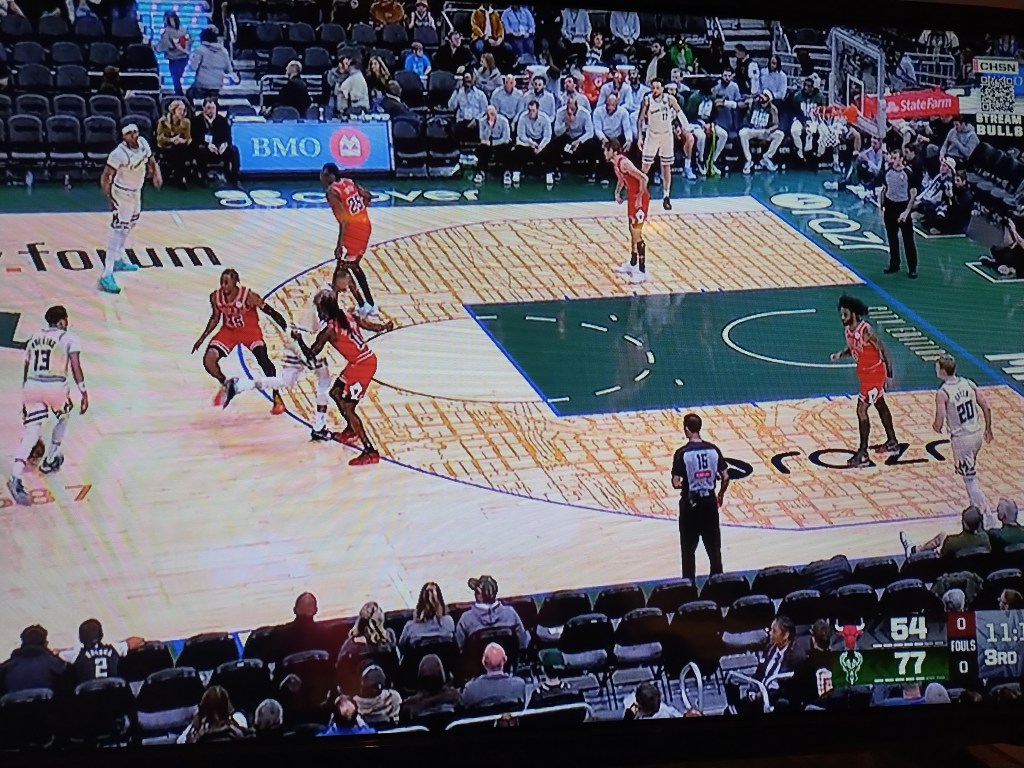
This is some wild stuff happening between the circles. Minnesota’s Jaden McDaniels is guarding Steph Curry nose-to-nose more than 40 feet from the basket, no space between them, two guys sharing a shirt. The other eight players on the court might as well be in another galaxy; this dance in the exurbs is its own game. The player who has the ball is somewhere behind McDaniels, far outside his sphere of interest. His mandate appears settled: He will go where Curry goes, and he will turn his attention to the ball if, and only if, he sees it in Curry’s hands.
The idea invoked is that the dribbling is taking place on the outskirts of a region. Forty feet out is a long way from the basketball and closer to the half-court line than the hoop.
But continue the spatial analogy. One issue is that some announcers say a three-point shot is from “downtown.” From Hunter S. Thompson:
My grudge against Brent Musburger has been smoking on a personal back burner for many years — since the early 1980s in fact, when Brent was covering the NBA Finals for CBS-TV, and it involves the word “downtown.”
That is when Musburger changed the language of sports forever when he kept repeating this ignorant notion that any basketball player firing off a long 3-point shot is shooting from “downtown.” (Celtics announcer Johnny Most might have coined the “downtown” trademark in the 1960s, but it was Musburger who beat it to death.)..
Downtown is where you score — not somewhere out in the wilderness, where people are far apart & not much happens. You don’t fire a long jump shot from Downtown, you fire it into Downtown. The Real definition of “Taking it downtown” is to suddenly drive to the basket & into a cluster of 7-footers who seem to have you sealed out — like Iverson launching himself at Robinson & Duncan & dunking it over them. To think Otherwise would be to think like a Baseball Writer, or like Brent Musburger.
Thompson did not like the term and he points out that it makes more sense to say downtown is right where the basket is. If downtown is at the center of the city and the region, why would taking a three-pointer be from downtown?
If the basketball court is likened to American geographic categories, how about downtown is under the basket, the city is the paint, the suburbs span between the paint to just outside the three-point line, the exurbs are between the normal three-point shots and the half-court line, and rural areas are in the backcourt. That is probably too many categories but it more accurately applies categories Americans use.
Watching several big college football games yesterday, I tried to focus on the number of transfers playing for Power 5 teams. Sometimes these transfers come from other big programs but they also now come from small schools were players have proven themselves. And then when they do well, they get the call-up to the 10-20 teams that might challenge for a national championship. And then they might get the call-up to the NFL.
To some degree, this has always been true in college football. But with the ease of transfers and NIL money, it seems like a new era is underway. The player who might never get recruited at a top team at the end of high school could be a hot commodity after several successful in the lower minor leagues. This might be especially true of quarterbacks; instead of going through years of developing someone, big programs can pluck a veteran transfer who can step right in.
How much more like the minor leagues can college football get? Will this help prompt separating the football from the education side? The number of transfers from smaller programs to bigger ones might play a role.
Professional sports teams in the United States can and do move from place to place. But how often does a city lose three teams in less than 10 years? Here is what happened in Oakland:
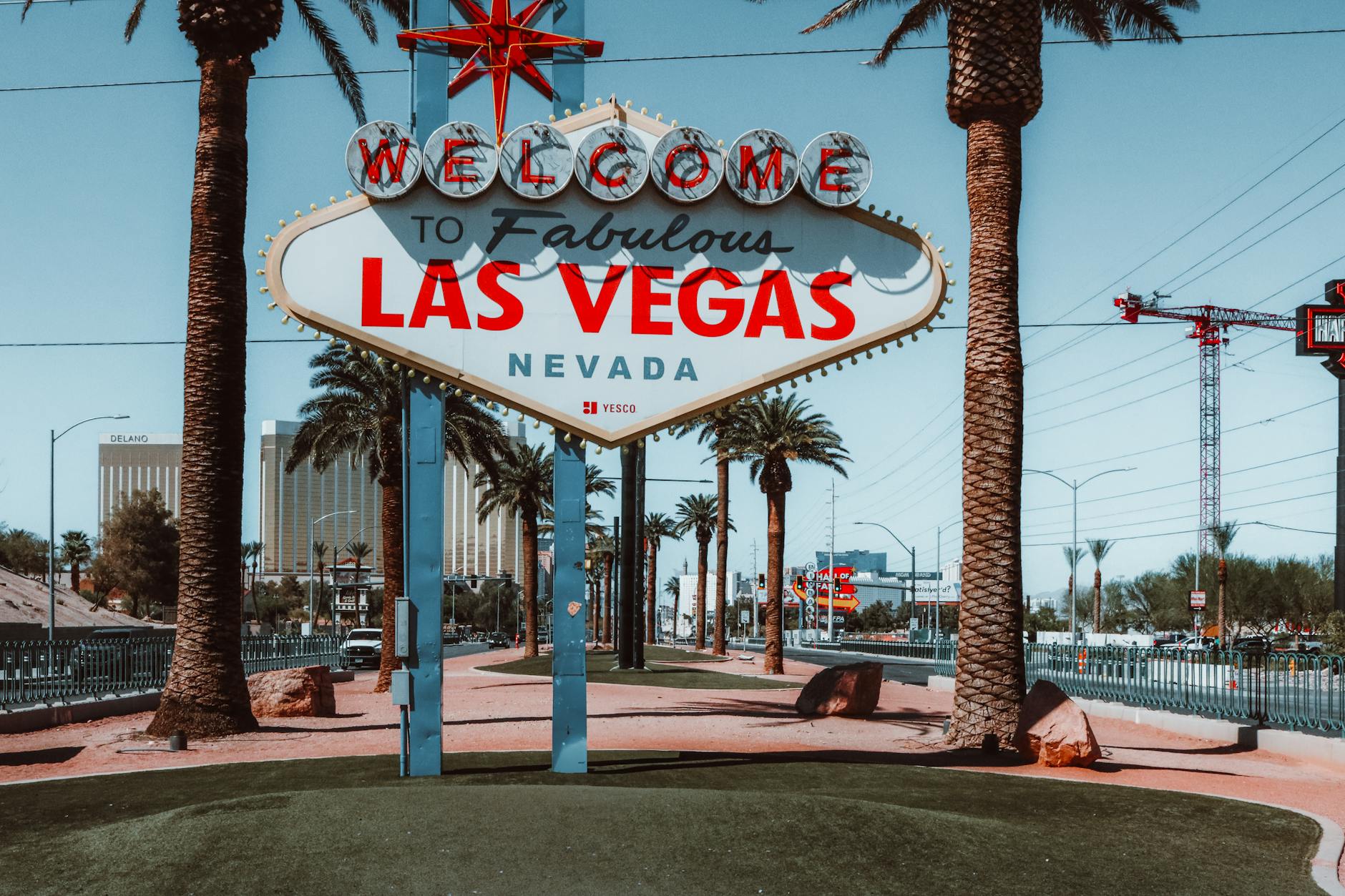
The Raiders left for Los Angeles in 1982, came back to Oakland in 1995 and then uprooted for Las Vegas 2020.
The Golden State Warriors moved across the bay to San Francisco’s Chase Center starting in the 2019-20 season after having played in Oakland since 1971.
Oakland even briefly had an NHL team: the California Golden Seals, which entered as an expansion franchise in 1967 and played nine seasons in Oakland before moving to become the Cleveland Barons, which ceased operations after two seasons.
What might this signal about Oakland? Pro sports teams can be a status symbol, indicating a particular population size and reputation. Losing a team can be viewed as a loss to a different place.
At the same time, there seem to be some unique factors at work. Oakland is across the bay from San Francisco and is close to San Jose, two other big cities that also have pro sports teams. One team, the Warriors, went across the bay. Additionally, the rise of Las Vegas meant teams could move without going all the way across the country from Oakland. Two teams went there. Finally, all three of these teams were in other cities before leaving Oakland: the Raiders spent time in Los Angeles (though started in Oakland), the A’s came from Philadelphia and Kansas City, and the Warriors started in Philadelphia and played in San Francisco before playing in Oakland for several decades.
The A’s leaving means this big city has no pro teams within city limits. The region still has pro teams – the 49ers, Giants, Warriors, and Sharks – but none are located in a city that had teams in each of the four major leagues.
As shopping malls seek to add more entertainment options, why not add sports? It could be at the professional level or amateur level. Imagine a high school basketball tournament hosted inside a mall with space for sports. Or a kids baseball tournament. Or a tour pickleball tournament. Sports could help bring in more visitors. It puts more people in proximity to the shops and restaurants.
Even though malls are big, many may not be big enough to do this. The American Dream Meadowlands in East Rutherford Mall, New Jersey is the second-largest mall in the United States and has plenty of entertainment options – a ski slope, a hockey rink, an amusement park, an aquarium, and more – in addition to 450 stores and lots of food options. This complex has sports already in mind. Many malls would need to reconfigure space or add facilities.
Given how much Americans like football and shopping malls (even with their decline), how many events can get more American than this? And held at a place named American Dream?