The Chicago region has a lot of human capital…and the workers have a stronger work ethic?

A recent article discusses the potential workers in the Chicago region and how hard they work:
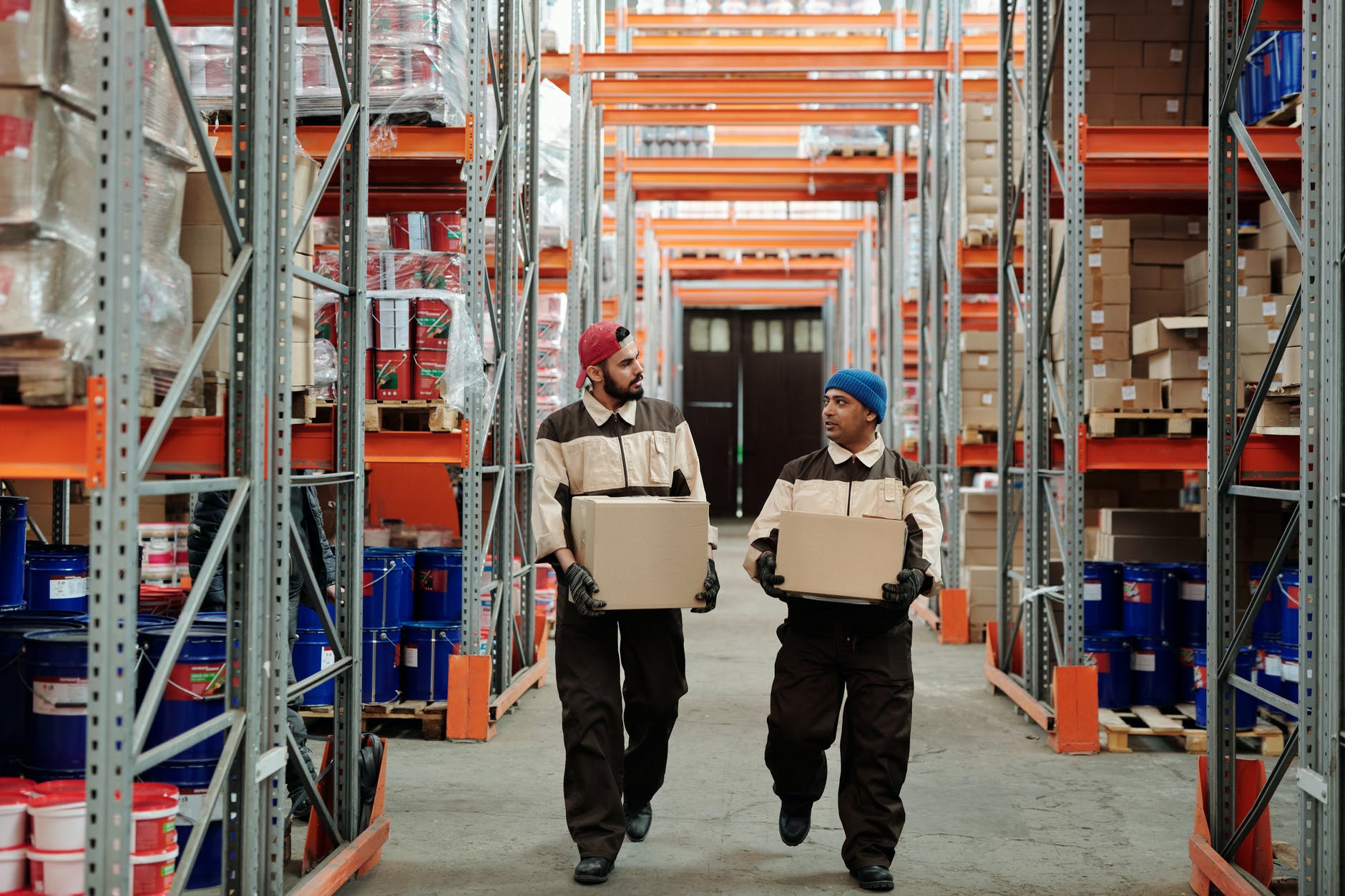
Photo by Tiger Lily on Pexels.com

“Probably the strongest work ethic of laborers is the folks in the Midwest,” the Houston-based founder of SparrowHawk Real Estate Strategists said, definitely not rhyming. “They’re just, I don’t know what they put in the water there, but they’re hard workers. And so you’ve got a good labor force.”…

Illinois Manufacturing Association president and CEO Mark Denzler recalls a businesswoman who recently moved her small manufacturing operations of about 50-70 workers to Mississippi with the goal of saving on costs. She regrets the decision, he said…

“When I’m around the warehouse workers in the Midwest — Chicago and all these other Midwestern cities — they’re different than the folks in the southeast and the folks in the West Coast. They just have a different work ethic,” he said…

“It would be really hard. I’d be suspicious of anybody who said they can do it,” Bruno said. “But there is this strong experience with work in the Midwest that it’s part of your development. It’s connected to your health and well-being.”

Contrary to the final paragraph above, I bet this could be measured. But, what would it show? And how would workers in Boston or New York City or Atlanta or San Francisco respond to the argument that Chicago workers have a stronger work ethic? Or, within the Midwest and Rust Belt, how about workers in Milwaukee, Cleveland, or Pittsburgh?

This is part of a bigger narrative about Chicago. it is part of its character. Even as it is a global city with an important finance sector and many professional and white-collar workers, it imagines itself as a blue-collar city relying on manufacturing. The loss of manufacturing jobs in the last sixty years hit Chicago hard, as it did many cities, yet the narrative continues.

I would be interested in a more recent study that looks at how residents of the Chicago area think about the purported work ethic. Does the narrative hold across locations, groups, and occupations? Does the idea of “the city that works” extend throughout the region and different kinds of workers?

The difficulty of collecting, interpreting, and acting on data quickly in today’s world

I do not think the issue is just limited to the problems with data during COVID-19:

Photo by Artem Saranin on Pexels.com

If, after reading this, your reaction is to say, “Well, duh, predictions are difficult. I’d like to see you try it”—I agree. Predictions are difficult. Even experts are really bad at making them, and doing so in a fast-moving crisis is bound to lead to some monumental errors. But we can learn from past failures. And even if only some of these miscalculations were avoidable, all of them are instructive.

Here are four reasons I see for the failed economic forecasting of the pandemic era. Not all of these causes speak to every failure, but they do overlap…

In a crisis, credibility is extremely important to garnering policy change. And failed predictions may contribute to an unhealthy skepticism that much of the population has developed toward expertise. Panfil, the housing researcher, worries about exactly that: “We have this entire narrative from one side of the country that’s very anti-science and anti-data … These sorts of things play right into that narrative, and that is damaging long-term.”

My sense as a sociologist is that the world is in a weird position: people expect relatively quick solutions to complex problems, there is plenty of data to think about (even as the quality of the data varies widely), and there are a lot of actors interpreting and acting on data or evidence. Put this all together and it is can be difficult to collect good data, make sound interpretations of data, and make good choices regarding acting on those interpretations.

In addition, making predictions about the future is already difficult even with good information, interpretation, and policy options.

So, what should social scientists take from this? I would hope we can continue to improve our abilities to respond quickly and well to changing conditions. Typical research cycles take years but this is not possible in certain situations. There are newer methodological options that allow for quicker data collection and new kinds of data; all of this needs to be evaluated and tested. We need better processes of reaching consensus at quicker rates.

Will we ever be at a point where society is predictable? This might be the ultimate dream of social science if only we had enough data and the correct models. I am skeptical but certainly our methods and interpretation of data can always be improved.

The implications of unevenness in rapid housing value appreciation

A new analysis suggests housing prices did not increase as much in recent years in some wealthier areas:

Photo by RODNAE Productions on Pexels.com

House prices were up less than 1% last quarter from a year earlier in Westchester, New York, for example — and not much more than that in Montgomery County, Maryland, a favorite of wealthy commuters to the capital.

The trend isn’t limited to the east coast, with Chicago’s Cook County posting an increase of 2%. By comparison, almost two-thirds of the counties surveyed saw prices rise more than 10%…

“Demand today tends to be stronger at the entry and mid-priced tiers of the market than at the higher end,” said Rick Sharga, Attom’s executive vice president of market intelligence. “Price appreciation tends to rise more quickly in counties with a higher percentage of lower-priced homes available.”…

In more than three-quarters of the 586 counties analyzed by Attom, housing was less affordable than in the past relative to incomes.

Interpreting this report about the data and trends, it sounds like housing prices increased faster than incomes in many places but not all places. Additionally, housing did not appreciate at the same rate; places with more cheaper housing appreciated more.

Two quick thoughts in response:

  1. There is a need to both see housing as a national issue and a need to understand local variation in housing. While so much about housing can be local, there is also a tendency to make sweeping claims about housing across the country as a whole. Better addressing both levels of analysis requires better reporting of data and different kinds of analysis. (And this is why national housing policy is so difficult.)
  2. There is an idea that people who need cheaper housing can move to places or markets with cheaper housing. What if enough people move to those cheaper housing areas so that there is no longer cheaper housing? I’m thinking of the rapid housing value increases in Austin. In the first place, not everyone can simply move to take advantage of that cheaper housing, but, even if they did, this would defeat the purposes of moving as housing prices would increase.

An Illinois gubernatorial candidate with experience as mayor of a suburb that is also the state’s second largest city

Without getting into the particular politics of Richard Irvin’s campaign for Illinois governor, it is worth noting the position from which he approaches his run: as mayor of Aurora, Illinois, the largest suburb in the Chicago region and the second largest city in Illinois. Some notes about Aurora and what leading that city might mean for leading Illinois:

-Aurora has unique history. With its location roughly 40 miles outside downtown Chicago, it has an industrial background with its location on the Fox River and its railroad connections. For Naperville residents at the turn of the 20th century, a trip to Aurora along the rail line was a big deal.

-The city experienced a renaissance in recent decades plus high population growth between 1980 and 2010 – going from over 81,000 residents to over 197,000 residents – before a slight downturn in the 2010s to a population of just over 180,000.

-That population growth means Aurora is now solidly the second largest city in Illinois.

-It is a racially diverse suburb with 2021 Census estimates putting the population at 42.7% Latino, 34.9% White alone, 10.5% Black, and 9.3% Asian.

-A relatively recent rebranding campaign took the city’s longtime motto of “The City of Lights” and updated it.

In advertisements, Irvin has highlighted his experience as a mayor of a decent sized city. A governor’s race between a politician identified with Chicago and another identified with the biggest suburb and second biggest city could present some interesting contrasts.

Another reason Americans need McMansions: to fit their giant TVs!

You need a large room to fit the biggest televisions:

Photo by Max Vakhtbovych on Pexels.com

What’s the biggest TV you can buy? If we’re talking about conventional televisions, the TCL 98R754 is a staggering 98-inches wide. But if you’re willing to consider a laser or short-throw projector TV, Samsung’s The Premier is capable of showing a screen up to 130 inches. But unless you live in a cavernous McMansion with 18-foot cathedral ceilings and a sprawling layout, you won’t be able to get them to fit in your living room, let alone be able to take full advantage of their features.

How can I know if an 85-inch TV will fit in my room?

The best way to find out is to measure (in inches) from where the TV will be wall mounted or placed on a stand to where you will be sitting, and then divide that measurement by 2. If your couch is anywhere from 150 to 170 inches (12.5 to 14 feet) from the TV, an 85-inch screen will be an almost perfect fit. You can, of course, go a bit bigger (if possible) or smaller depending on what your budget is and what is available from each brand. But a screen that is too big can overwhelm your space and even cause motion sickness while one that is too small will make it feel cavernous and force everyone to crowd around in order to see.

Put together the hours of TV Americans watch each day on average plus their tastes for big houses and the cycle continues: people need a large house to fit their large TV which leads to needing a bigger TV which leads to a bigger house…

Presumably, there is some limit to how big a television can or should be. Perhaps this is about the ability to see what is happening on the entire screen. Perhaps rooms truly can only be so large. Perhaps screen technology will be replaced by an entertainment chip in glasses. Or, people might get tired of important rooms in their house being dominated by a gigantic screen.

On the other hand, perhaps this helps signal a shift away from homes leading with their garages – the so-called “snout houses” – and instead leading with a giant screen. Imagine walking in the front door and the major room is devoted to the biggest possible screen. The screen is something to show off and impress visitors with. Homes could even be designed so that the outside would make clear the giant screen and the room it sits in.

Preserve a McMansion to help combat climate change

As part of an argument against demolishing buildings, McMansions should also be preserved to help address ecological challenges:

Photo by Darya Sannikova on Pexels.com

Anyone interested in mediating the worst ongoing outcomes of the present climate catastrophe must also disconnect the idea of development from our notion that it proceeds only in cycles of demolition and new construction—a pattern that prevails because it is maximally legible to our existing structures of debt, financialization, and speculation. About 80 percent or more of a typical new house’s lifetime ecological and energetic impact comes through the operations of initial material extraction, manufacturing, transportation, and construction; and then of eventual demolition, further transportation, and decay. Sustainable buildings are therefore not new buildings—however fuel-efficient their machines and materials. Sustainable buildings are buildings that have been sustained. Merely by being seventy-five years old and in working order, Geller I was radically sustainable. For that matter, any dumb 1990s McMansion down the block is almost as ecologically precious as Geller I. That McMansion’s judicious conservation, too, is part of ecological stewardship.

This kind of conservation comes not by preserving any one house exactly as it is, but by shifting from a fantasy of perpetual newness or untouchable oldness to the best practices that Gropius and Breuer cherished in old New England farmhouses: renovation, addition, retrofitting, and all manner of adaptive reuse that allows ever more lively and dignified density. The model of development becomes less one of the sudden appearance and disappearance of structures, and more one of continuous emendation and repair. Not incidentally, this affords ever more innovative ways of living intergenerationally and integratively—rather than dwelling in the built residue of past generations’ conventions about how families and communities ought to live.

Demolition and rebuilding takes a lot of resources. Additionally, rehabbing existing homes can help keep the character of a neighborhood or community consistent.

The twist above is that this might be the preferred course for McMansions. Such homes are not usually renowned for their architectural quality. Critics are not fans of the ways in which they were constructed, their drain on resources, and their ongoing presence.

I have argued before that at least a few McMansions will be preserved, at the least to mark a particular era and design. Preserving them to help combat climate change moving forward might be a unique feature of this decade.

The legislative act that helped Disney build Disney World in Florida

Corporations, sports teams, and developers ask for or make use of tax breaks or monies or land opportunities provided by governments. Walt Disney benefited from a 1967 act by the Florida legislature:

Photo by Craig Adderley on Pexels.com

The Reedy Creek Development Act can be traced back to 1967.

It was a pivotal negotiating factor in convincing Disney to locate his company in Florida and allows the company to do just about whatever it wants on its land.

“The ability, the power to build a nuclear power plant, an airport manufacturer, distill and distribute alcoholic beverages and lots of other things,” said Dr. Richard Foglesong, author of “Married to the Mouse” in an interview with WFTV in 2021.

Many would love to have this kind of freedom to do what they want with a large property. In contrast to what was possible through this act, many property owners would have to apply to local governments for uses of the property beyond what is allowed through the local zoning.

If leaders in Florida follow through with revoking this act and Disney wants to go elsewhere, does this shape up to be a second Amazon HQ #2 situation? Or, does Disney have a lot fewer possible locations to go to given its need for a lot of land and good weather?

The coming of the “embodied internet”

Can you have both a physical body and operate in a virtual world? Perhaps so in the coming metaverse:]

Photo by Bradley Hook on Pexels.com

Billionaire Zuckerberg is betting his company’s future on the metaverse but is keen to make it a collaborative project, describing it as an “embodied internet”…

“We believe the metaverse may be the next generation of the internet — combining the physical and digital world in a persistent and immersive manner — and not purely a virtual reality world,” the report says.”

A device-agnostic metaverse accessible via PCs, game consoles, and smartphones could result in a very large ecosystem.”

Some might see the “real world” and “online world” as disconnected realms. I have argued for using “online” and “offline” spheres because I think they are quite connected in terms of social relationships and networks.

The metaverse has the potential to further link realms. The embodied aspect is interesting to consider; how much will the offline body move in sync with the online body? How much further will we move beyond guiding an avatar around an online platform with a mouse or keyboard? And what potential is there to truly meld online and offline experiences at the same time?

I wonder how much this embodiment can happen in the metaverse as compared to other technological options. For example, Google Glass and similar options offered the opportunity to overlay data on top of what a person was seeing and experiencing. Or, Pokemon Go put video game characters in an offline map and reality.

How many deaths from COVID-19 are acceptable?

With a downturn in COVID-19 cases and deaths in the United States, officials and others are considering how many COVID deaths are acceptable moving forward:

Photo by cottonbro on Pexels.com

Implicit in a decision to drop the last remaining safety rules is a willingness to abide the current mortality rate. Over the last week, COVID-19 has claimed an average of 626 lives in the U.S. each day. That’s fewer than the roughly 1,900 who die of heart disease and the 1,650 who die of cancer each day, on average, but well above the 147 are lost to influenza and pneumonia combined.

For public health experts, the calculus is more explicit. Mortality and morbidity — the words their profession uses for death and illness — are on one side of the equation, and tools like seat belts, blood pressure medication, smoking-cessation programs and vaccines are on the other.

Those tools vary in cost, intrusiveness and political acceptability. Despite public health campaigns and legal mandates, Americans continue to drive drunk and leave seatbelts unfastened. Tobacco kills more than 480,000 people a year in the United States, yet 34.2 million adults continue to smoke. Diabetes claims more than 100,000 lives a year, but efforts to discourage the sale and consumption of sugary drinks — a significant contributor — have met fierce resistance.

At some point, all efforts to limit preventable deaths will hit the hard wall of funding constraints, medication availability, and people’s willingness to take steps to protect themselves and others. That’s where the number of deaths that is “acceptable” comes into focus…

The CDC and other federal agencies are still deciding on the criteria they’ll use to determine when the pandemic has ended. There’s still time — Dr. Rochelle Walensky, the agency’s director, said as recently as last week that we’re not there yet.

What I would highlight here as a sociologist:

  1. The relative risk of different illnesses or behaviors are not just determined by numbers. The first paragraph cited above highlights the number of people who die each day in the US due to different conditions. But, this does not mean each of these illnesses is experienced the same nor is thought of as the same kind of threat. See earlier posts on the acceptable deaths due to driving (and pedestrians).
  2. Decisions like these are made by a constellation of actors with a variety of interests. The public is involved in how leaders think the public will perceive changes, pressure the public can place on officials to make particular decisions, and in how the public responds. This is a process with numerous organizations and institutions involved.

Declaring an end to the COVID-19 pandemic is not easy nor is addressing the illness beyond the official end of a pandemic. Like much involving health, policies and behavior depends on social conditions and influences.

Social isolation and anomie during COVID-19

One possible explanation of the weird behavior of people during COVID-19 draws on the work of sociologist Emile Durkheim:

Photo by Joshua Miranda on Pexels.com

The pandemic loosened ties between people: Kids stopped going to school; their parents stopped going to work; parishioners stopped going to church; people stopped gathering, in general. Sociologists think all of this isolation shifted the way we behave. “We’re more likely to break rules when our bonds to society are weakened,” Robert Sampson, a Harvard sociologist who studies social disorder, told me. “When we become untethered, we tend to prioritize our own private interests over those of others or the public.”

The turn-of-the-20th-century scholar Émile Durkheim called this state anomie, or a lack of social norms that leads to lawlessness. “We are moral beings to the extent that we are social beings,” Durkheim wrote. In the past two years, we have stopped being social, and in many cases we have stopped being moral, too.

“We’ve got, I think, a generalized sense that the rules simply don’t apply,” Richard Rosenfeld, a criminologist at the University of Missouri at St. Louis, told me. In some places, he says, police arrested fewer people during the pandemic, and “when enforcement goes down, people tend to relax their commitment to the rules.”

This perspective is interesting to consider alongside the millions who did follow national and local guidelines regarding masking and behavior. A lot of attention has been paid to those refusing to comply but many did; does the weirdness stand out even more because of this?

To take the Durkheim reference further, he thought the breaking of the rules and the subsequent reaction and sanctions could help reinforce the original rules.

I might add to the list of explanations in the article the influence of smartphones and social media. These could matter in multiple ways. First, the weird behavior can easily be recorded by others. People may have been weird in the past but was there such a visible record of that behavior? Second, the people with the weird behavior may be recording and sharing their own behavior. Overall, what may have been more private behavior in the past or actions limited to a relatively small set of people or closely connected set of people are no longer kept from a broader audience.