Combining a new Costco and affordable housing in LA

Costco plus affordable housing is set to arrive in Los Angeles in a few years:

Photo by PhotoMIX Company on Pexels.com

An approved upcoming Costco location in South Los Angeles (the Baldwin Village/Crenshaw area specifically) is slated to open in the coming years, and it combines the company’s more-is-more brand with a novel new approach to residential construction. The project, to be built by developer Thrive Living and architects AO, was first announced early last year in a press release that revealed renderings of a mixed-use model with multiple floors, open courtyard spaces and other amenities. All told, the build would encompass not only the Costco store (and necessary parking) but a whopping 800 residential units, including 184 set aside specifically for low-income tenants…

According to real estate analysts CoStar, this entirely new mixed-use model isn’t just something novel for Los Angeles, it “may have national retail implications for Costco.” That could mean smaller footprints, more transit-oriented openings, or Costco itself getting even further into the housing market…

So yes, 800 small apartments can fit on top of a Costco in the middle of Los Angeles, with 23% of those units reserved for low-income residents and all units eligible for Section 8 vouchers. And if done right and embraced by locals, developers, big box retailers and public officials, the project could be a novel model for future build-outs statewide.

It sounds like Costco and the housing units will coexist. Are there ways that they might be more intertwined? I could imagine some deeper partnerships:

  1. Special deals for those living in the development.
  2. Jobs for those living in the development.
  3. Costco block parties for neighbors.

While this development will help provide affordable housing units, it is also interesting how it weaves a big box store into a denser environment. Developers and planners have tried a variety of ways to incorporate big box stores into cities. Is putting the big box store in with housing a new formula for success for both?

Turning down a big proposed warehouse, thinking about affordable housing for certain members of the community

The spread of warehouses in suburban areas can meet opposition:

Photo by Thijs van der Weide on Pexels.com

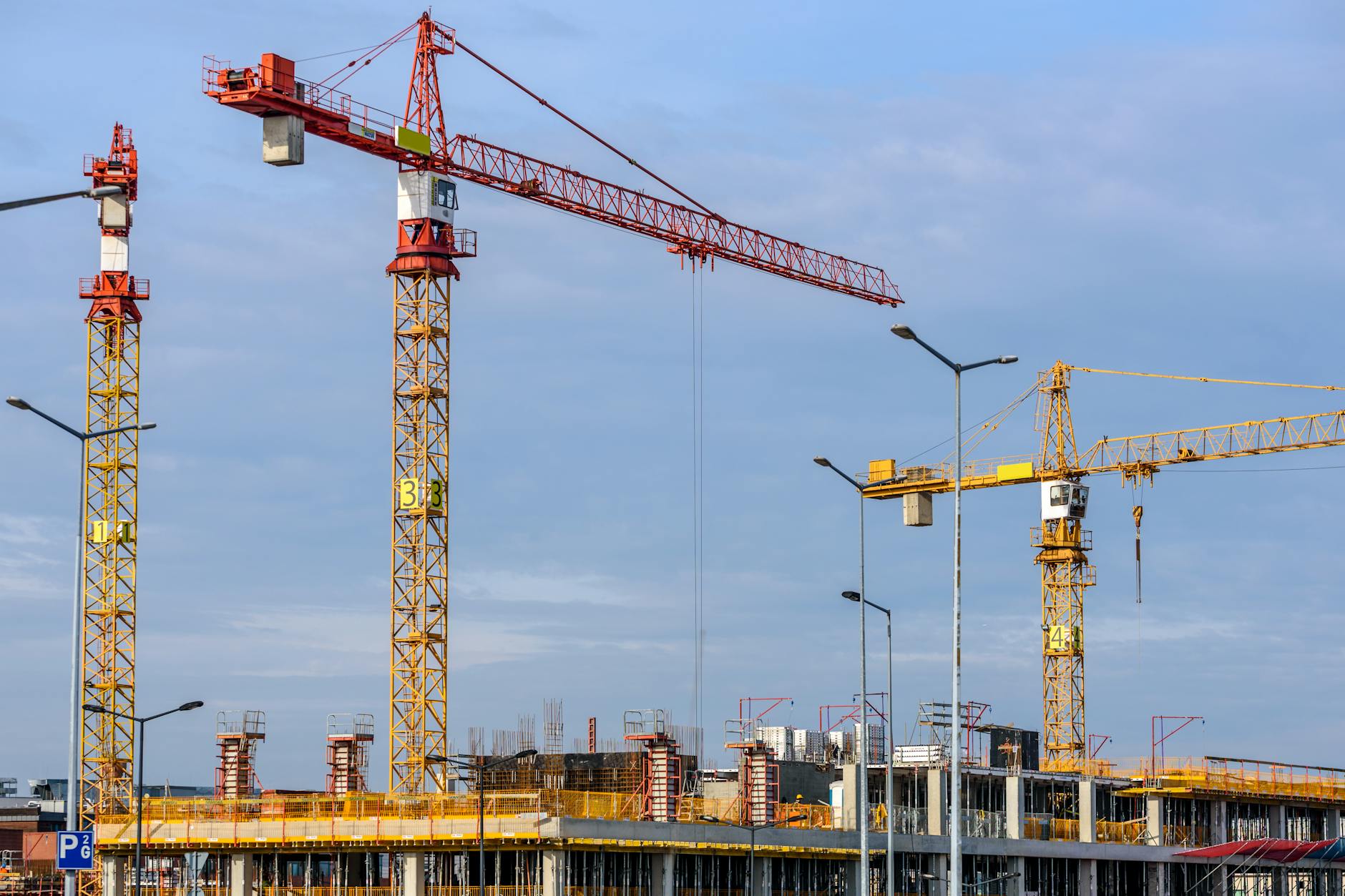
For the second time in less than a year, the Geneva Planning and Zoning Commission is recommending the denial of a request to allow a 719,200-square-foot warehouse on the northeast corner of Kirk Road and Fabyan Parkway.

The commission voted 4-1 Thursday against Venture One Acquisitions LLC of Rosemont’s requests to amend the city’s comprehensive plan for the 55.62-acre site, changing it from rural single-family residential to light industrial, and approving a site plan.

If not warehouses at a site of suburban open space, what else could go there?

Walendziak said the east-side residents do not want more diesel pollution and truck noise.

“What the residents do want is residential,” Walendziak said. “We need affordable housing in Geneva. This is one of the last big sites left. … Housing for starting families, for seniors that they can afford to stay living here in Geneva.”

Commissioner Mim Evans also suggested that housing is the best use for the site.

“We need housing in this town, even if it isn’t technically affordable housing,” Evans said. “Housing is needed everywhere at every price point, at every level of density.”

If warehouses are the enemy – traffic, noise, out of character for a community due to their scale and industrial aspects – then housing may be more desirable. And housing for certain people groups, including families or young professionals starting out and older residents of the community who want to downsize and stay.

It may be helpful to look at the longer trends. Suburban residents and leaders have had heated debates about land use since at least the beginning of the postwar era. Big proposals could generate conversations about what the community could become. Community needs shift over time as social and economic conditions change.

At the same time, I wonder if there is extra urgency these days due to two factors. First, many suburbs have few large parcels left. This means that decisions like those above feel extra consequential. Second, housing prices are high enough in many places that people want to protect their housing values and extend housing opportunities to certain people.

Figuring what happens with this particular property might take years from additional discussions to planning to actual construction.

Are falling housing and rent prices good or bad for a community?

The cost of housing in Austin, Texas has recently fallen. Is this good or bad in the long run for the city? Some details on the falling prices:

Photo by Jeswin Thomas on Pexels.com

Home prices and apartment rents in Austin, Texas, have fallen more than anywhere else in the country, after a period of overbuilding and a slowdown in job and population growth. 

That marks a sharp reversal from previous years when Austin’s real-estate market was sizzling. The city attracted waves of remote workers on six-figure tech salaries. Others arrived after companies such as Tesla and Oracle moved offices there, taking advantage of lower taxes and less business regulation. Austin’s economy grew at nearly double the national rate, and it became the country’s 10th-largest city. 

Now, it is contending with a glut of luxury apartment buildings. Landlords are offering weeks of free rent and other concessions to fill empty units. More single-family homes are selling at a loss. Empty office space is also piling up downtown, and hundreds of Google employees who were meant to occupy an entire 35-story office tower built almost two years ago still have no move-in date. 

On one hand, falling prices are good news for residents. Housing is more affordable. People have more options. Getting in to better housing can mean better day-to-day experiences plus the opportunity to develop wealth.

On the other hand, falling prices mean less demand for development. This could mean slower population growth. Status is tied to population and interest actors have in snatching up properties. Tax revenues will be lower than they could be if property values do not shoot up.

Many American communities experience this tension. Property owners want values to go up. They do not necessarily want to pay higher taxes with these rising values but they will be happy when they sell the properties. More people want housing at reasonable prices. But, relatively few people want to live in places known for low housing values or people may not want to live in places where property values do not go up.

Who suburban leaders say affordable housing is for – another example

Federal money will help in constructing a new affordable housing apartment building in suburban Glen Ellyn. Who might live there?

Photo by Bidvine on Pexels.com

Chicago-based nonprofit Full Circle Communities is seeking to build an apartment complex with up to 42 units. The developer would set aside no less than 30% of the units as permanent supportive housing for people with disabilities under the terms of an agreement to purchase a portion of the village-owned property.

U.S. Rep. Delia Ramirez requested federal dollars for demolition and site remediation work to make room for the proposed affordable housing project. Ramirez, whose 3rd Congressional District runs from Chicago’s Northwest Side into DuPage County, announced the funding at a news conference with Glen Ellyn Village President Mark Senak and other elected officials last week.

Affordable housing allows “senior members of our communities to stay close to their families so that grandparents can see their grandchildren,” Senak said, echoing remarks he made at a village board meeting last month.

“It gives adults with developmental disabilities the opportunity to remain in the community where they went to school, where they grew up, where their families live, where their friends live, and where many of them work,” Senak said.

This follows a common pattern among west suburban leaders in recent years. Affordable housing is for (1) seniors who want to stay in their community and (2) adults with developmental disabilities who want to stay in their community. These are indeed groups with housing needs.

Would more communities be open to affordable housing for people who do not have much money? The two examples above suggest affordable housing is for people already in the community who want to stay. Is there interest in housing for workers with lower wages?

My study of suburbs suggests that in wealthier suburban areas there is less interest in affordable housing that is open to any residents who might qualify. Americans generally do not like the idea of government money for public housing, with some exceptions. This is probably even more true in suburbs where a primary focus is on single-family housing.

Opening land for development and “subsidies for McMansions”

A proposed bill in Utah would allow development on public lands. Critics say it would open the door for McMansions.

Photo by Michael Tuszynski on Pexels.com

Rep. Ivory, R-West Jordan, sponsored HJR19, a resolution supporting a piece of federal legislation called the Helping Open Underutilized Space to Ensure Shelter (HOUSES) Act. Ivory is a manager for two real estate affiliated companies — Mission Property Management and 9615 Property Management — according to his financial disclosure form.

“We’ve learned that about 150,000 acres of federal lands are within city boundaries,” Ivory told the House Public Utilities, Energy, and Technology Committee on Thursday evening. “There’s another about 600,000 acres that are within a mile of city limits.”

The HOUSES Act, sponsored by Utah Sen. Mike Lee last year would open up certain public lands managed by the Bureau of Land Management to housing developers. Some critics of the legislation note that it doesn’t require those homes to be affordable, calling it a “McMansion Subsidy Act.”

The proposal would require that 85% of public lands sold be used for residential development and that 4 homes be built per acre. The other 15% could be used for commercial businesses or “other needs of potential communities.”

My guess is that the use of the word McMansion here refers less to a home with mixed-up or garish architectural features and more to big houses in the suburbs. More like “McMansions sprouting” or “cookie-cutter large homes” suddenly arriving in fields. The sprawl that has marked America for decades. And why should new housing opportunities go to people with resources? (See the different traits of McMansions here.)

At the same time, if these lands were opened up and they were filled with denser condos or communities of tiny homes, critics might still have concerns. Allowing the use of public land can be contentious as protected open spaces have value. If one goal is to not allow sprawl to take over everywhere, opening federal land is not a line some would want to cross.

Another question: does simply adding any housing to the housing stock help by adding to the supply? Or, is it more important that affordable housing is added? The charge of McMansions being constructed with subsidies suggests these may be houses for people who do not need help or that adding such housing might not help the housing issue.

More faith-based organizations using their property for housing

Congregations and faith-based organizations have a lot of land. Many areas of the United States need more housing. Might this be a good match?

Photo by Pixabay on Pexels.com

Seeking to grow revenue and do good, faith-based organizations are increasingly turning to their unused land and underused buildings as a solution to affordable housing. By the time Ms. Goff arrived at Arlington Presbyterian Church in 2018, Gilliam Place was already under construction.

“Our congregation had begun to ask itself, ‘What’s the point of us?’” Ms. Goff said. “It’s a big, existential question, and they had the sense that affordable housing was an issue they could do something about.”…

State and local governments are also recognizing the potential to increase housing stock. Andrew Gounardes, a New York State senator who represents southern Brooklyn, introduced a bill in December that, he said, would “streamline the process and the way in which religious institutions that want to help contribute to solving the state’s housing crisis will be able to develop affordable housing on their property.”…

Regardless of state laws, projects often face make-or-break decisions at the local level. Neighborhood buy-in is one small step in the journey, said the Rev. David Bowers, vice president of faith-based development initiative for Enterprise Community Partners, a national nonprofit developer. “There is NIMBYism, zoning approvals,” he said. “It’s the nature of the beast.”

Then there’s the financing question. Banks are “hesitant to do business with churches for fear of default,” said Bishop R.C. Hugh Nelson, lead pastor at Ebenezer Urban Ministry Center in Brooklyn, who worked with Brisa Builders Corporation on Ebenezer Plaza, a project that includes 523 affordable apartments, 43,000 square feet of sanctuary and ministry space, and 21,000 square feet of commercial space in Brownsville.

Two thoughts come to mind:

  1. The combination of doing good for the community and generating revenue are interesting to consider together. Are there congregations where one of these is more of the driving force? What if more congregations from their beginnings saw housing as one of the ways they lived our and/or shared their religious faith?
  2. How might congregations not just build housing but develop larger communities around faith, rituals, and community life? Housing is good but so is community and the possibilities of developing a local life involving the congregation.

Are peripheral suburbs really “the most boring places in the world”?

Looking at data on where millennials are moving includes an evaluation of those places:

Photo by Helena Lopes on Pexels.com

To Lee and his colleagues’ surprise, millennials aren’t moving to nearby dense, walkable exurbs. They’re getting way out to peripheral suburbs.

“It turned out that millennials are moving to the most boring places in the world,” says Lee, who’s now a professor at Seoul National University. “They’re moving to really single-family-dominated areas with very few urban amenities.”

What might make these places less boring?

It’s expensive to live in the places millennials prefer: walkable communities with lots of shops, restaurants, and public space. An analysis published last year found that homebuyers in the 35 biggest American metropolitan areas paid 34% more to live in walkable neighborhoods, while renters paid 41% more. Paul Stout, a millennial landscape-architecture student with a popular urbanist TikTok account called Talking Cities, says he constantly hears from followers who wish they could afford a home within walking distance of places like coffee shops…

But while millennials wallow over the choice between a tiny apartment in a dense city and a lonely, sidewalk-less subdivision, urbanists insist any place can be dense and walkable as long as land-use laws allow it and people want to live there.

“There’s a lot of places in the suburbs that could be really lovely to live if you could only put a grocery store or a coffee shop on the corner,” Stout says. “I’m optimistic that you could actually make living walkable almost anywhere in the US, given the right package of zoning reform.”

America is not known for its walkability (see the dangers to pedestrians) or its third places. Instead, Americans often promote and move to suburbs built around single-family homes and driving.

Does this mean suburbs further out from the city are really “the most boring places in the world”? Or are millennials and many others pushed into binary choices where they prioritize cheaper and larger housing and thus give up other community features? In many American communities, they cannot have both cosmopolitan street life and ample affordable housing they can own.

And I would venture to guess that at least a few of American suburbanites do not find them to be boring places. (One could argue they were pushed into this option rather than chose it but that is a different argument.) Millennials and Gen Z may find them more boring than older adults and this would be interesting data to compare.

The return of Rust Belt housing markets, Buffalo edition

Many Americans will not move to the cheapest metro areas just because housing prices are attractive. But, what if Rust Belt areas became popular again? Zillow thinks this will happen with Buffalo, New York:

Shark Girl is a fiberglass sculpture in the Canalside area of Buffalo, New York. by Michelle Frechette is licensed under CC-CC0 1.0

Buffalo, New York is projected to be the hottest housing market of 2024, according to an analysis from real estate company Zillow.

Zillow called affordability the “most powerful force driving real estate,” bringing lower-cost markets in the Great Lakes, Midwest and South regions to the top of the company’s 2024 rankings.

“Housing markets are healthiest where affordable home prices and strong employment are giving young hopefuls a real shot at buying and starting to build equity,” said Anushna Prakash, data scientist for Zillow Economic Research…

According to Zillow’s analysis, Buffalo has the highest number of new jobs per home permitted – a measure of expected demand, as new jobs often mean new residents.

The key seems to be the expected job growth in Buffalo. Yes, there is cheaper housing in the region but a growth in jobs means more people which means more demand for housing. How many people would choose a job in Buffalo because of the cheaper housing instead of going elsewhere where housing would be more expensive?

On the list of the predicted top ten housing markets are 6 regions in the Midwest or Northeast – the Rust Belt. This includes Buffalo, Cincinnati, Columbus, Indianapolis, Providence, and Cleveland. If this prediction comes true, would this help create more momentum in these places for a brighter future?

For example, Buffalo’s population peaked in 1950 with over 580,000 residents. In the 2020 Census, Buffalo had over 278,000 residents. The metropolitan region peaked in population in 1970. Similarly, Cincinnati (#2 on the predicted list) peaked in population in 1950 and has lost nearly 200,000 residents since (even as the metro area has grown slowly since then).

Pilot ADU program in New York City

New York City has started a small program that could help address the need for housing in the city:

Photo by Centosfotos on Pexels.com

New York City just unveiled its newest effort, which will hand 15 homeowners up to $395,000 to build an additional apartment. This could mean an extra unit in a garage, basement, or attic, or a tiny home in the backyard. The idea is to boost housing density in a city in desperate need of new housing.

New Yorkers can apply online for the funding, but high-income residents aren’t eligible — the income limit for a family of four is $232,980, the New York Times reported. And the ADUs that are built will have a limit on rent: a one-bedroom can’t be rented for more than $2,600.

The city’s department of housing preservation and development on Tuesday unveiled the “Plus One ADU” pilot program, similar to a state-wide initiative with the same name that has doled out tens of millions of dollars to help homeowners across New York State build ADUs in their backyards…

The effort is part of the city’s sweeping new housing reform proposal, which seeks to pave the way for 100,000 new homes in the city by encouraging conversions of commercial buildings into residential, boosting density near mass transit, and reducing space devoted to parking. The proposal also aims to legalize ADU construction across much more of the city.

Adding 100,000 units would be helpful as the city, like many major cities, needs lots and lots of units to provide more housing options and address housing costs. But, how quickly can these units be added and how much can they ease the housing issues? It would be worth looking at the math on this; at what point do the government funds lead to long-term savings? Hopefully, this is part of a comprehensive strategy that tries to add housing units in multiple ways.

Not all New York City is as dense as Manhattan but it is a pretty dense American city. How dense are city residents willing to go? Like many cities, there are different clusters of housing units in different neighborhoods. Adding a housing in basements or backyards can only happen in certain places and these changes would add residents. ADUs might be less visible than other means of providing more housing units – for example, high-rises would not be welcome in many residential neighborhoods – but Is there a point where residents feel there are enough ADUs?

What allowing “build[ing] more houses on less land” in Austin could lead to

Austin, Texas recently changed its regulations to allow property owners to “build more houses on less land”:

Photo by Abigail Sylvester on Pexels.com

Homeowners now have increased flexibility to build more houses on less land, after the lot size required for a home was reduced from 5,750 square feet to 2,500 via the HOME initiative (Home Options for Middle-income Empowerment). The policy also increases the number of housing structures that can sit on that 2,500 square feet from two to three. 

The debate over these changes continues:

The debate around a policy like this comes down to whether someone believes increased density (more housing for more people on smaller footprints) will help the situation, or will lead to overbuilding, crime, and rental cash grabs. The latter tends to sound a lot like NIMBY talking points more concerned with preserving the charm of longstanding Austin neighborhoods.

Some developers and homeowners feel that the resolution alleviates just a small part of Austin’s building woes, since the zoning codes are still complex and difficult to navigate. Jason Kahle, who owns Small Home Solutions, LLC, says he and his 10 employees are “going to be all over” the changes in a market where it seems everyone with a large-enough lot has considered building a granny pod, mother-in-law suite, or backyard office. 

But being free to build on a smaller lot is not the same as being able to feasibly do it within existing rules, Kahle points out. “There’s a lot of wheels turning at the same time,” he says. “Austin Energy is a challenge. We have protected trees, impervious cover, floor-area ratio rules, the level of detail the city requires on civil engineer plans, the subchapter McMansion ordinance, temp drawings. It’s a lot to deal with.” The McMansion regulations, also known as “Subchapter F” in the city’s housing code, set detailed and strict limits, including height and setbacks from the edges of a lot.

Laura Boas, an Austin physical therapist, is building an “accessory dwelling unit” for her family behind her 1950s-era, 720-square-foot cottage in the Brentwood neighborhood. She’s seen massive 2,500-square-foot homes go up in her area, and her lot is big enough to support additional buildings. Boas lives alone and jokes, “I’m part of the problem.”

It sounds like the goal is to allow for more housing units without changing many existing lots and allowing for smaller lots. This is a different approach than promoting more multi-family housing or larger structures containing more residential units. These changes keep the single-family character and the scale of the neighborhood similar while adding more units and people.

It will be interesting to see if an approach like this solves the problems it was intended to solve. Will the number of new McMansions decrease as property owners pursue other options? Does this add enough units? Does it ease housing affordability? If not, what changes would residents and the city be willing to enact? I hope researchers and policy experts are keeping track of the changes in cities that have enabled similar regulations. This could help determine whether adding ADUs (such as in Portland) is helpful.