How much some major US convention cities spend on attracting visitors

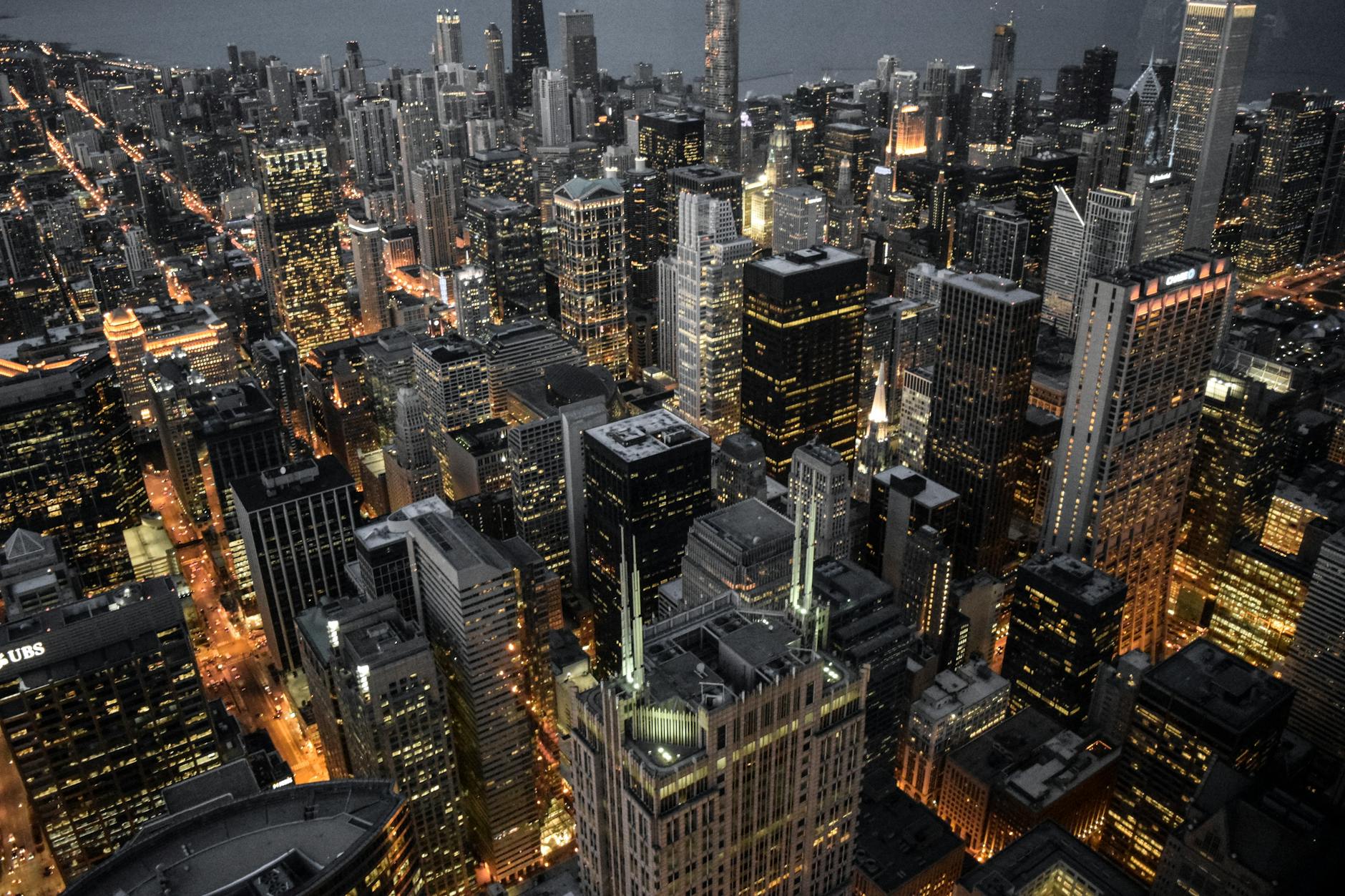
How much Chicago spends to try to attract conventions and visitors is less than some other American cities:

Photo by Nate on Pexels.com

Choose Chicago has been laying the groundwork to create a so-called Tourism Improvement District that would more than double the marketing agency’s annual budget by increasing the tax on rooms in Chicago hotels with 100 or more rooms by 1.5 percentage points — to 18.9%.

The Las Vegas Convention and Visitors Authority has an annual operating budget of $457 million, according to a comparison prepared by Choose Chicago. That’s followed by Visit Orlando ($116 million); Discover Los Angeles ($62 million); the San Diego Tourism Authority ($57 million); and New York’s NYC & Company ($45 million).

Choose Chicago is dead last among major convention cities, with a projected budget of $33 million for 2024…

Choose Chicago, which has yet to release data for 2024, said Chicago had 52 million domestic and international visitors in 2023. The number has increased steadily in recent years, but Chicago has struggled to match the 61 million visitors of 2019, the last full year before the pandemic. Worries about high taxes and crime hurt perceptions about Chicago as a place to visit or do business.

All cities have to brand themselves to compete in the competitive market. But, apparently, they do that with different amounts of money. Does spending more money necessarily net more visitors? Not necessarily. But the budgets do look quite different. So some additional information might be helpful:

  1. How much money is spent per visitor?
  2. How much of that money is spent directly targeting certain visitors or groups – think like conventions that then come with a certain number of attendees – versus mass media appeals?
  3. And then how much money do those visitors put back into the local economy?
  4. How do these different cities fund these marketing arms? Is it primarily about taxes visitors pay or are there other significant money streams?

Let’s see what Choose Chicago does with its increased revenue.

Office buildings empty, residential property taxes go up

What happens when the office buildings in Chicago’s Loop have more vacancies? Residents end up paying more in property taxes:

Photo by Burak The Weekender on Pexels.com

The pandemic left the heart of the Loop with vacant offices and stores as workers and customers stayed home, and more people began working remotely. Then, citing the impact of that lost business, the owners of those vacant offices won huge tax breaks from Cook County officials.

The amount of property taxes didn’t get smaller because those taxpayers were now paying less. The taxes were still needed to pay for government services and salaries. So others have had to pay more to make up for that shortfall.

On top of that shift, City Hall and other government agencies have been asking property owners to pay more taxes overall, with total property taxes in Chicago rising from $6.8 billion five years ago to $8.3 billion last year.

That’s a 22% increase in taxes citywide in those five years.

This is one reason municipal officials like thriving commercial and industrial sectors: they contribute to the property tax base of a community. When these properties are worth less, someone else has to pick up the slack. Homeowners do not like rapidly increasing property taxes, if they like property taxes at all.

For residential property owners, the issue is compounded for some because the value of residences has jumped in recent years. With limited new supply and consistent demand for good housing, property values have gone up. Homeowners like this – until property taxes also increase because their home values have increased.

Will residential property owners put up with this and, even if they do not like it, what recourse do they have? Does this mean cities and communities need to put on a full-court press to get office buildings filled or converted?

The Chicago bungalow as a symbol of early 20th century success

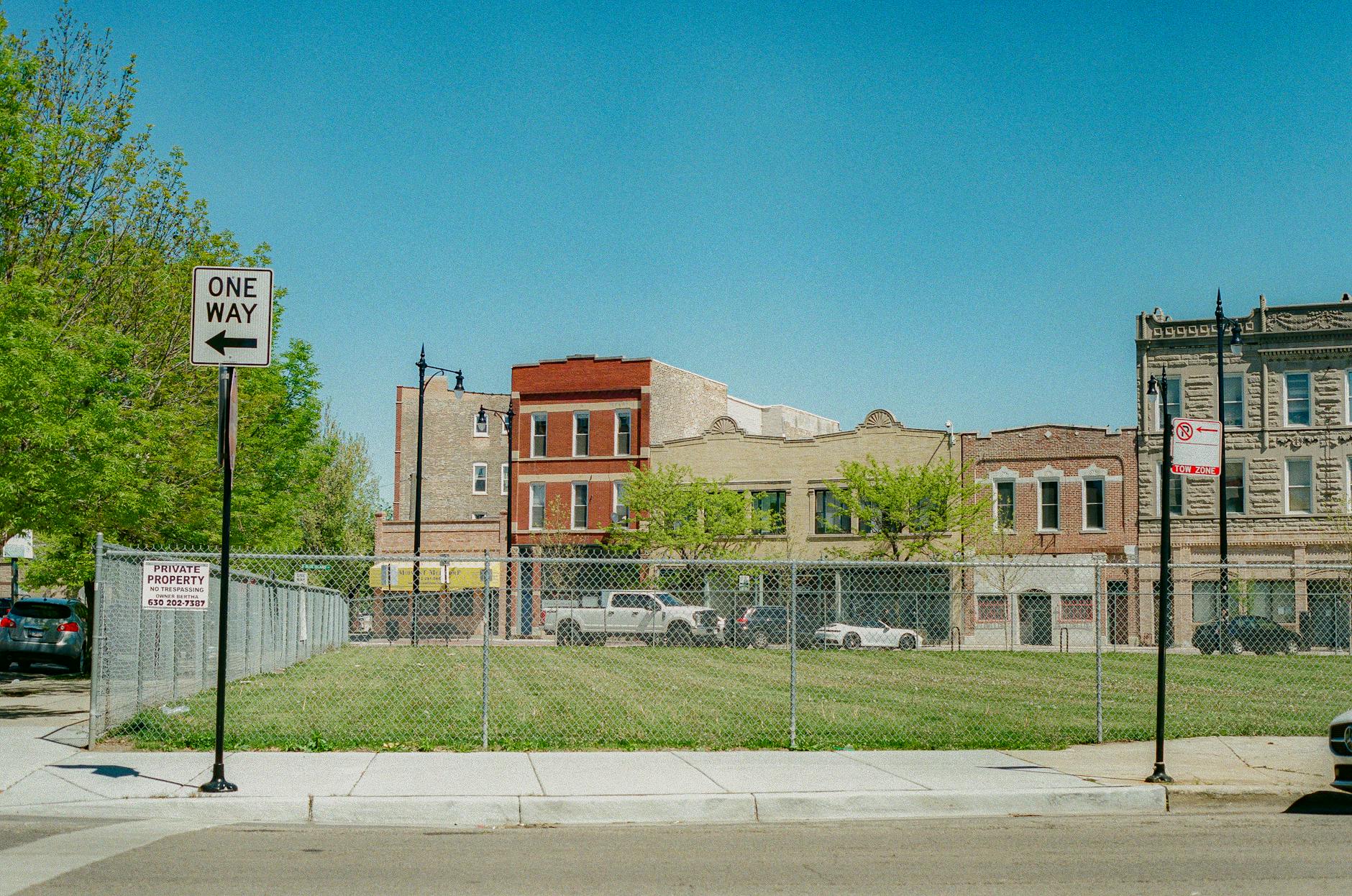
Living in a Chicago bungalow became a symbol of a successful life:

Photo by Haley Cao on Pexels.com

The humble bungalow made it possible for Chicagoans to realize the American Dream of home ownership. In the first part 20th century, between 80,000 and 100,000 bungalows were built in Cook County. The majority went up between the end of World War I and the beginning of the Great Depression, making many about 100 years old. Many were home to first-generation immigrants. They formed an arc around the city’s center known as the Bungalow Belt.

It “stretches all around the city, from South Shore to Marquette Park, out west to Austin to the Northwest Side and West Rogers Park,” Dominic Pacyga, a Columbia College urbanologist, told the Tribune in 2000…

In 1997, a Tribune declared: “Bungalows Were Better Than A Place To Live. They Told The World Who You Were” over a story that declared the humble home to be “an idea, a symbol, a trophy, a style, an approach to life.”…

Chicago’s bungalow builders left that idea behind, while appropriating the concept that the middle class deserved homes with little artistic touches, like those the wealthy took for granted: leaded window glass, red or yellow brick with checkerboard patterns, bay fronts either octagonal, squared or rounded.

Three quick thoughts:

  1. This highlights the coming and going of residential architectural styles. This design emerged in a particular era, took off, and now has been replaced by other designs that address the wants of residents and builders and that also became symbols of joining the middle class. (See the suburban ranch home or the McMansion.)
  2. How exactly does a particular home style become a status symbol? The article hints at the role of developers (selling the image that goes with this particular home), politicians (promoting the style and protecting the homes in later decades), and residents. Could we add in famous cultural works that take place in or highlight or celebrate the bungalow? The role of zoning officials and historic preservationists?
  3. How many of these homes initially were owned by white residents of Chicago and how much has this changed over time? How much did bungalows contribute to long-standing patterns of residential segregation and differences in wealth among homeowners?

Chicago rents up at three times the rate of median household income in 2+ decades

The cost of renting in Chicago has increased in recent years:

Photo by Max Vakhtbovycn on Pexels.com

After adjusting for inflation, Chicago’s median household income grew by just 9% from 2000 to 2023. Meanwhile, the city’s median cost for rent and utilities grew by 28%, roughly three times faster, according to a WBEZ analysis of census data.

This particularly affects lower-income residents:

Like Robinson, about 129,000 renter households in Chicago — roughly one-fifth of the citywide total — make between $2,000 and $4,000 a month, according to a WBEZ analysis. About 30% of those households are spending a majority of their income on rent and utilities…

Twenty-five years ago, a majority of the apartments in a dozen neighborhoods would have been affordable for someone making about half the city’s median income, like Robinson. They would have included North Lawndale, South Lawndale, the Lower West Side, the Near South Side, Douglas, Grand Boulevard, Washington Park and Woodlawn. Now, a majority of the rents in those eight neighborhoods are completely out of her reach. For example, after adjusting for inflation, the median rent in the Near South Side community has nearly quadrupled since 2000.

And the causes?

New apartment construction fell off dramatically in the late 2000s, in the early years of the subprime mortgage lending crisis and the Great Recession. “A number of single-family home builders [and] a number of multifamily developers left the sector all together,” Hermann said. “Less housing was built for more than a decade than we’ve seen pretty much ever.”…

The city is also losing housing — in particular, older two- to four-unit apartments that have historically offered more affordable rents for families.

Can leaders – political, business, real estate, etc. – address this issue? Building more units overall could help. Offering more incentives for affordable housing could help. Promoting and incentivizing development throughout the city – and not just areas where developers see the potential for a lot of profit – could help. Can housing be a leading issue to tackle?

Big cities face numerous issues but housing is a foundational concern. Residents need quality housing at prices they can afford. Not having such housing can affect all areas of life, including people’s hope for what their future can be. It can lead to people leaving (hinted at by the end of the article) and limit who can move in. And if the affordable housing shortage continues, the number of units needed only increases.

Even as there appeared there might be some energy in mid-2024 to address housing concerns at a national level, communities need to keep at this and make sure there is affordable housing on the way.

The limits in Chicago on a lower city speed limit

Chicago’s City Council disagreed on whether to lower the city’s default speed limit and ultimately voted against it:

Photo by Airam Dato-on on Pexels.com

The 28-21 vote against lowering the speed limit followed a spirited and emotional debate that pitted traffic safety advocates, many of them on the North Side, against African-American alderpersons concerned about uneven enforcement and a surge in pretextual traffic stops targeting Black drivers.

West Side Ald. Jason Ervin (28th), Mayor Brandon Johnson’s handpicked Budget Committee chair, led the charge against the lower speed limit.

Ervin said he “understands the logic that, if you go slow,” there will be fewer traffic fatalities and serious injuries. But when Johnson’s 2025 budget is balanced, in part, by installing more speed cameras, he is concerned about an avalanche of speeding tickets that struggling Chicagoans cannot afford to pay…

Wednesday’s vote was a bitter and emotional disappointment to Ald. Daniel La Spata (1st), an avid cyclist who represents Bucktown, Wicker Park, West Town and Logan Square, where several fatal accidents have occurred…

La Spata has estimated the lower speed limit could save the lives of more than 300 Chicagoans over the next decade.

The summary of the discussion hints at the meaning of speed limits. Are they about safety and discouraging higher speeds? A good number of American roads are built to be wide and straight such that the design itself can help drivers feel comfortable in going faster. And since many drivers go above whatever speed limit is posted, is a lower limit necessary to reign in the higher speeds?

Or are they about police enforcement? Are they about collecting revenue? Whether administered via law enforcement personnel or a speed camera, there is a legal process at work. In a society where driving is often required, the enforcement element matters.

Trying to think outside the box a bit, couldn’t the Council meet in the middle and settle for a 28 mph speed limit? Do all speed limits need to be in 5 or 10 mph increments?

This likely will be an ongoing discussion given the amount of driving in Chicago, interest in biking and pedestrian options in the city, and concerns about police activity.

The Chicago Tribune on the side of suburban commuters

An editorial in the Chicago Tribune details some of the issues commuters to Chicago face:

Photo by Cameron Casey on Pexels.com

But hope and optimism have their limits, even among the heartiest suburbanite, who likely saw the news about the Kennedy construction delay debacle and felt put upon and frustrated — but not surprised. After all, suburban commuters are just supposed to take it. Still, this one stings…

It’s not just the roads where suburban commuters get a rough deal — they’re constantly on guard against Metra fare hikes. Fares increased last year, and now Metra is threatening fare hikes again — plus service cuts — as the agency stares down the proverbial fiscal cliff. 

So the suburban commuter faces tortuous traffic on the highways, higher prices and worse service on the trains — yet the city wants them back downtown to buy their $20 lunches and restore the Loop’s economy. Businesses want the suburban commuter back downtown to occupy vast commercial office spaces to justify the rent. And everyone wants them to boost foot traffic, creating safety in numbers and making everyone feel a little safer walking to the office…

But the city often lacks warmth for the people trekking downtown. Not too long ago, the mayor of Chicago floated weaponizing taxes on suburbanites to extract more tax revenue via a Metra “city surcharge” and a “commuter tax” as a way to “make the suburbs … pay their fair share.” See above — they’re already paying a lot to get downtown. 

A hostile relationship between the city and the suburbs is no good. Suburban willingness to come to work downtown is a direct reflection on the city’s health. Is it safe? Is it clean? Is the restaurant scene thriving? If so, people will hop on the Metra and gladly make the trip. The more suburbanites, the better.

Four thoughts in response:

  1. What exactly would “warmth” for suburbanites look like?
  2. What about the many commuters in the region who go suburb to suburb? Are their trips easier?
  3. Do suburbanites need the city more or does the city need suburbanites more?
  4. Contrary to the zero-sum game assumption in #2 above, would it be better to think of suburban commuters and city residents as part of a larger metropolitan area? Better transportation options could be good for city and suburbs as could economic opportunities for both cities and suburbs.

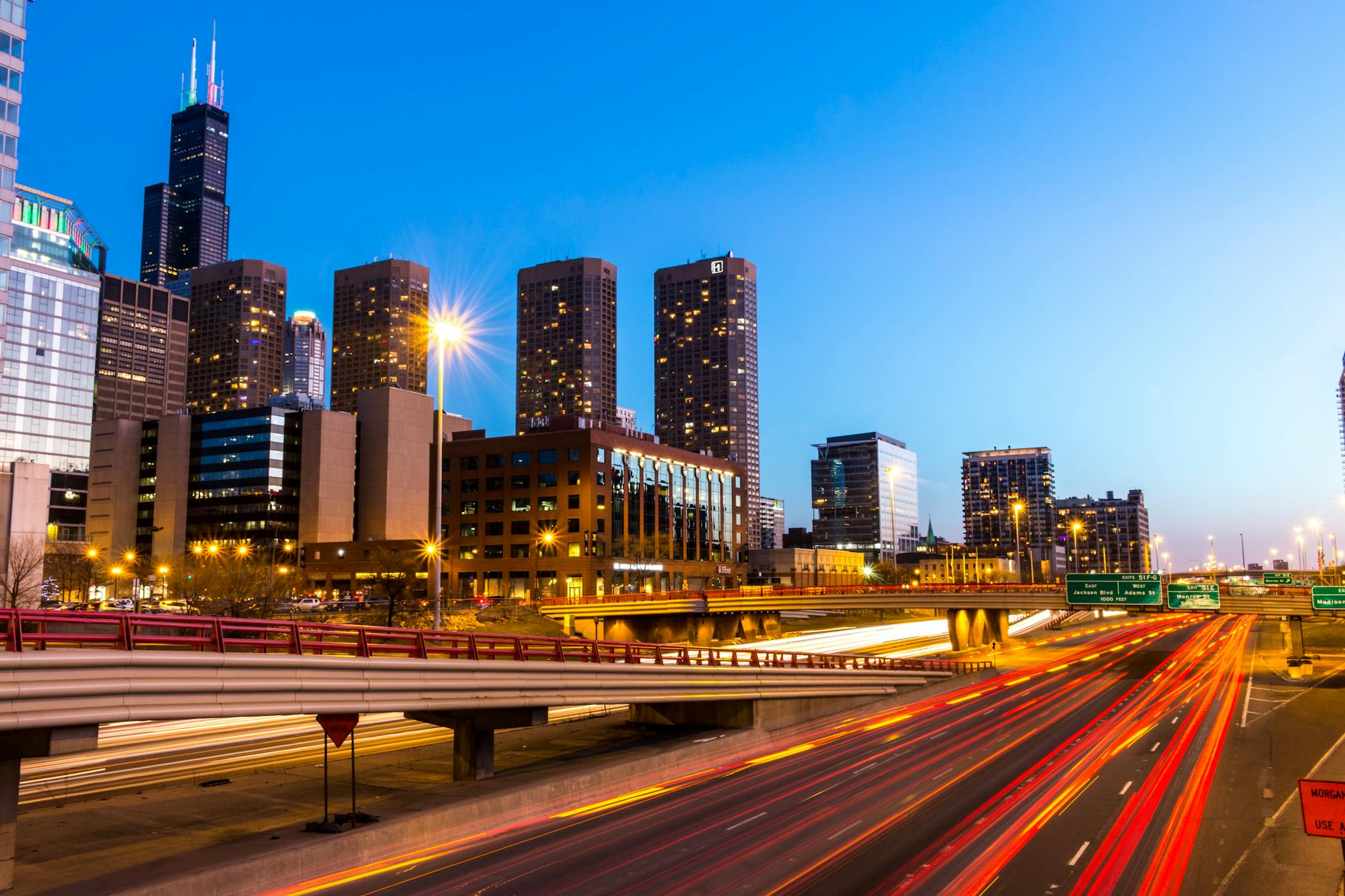
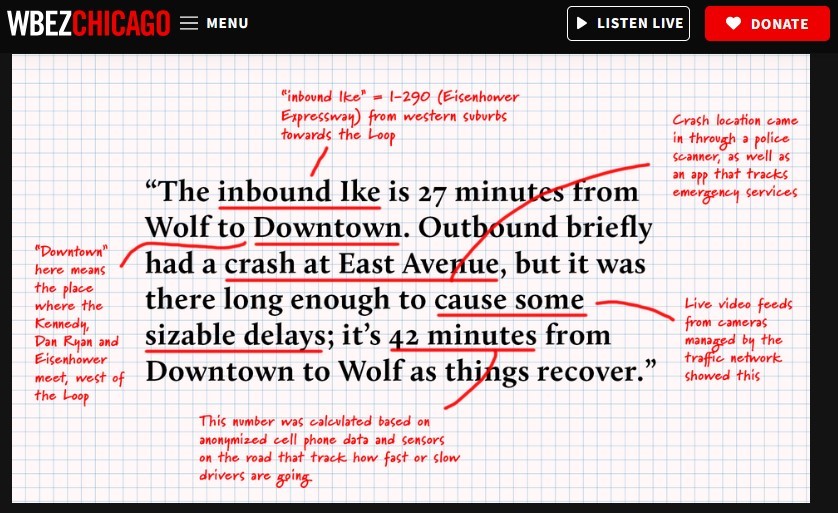
Where “downtown” is in Chicago traffic reports

Listen to or watch or read Chicago traffic reports and “downtown” is likely to come up. Here is what that refers to:

In Chicago, the downtown is like it is in the many big cities: it is the central business district, marked by skyscrapers and business activity. Downtown and the Loop – marked by mass transit lines – are pretty synonymous. The Loop is one of the city’s 77 community areas that have been defined for decades.

But the downtown referenced above is outside the Loop. It is across the Chicago River. It is marked not by financial matters but by the convergence of highways. It arose on top of existing neighborhoods. This is technically the Jane Byrne Interchange, a busy location where people are driving in and out of the city. Depending on traffic, it can take a while to get from this location to downtown.

While they are not the same place, this sounds very American: the center of the city is actually where the most vehicles meet. As so much day-to-day life involves driving, perhaps this is downtown for many.

The number of Chicago residents who might apply to a second guaranteed income trial

The Chicago Housing Authority has a long waiting wait for housing; the first guaranteed housing pilot also had a lot of applicants:

Photo by Anderson Rodrigues on Pexels.com

The YWCA Metropolitan Chicago was the lead contractor for the pilot program, according to the report. In total, there were more than 700 in-person events while the application window was open. About 176,000 people applied for 5,000 slots. Participants were chosen through a lottery system, according to the report.

How many might apply for a second program?

A second city pilot, rebranded as the Chicago Empowerment Fund, is expected to launch sometime in 2025, according to the city’s proposed budget. The program will again serve 5,000 “low-income families and returning Chicago residents,” and provide $500 for 12 months, but more details about the qualifications weren’t available.

I would guess more people will apply than the 176,000 who applied the first time. I am basing this on the presence of the first program and the economic uncertainty many people feel.

If the number applying is indeed higher, the odds of any individual getting into the program decreases. The situation reminds me of the documentary Waiting for Superman which effectively uses video of a lottery for a school – some students benefit, many do not – as a sign that the education system is not working as it should. At what point does Chicago or other organizations go for a larger and longer-lasting guaranteed income program?

The many people still on public housing waiting lists in Chicago

Many Chicagoans are on public housing waiting lists:

Photo by Artyom Kulakov on Pexels.com

There are 164,000 unique applicants across CHA waitlists, a CHA spokesperson said.

Americans on the whole may not like public housing but that does not mean there is not a need for it. Chicago, like many major cities, has long provided some public housing but what was provided did not adequately meet the housing needs (and created other issues). And the CHA waiting lists historically were long and did not open often for people to join.

Who has a plan to reduce the waiting lists and provide housing? Large-scale public housing is probably not in the works, but small-scale projects and scattered-site projects often only make small dents in the waiting lists and the larger need for housing.

Tackling housing at a metropolitan scale would be helpful. If Chicago does not want to or cannot address these housing needs, what other communities can or will? Or what if housing was viewed as an opportunity for the whole region to collectively address a pressing need?

Trying to cut through a street grid on a diagonal to save time and distance

Street grids have benefits, including offering multiple routes should congestion arise at one intersection or certain routes are off-limits. But what if a driver or pedestrian wants to move quickly through the grid at a diagonal?

Photo by Pixabay on Pexels.com

Different communities may offer options for this. Perhaps there are alleys one can cut through. These back ways offer even more alternatives through the grid if the main streets are congested. Or there might be an occasional diagonal roadway that crosses at an angle to other roads. Depending on the way one is traveling, the diagonal route might be more direct.

Chicago is a good example of having both options in numerous neighborhoods. The flat Midwestern city primarily has a road grid that stretches for miles. East-west and north-south streets can go a long way from one end of the city to the other (and beyond). At the same time, alleys and diagonal streets provide other travel options. The diagonal roadways can create some interesting intersections – these present travelers with different visuals and traffic patterns than they might be used to – but offer more direct routes at an angle to the grid. Numerous alleys take some pressure off the roads for garages, garbage, and other uses.

I imagine other places might offer different options. Any city offer an underground grid at a 45 degree angle to the ground-level grid? Or pedestrian skyways or tunnels that offer paths that cross the grid in different ways?