When a suburb declines a train station along a proposed passenger line

The Chicago suburb of Huntley is a little more than 50 miles from downtown Chicago. With the planned opening of a new passenger rail line from Chicago to Rockford, here is how city officials responded:
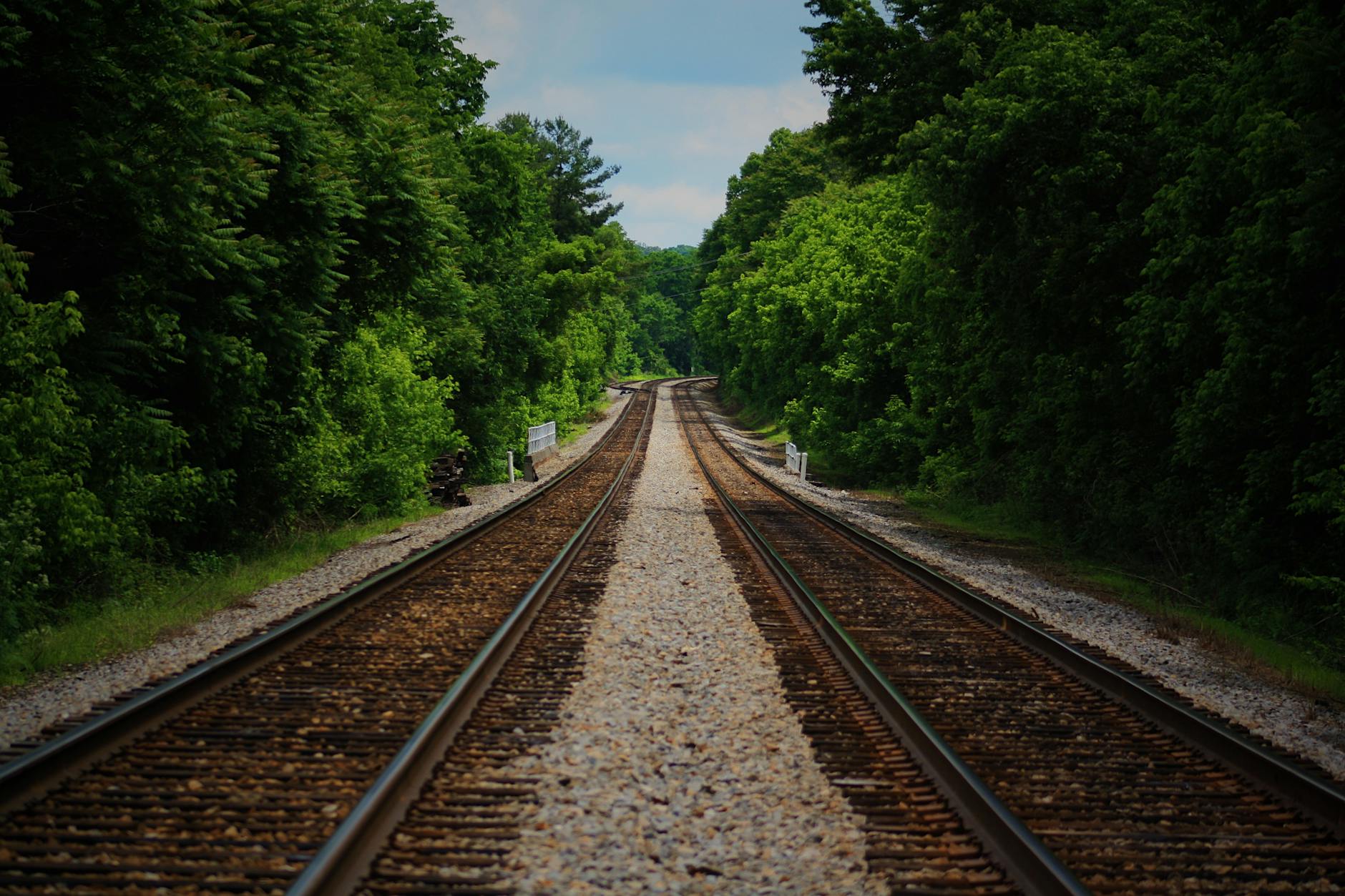
Photo by Cody King on Pexels.com

Huntley officials confirmed Friday that the village has decided against having a train station come to town.

Huntley had been slated to have a stop on the Chicago-to-Rockford rail line that’s expected to start operations by 2027, but the village recently notified project leaders they no longer wanted a station.

Village officials cited potential parking and traffic issues, among other things, downtown as well as uncertainty with ridership numbers and village financial commitments…

In nearby Marengo, which isn’t scheduled to have a train stop despite the rail line going through the center of town, the City Council has expressed its support for having the train stop there.

For a long time, suburbs would have wanted a stop on a commuter rail line. This offers nearby residents – in the particular community with a stop but also residents in nearby communities – opportunities to go to the city. Not having a train station means other communities could benefit from the commuting options and the business and residential opportunities that might go with it.

But the reasons cited above suggest a railroad today might be seen as more trouble than its worth for suburban communities. Parking and traffic concerns come up with any new development. Ridership and money figures could be hard to forecast.

I wonder if another matter at play is the rapid growth of the community in the last few decades. As late as 2000, the suburb had 5,730 residents. In the 2020 Census, the community has 27,740 residents. Would a train line contribute to that change? Might it encourage denser development around a train station, something that has happened near numerous Chicago suburban train stations?

Also, the community already has transportation options. It is along a major highway, I-90, to and from Chicago. Residents can access train lines to Chicago in the nearby suburbs of Elgin or Cary, roughly 25 minutes drive away, if they really want a train.

Still, I wonder if the suburb will regret not having a train stop. The train will run through the community anyway; would a train station disrupt life that much and/or might it add something for residents?
The Chicago Tribune on the side of suburban commuters

An editorial in the Chicago Tribune details some of the issues commuters to Chicago face:

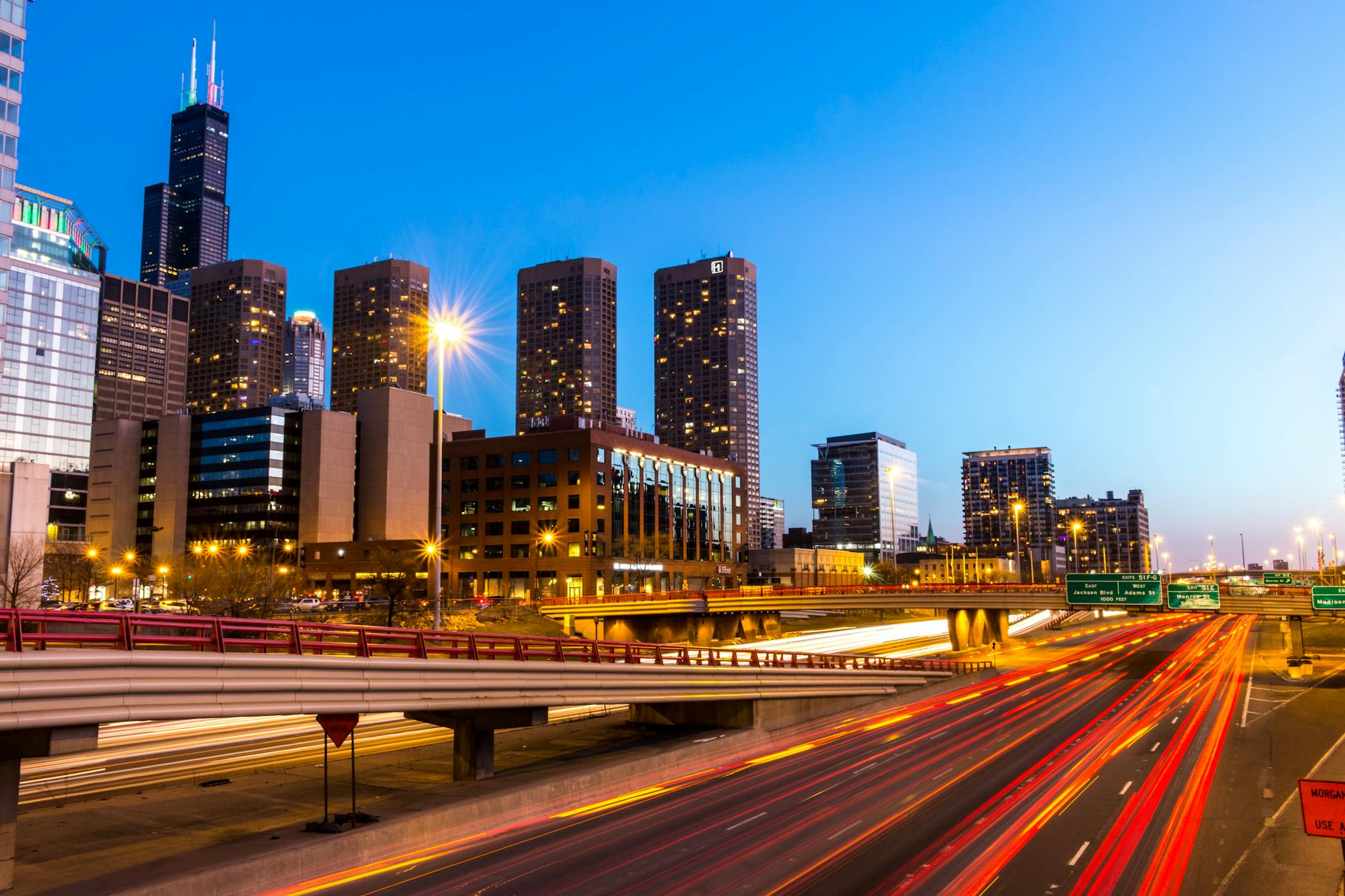
Photo by Cameron Casey on Pexels.com

But hope and optimism have their limits, even among the heartiest suburbanite, who likely saw the news about the Kennedy construction delay debacle and felt put upon and frustrated — but not surprised. After all, suburban commuters are just supposed to take it. Still, this one stings…

It’s not just the roads where suburban commuters get a rough deal — they’re constantly on guard against Metra fare hikes. Fares increased last year, and now Metra is threatening fare hikes again — plus service cuts — as the agency stares down the proverbial fiscal cliff. 

So the suburban commuter faces tortuous traffic on the highways, higher prices and worse service on the trains — yet the city wants them back downtown to buy their $20 lunches and restore the Loop’s economy. Businesses want the suburban commuter back downtown to occupy vast commercial office spaces to justify the rent. And everyone wants them to boost foot traffic, creating safety in numbers and making everyone feel a little safer walking to the office…

But the city often lacks warmth for the people trekking downtown. Not too long ago, the mayor of Chicago floated weaponizing taxes on suburbanites to extract more tax revenue via a Metra “city surcharge” and a “commuter tax” as a way to “make the suburbs … pay their fair share.” See above — they’re already paying a lot to get downtown. 

A hostile relationship between the city and the suburbs is no good. Suburban willingness to come to work downtown is a direct reflection on the city’s health. Is it safe? Is it clean? Is the restaurant scene thriving? If so, people will hop on the Metra and gladly make the trip. The more suburbanites, the better.

Four thoughts in response:

  1. What exactly would “warmth” for suburbanites look like?
  2. What about the many commuters in the region who go suburb to suburb? Are their trips easier?
  3. Do suburbanites need the city more or does the city need suburbanites more?
  4. Contrary to the zero-sum game assumption in #2 above, would it be better to think of suburban commuters and city residents as part of a larger metropolitan area? Better transportation options could be good for city and suburbs as could economic opportunities for both cities and suburbs.

Seeing a steam locomotive roll through suburbs created by such vehicles

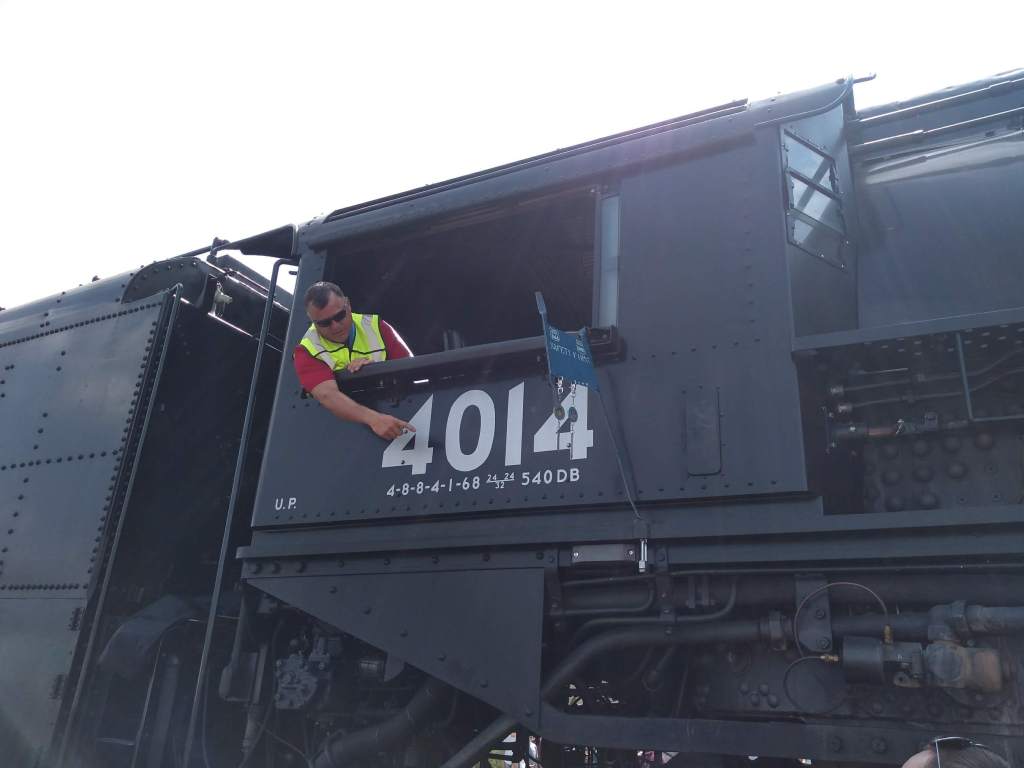
At least a few suburbs in the Chicago area and outside cities throughout the United States owe their founding to early railroad lines that provided quick access to the bi city and other points beyond. So when a large steam locomotive passed along the same suburban tracks in 2024, at least a few people took note:

With a shiny yellow-and-gray streamlined passenger train in tow, the Union Pacific “Big Boy” No. 4014 steam locomotive rolled through the western suburbs Monday morning to the delight of railroad enthusiasts and casual observers alike.

Roughly two hundred years ago, steam locomotives opened up all kinds of possibilities. One opportunity involved the possibility of larger and further-flung suburbs: a resident outside could travel quickly in and out of the big city. It no longer took a day or more to use horses or a carriage. No more need to travel a long distance over poor roads. Large amounts of freight could be shipped overland from the interior to big cities.

The early railroad lines tended to connect important cities and locations to each other. Along these lines, residents gathered near stations. Lots were developed. Businesses moved there. Churches opened. Houses were built. Communities grew. Regular train service emerged.

Eventually, these railroad lines were dwarfed in importance by cars, trucks, roads, and highways. Many of the lines still exist but more people drive. Much suburban development since World War Two has happened between railroad lines as cars offered access to more land.

Amid the regular clatter of passenger and freight trains through suburbia, an occasional steam locomotive with a loud whistle and billowing smoke provides a reminder of an older era. Yet, that older era helped give rise to the automobile dominated suburbia of today.

What US metro areas do suburb to suburb mass transit well?

Public hearings about mass transit consolidation in the Chicago region highlight a persistent issue: where is the mass transit to serve all the people who commute suburb to suburb?

Photo by Jou00e3o Jesus on Pexels.com

“Right now, our transit system reflects an old design,” DuPage County Board Chair Deb Conroy testified in Naperville. “One that saw commuting as merely bedroom communities serving downtown workplaces.”

“All suburban residents deserve the same level and access to and from Naperville to Rosemont or from Oak Park to the Morton Arboretum in Lisle.”

College of DuPage student Rowan Julian experienced that disconnect trying to get from Wheaton to Batavia to see a friend, a 20-minute car trip. She wanted to use public transit but found it could take up to one hour and 40 minutes.

“For me I felt like I had no choice … so I chose to take my car,” she said.

Chicago, like many older metro areas, has a hub-and-spoke model where the train lines feed the center of the city. This fit a particular era when there was a mass of jobs and economic activity in the center of cities.

Today, metropolitan regions are sprawling and many commuters do not need to go to the big city for work: there are all sorts of jobs all throughout the region. This presents particular challenges for mass transit. Buses can use existing roadways but tend to be slower than cars. Trains can connect nodes but then there needs to be additional service from the train stations. Access via walking or biking might be theoretically possible in some suburban areas but it is often dangerous. Communities and the region can encourage more development around existing transit nodes. And Americans often seem to like driving because of the individual freedom it offers and go when they want and where they want.

What American regions do this well? Could be older regions or newer regions. Who has a model that other regions can emulate? How can regions build this capacity and pay for it? When much of the money is funneled to maintaining existing roads and building new ones, how can suburban places find resources for mass transit?

Adjusting rail transit to a decline in the 9-5 commuter

The Chicago region is built around a hub-and-spoke railroad system. But, what happens to those railroads when fewer people take the train into the city five days a week?

Photo by Josh Hild on Pexels.com

The 9 a.m.-5 p.m., five-days-a-week-in-an-office commuter is an endangered species on the brink of extinction. And that reality poses an existential crisis for transit agencies, especially commuter rails like Metra.

Now the agency’s post-pandemic recovery plans are coming into focus, and commuters could soon feel changes, from some increased fares to new ridership packages that will make a popular 10-ride card obsolete.

But perhaps the most interesting shift is Metra’s attempt to market itself as more than a vehicle to get white-collar workers downtown…

The plan is also focused on promoting non-downtown trips, which Metra sees as a growth opportunity. To encourage a trip to the zoo, for example, one-way tickets that don’t include a downtown starting point or destination would cost $3.75 regardless of distance…

Even if Metra wanted to add more frequent trains — which Gillis said it does — that change can’t happen overnight. Mixing up schedules would likely require infrastructure updates and new agreements with the freight railroads that share the tracks Metra trains travel on. All that would come at a cost, which may be out of reach for an agency barrelling toward a budgetary crisis.

One issue that is very difficult to address: is the railroad infrastructure in the Chicago region just not in the right places? The hub-and-spoke model worked for decades but more commuting is suburb to suburb. The region needs rail lines and other mass transit options that link suburbs and suburban job centers. Even just adding one or two dependable connector options between the Metra lines could be a big help. (See the proposed STAR Line.)

Another route to pursue: continue to encourage communities to build more transit-oriented development that can help create a larger residential base who can easily hop on and off railroad lines. I was recently on a suburban railroad line and saw a family with small kids hop on for three stops and get off. If more people can easily walk to a station, travel quickly and reliability, and find something interesting within a short walk a few stops away, they will do so. What might be good for local development can also be good for Metra.

The long wait for a train station parking permit in Naperville is ending

The busy Metra commuter rail train stations in Naperville meant that it could take years to get a parking permit. That is no longer true:

Photo by Pixabay on Pexels.com

All parking spaces in Naperville commuter rail lots will transition to daily fees in the coming months.

The Naperville City Council Tuesday voted to eliminate the parking permit system at the Route 59 and Naperville/Fourth Avenue Metra rail stations and require commuters to pay only for the days they park…

Even before the COVID-19 pandemic changed the frequency people commute to Chicago, city staff was working to address the problem of spaces not be used in permit lots.

Effective immediately, no new permits will be issued for any Naperville commuter parking lots.

In the coming months, staff will modify the municipal code for council consideration with a goal implementing the daily pay-by-plate fee model in July…

When demand does return, the city can look into implementing more technology, such as parking guidance and reservations systems, Louden said.

This is a big change in a community where finding parking at the train station was difficult for years. Suburbanites are often used to plentiful and cheap parking so both a waiting period for a permit and a shift to a first-come-first-served model can irk different people.

It would be interesting to hear more about how changing work patterns – more work from home, perhaps more suburb to suburb commuting over time compared to trips into Chicago – affect suburban life. Are we in for a significant reckoning with commuter rail and mass transit when fewer people use it regularly for work? How about big parking lots: do they survive? Or, do suburban schedules change when fewer people work 9-5 shifts?

Even with some working from home in 2021, driving alone is by far the most common way to get to work

Here is data on how people in the United States got to work in 2021:

Over two-thirds of workers drove alone. This is the case even with some Americans working from home.

The percent of Americans either driving with someone or taking mass transit is low. Estimating from this data, fewer than 11% travel to work among others.

Commuting is primarily a solo task in the United States. This has all sorts of implications ranging from traffic and congestion on roads, environmental concerns, time use, land use, social interactions, and more.

Focusing mass transit on those who need it or commuters

Looking at those who continued to use mass transit during COVID-19 helps raise the question of who public transit should serve:

Photo by Samson Katt on Pexels.com

Yes, public transit ridership dropped like a stone after many places instituted stay-at-home orders. Americans took 186 million transit rides in the last week of February 2020, according to data compiled by the American Public Transit Association; a month later, that number had fallen by 72 percent, to 52.4 million. At the Port Authority of Allegheny County, which operates in the Pittsburgh area, ridership fell 68 percent.

Who kept riding? In a country where race is tied to economic opportunity and geography, transit riders have long been disproportionately low-income and people of color. Maybe it shouldn’t have been a surprise, but they were the riders who stuck around. An analysis from the APTA found that white men were more likely to have given up transit during the pandemic; people of color, people who spoke Spanish, and women did not…

But US public transit has generally focused on commuters, especially those with traditional 9-to-5 schedules, who travel between city fringes and downtown business districts—riders who are less likely to be low-income and more likely to be white. That’s despite the fact that, even in the biggest cities, where transit use is more common, just half of pre-pandemic trips were to and from work. In smaller systems, the share is even less. The Port Authority of Allegheny County isn’t an exception. “Our system is very downtown centric, and it has historically relied very much on the commuter,” says Brandolph, the spokesperson. As a result, service within cities, serving people with less-regular work schedules or who took transit for other purposes, got short shrift.

That age may be over, says Alex Karner, who studies transportation equity as an assistant professor at the University of Texas at Austin’s School of Architecture. “The pandemic really exposed the truth that there are people for whom public transit is a vitally important public service,” he says. He says agencies now realize they will no longer be able to rely on peak-period commuters. When Urban Institute researchers surveyed 73 US and Canadian agencies on what service might look like in a “post-pandemic” era, more than half said they thought “peak period” travel would decrease. Nearly 70 percent said white-collar workers would take fewer rides. So transit agencies must decide what the new normal will be—and who it will serve.

In a country devoted to driving, those who have alternatives to mass transit to get to work will use those. Additionally, there is a class element to how mass transit is used and regarded and COVID-19 made work from home possible for some and not others.

The underlying assumption here appears to be that public transit cannot or cannot easily serve both groups of users. One aspect of this is that underlying patterns of residential segregation in cities and urban areas mean potential riders live in different locations. Additionally, later parts of the story cited above highlight the money mass transit systems have at the moment due to federal funds.

In the long run, when wealthier residents are asked to devote more funds to mass transit for equity and those who need it, will they agree? In Chicago, this has manifest in limited mass transit service in some areas compared to others. The new federal money means the Red Line can be extended on the South side. How far can efforts go? In other metro areas in recent years, wealthier suburbanites (see Nashville) have rejected efforts to expand mass transit. When suburbs are increasingly diverse and home to poorer residents, is there will to have consistent mass transit service?

Getting people back to mass transit after COVID-19 – and a deck stacked against mass transit

Mass transit agencies across the United States are trying different strategies to try to get people back after COVID-19:

Photo by Jeffrey Czum on Pexels.com

Agencies in Boston, Cleveland, Las Vegas, the San Francisco Bay Area, and New Orleans are offering reduced fares or free rides, temporarily, to lure people back onto transit. Others are considering abolishing fares altogether. Los Angeles is exploring a 23-month pilot that would give students and low-income residents free rides. The Kansas City Area Transportation Authority scrapped fares in March 2020 and doesn’t plan to bring them back. “The return on investment for empathy, compassion, for social equity, far outweighs the return on investment for concrete and asphalt,” Robbie Makinen, the agency’s CEO, told Stateline last week.

Others are taking aim at an even more sacred cow: rush hour service…

Agencies are using the murky period of pandemic recovery to usher in schedule changes. In Los Angeles, officials for Metra, the local commuter rail, said this month they would test new schedules that “step away” from the pre-pandemic, rush hour norm, “in favor of a more balanced approach” that spaces trains more evenly throughout the day. In Boston, officials in April went ahead with pre-pandemic plans and began running more frequent commuter trains outside the schedules of the 9-to-5ers. It’s part of a bigger vision to transform the system into a more equitable regional rail network that serves more than the traditional office worker. Off-peak riders are more likely to be immigrants, women, people of color, and lower income. The pandemic, as the local advocacy group TransitMatters has observed, may have given the local agency the “political space” to make long-planned changes. There are fewer people now to complain that operators took away their specific train.

Just as the aftermath of COVID-19 offers an opportunity to think about housing, here is an opportunity to reconsider mass transit strategies. Why keep doing things the same old ways when the world has changed? If different cities and regions experiment with different tractics, they might find a few that work and that can be widely adopted.

At the same time, mass transit does not just face COVID-19 fallout. If given the choice, many Americans would prefer not to use mass transit. If needing to travel, they would prefer to drive unless this is really inconvenient. Driving offers more individual freedom to come and go and offers completely personal space (outside of seeing other drivers and passengers in nearby vehicles). American governments have spent a lot of money in the last century paying for roads and driving infrastructure while investments in mass transit have lagged or mass transit is often tied to driving (an emphasis on buses).

Additionally, if a post-COVID-19 world means that working from home is more of an option, more people simply will not need mass transit and/or will enjoy not having to use it. Mass transit could still be useful for going out but if it is not needed for work for as many people, this will mean losing a lot of regular riders.

More broadly, this gets at bigger questions in the United States about development, density, transportation, and thriving communities. An ongoing commitment to cars has consequences as would a shift toward a different kind of mass transit or constructing more dense places where mass transit makes more sense. If the best that can be done now is to prioritize transit-oriented development in denser pockets in urban areas, it will take a long time to swing trips toward mass transit compared to driving.

Rituals to mimic the valuable aspects of a commute (without the actual travel time)

COVID-19 has disrupted the work patterns of many and this included the commute to and from work. Even as some relished the opportunity to work from home and avoid the time and hassle of a commute, the pattern could offer some advantages. Enter in alternative rituals to mark the beginning and end of a work day:

Photo by Fabrizio Verrecchia on Pexels.com

I sought the advice of Ezra Bookman, a corporate-ritual designer (yes, this is a real job) based in Brooklyn. His work includes coming up with ideas like “funerals” for failed projects. “Every single conversation I have with corporate clients is the same,” he told me: “Employees are burnt out and have no separation between home and life.”

Naturally, he has come up with some rituals to replace the commute and mark the beginning and end of each day. The ideas he’s proposed to clients include lighting variations, warm-up stretches, cellphone-free walks, and, as he demonstrated to me over Zoom, shrouding your computer in a fine blue cloth when you log off, as if it, too, needs a good night’s sleep.

“Rituals are friction,” he told me. Like the commute, “they slow us down. They’re so antithetical to most of our life, which is all about efficiency and speed.” One ritual that worked for Bookman was changing his laptop password to “DeepBreath”: “It helps me to locate myself in time and say, ‘Okay, what am I here to do?’ ”

Iqbal, the Microsoft researcher, said that this was the same idea behind a “virtual commute” that her company has just released. An onscreen tap on the shoulder—“Ready to leave for the day?”—signals that it’s time to knock off. The shutdown sequence has you bookmark what you were working on. It invites you to “take a minute to breathe and reset,” in sync, if you like, with a calming meditation video. Because work is done.

The stark physical distance in the modern world between work and home is one that is relatively unusual in human history. In communities prior to the 1800s, many workers lived and worked in close proximity, often on the same property or land. The availability of new transportation options plus burgeoning populations and industries separated the two such that the physical distance between home and work increased.

These rituals hint at these physical distances while emphasizing the broader dimensions of not living and working in the same place. Humans fall into and often enjoy routines/rituals. Even if they are stressful – and commuting can be both in the moment and long-term – they can become needed.

At the same time, how exactly does replacing one ritual with another work? Here the issue is work and home life, trying to recreate patterns that allow for decompression and shifting focus. Yet, the new ritual is quite different: it does not involve the body in the same way – less motion, more emphasis on breathing – and happens at a different speed – commuting involves the possibility of higher speeds via car, train, and other means.

Does this always work? I am thinking of T. M. Luhrmann’s book on religious kindling which involves a lot of discussion of rituals. Replace a religious ritual with an action that tries to invoke something similar – say mindfulness – and does it replace the previous ritual or is it deficient or even better? How much time does it take to adjust from one important rituals or set of rituals to another?

Add technology to this mix – which could help pattern and establish new rituals as well disrupt old patterns such as making work possible at all hours and in all places – and lots of rituals may need reinforcing or replacing.