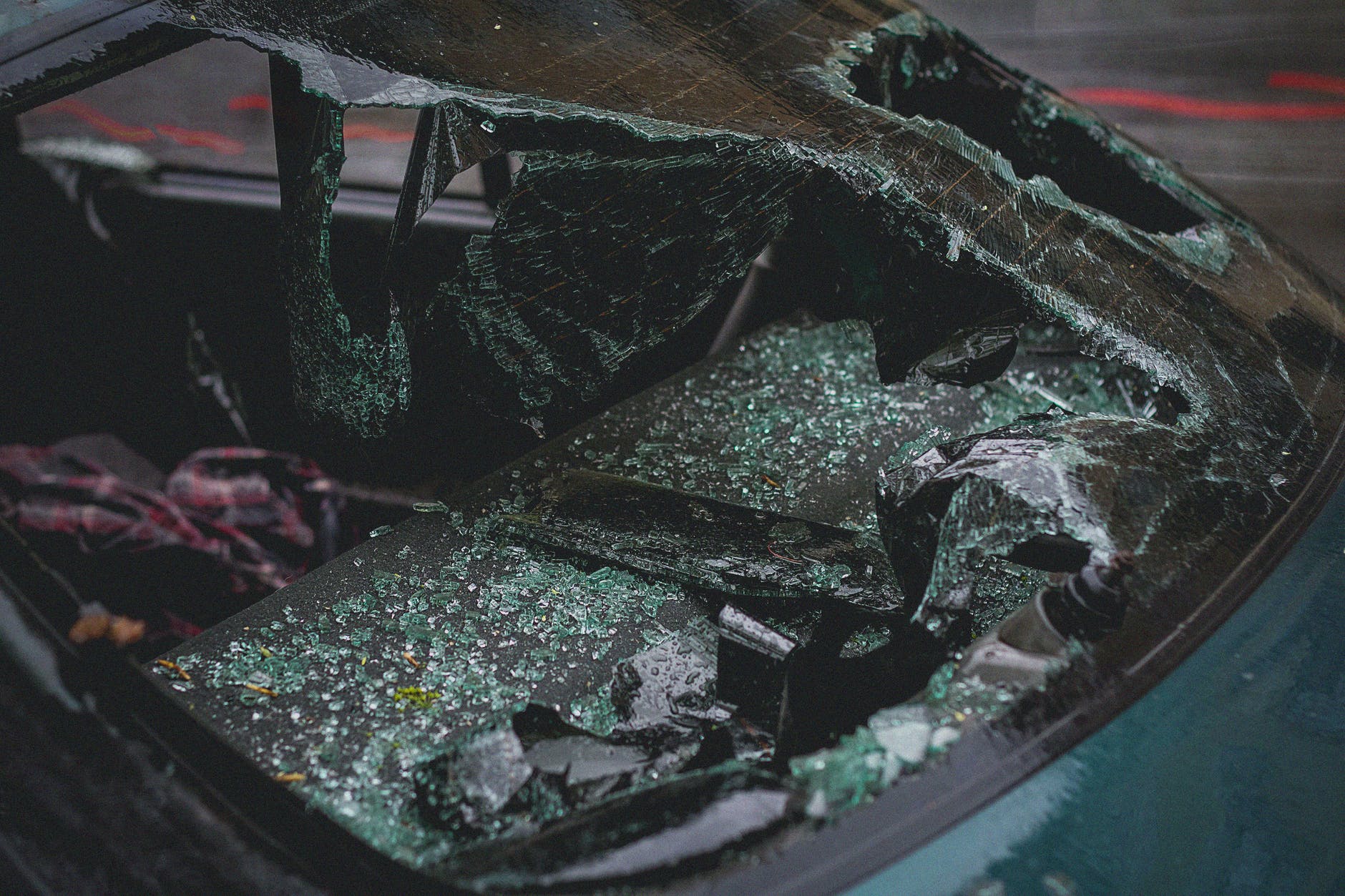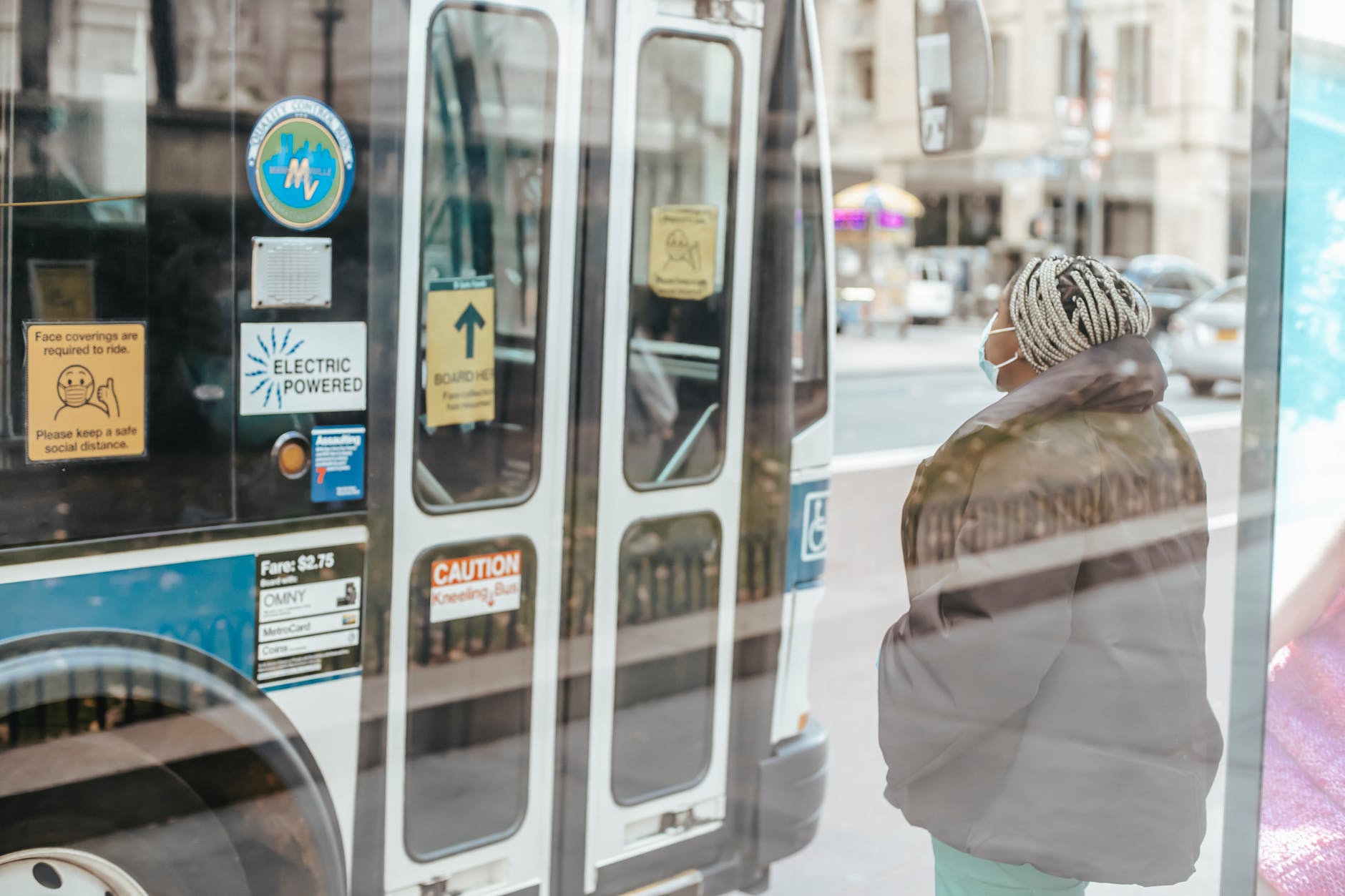
But to get around metropolitan areas in the United States almost requires using highways. Driving is required in most places and people might be able to avoid faster roads for specific destinations or shorter trips. However, completing a lot of trips – whether suburb to suburb or in and out of major population centers – will involve highway travel.
There are already numerous efforts to make highway driving safer. Vehicle features. Signs. Public service announcements. Traffic enforcement. Are there other methods to try or is this more of a question of public will – are people willing to change driving habits and our public infrastructure in order to reduce the number of deaths?
In Cook, DuPage, Kane, Lake, McHenry and Will counties, pedestrian crash fatalities totaled 144 last year, a 6.7% rise from 135 in 2023…
Asked to explain the trend, CMAP Senior Transportation Planner Barrett cited Insurance Institute for Highway Safety research that found SUVs, pickups and vans with hood heights greater than 40 inches are about 45% more likely to cause pedestrian deaths in crashes than vehicles with shorter hood heights. Blunt, vertical front ends also increase risks…
Barrett and Active Transportation Alliance Advocacy Manager Alex Perez also listed distracted driving, COVID-19-era bad habits such as speeding, and traffic enforcement drop-off as contributors to collisions…
Street design also plays a role with busy suburban corridors such as North Avenue — multilane, fast-flowing intersections that are problematic at best for pedestrians and cyclists, he added.
There are lots of factors at play that make walking and biking dangerous in metropolitan areas. Each of the factors listed above – size of vehicles, safer driving practices, and street design – could each be addressed.
But the goal of reducing pedestrians deaths or having safer streets might be best served by reducing driving and encouraging other forms of transportation. Driving is deadly across the board for drivers and pedestrians. Americans accept the risks of driving because they tend to live driving, or at least like driving compared to other options.
Or rather than prioritize safety efforts that try to play around the edges of the dominant system of driving that seems required in almost all American communities, could communities that from the beginning that serve a variety of mobility options do better? Retrofitting existing communities is hard. Adding bike lanes, establishing good mass transit, and prioritizing other uses of streets takes time and money.
Of course, reducing driving might be unpopular. Wildly unpopular. It is often associated (positively) with the American way of life. So if public officials or residents or others want safer roads, they might have to address individual factors that each have limited impact.
It was the only bicyclist death so far this year, suggesting what some hope signals the beginning of a decline in such fatalities.
Some even contend the number of all traffic deaths in Chicago — cyclists, motorists and pedestrians — could be reduced to zero with the right improvements.
Others are more guardedly optimistic.
Before that August crash on the West Side, Chicago had gone 10 months without a cycling death. That was the longest such duration dating back to at least the beginning of 2019, the earliest year available from the city’s daily traffic crash data.
“Statistically, this drop appears too large just to be entirely good luck,” said Joseph Schwieterman, a transportation professor at DePaul University. “It’s not likely the fatalities will stay at this level, unfortunately, but this is encouraging.”
The rest of the article talks about methods that could be implemented to make roads in Chicago safer.
As I have read about similar efforts in recent years, reducing traffic deaths seems to go well with multiple other efforts:
More sustainable cities with fewer cars on the road and other viable non-driving transit options.
More inviting and lively streetscapes with less emphasis on motorized vehicles.
Encouraging walking and biking, which are healthier options.
Safety alone may or may not be a compelling reason to change conditions but combine safety with other interests people have and perhaps there will be a steady shift away from only emphasizing driving.
Above all, though, the problem seems to be us — the American public, the American driver. “It’s not an exaggeration to say behavior on the road today is the worst I’ve ever seen,” Capt. Michael Brown, a state police district commander in Michigan, told me. “It’s not just the volume. It’s the variety. There’s impaired driving, which constituted 40 percent of our fatalities last year. There are people going twice the legal limit on surface streets. There’s road rage,” Brown went on. “There’s impatience — right before we started talking, I got an email from a woman who was driving along in traffic and saw some guy fly by her off the roadway, on the shoulder, at 80, 90 miles an hour.” Brown stressed it was rare to receive such a message: “It’s got so bad, so extremely typical,” he said, “that people aren’t going to alert us unless it’s super egregious.”
In 2020 and 2021, the National Highway Traffic Safety Administration has calculated, approximately a quarter of all fatal wrecks in the United States involved vehicles traveling above the posted speed limit; a significant percentage of the dead, whether passenger or driver, were not wearing seatbelts. In line with the trends documented by Kuhls in Nevada — and observed firsthand by Brown in Michigan — national intoxicated-driving rates have surged to the extent that one in every 10 arrests is now linked to a suspected D.U.I. And aggressive driving, defined by AAA as “tailgating, erratic lane changing or illegal passing,” factors into 56 percent of crashes resulting in a fatality. (Distressingly, this statistic does not cover the tens of thousands of people injured, often critically, by aggressive drivers, or the 550 people shot annually after or during road-rage incidents — or the growing number of pedestrians and cyclists deliberately targeted by incensed motorists.)
Take the bad behavior and add the perils of distraction by smartphone — responsible, by one conservative estimate, for about 3,500 deaths annually — and you’re left with what Emily Schweninger, a senior policy adviser at the U.S. Department of Transportation, described to me as a “genuine public-health crisis” on the level of cancer, suicide and heart disease.
Much could change in the coming years to address this issue. Safety features in vehicles. Changed designs of roadways and spaces for pedestrians and bicyclists. Other efforts need more time and capabilities: self-driving vehicles, a changed culture around roads, driving, and community life.
But, part of the issue is whether these accidents and deaths are a problem or not. Americans like to complain about other drivers and tend to see their own driving as okay. Driving is required in many places. Some drivers might even enjoy driving. The delivery of many of our goods requires driving. Are deaths via vehicle just the price Americans are willing to pay for driving?
Addressing this issue is a long-term project. All of daily life contains some risks but Americans tend to not think much about the risks of driving even as it impacts many lives on a daily basis. Does this mean a national safety campaign is needed? A serious conversation about how necessary driving should be? A need to invest in new technologies and options? On one hand, plenty of people would have experience with this issue. On the other hand, it will take a lot of work to convince people to support significant changes to American driving and all that goes with it.
But roadkill is also a culprit in our planet’s current mass die-off. Every year American cars hit more than 1 million large animals, such as deer, elk, and moose, and as many as 340 million birds; across the continent, roadkill may claim the lives of billions of pollinating insects. The ranks of the victims include many endangered species: One 2008 congressional report found that traffic existentially threatens at least 21 critters in the U.S., including the Houston toad and the Hawaiian goose. If the last-ever California tiger salamander shuffles off this mortal coil, the odds are decent that it will happen on rain-slick blacktop one damp spring night.
But, it has costs. It is expensive. Driving pollutes. It is part of sprawl. And it is dangerous to life, whether other drivers or pedestrians or animals.
There may innovative solutions. See the construction of bridges or overpasses over roads and highways that enable wildlife to cross roads without danger.
Yet, the danger to animals appears to be a cost Americans are willing to bear for what driving brings. Whether it continues this way remains to be seen.
More than 7,500 people were killed last year after being struck by vehicles while walking along or across U.S. roadways — the most pedestrian deaths in more than four decades, according to a new report.
This sobering trend was not surprising to experts who track the numbers. But they were dismayed by the consistent increase — up 77% since 2010.
From a social problems perspective, at what point would pedestrian deaths become a sufficient issue that people and governments would devote significant resources to addressing it? I am trying to imagine a pedestrian lobby that brings together different groups and it is hard to envision such a movement coming together. Perhaps it requires major marches on population centers? Could local walkers or walking groups join together with park districts, outdoor companies, and others with a stake in pedestrian activity to collectively act? The ability to walk safely should be prioritized, but it is not the primary concern in transportation or with roadways.
(Additionally, American roadways are not safe for drivers either. According to one source, “The United States has the most traffic deaths per capita of any developed country.”)
Nearly 43,000 people were killed on U.S. roads last year, the highest number in 16 years as Americans returned to the roads after the coronavirus pandemic forced many to stay at home.
The 10.5% jump over 2020 numbers was the largest percentage increase since the National Highway Traffic Safety Administration began its fatality data collection system in 1975. Exacerbating the problem was a persistence of risky driving behaviors during the pandemic, such as speeding and less frequent use of seat belts, as people began to venture out more in 2021 for out-of-state and other road trips, analysts said.
Transportation Secretary Pete Buttigieg said America faces a crisis on its roads. The safety administration urged state and local governments, drivers and safety advocates to join in an effort to reverse the rising death trend…
Buttigieg pointed to a national strategy unveiled earlier this year aimed at reversing the trend. He said earlier that over the next two years his department will provide federal guidance as well as billions in grants under President Joe Biden’s new infrastructure law to spur states and localities to lower speed limits and embrace safer road design such as dedicated bike and bus lanes, better lighting and crosswalks. The strategy also urges the use of speed cameras, which the department says could provide more equitable enforcement than police traffic stops.
Americans like driving and all that comes with driving. Because of this, Americans generally accept the risks of driving. While people may have fears of airplanes crashing or being hit by lightning or other improbable occurrences, the regularity of vehicle accidents does not seem to bother many.
Would a big jump in roadway fatalities catch people’s attention in a way that a typical year-to-year change would not? That this jump is tied to COVID-19 is also an interesting twist; driving might be more dangerous during and after a deadly pandemic. Also in the article, officials note the difficulty of quickly reducing roadway deaths. When do such deaths become an acknowledged crisis or a serious social problem?
Implicit in a decision to drop the last remaining safety rules is a willingness to abide the current mortality rate. Over the last week, COVID-19 has claimed an average of 626 lives in the U.S. each day. That’s fewer than the roughly 1,900 who die of heart disease and the 1,650 who die of cancer each day, on average, but well above the 147 are lost to influenza and pneumonia combined.
For public health experts, the calculus is more explicit. Mortality and morbidity — the words their profession uses for death and illness — are on one side of the equation, and tools like seat belts, blood pressure medication, smoking-cessation programs and vaccines are on the other.
Those tools vary in cost, intrusiveness and political acceptability. Despite public health campaigns and legal mandates, Americans continue to drive drunk and leave seatbelts unfastened. Tobacco kills more than 480,000 people a year in the United States, yet 34.2 million adults continue to smoke. Diabetes claims more than 100,000 lives a year, but efforts to discourage the sale and consumption of sugary drinks — a significant contributor — have met fierce resistance.
At some point, all efforts to limit preventable deaths will hit the hard wall of funding constraints, medication availability, and people’s willingness to take steps to protect themselves and others. That’s where the number of deaths that is “acceptable” comes into focus…
The CDC and other federal agencies are still deciding on the criteria they’ll use to determine when the pandemic has ended. There’s still time — Dr. Rochelle Walensky, the agency’s director, said as recently as last week that we’re not there yet.
What I would highlight here as a sociologist:
The relative risk of different illnesses or behaviors are not just determined by numbers. The first paragraph cited above highlights the number of people who die each day in the US due to different conditions. But, this does not mean each of these illnesses is experienced the same nor is thought of as the same kind of threat. See earlier posts on the acceptable deaths due to driving (and pedestrians).
Decisions like these are made by a constellation of actors with a variety of interests. The public is involved in how leaders think the public will perceive changes, pressure the public can place on officials to make particular decisions, and in how the public responds. This is a process with numerous organizations and institutions involved.
Declaring an end to the COVID-19 pandemic is not easy nor is addressing the illness beyond the official end of a pandemic. Like much involving health, policies and behavior depends on social conditions and influences.
Northwestern University economics professor Ian Savage examined American crash data over a decade, concluding that 7.3 people died in a car or truck for every billion passenger miles, 30 times the risk on urban rail and 66 times the risk aboard a bus. (If you’re wondering, motorcycles are by far the riskiest vehicles of all, while airplane travel is the safest.)
Even with these numbers, there are multiple reasons why many continue to prefer to drive:
Studies show that people typically feel safer in vehicles they control compared to those they cannot (i.e., a car compared to a bus or train). Worse, the rare transit crash is often a top media story, while daily car collisions barely register. “It’s baked into how we talk about crashes,” says Millar, of Washington State. “We had an Amtrak train crash here, three people died, and it was international news. That same week 10 people died on highways in this state—and it was the same the week before that, and the week before that.”
According to psychology’s “availability heuristic,” the intense attention paid to exceedingly rare plane or train crashes can lead us to unconsciously exaggerate their frequency, while the media’s shrug at car crashes causes us to discount the dangers of driving. One extreme example: A study found that the shift away from flying toward driving in the aftermath of 9/11 led to over 2,000 additional traffic deaths in the United States.
Lots of interesting factors to consider here. Do the perceived advantages of driving block out any consideration of the risk? Even if people had these numbers at their fingertips, would they consider risks or numbers?
I have argued before that the preference for driving is strong. If people in the United States have the resources and opportunity, they will pick driving over mass transit. Of course, the system is set up to make this choice for driving easier with an emphasis on roads and linking important cultural values and driving (such as individualism, taking road trips, suburban life, etc.).
This may be a prime case where making an argument from the numbers simply will not get far given the cultural narratives and social systems already in place. Perhaps the numbers could be paired with a compelling story or narrative? Even then, it could take a long time to convince Americans that because driving is more dangerous than other options they need to switch to other modes of transportation.
COVID-19 is big in its effects but I am surprised we have not seen more coverage all over the place about who specifically is affected more within regions and big cities. WBEZ looks at recent data in Cook County, Illinois:
In the earliest weeks of the pandemic, Chicago’s Black residents were dying of COVID-19 at alarming rates. More recently, in the few weeks since the arrival of the omicron variant, Black Chicagoans are again dying at much higher rates than their Asian, Latino and white counterparts, shows a WBEZ analysis of data on COVID-19 related deaths from the Cook County Medical Examiner’s Office.
Since Dec. 7, 2021, the date when the state’s first omicron case was found in Chicago, the city’s Black residents are dying at rates four times higher than Asians, three times higher than Latinos and nearly two times higher than white residents, according to WBEZ’s analysis. A total of 97 Black Chicagoans died of COVID-19 during the seven-day period ending Jan. 9, 2022 — more than at any point since May 11, 2020.
Black Chicagoans aren’t the only demographic that has been particularly vulnerable since the arrival of omicron. Older suburban Cook County residents have also seen their seven-day COVID-19 death totals reach levels not witnessed in more than a year. According to WBEZ’s analysis, a total of 181 suburban Cook County residents 60 years and older died from COVID-19 during the week ending Jan. 9, 2022. That’s the highest seven-day total for that group since Dec. 24, 2020…
While several communities on Chicago’s South and West sides have been hit hard by COVID-19, the pandemic’s death toll has also weighed heavily in various parts of suburban Cook County. WBEZ’s analysis finds some of the county’s highest COVID-19 death rates in parts of northwest suburban Niles, Norridge and Lincolnwood, southwest suburban Palos Heights, Chicago Ridge, Oak Lawn and Bridgeview; and south suburban Hazel Crest, Markham, Harvey, Robbins and Country Club Hills.
I am sure there are already and will continue to be many academic studies that examine these differences. Even as COVID-19 has impacted many, the impacts of COVID-19 are not distributed evenly. It arrived at a time of inequality, including in health outcomes and experiences, and it exacerbated issues.
At least in the Chicago area, data on this topic is available online. For example, I have tried to keep track of the disparate effects of COVID-19 in DuPage County where there are significant differences across racial and ethnic groups, age groups, and communities (earlier post here).