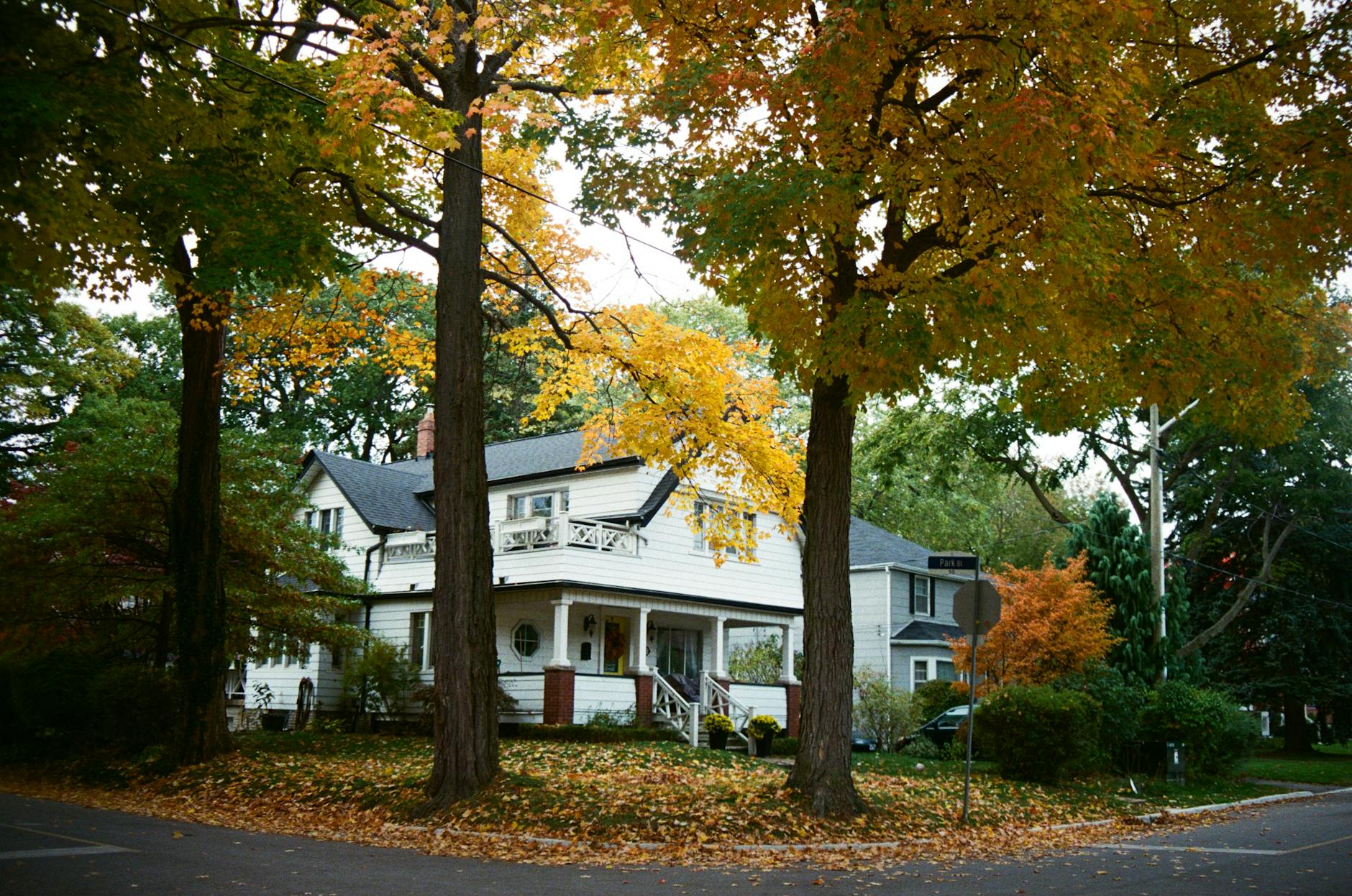
How would we know when there is a “housing panic”?

Headline: “Housing panic grips half of US cities as record price cuts send home values tumbling.” What does the text of the story say?

Photo by Anna Tarazevich on Pexels.com

Sellers are slashing prices at record rates to to lure hesitant buyers put off by soaring mortgage rates and economic uncertainty.

In July alone, 27.4 percent of listings had a price cut — the highest rate ever recorded in Zillow’s monthly data going back to 2018.  

It helped push prices down year-over-year in 25 of the 50 largest US cities. Most were in the South and West…

Tampa prices are down 6.2 percent, Austin 6 percent, Miami 4.6 percent, Orlando 4.3 percent and Dallas 3.9 percent, according to Zillow

Price cuts are more common in the South and the Mountain region, according to Zillow, as homeowners desperately try to offload properties.

Summary of this data: these are “record” cuts, supported by the number of listings with a price cut (27.4%), the number of metro areas with price cuts (half of the largest cities), and four specific cities have had prices drop between 3.9% and 6.2%.

This may be unusual behavior compared to prior years. It might not be what property owners want to see. Is it a “housing panic”?

Here are several indicators I could imagine of a larger panic regarding housing values:

  1. Prices dropping across all or most metro areas. (We read later in the article that values are up in some metros, mostly in the Northeast and Midwest.)
  2. Price drops of more than 10%. This may be an arbitrary cut-off but it is at least double-digits.
  3. Consistent public reporting and/or conversation about a housing panic. If there was truly a panic, wouldn’t it be easy to find that conversation?
  4. An inability to sell many homes even with larger price cuts.

This is worth paying attention to, both for the actual figures and how they are interpreted.

Whether Americans will be happy if/when housing values go down

If housing prices drop, will Americans be happy? The CEO of Redfin has thoughts:

Photo by RITESH SINGH on Pexels.com

I think we’re at an inflection point. So mostly people who have had to sell their home have been able to do so quite easily over the past two or three years. So even in the post-pandemic correction, it was fairly straightforward.

But now home sellers are struggling, especially people who bought a house during the pandemic. We are talking to them about lowering their price and they can’t, because they’ll be short on their mortgage. Now, we’re not going to have anything like the great financial crisis in 2008, where there was a wave of foreclosures. But for a particular population of folks who did buy during the pandemic, it has suddenly gotten very hard to sell their home and pay off their mortgage. And so right now the market is just teetering in a very unhappy equilibrium. I think that prices will come down, and I’m one of the people who views that as good news.

When bread prices come down, when gas prices come down, most Americans view that as cause for celebration. But when home prices go down, about half of us are worried about it and the other half are throwing a party. And really, for the younger generation, we need prices to come down…

So about 75 percent of American homeowners have a mortgage below 5 percent. We’re unlikely to see a rate like that anytime in the foreseeable future, and so those folks create this rate-locked inventory. Many, many people in America—more than half of all Americans—really couldn’t afford to buy their own home at current interest rates. So it’s very common for us to go to a listing consultation with someone who has had another baby or is going through a divorce, had some kind of life event where they need to move, and when they realize what they’re going to be able to afford from the sale of their home, they decide to stay put instead.

If the goal is to have a majority of Americans happy about housing prices, that might be hard at this particular moment. As described above, different actors may want higher or lower prices. Those wanting to rent or buy want lower prices. Those who are looking to sell might want higher prices. And the 0homeownership rate in the United States is a little over 65%.

But one hint above is that more people – a majority – might win if prices come down. If prices are too high and interest rates stay roughly where they are, there is little movement in the housing market. So could Americans be convinced that a drop is good? This would help more people get into the market and others to sell. (I wonder if it also might create more demand that would then raise prices again.)

Perhaps this is not the right topic in the first place. Focusing on this particular issue and moment obscures the larger issue: what is the long-term trajectory for American housing and for the ability of buyers and sellers? Do people perceive they can purchase a residence? What policies further (or hinder) a longstanding American idea that homeownership is a critical element of the American Dream?

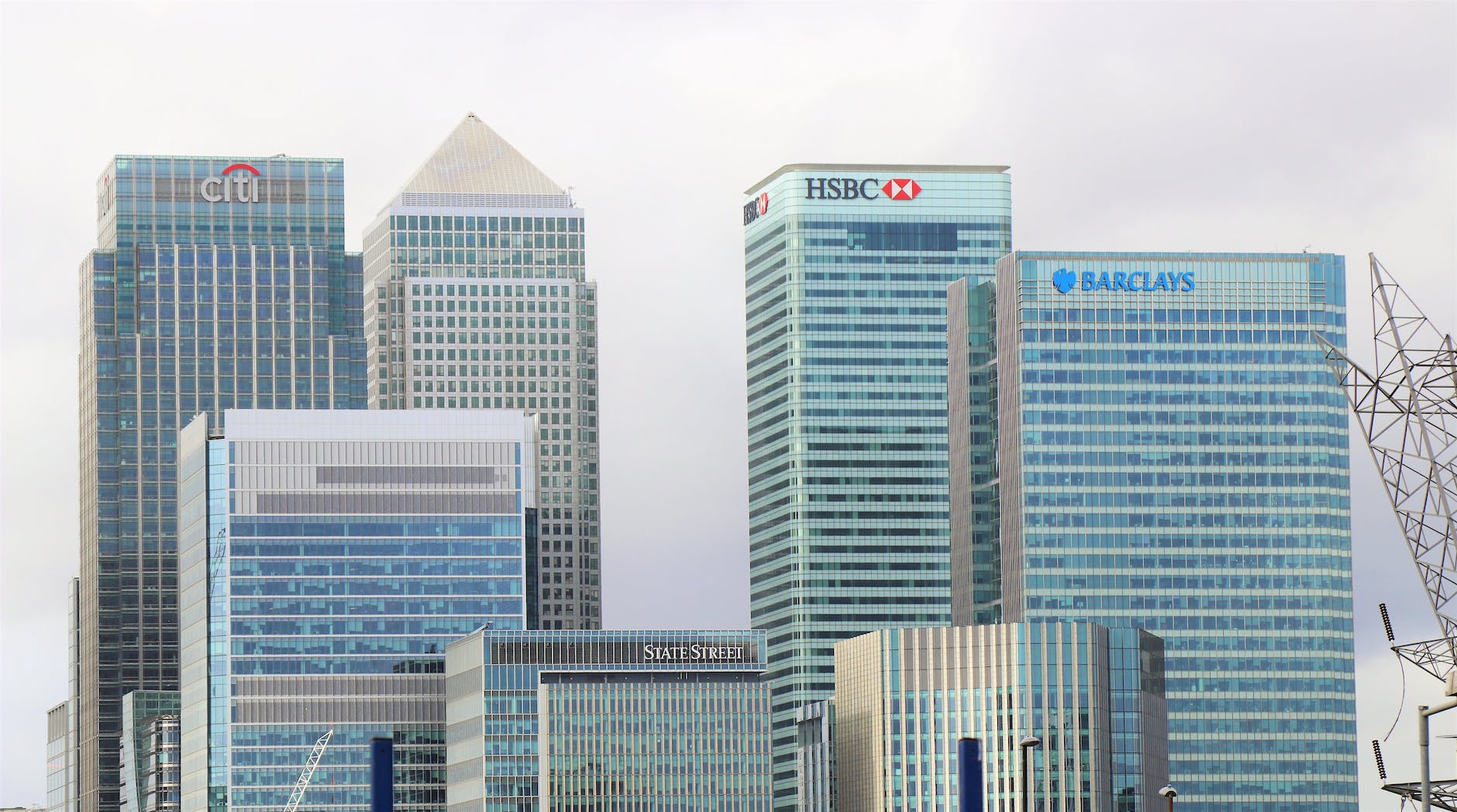
Banks and “extend and pretend” for office properties

With some companies and organizations falling behind on their commercial mortgages, some banks are waiting and looking for ways to get out of the loans:

Photo by Mikhail Nilov on Pexels.com

Some Wall Street banks, worried that landlords of vacant and struggling office buildings won’t be able to pay off their mortgages, have begun offloading their portfolios of commercial real estate loans hoping to cut their losses…

But these steps indicate a grudging acceptance by some lenders that the banking industry’s strategy of “extend and pretend” is running out of steam, and that many property owners — especially owners of office buildings — are going to default on mortgages. That means big losses for lenders are inevitable and bank earnings will suffer.

Banks regularly “extend” the time that struggling property owners have to find rent-paying tenants for their half-empty office buildings, and “pretend” that the extensions will allow landlords to get their finances in order. Lenders also have avoided pushing property owners to renegotiate expiring loans, given today’s much higher interest rates.

But banks are acting in self-interest rather than out of pity for borrowers. Once a bank forecloses on a delinquent borrower, it faces the prospect of a theoretical loss turning into a real loss. A similar thing happens when a bank sells a delinquent loan at a substantial discount to the balance owed. In the bank’s calculus, though, taking a loss now is still better than risking a deeper hit should the situation deteriorate in the future.

Four questions come to mind:

  1. How long will banks wait before aggressively working to drop these loans? It sounds like this is happening a little bit. Is there a possible tipping point? In other words, how much “extend and pretend” is doable?
  2. How much does this behavior toward commercial tenants reflect how the same lenders or other banks treat residential loan holders? If a homeowner is not making their mortgage payments, do they get treated the same? Is the issue more of the size of these loans and not necessarily what kinds of properties are involved?
  3. Given the foreclosure crisis of the late 2000s and the COVID-19 pandemic, is it safe to assume there are plans in place if banks need to move a lot of these loans at once? Who would benefit the most from aid to get out from under a lot of commercial property losses in a short amount of time?
  4. What happens to these vacant properties in the short and long-term? How quickly can they be filled by other uses? How do these vacancies affect the communities in which they are situated?

Now we have the Home Buyer Index

NBC, with the help of experts, developed a new index to summarize the ease or difficulty of buying a home in many counties in the United States. It produces a number between 0 (easy to buy) and 100 (hard to buy) and consists of four factors:

Photo by RDNE Stock project on Pexels.com
  • Cost: How much a home costs relative to incomes and inflation — as well as how related expenses, such as insurance costs, are changing. 
  • Competition: How many people are vying for a home — and how aggressive the demand is. This is measured through observations including the percentage of homes sold above list price and the number that went under contract within two weeks of being listed. 
  • Scarcity: The number of homes that are on the market — and how many more are expected to enter the market in the coming month.
  • Economic instability: Market volatility, unemployment and interest rates — reflecting the broader climate in which home shoppers are weighing their decisions. 

The value of an index is that it attempts to incorporate a lot of data into a single number. Given the current real estate market in many places, having this single number could help express what home buyers can expect or are experiencing.

At the same time, this seems like the product of a particular moment. Home buyers perceive a tighter market than they might like. This index confirms it. The index goes back to 2012 with the data available: it was quite a bit lower ten years ago in 2014 and it really ticked up in late 2021.

Two additional questions:

  1. How many potential home buyers would act differently based on this index? Will this encourage people to not try so hard to purchase a home?
  2. Does this score mean it is a great time to be a home seller? Is the home seller index roughly the inverse of the index for home buyers?

The key to the American middle class is feeling middle class

Forget material measures of being middle-class; what if the key is that people in the American middle class feel that they are comfortably middle class?

Photo by Engin Akyurt on Pexels.com

Vincent is among a growing group of middle-class Americans — most recently defined in 2022 by the Pew Research Center as households earning between $48,500 and $145,500 — who don’t feel they can’t afford to live a traditional middle-class life, replete with a home and a comfortable retirement…

Collins suspects that most middle-class Americans feel anxious about their financial situation due to financial shock fatigue — the exhaustion of navigating one big economic shock after another — as well as a lack of financial planning…

Financial anxiety has hit an all-time high, according to a survey from Northwestern Mutual, and a survey from Primerica found that half of middle-class households say their financial situation is “not so good” or outright “poor.”…

Buying a home may be the greatest example of a tenet of middle-class life feeling out of reach for many, and that struggle is very real rather than merely negatively perceived.

The suggestion is that people feel less certain of their social class status because of financial uncertainty at the moment and in recent years. They may have resources, particularly a certain income level, but they do not feel secure.

What might this mean for defining the middle class? Perhaps this should lead to changing what it means. If people do not feel that certain markers provide a middle class status, then change the markers. These variables might need to change as economic conditions change.

It would also be interesting to see what social class those feeling financial anxiety say they are in. Traditionally, being in the middle class was a sign of making it and being successful. Would someone who might be classified as middle class by income and other markers say they are working class? Is there a big shift away from identifying as middle class?

    Regional banks and commercial real estate loans

    As companies reduce their office footprint, what institutions hold many commercial real estate loans?

    Photo by Andrea Piacquadio on Pexels.com

    US banks hold about $2.7 trillion in commercial real estate loans. The majority of that, about 80%, according to Goldman Sachs economists, is held by smaller, regional banks — the ones that the US government hasn’t classified as “too big to fail.”

    Much of that debt is about to mature, and, in a troubled market, regional banks might have problems collecting on those loans. More than $2.2 trillion will come due between now and the end of 2027, according to data firm Trepp.

    Fears were exacerbated last week when New York Community Bancorp (NYCB) reported a surprise loss of $252 million last quarter compared to a $172 million profit in the fourth quarter of 2022. The company also reported $552 million in loan losses, a significant increase from $62 million the prior quarter. The increase was driven partly by expected losses on commercial real estate loans, it said.

    Because I know little about this, this leads to several questions:

    If patterns from earlier crises hold up, does this mean that when regional banks suffer difficulties they will be gobbled up by the larger banks?

    What do regional banks have more of these loans – is this more of their specialty or they are more familiar with the local markets?

    Who exactly decides which financial institutions are too big to fail and at what point might these regional banks qualify?

    If these are the losses of just one regional bank, what might we expect throughout the entire US within the next few years?

    US urban office space vacancies related to earlier office building booms

    With the vacancy rate for office space in the major US cities almost at 20%, is now safe to conclude too much space was constructed in the first place?

    Photo by Scott Webb on Pexels.com

    America’s offices are emptier than at any point in at least four decades, reflecting years of overbuilding and shifting work habits that were accelerated by the pandemic.

    A staggering 19.6% of office space in major U.S. cities wasn’t leased as of the fourth quarter, according to Moody’s Analytics, up from 18.8% a year earlier. That is slightly above the previous records of 19.3% set in 1986 and 1991 and the highest number since at least 1979, which is as far back as Moody’s data go…

    That glut weighs on the office market to this day and helps explain why vacancies are far higher in the U.S. than in Europe or Asia. Many office parks built in the 1980s and earlier struggle to find tenants as companies cut back on space or leave for more modern buildings.

    “The bulk of the vacant space are buildings that were built in the 1950s, ’60s, ’70s and ’80s,” said Mary Ann Tighe, chief executive of the New York tri-state region at real-estate brokerage CBRE.

    And just as in the early ’90s, it is the overbuilt South that is hit hardest. Today, the three major U.S. cities with the country’s highest office-vacancy rates are Houston, Dallas and Austin, Texas, according to Moody’s. In 1991, Palm Beach and Fort Lauderdale in Florida and San Antonio held those positions.

    This sounds like a cyclical market: during financial downturns, fewer companies want office space and vacancies rise. During economic success, more companies expand and make use of the space. When more space is built during the good times, that same space is not necessarily needed later.

    Does that mean that COVID-19 was only a partial contributor to office vacancies? Was a reckoning going to come for urban office space even without a global pandemic? Or might office space be back in demand again soon as economic conditions change?

    I can see why new office space is desirable to fund and build. Whether it should be built, given the cycles discussed above, is another story. And if office space cannot be easily converted to other uses, how much more is really needed in major cities?

    Quickly describing the worst-case scenario of “the urban doom loop”

    What might an urban doom loop look like? Here is one brief description:

    Photo by Stas Knop on Pexels.com

    The worst-case scenario would go like this: With more people working from home, companies from Milwaukee to Memphis are rethinking their leases or pulling out of them altogether. That drives vacancy rates up and makes it harder for landlords to attract new tenants or sell buildings for a healthy price.

    Then property owners might struggle to pay off their mortgages or clear other debt. Business districts would dry up, stifling tax revenue from commercial properties or employee wages. Shoppers and tourists would have fewer reasons to venture downtown to eat or shop, choking off spending and forcing layoffs at restaurants and retail stores.

    “Once those offices are empty, there are few alternatives and not a lot of life after hours,” said Stijn Van Nieuwerburgh, a professor of real estate and finance at Columbia University’s Graduate School of Business who is one of the authors of a paper that coined the “urban doom loop” phrase. Midsize cities “have a much bigger chasm to cross than what New York City has to go through. The situation is worse in those places with so little else in place.” He added, “It is a train wreck in slow motion.”

    Once the primary use of a district starts disappearing, it can be hard to reverse the pattern. This is true in downtowns where much of the space is used for offices. It can be true for other uses as well, such as when retail dries up at shopping malls or a particular industrial activity slows down in a one industry place.

    Is the primary way of addressing this right now simply to hope it the doom loop does not get too far? Are there any interventions that could help protect against worsening conditions? This could be an interesting time for experimentation across American cities as places and firms adjust to less need for permanent office space.

    From subprime mortgage issues to superprime mortgage issues

    The most recent financial uncertainty includes mortgages in a superprime era:

    Photo by Expect Best on Pexels.com

    This is quite the turnaround. After 2008, banking the rich was often touted as a far better model. Even the biggest banks began aiming more of their consumer lending and wealth management at relatively better-off customers, and they scaled back on serving subprime customers. Wealthy customers seldom default, they bring lots of cash and commercial banking business and pay big fees for investments and advice, the thinking went.

    But when interest rates shot up last year, it exposed weaknesses in the strategy. It isn’t that the rich are defaulting on loans in droves. But the most flush depositors with excess cash last year started taking their cash and seeking out higher yields in online banks, money funds or Treasurys. On top of that, startups and other private businesses started burning more cash, leading to deposit outflows…

    A major way that the better-off do borrow from banks is to buy homes, and often in the form of what are known as jumbo mortgages. Jumbos are for loan amounts over $726,200 in most places, and over $1,089,300 in high-cost cities such as New York or San Francisco. Jumbo mortgages bring wealthy customers with lots of cash. They also are typically more difficult to sell to the market, in part because they aren’t guaranteed by government-sponsored enterprises such as Fannie Mae or Freddie Mac. So banks often sit on them. But the value of these mortgages, many of which are fixed at low rates for the foreseeable future, have dropped as interest rates have risen.

    To be sure, not all banks that focus on wealthier individual clients are under intense pressure. Shares of Morgan Stanley and Goldman Sachs, are down less than half as much this month as the nearly 30% decline for the KBW Nasdaq Bank index. But those banks are more diversified and focus more on the steadier, fee-generating parts of the wealth business, such as stock trading and asset management, than on mortgages or deposits.

    I interpret this to mean that there is less money – or lower rates of return – to be made on big mortgages. Wealthy people will want to buy real estate, particularly because it is often assumed that the value of real estate will be good long-term, but the money does not generate the amount of money banks want.

    If mortgages are too “boring” or do not generate enough money, could we be headed to an era where banks do not want to do mortgages? Money for mortgages could come from elsewhere.

    I just want housing for Christmas, New Year’s, and the years to come

    How about more housing for the holidays?

    Photo by Michael Tuszynski on Pexels.com

    “We have a supply problem with housing,” Marc Norman, associate dean at the NYU Schack Institute of Real Estate, told Yahoo Finance Live (video above). “We’ll see the price declines, but I think the income gains that we are seeing lately are still not keeping up with the prices that we are seeing in the market — in most markets.”…

    “We, for the last 20 years, have underbuilt the housing,” Norman said. “In 2008, we saw the sort of demand go down, but it never came back in terms of supply.”

    After the 2008 real estate crash, residential construction activities in the private sector never recovered to the level of 2006. Although home building slowly increased year over year during the last decade, projects remained well below early 2000 levels, according to figures from the Census Bureau and. Department of Housing and Urban Development.

    Several thoughts in response:

    1. The United States has never fully recovered from the housing bubble in the late 2000s. The rise in housing values, homeownership, and lending activity led to a lot of trouble.
    2. How much money has the real estate and development sector made since the late 2000s? How much money has been left on the table by not building (or not being able to build, as discussed in the article, due to zoning and other restrictions)?
    3. How many older homes are retrofitted or renovated to meet current standards and tastes each year compared to how many new housing units are needed? Both routes could help provide housing.

    All of this could set up nicely for giving housing as a Christmas present in the future.