More data centers and AI, higher utility bills

With more AI and cloud-based activity in daily life, it may have one clear effect for people: higher prices for electricity.

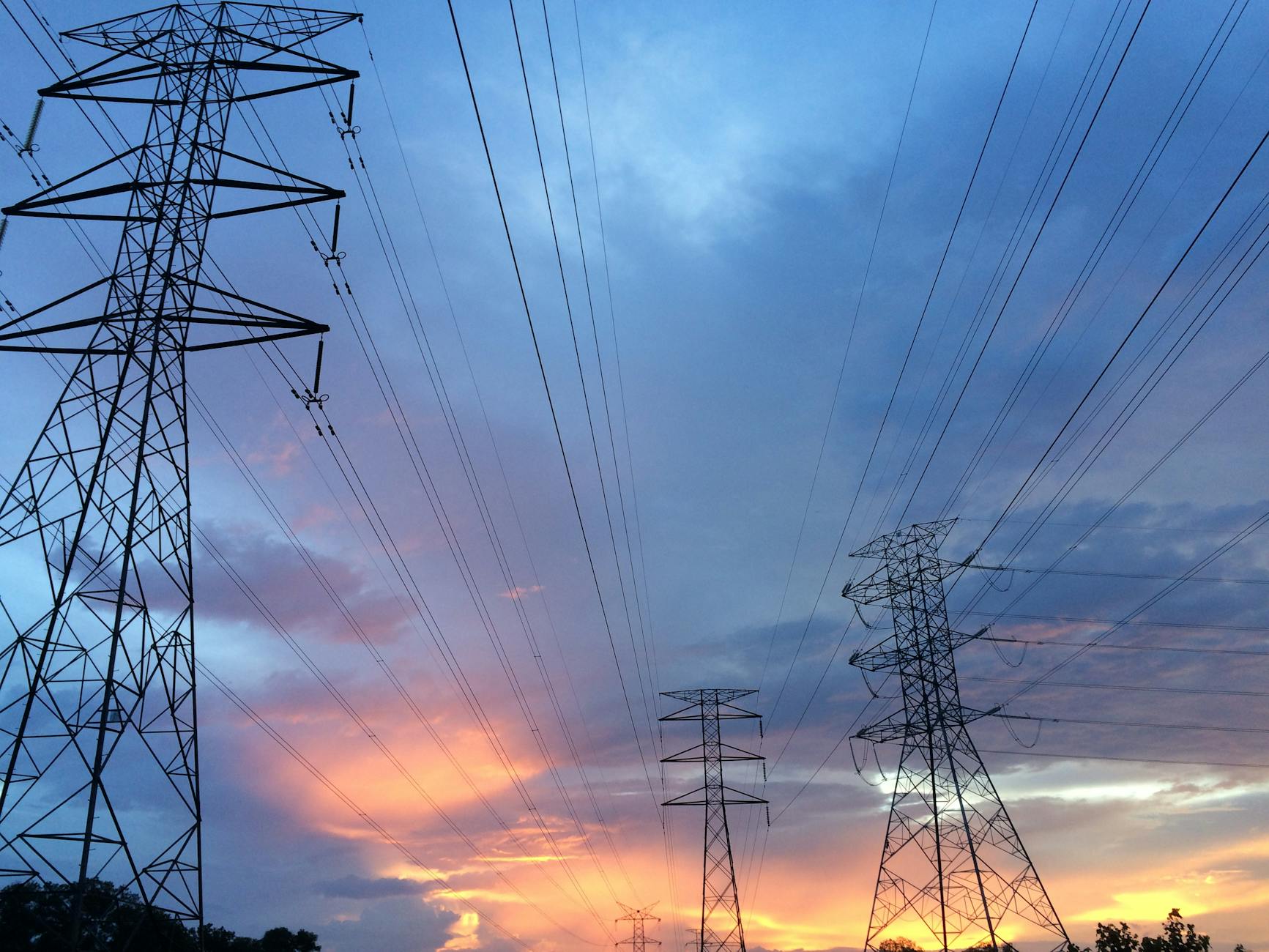
Photo by Pok Rie on Pexels.com

As the Sun-Times reported in November, the demand for power from big data centers and a delay connecting new power sources, such as solar and wind, to the electric grid is resulting in ComEd customers seeing their monthly bills go up $10.60 a month on average…

Power demand across the country has skyrocketed as big data centers and artificial intelligence operations have created huge demand. Meanwhile, new sources of “renewable” energy, including wind and solar power, have been slow to get connected to an electric grid that spans from Northern Illinois to the East Coast, said Jim Chilsen, a spokesman for the consumer watchdog Citizens Utility Board.

How much will this register with Illinois customers – will they have no problem paying roughly $10 more a month to help support what they expect on their smartphone and online activity? Technology tends to have costs, even if people tend to think the benefits outweigh the downsides, but it can be hard to pin down. While all of the increased rates may not be due to computing activity, at least some is.

Considering indirect costs may just be difficult to do. Having direct feedback with technology probably elicits different reactions than these more indirect costs. Imagine the new AI feature on your phone comes with a $5 a month surcharge on your phone bill to cover its costs. Or each time you do an AI search you incur a charge. Contrast that with the costs of driving. Automobiles opened up all kinds of new opportunities but driving comes with numerous costs, some direct (like paying for gas, insurance, and maintenance) and some more indirect (taxes for infrastructure, changes in land use, pollution).

If asked how much they would be willing to directly pay for AI, what would Americans say?

Who may and may not benefit from going off the electric grid

With the declining price of solar panels and an increasing ability to go off the electric grid, who could benefit?

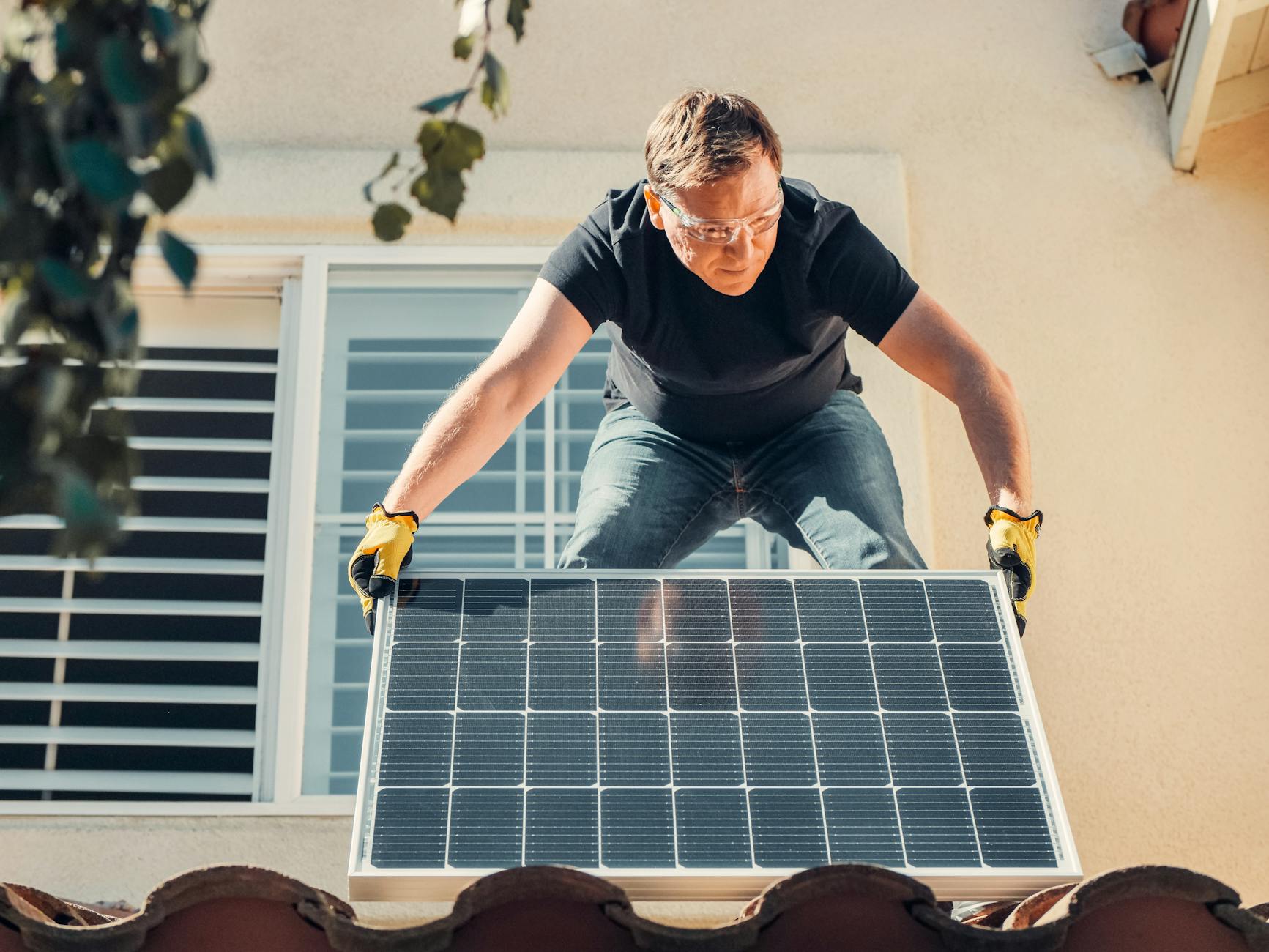
Photo by Kindel Media on Pexels.com

These trends, coupled with increasing grid electricity costs and decreases in both solar and battery costs, have made economic grid defection a salient issue.

But this also raises concerns about potential “utility death spirals,” where as more customers leave the grid to save money, the ones who are left face higher electricity costs, prompting even more to leave until the utility is bankrupt.

This trend raises two major concerns. First, those who can’t afford to leave the grid — often the poorest households — will end up paying the most for left-over fossil fuel electricity from the grid. Leaving the grid requires a hefty up-front cost, and not everyone can afford it.

Second, our research shows that the diesel generators used as back up for off-grid solar and battery systems will cause significant pollution — even more than the grid in some locations.

Large-scale infrastructure often serves large numbers of people. Without a large user base – whether it is a highway or an electrical grid or a sewage system – it is harder to justify its construction and maintenance. When most, if not all, the population participates, resources can be pooled and the infrastructure can serve the common good. The shift to mass society can with systems that (theoretically) served all.

If not everyone participates, things can get interesting. We see this playing out in a number of areas. What if more people start purchasing electric cars? The gas tax resources that fund roads start to shrink so there are ways to make up that revenue. What if health care is a multi-tiered system where those who good jobs and insurance can access better care? Then the public option might suffer in terms of quality and prices.

The vision above hints at a two-tiered electric system: those who have the means to produce their own electricity and those who cannot and need to keep paying for an aging system. If the trends described keep going, it could lead to interesting discussions and choices made about how to provide electricity in the United States in the 21st century.

Available electricity helping to make the Chicago region a desirable place for data centers

As data centers emerge in the Chicago suburbs and the Chicago region, here are some reasons why these are attractive locations:

Photo by Miguel u00c1. Padriu00f1u00e1n on Pexels.com

Illinois’ attractiveness for data centers stems from economic incentives, an already improved power infrastructure and its being a net exporter of electricity, he said.

Furthermore, the use of clean-energy sources, including nuclear power plants and solar, is a draw for public companies with an environmental awareness that lead the data center industry, Sitar added.

This reminds me of the book Urban Fortunes where sociologists John Logan and Harvey Molotch discuss some of the actors involved in and benefiting from growth machines. They include utilities. Growth means more potential customers. In this particular case, data centers need a lot of electricity. ComEd, the primary electricity provider in the Chicago area, can make that happen:

A number of factors contribute to the suitability of a property like the former Sears campus in Hoffman Estates for the development of data centers, but access to an extraordinary amount of electricity is one that’s a make-or-break element.

And while the developer and municipality must rely on ComEd for that side of the project, the electric company’s expertise doesn’t make such a task easy or routine.

The article suggests a new data center will require its own substation.

Of course, one could ask about the impact of using all of that electricity. At the same time, the utility likely has a big customer who will be there for a while.

What would a lack of water and power from the Colorado River do to sprawl?

The suburban sprawl in the United States depends on the availability of water and power, among other resources. So what happens if the Colorado River, a source of water and power for numerous people, no longer can supply either?

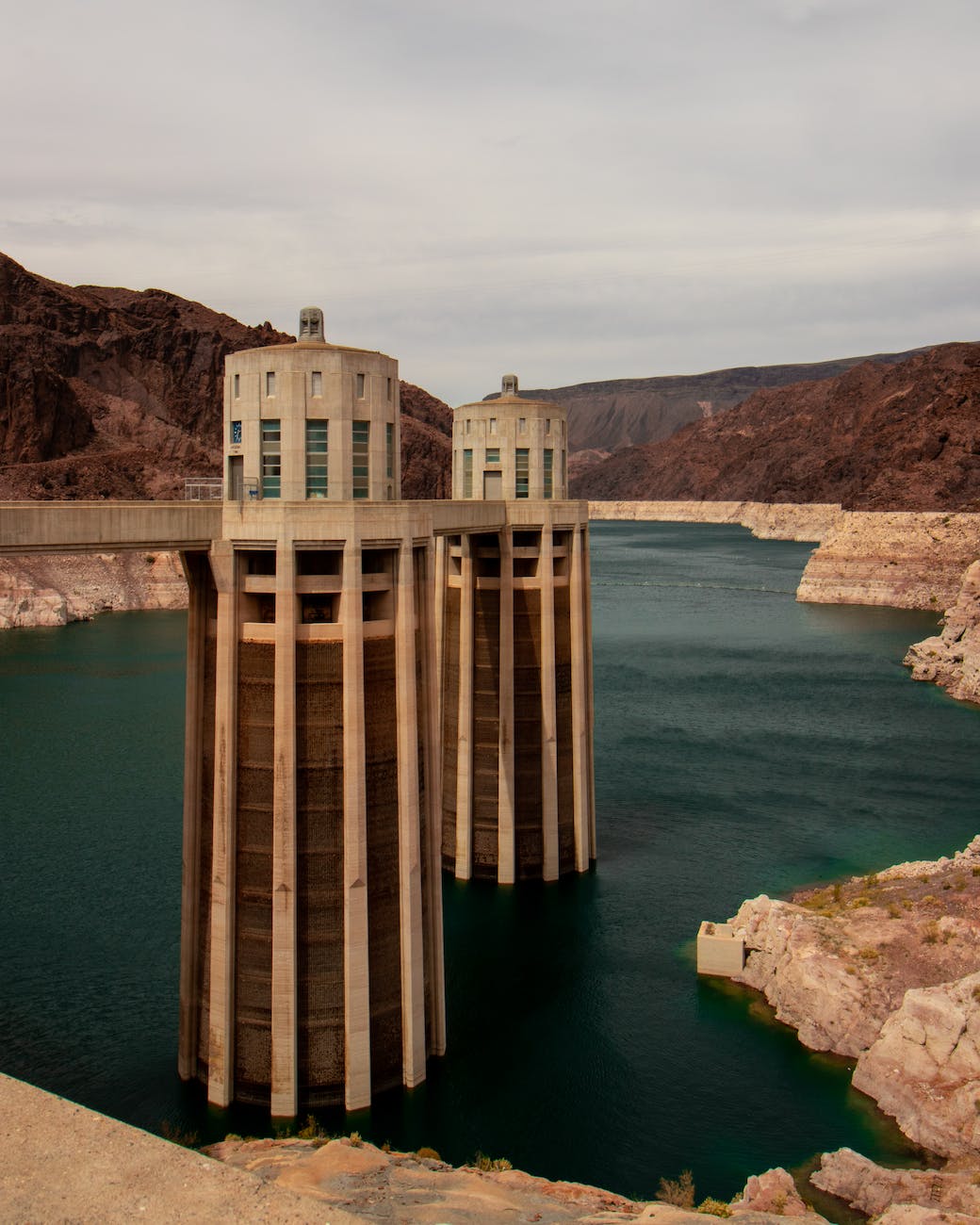
Photo by Cameron Rainey on Pexels.com

Such an outcome — known as a “minimum power pool” — was once unfathomable here. Now, the federal government projects that day could come as soon as July.

Worse, officials warn, is the remote possibility of an even more catastrophic event. That is if the water level falls all the way to the lowest holes, so only small amounts could pass through the dam. Such a scenario — called “dead pool” — would transform Glen Canyon Dam from something that regulates an artery of national importance into a hulking concrete plug corking the Colorado River…

As the water has receded, so has the ability to produce power at Glen Canyon, as less pressure from the lake pushes the turbines. The dam already generates about 40 percent less power than what has been committed to customers, which includes dozens of Native American tribes, nonprofit rural electric cooperatives, military bases, and small cities and towns across several southwestern states. These customers would be responsible for buying power on the open market in the event Glen Canyon could not generate, potentially driving up rates dramatically.

The standard rate paid for Glen Canyon’s low-cost power is $30 per megawatt hour. On the open market, these customers last summer faced prices as high as $1,000 per megawatt hour, said Leslie James, executive director of the Colorado River Energy Distributors Association.

The issue of water has already increased concerns about development in the Southwest. A landscape full of single-family homes, lawns, lots of roads, and other suburban features requires a lot of water. Can life in sprawl not require as much water or is there a point where no more sprawl is just not possible? Then add in the issue of power. This includes transmission lines, homes, and other structures. Can the existing sprawl even be maintained with less electricity and water?

It also worth paying attention to how these changes with the Colorado River have ripple effects elsewhere. If as much water is not available, where can water come from? I imagine those around the Great Lakes have thoughts. If not as much power is generated, is there electricity capacity elsewhere? How much can be done short-term to shore things up while also considering long-term consequences?

More broadly, what might stop American sprawl? Not having water or power would be a powerful incentive. Others have speculated about a certain price of gas. Perhaps cultural beliefs about the suburban good life change. Or there might be something unforeseen. The conditions with the Colorado River might just offer a glimpse into what happens when sprawl has to stop.

A visible reminder of above-ground (and buried) power lines

I recently noticed what looks like plans to replace nearby poles for above-ground power lines:

I look forward to seeing the way these poles are replaced. I would guess that this does not happen very often and these poles need to stand straight through all kinds of weather to do their job and keep power moving. This transmission line running north-south down an important two lane road through residential areas clearly brings the power.

Seeing this also reminded me of something else: the relatively lack of visible power lines near where I live. This is not the case in other nearby places; older neighborhoods in my suburb have power lines on each street with an attachment to each single-family home. In contrast, most of the streets near me are unmarred by power lines. I primarily see buildings, grass, and roads without seeing power lines.

Additionally, we rarely experience power disruptions. Through rain, snow, and high winds, the power stays on. Presumably, the path our power takes the power plant to our house includes above-ground lines, supported by metal towers or wood poles. A few miles away is a major transmission line running north-south with its own right-of-way and lines several stories in the air.

When I do not see power lines, I rarely think about them. Or, I do not think about sewers that channel waste and water away from suburban homes unless something bad happens. Or, the wifi in the house silently disperses digital bits and I do not need to think about it.

The hidden infrastructure of our lives brings us much. I will watch for the replacement of the power line poles and then I will likely go back to not thinking about how the electricity that makes so much of modern life go around reaches me as much of the infrastructure is out of sight.

The multiple NIMBYs in the way of “electrify everything”

A new book suggests a climate change answer is “electrify everything” but the author describes some NIMBY roadblocks to this idea:

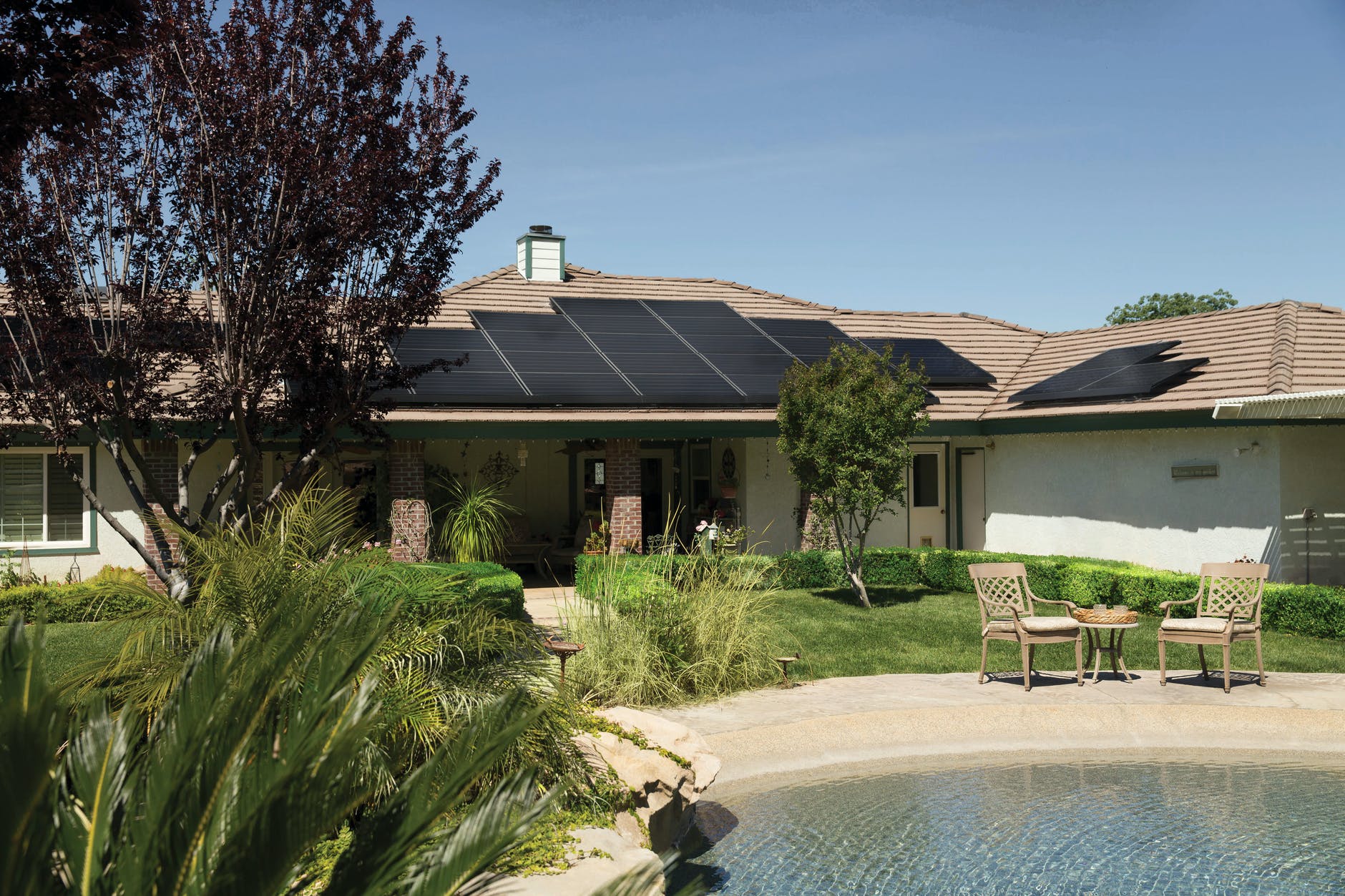
Photo by Vivint Solar on Pexels.com

Griffith: There is no easy answer. There are different NIMBYs at play. There are “No wind turbines off my coastline!” NIMBYs. There are “No gas line running through my backyard!” NIMBYs. There are “I don’t like the look of solar cells!” NIMBYs. For those complaining about the view, I would remind them that a huge amount of land is already taken up by our energy-transmission systems. Millions of miles of dedicated coal rail lines and natural-gas pipelines are already strewn across the landscape. They only seem invisible because they’ve blended in over the past century.

Thompson: Okay, if there’s no easy answer, what’s the hard answer?

Griffith: I’m going to give you an answer that I’ve only been thinking about for a few weeks. I think the argument will be won on local economics. If you take a suburb with a thousand homes in it, those families might spend $3.5 million a year on gasoline. When those families fill their car with gas, the money immediately leaves the community and goes to Texas or Saudi Arabia. But if the cars are run on electricity that comes from their own rooftops and houses, then no money is leaving the community. You can take that $3.5 million and build new classrooms. That’s really exciting to me…

Griffith: Electricity literally is the network that connects every home. You are connected to everybody through this thing in your community. And it really might be the opportunity for community renewal that America needs. It might be the thing that binds us back together again. Because it saves us money and has a damn good chance of being bipartisan.

This does seem to be the trick: how to convince the majority of Americans that green energy benefits their daily lives. And if they actually gain money for their own households or for goods they want in their community, this would help. If individual homeowners do not want to take more responsibility for generating electricity (solar panels on the roof), it could devolve into arguing which less fortunate suburb should be home to the solar panels, wind turbines, etc.

Thinking bigger, what if green energy enables suburban life to continue, as opposed to a vision where people need to live in denser concentrations in order to use less energy? I wonder about this externality of more electric vehicles: if pollution via driving and the need for gas are reduced, can sprawl even expand?

When infrastructure does not work as expected, Texas grid edition

The bitter cold in Texas has created problems for the grid. I found a 2011 article helpful in understanding a bit more about how power works in Texas:

Photo by Mikhail Nilov on Pexels.com

The separation of the Texas grid from the rest of the country has its origins in the evolution of electric utilities early last century. In the decades after Thomas Edison turned on the country’s first power plant in Manhattan in 1882, small generating plants sprouted across Texas, bringing electric light to cities. Later, particularly during the first world war, utilities began to link themselves together. These ties, and the accompanying transmission network, grew further during the second world war, when several Texas utilities joined together to form the Texas Interconnected System, which allowed them to link to the big dams along Texas rivers and also send extra electricity to support the ramped-up factories aiding the war effort.

The Texas Interconnected System — which for a long time was actually operated by two discrete entities, one for northern Texas and one for southern Texas — had another priority: staying out of the reach of federal regulators. In 1935, President Franklin D. Roosevelt signed the Federal Power Act, which charged the Federal Power Commission with overseeing interstate electricity sales. By not crossing state lines, Texas utilities avoided being subjected to federal rules. “Freedom from federal regulation was a cherished goal — more so because Texas had no regulation until the 1970s,” writes Richard D. Cudahy in a 1995 article, “The Second Battle of the Alamo: The Midnight Connection.” (Self-reliance was also made easier in Texas, especially in the early days, because the state has substantial coal, natural gas and oil resources of its own to fuel power plants.)

ERCOT was formed in 1970, in the wake of a major blackout in the Northeast in November 1965, and it was tasked with managing grid reliability in accordance with national standards. The agency assumed additional responsibilities following electric deregulation in Texas a decade ago. The ERCOT grid remains beyond the jurisdiction of the Federal Energy Regulatory Commission, which succeeded the Federal Power Commission and regulates interstate electric transmission.

Historically, the Texas grid’s independence has been violated a few times. Once was during World War II, when special provisions were made to link Texas to other grids, according to Cudahy. Another episode occurred in 1976 after a Texas utility, for reasons relating to its own regulatory needs, deliberately flipped a switch and sent power to Oklahoma for a few hours. This event, known as the “Midnight Connection,” set off a major legal battle that could have brought Texas under the jurisdiction of federal regulators, but it was ultimately resolved in favor of continued Texan independence.

I have contended before that few people pay much attention to infrastructure until something goes wrong. When electricity, natural gas, water, roads, mass transit, and more operate normally, we do not think about them much. They just work. Until they don’t.

A short event last summer reminded me of this. Our family was about to leave our house for a trip and right as we were closing everything up, the power went out. In such a situation, what do you do? Stay and make sure all essential systems are back on – refrigerator, sump pump, air conditioning – before leaving? Just go and hope for the best? We stuck around for a little bit, power was restored, and we were on our way. And this happened in a location where we rarely lose electricity and most of the power lines are underground.

Our situation was a drop in the bucket compared to a severe storm or change in weather like Texas is experiencing. It all works until it is knocked out and millions of people are affected. Then, everyone wants to know what is going wrong. What is taking so long? Is there a way to quickly reestablish service or are people at the mercy of the cold? Certainly, the return of power and services will be accompanied by serious conversations about what to do to ensure something similar does not happen again.

And then there are the peculiarities of local infrastructure. How was it built? How is it managed? Who makes the decisions and what are the priorities for the systems? Is it prepared for a crisis? Some places take great pride in the infrastructure. As an example, the Chicago story of reversing the Chicago River to help improve public health is told over and over as a notable achievement. The construction of Deep Tunnel is a sizable project.

But, these are the big projects. Power, gas, and water are just supposed to be there. While some property owners, often in more rural areas, might have to deal with this more on their own (wells, propane tanks, septic fields, etc.), this is part of the urban and suburban bargain: you live there and the services work (and might even be relatively cheap – see the example of water).

Perhaps this will lead to more consideration of infrastructure. Build a strong infrastructure and it will help keep different and important parts of society running. When it fails, everyone struggles.

California’s biggest cities without blackouts, suburbs have them

A journalist looks into why California’s power blackouts have hit some suburbs but not the biggest cities:

The municipal utility that serves Los Angeles doesn’t shut off power during high winds. As the utility explained in a recent press release, the city’s miles of pavement, numerous fire stations and relatively limited open spaces help protect it from runaway fires. There’s also the chaos that could ensue from knocking out traffic lights in the capital of car culture.

L.A.’s approach, however, isn’t foolproof. The Getty fire that’s chased celebrities from their hillside homes started when a broken eucalyptus branch sailing on the wind hit a live power line owned by the city’s utility. The Los Angeles Department of Water and Power did not return a call Wednesday asking if it would reconsider its no-blackout policy as a result…

San Francisco, meanwhile, benefits from its famously odd climate. While the rest of California heats up and dries out during the summer, San Francisco shivers in a fog bank so much a part of city life that residents have given it a name (Karl). The fog typically vanishes by October, but even then, the city never gets as dry as most of its suburbs. And the dangerous Diablo winds striking this month rarely hit the city as hard as its hilly suburbs.

As a result, San Francisco isn’t included on the state’s official map of high fire threat areas. So PG&E Corp. doesn’t cut its power when winds rise, said utility spokeswoman Ari Vanrenen. That’s not to say the city couldn’t someday lose electricity if PG&E takes down a transmission line that feeds it.

These reasons make some sense. Denser urban areas are less likely to have large areas of foliage and nature in addition to exposed power lines through which fires can easily spread.

At the same time, it might be difficult to make a case when many people in the state are affected by the blackouts and others are not “sharing the burden.” Do such choices provide economic benefits to certain areas while others are hurt?

The case of Los Angeles could get pretty interesting in this regard in that there are some more natural areas surrounding the city and separating communities. The Getty fire above is a good example; the museum and the surrounding homes sit on less dense land on hillsides overlooking the city. Could a fire break out there and then end up on either side of the hills/mountains and spread to urban and suburban land?

If my efficient neighbors use 300 kWh less electricity in a month, they must be…

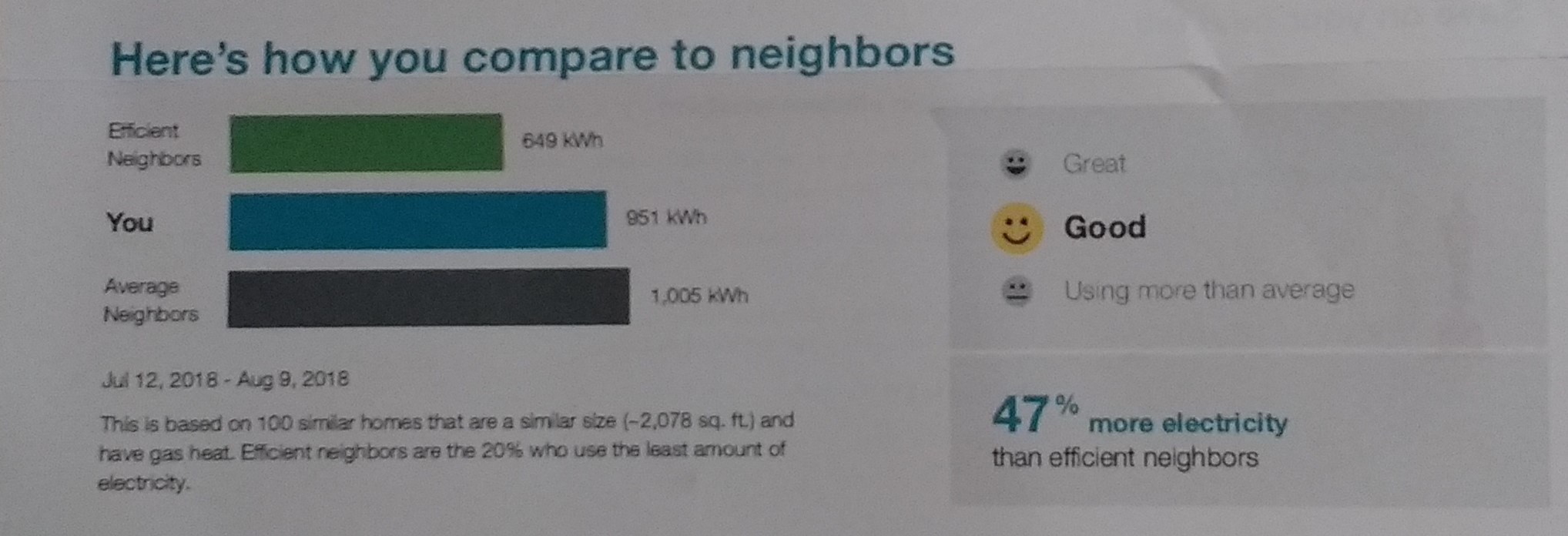
ComEd now sends me a Home Energy Report each month. The latest has this comparison:

comedenergyefficiency.jpg

Who are these neighbors, the most efficient 20%, that can use so much less electricity? Some guesses at their lives:

-single-person or two-person households (and no kids)

-very little to no air conditioner use

-no DVRs

-no kitchen appliances above the bare minimum or very few

-perhaps not home very much

I know the goal of such reports is to nudge people toward the actions of their most efficient neighbors. The comparison between households is supposed to incentivize me to change my behaviors. However, given the composition of my household plus some creature comforts we have, can we ever really aspire to get to those most efficient neighbors?

Additionally, the chart suggests I am below average in my electricity use. Some might read this and take comfort in knowing what their doing is already put them ahead of others. The smiley face next to the bars reinforces this idea. Should this report ultimately communicate to me that I do not need to change anything?

What might be more useful – and difficult for the electric companies to get their hands on – is data they could report about electricity use for particular home features. Perhaps even presenting a profile of the “average efficient neighbor” might make joining that group seem more possible. Do they live in a house with no AC and no lights? If not, what are they allowed and how do they keep their use so low? This would also help educate consumers on how much electricity items use. It is hard to know this and there are devices that use much more energy than people would expect.

The Swiss Cheese Model for dealing with industrial accidents

I was recently reading The Grid by Gretchen Bakke where a discussion of massive power plant brownouts led to discussing two approaches to industrial accidents:

One might be given to think that this blackout might have been prevented if somebody had just noticed as things slowly went awry – if in 2002 all of FirstEnergy’s “known common problems” had been dealt with rather than merely 17 percent of them, if the trees had been clipped, if a bright young eye had seen the static in the screen. But what most students of industrial accidents recognize is that perfect knowledge of complex systems is not actually the best way to make these systems safe and reliable. In part because perfect real-time knowledge is extremely difficult to come by, not only for the grid but for other dangerous yet necessary elements of modern life – like airplanes and nuclear power plants. One can just never be sure that every single bit of necessary information is being accurately tracked (and God knows what havoc those missing bits are wreaking while they presumed to-be-known bits chug along their orderly way). Even if we could eliminate all the “unknown unknowns” (to borrow a phrase from Donald Rumsfeld) from systems engineering – and we can’t – there would still be a serious problem to contend with, and that is how even closely monitored elements interact with each other in real time. And of course humans, who are always also component parts of these systems, rarely function as predictable as even the shoddiest of mechanical elements.

Rather than attempting the impossible feat of perfect control grounded in perfect information, complex industrial undertaking have for decades been veering toward another model for avoiding serious disaster. This would also seem to be the right approach for the grid, as its premise is that imperfect knowledge should not impede safe, steady functioning. The so-called Swiss Cheese Model of Industrial Accidents assumes glitches all over the place, tiny little failures or unpredicted oddities as a normal side effect of complexity. Rather than trying to “know and control” systems designers attempt to build, manage, and regulate complexity in such a way that small things are significantly impeded on their path to becoming catastrophically massive things. Three trees and a bug shouldn’t black out half the country. (p.135-136)

Social systems today are increasingly complex – see a recent post about the increasing complexity of cities – and we have more and more data regarding the components and the whole of systems. However, as this example illustrates, humans don’t always know what to do with all this data or see the necessary patterns.

The Swiss Cheese Model seems to privilege redundancy and resiliency over stopping all problems. At the same time, I assume there are limits to how many holes in the cheese are allowed, particularly when millions of residents might be affected. Who sets that limit and how is that decision made? We’ll accept a certain number of electrical failures each year but no more?