McMansion may be a positive term for those conducting estate sales

I ran across this listing for an estate sale in Naperville:

Upscale, High-End Downtown Naperville Sale!
$1.8 Million Home Has Beautiful Things
Saturday, April 16th 9AM-3PM
Sunday, April 17th 10AM-2PM
330 W. Douglas Naperville, IL 60540
7,200 Square Feet of Bliss!…
This weekend’s sale is at an incredibly beautiful McMansion in Downtown Naperville and you won’t want to miss it. What a house! Here’s some of what we’re selling…
As always, we know you have an abundance of choices of where to spend your hard-earned time and $$$, and we thank you in advance for sharing some of both with us. You will not be disappointed.

One of the critiques of McMansions is that they are symbols of American consumerism, both in terms of the size of the house and the items within the home. Yet, if you are an estate sale company, a McMansion could be exactly what you are your customers are looking for: a place with plenty of good things to sell and buy. Arguably, these items won’t be the highest-end goods – those with $1.8 million homes in Naperville may not be able to or want to buy the best of the best – but there should be plenty to look at. Perhaps people wouldn’t want to have such a large teardown built next door but they would be happy to buy the things in the home in an estate sale.

In addition to the items for purchase, some may want to know about the home itself: see pictures, the price, and other info (there is supposedly an offer pending) here.

Builders to construct “jewel box homes”?

Builders have ways to sell small but high-end homes:

Stumped on what to do about buyers who are looking for a home that comes with a tiny price but a McMansion look and feel? Enter stage right: the jewel box home.

Ranging between 650-2,500 square feet, these are a win for buyers who want something custom but affordable, but they’re also an ideal product for builders looking to diversify and sell a higher-end product across multiple demographics…

It’s just a smaller-than-average single-family home — not a starter home or a tiny house — built with high-quality materials, exquisite detailing and custom finishes with an emphasis on tailoring the home to the owners’ way of life for maximum elegance, harmony and function…

Another key advantage to building jewel box homes: They’re ideal for high-density areas. In some of Weremeichik’s planned communities, he has reached densities up to 9-11 dwelling units per acre.

I suspect this may be a way for builders to avoid the ignominy of constructing oversized single-family homes: they can build (1) homes with all sorts of nice touches that still command high prices and (2) fit even more of these smaller homes onto parcels of land. Of course, there is also the matter of providing the sorts of homes that at least some in the housing market desire. However, are the profits to be made in these smaller homes enough to outweigh what could be made in larger homes or other development projects?

What to do if “a McMansion is going up next door”

If a McMansion is built next to existing houses, what can neighbors do?

“It’s built so much higher than my house, virtually every window looks out into my backyard,” she says. Desperate to protect her privacy, she planted Italian cypress trees as a natural barrier. She tried to reason with the builder, whose unsympathetic response was: “Shouldn’t everyone be able to build their dream home?”

What’s going on in Mountain View is an extreme version of a problem cropping up all over the country: Huge houses are being built on plots of land originally meant to accommodate smaller dwellings, sparking a heated debate over what’s best for the community. Some argue that owners of larger homes pay more taxes, which can benefit all. But if your home happens to have its air and light blocked by a behemoth next door, you would likely be very, very upset — and can most likely kiss the idea of cashing out on your home sale goodbye…

A similar drama is playing out in Arcadia, CA, where more than 30 homes larger than 5,000 square feet (some as large as 8,000 — 9,000) have been proposed in the 850-home community over the past six years. In response, a group of longtime residents formed Saving Arcadia, which is currently battling the municipal government and City Council. Its argument: Overly lenient rules for developers have led to the proliferation of McMansions on lots that were zoned back in the 1950s for smaller homes. Plus, these oversize dwellings overburden the city’s water, gas, electricity, and other utility services…

Another option is finding a creative solution. One example is building downward (if a property is set on a hill) in order to increase square footage while preserving neighboring views, which is increasingly happening in various areas near Newport Beach. So maybe there’s hope that we can all play nice after all?

A homeowner who doesn’t like the nearby McMansion has a number of options available to them – these are sorted roughly in order of severity:

  1. Talk to the neighbor and builder. Might they be willing to make changes? They don’t have to but perhaps they are also unaware of what neighbors think of their actions.
  2. Modify your own lot or house to avoid having to see the new dwelling (if this is possible given its new size). For example, buy some artificial plants.
  3. Fight for local regulations. Many communities (see examples like Austin and Los Angeles) have considered rules about teardowns in recent decades and try to balance the interests of property owners versus those of neighborhoods. A variety of tools can be used including design guidelines, lot to house size ratios, approval processes, and historic districts.
  4. Buy up the properties that may become McMansions. This requires money but then you can control the fate of the nearby properties. See examples here and here.
  5. Sue your neighbor. You have to have resources to fight this out and it is likely to sour relations for a long time. But, some neighbors choose this option. See an example here.
  6. Move away. This is what the resident in this particular article does. This may be a last resort option or one favorable to those who don’t like open conflict (which is often minimized in suburbia).

In many places, the teardown McMansion cannot be stopped, particularly if there are not existing guidelines which are likely based off earlier cases or if the neighbor is not independently wealthy. Still, the neighbor who does not like it can pursue a number of options and each is likely to affect their relationship with the teardown neighbor.

Infographic: “Is Your McMansion Killing You?”

Put together a number of statistics about large American homes and an infographic can point the way towards death. These factors – everything from more TV watching, eating poorly, not getting much exercise, and paying more for space that isn’t necessarily needed – are not necessarily related to McMansions. You could do all of this and live in a more modest home or have a really large home that is more architecturally pleasing. For example, did growing up in a 1880s Victorian home or a 1950s ranch necessarily lead to better behavior or were these larger social issues? In this line of reasoning, McMansions may just be a symptom of larger issues such as increased consumerism and individualism.

All that said, I could imagine even more data that could be added to the infographic:

-How much extra infrastructure needs to be built to support suburban McMansions (as contrasted with denser apartment living in big cities)?

-What about the loss of aesthetic beauty in seeing or living in mass-produced, poorly designed McMansions? Can’t this decrease one’s enjoyment of life?

-What is the cost of all the driving often done to accommodate McMansions?

-How about the decrease in civic life encouraged by such large and well-furnished private spaces?

This infogrphic could keep going on and on and on…

Summary of problems with Australian McMansions

One Australian columnist covers a number of the critiques of McMansions:

THEY’RE not McMansions. They’re Shateaux. They’re houses so big they take up the entire block, stretching fence to fence like a Neo-Georgian Graceland. From Caroline Springs to Camberwell, Werribee to Wantirna, many new houses have six bedrooms, three living rooms and five bathrooms — not to mention teen retreat, parents’ zone, indoor/outdoor cabana and entertainers’ deck.

Many are the slums of tomorrow being built for the people of today. In established suburbs these houses are being built by Chinese investors for other Chinese investors so they have somewhere safe to park their money amid the financial crisis. The Chinese don’t care about heritage trees, visual intrusion or the lack of privacy; they just care about getting maximum box for their buck.

For Aussies, it’s more about having the appearance of wealth and upward mobility, even if they don’t quite have the funds to match. With a four-wheel drive out the front and a jetski in the garage, it’s all part of our modern sense of entitlement. People tell themselves they deserve it, even if it’s all on credit and interest-only loans…

As long as it meets the state building code, no one has the ability to stop anything from going up. It’s too bad for residents affected by the monolithic monster being built next door that blocks out their light, overlooks their backyard, is three times the size of any other nearby house and stretches from boundary to boundary. They can’t even look at the plans, let alone object…

Sure, we all want bigger houses, but there’s a difference between big and supersized. What’s the point in having a house that is so massively huge that you can’t afford to heat or cool it, let alone meet other utility costs?

What’s left? Covered here: bad architecture; too much space; slums of the future (either because they are poorly built or push buyers into debt); outsiders entering the neighborhood; about showing off wealth; fits broader patterns of consumption; teardowns ruin the homes of their neighbors and nearby residents can’t fight back; McMansions are inefficient in energy use. Perhaps the only thing missing in this article is a connection to the terrible sprawling suburbs. Or, perhaps the suggestion that such homes exemplify all that is wrong about society.

An oil bubble and McMansions

One commentator links the shrinking profits in the oil industry to declining McMansion values:

They lived high on the hog in Bubble McMansions near Houston and elsewhere, the economy tied to the oil industry. And now, a very different story all over Texas.


texas

That is not a huge drop in housing prices compared to the changes in other areas in the chart. But, the potential link between oil money and McMansions is an interesting one. Houston has long been known as a major city tied to the oil industry; I remember reading works by sociologist Joe Feagin about the effects of the oil industry on Houston written in the 1990s. The stereotype is that all of this cash was spent on Texas-sized items, like huge homes in sprawling suburbs. However, I’ve never seen data on whether Texas has more McMansions per capita than other metropolitan areas. For example, are there more McMansions in the Houston area compared to the New York area (which has its own money-printing industry in Wall Street)? Or, in the Atlanta or Las Vegas area? Going further with the chart provided, what about McMansions in Midland and Odessa?

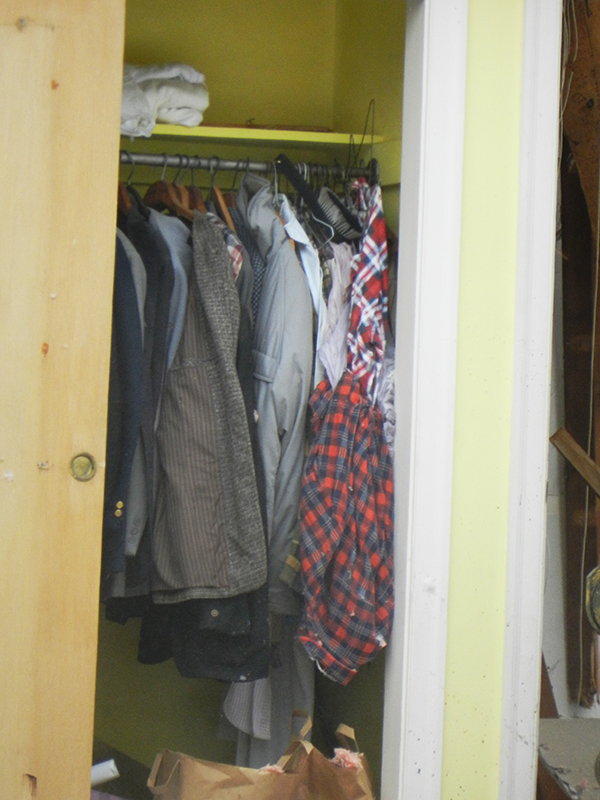
Demolition for a teardown, clothes in the closet and all

Many neighbors don’t like teardowns and one residents highlight that the new property owners didn’t even empty the old home:

This house is two houses away from us. The lady who lived in this house passed away a few months ago. A builder bought the house for $660,000 and a mortgage was taken out for $1,178,000 on it. So what this means is it’s probably going to be sold for a minimum of $1.5 million dollars…

The builder didn’t even empty the closet.

On one hand, if the whole house is going, why not simply trash everything inside rather than spend the time sorting it all out? On the other hand, displaying such a picture highlights several features:

  1. It increases the tragedy factor many claim are inherent in teardowns. These aren’t just houses; these places where people have lived for decades and threatening the character (and social life) of the neighborhood is not a trivial matter.
  2. Americans have so much stuff through our consumption patterns that it simply doesn’t make sense to try to salvage any of these items. It often may not be worth it to even donate the items as it is too easy to throw it out and/or obtain more.

Now that I think about, there are numerous photographers and artists in recent decades who highlight ruins in big cities – like Detroit or New York City. Where is the major project that documents the sadness of teardowns? It may not quite have the noir allure of the city but there is long history of suburban critiques to draw upon: the mass produced raised ranch of the post-war era is even more desolate in the snow and shadow of the wrecking ball.

One thing McMansions can do? Play host to Smash Bros. tournaments

McMansions are often derided for their size but imagine them as a fun site for a weekend of Smash Bros.:

Some tournaments take place in massive convention centers. Some grand finals even go down in giant arenas. While these events can be truly impressive, they don’t have the spark of early tournaments that captured the imagination and hearts of Smash players. Friends crowded around TVs, laughing, jeering, and, while the competition was fierce, they were still having the time of their lives. This is the atmosphere players will find at McMansion 7, a tournament that’s like a vacation with live music and a whole lot of Smash.

[?IMG]

This home in Pensacola Beach, Florida (according to the comments) is a modest home by McMansion standards. I can only imagine the kind of fun and mayhem that might occur in a larger and more opulent McMansion, say 8,000 square feet in a ritzy neighborhood. Still, a massive video game tournament may help fill out those great rooms, bonus rooms, and expansive spaces of the McMansion. But, what would the neighbors think about the kind of people who play video games, the noise, the cars, and the property values related to being near the video game heaven McMansion…

13 reasons to hate McMansions

City Watch makes a case against McMansions – here are a few of the 13 reasons given:

Some people hate them because they conflict with the City Planning Commission’s anti-mansionization policies contained in their Do Real Planning manifesto.

Some people hate them because they conflict with the policies of the Framework Element, a key part of LA’s General Plan. The Framework is clear that new residential developments must respect the character and scale of existing residences. But, as anyone can see when driving through neighborhoods blighted by mansionization, the scale and character of McMansions intensely clash with existing homes, whether they are Spanish Revival, Tudor, mid-century, or even ranch-style…

McMansions routinely include two or even three car attached garages. This feature not only incentivizes automobile driving, but the new double driveways also wipe out green space and trees in front yards and parkways. But since the attached garages are routinely used for recreation, storage, and other habitable uses, the owners park their luxury cars on their front yard driveways, next to sidewalks…

Because McMansions are huge, they devour enormous amounts of construction materials, such as cement, metals, plastics, and wood. Furthermore, because they are shoddily constructed, they will have a short life-span. Future buyers will quickly tear them down to avoid the extensive repairs necessary to keep McMansions habitable. This short life span, then, also adds to the rubble created by the mansionization process.

Some of the reasons given are specific to Los Angeles, which has been debating measures to limit McMansions for a few years. But, many of the reasons could apply anywhere: such homes don’t fit the existing architecture in the neighborhood, they are generally large, and they require the use of numerous resources ranging from demolition and construction to maintaining the home over the years and what is required to be part of suburban sprawl.

If the opposite case were to be made – 13 reasons for McMansions? – I would guess the primary reason would be property rights. The argument would suggest that if an American owns a piece of land, they should be able to do with it what they wish. Of course, people and organizations don’t have complete freedom; particularly in cities, there are a variety of zoning laws and regulations that limit how property can be used. But, if a plot of land is in a residential area, should neighbors or the local government be able to restrict what kind of single-family home is built?

Tampa McMansions block the sun, loom over older ranches

A hot housing market in Tampa has led to a number of teardown McMansions that loom over the older homes of neighbors:

If there’s one trend that has characterized Tampa Bay’s new-home market in recent years, it’s the proliferation of huge new houses replacing or overwhelming smaller ones in established neighborhoods like Davis Islands and St. Petersburg’s Snell Isle. Many Realtors and property owners welcome the new construction, which is boosting sales and driving up value.

But it can be less than wonderful for homeowners who live next to these enormous abodes. They must endure months of banging and pounding, only to face the prospect of diminished privacy and an inevitable change in the look and feel of the neighborhood…

Because of federal flood insurance rules, the new house had to be elevated so much that its first floor was above the level of the Dodges’ 6-foot fence. “Where their feet walk is higher than our fence,” Dodge said. “The fence didn’t give us privacy any more.”…

Levine said she and Lentz aren’t opposed to new homes, only to huge ones that sit a few feet from neighboring property and loom over everything around them. The couple have stopped trimming their large fan palms, but even those aren’t big enough to block the view of their yard from the McMansion’s second floor.

These are common complaints about teardowns: the new homes are significantly larger than the original homes in the neighborhood. The pictures accompanying the story provide the image: mid-twentieth century ranch homes next to hulking McMansions (that also are now following new guidelines to help limit flooding damage). This story doesn’t contain much reference to another common complaint – changing the character of the neighborhood – but it is easy to see why having such big houses suddenly show up next door could draw negative reactions.

The next step in this process would likely involve going to the municipal level and trying to get develop restrictions on teardowns. However, this doesn’t always happen: there likely needs to be a critical mass of teardowns, enough of the existing residents of these neighborhoods may not mind selling their properties for big money, and it can be daunting to try to push forward such regulations.