Looking back, this is one of the key things I have learned in 20+ years of studying sociology. In this particular social setting and time, we are often determined to see ourselves as individuals slowed down by society and its constraints. We cannot do what we really want or be who we really want to be. Our mass society wants us to conform and we want to break free.
But many of the features of life today that we know and take for granted came about because of mass society. Large cities. The Internet and social media. Clean water, available health care, and long life expectancy. Airplanes hurtling through the sky. Educational opportunities. Libraries. Music festivals. And much more.
On the whole, we could argue that society empowers people. To be in relationships with people and institutions can be good. They provide access to things humans not that long ago might only have only dreamed of. These changes might come with downsides – rapid change, traditions that faded away, a changed physical landscape, and so on – but humans working with other humans can lead to increased humanness, not just restrictions and limits.
One last example of how we might see this better. Multiple times, I have asked my Introduction to Sociology students to finish the course by writing a sociological autobiography (a project borrowed from several other sociologists). How would they narrate their life through sociological categories? I ask them to step back from just an individualistic view. In doing so, they both demonstrate that they can apply sociological concepts we have discussed throughout the semester and they can reflect on a different angle to their life: how their individual actions and experiences fit within relationships and social systems around them.
To repeat the argument, over the long term society enables people more than it constrains them. To not be in a society or connected to other humans is not ultimately freeing. How society is best ordered or organized is another matter; humans have promoted and experienced different approaches in different times and places. With relationships with other people and institutions, we can be empowered.
Bureau of Alcohol, Tobacco, Firearms and Explosives analysts at a facility in West Virginia search through millions of documents by hand every day to try to identify the provenance of guns used in crimes. Typically, the bureau takes around eight days to track a weapon, though for urgent traces that average falls to 24 hours…
In an era of high-tech evidence gathering, including location data and a trove of evidence from cell phones and other electronic devices used by shooting suspects, ATF agents have to search through paper records to find a gun’s history.
In some cases, those records have even been kept on microfiche or were held in shipping containers, sources told CNN, especially for some of the closed business records like in this case.
The outdated records-keeping system stems from congressional laws that prohibit the ATF from creating searchable digital records, in part because gun rights groups for years have fanned fears that the ATF could create a database of firearm owners and that it could eventually lead to confiscation.
But the urgent ATF trace Saturday proved indispensable in identifying the Pennsylvania shooter, giving authorities a key clue toward his identity in less than half an hour.
On one hand, searching through paper records could appear to be inefficient in the third decade of the twenty-first century. In today’s large-scale societies and systems, the ability to quickly search and retrieve digital records is essential in numerous social and economic sectors.
On the other hand, a large set of paper records is a reminder of the relatively recent shift humans have made to adjust to large populations, and in this case, specifically addressing crime. I recently read The Infernal Machine, a story about dynamite, anarchists at the turn of the twentieth century, and developing police efforts to address the threat of political violence. These changes included systems of records to identify suspects, such as having fingerprints or photos on file.
More broadly, the development of databases and filing systems helped people and institutions keep up with the data they wanted to collect and access. To do fairly basic things in our current world, from getting a driver’s license to voting to accessing health care, requires large databases.
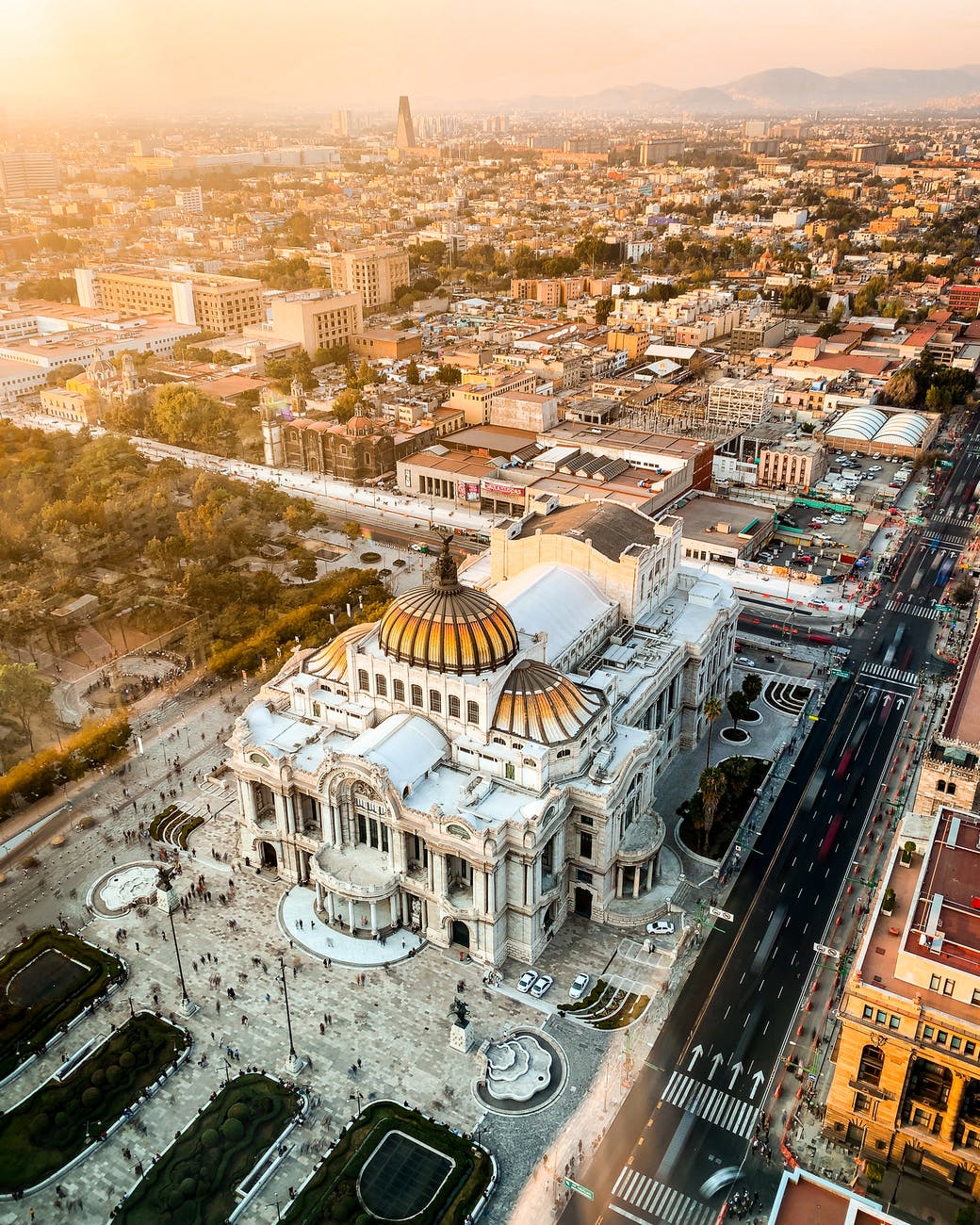
Photo by Miguel u00c1. Padriu00f1u00e1n on Pexels.com
In 2018, UNESCO inscribed dry stone walling as an Intangible Cultural Heritage of Humanity, stating that “the technique exemplifies a harmonious relationship between human beings and nature.” When building a dry stone wall, Kaneko told me, you have to work with the contours of the land and irregularities of each stone. John New, the chair of the West of Scotland Dry Stone Walling Association, told me that “when you’re building a stone wall, you become part of the environment. Brown hares will just come up and stop and watch you.” Deer too. Almost as soon as it’s built, a stone wall is inhabited by insects—a key indicator of biodiversity—and small animals such as voles, chipmunks, and wrens. In China, researchers have documented the remarkable diversity of plants thriving on ancient stone walls—even in urban environments.
In rocky regions around the world, groups are working to preserve and promote the craft of dry stone walling, touting the benefits to biodiversity and low carbon footprint. These are inherently local efforts because building with stone makes the most sense when it can be sourced locally. (In the past, farmers used stone unearthed while clearing the very fields they needed to terrace or fence.) In Scotland, for example, trucking in material for a stock fence from far away could cost upwards of $5,000, New said. The most ambitious recent dry-stone-walling projects, such as the multimillion-dollar effort to restore the stone walls of Italy’s Cinque Terre, are in service of historical preservation. But Stone Walls for Life, the EU-funded project organizing the Cinque Terre restoration effort, argues that the walls strengthen resilience to climate change, too, by improving drainage and preventing landslides. They plan to replicate this kind of undertaking around the EU.
In Japan, Kaneko told me, most of the people who still know how to build simple utilitarian stone walls are in their 80s. In the past, if a stone wall along a rice paddy or road collapsed, the community would gather to repair it. This collective experience was key. When I met him again at a Kyoto café (in the concrete Kyoto International Conference Center, near a concrete-encased river), Kaneko told me about a 1919 Journal of Engineering article that emphasized the importance of human skill and discretion rather than objective numbers in stone-wall building. Although perfecting the craft of stone walling takes a lifetime, Kaneko said that an amateur, with no formal engineering experience, can learn the basics in about four days. Through workshops all over the country, he and Sanada teach people to place stones with the long side angled down into the slope, to make sure that each large stone touches at least two others, and to fill behind the large stones with small rocks or gravel as they build. There have been attempts to standardize and mechanize dry stone walling, using, for example, software and a robotic excavator. But Kaneko says that in many cases, the sites where he works are too narrow or steep for a machine to access. To him, stone walling’s reliance on man power instead of machine power, and passed-down knowledge instead of equations, is part of its value. “I like the very wild dry stone walls,” he told me.
Embracing those qualities, though, requires trust and experience. In July, Kaneko traveled to the town of Genkai, on Japan’s Southern island of Kyushu, to repair the walls at Hamanoura Tanada, a scenic and historic site where nearly 300 small terraced rice paddies chisel the dramatic slopes above an inlet of the Genkai Sea. A few years ago, the town’s planning and commerce division invited Kaneko to teach five local construction companies how to build dry stone walls so they could preserve the traditional scenery. But even with that training, none of them was willing to take on rebuilding stone walls. It’s seen as a labor-intensive and risky job, Kaneko said. Companies that use concrete can reliably calculate the strength of their walls, but it’s nearly impossible to estimate the engineered strength of any particular dry stone wall. Although villages and private landowners can choose stone over concrete, there have been no mainstream attempts to return to dry stone walling for major new public-works projects in Japan, Kaneko told me. In the United States, most landscaping walls shorter than three or four feet don’t need to be permitted, Alan Kren, a structural engineer at Rutherford + Chekene, told me. To build stone walls on any larger scale would likely require new standards for using these old techniques.
Lots of potential connections between this and the move to modernity more broadly:
-New crafts and methodologies that people know and use while older techniques fade away.
-Technological and scientific progress in new materials but costs with which we have not fully reckoned.
-Lost community moments replaced by private activity.
-Local efforts are difficult to sustain given broader global and social pressures.
The march of concrete will go on while some advocate for other options. And perhaps at some point concrete will be replaced by another material and the techniques of using concrete could be lost.
If we consider the city a geophysical entity, we can think about being tocado as a uniquely historical form of relating with the Earth. Rather than Elena’s affliction being induced by a traumatic experience and a fear of future earthquake events, she and others fear the processes that were initiated by the earthquake: the grietas, the slumps, the leans, the fissures, the buildings collapsing years later…
This is a form of seismic time that is not only knowable through a seismic event. It’s a time that begins with an earthquake but continues through ongoing geophysical and political processes. Rather than a pathological individual condition or a culture-bound form of expression, we might see being tocado as an emergent form through which bodies, histories, legislations and earths come into relation. Deep time, in Mexico City, is resolutely present if you are compelled to notice.
Deep time might be a useful frame for contemporary analysis, a temporal literacy that places the long-term ramifications of the present moment into a deeper history. Conversely, such scales also risk subsuming deep time into the present.
Mexico City points toward something more physical, a sense of time that neither collapses the human and the geological nor holds them as irrevocably distinct. In their embodied apprehension of earthly processes, people who are tocado reveal that deep time is not only an analytic problem of scale, but a stranger temporal geometry, where homes are at once sites of security and indifferent geophysical entities. Deep time portals open in the city’s many cracks, slumps and fissures, revealing an inconceivable horizon forever rushing forward.
The modern city is often designed to avoid deep time or a deep understanding of the past. The modern city of the last two centuries often took existing land and communities and created a city on a new scale with new materials with new possibilities.
In this article, the primary point of departure from modern time are earthquakes that remind residents on what the city is constructed. Other features of cities that might do this could be other natural disasters, areas designed and established far before the advent of cars, ancient landmarks, and excavations that reveal the past.
But, I imagine many residents of such cities have limited interactions with a deep past. Take Chicago: what there would remind people of a deep past, let alone even a few hundred years before? And if residents and leaders did more regularly interact with the deep past, would they act differently in the cities that are now so important to modern life?
All I asked in return was relative safety and to be left alone to enjoy the city. City-living in America, for decades, meant tolerating mild inconveniences so that you could be left alone, alongside millions of others. That was the tacit pact…
Gay? Black? Trans? No offense, but, so what? We are city people: we have seen it all—literally, all—our entire lives. You are our neighbors, our friends, the president of our HOAs, our coworkers. The great beauty of the city is that we come from all walks of life and we get along. We accomplish this by leaving each other alone.
A kind of moral minimalism pervades the suburbs, in which people prefer the least extreme reactions to offenses and are reluctant to exercise any social control against one another at all. (3)
suburbia is a model of social order. The order is not born, however, of conditions widely perceived to generate social harmony. It does not arise from intimacy and connectedness, but rather from some of the very things more often presumed to bring about conflict and violence – transiency, fragmentation, isolation, atomization, and indifference among people. The suburbs lack social cohesion but they are free of strife. They are, so to speak, disorganized and orderly at the same time. (134)
In both descriptions, residents want to be left alone. They want to live life as they see fit without interference or social control exerted by others. This does not necessarily mean there is no social interaction or residents dislike the local environment; the Washington, D.C. resident describes partaking in and enjoying urban culture and interacting with neighbors. In Baumgartner’s study, suburbanites might know each other or interact; they just do not get too deeply involved or try to pressure others.
At the root of this seems to be a deep seated individualism that provides space for people to make their own choices. Every space or community provides some constraints on what people can do (or can imagine doing) yet Americans often imagine themselves as solitary units. The strains of this are everywhere: as long as it does not hurt other people, people should be free to do it; what people do on their own time or in their own dwelling is none of my business; a man’s home is his castle; you do you and I’ll do me; and so on.
Even though this idea is widespread, it also has limits. If individuals are masters of their own fate and this should not be interfered with, it can be tough to rally people around particular causes that require collective effort. Indeed, I think a good argument could be made that some of our current political conflict is due to the fact that different groups would like to introduce ideas/values/legislation for others to consider and/or follow while wanting to claim that they also support individualism.
More broadly, this is an odd social contract to have considering the sweep of human history and societies. Much of what humans experienced took place in relatively small groups with strong bonds. Today, more of our world is organized around people with whom we have chosen to interact with more tenuous ties to traditional bonding agents like extended family, religious groups, and specific geographic locations and the communities there.
I do not know if this social contract will last. The individualism of the last few centuries has changed much. Yet, it is helpful to keep in mind as we consider how to do anything together.
Why is this? David Martin, another British sociologist who has been a kind of dean of Pentecostalism studies, has shown in great detail how this astounding development can be understood as yet another incarnation of the Protestant ethic, which was a crucial factor in the genesis of modern capitalism.I think he is right.
But I think there is another important factor, which has been generally overlooked. Allow me to regale you with the Berger hypothesis on why Evangelical Protestantism is doing so well in much of the contemporary world: Because it is the most modern of any large religion on offer today. I am well aware of the fact that this contradicts the prevailing view of Evangelicals in academia and the media—so brilliantly expressed in President Obama’s priceless characterization of a demographic not voting for him in the 2008 election as economically challenged people “clinging to their guns and their God”. In other words, seen from the perspective of Harvard Yard these are the great unwashed out of step with modernity. But curiously this is also how diehard Evangelical fundamentalists see themselves—as defenders of the true faith against the intellectual and moral aberrations of modernity. They are both wrong.
Evangelicals believe that one cannot be born a Christian, one must be “born again” by a personal decision to accept Jesus. What can be more modern than this? This view of the Christian faith provides a unique combination of individualism with a strong community of fellow believers supporting the individual in his decision. It allows individuals to be both religious and modern. That is a pretty powerful package.
Berger isn’t the first to note the individualistic ethos of evangelicalism. This reminds me of one of the conclusions of Souls in Transition where Smith and Snell suggest that while conservative churches are the ones that have thrived in the United States, particularly compared to mainline churches, they too have accepted the tenets of liberal Protestantism including individualism, declining adherence to authority, and pluralism.
If Berger is right, can this tension between individual religiosity – notable dubbed “Sheilaism” in Habits of the Heart – and community (adherence to a larger umbrella of conservative Protestantism, going to church regularly, etc.) continue to propel evangelicalism or tear it apart?
So if there is not really a Christian method in sociology, but there is a role for a self-described Christian in sociology, as Dr. Regnerus once averred, then what is that role? One can imagine several answers.
First, the religious — or atheist, for that matter — sociologist might have a set of topics that she finds particularly relevant to her beliefs. Given their traditions’ emphasis on traditional family, for example, a conservative Catholic or evangelical Protestant could reasonably gravitate toward the study of family structure.
Second, a scholar might have faith that good research ultimately brings people to God or furthers his plans. A Christian historian might trust that even a modest study of the Spanish-American War, or of Rhode Island history, would do a small part to reveal the providential nature of all history.
Finally, a scholar might be a “Christian scholar” by virtue of the pride he takes in his faith, especially in the secular academy. Dr. Regnerus was a proud Christian witness, once upon a time. But these days he won’t discuss his faith, even with a Christian magazine. Two weeks ago, Christianity Today ran a lengthy interview with Dr. Regnerus in which he said nothing about his religious beliefs.
Option one presented here seems to be the one that would probably be most acceptable to the broader scientific community. Lots of researchers have personal interests that help guide them to particular areas of study but then we tend to assume (or hope), a la Weber’s arguments about value-free sociology, that the findings will not necessarily be influenced by these personal interests. At the same time, some might argue that completely separating personal life and research results may be a modernist dream.
I suspect options two and three wouldn’t get as much broad support.
It would also be interesting to see how this would play out if we weren’t talking about personal religious beliefs but other personal beliefs. For example, Jonathan Haidt has been looking at politics within social psychology and thinking about how these personal (and more collective) beliefs might influence a whole field.
Still, there’s no going back. On the contrary, it seems inevitable that societies move from what the sociologist Ferdinand Tonnies called Gemeinschaft, or a society more like Italy, to Gesellschaft, or a place more like America. Gemeinschaft refers to something like village (if not clan) life; what mattered was who you were and whether you belonged. In Gemeinschaft local rather than universal standards prevail, cooperation is emphasized over competition, and the goal is simply to keep this system of mutual regard and support going. The family is perhaps the ultimate example.
But the future belongs to Gesellschaft, and the decline of the family in Western nations reflects this individualistic trend. What matters in Gesellschaft is not who you are but what can you do. Gesellschaft is open, meritocratic, diverse, mobile, competitive, anxious and most of all modern. It’s the way we live now. It’s a great place, free and bursting with possibility, though fraught as well, since people are always having to prove themselves, and one’s offspring can’t assume their parents’ status.
Several thoughts:
1. I wonder how much this reflects all of Italy or an older image of the country. Birth rates are down for the whole country but particularly so in the north where life may be more closely tied to northern Europe.
2. It may be easy to paint the United States with this broad brush but there has always been a tension between individual and community life. While Americans have rightly often been portrayed as individuals, an image burnished by Hollywood and other cultural works, commentators from de Toqueville onward have noted the propensity of Americans to join civic groups (Bowling Alone notwthstanding).
3. This is a linear view of history: we have inevitably moved from Gemeinschaft and Gesellschaft and aren’t going back. This may be the trend since the Industrial Revolution and what piqued the attention of many of the early sociologists but it is not necessarily a process that will continue ad infinitum.
We are addicted to new products, say Botsman and Rogers. They cite Colin Campbell, a professor of sociology at the University of York, for the diagnosis – that we suffer from ‘neophilia,’ where novelty seeking is the new phenomenon. “Pre-modern societies tend to be suspicious of the novel. It is a feature of modernity that we are addicted to novelty.”
As a stark example of how obsolescence was built into our minds, the book traces the tale of how GM’s Alfred Sloan launched Chevrolet by convincing his team ‘to restyle the body covering of what was essentially a nine-year-old piece of technology under the banner of product innovation.’ The Chevrolet was a remarkable success and the idea of ‘perceived obsolescence’ and ‘change for change’s sake’ was born, the authors note.
“GM went so far as to define its strategy as choreographed cosmetic ‘upgrades’ to ‘Keep the Consumer Dissatisfied.’ In 1929, Charles Kettering, director of research for Sloan, wrote an article declaring, ‘The key to economic prosperity is the organised creation of dissatisfaction…’”
Of course, this obsolescence means more products are sold. It would be intriguing to be privy to some of the conversations corporations must have about particular products: “do we make it a little cheaper so the consumer has to buy a similar product sooner or do we aim for a higher reliability rating in Consumer Reports“? (Do the reliability rankings in Consumer Reports necessarily correspond with the longevity of products or how long consumers hold on to them?)
The contrast between the pre-modern and modern world is interesting: we moderns are skeptical of tradition and conservatism. Does this mean “neophilia” is a product of the Enlightenment?
Despite officially retiring in 1990 as professor of sociology at Leeds University, the 84-year-old has remained remarkably productive – churning out a book a year from his home in a leafy Yorkshire suburb. His latest, entitled 44 Letters from the Liquid Modern World, is a collection of columns written for Italy’s La Repubblica newspaper featuring pithy potshots at Twitter, swine flu hysteria and the cultural elite.
Such is his star power that when Leeds opened the Bauman Institute for sociology in September, more than 200 foreign delegates flew in to listen to the octogenerian thinker. Despite the plaudits, Bauman appears to be a prophet everywhere except in Britain. This may be because until now he had proved unwilling to provide politicians with grand overarching theories to explain what they were doing and why – unlike Lord (Anthony) Giddens, the sociologist whose “third way” political approach was embraced by Tony Blair’s New Labour.
That has all changed with the arrival of Ed Miliband as Labour party leader and his Baumanesque analysis that the party had lost its humanity by embracing the market. The sociologist says he was encouraged by Miliband’s first speech as leader to the Labour party conference, saying that it offered a chance to “resurrect” the left on a moral basis.
Several thoughts come to mind:
1. It is interesting that Britain has sociologists who are influencing politicians and policies. Does any sociologist in the United States play a similar role?
2. This isn’t the first time I’ve seen Bauman called a major thinker. And yet, how many Americans (or even American sociologists) have heard of him? I think I once read a piece by him regarding modernity but other than that, haven’t really encountered his work.
3. This all is a reminder that there is a role for the public intellectual in Britain and Europe that doesn’t really exist in the United States.
Additionally, Bauman comments on the ability of sociology to help solve the major problems in society:
Despite such interrogative success, Bauman today is sanguine about his own discipline’s ability to find answers for such problems. He warns that sociology, with its falling student rolls and insular outlook, is caught between number crunchers and philosophers. “The task for sociology is to come to the help of the individual. We have to be in service of freedom. It is something we have lost sight of,” he says.
What kind of freedom is Bauman talking about? Freedom from repressive dictators? Freedom from traditional metanarratives? Freedom from restrictive social structures?





 Legally Sociable