Photo by Miguel u00c1. Padriu00f1u00e1n on Pexels.com
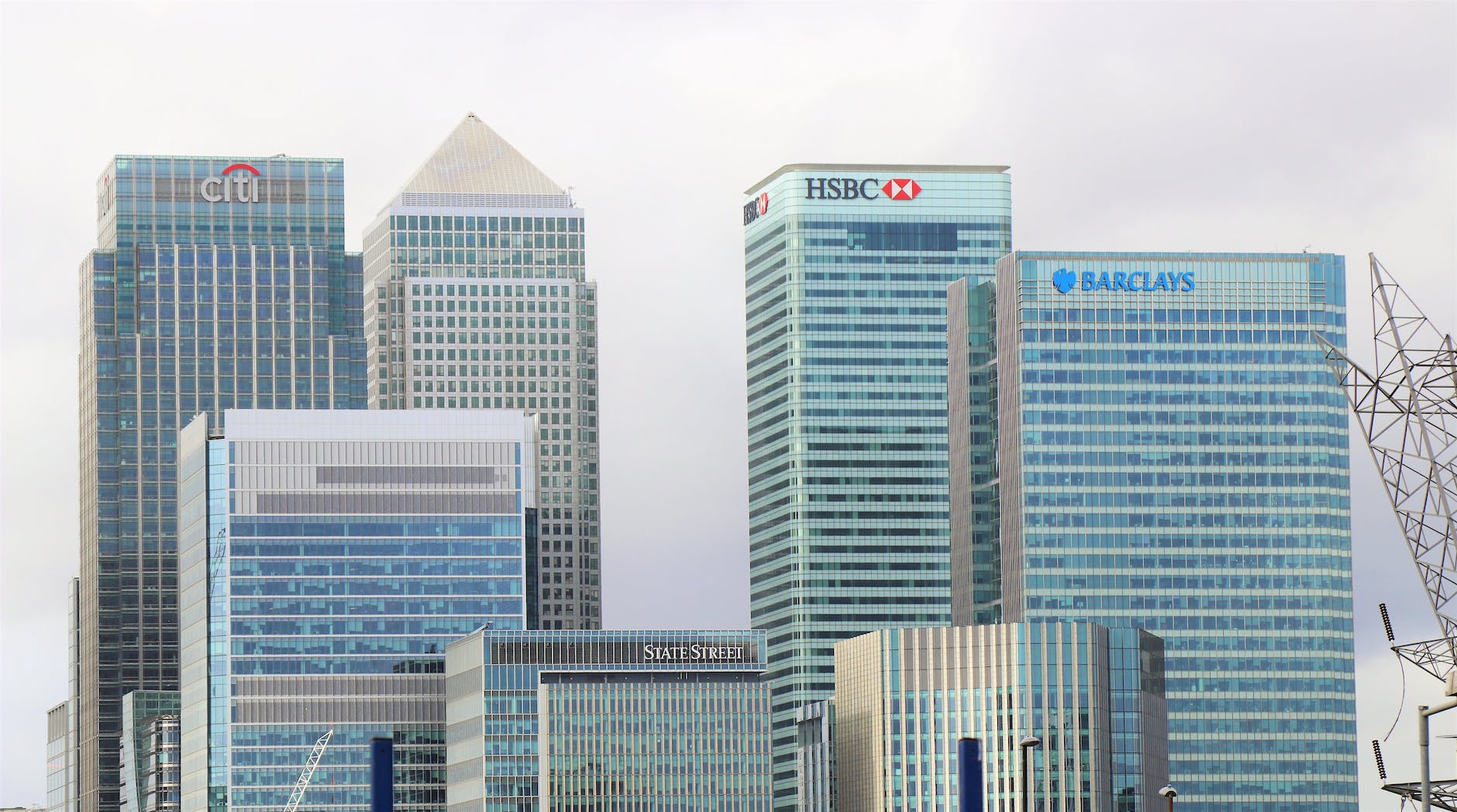
Investors who paid high prices for skyscrapers before the pandemic are reluctant to sell at a discount. Michael Pestronk, chief executive of Philadelphia-based apartment developer and landlord Post Brothers, said that around nine out of 10 office buildings around the U.S. that the company looks at aren’t suitable for converting to apartments, mostly because prices are too high or they still have too many tenants.
How low would prices need to go before redevelopment is attractive? How much money might previous investors be willing to accept or lose to convert structures?
There might need to be a tipping point for this to happen. Imagine a major office skyscraper is converted. Or, a certain amount of space is vacant in a single downtown. Or, a major lender accepts a loss and moves on with new plans. Or, a city decides to move with some major money. Or, one place shows this is possible.
That said, it will not only be expensive to pursue such paths but it will take time and experimentation. There may not be a single answer as cities seek different ways to fill office spaces.
The average 30-year fixed-rate mortgage has soared to 7.49 percent, according to latest data from lender Freddie Mac, while many homeowners are locked into much cheaper 2 or 3 percent deals on their current homes.
Meanwhile the number of smaller houses for sale has diminished in recent years, according to listing website Realtor.com – pushing up the price of the limited inventory on the market.
The number of properties for sale that measure 750 to 1,750 square feet – the size range people who are downsizing tend to purchase – has dropped by more than 50 percent since 2016, according to Realtor.com…
Hannah Jones, Senior Economic Research Analyst at Realtor.com, said: ‘Home prices for smaller homes fell 0.4 percent year-over-year in September, but remained more than 50 percent higher than pre-pandemic.
On one hand, this is about a particular moment where demand is high for small houses, few are available, and selling and buying means acquiring a higher interest rate.
In many ways, the housing stock in the United States does not change quickly. Builders, developers, municipalities, buyers, and others interested actors need time to assess conditions and change course. Coordinated planning across different interested actors could help as housing conditions and needs change in the coming years.
On Monday, the average 30-year fixed mortgage rate reached 7.48%, marking the highest level since the year 2000. Even prior to this recent surge in mortgage rates, housing affordability, as monitored by the Atlanta Fed, had already deteriorated beyond the levels seen at the housing bubble’s peak in 2006. Once this latest mortgage rate surge is factored in, August 2023 will become the worst month for housing affordability this century.
The journey to this predicament can be traced back to last year’s sharp rise in mortgage rates, which escalated from 3% to over 7%. That rate surge, coupled with the Pandemic Housing Boom pushing U.S. home prices up over 40% in just over two years, deteriorated housing affordability across the nation…
While the current lack of housing affordability echoes the affordability conditions leading up to the 2008 housing crash, there are distinct differences that set the two periods apart. Unlike the years preceding the 2008 crash, the nation is not grappling with an excessive surplus of existing homes for sale. In fact, housing inventory levels are hovering at historic lows, with July 2023 witnessing a staggering 47% decline in homes available for sale compared to July 2019.
Furthermore, the U.S. housing market in 2023 is not plagued by the risky mortgage products that contributed to the 2008 bust. In fact, the Pandemic Housing Boom was the opposite of the boom in the aughts: This boom was primarily led by households with high incomes, who because of low mortgage rates and remote-work policies were seeking out a new home.
I am a little surprised there are not more leaders proposing solutions or calling for addressing this issue. Housing is often the biggest expense in a household budget. People may not be able to find stable, quality housing. They will not be able to develop wealth. It is difficult to move. People will pay more in interest. People can experience anxiety about housing. And so on.
There might be a temptation to sit back and say people should wait for interest rates to stabilize and/or decline. Or, the housing market will have more inventory at some point.
Yet, housing is a complicated issue and there are multiple ways to address it. How can more housing at lower price points be built? How can existing homeowners rally for the need for cheaper housing costs (even as they might benefit from rising home values)? What incentives or sticks are needed to get various actors in the housing industry moving on providing more options?
I interviewed nine real-estate experts to help me understand why the numbers vary so much and, I hoped, help me figure out the right one to use for myself. They confirmed that, yes, the mortgage-affordability numbers are all different, and though some lenders use them to approve mortgages, they are basically guesstimates. “To some extent, they’re plucked out of the air,” Robert Van Order, an economics professor at George Washington University, told me. “A lot of these numbers are pretty arbitrary,” added Edward Seiler, the associate vice president of housing economics at the Mortgage Bankers Association. “It’s just based on people staring at data and thinking, What are the tipping points that force people into delinquency?” If the percentages don’t seem ironclad, it’s because they aren’t.
If these numbers are at the upper end of what people should spend, what do people actually spend?
Despite hearing the 30 percent figure from many of the experts I talked with, I was surprised to learn that most current homeowners actually spend much less on their housing. So do most renters. The median homeowner with a mortgage spends 16 percent of their gross income on their house payment, including taxes and insurance. That number is higher—24 percent—for low-income households, but it’s still less than 30 percent. Renters spend an average of 26 percent of their income on housing. In other words, if you take the mortgage calculators at their word and spend 28 percent, you’re paying much more for a house than the average American does.
Medians can disguise a lot of variability. In certain housing markets or in certain economic conditions or certain personal circumstances, the top end percent might be very helpful. In other situations, it may not matter as much.
Even with the variation in recommendations, it appears they roughly fall into a range of 25-35% of income. Would it be better then to suggest to people that they should aim to spend at most a quarter to one-third of their income on housing? This does not have the convenience of a single number but the range could fit a broader set of conditions and circumstances.
A McMansion is a large, highly ornate house often found in planned communities. This term is sometimes used as a criticism of mass-produced homes that don’t follow strict architectural styles.
They are large homes on small plots of land and can be more prevalent in states like California, New York and Texas. McMansions provide a way for upper-middle-class Americans to inflate their economic status.
McMansions are often generic and made from low-quality materials, so they don’t hold up well over time.
McMansions get a bad rap and are often referred to in a disapproving manner, but there are advantages to purchasing one. It can be a good way to buy a larger home, and you may be able to live in a nicer neighborhood. However, these houses may also come with high property taxes and can be expensive to maintain, especially if they’re built with low-quality materials.
For a company interested in providing mortgages, does this encourage people to pursue McMansions or not? I suppose providing information is helpful. I imagine all the major mortgage companies have underwritten lots of McMansion mortgages and would like to do more.
If a Quicken Loans customer does not like a McMansion but wants a bigger home that is not a mansion, what kind of home should they go after instead?
This is quite the turnaround. After 2008, banking the rich was often touted as a far better model. Even the biggest banks began aiming more of their consumer lending and wealth management at relatively better-off customers, and they scaled back on serving subprime customers. Wealthy customers seldom default, they bring lots of cash and commercial banking business and pay big fees for investments and advice, the thinking went.
But when interest rates shot up last year, it exposed weaknesses in the strategy. It isn’t that the rich are defaulting on loans in droves. But the most flush depositors with excess cash last year started taking their cash and seeking out higher yields in online banks, money funds or Treasurys. On top of that, startups and other private businesses started burning more cash, leading to deposit outflows…
A major way that the better-off do borrow from banks is to buy homes, and often in the form of what are known as jumbo mortgages. Jumbos are for loan amounts over $726,200 in most places, and over $1,089,300 in high-cost cities such as New York or San Francisco. Jumbo mortgages bring wealthy customers with lots of cash. They also are typically more difficult to sell to the market, in part because they aren’t guaranteed by government-sponsored enterprises such as Fannie Mae or Freddie Mac. So banks often sit on them. But the value of these mortgages, many of which are fixed at low rates for the foreseeable future, have dropped as interest rates have risen.
To be sure, not all banks that focus on wealthier individual clients are under intense pressure. Shares of Morgan Stanley and Goldman Sachs, are down less than half as much this month as the nearly 30% decline for the KBW Nasdaq Bank index. But those banks are more diversified and focus more on the steadier, fee-generating parts of the wealth business, such as stock trading and asset management, than on mortgages or deposits.
I interpret this to mean that there is less money – or lower rates of return – to be made on big mortgages. Wealthy people will want to buy real estate, particularly because it is often assumed that the value of real estate will be good long-term, but the money does not generate the amount of money banks want.
If mortgages are too “boring” or do not generate enough money, could we be headed to an era where banks do not want to do mortgages? Money for mortgages could come from elsewhere.
One reason inventory is so low nationally is that many homeowners were able to lock in record low interest rates in 2020 and 2021. Mortgage rates have skyrocketed since then—the rate for a 30-year fixed mortgage reached 6.7% on March 9, nearly double that of a year ago, according to Freddie Mac. That means that homeowners who bought or refinanced with low interest rates are reluctant to sell their homes and buy another with a mortgage with a much higher interest rate.
The low inventory makes house hunting an even more painful and emotionally charged process than usual, because buyers are finding that there just aren’t that many options. They have to choose between paying a high price for the inventory that is available, or waiting—potentially for a long time.
There are factors at play that make some markets especially brutal. In January, according to Redfin, the places out of the top 100 most-populated metro areas in the country with the lowest inventory were Rochester, N.Y. (1.2 months’ supply); Buffalo, N.Y. (1.4 months’); and Allentown, Penn. (1.5 months’). Rounding out the top ten were Grand Rapids, Mich.; Worcester, Mass.; Greensboro, N.C.; Hartford; Boston; and Montgomery County, Penn…
One other reason that there’s low inventory? The influx of investors who have bought properties, including single-family homes, to rent. Investors bought 24% of all single-family homes in 2021, up from around 15-16% each year going back to 2012, according to a Pew Stateline analysis.
Add to this that many places in the United States are short units of affordable housing.
I have not seen many hints that this is a short-term problem or one that will be addressed soon. The mortgage rate issue will take time to see through. The housing crunch in particular markets may require hyperlocal policies as well as changing national conditions. Investors will continue to act in the market. The construction that is taking place is often aimed at higher ends of the market.
What I am still surprised at: how come no national politician is making this a centerpiece of a campaign? Imagine a politician promoting homeownership opportunities, new housing starts, seeking ways to boost construction, and wanting to help people achieve the American Dream. This could appeal to both sides of the aisle. This would not necessarily require major changes to national policy beyond a consistent message, helpful incentives, and a desire to help address the foundational issue of housing that many face.
The Federal Housing Finance Agency (FHFA) said Tuesday it will increase the maximum size of mortgages that Fannie and Freddie will cover—known as the conforming loan limit—to $1,089,300 in high-cost areas from $970,800 this year and $765,600 in 2020. The conforming loan limit in other areas will rise to $726,200, from $510,400 two years ago…
Instead, the Administration wants to prop up housing demand and prices by raising the guarantee limit. This will please the Realtors and affluent, especially in California areas where the median home price exceeds the new limit, such as Orange County ($1.2 million), San Francisco ($1.3 million) and San Jose ($1.7 million).
Sorry to state the obvious, but anyone who can qualify for a million-dollar mortgage doesn’t need the government to subsidize it with a guarantee. The average 30-year interest rate on a jumbo loan is 6.8%, which is similar to a government-backed mortgage.
Borrowers with jumbo loans tend to have higher incomes and credit scores. But these mortgages are getting riskier as borrower monthly payments have risen faster than incomes. Layoffs are increasing in higher-paying fields like tech, and a recession could result in foreclosures. The FHFA is expanding the taxpayer liability at an especially risky time…
The more the government intervenes in the housing market, the more damage it does.
There is a lot here that relates to work I have done. A few thoughts in response:
The final line is interesting. Is the assumption that the federal government should not be very involved or involved at all in the housing market? One journalist reported this quote from a European finance official a few years ago: “Most countries have socialized health care and a free market for mortgages. You in the United States do exactly the opposite.” This government intervention was instrumental in helping to create suburbs and promote homeownership.
This move might help people in more expensive housing markets. Does one have to be rich to access housing in Orange County or San Jose or is this needed because the housing prices are so high there?
The headline mentions McMansions but the word is not used in the editorial. Is the term shorthand for expensive homes? Or, commentary on the kinds of homes people with this level of resources purchase? Is the Wall Street Journal against McMansions? (If I had to guess based on my work looking at the use of McMansion in the New York Times and the Dallas Morning News, the WSJ would fit somewhere in between these two sources.)
A “bridesmaid suburb” is a second-choice postcode and could become a strategic buying trend as ballooning interest rates bite into borrowing capacity…
“Buyers will still have to consider alternatives or the bridesmaid suburbs to their first preference, possibly not because of price but because of diminished borrowing capacity.
”Bridesmaid suburbs are adjacent to higher-profile neighbouring suburbs. They cost less to buy into but share many similarities to the first-pick suburb next door, including access to public transport routes, schools and major shopping hubs…
“A bridesmaid suburb can still allow you to secure a lifestyle with comparable amenities and appeal, and only a short drive down the road.”
While this is used in Australia- a quick Google search suggests this term has been around there for several years – I wonder if it might also apply to suburbs in the United States. Are there many homeowners who would have preferred to live in the most desirable suburb but could not afford it and so settled in nearby communities? There are several assumptions at work here:
Many people want to live in the most desirable suburbs. If supply and demand is the only factor at work, more people wanting to live in desirable suburbs drives up home prices so much that there is not enough housing. Additionally, my own sense of American suburbs is that some of the most desirable and exclusive suburbs also intentionally limit their housing supply to help maintain their character and status. Are there such suburbs that always stand out above any other location in the region and where most people would want to live?
Suburban homeowners want to max out their borrowing capacity and get the most they can – a more expensive home – through their mortgage. People can borrow up to a certain point decided by lenders, but how many go all the way to the maximum allowed?
The exact community in which you live matters less than the clusters of suburban communities you can access. It is less about a particular zip code and more about a cluster of adjacent zip codes. Suburbia offers driving access to a lot of communities so perhaps you do not have to live in a particular place to enjoy the benefits. At the same time, communities that appear similar on certain factors can be quite different in terms of character and everyday experiences.
The first loan, which a source close to the project said also refinanced existing bank debt, was $82.5 million with a minimum interest rate of 11%. It included an agreement that should the house sell for more than $200 million, Hankey would get $3.5 million of the sale.
Niami came back a little over a year later and borrowed an additional $8.5 million at the same rate, paying a loan fee of $82,500. He also agreed to more onerous terms: giving Hankey a percentage of the profits if the house sold for $100 million to $200 million.
Two months before the loans were due, Niami came back for a third helping, and got an additional $15 million at the same interest rate. There were no changes to the profit-sharing arrangement, but this time the developer had to cough up a $1-million application fee.
The total: a whopping $106 million that Crestlloyd defaulted on when it all came due on Oct. 31, 2020 — and it’s growing with interest and penalties. But Hankey is not the only lender owed by Crestlloyd, according to a title report provided by the receiver.
There is a lot of money wrapped up in this house and it is unclear whether those involved will get what they hoped for. Almost regardless of what happens in the short-term, this house will live on in future memories because of its price-tag and location. Will it end up being a cautionary tale/disaster or an eventual success in a land of mega-mansions and wealthy residents?
Because this is one of the most expensive properties around, would the fallout from the subprime lending receive more attention or less attention compared to the consequences of subprime loans in the late 2000s? How long would it take to sort out debt and payments in court? While there are wealthy actors involved, a lot of money could be lost and even the wealthiest would feel a loss of $50-100 million on a single house.







 Legally Sociable